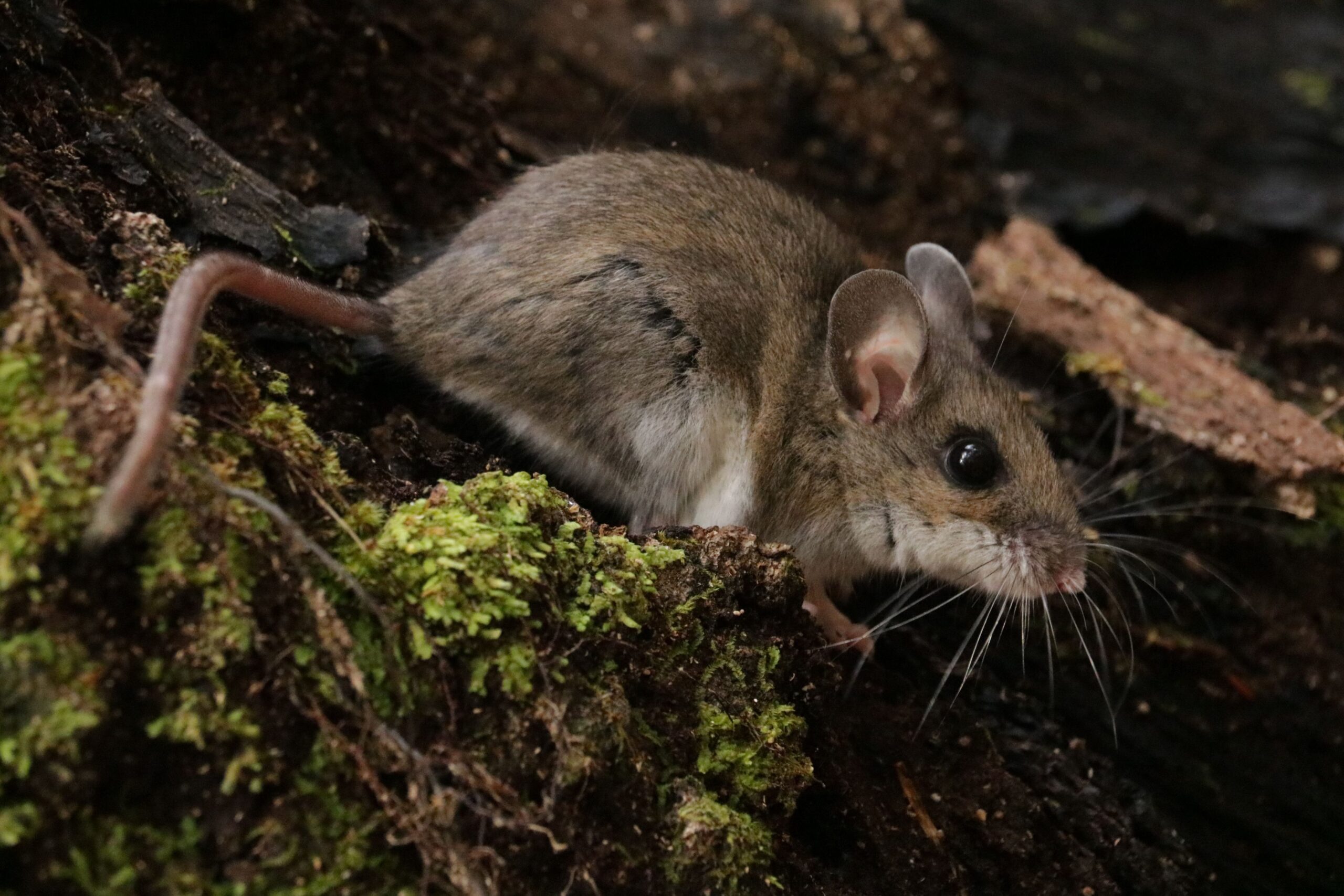
What kind of animal is the Tokyo shrew? We will explain its characteristics, ecology, and habitat. Please note that although the name is Tokyo, the area where you actually live is completely different. This rat is extremely rare and is listed as an endangered species.










- What is the Tokyo shrew? About basic status
- What are the roots and origins of the Sorex minutissimus hawkeri (Tokyo shrew)?
- About habitat
- feature is? What kind of creature is it?
- What is the ecology like?
- Vocalizations of the Sorex minutissimus hawkeri (Lesser Shrew)
- Seasonal Activity
- Walking Speed
- About Baby Tokyo Shrews
- Is the Tokyo shrew an endangered species?
- Is it possible to keep Tokyo shrews?
- Zoos Housing the Species (Japan & Worldwide)
- Introducing other animals
What is the Tokyo shrew? About basic status
The Tokyo shrew is a mammalian mole belonging to the genus Shrew, in the order Truececalidae and family Shrewidae. The scientific name is Sorex minutissimus hawkeri. It is an extremely small animal with a body length of only 45-49mm, a tail length of about 27-31mm, and a weight of about 1.5-1.8g.
| Japanese(和名) | トウキョウトガリネズミ |
| English(英名) | Hawker’s least shrew |
| scientific name(学名) | Sorex minutissimus hawkeri |
| classification(分類) | Mammalia、 Eulipotyphla、 Soricidae、Sorex 哺乳綱、真無盲腸目、トガリネズミ科、トガリネズミ属 |
| IUCN Status(保全状況) | VULNERABLE |
| Length(体長) | 45-49mm |
| Weight(体重) | 1.5-1.8g |
What are the roots and origins of the Sorex minutissimus hawkeri (Tokyo shrew)?
Despite having “nezumi” (mouse/rat) in its Japanese name, the Sorex minutissimus hawkeri—often referred to in Japan as the “Tokyo shrew”—is not a rodent. It is a small mammal belonging to a lineage more closely related to moles. Taxonomically, it falls under the order Soricomorpha and the family Soricidae (shrews).
Ancestry: The “Early Insectivore” Lineage (Approx. 60 Million Years Ago)
The distant ancestors of this shrew were small, insect-eating mammals that proliferated during the early Cenozoic era (following the extinction of the dinosaurs about 66 million years ago).
The general evolutionary progression is as follows:
Early small mammals
↓
Insectivorous mammals (insect-eating lineage)
↓
Soricidae (Shrew family)
↓
Sorex minutissimus (Eurasian least shrew)
↓
Sorex minutissimus hawkeri (Hokkaido subspecies)
Modern shrews belong to a mammalian group known as “Laurasiatheria,” which also includes moles and hedgehogs.
Global Roots: Northern Eurasia
The Sorex minutissimus hawkeri is not a species unique to Japan in isolation; it is a member of the Sorex minutissimus (Eurasian least shrew) species, which is widely distributed across cold regions of northern Eurasia, including:
Northeastern Russia
Siberia
Northern Mongolia
Northeastern China
Hokkaido
The Hokkaido population is believed to have migrated from the continent due to climatic changes during the Ice Age and subsequently became isolated in Hokkaido, evolving into its current form.
When It Arrived in Hokkaido
A leading theory suggests that during the cold periods of the Pleistocene epoch (approximately 2.6 million to 10,000 years ago), the species migrated along the following route:
Siberia/Far East region
↓
Sakhalin area
↓
Hokkaido During glacial periods, sea levels dropped, narrowing the distance between Hokkaido and the Asian mainland and creating an environment that allowed cold-climate animals to easily enter the Japanese archipelago.
Animals that reached Hokkaido via similar routes include:
The Ezo pika
The Ezo mountain hare
The Ezo red fox
The Ezo squirrel
…and others.
Why is it named the “Tokyo Shrew” (Tokyo-togarinezumi)?
There is a very famous case of a naming error.
The label on the specimen at the time of its discovery bore the word “Ezo” (an old name for Hokkaido).
However, this was later misread as “Edo” (the old name for Tokyo),
resulting in the peculiar name
“Tokyo Shrew.”
In reality,
it does not inhabit Tokyo.
Its primary habitats are the grasslands and wetlands of eastern Hokkaido.
What is the origin of the name?
When it comes to the Tokyo shrew, it is common to recognize it as a creature of Tokyo. But why? It dates back to 1903. This animal was discovered during this period, but its name comes from the fact that the discoverer, Hawker, mistakenly wrote Yedo (Edo) on the specimen label instead of writing ‘Yezo’ (Ezo). There are also subspecies. The great-footed shrew is the largest species in Japan, and there are also the Ezo shrew and the Japanese shrew.
Scientific name and classification
- 学名:Crocidura dsinezumi
- 目:食虫目(Eulipotyphla)
- 科:セミトガリネズミ科(Soricidae)
- 属:トガリネズミ属(Crocidura)
- 種:トウキョウトガリネズミ (Crocidura dsinezumi)
About habitat
The Tokyo shrew inhabits Hokkaido’s Horonobe Town, Sarufutsu Village, Shiranuka Town, Nemuro City, Shikaoi Town, and Mikasa City.
- Geographic Distribution
This species is endemic to Japan, particularly in the Kanto region.
It is commonly found in the plains and hilly areas of Tokyo, Kanagawa, Saitama, and Chiba prefectures.
It is generally not found in other regions, such as Kyushu and Hokkaido.
- Habitat Characteristics
It has adapted to a variety of environments, including urban suburbs, farmland, grasslands, and woodlands.
It prefers hiding places such as under fallen leaves and grass, or in the crevices of stones and fallen trees.
It is nocturnal, resting in burrows or fallen leaves during the day and active at night to search for food.
- Environmental Conditions
It is not particularly dependent on humidity or proximity to water, and can survive in urbanized environments.
It prefers environments with plenty of soil and fallen leaves, as they have an easy way to find food such as insects.
feature is? What kind of creature is it?
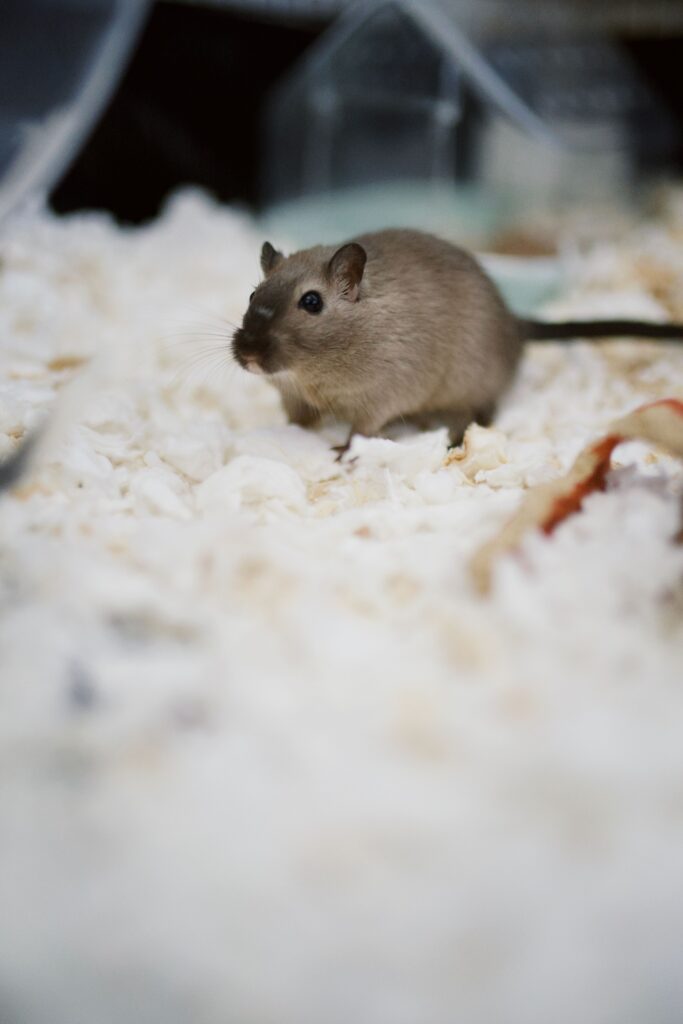
The Tokyo shrew has a pointed nose and small eyes, and although it has the word “mouse” in its name, it is a member of the mole family. The Tokyo shrew is the world’s smallest mammal, with large, mole-like hands that live underground in holes. Therefore, there are times when you cannot see it on the ground. Because of their small size, they have the characteristic of repeatedly feeding and resting every 30 minutes.
- Appearance and Physical Characteristics
Body Type: Small and slender, with a small, rounded head and a pointed snout.
Body Length and Weight:
Body Length: Approximately 5-7 cm
Tail Length: Approximately 3-4 cm
Weight: Approximately 5-10 g
Fur Color: Gray to brownish-gray on the back, light gray on the underside.
Limbs and Tail: Small limbs allow for walking and digging. The slender tail helps with balance.
- Behavior and Ecology
Nocturnal: Rests in burrows or leaf litter during the day, active at night, preying on insects and small invertebrates.
Solitary: Primarily lives alone.
Agility: Small and agile, they excel at hiding under leaves and grass.
- Special Characteristics
Pointed snout, typical of insectivores: Adapted to search for insects and small invertebrates.
High Reproductive Capacity: Has the flexibility to maintain populations in urban environments and agricultural fields.
Adaptability: Able to survive under the influence of human activity, such as in urbanized environments and agricultural land.
What is the ecology like?
The Tokyo shrew is poisonous and is used for hunting. This poison paralyzes enemies and allows it to move quickly to catch insects larger than itself. The main food is insects. The lifespan of the Tokyo shrew is said to be 1 to 2 years. There are still many mysteries regarding ecology. This has not been elucidated by research.
- Diet (What they eat)
They are insectivorous, primarily preying on insects, spiders, earthworms, and small invertebrates.
They hunt by searching under fallen leaves and grass.
They tend to be omnivorous, occasionally eating seeds and fruit.
- Reproduction and Growth
Breeding Season: Active breeding from spring to summer.
Gestation Period: Approximately 3 weeks
Birth: Gives birth to 2-6 pups at a time.
Baby Development: Immediately after birth, they are protected by their mother in a burrow. After a few weeks, their eyes open and they begin preparing to become independent.
- Behavior and Lifestyle
Nocturnal: Rests during the day in burrows or among fallen leaves.
Solitary: They have a territory and only interact with other individuals during the breeding season.
Agility and Stealth: They quickly move under fallen leaves and grass to hunt and avoid danger.
- Movement and Habitat Use
They use burrows, under fallen leaves, and gaps between stones and fallen trees. They can adapt to living in environments affected by human activity, such as urban areas and farmland.
- Natural Enemies/Threats
Natural Enemies: Owls, snakes, cats, etc.
They face relatively few threats from human activity and can survive in urbanized environments, but they are affected by pesticides and environmental destruction.

Vocalizations of the Sorex minutissimus hawkeri (Lesser Shrew)
Despite their tiny bodies, Sorex minutissimus hawkeri (a subspecies of the least shrew) use sound to communicate with others and assess their surroundings. However, they rarely emit loud calls that humans can clearly hear in the wild, and consequently, there are limited research studies or audio recordings available.
Typical Vocalizations
They are described as short sounds, such as:
“Tchi, tchi, tchi”
“Chu, chu”
Rapid, high-pitched, faint sounds
Faint “peep-peep” sounds
Juveniles, in particular, begin vocalizing just a few days after birth, using these sounds to call out to their mothers.
Use of Ultrasound
Shrews, including this species, possess the ability to emit high-frequency sounds (ultrasound), much like bats.
These sounds are believed to serve several purposes:
Detecting obstacles in dark places
Determining their location within burrows or amidst the grass
Perceiving the surrounding environment
However, unlike the sophisticated “flight radar” used by bats, this functions more as an aid for short-range exploration (a simple form of echolocation).
Communication with Others
Vocalizations are used in the following situations:
🟤 Parent-Offspring Interaction
Offspring calling to the mother
Signaling location within the nest
🟤 Breeding Season
Contact between males and females
Responding to a potential mate
🟤 Danger
Warning calls when attacked by a predator
Why They Are Difficult for Humans to Hear
Weighing only about 2 grams, Sorex minutissimus hawkeri is one of the world’s smallest mammals, and the sounds it produces are extremely faint.
Furthermore, because shrews utilize high-frequency sounds:
They are difficult for the human ear to detect
The sounds get drowned out by ambient noise in grassy areas
They are hard to detect in the first place due to their nocturnal activity patterns
Seasonal Activity
The Hokkaido least shrew (Sorex minutissimus hawkeri) is one of the world’s smallest mammals, adapted to the cold environment of Hokkaido. Due to their tiny bodies, they face a high risk of hypothermia and energy depletion; consequently, they remain active year-round (they do not hibernate).
🌱 Spring (April–June)
Activity: Increase in activity and onset of breeding
Activity levels rise as the snow melts.
Key behaviors:
Emerging from beneath the snow or leaf litter to forage
Hunting for insects, spiders, and small arthropods
Beginning of breeding activity
Increased interaction between males and females
Spring is a crucial period when food sources begin to increase.
In Hokkaido, they are particularly active in:
Wetlands
Riverbanks
Grasslands
Dwarf bamboo thickets
☀️ Summer (July–August)
Activity: Peak activity period
Summer is the most favorable season for the Hokkaido least shrew.
Key activities:
Consuming large quantities of insects
Nest building
Raising young
Dispersal of young individuals
Diet:
Small insects
Larvae
Spiders
Earthworms
Small invertebrates
Due to their small size, they have a very high metabolic rate; it is estimated that they require food amounting to more than several tens of percent of their body weight each day.
🍂 Autumn (September–November)
Activity: Preparing for winter
Temperatures drop and insect populations decline in autumn.
Behaviors:
Continuing to forage for small prey
Using leaf litter and the bases of plants for cover
Securing a location to overwinter
As they do not hibernate, Hokkaido least shrews do not store large amounts of body fat.
Therefore,
They adopt a strategy of “surviving by constantly eating”
rather than “hibernating.”
❄️ Winter (December–March)
Activity: Reduced activity, but no hibernation
They remain active even during Hokkaido’s harsh winters. Characteristics:
Moves through the space beneath the snow.
Utilizes an environment with less temperature fluctuation than the surface.
Forages for insect larvae and small soil-dwelling animals.
Conversely, the snow acts as “insulation” by:
Blocking the wind
Buffering temperature changes
Providing cover from predators
Daily Activity Rhythm
The Laxmann’s shrew is primarily active:
🌙 From night through crepuscular periods
(evening and dawn)
However, it is not strictly nocturnal;
it repeats short cycles of:
being active for tens of minutes
resting
becoming active again
Reason:
Due to its small body size,
it cannot sleep for long periods
while maintaining body temperature
and replenishing energy.
Walking Speed
The Tokyo shrew (Sorex minutissimus hawkeri) is a tiny mammal weighing only about 1.5–2g; there are very few studies that have accurately measured its top speed. However, based on the locomotive capabilities of closely related shrew species, it is known to move at very high speeds relative to its body size.
🚶 Normal Walking
Approx. 0.1–0.3 m/s (roughly 0.4–1.1 km/h)
Moves nimbly through grass and fallen leaves
Forages for food while probing the ground with its snout
Frequently moves over short distances
🏃 Active Running
Estimated at approx. 0.5–1 m/s (roughly 1.8–3.6 km/h)
When active, it exhibits the following characteristics:
Keeps its body low to the ground
Moves its limbs rapidly
Changes direction in a zigzag pattern
To a human observer, it looks less like “running” and more like a tiny shadow darting rapidly through the undergrowth.
Exceptional Locomotion Relative to Body Size
The Tokyo shrew has a body length of about 5 cm.
If it moves at a speed of 1 m/s,
it covers a distance of approximately 20 times its body length
in a single second.
For a human (170 cm tall) to move at the same relative speed,
it would be equivalent to covering about 34 meters in one second.
About Baby Tokyo Shrews
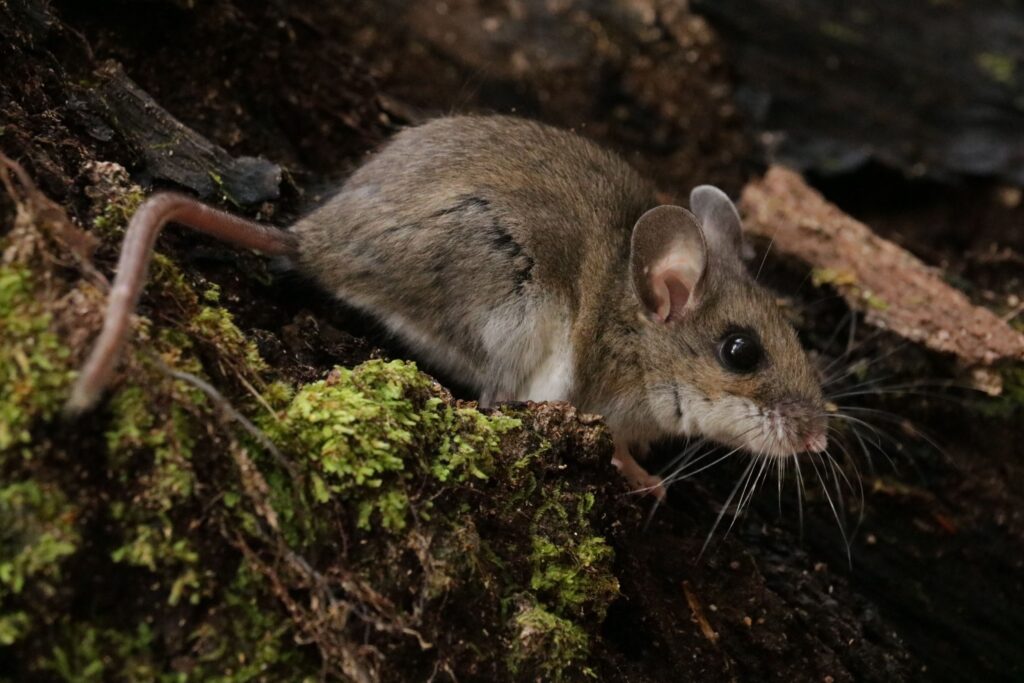
To summarize the appearance, growth, behavior, and mother-child relationship of baby Tokyo shrews (Crocidura dsinezumi), please see below.
- Appearance and Physical Characteristics
Body Color: Immediately after birth, they are pale gray to brown, with a slightly lighter ventral surface. As they grow, they turn the same gray-brown color as adults.
Body Length and Weight:
Body Length: Approximately 3-4 cm
Weight: Approximately 2-4 g
Body Type: Very small, with short, flexible legs and a slender body.
- Growth and Development
Lactation: They are breastfed for approximately three weeks.
Weaning: They begin to eat insects and small invertebrates at three to four weeks of age.
Independence: They leave the burrow at approximately one month of age and learn hunting and hiding techniques from their mother.
Sexual Maturity: They may become capable of breeding at two to three months of age.
- Behavior and Mother-Child Relationships
Cubs live closely with their mothers and are protected in dens.
Mothers teach them how to hunt and avoid danger.
Cubs develop athletic and hunting skills through play with each other.
- Threats and Survival
Cubs are more vulnerable to predators than adults, and are often preyed upon by owls, snakes, and cats.
Insufficient protection from dens and their mothers reduces their chances of survival.
Is the Tokyo shrew an endangered species?
The Tokyo shrew is listed as an endangered species on Japan’s Hokkaido Red List. The Tokyo shrew is listed on the Ministry of the Environment’s Red List. In the first place, they are in a critical situation because their numbers are small.
- IUCN Red List Assessment
Current Assessment: The IUCN (International Union for Conservation of Nature) Red List does not list it as “endangered.”
Due to its relatively wide distribution and ability to adapt to urban and agricultural environments, the decline in wild populations is not considered extreme.
- Status in Japan
The Japanese Ministry of the Environment’s Red List does not specifically list it as endangered.
Although it is affected by urbanization and agricultural development, it lives in urban areas and has adapted reliably.
- Conservation Considerations
Pesticide use and environmental destruction may lead to local population declines.
Competition with invasive rodents may also have an impact.
Is it possible to keep Tokyo shrews?
The ecology of the Tokyo shrew is still a mystery, and it is also poisonous, so we do not recommend raising it easily.
- Ecological Reasons
Nocturnal and highly stealthy: They rest in burrows or fallen leaves during the day, making observation and management difficult.
Small and agile: They have a strong predatory instinct, and cramped captivity can be very stressful.
Specialized Diet: They are insectivorous, feeding on insects and small invertebrates, making it difficult to maintain their health on artificial diets alone.
- Laws and Regulations
While not endangered in Japan, local government and Nature Conservation Act restrictions may apply when capturing and raising wild specimens.
Private captivity is generally prohibited without a capture permit.
- Conditions in Captivity Facilities
Captivity is limited to special-purpose captivity in research institutions and university laboratories.
Captivity requires a nocturnal environment, appropriate insect and invertebrate food, burrows and hiding places, and specialized care.
Zoos Housing the Species (Japan & Worldwide)
The Sorex minutissimus hawkeri (a subspecies of the least shrew) is a rare, small mammal that is extremely difficult to keep in captivity. Weighing only about 2 grams, it presents significant challenges regarding diet, temperature control, and stress management; consequently, there are very few instances of it being kept in captivity anywhere in the world.
🇯🇵 Zoos in Japan
Tama Zoological Park (Tokyo)
One of the world’s most important research facilities for Sorex minutissimus hawkeri
Began husbandry and research: 2000s
Conducts research on ecology and breeding
Achieved the world’s first successful captive breeding (confirmed birth) in 2021
At Tama Zoological Park, work focuses on the Hokkaido population, including:
Establishing capture techniques
Researching husbandry methods
Elucidating breeding ecology
Conducting foundational research aimed at reintroduction to the wild
Note: The species is not currently on permanent public display; exhibition status varies.
Sapporo Maruyama Zoo (Hokkaido)
Conducts research and public outreach regarding shrew species native to Hokkaido.
Collaborates with institutions such as Hokkaido University on husbandry research for shrews
Promotes understanding of Hokkaido’s small mammals, including Sorex minutissimus hawkeri
Note: Permanent exhibits featuring Sorex minutissimus hawkeri are limited.
🌍 Global Captivity Status
Russia and Siberia
Relatives of this species (specifically the least shrew, Sorex minutissimus)
are distributed across:
The Russian Far East
Siberia
Northeast Asia
However, there are very few examples of long-term captive rearing or breeding displays in overseas zoos, and there are virtually no confirmed instances of facilities offering public viewing.
Introducing other animals




コメント