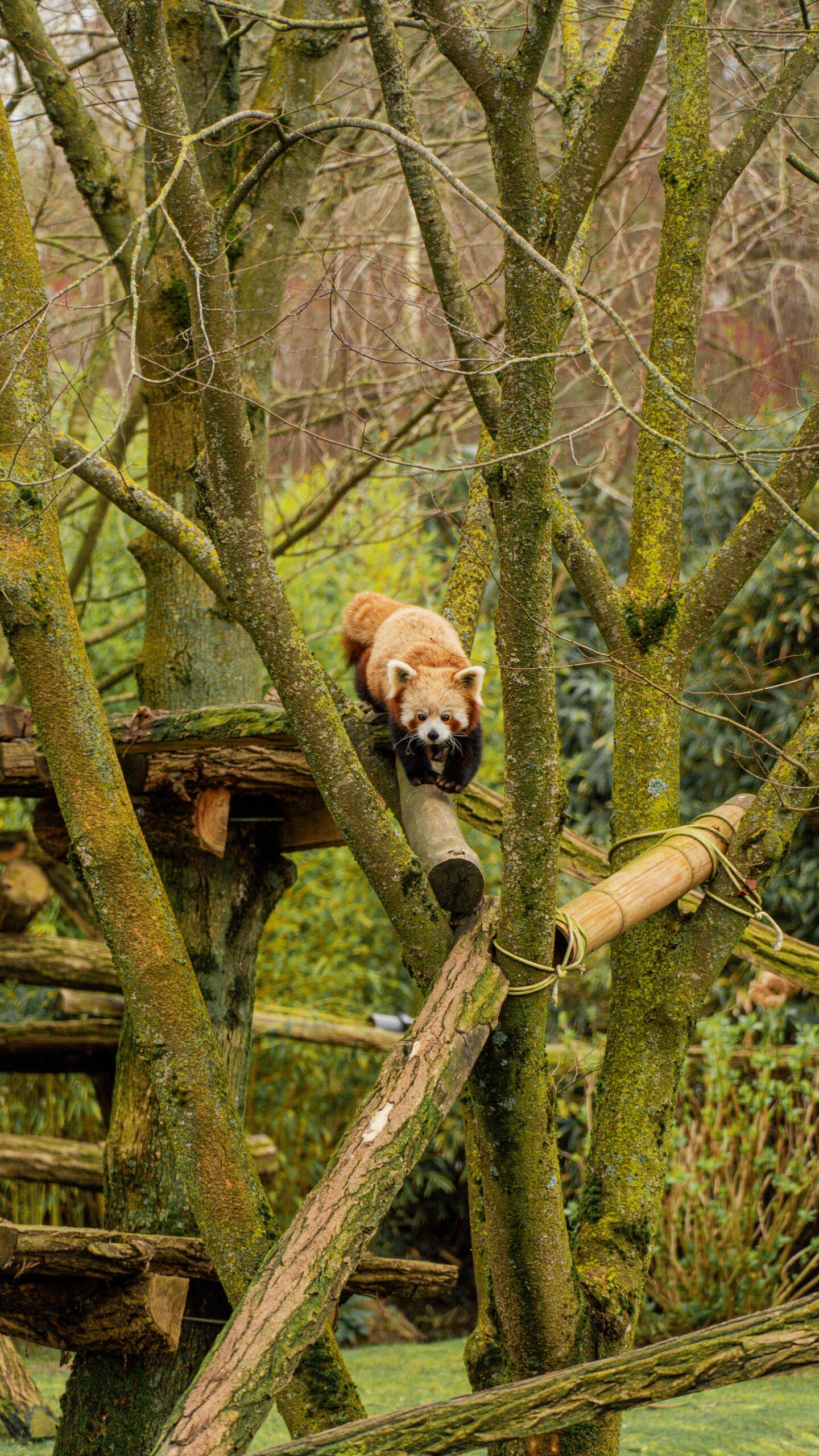
This page provides information about the characteristics, ecology, classification, distribution, and habitat of red pandas. Red pandas are bred and kept in zoos and live in mountain forests. They are very cute and popular animals. Their fur is long and soft, and they are even used to make dolls. They are quite popular, but they are actually an endangered species.


- What is a red panda? About basic status
- What are the roots and origins of the red panda?
- About the habitat of the red panda
- feature is? What kind of creature is it?
- What will your personality look like?
- What is the ecology of the red panda?
- Red Panda Vocalizations
- Seasonal Activities
- Walking Speed
- About Red Panda Cub
- Is the red panda an endangered species?
- Can red pandas be bred?
- Zoos Housing Red Pandas (Japan & Worldwide)
- Introducing other animals
What is a red panda? About basic status
The red panda is a mammal in the genus Ailurus and family Ailurus in the order Carnivora. Its scientific name is Ailurus fulgens. Its body length is 50-65cm and it weighs 3-6kg. It is also known as the bear cat. Many people mistake it for a wild giant panda or raccoon, but it is a different species. It has a habit of standing up, which is said to be cute.
| Japanese(和名) | レッサーパンダ |
| English(英名) | Lesser Panda / Cat-Bear / Red Panda |
| scientific name(学名) | Rangifer tarandus |
| classification(分類) | Mammalia、 Carnivora、Ailuridae、Ailurus 哺乳綱、食肉目、レッサーパンダ科、レッサーパンダ属 |
| IUCN Status(保全状況) | ENDANGERED |
| Length(体長) | 50~65cm |
| Weight(体重) | 3~6kg |
What are the roots and origins of the red panda?
The red panda belongs to a very ancient mammalian lineage that survived in what is now southwestern China and the Himalayan region. Although they resemble raccoons or giant pandas in appearance, they followed a unique evolutionary path.
Origins: Dating back approximately 50 million years
The ancestors of the red panda are believed to have appeared about 50 million years ago (during the Eocene epoch).
Modern red pandas are classified as follows:
Order: Carnivora
Family: Ailuridae
Genus: Ailurus
The red panda is the only surviving member of this group today.
In other words, the red panda can be described as:
“An evolutionary orphan—a species that once had many relatives but is now the only one left.”
What is their relationship to the giant panda?
Despite having “panda” in their name, they are not closely related to the giant panda.
Past classifications debated whether:
Red pandas were related to raccoons?
Giant pandas were related to bears?
Current genetic analysis places them in completely separate lineages:
Giant panda → Ursidae (bear family)
Red panda → Ailuridae (red panda family)
However, the two share certain common traits:
They eat bamboo.
They possess a “sixth digit” (a false thumb).
They adapted to the mountainous forests of China.
These similarities are the result of evolving in similar environments (convergent evolution).
Ancient relatives of the red panda
Red panda relatives once inhabited a much wider area than they do today.
Fossils of closely related species have been discovered in:
Europe
North America
Asia
Representative ancient species:
Parailurus
A large red panda relative that existed approximately 7 million to 2 million years ago.
It was larger than the modern red panda and may have been more carnivorous. Simocyon
Lived approximately 9 million years ago, during the Miocene epoch.
It was highly adept at climbing trees and possessed characteristics similar to those of the red panda’s ancestors.
How did it evolve into its current form?
Red pandas evolved to adapt to life in the forest.
① Arboreal lifestyle (living in trees)
Long tail → Balance
Sharp claws → Climbing trees
Flexible ankles → Ability to climb down trees
② Adaptation to a bamboo-based diet
While their ancestors were primarily carnivorous, they have since become omnivores, eating:
Bamboo
Fruit
Tree buds
Insects
Small animals
③ Adaptation to cold climates
In the forests around the Himalayas, they cope with the cold through:
Thick fur
A long tail that covers the body
Small ears
About classification
The Red Panda genus is actually not just one species. There are many subspecies. The following subspecies exist. There are no major differences in the head, front legs, hands, bones, ears, etc. There are many wild pandas on land in Sichuan Province and other areas, and they are often seen behaving well, which makes them the news.
| Name (名前) | Academic Name (学名) | Habit (生息地) |
| nepal red panda ネパールレッサーパンダ | Ailurus fulgens fulgens | Northeastern India, Nepal, Bhutan インド北東部、ネパール、ブータン |
| Shisen Red Panda シセンレッサーパンダ | Ailurus fulgens styani | China, Myanmar 中国、ミャンマー |
classification
Red pandas were once classified as part of the Ursidae or Procyonidae families, but are now classified as their own family.
- 界:動物界(Animalia)
- 門:脊索動物門(Chordata)
- 綱:哺乳綱(Mammalia)
- 目:食肉目(Carnivora)
- 科:レッサーパンダ科(Ailuridae)
- 属:レッサーパンダ属(Ailurus)
- 種:Ailurus fulgens
About the habitat of the red panda
Red pandas can be found in India, China, Nepal, Bhutan, and Myanmar.
- Geographic Distribution
Red pandas are found in the mountainous regions of eastern Asia.
Northern India (eastern part of the Himalayas)
Nepal
Bhutan
Southwestern China (Sichuan and Yunnan provinces)
Northern Myanmar (formerly Burma)
- Environmental Characteristics
Most commonly found in mountain forests at altitudes between 2,200 and 4,800 meters.
Mainly inhabits temperate coniferous forests, broadleaf forests, and mixed forests of bamboo.
Climate: Cool and humid, with cool summers and cold winters.
- Habitat Conditions
Bamboo Presence: Since bamboo leaves are their primary food source, forests with bamboo are essential.
Tree Abundance: Since they primarily live in trees, they require densely branched trees that are easy to climb.
Distance from Humans: Prefers relatively untouched mountain forests rather than those near human settlements.
- Habitat Status
Habitat fragmentation and decline due to deforestation and agricultural development.
Listed as Vulnerable by the International Union for Conservation of Nature (IUCN).
feature is? What kind of creature is it?
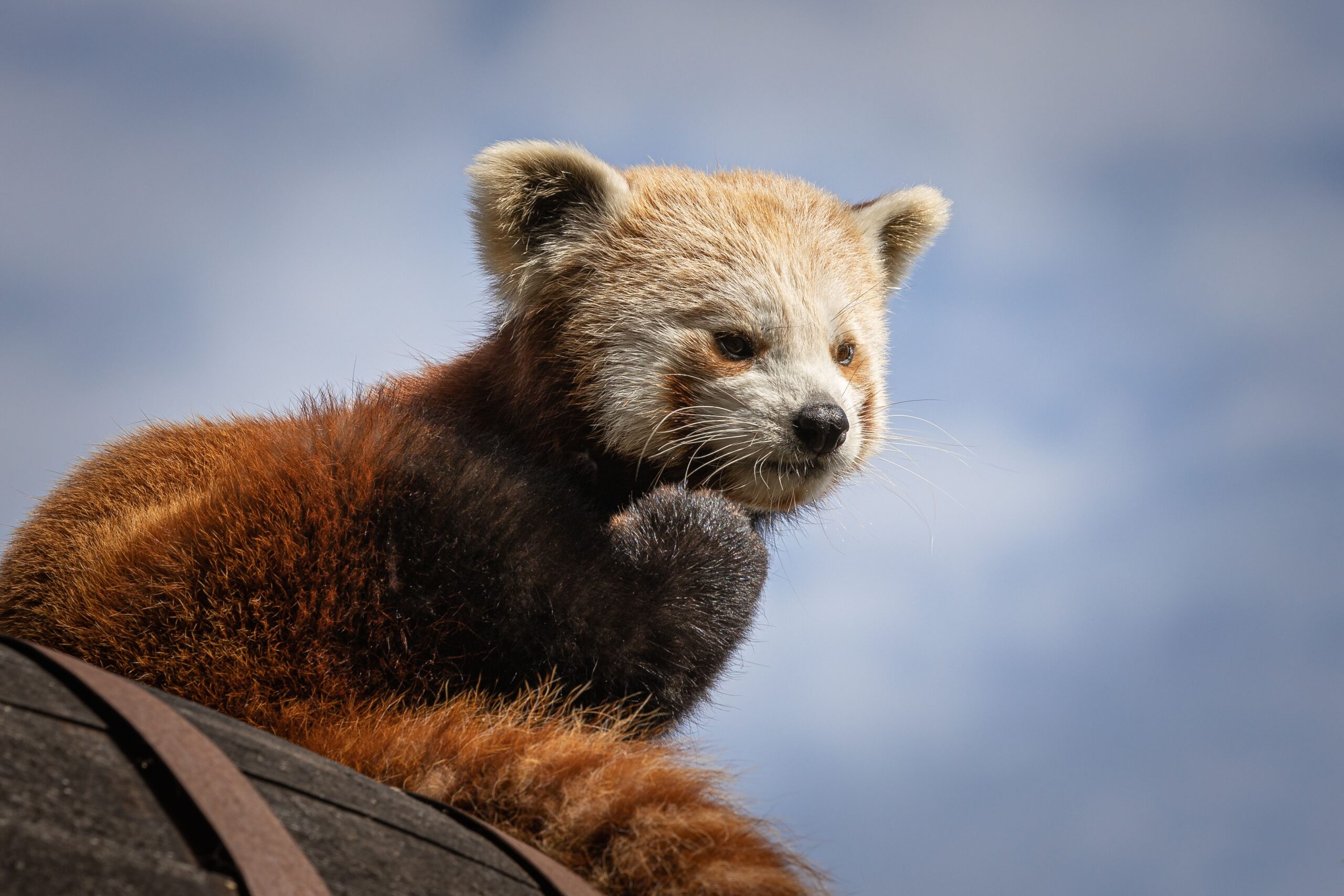
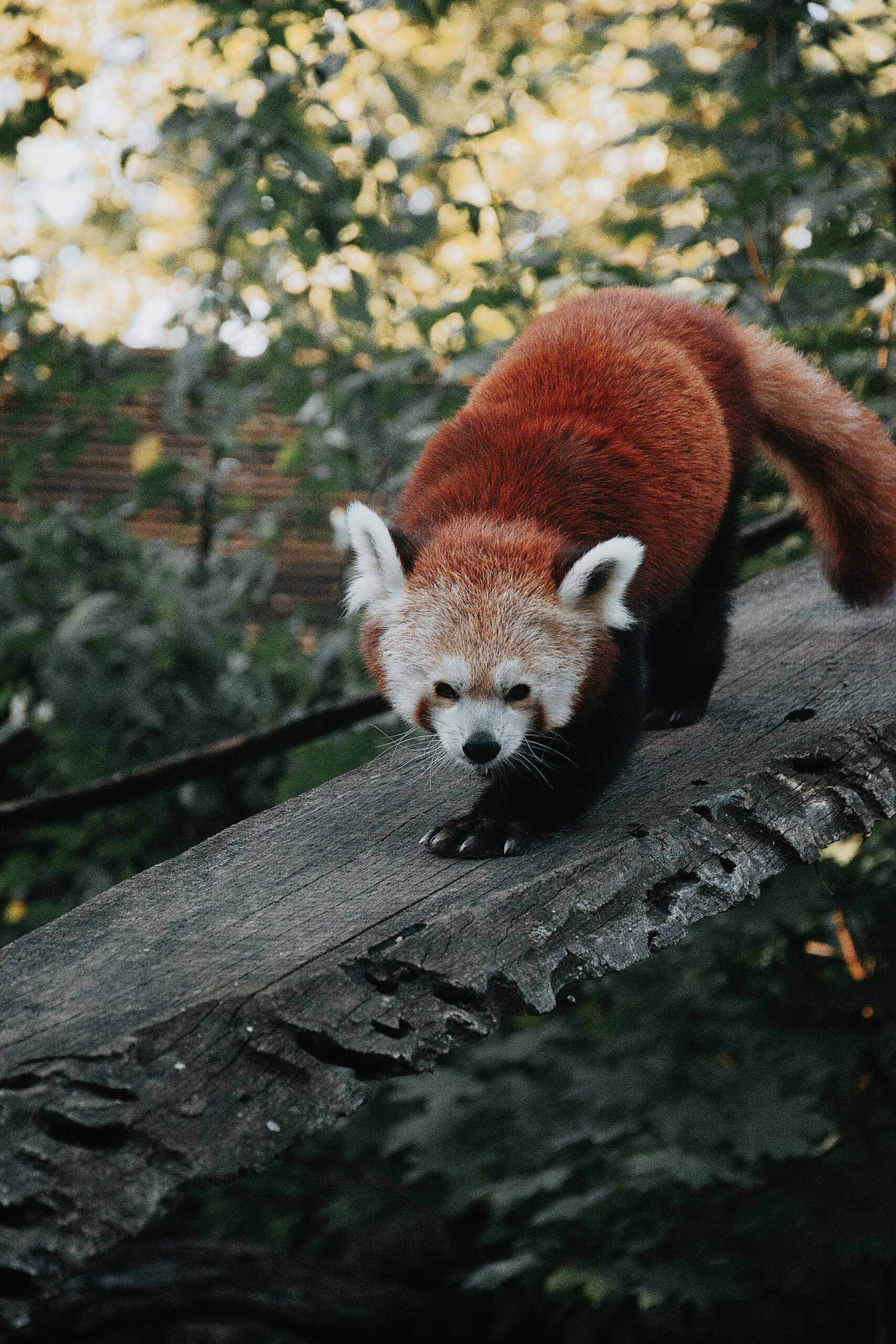
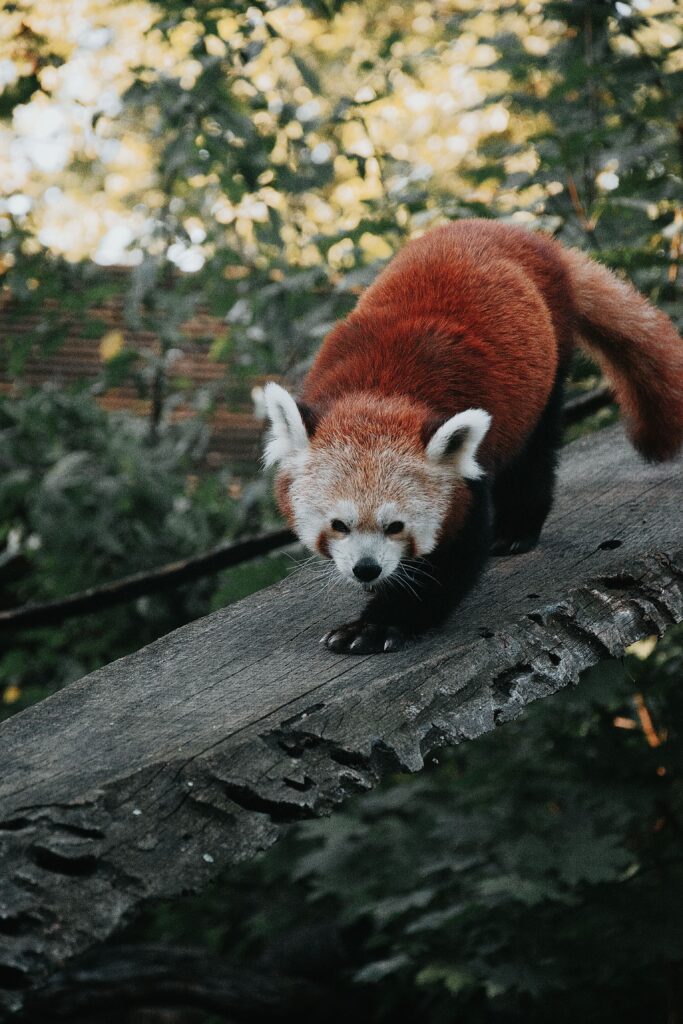
Red pandas have short limbs, but each has five fingers and retractable claws. The fur is long and soft, and the limbs and abdomen are dark brown. The tail is quite long and bushy. They are rather nocturnal, often resting in trees during the day. Red pandas are good climbers and can even climb down from trees upside down using their sharp claws. My eyesight and hearing are poor.
- Physical Characteristics
Size: Body length approximately 50-64cm, tail length approximately 28-59cm, weight approximately 3-6kg (males are slightly larger)
Appearance: Round face, small ears, black, round eyes
Coat Color: Reddish-brown coat with white and brown markings on the face. The tail has a ring-shaped stripe pattern.
Tail: Long and bushy, used for balance and protection from the cold.
Limbs: The front paws have pseudo-thumbs, suitable for gripping bamboo.
- Diet
Mainly eats bamboo leaves and young shoots (though not as dependent on bamboo as giant pandas).
They also eat fruits, flowers, insects, small birds, and eggs.
Their digestive abilities are more carnivorous, and they have long intestines to efficiently digest bamboo.
- Behavior/Lifestyle
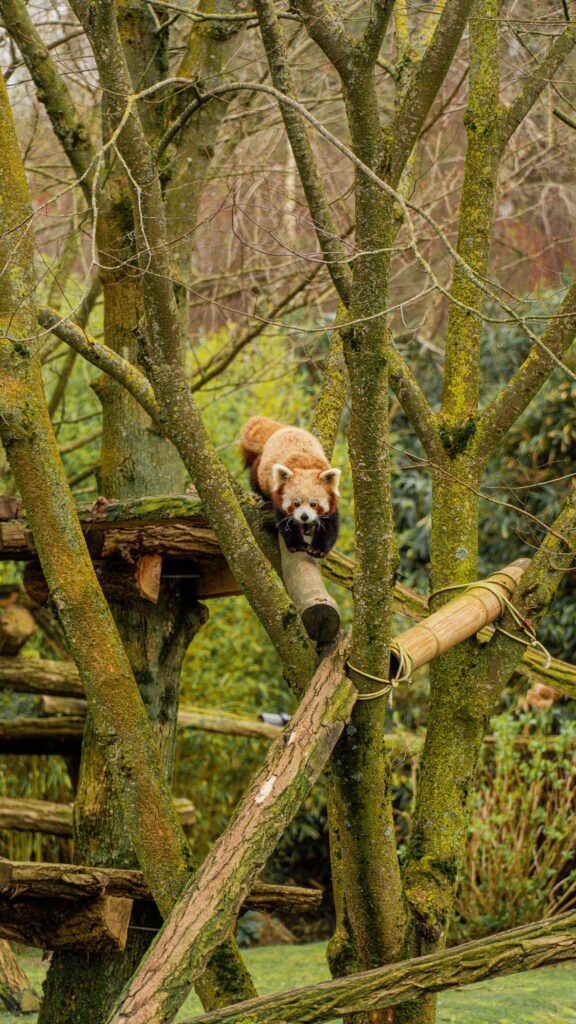
Mainly arboreal, sleeping and moving in trees.
Nocturnal or crepuscular, they are often active at night or in the morning and evening.
Typically solitary and territorial.
- Personality/Habits
Timid and cautious.
Self-paced and docile, but males will fight over territory during the breeding season.
They have a quiet cry and may bare their teeth when threatening.
- Other characteristics
They have a pseudo-sixth toe (thumb-like bone) similar to that of giant pandas, allowing them to grasp bamboo.
They wrap their tails around their bodies to keep warm.
What will your personality look like?
Red pandas are originally carnivorous animals and have a ferocious and strong temperament. They basically live alone and have a very strong sense of territory. They are not very cooperative and can get very angry, so it is difficult to interact with them. Red pandas are mammals and have long body hair, and can be seen in bamboo forests.
- Basic Personality
Timid and cautious
Sensitive to loud noises and unfamiliar things
If they sense danger, they will immediately flee to the trees
Quiet and independent
Spend time in trees when not active
- Sociability
Generally solitary
Territorial, males avoid contact with each other
Rarely interact with anyone other than their parents
Does not interact with other individuals except during breeding season
- Activity and Behavioral Characteristics
Curious but cautious
Shows interest in food and objects, but is cautious about approaching them
Nocturnal and crepuscular
Mostly active at night, in the morning and evening, and sleeps most of the day
- Relationships with Humans
Highly cautious and does not tame people
In zoos, they are slowly accustomed to being exhibited, but in the wild, they will immediately flee if approached
What is the ecology of the red panda?
Red pandas live on bamboo shoots, insects, acorns, bamboo, eggs, grass, fruit, and nuts. They eat a lot. The breeding season is from January to March, and the gestation period is about four months. The baby reaches sexual maturity at about 18 to 20 months. It is said that they live for about 15 years.
- Living Environment
Habitat: Forests from the eastern Himalayas to southwestern China, at altitudes of 2,200 to 4,800 meters
Arboreal Life: Spends most of its time in trees
Burrows: Uses tree branches, hollows, and makeshift bedding made from bamboo and fallen leaves
- Diet
Main Food: Bamboo leaves and young shoots
Other: Also eats fruits, flowers, insects, small birds, and eggs
Digestion: As a carnivore, its digestive abilities are more carnivorous, but it has intestines capable of efficiently digesting bamboo
- Behavior
Activity: Nocturnal or crepuscular
Sleep: Often rests curled up in trees during the day
Movement: Moves along branches in trees and rarely descends to the ground
- Breeding
Breeding Season: Mainly winter to spring
Gestation Period: Approximately 134 days
Birth: Gives birth to 1 to 4 (usually around 2) babies
Raising: Raises babies in the mother’s burrow, then transitions to arboreal life as they grow older
- Sociality
Generally solitary
Many males have territories, and male-to-male contact is rare except during breeding season.
There is little contact between males and their offspring.
- Communication
Calls: Soft cries and bared teeth when threatening.
Scent: Marks territory with anal glands and scent glands on feet.
- Lifespan
Wild: Approximately 8-10 years
Captive: Approximately 15 years
What are the red panda’s natural enemies?
Enemies of the red panda include snow leopards, leopards, eagles, hawks, and wolves. They have natural enemies not only on land but also in the air.
Red Panda Vocalizations
Red panda vocalizations are characterized by sounds that are higher-pitched, quieter, and more bird-like than one might imagine given their body size. Although they are generally quiet animals, they use a variety of vocalizations to communicate with one another.
① “Kyuru-kyuru” / “Pii-pii” (Juvenile / Affectionate sounds)
These are sounds frequently made by young red pandas.
Calling their mother
Expressing anxiety
Seeking affection
They use these sounds in such situations.
To human ears, they can sound like the chirping of small birds.
② “Hyuu” / “Pyaa” (Alert / Signal to others)
These sounds are made when the animal senses danger or wishes to alert others to their surroundings.
Characteristics:
High pitch
Short duration
Rapid delivery
They serve to signal the animal’s presence to others in the forest.
③ “Shu” / “Ha” (Threatening sounds)
When angry or defending themselves, they may:
Snort
Exhale sharply
Produce low-pitched sounds
Despite their small size, they are surprisingly spirited animals when it comes to territorial disputes or avoiding danger.
④ Sounds resembling “Wan-wan” (Breeding season)
During the breeding season, males and females may produce short sounds such as:
“Hon”
“Wan”
“Kyan”
While these can sound like a dog barking, the actual volume is very low.
Why are their vocalizations so quiet?
Red pandas are primarily adapted to:
High-altitude forests
Bamboo forests
An arboreal (tree-dwelling) lifestyle
Consequently, they do not need to project their voices over long distances like wolves or large monkeys; instead, they have developed a form of communication based on quiet, short-range interactions with their companions.
Seasonal Activities
Red panda activity varies by season. Originally adapted to the cool mountain forests of the Himalayas and southwestern China, their behavioral patterns shift depending on temperature, food availability, and breeding cycles.
Spring (March–May): Breeding and Increased Activity
Key Activities
Breeding season
Increased interaction between males and females
Higher activity levels compared to winter
Spring is a crucial season for red pandas.
Characteristics
Males patrol and check their territory
Marking territory with scent glands and urine
More time spent moving both in trees and on the ground
As the winter chill fades and food sources—such as fresh plant shoots and fruits—become more abundant, it becomes easier for them to be active.
Summer (June–August): Energy-Conserving Lifestyle to Avoid Heat
Summer is a challenging season for red pandas.
Key Activities
Active during early morning, evening, and night
Resting in tree shade or hollows during the day
Adjusting food intake
Red pandas have thick fur, making them sensitive to heat.
Especially in regions with high temperatures, they:
Rest in trees
Move to cooler locations
Shift their activity times to the night
Diet
In summer, they consume:
Bamboo leaves
Bamboo shoots
Fruits
Insects
Small animals
Autumn (September–November): Preparing for Winter
Autumn is a season of stable activity.
Key Activities
More time spent foraging
Building up physical reserves for winter
Increased territorial behavior
As temperatures begin to drop, this becomes a comfortable time of year for red pandas.
Their fur transitions for winter, showing changes such as:
Increased fur density
Fluffier tails
Winter (December–February): Resilient to Cold, but Cautious Activity
Red pandas are animals that handle the cold well.
Key Activities
Activity may occur even during the day
Resting in sunny spots
Continuing to feed
In winter, they protect themselves from the cold with:
Thick fur
Large tails (used for insulation)
Fur on the soles of their feet When resting,
they can be seen
curling up to sleep
with their tails wrapped around their faces or bodies.
Walking Speed
While there is limited precise data on the average walking speed of red pandas in the wild, observational records indicate that they are generally slow walkers. However, they can move surprisingly quickly when the situation demands it.
Red Panda Walking Speed (Estimates)
Movement Speed Estimates | Normal walking: approx. 1–3 km/h | Moving hurriedly: approx. 5–10 km/h | Short-distance escape/sprint: estimated around 10 km/h
*As small, forest-dwelling mammals, they have evolved superior abilities for climbing trees and hiding rather than for running long distances at high speeds.
① A distinctive, slightly pigeon-toed gait
Red pandas walk by:
Placing the entire sole of the foot on the ground
Walking cautiously on short legs
Swaying their bodies from side to side
This gait is an adaptation for life in the trees.
② Fast in the trees
While they move leisurely on the ground, they truly excel when in the trees.
Characteristics:
Grasping branches with sharp claws
Rotating their ankles to climb down trees head-first
Possessing an exceptional sense of balance
They are considered to be particularly superior to bears when it comes to the ability to climb down trees.
About Red Panda Cub
Learn more about red panda cubs (babies).
- Birth
Gestation Period: Approximately 134 days
Size at Birth: Very small, approximately 110-130g
Appearance: Born with thin fur and closed eyes
- Growth and Development
Eye Opening: Approximately 18-25 days after birth
Hair Growth: Within a few weeks of birth, the fur grows and turns reddish-brown
Walking: Approximately one month after birth, the baby gradually begins practicing walking and tree climbing
- Relationship with Mother
Raised in the mother’s burrow (a sleeping space made from tree branches, hollows, bamboo, and fallen leaves)
Nursing: Breastfeeds until approximately three months of age
Transition to Arboreal Life: While practicing tree climbing with the mother, the baby gradually becomes independent
- Weaning and Independence
Weaning: Begins eating bamboo and fruit at approximately three to four months of age
Independence: Becomes fully independent, able to eat and move around on its own at approximately eight to twelve months of age
- Personality/Characteristics
Very timid and docile
Highly dependent on their mother for a long period of time, they adapt their behavior to hers
Curious, but still clumsy at climbing trees
Is the red panda an endangered species?
Red pandas are listed as an endangered species. Furthermore, it is listed in Appendix I of the Washington Convention, and international trade is severely restricted. The estimated global population is only 10,000. The reasons for the decline in population are as follows.
poaching and overfishing
Poaching and overfishing are on the rise. Hunting for pets or for their fur is a particular problem, and the reality is that their population is decreasing year by year.
habitat loss
Environmental destruction is a problem in China. Furthermore, rapid land development in Southeast Asia has been occurring since the 2010s, and the number of places where red pandas can live is rapidly decreasing.
Conservation activities starting in each country
A red panda anti-poaching unit and community-based surveillance have been established in Langtang National Park. Since 2010, community-based conservation programs have been launched in 10 districts of Nepal. We are also protecting and monitoring red panda habitat in other parts of Nepal.
Can red pandas be bred?
Red pandas have a ferocious personality and are designated as an endangered species, so it is extremely difficult for the general public to keep them.
- Legal Restrictions
Red pandas are designated as an endangered species (Vulnerable) and are an internationally protected species.
Even in Japan, private individuals are not legally permitted to keep them.
Only facilities with special permission, such as zoos and research institutions, are allowed to keep them.
- Ecology and Difficulties
Unique Diet
Their staple diet is bamboo leaves, so ensuring freshness and variety is essential.
They also eat fruit and insects, so a balanced diet is essential.
They primarily live in trees.
They require large, three-dimensional spaces and become stressed without trees or branches.
They are sensitive to stress.
Captivity and changes in their environment can cause illness and loss of appetite.
- Examples of Captivity
They are kept in zoos and conservation facilities around the world.
Keeping them requires a dedicated bamboo supply route, treetop space, and temperature and humidity control.
Some Japanese zoos import bamboo from Sichuan and Yunnan provinces.
Zoos Housing Red Pandas (Japan & Worldwide)
Red pandas are kept in zoos across the globe. Japan, in particular, plays a globally significant role in the husbandry and breeding of red pandas.
🇯🇵 Major Zoos in Japan
Shizuoka City Nihondaira Zoo
“The Mecca for Red Panda Fans”
Responsible for managing the breeding of Sichuan red pandas within Japan
Involved in pedigree management for captive individuals nationwide
Features a multi-level exhibit where visitors can observe natural behaviors like tree-climbing
A central facility for red panda breeding in Japan.
Chiba City Zoological Park
Famous for “Futa-kun”
Nationally renowned for “Futa,” a red panda known for standing upright
A zoo that significantly boosted the popularity of red pandas
Nishiyama Zoo (Sabae City, Fukui Prefecture)
A facility with an outstanding track record in red panda breeding
Known for the birth of many cubs
Places great emphasis on red panda exhibits
Tama Zoological Park (Tokyo)
Housed in a spacious, forest-like environment
Allows for easy observation of tree-climbing and movement capabilities
Other notable facilities in Japan
Asahiyama Zoo (Asahikawa City)
Maruyama Zoo (Sapporo City)
Higashiyama Zoo and Botanical Gardens
Nagasaki Bio Park
…and many other zoos.
🌏 Major Red Panda Facilities Worldwide
🇺🇸 USA
San Diego Zoo
Participates in endangered species conservation programs
Conducts educational and breeding activities
Smithsonian National Zoo
Famous for its red panda exhibit
Focuses heavily on conservation education
Hogle Zoo (Utah)
Has a track record of keeping red pandas
Participates in breeding and animal exchanges
🇬🇧 UK
Chester Zoo
One of Europe’s largest zoos
Participates in endangered species conservation efforts
🇩🇪 Germany
Berlin Zoo
A zoo with a long history
Participates in the European red panda breeding network
🇮🇪 Ireland
Fota Wildlife Park
Participates in European breeding programs
Has successfully bred red pandas
Introducing other animals
コメント