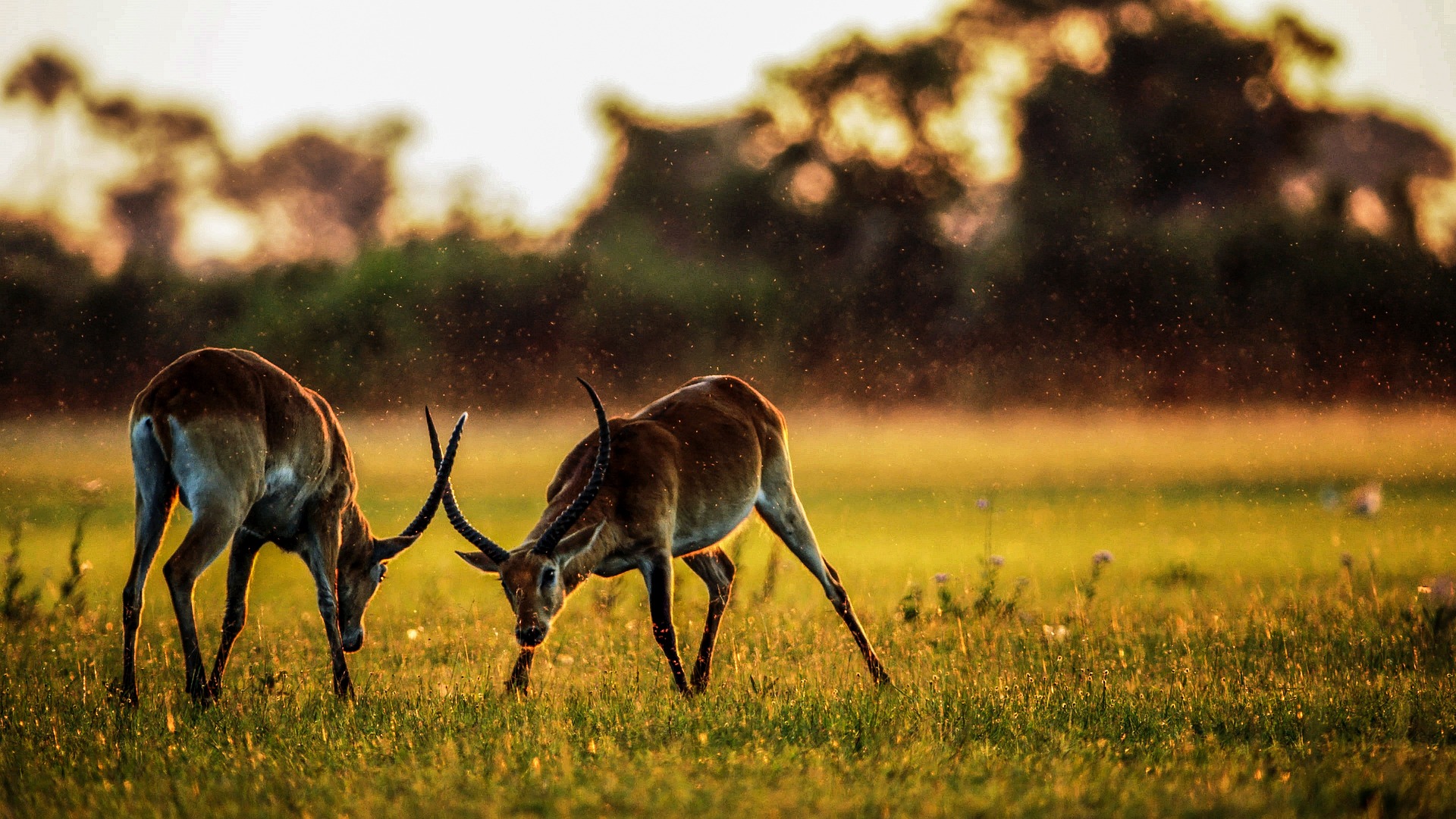
What kind of animal is a gazelle? We will explain its characteristics, ecology, and habitat. This animal is widespread from Eurasia to Africa, so there is no chance of it going extinct, but some subspecies are in danger of extinction.










- What is a gazelle? About basic status
- What are the roots and origins of the gazelle?
- About habitat
- feature is? What kind of creature is it?
- What is your personality like?
- What is the ecology like?
- Vocalizations
- Seasonal Activities
- About Walking Speed
- About Baby Gazelle
- Are gazelles an endangered species?
- Can gazelles be kept as pets?
- Zoos Housing Gazelles (Japan & Worldwide)
- Introducing other animals
What is a gazelle? About basic status
Gazelles belong to the family Bovidae, subfamily Blackbuck, subfamily Blackbuck, subtribe Blackbuck. The body length is 140 – 160 cm and the weight is 40-75 kg. The list of information is as follows.
| Japanese(和名) | ガゼル |
| English(英名) | Gazelle |
| scientific name(学名) | Gazella |
| classification(分類) | Mammalia、Cetartiodactyla、 Bovidae、Antilopinae 哺乳綱、齧歯目、ウシ科、ブラックバック亜科 |
| IUCN Status(保全状況) | LEAST CONCERN |
| Length(体長) | 140–160cm |
| Weight(体重) | 40-75kg |
What are the roots and origins of the gazelle?
“Gazelle” is a collective term for herbivorous mammals belonging to the family Bovidae and the antelope group. Known for their slender legs, impressive leaping ability, and tendency to move in massive herds, their lineage traces back to bovid ancestors from the Miocene epoch, approximately 15 to 20 million years ago.
Origins and Roots
Gazelle ancestors were primitive bovids that spread across what are now Africa and Eurasia.
The evolutionary path branched roughly as follows:
About 20 million years ago
│
Primitive Bovids
│
├─Goat and sheep lineage
├─Cattle and bison lineage
└─Antelopes
│
Gazelles
When Gazelles Emerged
Animals closely resembling modern gazelles are believed to have appeared primarily during the Late Miocene to Pliocene epochs (approximately 10 to 5 million years ago).
During this period, forests in Africa shrank, and vast grasslands (savannas) expanded.
In response, they evolved:
The ability to run at high speeds across open terrain
Vision capable of spotting distant predators
Legs suited for long-distance travel
Behavioral patterns for herd-based protection
Why did they become so fast?
Gazelle evolution is defined by an ongoing “chase” dynamic with carnivorous predators.
Major natural predators:
Cheetahs
Lions
African wild dogs
Hyenas
Their relationship with the cheetah is particularly well-known.
To survive, gazelles developed:
Running speeds approaching 60–80 km/h
The ability to make sharp turns
Zigzag running patterns
Stotting (a behavior involving leaping while running)
Meanwhile, cheetahs evolved the ability to accelerate rapidly in short bursts.
This serves as a classic example of an “evolutionary arms race” between predator and prey.
About classification
Gazelles have the following classifications: It consists of Gazella, Nanger, and Eudorcas.
- Gazella cuvieri エドミガゼル Cuvier’s Gazelle
- Gazella leptoceros リムガゼル Rhim Gazelle
- Gazella marica サンドガゼル Goitered Gazelle
- Gazella bennettii チンカラ Chinkara
- Gazella subgutturosa コウジョウセンガゼル Goitered Gazelle
- Gazella gazella マウンテンガゼル Mountain Gazelle
- Gazella spekei スペックガゼル Speke’s Gazelle
- Gazella dorcas ドルカスガゼル Dorcas Gazelle
- Nanger granti グラントガゼル Grant’s Gazelle
- Nanger soemmerringii ゼメリングガゼル Soemmerring’s Gazelle
- Nanger dama ダマガゼル Dama Gazelle
- Eudorcas rufifrons コリンガゼル Red-fronted Gazelle
- Eudorcas thomsonii トムソンガゼル Thomson’s Gazelle
About habitat
Its habitat is distributed in Africa and Eurasia.
- Main Habitat
Gazelles are found across a wide area of Africa and Asia. Their habitats vary slightly depending on the species.
African Continent
They live mainly in savannas (grasslands) and arid zones.
Typical countries: Kenya, Tanzania, Namibia, Botswana, South Africa, etc.
Middle East and Asia
Arid and semi-desert zones, such as the Gobi Desert.
Typical species: Some species live in the same areas as cheetahs and oryx.
- Habitat Characteristics
Grasslands (Savannas)
Vast plains with abundant grass for food.
Open environments that make it easy to escape predators.
Semi-desert and Arid Zones
Water-scarce, but they survive by eating drought-tolerant plants.
Stamina for long-distance running is important.
- Environmental Key Points
Water is necessary, but some species can survive for several days without water.
They prefer open areas to escape predators (lions, leopards, and cheetahs).
They mainly eat grass and shrubs.
feature is? What kind of creature is it?
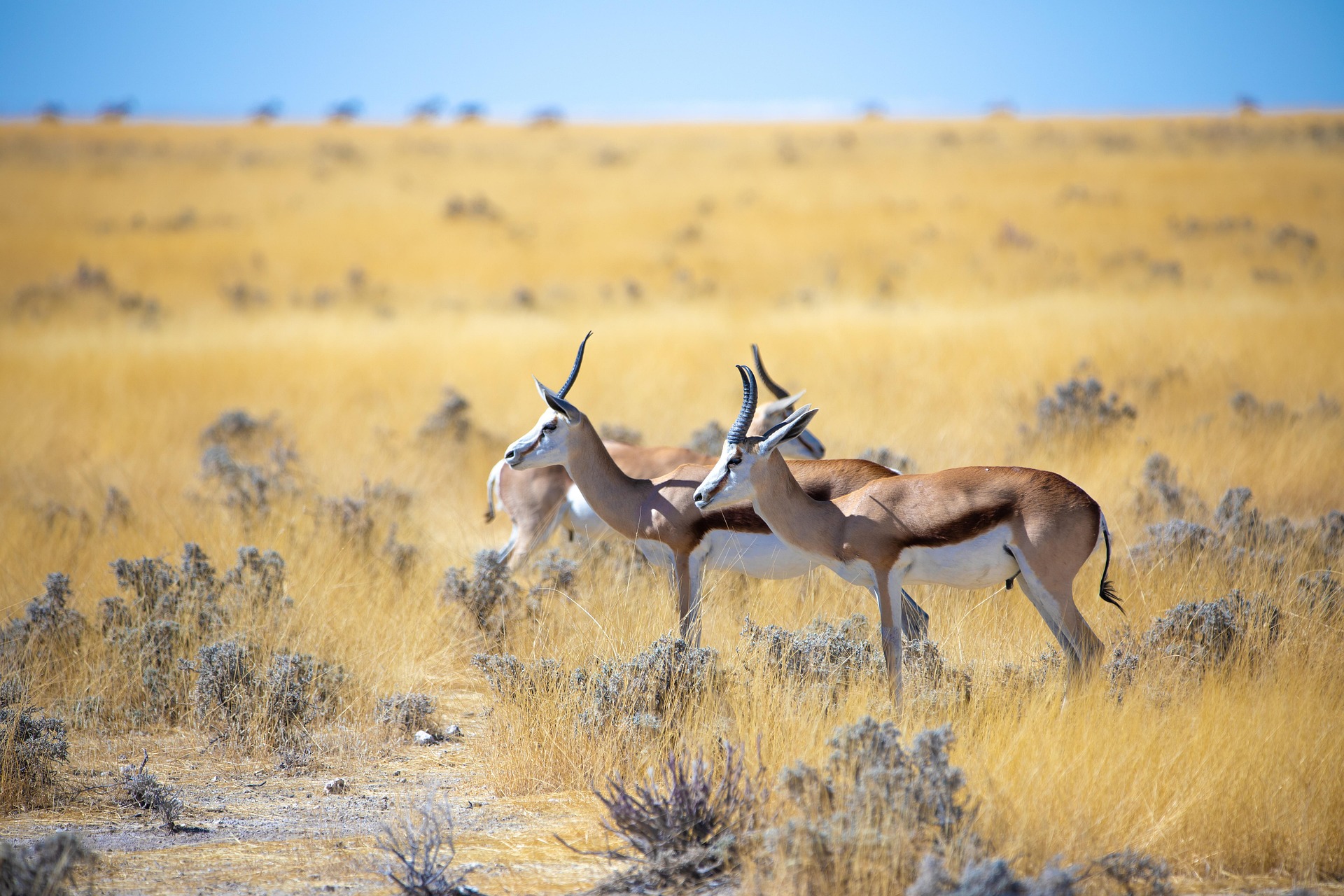
Gazelles mainly live in savannahs, steppes, and grasslands, and tend to live in groups rather than alone. The body color is reddish brown overall, and the ventral surface is white. They have elongated limbs, small hooves, and often even horns. We are active in the early morning and evening.
- Physical Characteristics
Body Type
Slim and agile.
Long legs allow for excellent jumping and running ability.
Weight and Size
Weight: Approximately 15-75 kg (varies by species)
Body Length: Approximately 90-150 cm
Horns
Both males and females have horns, depending on the species.
The horns are straight or slightly curved and are used for fighting and defense.
Fur Color
Brown to tan body color with a white belly.
Some species have black or white stripes on their flanks and face.
- Personality and Behavior
Very timid and wary.
Excellent eyesight and hearing, they will flee immediately at the slightest movement.
They often travel in groups, working together to protect themselves from predators.
Most species are diurnal, but in arid regions they may be active in the early morning or evening.
- Biology and Abilities
Speed: Some species can run up to 80 km/h over short distances, making them extremely fast escape riders.
Jumping Ability: They can jump 2-3 meters while running at 60 km/h.
Diet: They are primarily herbivores, eating grasses, shrubs, and leaves. They hydrate by eating plants with a high water content.
Reproduction: They usually give birth to one offspring at a time. Due to the large number of natural predators, the offspring are able to stand and run quickly.
What is your personality like?
Gazelles are prey animals, so they are very wary and timid. Therefore, they have a tendency to flee as soon as they sense a crisis.
Gazelle Personality Characteristics
Timid and cautious
Easily targeted by predators (lions, cheetahs, hyenas, etc.), they are extremely cautious.
They instantly flee when they sense noise or movement.
They often seek safety in groups rather than alone.
Sociable and value the group.
They live in small (family) groups or large groups.
They communicate with each other within the group through voices and eye contact, alerting each other to danger.
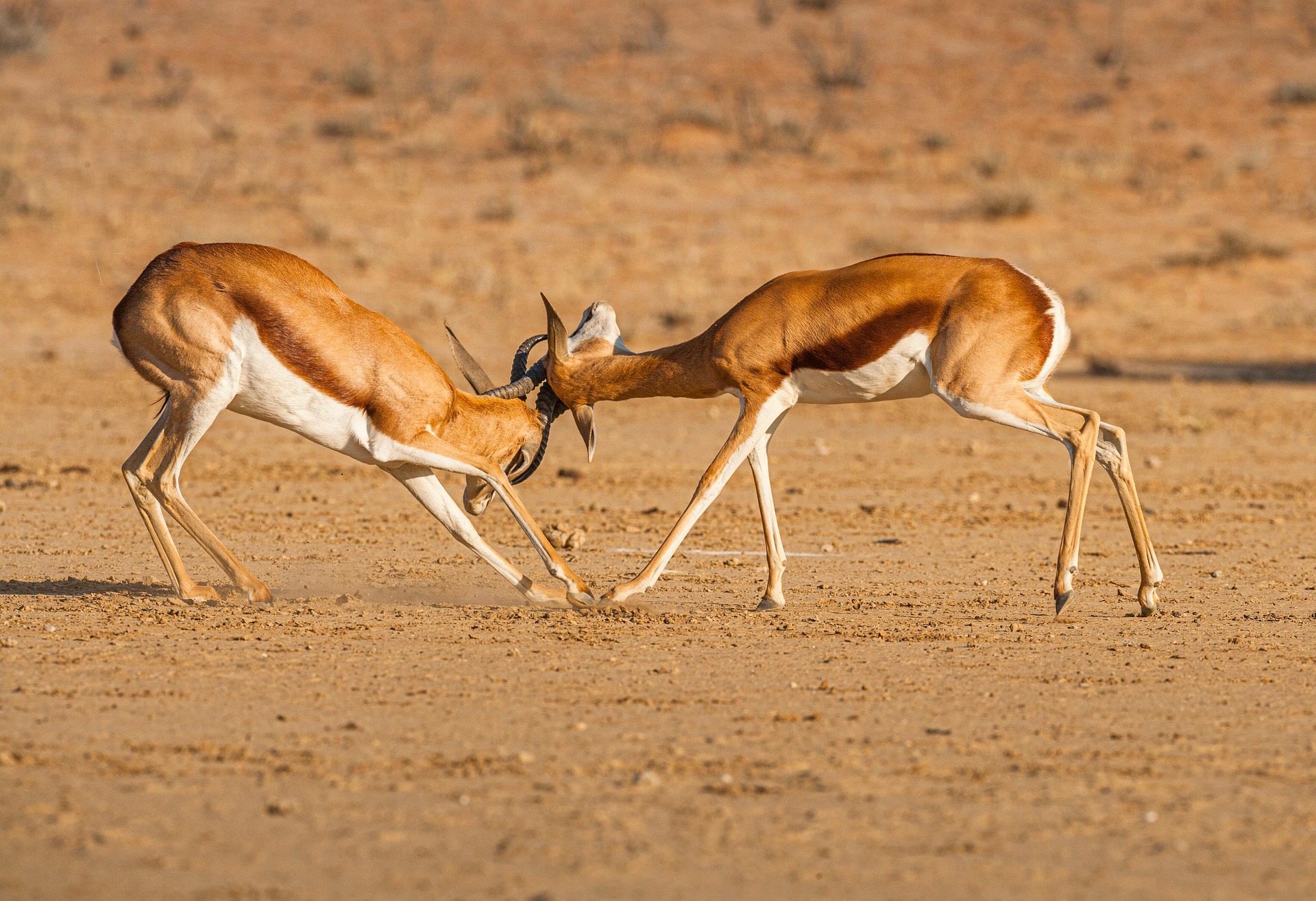
There is a hierarchy within the group, and males, in particular, sometimes demonstrate their dominance through petty horn fights.
Agile and curious, but cautious.
They may show interest, but will quickly retreat if there is a possibility of danger.
They are agile and adept at jumping and changing direction quickly.
They are enduring.
They are able to survive in arid regions where water and food are scarce.
They are also intelligent and adapt to their environment, such as obtaining moisture from grass and shrubs.
What is the ecology like?
Gazelles mainly eat grass. The reproductive form is viviparous. The gestation period is 5 to 6 months, and childbirth occurs twice a year, in January-February and July. They reach sexual maturity in one year. The lifespan is about 10 to 12 years.
- Living Environment
They primarily live in the savannas and arid regions of Africa, as well as in some semi-desert areas of Asia.
They prefer areas rich in grasses and shrubs, and open plains where it is easy to escape predators.
They require water, but some species can survive for several days without water by consuming moisture from plants.
- Herd Structure
They often travel in groups (small to medium-sized groups of around 10-50 individuals).
Benefits of a Herd
Warning from predators
Ensuring the safety of young gazelles
Improved efficiency in searching for food and water
Males within the herd sometimes have territories and may engage in light horn fighting.
- Behavior Patterns
They are mostly diurnal, but in arid regions, they are active in the early morning and evening to avoid overheating.
They primarily feed on the move through “grazing” (grazing behavior).
If they spot a predator, the entire herd will suddenly accelerate and run in a zigzag pattern to escape.
- Diet
They are herbivorous, eating grasses, leaves, and shrub shoots.
In low-water environments, they hydrate by eating water-rich plants.
During times of food scarcity, they also eat leaves from taller trees and drought-tolerant plants.
- Reproduction and Rearing
Breeding seasons vary by species, but most coincide with the rainy season.
Gazelle births generally involve one calf. In rare cases, twins may occur.
Baby gazelles are able to quickly stand and escape predators.
Mothers often raise their calves hidden within the herd.
Are there any natural enemies?
Natural enemies of gazelles include lions, leopards, and cheetahs. Cheetahs can run at speeds of up to 100 km/h, so they are unlikely to escape.
Vocalizations
Although gazelles are generally very quiet animals, they use a variety of vocalizations to communicate with one another, signal alarm, facilitate mating, and interact between parent and offspring.
“Pee” or “Maa”
These are among the most commonly heard sounds.
They are produced when a young gazelle calls for its mother or feels anxious.
They can sound like the high-pitched bleating of a sheep.
Low-pitched sounds like “Nnn” or “Boo-boo”
These sounds are primarily made by males.
They are used to assert territorial claims or to intimidate other males.
“Kuh-kuh” or “Guh”
Short signals used within the herd.
They serve to locate other members of the group or facilitate close-range communication.
“Hee-heen” or snorting sounds
These may be heard when the animal is on alert.
They serve to warn the herd of danger upon spotting a predator.
Seasonal Activities
Gazelle activities vary by habitat, but for African species in particular, the shift between the rainy and dry seasons largely dictates their rhythm of life. Rather than the four distinct seasons found in Japan, their lives revolve around adapting to periods of abundant grass growth and periods of drought.
🌱 Rainy Season (Roughly November–May, depending on the region)
Rain triggers rapid grass growth, making this the most critical season for gazelles.
Key Activities
Consuming large amounts of fresh grass
Herds grow larger
Breeding activity intensifies
Increase in births
Characteristics
Restoring physical strength by eating nutrient-rich young grass
Pregnant females build up nutritional reserves
Environment becomes ideal for raising young
Species like the Thomson’s gazelle, for instance, give birth during the rainy season, which improves their offspring’s chances of survival.
☀️ Dry Season (Roughly June–October, depending on the region)
Rainfall decreases, and the grass withers.
Key Activities
Migrating in search of water and food
Ensuring safety by staying in herds
Heightened vigilance against predators
Characteristics
Traveling long distances to find edible vegetation
Foraging more frequently during the cooler morning and evening hours
Resting in the shade during the day
During the dry season,
Lions
Cheetahs
Hyenas
…predatory pressure from animals like these also increases.
🍂 Migration Period (End of dry season to just before the rainy season)
Some gazelles engage in seasonal migration.
Behaviors
Searching for water sources
Moving to areas where grass remains
Traveling distances ranging from tens to hundreds of kilometers
In East Africa specifically, gazelles travel over vast areas alongside other large herbivores.
About Walking Speed
Gazelles have evolved the ability to both travel efficiently over long distances and sprint rapidly to escape predators. While they usually walk with a graceful gait, they can run at astonishing speeds when they sense danger.
Normal Walking Speed
A gazelle’s normal movement speed is:
approximately 3–6 km/h.
When moving as a herd while grazing, they walk without rushing, keeping a watchful eye on their surroundings.
Characteristics:
Lifting the head to scan the area
Walking a few steps and then pausing
Checking for scents and sounds
Moving slowly as a collective herd
Brisk Walking / Travel
When heading toward water sources or new feeding grounds,
they may move at speeds of approximately 8–12 km/h.
During the dry season, they travel long distances in search of food and water, employing an efficient walking style that conserves energy.
The Jumping Gait: “Stotting”
Gazelles exhibit a distinctive movement known as:
stotting (also called pronking).
This behavior involves:
leaping high into the air with all four legs simultaneously
arching the back
raising the tail
Height:
They can sometimes leap 1 to 2 meters or higher.
Regarding the meaning of this behavior,
there are several theories, such as:
“I am healthy and fast”
“You won’t catch me even if you chase me”
“Alerting the herd to danger”
About Baby Gazelle
This section provides detailed information about baby gazelles (juvenile gazelles).
- Appearance/Characteristics
They weigh approximately 2-5 kg at birth (varies by species).
They are approximately 50-60 cm long.
Their coat color is similar to that of adults, but is often a lighter brown or whitish color.
They have almost no horns at birth, but these gradually grow as they grow.
- Movement
They can stand and walk immediately after birth (to escape predators).
They grow large enough to follow their mother within a few hours of birth.
They begin eating grass immediately after birth, but require several weeks of nutrition from their mother’s milk.
- Defense/Hiding
Mothers have the habit of hiding their baby gazelles to protect them from predators.
They often stay motionless in the shade of grass or shrubs, avoiding danger by remaining motionless and not exuding any scent.
When in a herd, nearby adults will keep a watchful eye to ensure their safety.
- Growth and Weaning
They begin eating grass at 1-2 weeks of age, but are completely weaned from their mother’s milk at approximately 1-3 months.
They are agile from birth, capable of small jumps and runs within a few days of birth.
Growth rate varies depending on the species and environment, but they reach nearly adult size by 6-12 months.
- Relationship with the Herd
Cubs are not central to the herd, but are protected by their mother’s side or on the periphery.
They also begin to learn social skills within the herd, and will eventually learn to protect the herd.
Are gazelles an endangered species?
Gazelles are not likely to go extinct because their habitat is very populated. However, this is not the case with subspecies. Unfortunately, many subspecies are designated as endangered species, and international trade is severely restricted as they are listed in the Washington Convention.
- Overall Status of Gazelle
There are approximately 20 or more species of gazelles in the world.
While many species remain relatively stable, others are declining due to habitat destruction and hunting.
- IUCN (International Union for Conservation of Nature) Classification Example
Stable/Low-Risk Species
Thomson’s gazelle: Relatively large population, currently classified as “Least Concern”
Species close to endangered
Addax (Northern African Desert): “Critically Endangered”
Sun Gazelle (a type of small gazelle found in desert regions): Population numbers are rapidly declining
Other
Some species are affected by hunting and agricultural development in the same areas as cheetahs and lions, making their populations unstable in some areas.
- Causes of Endangerment
Habitat Destruction
Development of savannas and grasslands, agricultural land development, road construction, etc.
Poaching and Hunting
Hunting for meat and horns
Impact of natural predators and competitors
Food competition with livestock and grazing cattle and sheep
Can gazelles be kept as pets?
Gazelles are designated as an endangered species, and it would be difficult for ordinary people to easily keep them. We recommend viewing it at a zoo.
- Legal Issues
In many countries and regions, it is illegal to keep gazelles as wild animals without special permission.
Even in Japan, gazelles designated as “special species” require a pet license, making them difficult to keep as pets.
Endangered and protected gazelles are subject to even stricter regulations.
- Ecological and Behavioral Issues
Highly sensitive and timid
Keeping gazelles as pets can be stressful and difficult.
Large exercise space required
In their natural habitat, gazelles roam freely across the savanna, so small cages can cause stress and illness.
Primary social animals
Keeping them alone can lead to mental instability and health problems.
- Requirements for Keeping Gazelles
Even if legally possible, the following requirements are required:
A large exercise area (several hundred square meters or more)
Keeping them in groups with other animals of the same species
Expert knowledge of herbivore care (diet and health management)
Veterinarian support (a veterinarian with expertise in wildlife is required)
Zoos Housing Gazelles (Japan & Worldwide)
Gazelles are widely distributed across Africa, the Middle East, and Central Asia, so they are kept in zoos and safari parks around the world. However, “gazelle” is a collective term covering multiple species, and the specific types housed vary by facility.
🇯🇵 Zoos in Japan where you can see gazelles
Tama Zoological Park
A prominent zoo featuring an African animal zone.
Visitors can observe the behavior of grassland animals in spacious enclosures.
They have a history of keeping and exhibiting gazelles.
Features:
You can see them running in herds.
You can observe natural behaviors, such as moving while grazing.
Fuji Safari Park
Keeps African herbivores on vast grounds.
Visitors tour the park by car, allowing for observation at a distance that feels close to nature.
Features:
You can see herbivores living in herds.
It is easy to observe them running and displaying alert behaviors.
Higashiyama Zoo and Botanical Gardens
Has a history of exhibiting African herbivores.
One of the facilities in Japan with experience keeping antelopes.
Yokohama Zoological Gardens “Zoorasia”
Features exhibits that recreate African grassland environments.
Has a history of exhibiting antelopes, including gazelles.
🌍 Notable gazelle-keeping facilities worldwide
San Diego Zoo Safari Park (USA)
A facility known for its vast safari-style exhibits.
Houses many animals native to African grasslands.
Features:
Large-scale herd exhibits.
Observation in an environment close to nature.
Smithsonian’s National Zoo (USA)
A facility dedicated to the conservation and research of rare herbivores.
Has a history of keeping gazelles.
Bronx Zoo (USA)
One of the world’s largest zoos.
Focuses heavily on exhibiting African grassland animals.
Berlin Zoological Garden (Germany)
A zoo with a long history.
Has a history of keeping a diverse range of antelopes.
Introducing other animals




コメント