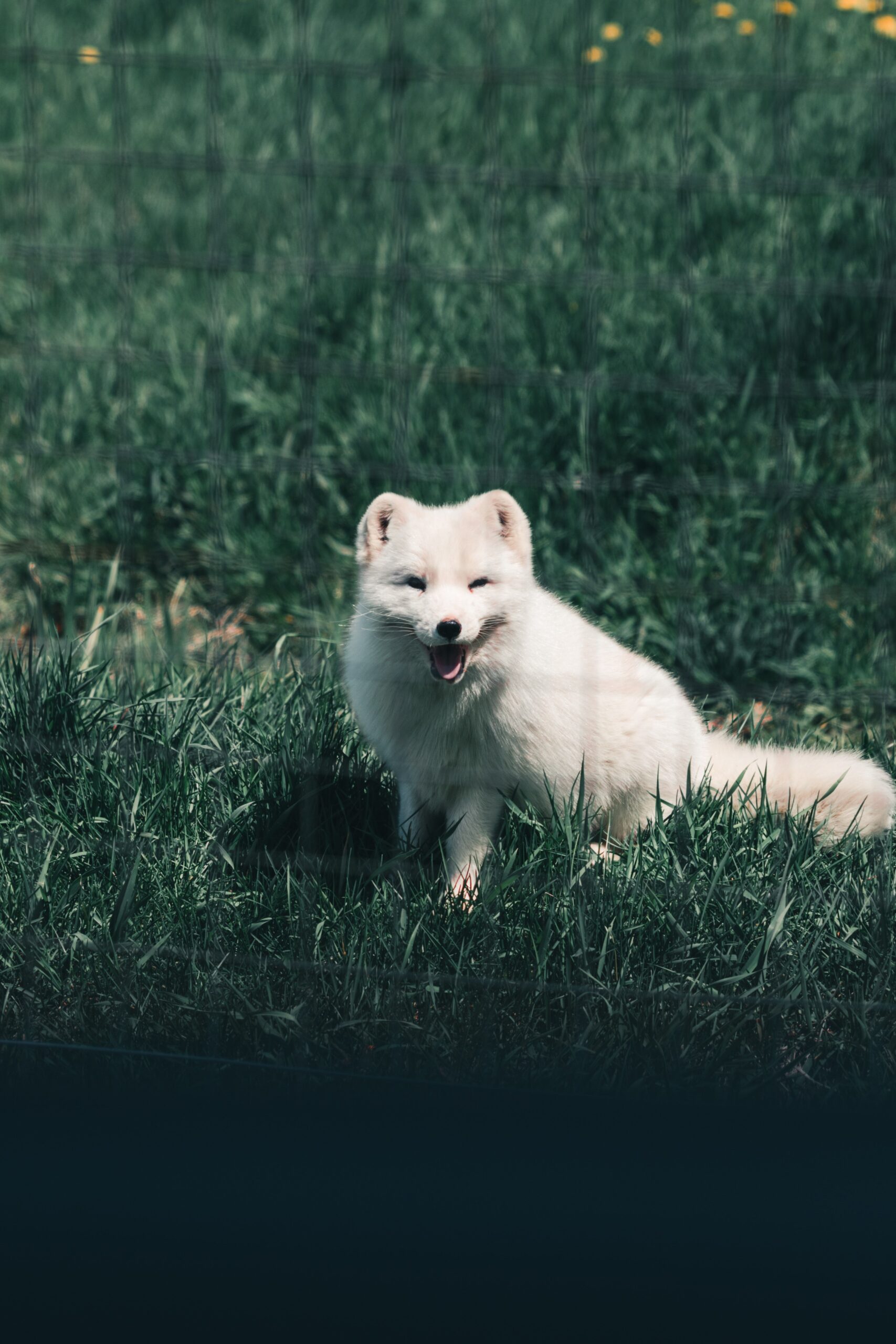
We will explain the characteristics, ecology, and habitat of the arctic fox. Among foxes, it is by far the most resistant to cold, and even in the -70°C world of the Arctic, it only gets a little cold. It is an animal that gives the impression of being quite beautiful due to its beautiful pure white and fluffy fur, but its numbers are decreasing and it is in a dangerous situation.




- What is an arctic fox? About basic status
- What are the roots and origins of the Arctic fox?
- About the habitat of the arctic fox
- feature is? What kind of creature is it?
- What will your personality look like?
- What is the ecology of the arctic fox?
- Arctic Fox Vocalizations
- Seasonal Activities
- Walking Speed
- About Arctic fox cubs
- Is the arctic fox an endangered species?
- Can arctic foxes be bred?
- Zoos Housing Arctic Foxes (Japan & Worldwide)
- Introducing other animals
What is an arctic fox? About basic status
The arctic fox is an animal classified as a mammal, in the order Felidae and the family Canidae. The scientific name is Vulpus lagopus. Body length 46–68 cm, tail length 26–42 cm. Weight is 2.5-8kg. Among mammals, foxes live in the arctic tundra climate of areas such as Finland and Canada. It has considerable strength in the natural world.
| Japanese(和名) | ホッキョクギツネ |
| English(英名) | Arctic Fox |
| scientific name(学名) | Vulpus lagopus |
| classification(分類) | Mammalia、 Carnivora、Canidae、Vulpes 哺乳綱、ネコ目、イヌ科、キツネ属 |
| IUCN Status(保全状況) | LEAST CONCERN |
| Length(体長) | 46–68cm |
| Weight(体重) | 2.5~8kg |
What are the roots and origins of the Arctic fox?
The roots of the Arctic fox (Vulpes lagopus) trace back to a common ancestor within the genus Vulpes. Current research indicates that while its closest relatives are other members of the Vulpes genus—such as the red fox (Vulpes vulpes)—the Arctic fox did not evolve directly from the red fox; rather, it represents an independent lineage that diverged from a shared ancestor.
Origins
It is believed to have evolved approximately 200,000 to 400,000 years ago (estimates vary by study) amidst the cold conditions of the Ice Age.
The species originated in northern Eurasia and the area around the Bering Land Bridge, subsequently expanding its range across the entire Arctic region.
Adaptation to the Arctic
The Arctic fox evolved the following characteristics to withstand the cold:
Seasonal coat color changes
Winter: White (protective coloration that blends in with snow)
Summer: Gray or brown (blends in with rocks and tundra)
Note: In some regions, there are also “blue morphs” that remain blue-gray year-round.
Extremely thick fur, providing one of the highest levels of cold resistance among mammals
Rounded ears and a short muzzle to minimize heat loss
Fur covering the soles of the feet, facilitating movement on snow and ice
Relationship with the Red Fox
Although the Arctic fox and red fox are closely related, they differ in physique and ecology.
| Feature | Arctic Fox | Red Fox |
|---|---|---|
| Habitat | Arctic region/Tundra | Forests, grasslands, and urban areas in the Northern Hemisphere |
| Coat Color | Changes seasonally | Basically reddish-brown |
| Cold Resistance | Extremely high (adapted to temperatures below -50°C) | Cold-tolerant but not suited for the Arctic |
| Physique | Small and stocky | Slightly larger with longer legs |
About classification
According to Wikipedia, there are subspecies of arctic fox. The following subspecies are distributed mainly in the Arctic Circle.
- ベーリング島ホッキョクギツネ(Vulpus lagopus beringensis)
- アイスランドホッキョクギツネ(Vulpus lagopus fuliginosus)
- グリーンランドホッキョクギツネ(Vulpus lagopus groenlandicus)
- ホール島ホッキョクギツネ(Vulpus lagopus hallensis)
- バロー岬ホッキョクギツネ(Vulpus lagopus innuitus)
- プリビロフ諸島ホッキョクギツネ(Vulpus lagopus pribilofensis)
- メードヌイ島ホッキョクギツネ(Vulpus lagopus semenovi)
- シベリアホッキョクギツネ(Vulpus lagopus sibiricus)
- スヴァールバル諸島ホッキョクギツネ(Vulpus lagopus spitzbergensis)
- アンガヴァホッキョクギツネ(Vulpus lagopus ungava)
Source : Wikipedia
Arctic fox taxonomy
- 界 (Kingdom): Animalia(動物界)
- 門 (Phylum): Chordata(脊索動物門)
- 綱 (Class): Mammalia(哺乳綱)
- 目 (Order): Carnivora(食肉目)
- 科 (Family): Canidae(イヌ科)
- 属 (Genus): Vulpes(キツネ属)
- 種 (Species): Vulpes lagopus(ホッキョクギツネ)
About the habitat of the arctic fox
Arctic foxes live in the Arctic, Alaska, and Russia. They are animals that are very resistant to the cold. Because of their thick fur, they are unaffected by snowfall in winter.
Arctic Fox Habitat
Regional Distribution
Tundra around the Arctic Circle
Northern North America (northern Canada, Alaska)
Greenland
Northern Europe (Norway, Sweden, northern Finland)
Northern Russia (Siberia, Kola Peninsula, etc.)
Habitat
Tundra: Areas with no forests, consisting of scrub and grasslands
Coastal areas and ice fields: May live on sea ice in winter
Burrows: Protect from the cold by digging burrows in snow or the ground
Seasonal Migration
May travel short distances depending on food and weather conditions
May hunt for seal carcasses and seabirds on sea ice in winter
feature is? What kind of creature is it?
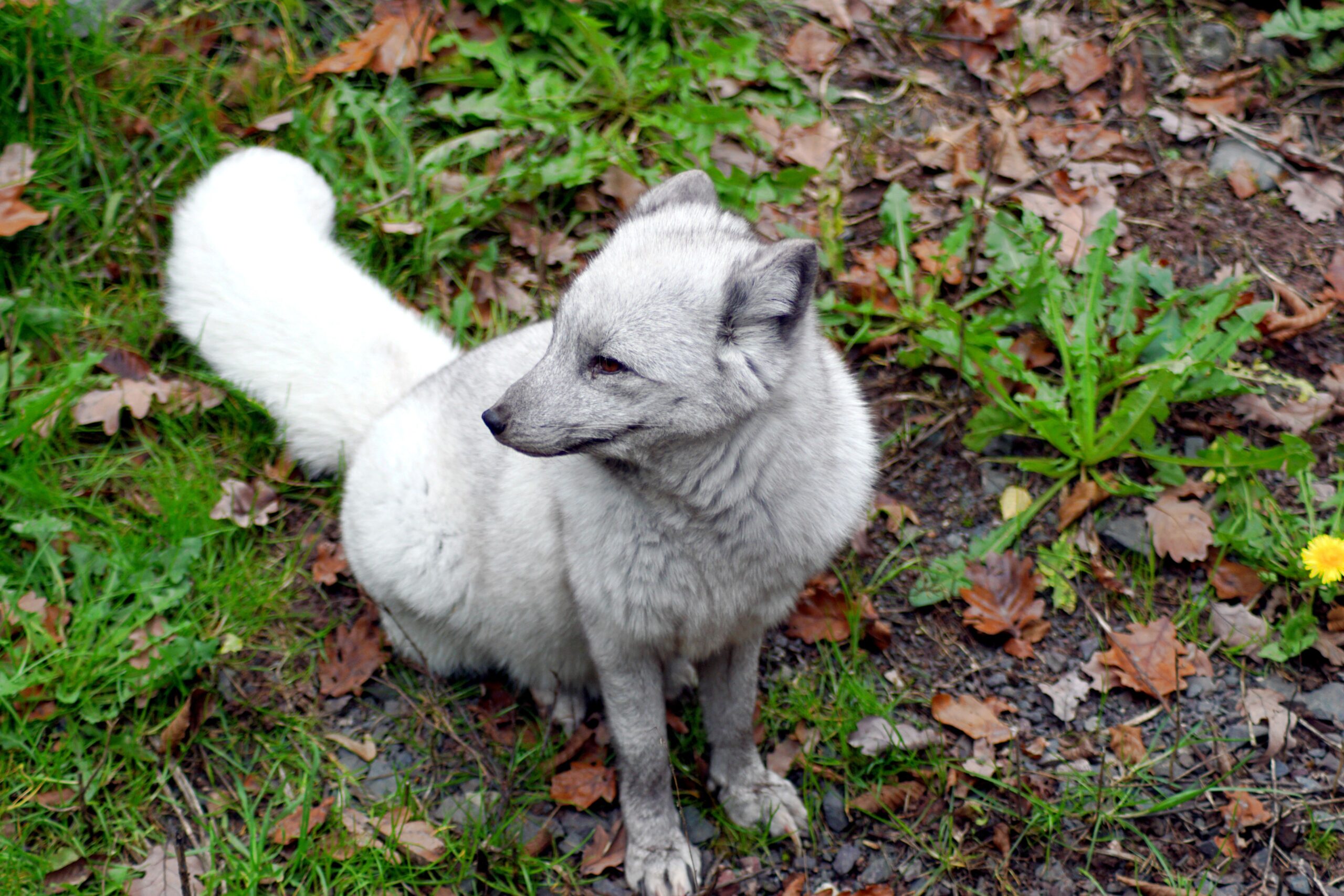
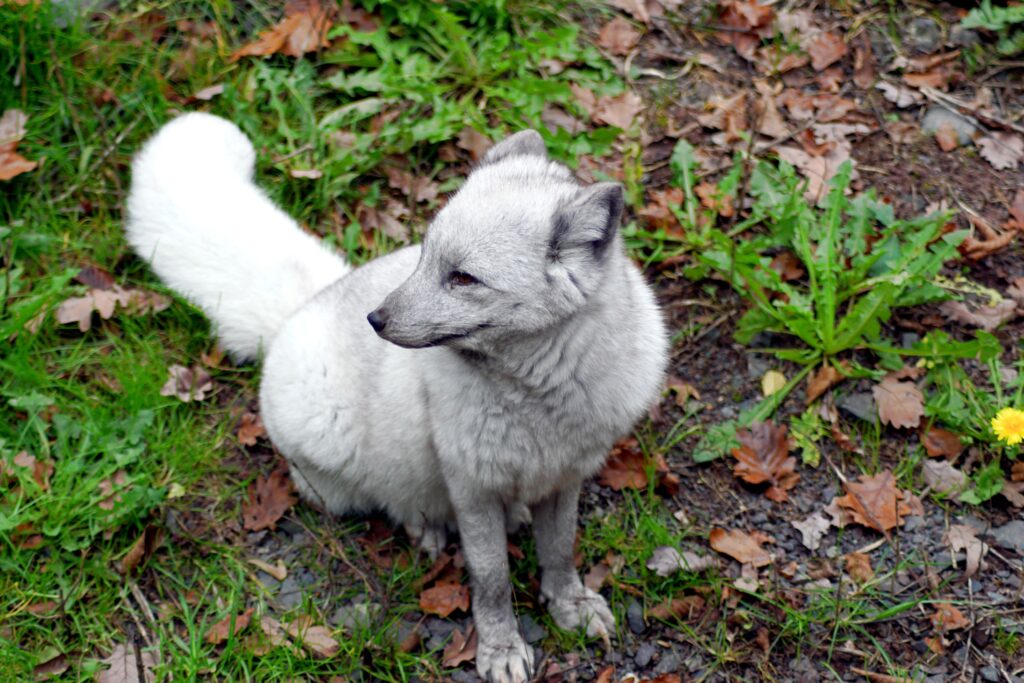
The arctic fox is extremely resistant to cold, and can survive in a world with temperatures as low as -70 degrees Celsius. Their fur is very thick because they can live in extremely cold regions. 70% of the arctic fox’s body hair is undercoat, and they generally have a round body shape. Their ears are buried in fur, which helps them protect themselves from the cold by reducing the surface area exposed to the cold. The coat color of the arctic fox is brown to blackish brown on the back in summer, white or yellowish white on the belly, and the whole body becomes white in winter. It is possible to move through the ice and move around the area.
- Physical Characteristics
Size: Small to medium-sized fox. Body length: Approximately 46-68cm, tail length: Approximately 30-35cm
Weight: Approximately 3-9kg (varies with the season; stores fat in winter)
Coat Color:
Winter: White to mimic snow
Summer: Grayish-brown to brown
Ears: Small, rounded, adapted to maintain body temperature
Tail: Long and bushy, can wrap around the body when sleeping
- Ecological Characteristics
Environmental Adaptations: Tolerant to extreme cold, can survive down to -50°C
Diet: Omnivorous, but leans towards carnivorous
Main Food: Small mammals (lemmings), seabird eggs, fish
Side Food: Plants, fruit, carcasses (such as seals)
Activity: Generally active day and night, activity patterns change with the seasons
Swimming: Can swim short distances as needed
- Behavioral Characteristics
Territory: Solitary or in small families
Hunting: They capture small animals by ambushes and using their keen sense of smell and hearing.
Reproduction: They come into heat in the spring, and the mother fox raises her young in her den.
Warming: Their fur is very dense, and their tails and ears are also designed to protect them from the cold.
What will your personality look like?
Arctic foxes live alone in pairs and have a personality similar to that of a cat. They are strong at night, and sometimes they sneak up on small animals to eat them, but sometimes they just rest and sleep. From the looks of it, even their feet are white, so they can hunt without being seen by their prey. They are carnivores and can eat anything, from young to adults. As a small species, life is very tough in a harsh environment with temperatures below zero.
Arctic fox personality and behavioral tendencies
Highly cautious
Sensitive to predators and humans, they quickly hide when they sense danger
Primarily solitary and territorial
Highly curious
Sensitive to changes in food and the environment, they actively explore
Play in the snow and ice and search for small animals
Highly independent
Hunting and traveling are almost always solitary
Families and packs form only for a short time during the breeding season
Highly adaptable but cautious
Changes their range depending on food and weather conditions
Highly risk-averse, they avoid unnecessary risks
Personality changes during the breeding season
During the spring breeding season, males and females work together to raise their young and secure food
Mother foxes can become aggressive while raising their young
What is the ecology of the arctic fox?
Arctic foxes eat lemmings, plants, mice, small animals and birds, fish and dead seals. Because of their dependence on lemmings, it is even said that the population of arctic foxes changes depending on the population of lemmings. Arctic foxes are monogamous and their breeding season is from April to July. The gestation period is about 2 months and it is possible to give birth to 4-10 puppies. Children reach sexual maturity at about 10 months. Their lifespan is very short, ranging from 3 to 6 years.
- Habitat
Arctic tundra, coastal ice fields, and rocky areas
Areas with little forest cover, covered in snow and ice
In winter, they are sometimes active on snow fields and sea ice
- Diet
Main Food: Lemmings and small mammals
Other Food: Seabirds, eggs, fish, crustaceans, carcasses, roots, and fruit
Hunting Method: Captures prey by ambushes and digging through the snow (a method known as “hearing hunting”).
- Behavior and Activities
Activity Period: Active day and night (depending on season and food availability)
Territory: Lives alone or in small family units
Migration: Travels short distances depending on food and weather conditions
Warmth: Dense fur, rounded ears, and a bushy tail help maintain body heat
- Breeding
Mating season: Spring (March-April)
Gestation period: Approximately 52 days
Gives 4-7 kittens at a time
The mother fox is primarily responsible for raising the young, with the father sometimes bringing food.
As young foxes, they learn hunting and snow survival skills from their mothers.
- Seasonal Changes
Winter: White fur mimics snow and adapts to the cold.
Summer: Molts to grayish-brown to brown fur, mimicking the ground.
Food and activity range change with the seasons.
- Conservation Status
IUCN Red List: Least Concern
Some areas are affected by climate change and habitat loss.
What are the natural enemies of the arctic fox?
The polar enemies of the arctic fox are polar bears and wolves.
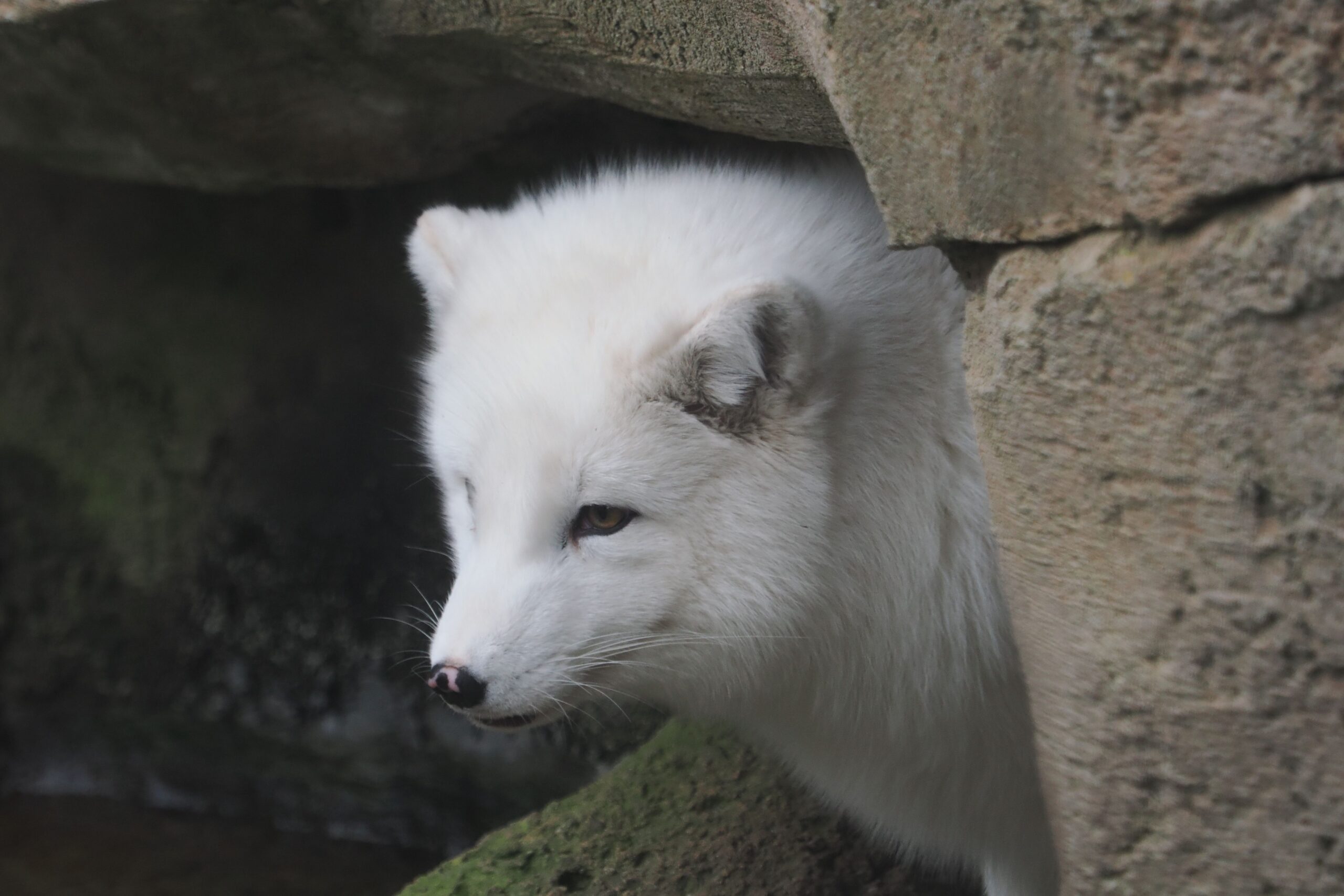
Arctic Fox Vocalizations
Arctic foxes rarely bark like dogs; instead, they communicate using a combination of high-pitched sounds and short calls.
Main Vocalizations
Bark (“Yip-yip”)
Used to assert territory or signal wariness of others.
Resembles the bark of a red fox.
Squeal
Heard during moments of excitement or in communication between parent and offspring.
Often used by kits (fox pups) to call for their mother.
Whine
Used for gentle communication among pack members or between parent and offspring.
Heard when seeking attention or signaling their presence nearby.
Growl
A low growl used for intimidation or to guard food.
Vocalizations of Kits
Kits make high-pitched, thin sounds such as:
“Pee-pee”
“Kyu-kyu”
The mother distinguishes these sounds to respond with nursing or to react to potential danger.
Communication Beyond Vocalizations
Arctic foxes convey their intentions through methods other than vocalizations, such as:
🦊 Tail movements: Indicate wariness, excitement, or relaxation.
👃 Scent (marking): Conveys information regarding territory or the breeding season.
🧍 Posture and facial expressions: Signal intimidation or submission.
Seasonal Activities
Arctic foxes live by adapting their coat color and behavior to the harsh four seasons of the Arctic. Their activities shift in response to changes in temperature and prey availability.
🌸 Spring (March–May)
The season for breeding and raising young
Snow begins to melt, and the breeding season arrives
Mated pairs prepare their dens
Litters of 5–10 kits are typical, though sometimes more than 15 are born (usually April–May)
Litter sizes increase during years when lemmings (rodents) are abundant
Parents take turns hunting and caring for the young
☀️ Summer (June–August)
Peak season for raising young and gathering food
Kits begin playing outside the den
Coat color changes from white to gray or brown, helping them blend into the tundra landscape
They prey on a wide variety of food, including lemmings, birds, eggs, insects, and fish
Surplus food is cached underground in preparation for winter
🍂 Autumn (September–November)
A season of preparation for winter
Kits become independent from their parents
Fur gradually molts to white
They store food and build up fat reserves
Along the coast, they may scavenge washed-up marine life or the carcasses of large animals
❄️ Winter (December–February)
The harshest season
Fur turns completely white, allowing them to blend into the snowy landscape
They locate lemmings by sound beneath the snow and pounce into the snow to catch them
They may feed on seal remains left behind by polar bears
During severe blizzards, they dig snow burrows to shelter from the cold
Walking Speed
The Arctic fox is a small, agile animal that employs a mix of walking, running, and jumping movements while hunting.
Normal Walking
Approx. 3–5 km/h
They wander slowly while searching for food.
They move while listening for the sounds of small animals, such as lemmings, beneath the snow.
Brisk Walk / Trot
Approx. 8–12 km/h
This is the speed used when heading toward feeding grounds or moving efficiently across the vast tundra.
Full-Speed Running
Up to approx. 50 km/h
True to their nature as foxes, they are extremely quick and can reach speeds of around 50 km/h over short distances.
They typically reach these speeds when chasing prey or fleeing from predators.
Hunting Characteristics
Arctic foxes use their keen sense of hearing to pinpoint the location of small mammals, such as lemmings, hidden beneath the snow. They then engage in a distinctive hunting sequence:
Slowly approach while listening for sounds
Take aim
Leap 1–2 meters into the air
Dive headfirst into the snow to capture the prey
About Arctic fox cubs
- Habitat
Arctic tundra, coastal ice fields, and rocky areas
Areas with little forest cover, covered in snow and ice
In winter, they are sometimes active on snow fields and sea ice
- Diet
Main Food: Lemmings and small mammals
Other Food: Seabirds, eggs, fish, crustaceans, carcasses, roots, and fruit
Hunting Method: Captures prey by ambushes and digging through the snow (a method known as “hearing hunting”).
- Behavior and Activities
Activity Period: Active day and night (depending on season and food availability)
Territory: Lives alone or in small family units
Migration: Travels short distances depending on food and weather conditions
Warmth: Dense fur, rounded ears, and a bushy tail help maintain body heat
- Breeding
Mating season: Spring (March-April)
Gestation period: Approximately 52 days
Gives 4-7 kittens at a time
The mother fox is primarily responsible for raising the young, with the father sometimes bringing food.
As young foxes, they learn hunting and snow survival skills from their mothers.
- Seasonal Changes
Winter: White fur mimics snow and adapts to the cold.
Summer: Molts to grayish-brown to brown fur, mimicking the ground.
Food and activity range change with the seasons.
- Conservation Status
IUCN Red List: Least Concern
Some areas are affected by climate change and habitat loss.
Is the arctic fox an endangered species?
The arctic fox is not currently an endangered species. Although the situation is considered to be of low concern and stable, the situation is by no means optimistic. The reasons are as follows.
Exterminated as a pest
Arctic foxes often attack and eat livestock such as reindeer that live nearby. For this reason, there are many cases where they are exterminated as a result of retaliation.
conflict with foxes
Arctic foxes end up competing with other animals, such as red foxes, for food. We know that this is causing their population to decline.
Can arctic foxes be bred?
As you can see from the fact that arctic foxes attack livestock, they are quite ferocious and difficult to keep without a lot of skill. It is not recommended for the general public.
- Captivity
Ordinary households: Not permitted
Regulated by the Wildlife Protection Act and other national laws.
From the perspective of ecosystem conservation and endangered species protection, capturing and keeping them without permission is illegal.
Zoos and conservation facilities: Captivity is permitted with special permission.
Managed for breeding, education, and research purposes.
Ensuring a suitable environment, food, and space for movement is mandatory.
- Difficulties in Captivity
Adapted to extreme cold environments
Dense fur and round ears help them cope with the cold.
In warmer regions, they are at high risk of heatstroke and stress.
Strong wild instincts.
Highly cautious and not easily tamed.
Prefers solitary behavior and requires free exercise and hunting.
Special dietary habits
Requires a natural diet of small mammals, birds, and fish.
Feeding at home is extremely difficult to maintain in terms of nutrition and hygiene.
- Significance of Conservation and Captivity
Keeping in zoos and conservation facilities is for breeding, education, and research purposes.
As part of a reintroduction program, young animals are sometimes taught hunting and ecology.
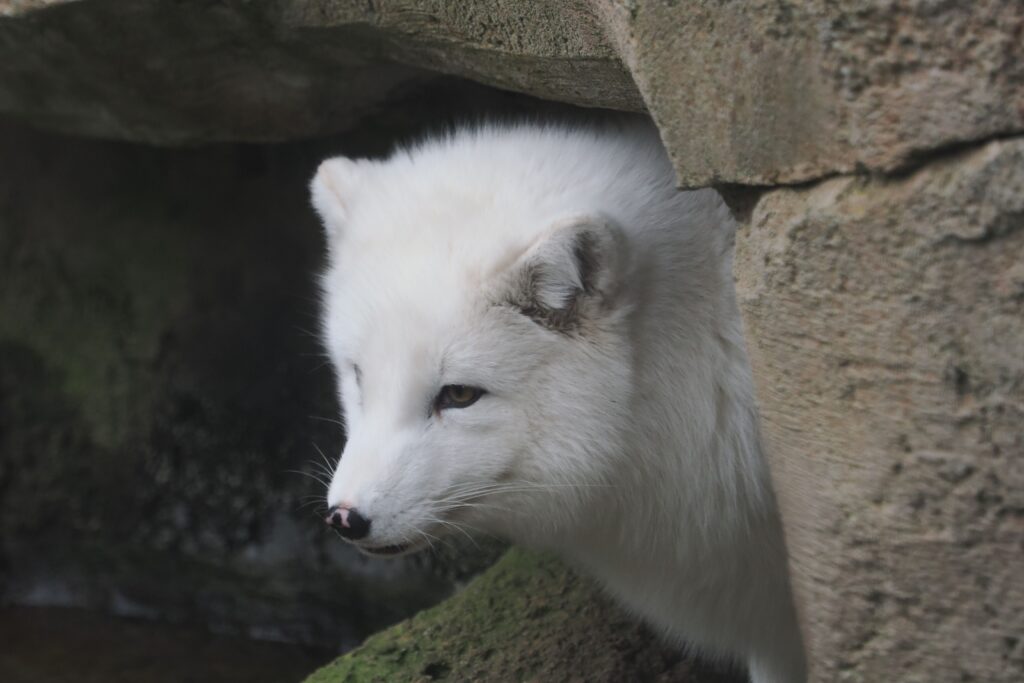
Zoos Housing Arctic Foxes (Japan & Worldwide)
While facilities housing Arctic foxes are limited in Japan, they are kept and exhibited at many zoos around the world, particularly in countries near the Arctic Circle.
Major Zoos in Japan
These are prominent facilities that currently house and exhibit Arctic foxes, or have done so in recent years.
Asahikawa City Asahiyama Zoo
Known for exhibits that take advantage of Hokkaido’s cold climate.
Sapporo City Maruyama Zoo
Focuses on exhibiting animals from the Arctic region; the Arctic foxes are popular alongside the polar bears.
*Note: The number of individuals kept in Japan is small, and exhibition status may change due to breeding plans or the transfer of animals between facilities.
Major Zoos Worldwide
Oulu Zoo
Located near the Arctic Circle; recreates an environment close to the Arctic fox’s natural habitat.
Kolmården Wildlife Park
Ranua Wildlife Park
Known for exhibiting a wide variety of animals from the Arctic region.
Skansen
Tallinn Zoo
Alaska Zoo
Introducing other animals


コメント