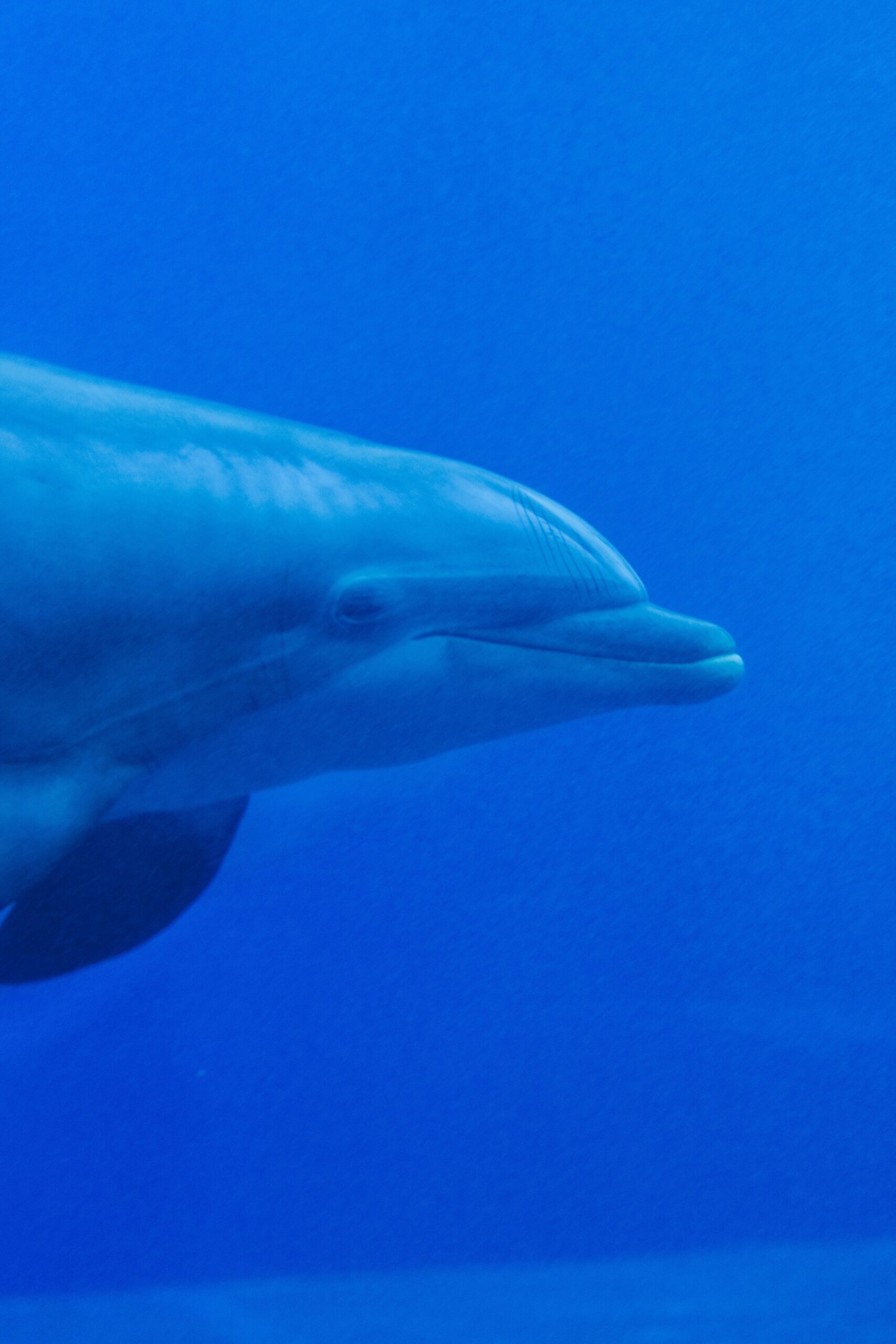
What kind of animal is a dolphin that belongs to the river dolphin family? We will explain its long length, body, characteristics, distribution, ecology, habitat, and types. These include the Ganges river dolphin and the Indus river dolphin, both of which are designated as endangered species, so they are in a very critical situation. Therefore, I will explain in detail.










- What is the dolphin family? About basic status
- What are the roots and origins of the Platanistidae family?
- Where is its habitat?
- feature is? What kind of creature is it?
- What is the ecology like?
- About Baby River Dolphins
- Diving in River Dolphins
- Vocalizations
- Seasonal Activities
- Are river dolphins an endangered species?
- Can river dolphins be kept?
- Zoos and Aquariums Keeping Them (Japan and Worldwide)
- Introducing other animals
What is the dolphin family? About basic status
The dolphin family is classified as an artiodactyla (some say it is a cetacean artiodactyla) among dolphins. It is also called the Ganges river dolphin family. The scientific name is Platanistidae. It has a long body, measuring 2-2.2m in length. It is a chordate that appears in encyclopedias, and data shows that it lives in estuaries. Males are larger than females.
| Japanese(和名) | カワイルカ |
| English(英名) | river dolphin |
| scientific name(学名) | Platanistidae |
| classification(分類) | Mammalia、 Cetartiodactyla、Platanistidae 哺乳綱、鯨偶蹄目、カワイルカ科 |
| IUCN Status(保全状況) | ENDANGERED |
| Length(体長) | 2-2.2m |
| Weight(体重) | ? |
What are the roots and origins of the Platanistidae family?
The roots of the Platanistidae family lie in the evolution of primitive odontocetes (toothed whales) that inhabited the oceans approximately 30 to 50 million years ago.
Their current form—as “river-dwelling dolphins”—is the result of adapting to freshwater environments during the course of their evolution.
Origins: Ancestors were “ocean dolphins”
The Platanistidae family did not inhabit rivers from the very beginning.
The general evolutionary trajectory is as follows:
Land mammals (ancestors related to artiodactyls)
↓
Archaeocetes (ancient whales; approx. 50 million years ago)
↓
Primitive odontocetes (toothed whales)
↓
Platanistoidea (superfamily)
↓
Platanistidae (family)
The Platanistoidea superfamily represents an ancient lineage that diverged from the modern Delphinidae family (which includes bottlenose dolphins) at a very early stage. Fossil records indicate that a group ancestral to the Platanistidae lineage already existed around 30 million years ago (during the Oligocene epoch).
Ancestors were “ancient river dolphins” that lived in the ocean
The ancestors of the modern Platanistidae family were marine-dwelling.
During the Miocene epoch (approximately 23 to 5 million years ago),
long rostra (snouts)
numerous slender teeth
small eyes
echolocation capabilities
…characterized the Platanistidae lineage, which had spread across oceans worldwide.
Representative fossil genera include:
Zarhachis
Pomatodelphis
These have been discovered in marine sedimentary deposits in regions such as North America and Europe.
Why did they move into rivers?
Starting more than 10 million years ago, new types of dolphins (the ancestors of modern Delphinidae) began to expand their dominance in the oceans.
Consequently, it is believed that the following sequence of events occurred:
Increased competition in the ocean
Changes in coastal environments
Movement into rivers in search of food sources In lineages that adapted to river environments, the following characteristics evolved:
Long snout
→ To search for fish in the mud
Small eyes
→ Ultrasonic sensing is more important than vision in murky water
Flexible neck
→ To facilitate turning in narrow rivers
Modern river dolphins are akin to “living fossils”
The primary modern representative is:
The Ganges river dolphin (Platanista gangetica)
It inhabits the Ganges and Indus river basins in India and retains characteristics of ancient toothed whales from tens of millions of years ago.
Characteristics:
Virtually blind
Locates prey using ultrasound
Long beak
Specialized for murky river environments
About classification
The river dolphin family was thought to consist of the Amazon river dolphin family, the La Plata river dolphin family, and the European river dolphin family, but all of these river dolphin families were considered to be common dolphins. Currently, the classification is as follows.
| Name (名前) | Scientific Name (学名) |
| ganges river dolphin ガンジスカワイルカ | Platanista gangetica |
| Indus river dolphin インダスカワイルカ | Platanista minor |
Platanista gangetica
The Ganges river dolphin is a species of toothed whale that belongs to the Cetacean artiodactyla family. It has a large body that can reach up to 2.6 meters and is blind. We are active on the Ganges River in India, Bangladesh, Nepal, etc. Unfortunately, it is listed as an endangered species.
Platanista minor
The Indus River Dolphin lives in the Indus River. Cannot see up to 2.6m. It is rarely seen because it prefers the deepest parts of rivers. This species is also listed as endangered. It is able to quickly catch fish using its elongated snout.
Where is its habitat?
The river dolphin family lives in waters around India and Bangladesh in Asia.
- Geographic Distribution
Living primarily in coastal areas of Asia
Around Japan, they are found in the following areas:
Sea of Japan coast (coasts of Honshu and Hokkaido)
East China Sea coast
Seto Inland Sea
Some inhabit inland bays such as Tokyo Bay and Osaka Bay
Also found in Southeast Asia, the coast of China, Indonesia, and Vietnam
- Habitat
Prefers coastal and estuary areas
Inland bays and estuaries with shallow waters and relatively calm waves
Living in schools
Moves in small schools (approximately 10-30 individuals)
Sensitive to water temperature and salinity
Can also live in estuaries where freshwater and seawater mix
- Habitat Characteristics
Feeds on fish and crustaceans in shallow coastal waters
May prefer muddy or sandy seabeds
Vulnerable to environmental changes (estuary reclamation and water quality deterioration)
feature is? What kind of creature is it?
River dolphins typically swim alone or in pairs. They have a very social personality and tend to live in groups.
- Body Size and Shape
Body Length: Approximately 1.4-2.0m
Weight: Approximately 40-60kg
Body Type: Small, stocky, and rounded
Dorsal fin: Low, triangular, and inconspicuous
- Body Color
Body color: Gray to pale blue-gray
Dark back, slightly whitish underbelly
Unlike other dolphins, they lack large markings and are relatively plain
- Face, Mouth, and Teeth
Rounded head, short snout
Fine teeth, adapted to preying on fish and small crustaceans
- Behavior and Personality
School Life
Forms small schools (approximately 10-30 individuals)
Relatively cautious
Shy of boats and humans, they often move away when approached
Moderate Swimming Speed
Able to move quickly in shallow waters and estuaries
- Ecological Characteristics
They are primarily coastal and bay-dwelling, preferring shallow waters and estuaries.
They feed on fish and crustaceans.
They breathe near the surface and search for food.
What is the ecology like?
River dolphins mainly feed on fish and crustaceans. The lifespan of river dolphins is not well known, but it is said that they live for about 10 to 20 years in captivity.
- Lifestyle
Live in coastal and estuary areas
Prefer shallow bays, estuaries, and areas with slow currents
School Life
Live in small schools (approximately 10-30 individuals)
They often cooperate within the school, coordinating foraging and migration
- Diet
Mainly feed on fish and crustaceans
Prey on small fish, shrimp, and crabs
Uses fine teeth to firmly crush small prey
How They Find Food
Search for prey by sound and vision while swimming on the surface or in shallow waters
- Reproduction
Gestation Period
Approximately 10-11 months
Birth
Usually gives birth alone
Baby calves grow up near their mother and are watched over by the entire school
Raising
Nursing for 6-12 months
Baby calves become independent around the age of one
- Behavior/Movement
They are active in shallow waters during the day, breathing and searching for food.
Their range of movement is often limited to coastal areas.
They move in response to environmental conditions (food and water quality).
- Schooling and Defense
They swim close together in schools to protect themselves from predators.
They are highly wary of predators (killer whales and sharks) and human influence.
About Baby River Dolphins
This article summarizes baby river dolphins (finless porpoises, genus Neophocaena). As coastal dolphins, cooperation with their mothers and pods is important for their survival, even from the early stages.
- Birth and Early Characteristics
Birthing Period
Varies depending on region and water temperature, but births are usually in spring and summer.
Number of Pups
Usually one pup is born at a time.
Body Length and Weight
Body Length at Birth: Approximately 70-90cm
Weight: Approximately 7-10kg
Appearance
Same gray body color as their mother, but their backs may appear slightly paler.
Their bodies are soft and have adapted shapes for easy swimming.
- Growth and Behavior
Nursing Period
Grows while drinking breast milk for approximately 6 months.
Learning to Swim
Immediately after birth, they swim alongside their mother, learning to breathe and change direction.
Learning to Feed
Around 2-4 months of age, they observe their mother’s feeding behavior and begin practicing catching fish and small crustaceans.
- Protection within the pack
Chubby animals stay close to their mothers and are watched over by the entire pack.
When faced with predators or other external threats, the pack will take collective action to escape.
The sociality of the pack is directly linked to the survival of young animals.
- Independence and Maturity
Independence: They separate from their mothers between 6 months and 1 year of age and learn how to forage.
Sexual Maturity: Both males and females are capable of breeding at approximately 3-4 years.
Diving in River Dolphins
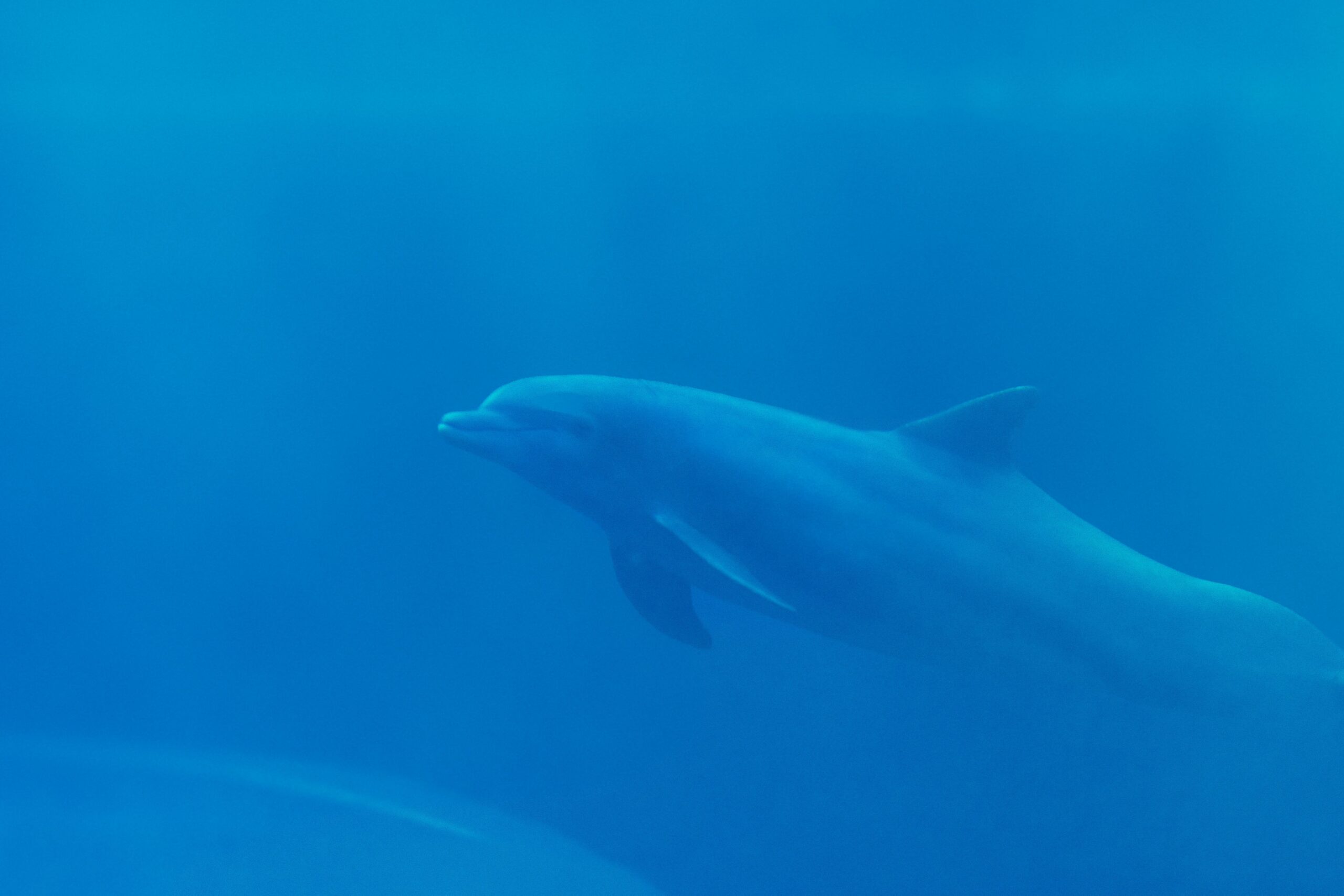
The diving capabilities of river dolphins have evolved in a direction somewhat different from that of oceanic dolphins.
Rather than diving into deep waters, they are specialized for diving to search for prey and avoid obstacles within murky, shallow rivers.
River Dolphin Dive Times
The Ganges river dolphin (a representative species of the river dolphin family), for example, can dive for:
Typically: About 30 seconds to 1 minute
When necessary: Several minutes
However, they are not the type of animal that dives for tens of minutes to nearly an hour, like the sperm whale.
The reasons for this are:
Their habitat is not the deep sea
Rivers offer many opportunities for oxygen exchange
They need to constantly swim while searching for food
① “Exploratory Diving” by Tilting the Body
Underwater, river dolphins employ a unique diving style:
Pointing the head downward
Directing their long rostrum (beak) toward the muddy riverbed
Emitting ultrasonic waves
The Ganges river dolphin, in particular, has very poor eyesight and perceives the world almost entirely through sound.
② Diving Using Echolocation
River water creates an environment with very poor visibility due to:
Mud
Silt and sediment
Driftwood
Vegetation
Consequently, they dive by:
Emitting high-frequency sounds from deep within the nasal passages
Receiving echoes reflected off fish and obstacles
Mapping out three-dimensional positions within their brains
For humans, this would be akin to the ability to navigate a dark cave using only sound.
③ Differences from Oceanic Dolphins
| Feature | River Dolphin | Oceanic Dolphin |
|---|---|---|
| Primary Environment | Rivers | Ocean |
| Diving Purpose | Foraging/Obstacle avoidance | Hunting/Travel |
| Vision | Weak | Relatively strong |
| Acoustic Ability | Highly developed | Developed |
| Swimming Style | Agile, frequent turning | High-speed swimming |
River dolphins have honed the ability to navigate and explore narrow, complex river environments using sound, rather than swimming at high speeds across the open ocean.
Vocalizations
River dolphins do not primarily produce the high-pitched squeaks or chirps we typically associate with dolphins; instead, their vocalizations consist mainly of ultrasonic clicks (echolocation sounds).
Primary Sound: Clicks
Underwater, river dolphins emit very short sounds—
“Click, click, click-click…”
—in rapid succession.
These sounds are not produced by vocal cords but are generated by a specialized organ located deep within the nasal passage.
Uses:
Locating fish
Mapping the riverbed
Avoiding obstacles
Gauging the distance to other dolphins
In short, rather than mere “calls,” they function as living sonar (acoustic detection systems).
Sound Characteristics of the Ganges River Dolphin
For the Ganges river dolphin:
Frequency: High-frequency sounds ranging from tens of kHz to over 100 kHz
Short, pulsed clicks
Capable of detecting distant objects even in murky water
Barely audible to the human ear
When recorded with an underwater microphone,
they sound like electronic noises—
“Chi-chi-chi-chi…” or “Pachi-pachi…”
Communication Sounds Between Individuals
In addition to clicks, river dolphins use:
Low-frequency growls
Pulsed sounds
High-frequency exchanges of calls
Purposes include:
Mother-calf communication
Locating other dolphins
Alerting/Warning
Courtship
However, they are generally considered to lack the complex “whistles” found in oceanic bottlenose dolphins.
Why Don’t They Use Standard Vocalizations?
River dolphins inhabit environments characterized by:
Murky water
Fast currents
Numerous obstacles
Consequently, they evolved in a way where:
Vision → Is of limited use
Low-frequency sounds → Produce complex echoes
High-frequency clicks → Allow for the precise detection of nearby objects
Seasonal Activities
The activity of river dolphins (particularly the representative Ganges river dolphin) is heavily influenced by seasonal changes in river water levels. Rather than migrating like ocean dolphins, they adjust their behavior according to water levels, currents, and fish distribution.
Spring (March–May): Late dry season; reduced activity range
Environment
Low rainfall and dropping water levels
River width narrows
Currents weaken
Dolphin Behavior
Tend to congregate in deep channels (pools)
Focus on areas where fish gather
Spend more time diving to explore the riverbed
As water levels drop, shallow areas increase, limiting their range of movement.
Summer (June–September): Monsoon season; widest activity range
Environment
Heavy rains cause river levels to rise
Tributaries and floodplains connect
Fish diversity and abundance increase
Dolphin Behavior
Move over a wide area
Explore new feeding grounds
Active foraging
Especially during high-water periods, they may venture into:
Tributaries
Channels
Shallow flooded areas
However, they avoid areas with excessively strong currents, preferring locations with eddies or deep water.
Autumn (October–November): Dropping water levels; high foraging efficiency
Environment
Flooding subsides
Water gradually clears
Fish concentrate in specific locations
Behavior
Active foraging
Move between deep and shallow areas
Rearing of young observed
This is a relatively favorable season for river dolphins, as fish tend to congregate.
Winter (December–February): Low-temperature period; energy-conserving behavior
Environment
Water temperature drops
Flow volume decreases
Fish activity levels decline
Behavior
Spend more time in deep areas
Reduce swimming speed
Tend to be active during the day
They do not hibernate in winter.
As mammals, they require constant respiration and surface every few minutes.
Are river dolphins an endangered species?
Both the Ganges river dolphin and the Indus river dolphin are in decline in population and are designated as endangered species. I will explain the reasons for each. It has been listed in CITES Appendix I since 1975, when CITES came into force.
ganges river dolphin
Since 1981, the genus Ganges River Dolphin has been listed in Appendix I of CITES. Their population is drastically decreasing due to habitat fragmentation, water pollution, and even capture.
Indus river dolphin
They are hunted for food and fishing bait, and their population is declining dramatically. Currently, it is legally protected in Pakistan.
International Assessment (IUCN Red List)
*The coastal finless porpoise (Neophocaena asiaeorientalis) is listed as Endangered (EN). This population, which lives in the shallow waters of Japan and coastal Asia, is experiencing population declines due to human activities and requires protection.
This assessment is based on the IUCN (International Union for Conservation of Nature) Red List.
Regional Population Status
The freshwater-adapted finless porpoise population of the Yangtze River is listed as Critically Endangered, with very low numbers.
Finally, finless porpoises around Japan are also declining in number due to human impacts (fishing net bycatch, coastal development, deteriorating water quality, etc.), and are considered rare in some areas.
Can river dolphins be kept?
As mentioned above, international trade is strictly restricted by the Washington Convention, and as it is an endangered species, it is extremely difficult to keep it in captivity.
- Current Status of Captivity
They are sometimes kept in captivity in some aquariums around the world and in Japan.
Japan: Kamogawa Sea World, Marine World Uminonakamichi, etc.
Wild capture is prohibited in principle, and captive individuals are kept for conservation and breeding purposes.
- Difficulties of Captivity
Aquarium Size and Water Quality Management
This coastal dolphin is adapted to shallow waters and estuaries, but requires ample swimming space.
Maintaining salinity, water temperature, and clean water quality is essential.
Dietary Management
They are strictly carnivorous, eating mainly fish and crustaceans.
Food freshness, quantity, and nutritional balance must be monitored daily.
Sociality
They have a strong tendency to live in groups, and keeping them alone causes stress.
They must be kept in a reconstructed group.
Health Management
Respiratory and digestive health management is important.
Regular veterinary care is required.
- Laws and Regulations
Listed in Appendix II of the Convention on International Trade in Endangered Species of Wild Fauna and Flora (CITES), international trade requires a permit.
In Japan, compliance with the Animal Welfare Act and the Specified Animal Regulations is required.
Zoos and Aquariums Keeping Them (Japan and Worldwide)
To put it briefly, there are currently no zoos or aquariums anywhere in the world that keep and exhibit members of the family Platanistidae (Ganges river dolphin and Indus river dolphin).
These dolphins are extremely difficult to keep in captivity; while there have been a few attempts in the past, none have succeeded in achieving long-term survival or breeding.
Examples of Captivity in Japan
Kamogawa Sea World (Past)
There are records of five Ganges river dolphins (Platanista gangetica) being kept in Japan during the 1970s.
However, the outcomes were as follows:
They failed to survive long-term.
Breeding attempts were unsuccessful.
There are currently no individuals in captivity.
At the time, experimental captive rearing was also conducted globally—including at aquariums in the United States, research facilities in Switzerland, and facilities in Japan—but there were no successful cases.
United States
Steinhart Aquarium
Indus river dolphins were kept there during the 1960s and 1970s.
However:
They died within a period ranging from a few weeks to about a year.
They struggled to adapt to the captive environment.
Switzerland
Berne Institute of Brain Anatomy
Indus river dolphins were kept there for research purposes.
While there are records of a total of seven individuals being maintained, breeding was not achieved.
Introducing other animals


コメント