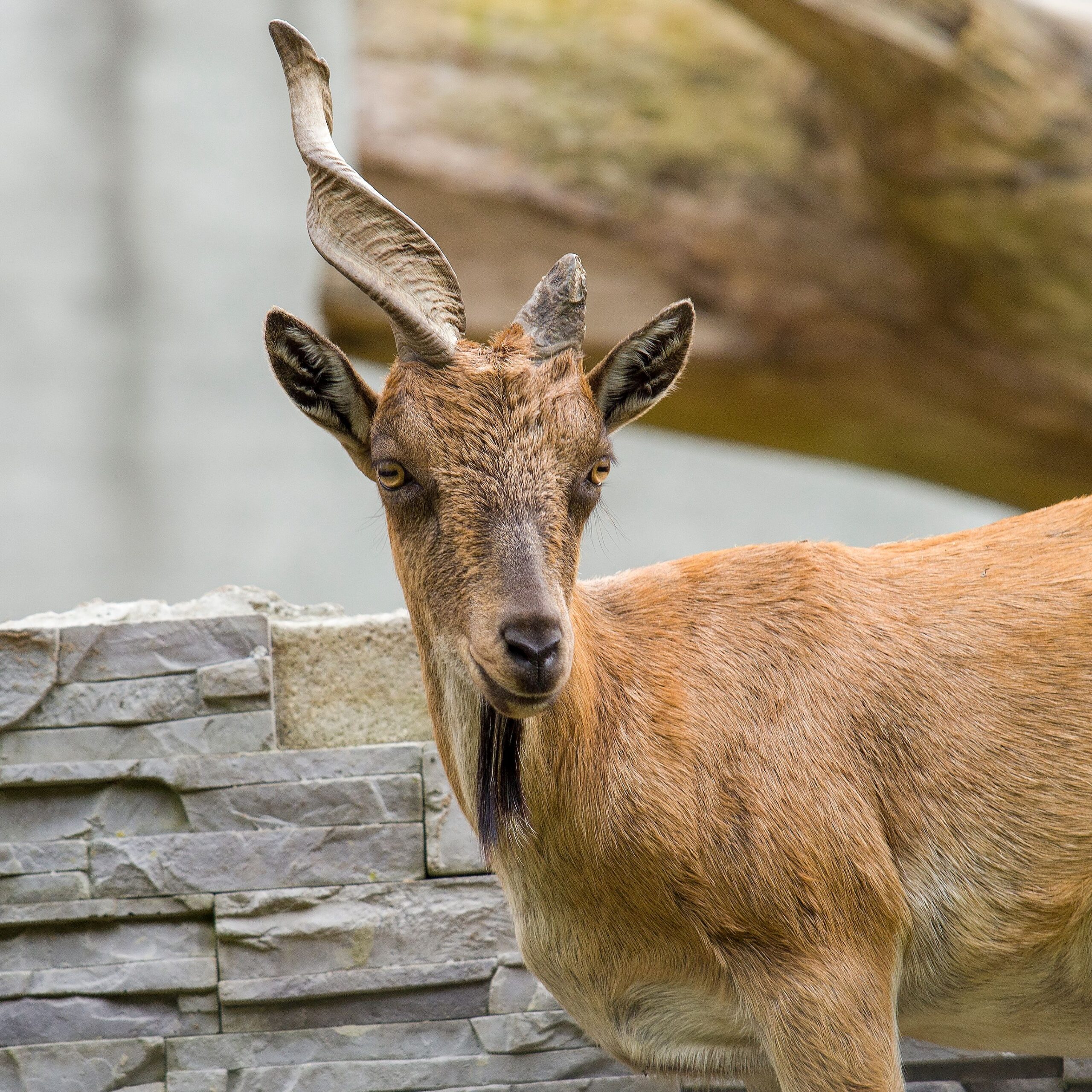
What kind of animal is a markhor? We will explain its characteristics, ecology, and habitat. This animal is unique because it has very special horns that can only be found in the Middle East. Unfortunately, it is one of the animals that needs protection as it is designated as an endangered species.




- What is markhor? About basic status
- What are the roots and origins of the Markhor?
- Where is the habitat?
- feature is? What kind of creature is it?
- Diet adapted to harsh environments.
- What does the ecology look like?
- Markhor Vocalizations
- Seasonal Activities
- Walking Speed
- About Markhor Cubby Animals
- Are markhors an endangered species
- Can markhors be kept?
- Zoos Housing the Species (Japan & Worldwide)
- Introducing other animals
What is markhor? About basic status
The markhor is an artiodactyl animal that belongs to the family Bovidae and belongs to the genus Caprine. The scientific name is Capra falconeri. The body length is 130-180cm and the weight is 50-110kg. There is a difference between males and females, with males being larger. Tail length 8-14cm, shoulder height 65-105cm.
| Japanese(和名) | マーコール |
| English(英名) | Markhor |
| scientific name(学名) | Capra falconeri |
| classification(分類) | Mammalia、 Artiodactyla、Bovidae、Capra 哺乳綱、ウシ目、ウシ科、ヤギ属 |
| IUCN Status(保全状況) | NEAR THREATENED |
| Length(体長) | 130-180cm |
| Weight(体重) | 50-110kg |
What are the roots and origins of the Markhor?
The roots of the Markhor (scientific name: Capra falconeri) lie in an ancient lineage of wild goats (genus Capra) that evolved in the mountainous regions of Central Asia.
Ancestry: Ancient Wild Goats (Genus Capra)
The Markhor belongs to the family Bovidae, subfamily Caprinae, and genus Capra. Its close relatives include:
Domestic goats
Ibexes (wild goats)
Nubian ibex
Tahr (Himalayan tahr)
Genetic studies indicate that the Markhor represents a highly distinct lineage that diverged from other goats quite early in the history of the Capra genus. In other words, it is not simply a “giant version of an ordinary goat,” but a species that preserves a very ancient wild goat lineage.
Place of Origin: Mountainous Regions of Central Asia
The ancestors of the Markhor are believed to have been primitive goats inhabiting the area around Central Asia several million years ago.
Current distribution range:
Northern Pakistan
Northeastern Afghanistan
Kashmir region
Tajikistan
Southern Uzbekistan
They adapted specifically to rugged, rocky mountains, such as:
The Hindu Kush
The Karakoram Range
The Western Himalayas
Why did they develop huge, twisted horns?
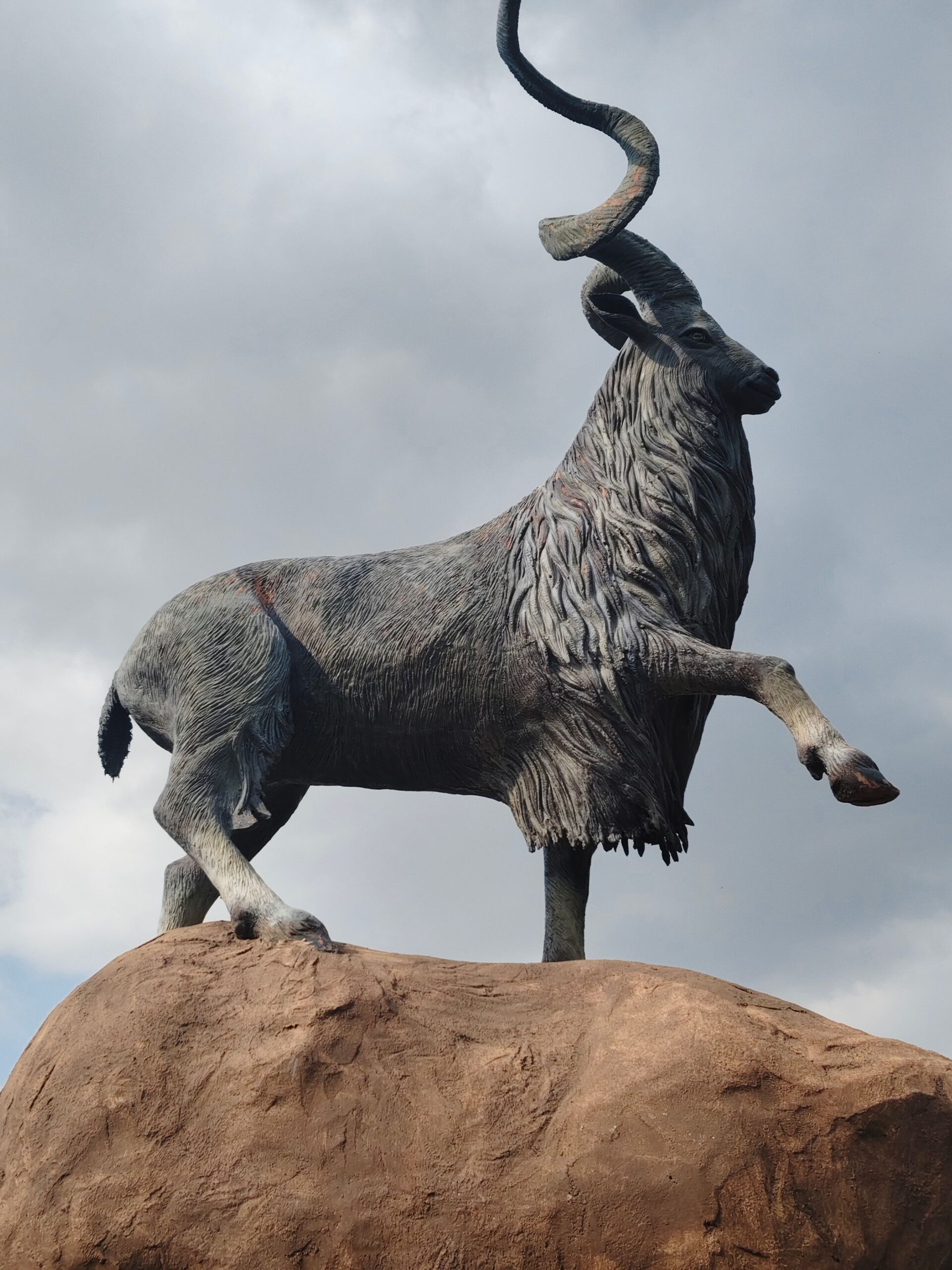
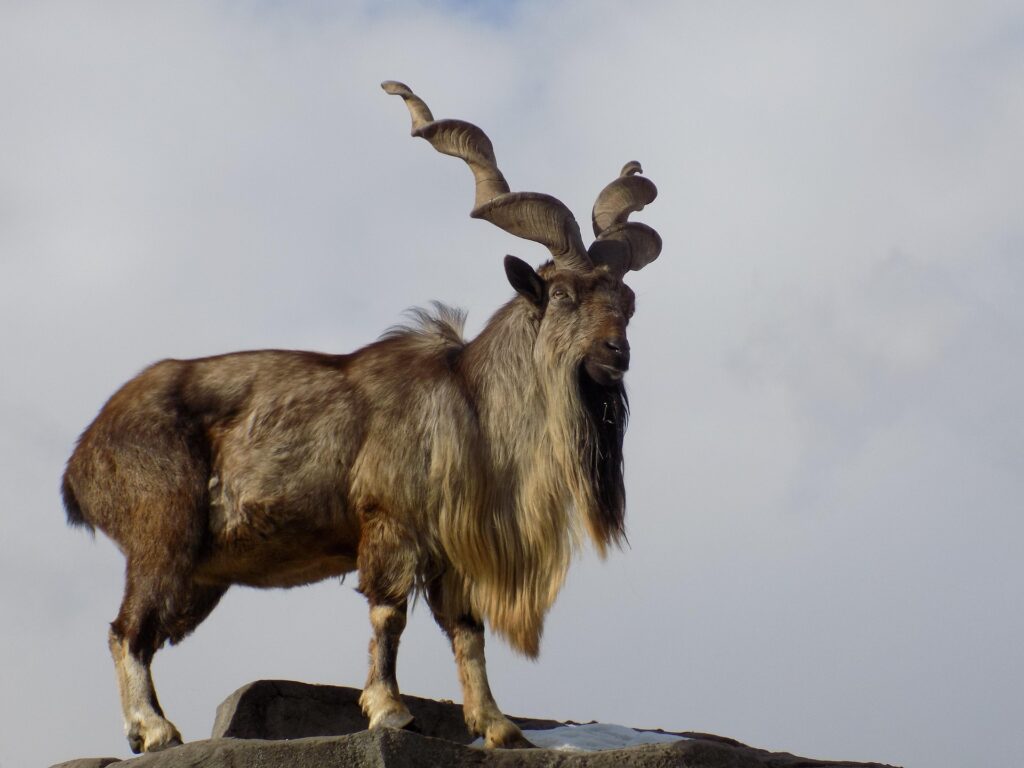
The Markhor’s most distinctive feature is its spiral-shaped horns.
The reasons for this evolution include:
① Competition between males
During the breeding season, males clash their horns to compete for dominance.
② Adaptation to the mountain environment
In rugged, rocky terrain, the following were crucial:
Quick changes of direction
Stable footing
Defense against predators
It is believed that individuals with massive horns and robust physiques had a higher chance of survival.
Relationship with Domestic Goats
The Markhor is not the direct ancestor of domestic goats. However, it belongs to the same lineage of wild goats (genus Capra) as the domestic goat (Capra hircus).
While the primary ancestor of the domestic goat is the wild goat of West Asia (the bezoar), the markhor is a closely related group that diverged at an early stage.
Origin of the Name
The name “Markhor” is believed to be of Persian origin,
mār (snake)
khōr (eater)
…leading to the theory that it means “snake-eater.”
About classification
Markhor has the following subspecies: They live in groups and move around in mountainous areas. It is characterized by large horns. It is distributed mainly in the Middle East. It has the largest body size among wild goats and is considered to be one of the ancestors of domestic goats.
| Name 名前 | Scientific Name 学名 |
| Astor markhor | Capra falconeri |
| Bukharan markhor | Capra falconeri heptneri |
| Kabul markhor | Capra falconeri megaceros |
| Kashmir markhor | Capra falconeri cashmiriensis |
| Sulaiman markhor | Capra falconeri jerdoni |
Capra falconeri
It is called Aster Markhor or Flarehorn Markhor. It is found in Kashmir and Pakistan and is listed as a near-threatened species.
Capra falconeri heptneri
It is called Bukhara Markor or Tajik Markor. This species lives in Tajikistan, Turkmenistan, and Uzbekistan, and is also designated as a near-threatened species.
Capra falconeri megaceros
It is called Kabul Markhor. This species is distributed in Afghanistan and Pakistan and is also listed as near-threatened.
Capra falconeri cashmiriensis
It is called Kashmiri Markhor, Pir Panjal Markhor, or Flarehorn Markhor. This species is distributed in India and Pakistan and is also designated as a near-threatened species.
Capra falconeri jerdoni
It is called Sulaiman Markhor. The horns are straight and the ridges go around the horns three times, and this species is also designated as a near-threatened species.
Where is the habitat?
Markhor is distributed in Afghanistan, Iran, India, Uzbekistan, Tajikistan, Turkmenistan, and Pakistan.
① Geographic Distribution
Markhors live in the following countries:
Pakistan (largest habitat)
Afghanistan
India (Kashmir region)
Tajikistan
Uzbekistan
Turkmenistan (very few)
The Himalayas, Hindu Kush, and Pamir Mountains.
② Preferred Environment Characteristics
Markhors have common characteristics in the environments they choose.
Steep rocky areas and cliffs
Shrub forests (such as juniper forests)
Places with little human access
Terrain with good views and many escape routes
A “three-dimensional landscape” that makes it easy to escape predators is essential.
③ Seasonal Migration
Summer: Move to higher altitudes (cooler, more vegetated)
Winter: Descend to lower altitudes (avoiding snow)
Vertical migration, mountainous animals.
④ Why do they live in these places?
To escape wolves and snow leopards
To avoid human hunting pressure
High mobility on rocky terrain
Rocky mountains are markhor’s “fortresses.”
⑤ Current status and issues of their habitat
Habitat fragmentation (roads and development)
Poaching
Food competition with livestock
*Recent conservation efforts have led to a recovery in some areas.
feature is? What kind of creature is it?
Markhors are covered with dark fur and have very distinctive horns. The horns are twisted in a spiral, and the number of rotations varies depending on the subspecies. The length between the tips of the corners tends to be longer than the straight distance between the corners. Markhors are adapted to mountainous terrain and live in areas between 600 and 3,600 meters above sea level. They are diurnal and are mainly active in the early morning and evening.
① The world’s most famous “twisted horns”
Males’ horns twist in a spiral pattern
They can grow to over 1.5 meters in length
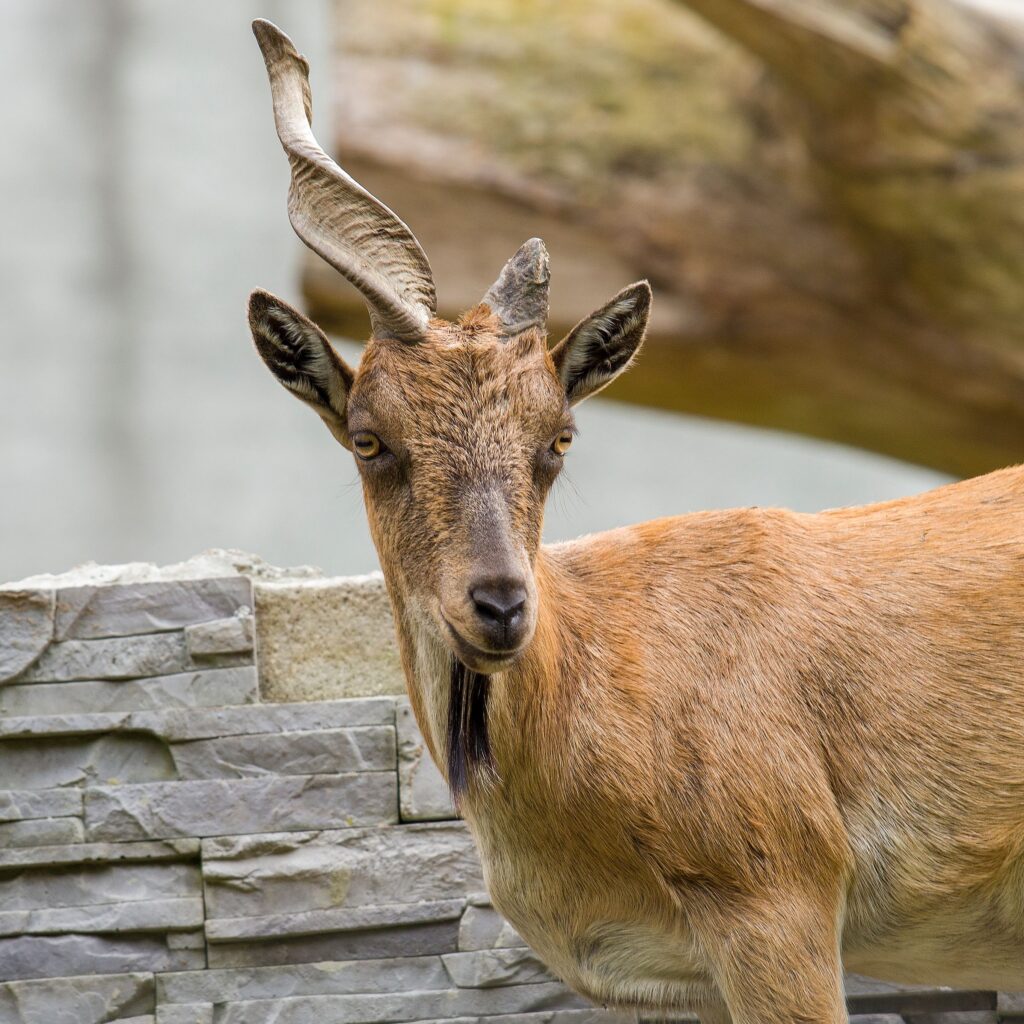
Females also have horns, but they are short and thin
Their appearance is strikingly unique among mountain goats.
② Body Size and Appearance
Body Length: Approximately 130-170 cm
Weight: Males 80-110 kg / Females 40-60 kg
Body Type: Slender but muscular
Coat Color: Grayish-brown to Brown
Winter Coat: Long feathers on the neck and chest (especially males)
Their majestic “king of the mountains” presence.
③ Masters of Rock Climbing
They can climb cliffs that appear nearly vertical.
Stable even on small footholds.
Exceptional jumping ability and balance.
Their climbing ability is unmatched among goats.
④ Herbivorous, but with a wide range of dietary habits.
Grass
Shrub leaves
Twigs and bark
Changes diet with the seasons
Diet adapted to harsh environments.
What kind of creature is it (personality/atmosphere)?
① Highly cautious
Early sensitive to human presence
Disappears before being spotted
Constantly monitors surroundings from high places
“Unapproachable wilderness.”
② Quiet and solitary
Usually lives in small groups
Often acts alone
Avoids unnecessary conflicts
Mountain hermit type.
③ Only violent during breeding season
Males clash with each other with their horns
A dramatic showdown of strength
A stark contrast to their usual calmness
④ Intelligent and cautious
Chooses safe routes
Memorizes dangerous areas
Does not take unreasonable actions
What does the ecology look like?
Markhor eats grass. Breeding occurs in the winter, when males fight each other to capture females by lunging at each other, grabbing their horns, and trying to throw them off balance. She has a gestation period of 135 to 170 days and can give birth to one or two calves. Their lifespan in the wild is about 11 to 13 years.
■ Basic Information
Classification: Mammal, Bovidae, Capricorn
Living Environment: Mountains and Rocky Mountains
Activity Period: Crepuscular (active in the morning and evening)
Lifespan: Approximately 10-13 years in the wild
Diet: Herbivorous
① Daily Rhythm
Morning and Evening
Peak Feeding Period
Eats grass, leaves, and shrubs
Activates on relatively low slopes
Daytime
Rests to avoid heat and predators
Ruminates in the shade of rocks or at high altitudes
Night
Rests at safe, elevated altitudes
Lifestyle designed to avoid heat and predators
② Movement and Behavior
Highly efficient climbing ability
Moves freely on steep slopes and cliffs
Retreats to higher ground when danger is detected
Vertical movement varies seasonally
③ Diet (What do they eat?)
Diet changes with the seasons
Spring/Summer: Grasses, young leaves, flowers
Autumn/Winter: Shrub leaves, branches, and bark
Flexibility to survive harsh winters
④ Social Structure
Usually small herds
Females + offspring
Horses of young individuals
Mature males tend to be solitary
Herd size varies depending on the situation.
⑤ Breeding Biology
Breeding Season
Autumn to early winter
Male Behavior
Horn-clashing fights
Competition for females
Birth
Spring to early summer
Gives birth to 1-2 offspring
Raising
Offspring can walk quickly
Follow their mothers on steep slopes
Are there any natural enemies?
The Eurasian lynx, snow leopard, Himalayan wolf, and brown bear are the main predators of the markhor. They may also be preyed upon by eagles and other animals. Markhors have sharp eyesight and a strong sense of smell to detect nearby predators, so they can detect them in advance and flee.
Markhor Vocalizations
While the vocalizations of the Markhor (Capra falconeri) are fundamentally similar to the “baa” or “meh” sounds of common goats, they also employ the low, short calls characteristic of wild goats.
Short “Meh” or “Baa” sounds (Contact calls)
These are made to check on other members of the herd.
They are frequently used for communication between mothers and their young.
The voice is slightly lower and more resonant than that of domestic goats.
They sound something like:
“Meh…”
“Beh, beh”
Calls of the young (Kids)
Young Markhor have relatively high-pitched voices.
They make small sounds like:
“Pee” or “Meh”
to call their mothers, signal anxiety, or keep up with the herd.
Male calls during the breeding season (Threats and courtship)
During the breeding season (autumn to winter), mature males produce low-pitched vocalizations.
Characteristics:
A low, growling sound
A resonant, nasal “rumbling” or “gurgling” quality
Threats directed at other males
In addition to fighting with their horns, they use their voices to assert their presence.
When sensing danger
When alert to predators (such as snow leopards or wolves),
they signal the herd by emitting:
short alarm calls
low vocalizations
snorting sounds
Seasonal Activities
The activity patterns of the Markhor (Capra falconeri) vary significantly by season.
Living in rugged mountainous terrain, they are heavily influenced by snow, temperature, and the breeding season.
🌱 Spring (March–May) — Snowmelt and Increased Foraging
Activity Level: ★★★★☆
Move to higher elevations as winter snow recedes
Actively feed on new shoots and young leaves
Period of high activity for herds of females and young
Key Behaviors:
Foraging on grass and shrub leaves
Increased daytime activity
Growth period for the young
Spring is a crucial season for regaining physical strength due to the abundance of food.
☀️ Summer (June–August) — Moving to Higher Altitudes
Activity Level: ★★★☆☆
Move to higher elevations to avoid the heat
Most active during the cool hours of morning and evening
Rest in the shade of rocks during the day
Behavior:
Morning: Foraging
Midday: Resting (rocky areas/shade)
Evening: Foraging again
Diet:
Grass
Tree leaves
Shrub shoots
Alpine plants
In summer, male and female herds often separate; males move alone or in small groups.
🍂 Autumn (September–November) — Breeding Season (Peak Activity)
Activity Level: ★★★★★
The most important season for the Markhor.
Male Behavior:
Battles using large horns
Competition for females
Low-pitched growling and displays of aggression
Horn Battles:
Interlocking horns
Pushing against each other
Strongest males succeed in breeding
During this period, males—usually wary and cautious—become highly active.
❄️ Winter (December–February) — Moving to Lower Altitudes and Conserving Energy
Activity Level: ★★☆☆☆
Descend to lower elevations as snow deepens
Efficient use of scarce food resources
Increased herding behavior
Characteristics:
Reduced movement
Minimized energy expenditure
Resting in rocky areas sheltered from the wind
Winter is a harsh season for weaker individuals and the young due to food scarcity.
Walking Speed
The walking speed of the markhor (Capra falconeri) during normal movement is estimated to be around 3–5 km/h.
However, as an animal adapted to rugged mountainous terrain, its agility in rocky areas—specifically its ability to climb and leap—is more important than its speed on flat ground.
🐐 Normal Walking
Approx. 3–5 km/h
Moves slowly in a herd
Forages for grass and leaves while walking
Carefully checks footing on steep slopes
The markhor is not an animal designed for high-speed travel over long distances, but rather for efficient movement across mountainous terrain.
🏃 When Hurrying or Fleeing
Estimated at around 20–30 km/h
When sensing danger:
Quickly scrambles up rocky terrain
Escapes using a zigzag pattern
Uses changes in elevation to evade predators
Its ability to move vertically is a greater asset than its top speed on flat ground.
🪨 Capabilities in Rocky Terrain
Markhor characteristics:
Can move across steep slopes approaching 60 degrees
Leaps between rock formations separated by several meters
Possesses hooves that provide excellent traction
Uses forelegs and hindlegs independently to secure footing
When escaping predators like snow leopards, it does not engage in a simple race of speed;
Instead of just “running fast,” it employs a strategy of
“fleeing to a place the predator cannot climb.”
About Markhor Cubby Animals
Markhor cubs may look adorable, but they’re “ready to fight” from the moment they’re born, adapting to the harsh mountain environment.
This article focuses on growth, behavior, and parent-child relationships.
Basics about Markhor Cubby Animals
Birthing Season: Spring to Early Summer (April to June)
Litter Size: 1 (Rarely 2)
Birth Weight: Approximately 2.5-3.5 kg
Birth Location: Hidden Rocky Areas or Cliff Shelves
Characteristics Immediately After Birth
① Incredible Athletic Ability
Standing within a few hours of birth
Walking and Jumping within a Day
Climbing Steep Slopes Within a Day
Evolution Doesn’t Wait Due to the Predators.
② Appearance
Light brown coat
Small body with long legs
Horns are absent at birth, with small protrusions emerging a few months later
Nursing and Diet
Nursing period: Approximately 4-6 months
Begins nibbling on grass at 2-3 weeks of age
Even after weaning, young continue to learn their mother’s behavior
“Copying” their mother’s behavior is important.
Mother-child relationship
Very close
Mothers are always aware of their young’s location
In times of danger, they guide their young to higher ground
They forage, move, and rest together
Raising young is entirely one-on-one.
Are markhors an endangered species
Unfortunately, the markhor is designated as an endangered species, and its population is decreasing dramatically due to the following reasons. The estimated population in 2013 was approximately 5,800.
hunting meat
Hunting for meat and horns stands out as the most important factor threatening the survival of markhor populations. As a result, isolated populations tend to become extinct. However, due to the following factors, the number of illegal cross-border hunters appears to be drastically decreasing.
Measures taken by the Pakistani government
Measures are also being taken to combat these illegal hunting practices. In order to preserve this species, Pakistan has banned hunting. Two reservations were established in Tajikistan in 1973 to protect the markhor. In India, markhors are fully protected under the Jammu and Kashmir Wildlife (Protection) Act, 1978.
Can markhors be kept?
The markhor is designated as an endangered species. It is extremely difficult for ordinary people to keep them.
① Legally almost impossible
IUCN Red List: Vulnerable
Captivity, trade, and private captivity are prohibited in many countries.
Listed under Appendix I of CITES (Convention on International Trade in Endangered Species of Wild Fauna and Flora).
International trade is generally prohibited.
② Extremely unique environmental requirements.
Vast mountainous and rocky terrain.
Varied terrain.
Dry climate.
Quiet environment.
Extremely stressful in enclosures on flat ground.
③ Low stress tolerance.
Highly cautious.
Not accustomed to people.
Prone to panic and injury.
Frequent accidents in captivity.
④ Virtually no record of captivity.
Very few examples exhibited worldwide.
Successful breeding is extremely rare.
Most are kept solely for conservation and research purposes.
Are there any exceptions?
National conservation facilities in the country of origin
International conservation breeding programs
Strict government permits are required
Only for species conservation purposes, not for “exhibition purposes.”
Zoos Housing the Species (Japan & Worldwide)
The markhor (Capra falconeri) is a very rare exhibit animal in Japan. Globally, however, many zoos keep them for conservation purposes.
Zoos in Japan
The main facilities currently known to house them are as follows:
Yumemigasaki Zoological Park
One of the few facilities in Japan where markhors are exhibited.
Visitors can observe the males’ large, spiral-shaped horns up close.
Utsunomiya Zoo
Known as a facility that maintains an ongoing markhor breeding program.
Note: While the Akita City Omoriyama Zoo in Akita City has also been reported to house markhors in recent years, the status of their collection is subject to change. We recommend checking the latest information before visiting.
Europe
Augsburg Zoo
Tierpark Hellabrunn
Wilhelma
Warsaw Zoo
Olomouc Zoo
Asia
Kabul Zoo
Padmaja Naidu Himalayan Zoological Park
Nainital Zoo
Night Safari
Al Bustan Zoological Centre
Introducing other animals
コメント