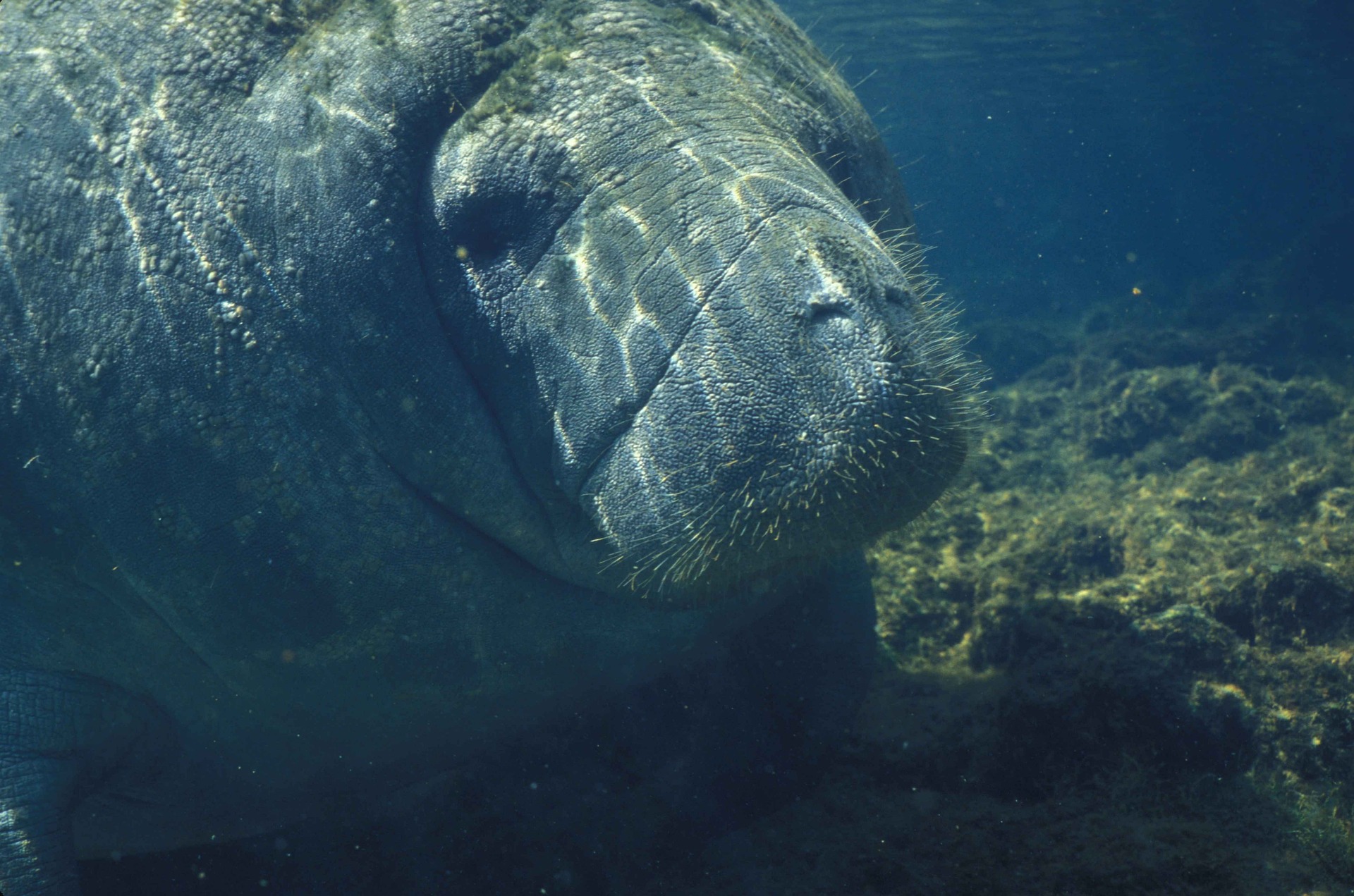
What kind of animal is a dugong? We will explain its characteristics, ecology, and habitat. The dugong is a mammal distributed in the Indian Ocean and the Western Pacific Ocean, and this species is the only member of the dugong family. However, despite their vast habitat, their numbers are very small and they are in a critical situation.





- What is a dugong? About basic status
- What are the roots and origins of the dugong?
- About habitat
- feature is? What kind of creature is it?
- What is your personality like?
- What is the ecology like?
- About Diving
- About Dugong Vocalizations
- Seasonal Activities
- Swimming Speed
- About Dugong Baby Animals
- Is the dugong an endangered species?
- Can dugongs be kept as pets?
- Zoos and Aquariums Housing Dugongs (Japan & Worldwide)
- Introducing other animals
What is a dugong? About basic status
Dugongs are mammals classified in the genus Dugong, family Dugongidae, order Dugongales. English is Dugong, scientific name is Dugong dugon. The body length is 3 meters and the weight is 450 kg. The list of information is as follows. Dugongs are also said to be “model mermaids”. Even in Pokemon, there is a monster called Dugong.
| Japanese(和名) | ジュゴン |
| English(英名) | Dugong |
| scientific name(学名) | Dugong dugon |
| classification(分類) | Mammalia、Sirenia、 Dugongidae、Dugong 哺乳綱、ジュゴン目、ジュゴン科、ジュゴン属 |
| IUCN Status(保全状況) | VULNERABLE |
| Length(体長) | 3m |
| Weight(体重) | 450kg |
What are the roots and origins of the dugong?
Although it is hard to imagine given their current appearance, the roots of the dugong (Dugong dugon) lie in mammals that lived on land approximately 50 million years ago. Dugongs are not related to whales; rather, they are marine mammals belonging to a lineage closely related to elephants.
Ancestors: “Land mammals closely related to elephants”
Dugongs belong to the group known as Sirenia (which includes dugongs and manatees).
Their evolutionary lineage follows this path:
Mammals related to primitive ungulates (hoofed mammals)
↓
Tethytheria
↓
Sirenia
↓
Dugongidae (Dugong family)
↓
Modern dugong
The Tethytheria group also includes the lineage of modern elephants, making dugongs and elephants distant relatives.
The earliest dugong ancestors walked on land
Early sirenians from about 50 million years ago (the Eocene epoch) differed significantly from modern dugongs.
Characteristics:
Had four legs
Capable of walking on land
Lived in rivers and shallow waters
Fed on aquatic plants
Representative early species:
Prorastomus sirenoides
Pezosiren portelli
These species are believed to have led a “semi-aquatic” lifestyle—living partly on land and partly in the water.
Why did they move into the ocean?
Living near the water became more advantageous for these ancestors than living on land.
Reasons:
① Abundant food sources
The shallow seas and estuaries of that time contained vast amounts of:
Seagrass
Aquatic plants
Soft vegetation
Dugong ancestors specialized in a plant-based diet rather than a carnivorous one.
② Easier to escape predators
The water was safer than the land, where many large carnivorous animals roamed. ③ Adaptation for an aquatic lifestyle
Evolutionary changes:
In the past:
Four legs
Capable of walking on land
↓
Present day:
Loss of hind limbs
Forelimbs transformed into flippers
Developed tail fluke
Fully adapted to life in the water
These are the changes that occurred.
When did the Dugongidae family originate?
The Dugongidae family—which includes the modern-day dugong—emerged approximately 40 million years ago.
Subsequently, sirenians (sea cows) spread across the globe, and at one time, a wide variety of species existed.
In the past, there were:
The gigantic Steller’s sea cow
Diverse ancient dugong species
…among others, though most have since gone extinct.
About classification
The dugong is a mammal distributed in the Indian Ocean and the Western Pacific Ocean, and this species is the only member of the dugong family.
Dugong Taxonomy
- 界 (Kingdom):動物界 (Animalia)
- 門 (Phylum):脊索動物門 (Chordata)
- 綱 (Class):哺乳綱 (Mammalia)
- 目 (Order):海牛目 (Sirenia)
- 科 (Family):ジュゴン科 (Dugongidae)
- 属 (Genus):ジュゴン属 (Dugong)
- 種 (Species):ジュゴン (Dugong dugon)
About habitat
Dugongs can be seen in tropical oceans such as the Indian Ocean, the Pacific Ocean, Australia, and the Red Sea. They can also be seen in the Philippines and around Okinawa in Japan. According to the documents, they are Sirenia and live in the natural ocean, so it is difficult to see them. Let’s take a look at some photos from the facility.
- Geographic Distribution
Dugongs live in shallow tropical and subtropical waters. Their main distribution areas are as follows:
East coast of Africa: Mozambique, Kenya, and Tanzania
Middle East: Persian Gulf coast
South Asia: India and Sri Lanka
Southeast Asia: Thailand, Malaysia, Indonesia, and the Philippines
Northern coast of Australia: Around the Great Barrier Reef
Pacific Islands: Papua New Guinea, Solomon Islands, etc.
- Habitat
Prefers shallow seagrass beds
Especially bays and lagoons with stable salinity
Mostly found in waters up to about 10-15 meters deep
Feeds on sandy or muddy seabeds
Does not particularly prefer rocky or steeply deep waters
- Behavior Patterns and Habitat Relationships
They may move depending on the distribution of seagrass.
They may form schools in isolated bays or shallow areas.
Breeding and rearing occur in calm, shallow waters with abundant seagrass.
feature is? What kind of creature is it?
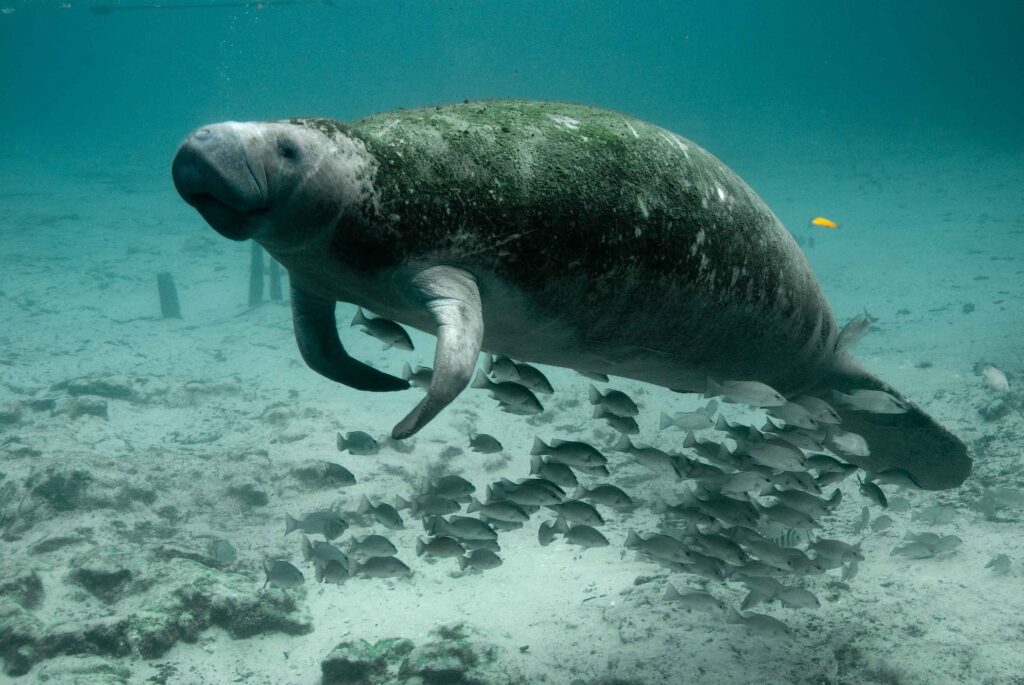
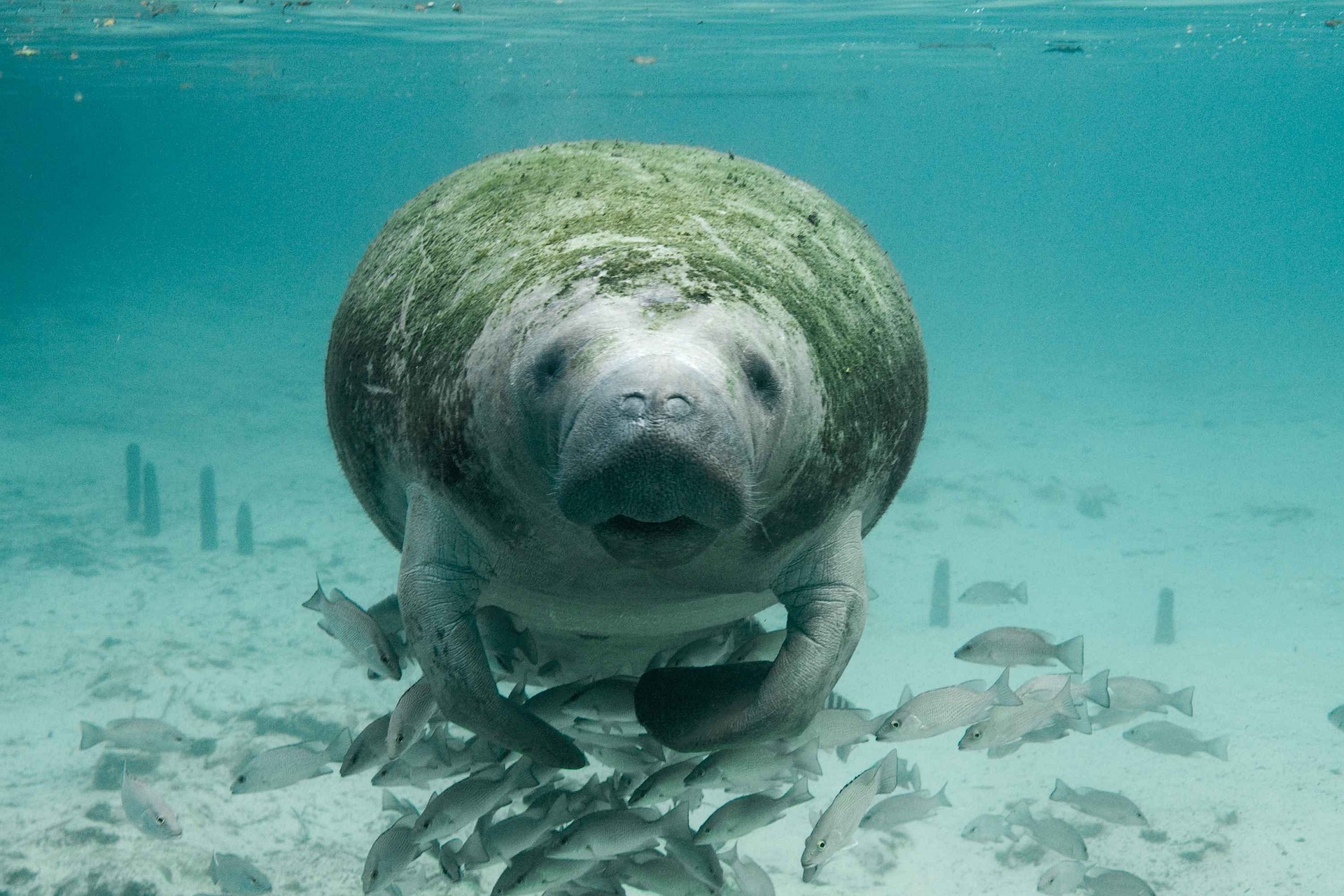
The dugong has a spindle-shaped body with a very thick upper lip and a flat, rounded tip. The ear holes are small, and so are the eyes. The forelimbs are fin-like and have no claws, and the hind limbs are degenerated. Hair grows sparsely all over the body, and the body color is gray, brown, or bluish gray. Dugongs live in areas with coral reefs and can dive to depths of more than 35 meters.
- Physical Characteristics
Body Type: Rounded, thick body, streamlined, and easy to swim.
Size:
Body Length: 2-4 m
Weight: Approximately 250-400 kg
Skin/Fur:
Thick skin and almost no hair.
Back is gray to brown, belly is slightly lighter.
Head/Face:
Nose points upward, allowing for easy breathing at the surface.
Mouth points downward, allowing for efficient feeding on seaweed.
- Limb/Tail Characteristics
Pectoral Fins: Two in front, used for steering and turning.
Caudal Fin: Swims using a horizontal tail fin like a dolphin.
Perfectly adapted to underwater life.
- Diet
Completely herbivorous.
Main food: Seaweed.
Uses its mouth to eat seaweed from the roots found in the sand and mud on the ocean floor.
Consumes 5-8% of its body weight in seaweed per day.
- Behavior/Lifestyle
They are completely aquatic and never come onto land.
They are slow swimmers but have great stamina.
They are not very social, and often live in small groups (mothers and calves or a few individuals).
They surface every few minutes to breathe.
What is your personality like?
Dugongs have a very docile personality. However, they are also very nervous animals, and have exceptionally good hearing, allowing them to detect predators. Their activity times vary greatly depending on the time of day. They often dive in the subtropical coastal waters to search for food.
- Gentle and gentle
They are rarely aggressive and are timid and docile towards humans and other animals.
As they are nicknamed “sea cows,” they are characterized by their leisurely movements.
- Social
They may form herds, but in small groups (mothers and calves or small groups of several animals).
Adults often act alone.
Even within herds, they rarely fight and are peaceful.
- Cautious and wary
When they sense danger or humans, they will slowly flee, keeping their distance.
They rarely make sudden movements or attack.
They maintain safety by spending their time relaxing in shallow waters and seagrass beds.
- Laid-back and at their own pace
They move and eat very slowly.
They will feed on seagrass in the same place for long periods of time or rest on the surface.
They are active both day and night, but they live leisurely in shallow waters where they are less susceptible to predation.
What is the ecology like?
Dugongs are herbivorous and subsist mainly on seaweed such as eelgrass. There is no fixed breeding season, and the gestation period is 13 months. They can give birth to one cub at a time. Both males and females reach sexual maturity as early as 6 years. They have a very long lifespan, with some living for over 50 years, and some can live up to 70 years.
- Life Rhythm
Completely aquatic and never comes onto land
Resurfacing every few minutes to breathe
Slow-moving and capable of long swims
Active day and night, but often spends their time relaxing in shallow waters or seagrass beds
- Diet
Completely herbivorous (seagrass is their staple diet)
Seagrass:
Cycad, eelgrass, dugong grass, etc.
Eats 5-8% of their body weight in seagrass per day
During feeding, they submerge their heads in the seafloor and pull up the roots
- Reproduction and Rearing
Breeding Season: Varies by region; in Australia, they breed almost year-round
Gestation Period: Approximately 13 months (long!)
Litter Size: Usually one calf
Rearing:
Mothers protect their calves, nurse them, and teach them how to swim
Mothers and calves stay together for several months to a year
- Movement and Living Range
Move mainly to shallow waters with seagrass beds
When gregarious, Mothers and children, small groups
Home ranges vary depending on seagrass distribution
Are there any natural enemies?
Dugongs’ natural enemy is sharks. Killer whales are also very large prey. Looking at a lot of research and survey data, there is a possibility of extinction because there is no defense against these things.
About Diving
While dugongs do not possess the same capacity for prolonged or deep-sea diving as whales or dolphins, they are adapted for diving in the shallow waters where they graze on seagrass.
Dugong Diving Duration
Typical: Approximately 3 to 6 minutes
Extended: Instances of dives lasting around 10 to 11 minutes have been recorded
After breathing at the surface, dugongs slowly descend to the seafloor to forage for seagrass. Unlike dolphins, which swim rapidly, dugongs employ an energy-efficient diving style.
Diving Depth
They generally remain active in shallow waters, typically around 10 meters deep.
They have been observed diving to depths of approximately 30 meters while foraging.
Since their primary food source consists of seagrass (such as eelgrass) growing on the seafloor, there is no need for them to dive into deep waters.
Diving Mechanism
As mammals, dugongs cannot breathe underwater. Their diving process follows this pattern:
Taking air into the lungs at the surface
Closing their nasal valves before submerging
Foraging on the seafloor while conserving oxygen
Returning to the surface after a few minutes
About Dugong Vocalizations
Although dugongs appear to be quiet, gentle animals, they communicate with one another by producing various sounds underwater.
Types of Dugong Vocalizations
Dugongs produce several characteristic sounds, including:
Short, high-pitched “kyu-kyu” sounds
These are believed to be used for calling out to others or determining each other’s locations.
They are frequently heard between mothers and their calves.
“Pi” or “chi” clicking sounds
These are used to sense the surrounding environment or gauge the distance to other dugongs.
Low, growl-like sounds
These may be produced during the breeding season or when the animal is excited.
Communication between mother and calf
Vocalizations play a crucial role in the relationship between a mother dugong and her calf.
Calves call out with high-pitched sounds when separated from their mothers.
Mothers use sound to locate their calves.
Mother and calf recognize each other through these vocalizations.
Because dugong calves live close to their mothers for an extended period after birth, they have developed sophisticated forms of acoustic communication.
What do they sound like to humans?
Dugong sounds recorded underwater are sometimes described as:
“Sounds resembling bird chirps”
“Sounds like small whistles”
“Electronic-like sounds that are softer than those of dolphins”
While dugongs do not use the complex echolocation (using clicks) seen in dolphins, they do utilize sound for social interaction.
Seasonal Activities
Dugong activity varies depending on water temperature, seagrass growth, and reproductive cycles in their habitat. Since they inhabit shallow tropical to subtropical waters, they do not undergo major seasonal phenomena like hibernation or migration (as seen in animals in regions with distinct four seasons), but they do exhibit seasonal behavioral patterns.
Spring (March–May)
A period of increased activity
Water temperatures rise, and seagrass growth accelerates.
Foraging activity increases.
They often spend long periods searching for food in shallow waters.
Key behaviors
Eating seagrass
Moving between seagrass beds
Increased social interaction with other dugongs
From spring to early summer, dugongs tend to congregate in areas where seagrass is abundant.
Summer (June–August)
A period marked by breeding and rearing calves
Dugong activity levels rise in warmer waters.
Key behaviors
Breeding behavior
Mother and calf swimming together
Foraging in shallow waters
Mother dugongs swim with their calves, nursing them and teaching them how to eat seagrass.
During this period of high water temperatures, their metabolism stabilizes, and they remain relatively active.
Autumn (September–November)
A period for securing food
Consuming large amounts of seagrass to maintain physical strength
Moving between seagrass beds
Key behaviors
Prolonged foraging
Increased frequency of dives
Selection of habitat
Because dugongs consume vast quantities of seagrass daily, they adjust their range based on the condition of the seagrass beds.
Winter (December–February)
Activity levels decline slightly
While they do not hibernate in tropical regions, their activity decreases as water temperatures drop.
Key behaviors
Moving to areas with stable water temperatures
Utilizing deeper waters or warmer zones
Shorter foraging times
However, in warmer regions like Okinawa, they remain active throughout the year.
Swimming Speed
Normal swimming speed
Approximately 2–5 km/h
They swim slowly near the seabed while searching for seagrass.
Dugongs are closely related to manatees and are not the type of animal that swims continuously at high speeds like dolphins; instead, they move leisurely to conserve energy.
Maximum speed
Can reach around 20 km/h
When sensing danger or traveling, they vigorously move their tail flukes to temporarily increase their speed.
“Walking-like movements” on the seabed
On the seabed, dugongs use their forelimbs (pectoral flippers) to adjust their posture while using their tail flukes for propulsion.
However, they do not:
Walk on all fours like elephants
Move by walking along the seabed
On the seabed, their movements consist of:
Swimming at low speeds
Tilting their bodies to graze on seagrass
Adjusting their direction using their pectoral flippers
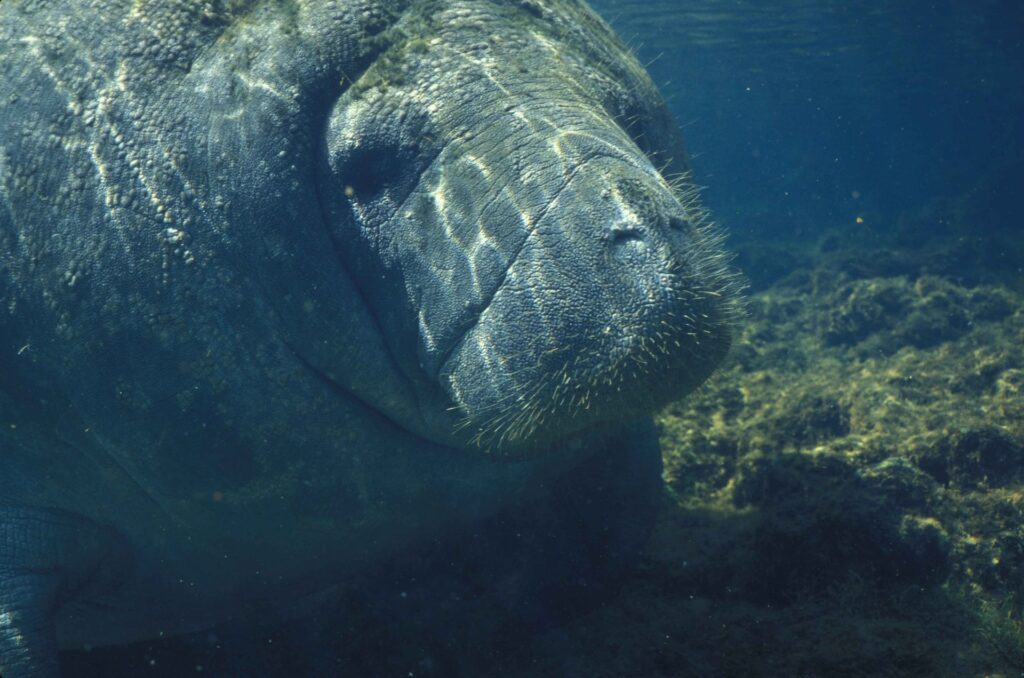
About Dugong Baby Animals
This article provides detailed information about dugong (Dugong dugon) baby animals.
- Birth and Body Size
Litter Size: Usually one pup (twins are extremely rare)
Weight: Approximately 30-35 kg at birth
Body Length: Approximately 1 m at birth
Skin/Fur: Almost hairless, soft gray skin
- Growth
Lactation: Breastfeeds for approximately 1-2 years
Independence: Learns how to swim and eat seaweed with the help of its mother’s care
Adult Body Size: Reaches nearly adult size at 3-5 years
Maturity: Sexual maturity is very slow, occurring at approximately 10-15 years
- Behavior
Immediately after birth, they stay with their mother
Learns how to swim by watching the movements of their mother’s pectoral and caudal fins
Learns how to eat seaweed from their mother
Hides near their mother when sensing danger
- Personality and Behaviors
Young pups They are curious and playful.
However, they are also cautious and will quickly hide near their mother if they sense danger.
They are highly dependent on their mothers and it takes a long time for them to become independent.
- Caution (Dangers to Young Animals in the Wild)
Natural predators include sharks and crocodiles.
Habitat destruction and human activity have led to a low survival rate.
Protecting mothers and young animals directly contributes to habitat conservation.
Is the dugong an endangered species?
Dugongs are designated as an endangered species (red list). Their meat is edible and considered very delicious, leading to overfishing. Furthermore, marine pollution and the resulting decline in seaweed, which serves as their food, have also dealt a major blow. In Japan, they were designated as a national natural monument in 1972, and since 2003, the Wildlife Protection Act has prohibited their capture and killing, in principle. Dugongs are also listed in Appendix I of the Convention on International Trade in Endangered Species of Wild Fauna and Flora (CITES), so international trade is strictly restricted. In the ocean, efforts are underway to conserve wild sea cows.
- Conservation Status (Endangered Species Classification)
IUCN Red List (International Union for Conservation of Nature):
Vulnerable (VU) = Equivalent to Critically Endangered
Rated “high risk of extinction in the wild in the future.”
Regional Differences:
Relatively stable in protected areas such as northern Australia.
Populations are declining in Southeast Asia and South Asia, and are locally endangered.
- Causes of Extinction
Habitat Destruction
Coastal Development, Port Construction, and Seagrass Bed Reduction
Seagrass reduction leads to food shortages and makes survival difficult.
Collisions with Fisheries
Frequent entanglement in fishing nets
Injuries and deaths caused by fishing gear have been reported.
Poaching
In some areas, meat, oil, and bones are traditionally used.
Collisions with Ships
Injuries can occur in shallow waters where ships pass.
- Conservation Activities
Protection of seagrass beds and coastal areas, and fishing regulations are being implemented.
Wild population monitoring and the establishment of protected areas are progressing.
Can dugongs be kept as pets?
Dugongs live in very harsh conditions, and due to the effects of development in society, it is extremely difficult to keep them in captivity. We recommend viewing them at aquariums. In recent years, there have been reports of them being seen in the wild along coastlines, so you can see them swimming along the coastal areas of the ocean with manatees and other creatures.
- Legal Issues
Dugongs are listed as an endangered species (IUCN: Vulnerable)
Listed under Appendix I or II of the international treaty CITES (Convention on International Trade in Endangered Species of Wild Fauna and Flora),
Commercial and private captivity is generally prohibited.
Keeping them without special permission is illegal.
- Biology and Personality
They are fully aquatic and do not come onto land.
They require large, shallow waters and seagrass beds.
Adults are very large, weighing 250-400 kg,
making it physically impossible to keep them in a home or aquarium.
They are gentle but timid and sensitive to stress.
- Difficulties in Care
They require large amounts of seagrass (5-8% of their body weight per day).
They require a high level of exercise, requiring a spacious aquarium or marine environment.
Breeding is extremely difficult due to their long breeding period (13 months of gestation, 1-2 years of lactation).
- Alternatives
If you want to see dugongs up close,
Observing them at an aquarium or conservation facility is the most practical option.
Learning about the ecology of wild individuals also contributes to their conservation.
Zoos and Aquariums Housing Dugongs (Japan & Worldwide)
Dugongs are extremely difficult animals to keep in captivity, and very few facilities worldwide house them. The challenges involved include securing their staple diet of seagrass, providing ample swimming space, managing water quality, and accommodating their long lifespans. Currently, there are only a limited number of facilities globally where the public can view them.
🇯🇵 Locations in Japan
Toba Aquarium (Mie Prefecture)
The only aquarium in Japan where you can see a dugong.
Individual in captivity
Name: Serena
Sex: Female
Arrival: 1987
Origin: Philippines
Notable trait: Known for holding a record for long-term captivity.
Care highlights
Consumes large amounts of seagrass daily (up to approximately 30 kg).
Shares a deep bond of trust with her keepers.
Years of husbandry experience contribute to dugong conservation research.
🌏 Major facilities worldwide where dugongs can be seen
🇦🇺 Sea World Gold Coast
Australia is a natural habitat for wild dugongs; the facility engages in the protection and research of rescued individuals.
Features:
Care for injured dugongs
Rehabilitation
Research aimed at releasing them back into the wild
*This facility plays a significant role in conservation activities, rather than serving solely as an exhibition venue.
🇸🇬 S.E.A. Aquarium
Known as a facility that has housed dugongs in the past.
The waters around Singapore are close to dugong habitats, and the facility is linked to marine life research in Southeast Asia.
Introducing other animals



コメント