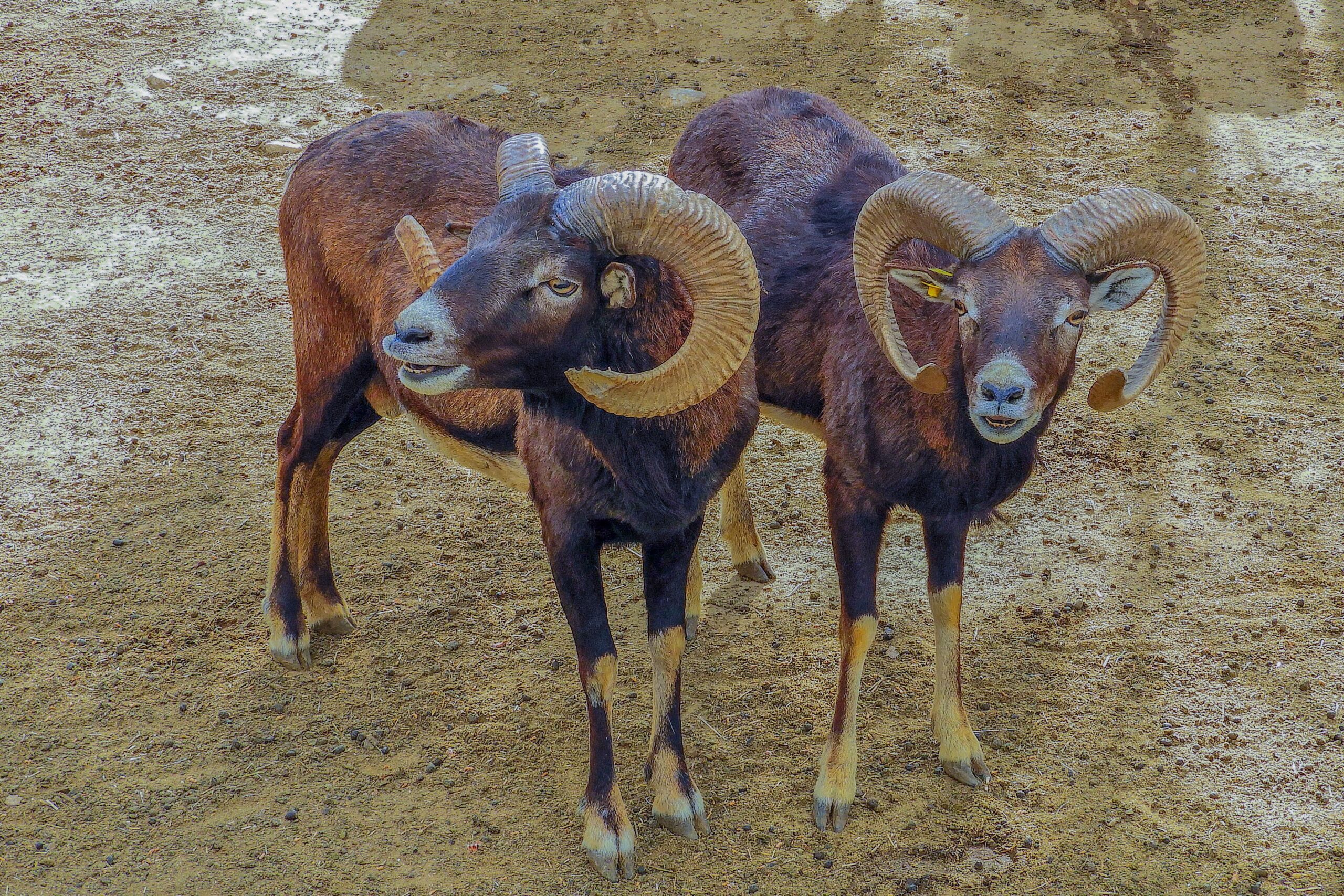
What kind of animal is a mouflon? We will explain its characteristics, ecology, and habitat. This animal is considered to be one of the original breeds of sheep, which are widely used as livestock around the world. It is an artiodactyl, classified as a member of the ovine family, and has a wide distribution, but it is actually an endangered species.





- What is Mouflon? About basic status
- What are the roots and origins of the mouflon?
- About habitat
- feature is? What kind of creature is it?
- What is your personality like?
- What is the ecology like?
- About Molting
- Vocalizations
- Seasonal Activities
- Walking Speed
- About Mouflon Baby Animals
- Is mouflon an endangered species?
- Can mouflons be kept as pets?
- Zoos Housing Mouflon (Japan & Worldwide)
- Introducing other animals
What is Mouflon? About basic status
The mouflon is an artiodactyl that is classified in the mammalian class Artiodactyla, bovidae, ovine genus. Its scientific name is Ovis gmelini, its body length is 110 – 145 cm and its weight is 25 – 90 kg.
| Japanese(和名) | ムフロン |
| English(英名) | Asia muflon/muflon |
| scientific name(学名) | Ovis gmelini |
| classification(分類) | Mammalia、Artiodactyla、 Bovidae、Ovis 哺乳綱、偶蹄目、ウシ科、ヒツジ属 |
| IUCN Status(保全状況) | NEAR THREATENED |
| Length(体長) | 110 – 145cm |
| Weight(体重) | 25 – 90kg |
What are the roots and origins of the mouflon?
The mouflon is considered the most important ancestor of modern domestic sheep.
Origins
Current research indicates that the mouflon’s ancestor was a wild sheep that evolved in West Asia (the Middle East), inhabiting the following regions:
Eastern Turkey
Armenia
Azerbaijan
Iran
Georgia
Cyprus
This wild species is currently classified primarily as the Asiatic mouflon (Ovis gmelini).
Relationship to domestic sheep
Humans began domesticating wild mouflons approximately 10,000 to 11,000 years ago during the Neolithic period, in the region stretching from eastern Turkey to western Iran (the Fertile Crescent).
This domestication process is believed to have given rise to the domestic sheep (Ovis aries) found worldwide today. Genetic analysis strongly supports the conclusion that the Asiatic mouflon is the primary ancestor of domestic sheep.
Origins of the European mouflon
The situation is somewhat different for the European mouflon (found on the islands of Corsica and Sardinia).
Recent research suggests the following prevailing theory:
Humans brought early domestic sheep to Mediterranean islands approximately 7,000 to 10,000 years ago,
and some of these sheep reverted to the wild (became feral), eventually evolving into the modern European mouflon.
Consequently, the European mouflon is sometimes viewed not as a “truly wild species,” but rather as a population of very ancient domestic sheep that returned to a wild state.
Lineage Overview
Wild Asiatic mouflon (Ovis gmelini)
│
Domesticated approx. 10,000 years ago
│
Domestic sheep (Ovis aries)
│
Some moved to Mediterranean islands
│
Reverted to the wild
│
European mouflon
About classification
Mouflon is an artiodactyl, but there is a theory that it is a cetacean artiodactyla, but it is considered to be either.
Taxonomy of Mouflon
- 界 (Kingdom):動物界 (Animalia)
- 門 (Phylum):脊索動物門 (Chordata)
- 綱 (Class):哺乳綱 (Mammalia)
- 目 (Order):偶蹄目 (Artiodactyla)
- 科 (Family):ウシ科 (Bovidae)
- 属 (Genus):ヒツジ属 (Ovis)
- 種 (Species):オビヒツジ(Ovis orientalis)
- 亜種:
- Ovis orientalis musimon(ヨーロッパムフロン)
- Ovis orientalis orientalis(中東の原種に近い亜種)
About habitat
Mouflon is distributed in Armenia, southern Azerbaijan, Iran, and Türkiye.
- Geographic Distribution
European Mouflon (O. o. musimon)
Corsica, Sardinia (Mediterranean)
Originally wild, now found in protected areas and under hunting control
Mouflon (O. o. orientalis) close to the original species
Middle East and Central Asia (Turkey, Iran, Azerbaijan, Armenia, etc.)
- Habitat
Prefers mountainous regions and rocky slopes
Dry hills and grasslands with sparse trees
Adapted to life on rocky and steep slopes, making it easy to escape predators
- Relationship between Behavior and Habitat
Rests in the shade of rocks or trees during the day and forages in the morning and evening
Eating grasses and shrubs, their range is limited to slopes rich in grass and shrubs
They often travel in small groups, ranging from a few to several dozen individuals
feature is? What kind of creature is it?
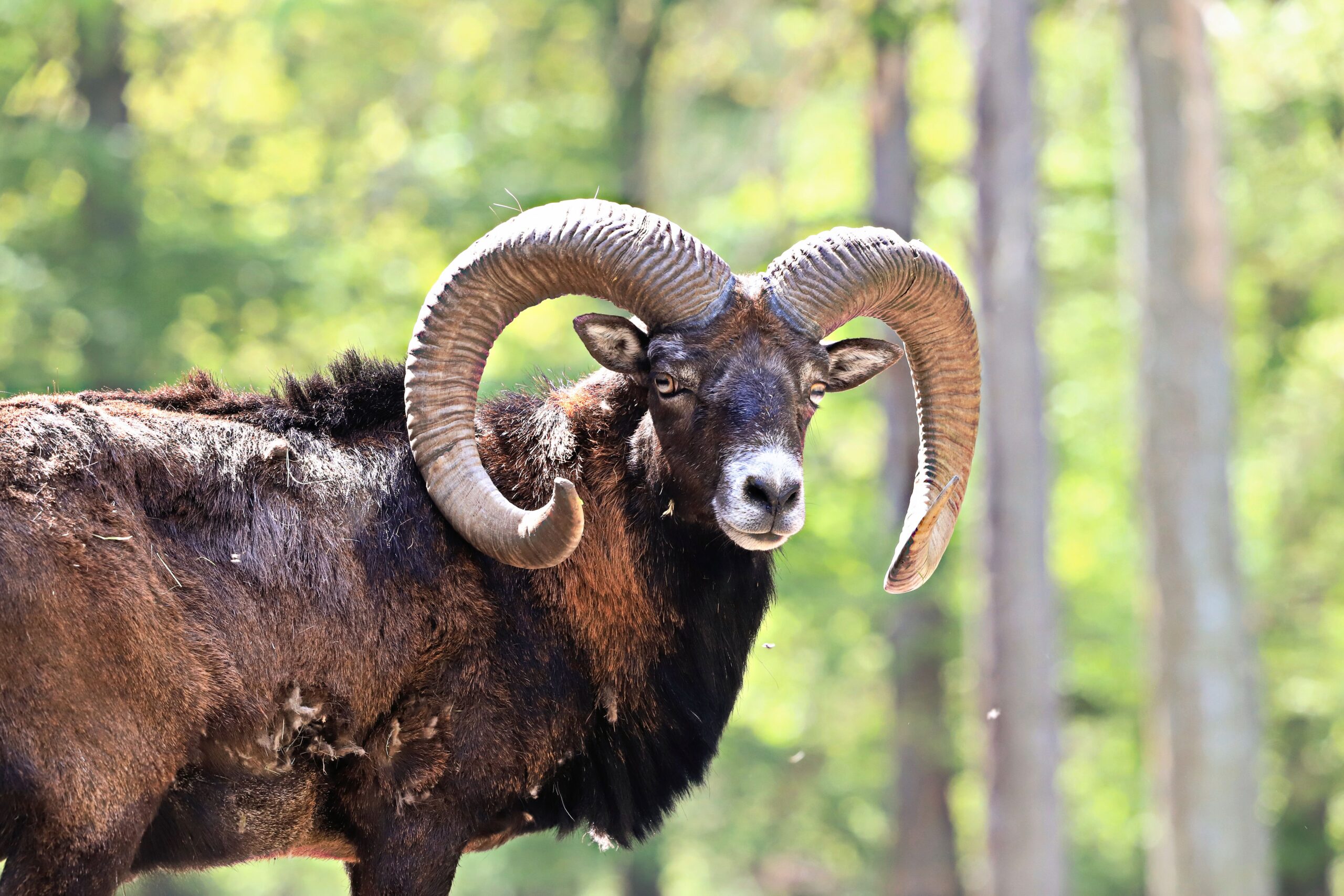
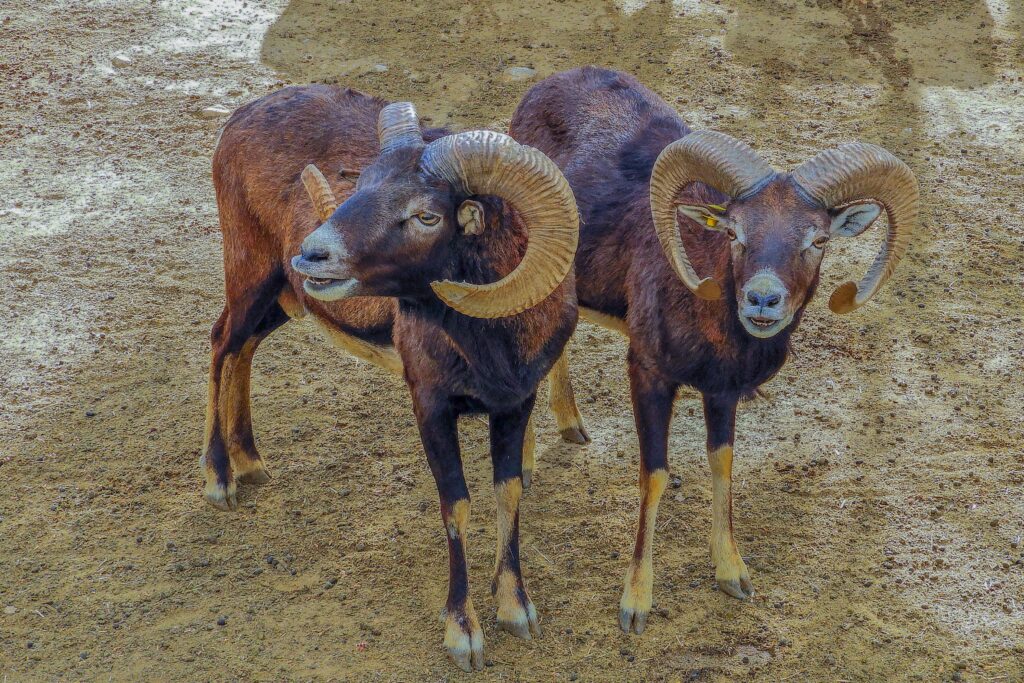
The mouflon’s fur is reddish-brown, brownish-brown, or blackish-brown, and tends to turn black in winter. The abdomen and half of the limbs are whitish, and the area around the eyes and mouth is also white. The mouflon is considered one of the original breeds of sheep, which are widely used as livestock around the world. The male’s horns turn in a spiral, but the female’s horns only have a trace. They live in groups of about 50 to 100 individuals and are active during the day. They prefer a variety of environments, from the coast to mountains and cliffs above 5,000 meters above sea level.
- Physical Characteristics
Size:
Body Length: Approximately 1.0-1.5 m
Height: Approximately 70-90 cm
Weight: Approximately 25-60 kg (Males are larger and have larger horns)
Coat Color:
Males: Reddish-brown to dark brown, with a black band on the back
Females: Slightly lighter brown, with small or almost no horns
Horns:
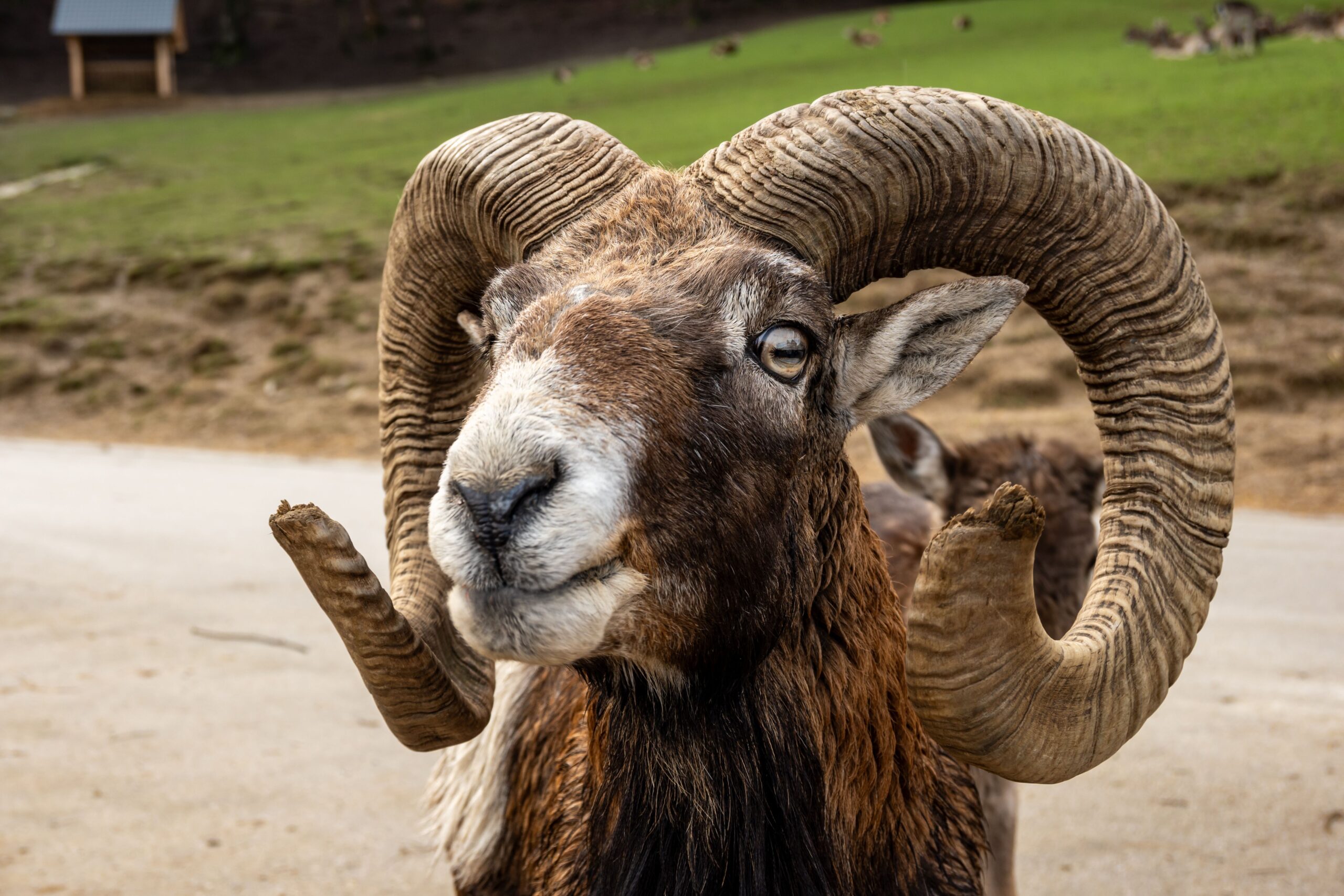
Males are characterized by large, thick, curved horns
Females have small or almost no horns
- Limbs and Body Shape
Legs are slender and muscular, adapted for running up rocky surfaces and slopes
Claws are hard and sharp for climbing rocky surfaces
Body shape is not streamlined, but stability is emphasized
- Diet
Herbivore (eats shrubs, grasses, and leaves)
Forages for readily available plants on dry mountain slopes
- Behavior/Lifestyle
Diurnal and active during the day
They often travel in groups, with males claiming territories during the breeding season
They have the athletic ability to move freely over rocky terrain and steep slopes
What is your personality like?
Males have a combative side and sometimes fight over females by violently clashing their large horns against each other, but females are the opposite and have a quiet personality.
- Highly Cautious
As wild animals, they are extremely timid and cautious.
If they sense humans or large predators, they will immediately flee to rocky areas or steep slopes.
They stay safe by living in groups.
- They Live in Groups
They are social within the group, with hierarchical relationships established.
Females and young individuals cooperate within the group.
Males become more territorial during breeding season.
- Gentle, but Aggressive During Breeding
Normally calm and docile.
During breeding season, males engage in strength contests and horn clashes.
Apart from breeding season, they rarely fight and are peaceful.
- Activity Patterns
They are diurnal, foraging and moving during the day.
They are adept at navigating rocky areas and slopes, allowing them to quickly escape.
When they sense danger, they quietly distance themselves and are not aggressive.
What is the ecology like?
Mouflons are herbivorous, so they feed on plants, leaves, fruits, bark, etc. The gestation period is 150-180 days, and at a time she gives birth to 1-2 young. Lifespan is 12 to 18 years.
- Life Rhythm
Diurnal, active during the day
Forages while moving along rocky terrain and slopes
Often rests in the shade of rocks or on cliffs at night
- Diet
Herbivore: Eats shrubs, grasses, leaves, and buds
Feeds on easily accessible plants in mountainous areas and dry slopes
Often moves and eats in groups
- Breeding and Rearing
Breeding Season: Autumn to Winter (varies by region)
Males use their antlers to compete in battles with other males during the breeding season
Females have a gestation period of approximately 5 months
Usually gives birth to a single cub (rarely twins)
Cubs are protected by their mother and pack, and learn to move and forage within a few months
- Movement and Living Range
Skillfully navigates rocky terrain and steep slopes
Packs can sometimes gather in groups of several dozen
Live within areas with food and water sources
Quickly flees to slopes when faced with predators (such as wolves)
Are there any natural enemies?
Mouflons are preyed upon in the wild by lynx, wolves, and brown bears.
About Molting
The molting process in mouflons is a crucial seasonal adaptation for survival in the wild. Unlike domesticated sheep, they naturally shed and regrow their coats every year.
Molting Seasons
Spring (Around April–June)
The winter coat sheds, giving way to a shorter, thinner summer coat.
This facilitates better body temperature regulation as temperatures rise.
Autumn (Around September–November)
A new winter coat begins to grow.
The undercoat thickens to prepare for the cold.
The exact timing may vary slightly depending on the region and climate.
How Molting Works
Mouflons have two main types of hair:
Guard Hair (Outer Coat)
Long, coarse hair.
Protects the body from rain and wind.
Undercoat
Fine, soft hair.
Traps air to act as insulation.
In spring, the winter undercoat sheds heavily, making the body lighter.
Why Don’t Domesticated Sheep Molt?
Wild mouflons possess a mechanism to grow only the amount of hair needed for survival and naturally shed it when it is no longer required.
In contrast, during the process of domesticating sheep—which began about 10,000 years ago—humans selectively bred individuals that:
Produced more wool
Had finer, softer wool
Did not shed their wool easily
Vocalizations
While mouflons are generally quiet animals, they use a variety of vocalizations depending on the situation. Their calls are similar to the “baa” of domestic sheep, but because they live in the wild, they tend to vocalize less frequently.
Mother-Offspring Communication
Mothers make short, soft “meh” or “beh” sounds to call their young.
Lambs also call back in a higher-pitched voice if they become separated from their mothers.
They use these calls to locate one another.
Alerting to Danger
When they detect a predator (such as a wolf, fox, or human),
they may emit short, sharp sounds like “buet!” or “ba!”
or snorting sounds like “huff!” or “psh!”
In addition to vocalizations, they may alert the herd to danger through behaviors such as stomping the ground or freezing with their heads raised.
Breeding Season (Rut)
During the breeding season, which spans from autumn to early winter, males
make low, growling sounds
and snorting noises
to announce their presence to females.
However, for males, a test of strength involving clashing horns is more important than vocalizing. They may charge from a distance of several dozen meters and collide with a loud crash.
Herd Communication
While moving as a herd,
they may use quiet, short calls
and snorting sounds
to communicate with nearby members of the group.
Seasonal Activities
Mouflon activity patterns vary significantly by season. Adapted to the harsh environments of mountainous regions, wild mouflon undergo seasonal changes in breeding, feeding, molting, and herd composition.
Spring (March–May) — A Season of Birth and Recovery
Key Activities
Molting from winter coat to summer coat
Birthing
Herd reorganization
Nutritional recovery
Behaviors
Moving from lower elevations to higher ground as snow melts
Actively feeding on new shoots and young grass
Females giving birth in rocky crevices or safe locations
Rearing Young
Births occur primarily between March and May
Usually a single lamb (twins are rare)
Lambs become able to walk within a few hours to a day of birth
Spring is a crucial time for rearing young, and the bond between mothers and lambs strengthens within female herds.
Summer (June–August) — A Season Spent at High Altitudes
Key Activities
Foraging
Physical recovery
Avoiding the heat
Behaviors
Resting in the shade of rocks during the hottest parts of the day
Foraging actively during the morning and evening
Moving to higher elevations
In summer, mouflon feed on:
Grass
Leaves
Shrub shoots
Herbs
During this period, males often separate from female herds to form male-only groups (bachelor herds).
Autumn (September–November) — Breeding Season
Key Activities
Mating season (rut)
Male-to-male competition
This is the most dramatic season for mouflon.
Male Behaviors
Fighting using large horns
Approaching female herds
Establishing dominance
Males compete through a sequence of actions:
Staring each other down
Running side-by-side
Maintaining distance
Charging and clashing horns
Rank is determined by horn size, age, and physical strength. Reproduction
Mating occurs primarily in autumn.
Gestation period: Approximately 5 months.
Birth takes place the following spring.
Winter (December–February): A season where survival is the priority.
Key Activities
Conserving energy
Foraging for food
Huddling in groups to stay warm
Behavior
Utilizing slopes and rocky areas that offer shelter from the wind
Moving to south-facing slopes with less snow cover
Reducing active hours
As grass becomes scarce in winter,
they feed on items such as:
dried grass
tree buds
shrubs
tree bark
Since males are physically depleted after the breeding season, winter is a crucial time for them to regain their strength.
Walking Speed
The walking speed of the mouflon varies depending on the environment and its level of alertness. While there are few recorded measurements of the exact “normal walking speed” for wild individuals, behavioral observations suggest the following:
Normal Walking
Approximately 2–4 km/h
Speed when the herd moves slowly
Even slower when walking while foraging
Mouflons are not animals designed for high-speed travel over long distances; instead, they excel at moving steadily across mountainous terrain.
Brisk Walking / Alert Movement
Approximately 5–8 km/h
When sensing danger, they:
Raise their heads
Check the herd’s direction
Move together toward a slope
…and gradually increase their speed.
Running Speed
Mouflons possess great explosive power and can run quite fast over short distances.
Top speed: Approximately 40–50 km/h (estimated)
They move at high speeds particularly when:
Fleeing from predators
Engaging in conflicts between males
Traversing steep slopes
Climbing Ability (Key Characteristic)
The mouflon’s strength lies not in speed on flat ground, but in its agility on rocky terrain.
Characteristics:
Quickly climbing steep slopes
Leaping across rocky gaps several meters wide
Maintaining balance on unstable footing
Their hooves feature a structure where:
The outer edge is hard
The inner part is soft and acts as a non-slip grip
…allowing them to gain a firm foothold on rocky surfaces.
About Mouflon Baby Animals
This article provides detailed information about mouflon (Ovis orientalis musimon) baby animals.
- Birth and Body Size
Litter Size: Usually one pup (twins are very rare)
Weight: Approximately 3-5 kg at birth
Body Length: Approximately 40-50 cm at birth
Fur color is light brown in both males and females, later changing to the reddish brown of adults
Horns are almost absent at birth and grow as they mature
- Growth
Lactation Period: Approximately 2-3 months of breastfeeding
Cubs stay safe with their mothers
Learn foraging and navigating rocky terrain within the pack
Sexual Maturity: Males reach maturity at approximately 2-3 years, females at approximately 1.5-2 years
- Behavior
Learn foraging skills while accompanying their mother
Practice jumping and navigating rocky terrain and slopes
Learn defenses against predators under the protection of the pack
- Personality and Behavior
Cubs They are curious and playful.
However, they are also highly cautious and will quickly hide near their mother if they sense danger.
They are highly dependent on their mother and pack until they become independent.
- Caution (Dangers to Young Animals in the Wild)
Natural predators include wolves and large birds of prey.
Accidents can occur on steep slopes and rocky areas.
Protecting their habitat and the presence of the pack are essential for the survival of young animals.
Summary
Young animals are protected by their mother and pack, and learn to forage and move around.
They grow relatively quickly, but it takes 2-3 years for them to reach sexual maturity.
They become independent as they adapt to life on rocky terrain.
Is mouflon an endangered species?
The mouflon’s habitat is being destroyed due to deforestation, and its population is drastically decreasing. It is currently an endangered species. Mouflon is protected in Armenia and Azerbaijan. In Turkey and Iran, hunting is not allowed without special permission. Since 2019, it has been listed in Appendix I of CITES.
- Conservation Status (IUCN Red List)
Ovis orientalis (parent species of the mouflon):
Near Threatened (NT) = Near Threatened
“Not currently at risk of extinction, but may be at risk due to habitat degradation in the future.”
European Mouflon (O. o. musimon):
Populations are primarily reintroduced to protected islands and parks.
Many areas remain stable, and the species is not currently endangered.
- Causes of Threat (by Population)
Habitat Decline
Natural mountain areas are declining due to deforestation and development.
Hunting Pressure
Populations have declined due to hunting for meat and antlers.
Hunting restrictions are currently in place in many areas.
Decreased genetic diversity
Inbreeding is a problem in small populations on islands and in protected areas.
- Conservation Activities
Management in protected areas and national parks
Population reintroductions and population monitoring
Many areas remain stable due to hunting restrictions and habitat conservation.
Can mouflons be kept as pets?
Because of the above, Mouflon is extremely well protected. Therefore, it is not suitable for breeding. There is also information on viewing inside the zoo, so be sure to visit the official page.
- Legal and Regulatory Issues
In many countries, they are protected as wild animals, and private ownership is subject to permits or is prohibited.
European mouflons have been reintroduced to protected islands and parks, so capturing and keeping them may be illegal.
- Biology and Personality
They are wild animals adapted to rocky and mountainous areas and require ample space for exercise.
They have a tendency to live in groups, and solitary captivity can be stressful.
During the breeding season, males fight with each other using their horns, making them difficult to manage in a domestic environment.
- Difficulties in Care
Large exercise areas: They require an environment such as rocky areas or slopes.
Diet: They feed on wild grasses and shrubs, making nutritional management difficult.
Considering their breeding and group behavior, they require an environment as close to their natural habitat as possible to maintain their health.
- Alternatives
If you want to observe wild individuals
National parks, nature reserves, and zoos are the most practical options.
Keeping them as pets is nearly impossible from legal, ethical, and ecological perspectives.
Zoos Housing Mouflon (Japan & Worldwide)
The mouflon is a wild species closely related to the ancestor of domestic sheep and is kept in zoos and safari parks around the world. However, unlike lions or zebras, they are not standard exhibit animals, and the number of facilities housing them is relatively limited.
🇯🇵 Facilities in Japan where you can see mouflon
Tama Zoological Park (Tokyo)
A prominent facility in Japan for viewing mouflon.
Species kept: Mouflon (Ovis aries musimon)
Exhibit area: Asian Zone
Features:
Large, curved horns on males
Seasonal changes in coat (summer vs. winter)
Herd behavior
Head-butting (clashing) during the breeding season
At Tama Zoological Park,
mouflon are fed a diet that includes hay, fresh grass, pellets for herbivores, and tree branches/foliage.
Fuji Safari Park (Shizuoka Prefecture)
Visitors can view mouflon in a safari-style setting.
Features:
Housed in the Mountain Herbivore Zone
Environment utilizing rocky terrain to mimic their natural habitat
Opportunities to observe herd behavior
Fuji Safari Park presents the mouflon as a wild sheep species native to the Mediterranean region.
🌍 Notable facilities worldwide
Zoo Berlin (Germany)
A large European zoo
Houses a diverse range of bovids
Features exhibits of mouflon species
Tierpark Berlin (Germany)
A zoo with vast grounds
Focuses on exhibiting mountain-dwelling herbivores
Parc Zoologique de Paris (France)
Features many exhibits of European and mountain-dwelling animals
Middle East and native regions
Mouflon are native to areas such as:
The Caucasus region
Iran
The region surrounding Turkey
They are also kept in local conservation centers and zoos in these areas.
They are kept—particularly for conservation purposes—to facilitate:
Maintenance of wild populations
Preservation of genetic diversity
Research into reintroduction
Introducing other animals

コメント