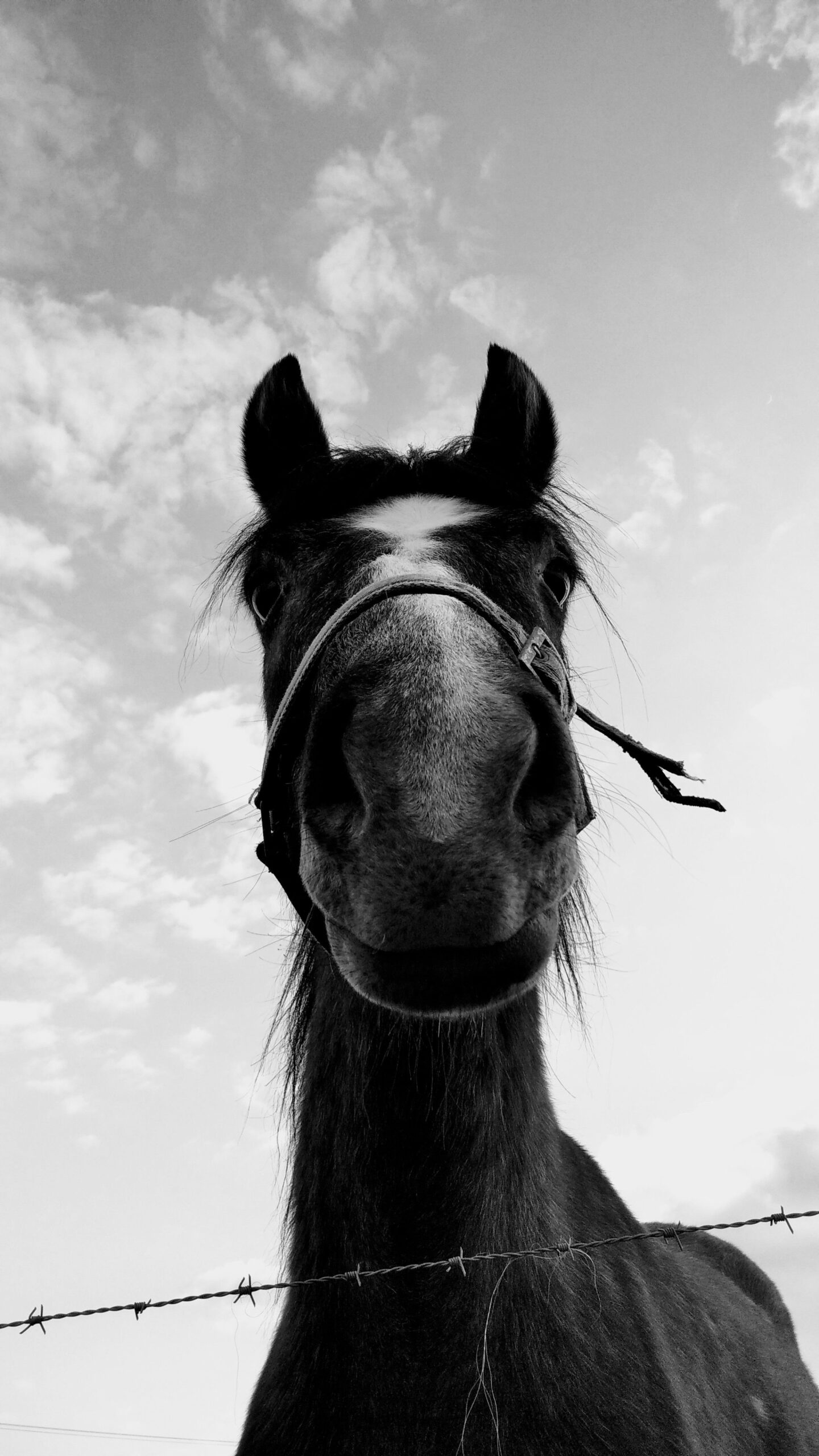
What kind of animal is a moukonouma? We will explain its characteristics, ecology, and habitat. This horse is a little smaller than other breeds, but it is an extant wild horse. It was once thought to have become extinct in the wild around 1968, but breeding has since started in zoos around the world, starting with the Moukono horses kept in zoos in Europe.





- What is Moukonouma? About basic status
- What are the roots and origins of Przewalski’s horse?
- About habitat
- feature is? What kind of creature is it?
- What is your personality like?
- What is the ecology like?
- Vocalizations
- Seasonal Activities
- On Walking Speeds
- About Przewalski’s horse foals
- Is the Moukonouma an endangered species?
- Can you keep Moukonouma as a pet?
- Zoos Housing the Species (Japan & Worldwide)
- Introducing other animals
What is Moukonouma? About basic status
The horse is a mammal classified in the order Mammalia, order Perissodactyla, family Equina. The body length is 2.2 – 2.6 cm and the weight is 200 – 300 kg. The scientific name is Equus ferus przewalskii. The list of information is as follows.
| Japanese(和名) | モウコノウマ |
| English(英名) | Przewalski’s Wild Horse |
| scientific name(学名) | Equus ferus przewalskii |
| classification(分類) | Mammalia、Perissodactyla、 Equidae、Equus 哺乳綱、奇蹄目、ウマ科、ウマ属 |
| IUCN Status(保全状況) | ENDANGERED |
| Length(体長) | 2.2 – 2.6cm |
| Weight(体重) | 200 – 300kg |
What are the roots and origins of Przewalski’s horse?
Przewalski’s horse (also known as the Mongolian wild horse) originated from an ancient lineage of wild horses that survived on the steppes of Central Asia.
Evolutionary Roots
The ancestors of Przewalski’s horse were members of the genus Equus that evolved in Eurasia millions of years ago.
Approximately 4 to 4.5 million years ago
→ The lineage leading to modern horses, zebras, and donkeys was established.
Subsequently, various wild horses evolved on the grasslands of the Eurasian continent.
Approximately tens of thousands of years ago
→ It is believed that the lineage of Przewalski’s horse diverged from the lineage leading to modern domestic horses. While research estimates vary regarding the exact timing, they are distinct lineages that separated prior to domestication.
In short, the relationship is as follows:
Ancient wild horses
↓
├── Przewalski’s horse lineage (retained wild characteristics)
└── Domestic horse lineage (led to domestication by humans)
Why it is called “the world’s last truly wild horse”
In the past, Przewalski’s horse was considered the only horse that had never been domesticated.
However, current research suggests a more complex picture.
Previous theory
→ A completely wild horse unrelated to domestic horses
Current prevailing theory
→ A lineage distinct from domestic horses, though debates continue regarding their relationship with ancient humans and past interbreeding.
Nevertheless, they remain the last horse population to have evolved independently in the wild.
History of Habitat
Originally, they had a very wide distribution, inhabiting areas such as:
The Mongolian steppes
Northwestern China
The region around Kazakhstan
Central Asia
However, their numbers plummeted due to factors such as:
Hunting
Competition with livestock
Loss of grazing land
Severe climate change
Wild populations went extinct in the late 1960s.
Since then, surviving individuals have been bred in zoos and other facilities, and reintroduction to Mongolia has been underway since the 1990s.
Why do they have a primitive appearance?
Przewalski’s horses possess certain characteristics rarely found in domestic horses:
A short, upright mane
No forelock
A thick neck
A small, sturdy body
A dark stripe along the back (dorsal stripe)
Stripes on the legs
These features are believed to be adaptations for survival in cold grassland environments.
About classification
The horse was discovered in Central Asia by Russian explorer Nikolai Przewalsky. A horse classified as a member of the genus Equine.
Systematic classification
| 階級 | 分類 |
|---|---|
| 界 | 動物界(Animalia) |
| 門 | 脊索動物門(Chordata) |
| 綱 | 哺乳綱(Mammalia) |
| 目 | ウマ目(Perissodactyla) |
| 科 | ウマ科(Equidae) |
| 属 | ウマ属(Equus) |
| 種 | Equus ferus |
| 亜種 | Equus ferus przewalskii |
About habitat
The Mokonoma lives in the grasslands of Eurasia. There used to be many individuals in central Asia, especially around Mongolia (around the Altai Mountains).
- Natural Distribution
Origin: Grasslands of Mongolia, Inner Mongolia, and Northern China
Habitat:
Open grasslands (steppe)
Dry, semi-desert areas
Tree-scarce environments where grass is the primary food source
Characteristics:
Selective habitats with water and salt deposits
Ability to adapt to barren grasslands and sand dunes
- Habitat Change
Wild populations became extinct in the mid-20th century
Current wild populations were reintroduced after breeding in conservation facilities
Examples of reintroduction areas:
Northern Gobi Desert, Mongolia (Khustain Nuruu National Park, etc.)
Inner Mongolia, China (reintroduction project area)
- Habitat Conditions
Open grasslands: Suitable for foraging and easy escape from predators
Water and salt intake: Essential for mineral replenishment and hydration
Sized area for herd life: Wild horses travel widely to secure food
feature is? What kind of creature is it?
The horse’s coat is light ink, with a light brown overall color and dark brown limbs, mane, and tail. In winter, the coat becomes lighter and longer. The mane is always erect and is found in the steppes of Eurasia. It used to live in Mongolia and Russia.
- Physical Characteristics
Physique
Height: Approximately 120-140 cm (shoulder height)
Weight: Approximately 250-350 kg
Sturdy body, adapted to rough grasslands
Coat Color
Light brown to sandy body
Short, erect, black mane
Long, black tail with only the tip being black
Head/Face
Rounded head, large, calm eyes
Slightly rounded nose, shaped to allow for easy breathing even in rough terrain
Feet/Hoofs
Short, sturdy legs
Hard hooves allow for easy walking on rocky or rough terrain
- Behavior/Personality
Living in groups
Harem-type, with one male mating with multiple females and offspring
Highly social, with a hierarchy within the group
Personality
Gentle and rarely fighting, but males keep each other at bay during breeding season
Highly cautious, fleeing from predators and humans
Activity
Movement by eating grass
May travel several kilometers in search of water
- Ecological Characteristics
Diet: Herbivorous (grasses, leaves, and shrub shoots)
Hydration: Obtains moisture from natural sources such as water and plants
Reproduction:
Gestation Period: Approximately 11 months
Gives birth to only one offspring
The offspring grows up alongside their mother
Adaptations: Adapted to life in arid grasslands and semi-desert environments
Lifespan: Approximately 20 years in the wild, approximately 25 years in captivity
What is your personality like?
Moukonouma is very quiet and has a timid personality. They are quite sensitive animals compared to domesticated horses, so raising them is not as easy as other horses. Moukono horses live in grassland areas and live in small family groups, making them very social animals.
Przewalski’s Horse Personality Characteristics
Calm and calm
Usually docile and non-aggressive
Their leisurely movements while grazing are striking
Highly wary
As wild horses, they are sensitive to humans and predators
They will quickly run away if they sense danger
Even within the herd, they are always cautious and observant
Highly social
Living in herds (harem-type)
Single males lead multiple females
Females and parents have strong bonds and are cooperative
Curious but reserved
They take their time to explore new environments and objects
They do not act suddenly, moving carefully
Breeding Season Behavior
During the breeding season, males will engage in mild defensive and threatening behavior with each other
Aggression is limited, and they often behave in a way to avoid injury
What is the ecology like?
Mokonouma lives by eating grass, tree leaves, bark, and fruits. They spend most of their day foraging and eat very well. Breeding occurs around April and the gestation period is 11 to 12 months. Females can give birth to one baby at a time. The lifespan is about 20 years, and the longest is about 25 years.
- Lifestyle
Living in groups
Harem-type groups: one male, multiple females, and offspring
Spreading in groups protects them from predators
Activity Period
Diurnal (active during the day)
Foraging, moving, and resting alternate throughout the day
Migration
Travels several kilometers in search of food and water in grasslands
Adapted to large grasslands, allowing for long-distance migration
- Diet
Herbivore
Mainly grasses, leaves, and shrub buds
Able to digest even low-nutrient grasses
Hydration
Replenishes moisture from rivers, springs, and plant moisture
Feeding Style
Grains grass simultaneously in groups
Keeps watchful eye on surroundings and guards against predators while feeding
- Breeding and Rearing
Breeding Season
The breeding season varies depending on the region, but is most common in spring and summer.
Gestation Period
Approximately 11 months
Birthing
Give birth only once
The foal grows under the protection of its mother and herd.
Growing
Foals accompany their mother and become independent after 1-2 years.
As they grow, they learn the social rules of the herd and how to forage and move.
- Habitat Adaptation
Adapted to grasslands and semi-deserts.
Strong hooves and legs allow them to move across barren and dry terrain.
Moving widely in herds to secure food.
Are there any natural enemies?
The natural enemy of the horse is said to be the wolf.
Vocalizations
The vocalizations of the Przewalski’s horse (Mongolian wild horse) resemble the familiar “whinny” or “neigh” of domestic horses, but they tend to use sounds that are more primal, lower in pitch, and shorter in duration.
- Whinny / Neigh
Long, high-pitched calls (e.g., “hee-heen” or “wheee”)
Functions:
Locating herd members
Checking the distance between herd members
Signaling danger
Attracting mates during the breeding season
They call out loudly to distant herd members, particularly when the herd has become separated.
- Snort
Short sounds (e.g., “brrr” or “huff”)
Functions:
Alertness to surroundings
Expressing anxiety or excitement
Investigating potential threats
This is a crucial form of communication for wild Przewalski’s horses. On the open steppe, they frequently snort when checking for sounds or scents that might indicate the presence of predators (such as wolves).
- Nicker
Low-pitched sounds (e.g., “grrr” or “kurr-kurr”)
Functions:
A mare calling to her foal
An intimate signal between herd members
A dominant individual keeping the herd together
This sound is most commonly used in the interaction between a mare and her foal.
- Sounds of Anger or Threat
During conflicts between males or territorial disputes, they use a combination of:
Low growls
Snorting/blowing air
Short, sharp cries
A stallion defending his harem (a herd consisting of one male, multiple females, and their offspring) will use both physical displays of intimidation and vocalizations against intruding males.
Seasonal Activities
Przewalski’s horses live according to a seasonal cycle adapted to Mongolia’s continental climate (characterized by hot summers and bitterly cold winters). Throughout the year, they roam in herds in search of grass and water.
Spring (April–May): “Season of Foaling and Herd Growth”
Key Activities
Foaling (giving birth)
Foal growth
Recovery of physical strength depleted during winter
Migration in search of fresh shoots
Spring is the primary breeding season.
Gestation period: Approximately 11 months
Most foals are born between spring and early summer
Newborn foals stand up and follow their mothers within a few hours
As fresh grass sprouts on the grasslands after winter, mares replenish their nutrients while raising their foals.
Summer (June–August): “Peak of Foraging and Breeding”
Key Activities
Extended periods of grazing
Traveling to water sources
Breeding behavior
Herd maintenance
With grass abundant in summer, the horses spend much of the day foraging.
Typical behaviors:
Morning and evening: Active foraging
Midday: Resting to avoid the heat
Night: Traveling during cooler hours
Herds are typically structured as a “harem”:
A stallion (male)
Multiple mares (females)
Offspring
During this period, the male defends the herd against other males.
Autumn (September–October): “Preparing for Winter”
Key Activities
Consuming large amounts of available grass
Storing fat
Expanding their range
Because Mongolian winters are harsh, autumn is a time to prepare for survival.
Key priorities include:
Accumulating body fat
Securing a good overwintering site
Locating water sources
Additionally, as young males mature, they may leave the herd to form “bachelor groups.”
Winter (November–March): “A Season of Cold Endurance and Energy Conservation”
Key Activities
Foraging for grass beneath the snow
Moving to sheltered areas
Minimizing energy consumption
Mongolian winters can bring:
Temperatures dropping below -30°C
Strong winds
Deep snow
Przewalski’s horses survive by:
Growing a thick winter coat
Adjusting their metabolism
Digging through snow with their muzzles to find grass
Obtaining moisture from the snow
However, when deep snow conditions (zud) occur,
They cannot access grass
They cannot move
Their physical strength declines
…which can lead to mass mortality.
On Walking Speeds
The movement speed of the Przewalski’s horse (Mongolian wild horse) varies significantly depending on the situation. They typically move at a slow, energy-efficient pace but can run at speeds equal to or greater than those of domestic horses when facing danger.
Normal Walk
Approx. 4–7 km/h
This is the speed maintained during routine foraging or when the herd is on the move.
Characteristics:
Head held low
Moving slowly while grazing
A gait designed to minimize fatigue during long-distance travel
In the wild, endurance for long-distance travel is more important than sheer speed.
Trot
Approx. 8–15 km/h
This is the most frequently used mode of movement for the Przewalski’s horse.
Characteristics:
Diagonal pairs of legs move simultaneously
More efficient than a walk
Suitable for long-distance travel
The trot is crucial for traversing the vast Mongolian grasslands, where they may travel distances ranging from several kilometers to tens of kilometers.
Canter
Approx. 20–40 km/h
Used for herd movements, evading danger, or during moments of excitement.
Examples:
Spotting predators such as wolves
When the herd is moving
Conflicts between males
Gallop
Top speed of approx. 50–60 km/h
Capable of running at high speeds over short distances.
However, unlike racehorses, Przewalski’s horses have not been selectively bred for speed; therefore, they exhibit the following characteristics:
Instantaneous top speed: Slower than racehorses
Endurance and adaptability to harsh conditions: Extremely high
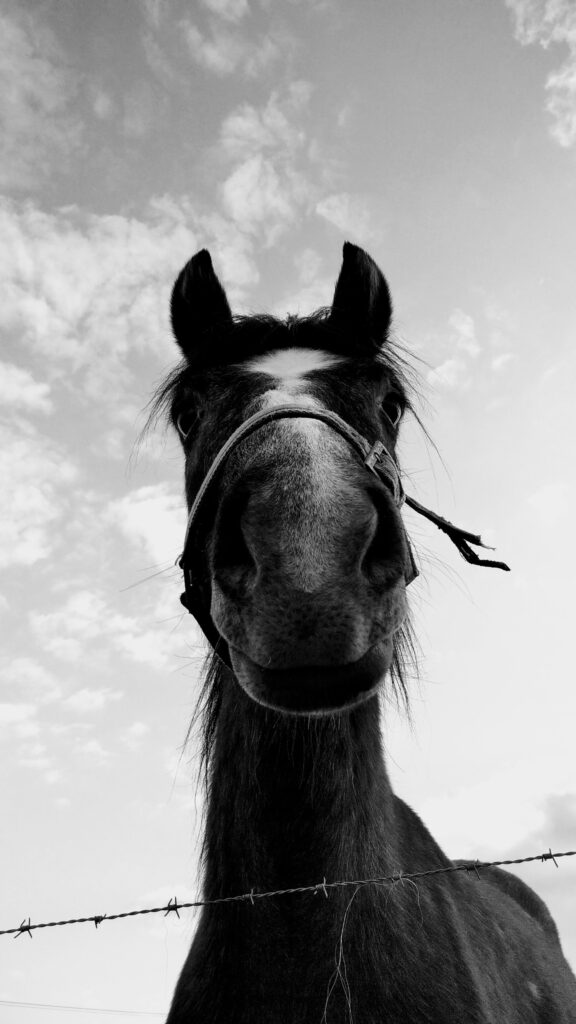
About Przewalski’s horse foals
This article provides detailed information about the characteristics and growth process of Przewalski’s horse foals.
- Birth
Gestation Period: Approximately 11 months
Birth: Usually one calf
Birthing Location: A safe spot in the grassland or near the herd
Newborn Characteristics:
Height: Approximately 60-80 cm
Weight: Approximately 20-30 kg
Fur color is light brown, becoming lighter than that of adults for the first few months of life
- Relationship with Mother
They accompany their mother immediately after birth
They cling to their mother’s back or belly and learn to walk and forage
They stay safe under the protection of the herd
- Growth and Behavior
1-3 Months Old:
Claws and legs begin to develop, and they learn to walk independently on branches and the ground
They begin to nibble on grass and gradually begin weaning
6 Months Old:
Forages and moves with the herd
Slowly develops a sense of independence
1-2 Years Old:
Becomes independent and establishes its own living space
Completely masters the herd rules and how to forage and move
- Characteristics
Coat Color: Light brown, paler than adults.
Personality: Curious and learns by observing the behavior of their mother and herd.
Defense: Protects their mother and herd from predators.
Is the Moukonouma an endangered species?
The horse was first discovered in 1879, but it is thought to have become extinct in the wild around 1968. However, in Europe, some Mokono horses were kept in captivity, and these were bred again, and they managed to escape extinction. Currently, it is said that there are over 300 Mokonoma horses that can be seen in the wild, but they are classified as an endangered species.
- Global Conservation Status
IUCN Red List (International Union for Conservation of Nature)
Classification: EN (Endangered)
Reason:
Extinct in the wild by the mid-20th century
Habitat loss and overhunting are the primary causes
- Reintroduction and Protection
Breeding in Conservation Facilities
Breeding programs implemented in zoos and conservation facilities
Reintroduction
Northern Gobi Desert, Mongolia (Khustain Nuruu National Park, etc.)
Protected areas in China’s Inner Mongolia Autonomous Region
Currently, the wild population has recovered to approximately 300-500 individuals
- Current Issues
The number of reintroduced individuals is increasing, but habitat limitations and risks from predators and human activity remain.
Environmental changes due to grassland development and climate change are future challenges.
- Conservation Status in Japan
No natural distribution in Japan
Captive individuals are protected and bred in zoos and research facilities
Import and breeding require permission under the Convention on International Trade in Endangered Species of Wild Fauna and Flora (CITES) and domestic law.
Can you keep Moukonouma as a pet?
As for whether it is possible to keep Moukono horses as pets, they are much more difficult to keep than other horses due to their temperament, so we recommend viewing them at zoos or events.
- Legal Restrictions
Przewalski’s horse is an endangered species (IUCN EN) and is internationally protected.
Import and export are prohibited under Appendix I of the Convention on International Trade in Endangered Species of Wild Fauna and Flora (CITES).
Even in Japan, private ownership is prohibited under the Wildlife Protection Act.
Keeping is permitted only in facilities with special permission, such as zoos and research facilities.
- Ecological and Behavioral Reasons
A large horse adapted to the wild.
Height: 120-140 cm, weight: 250-350 kg.
Adapted to a lifestyle of traveling extensively across grasslands and foraging.
Highly social.
Due to their herd-living habits, keeping them alone can be stressful.
Highly wary and wild.
They are not well adapted to human contact.
- Difficult to raise
Special dietary management required
Herbivorous and require a wide range of forage
Nutrition management and exercise are impossible at home
Large space required
In the wild, they travel several kilometers per day
Crowded enclosures have a negative impact on their health
High risk of stress and disease
Zoos Housing the Species (Japan & Worldwide)
The Przewalski’s horse (also known as the Mongolian wild horse) went extinct in the wild at one point; its survival was secured thanks to breeding programs conducted by zoos around the world. Today, individuals bred in zoos are being reintroduced into the wild, such as in Mongolia.
🇯🇵 Zoos in Japan
Tama Zoological Park (Tokyo)
This is the most famous facility in Japan for housing Przewalski’s horses.
Features:
Five individuals arrived from the UK in 1981.
Has achieved breeding success over many years.
Serves as the central hub for the domestic Przewalski’s horse breeding program.
Exhibit Location:
“Przewalski’s Horse Enclosure” in the Asia Zone.
Tama Zoological Park manages lineages and breeding in cooperation with other zoos. As of 2022, the park housed 13 individuals.
Yokohama Municipal Kanazawa Zoo
Along with Tama Zoological Park, this facility has a long history of housing Przewalski’s horses in Japan. It participates in cooperative breeding efforts as part of the domestic lineage management program.
🌍 Major Facilities Worldwide
🇨🇿 Prague Zoo
A global center for Przewalski’s horse conservation.
Features:
A long track record of successful breeding.
Has made significant contributions to reintroduction projects in Mongolia.
Involved in international lineage management.
Prague Zoo plays a crucial role in efforts to reintroduce the species to the wild.
🇺🇸 San Diego Zoo Safari Park
A key breeding center in North America.
Features:
Herd housing in vast open-range enclosures.
Research on maintaining genetic diversity.
Conducts genetic preservation research using cryopreserved DNA.
The park was also involved in research that successfully produced a cloned Przewalski’s horse from preserved cells.
🇭🇺 Hortobágy National Park
While not a zoo, this is a protected area hosting one of the world’s largest semi-wild herds of Przewalski’s horses.
Features:
Vast grassland environment.
Herd life that closely mimics natural conditions.
A site for rewilding training and research.
Introducing other animals

コメント