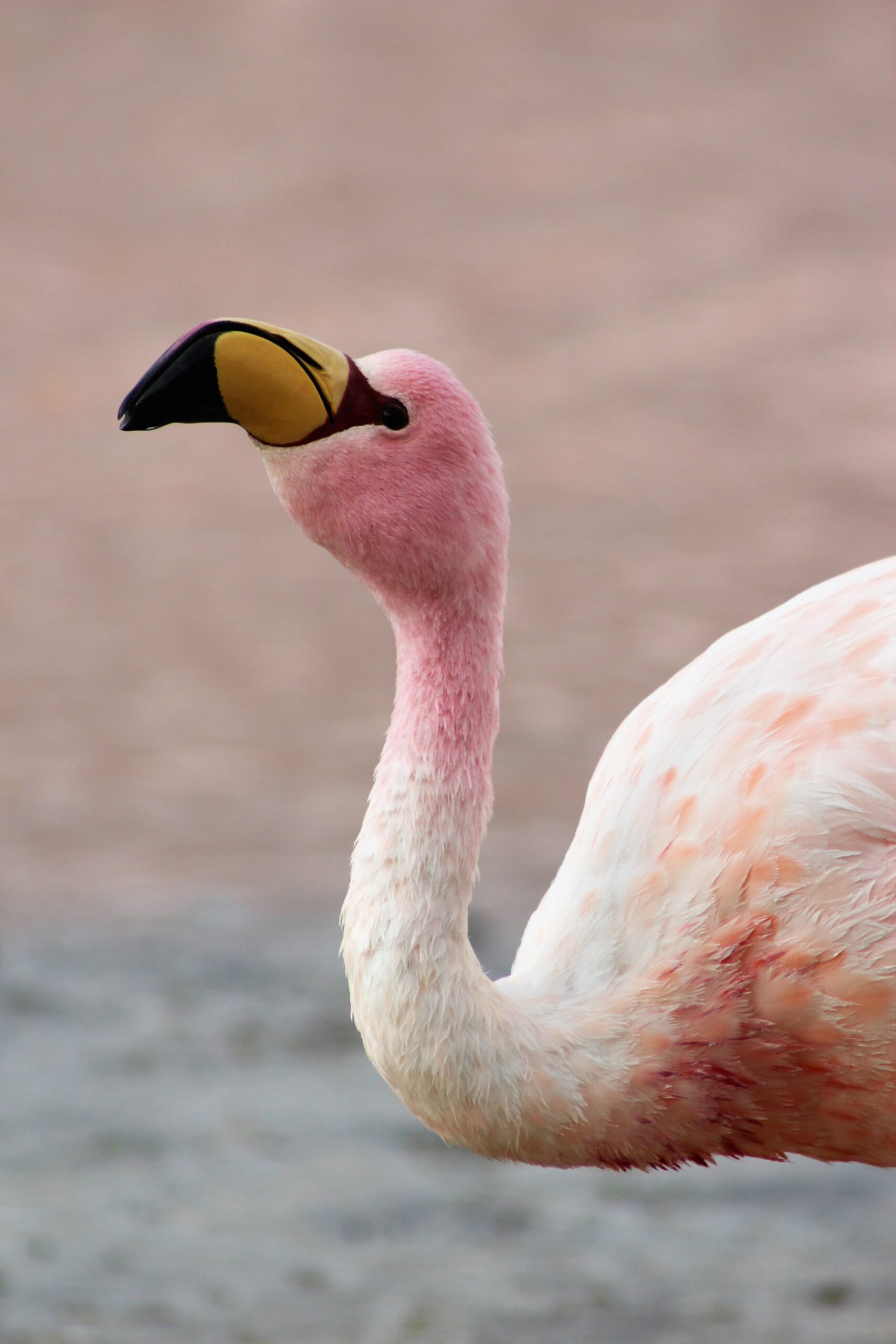
What kind of bird is the lesser flamingo that can be seen at zoos and animal parks? We will explain its characteristics, ecology, and habitat. It is the smallest species of flamingo and can be said to be a very familiar creature. Unfortunately, this flamingo, which lives in northwestern India and Africa, is designated as an endangered species.




- What is Lesser Flamingo? About basic status
- What are the roots and origins of the Lesser Flamingo?
- About habitat
- feature is? What kind of creature is it?
- What is the ecology like?
- Lesser Flamingo Diving
- Vocalizations
- Seasonal Activities
- Walking Speed
- About Lesser Flamingo Chicks
- Is the lesser flamingo an endangered species?
- Can lesser flamingos be kept?
- Zoos Housing Lesser Flamingos (Japan & Worldwide)
- Introducing other animals
What is Lesser Flamingo? About basic status
The lesser flamingo is a bird classified in the order Flamingidae and family Flamingidae. The scientific name is Phoenicopterus minor. Another name is Little Flamingo. The total length is 80-90 cm and the weight is 1.2-2.7 kg.
| Japanese(和名) | コフラミンゴ,コガタフラミンゴ |
| English(英名) | Lesser Flamingo |
| scientific name(学名) | Phoenicopterus minor |
| classification(分類) | Ave、 Phoenicopteriformes、Phoenicopteridae、Phoenicopterus 鳥綱、フラミンゴ目、フラミンゴ科、フラミンゴ属 |
| IUCN Status(保全状況) | VULNERABLE |
| Length(体長) | 80-90cm |
| Weight(体重) | 1.2–2.7 kg |
What are the roots and origins of the Lesser Flamingo?
The roots of the Lesser Flamingo (Phoeniconaias minor) are closely linked to the African continent—specifically the area around the Great Rift Valley in East Africa.
The origins of flamingos in general
Before looking specifically at the Lesser Flamingo, we must first consider the ancestors of flamingos as a whole.
Flamingos are believed to have existed as far back as tens of millions of years ago (the early Tertiary period).
Today, they are classified in their own distinct order, Phoenicopteriformes.
While they were once thought to be evolutionarily close to storks, current research also discusses a close relationship with groups such as grebes.
Their ancestral birds lived in shallow lakes and wetlands,
long legs,
curved beaks,
and a feeding habit of filtering microorganisms from muddy water
—evolving the characteristics typical of modern flamingos.
Where the Lesser Flamingo originated
Looking at their current distribution, Lesser Flamingos inhabit areas such as:
Kenya
Tanzania
Ethiopia
Namibia
Botswana
Northwestern India
Alkaline lakes (soda lakes) in East Africa are particularly important breeding grounds.
Key locations include:
Lake Nakuru (Kenya)
Lake Magadi (Kenya)
Lake Natron (Tanzania)
Why did they become “small flamingos”?
As their name suggests, Lesser Flamingos are small compared to other flamingo species.
The reason for this evolutionary path lies primarily in their diet.
Lesser Flamingos feed mainly on:
blue-green algae (cyanobacteria)
small plankton
These microorganisms proliferate in the highly alkaline lakes of East Africa.
In that environment,
the ability to “efficiently filter vast quantities of microorganisms”
was more advantageous than
the ability to “catch large fish.” As a result, the following traits are believed to have evolved:
Smaller body size
A beak capable of extremely fine filtration
A habit of living in massive flocks
Key characteristics of the Lesser Flamingo
Lesser Flamingos form some of the largest flocks in the world.
Examples include:
Flocks numbering from several hundred thousand to a million birds
Mass migrations involving thousands of individuals
A reliance on volcanic alkaline lakes
They possess these unique ecological characteristics.
About classification
The lesser flamingo belongs to the genus Flamingo.
Classification class
- 界(Kingdom):動物界(Animalia)
- 門(Phylum):脊索動物門(Chordata)
- 綱(Class):鳥綱(Aves)
- 目(Order):フラミンゴ目(Phoenicopteriformes)
- 科(Family):フラミンゴ科(Phoenicopteridae)
- 属(Genus):Phoeniconaias
- 種(Species):Phoeniconaias minor(コフラミンゴ、Lesser Flamingo)
About habitat
It is known that the lesser flamingo inhabits a fairly wide range from the African continent to India and Pakistan.
1. Geographic Distribution
Main Distribution Areas: East Africa to Southern Africa, Western Asia, and the Indian Subcontinent
Africa: Kenya, Tanzania, Uganda, Ethiopia, Namibia, and South Africa
Asia: Western India and parts of Pakistan
Migration Habits: Moves between salt and shallow lakes depending on the season
2. Habitat Characteristics
Mainly lakes, salt, and alkaline lakes
Can also live in high-salinity and alkaline lakes
Shallow waters, suitable for filter feeding (eating algae and microcrustaceans)
Open environments
Prefers shallow waters with good visibility and safety over forests and tall grasslands
Living in Flocks
Often forms large flocks of thousands to hundreds of thousands of birds
3. Habitat Characteristics
Depends on salt and alkaline lakes, where food is abundant
Cyanobacteria, algae, microcrustaceans, etc.
Migratory Behavior and Adaptation to Water Level Changes
When lakes dry up or food becomes scarce, they migrate to other lakes in flocks
feature is? What kind of creature is it?
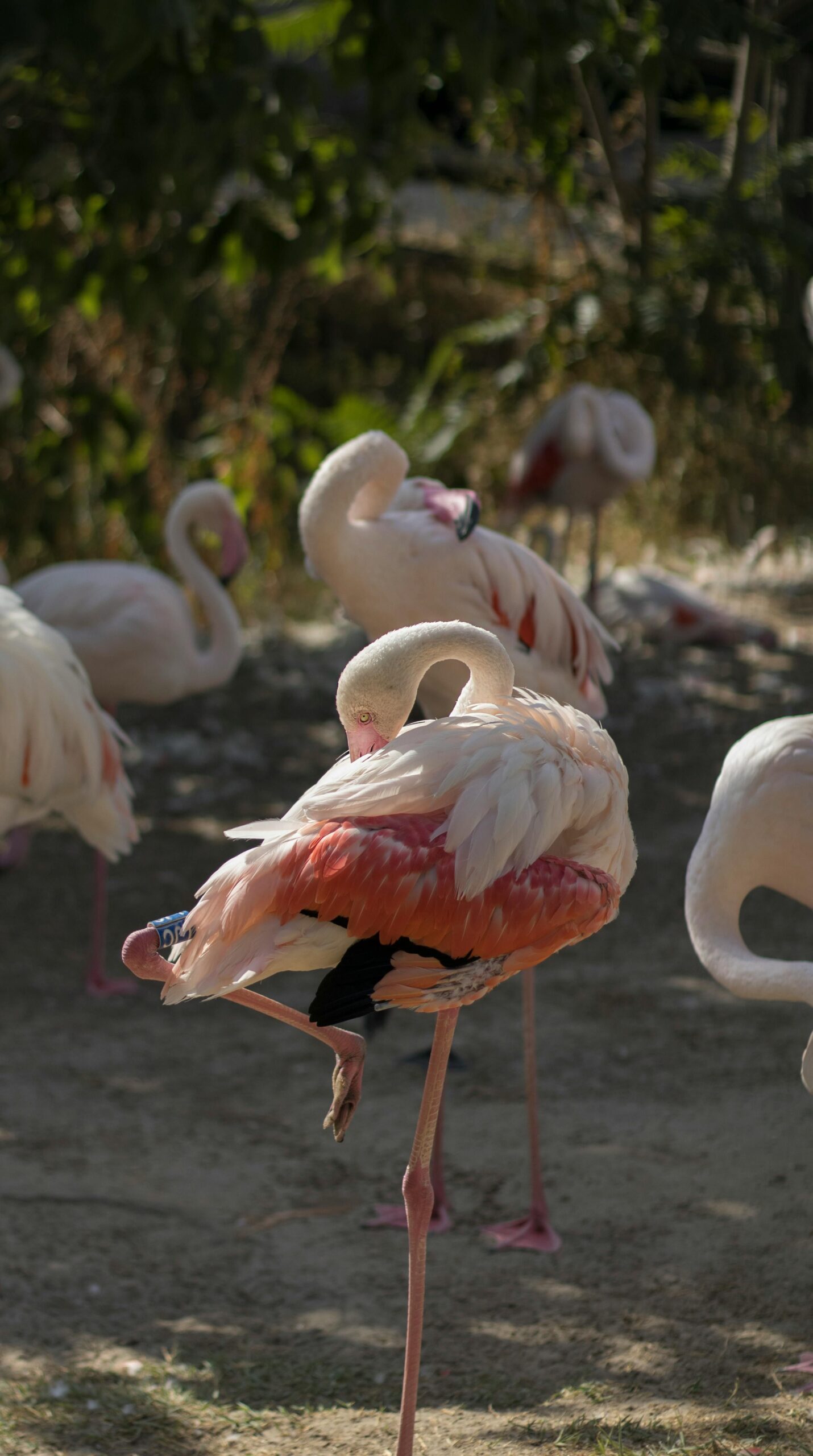
The lesser flamingo is the smallest species of flamingo and lives in alkaline and saltwater lakes. They are highly social animals, and Lake Nakuru in Kenya is world-famous for their large herds. The legs are bright pink. The flamingo has a large black part on its beak and is the most abundant flamingo, with an estimated number of 2 million flamingos.
1. Physical Characteristics
Body Size: The smallest flamingo
Body Length: Approximately 80-90 cm
Wingspan: Approximately 90-100 cm
Weight: Approximately 1-1.5 kg
Body Color: Pale pink to red
Feathers and legs become brighter as adults
Beak: Uniquely curved, adapted for filtering food
The tip of the beak is black
Legs: Slender and reddish
Neck: Long, stretched during flight and foraging
2. Behavioral and Ecological Characteristics
Living in Flocks
Forms large flocks of several thousand to hundreds of thousands of birds
Feeding Method
Filters algae and tiny crustaceans from shallow salt and alkaline lakes
Flight Ability
Capable of long-distance migration, traveling between lakes
Large wings adapted for gliding and flocking
3. Habitat Adaptations
Dependent on salt and alkaline lakes
Can survive in high-salinity environments
Equipped with a filter that efficiently consumes cyanobacteria and algae as food
Feeds in shallow waters
Long legs allow it to forage while standing
4. Overall Impression
Small flamingo-like waterbird that lives in flocks
Distinguished by its bright pink body color and curved beak
Forms flocks in salt lakes and shallow waters and migrates
What is the ecology like?
Lesser flamingos live by eating plankton and algae in the water. They lay only one chalk egg at a time in a nest made of mounds of mud. The lesser flamingo is very long-lived, living for about 50 years.
1. Habitat
Main Locations: Salt and alkaline lakes in East Africa, shallow lakes in South Africa, and the Indian subcontinent
Environmental Characteristics:
Can survive in high-salinity and alkaline lakes
Prefers shallow, open waters and feeds in groups
2. Behavior Patterns
Diurnal: Forages and flies during the day
Flock Life: Forms large flocks of thousands to hundreds of thousands of birds
Migratory Behavior: Moves between lakes seasonally (depending on food and water level)
Flight Ability: Adapted for long-distance flight, gliding and using thermal currents to move energy-efficiently
3. Diet
Filter Feeding: Filters food from the water with its beak
Main Diet:
Cyanobacteria (algae)
Microcrustaceans (such as Artemia)
Foraging Behavior: Stands in shallow water, bends its neck, and filters food with its beak
4. Breeding and Nesting
Nest: Builds a small earthen mound using lake sand or mud
Eggs: Usually one, at most two
Incubation Period: Approximately 27-31 days
Chick Development: Fledglings occur approximately four weeks later, and chicks grow with parental feeding.
5. Sociality
Flocking: Foraging, breeding, and migration are all performed in groups.
Defense: Gathers together to protect themselves from predators.
Communication: Communicates with the flock through calls and visual cues.
6. Ecology Summary
Diurnal, flock-living, filter-feeding waterbird
Adapted to salt and alkaline lakes and migratory.
Breeds in small earthen mounds, and parents provide feeding and rearing of chicks.
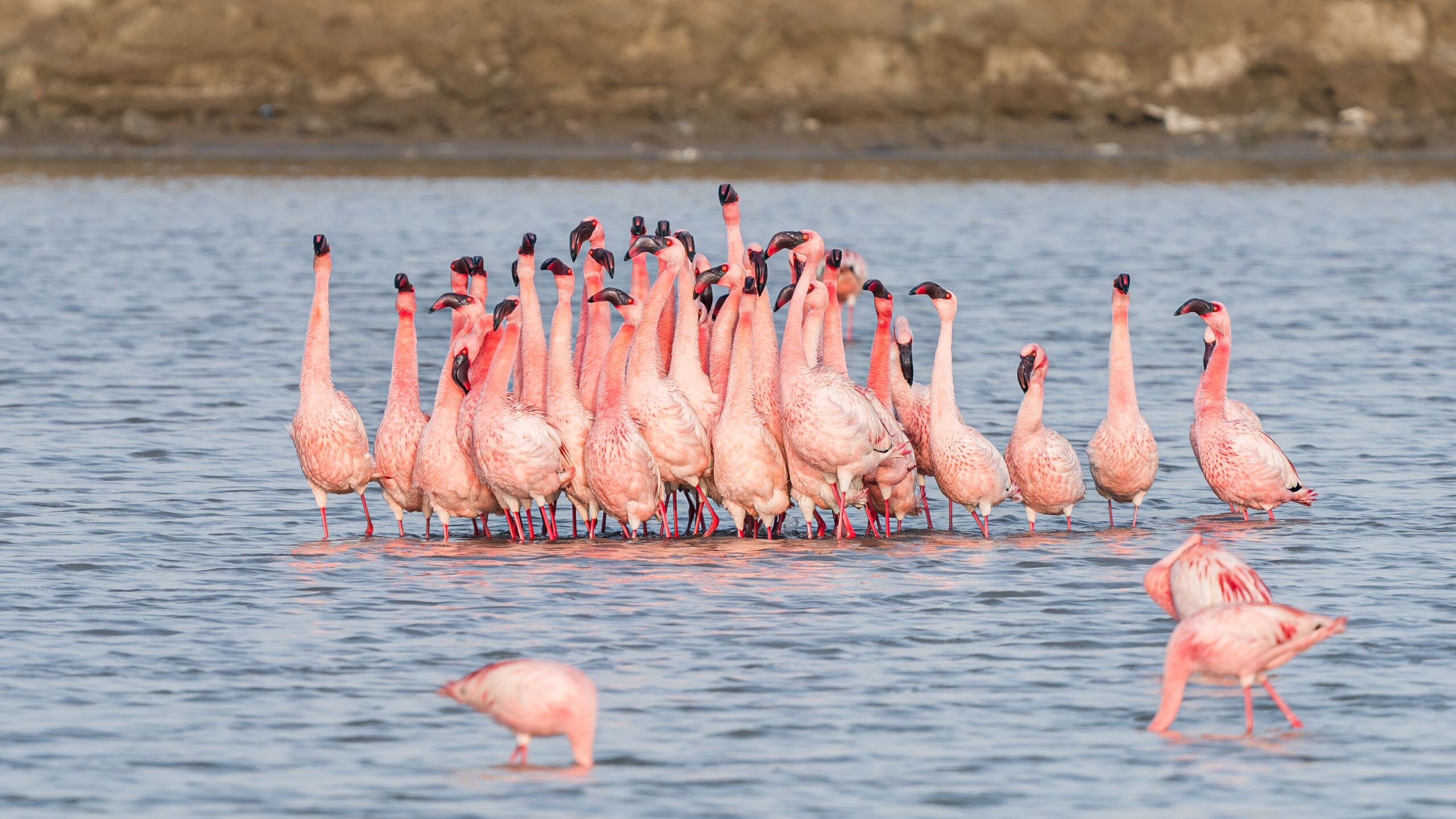
Lesser Flamingo Diving
The Lesser Flamingo (Phoeniconaias minor) is not, by nature, a bird adept at diving.
Flamingos generally feed near the water’s surface and lack the ability to swim underwater for extended periods, unlike ducks or penguins.
The Purpose of “Diving” in Lesser Flamingos
The primary purpose is foraging.
While underwater, Lesser Flamingos feed on:
Blue-green algae (cyanobacteria)
Tiny phytoplankton
Small organic particles
A distinctive behavior involves submerging their beaks upside down, moving their tongues like pumps to draw in water, and filtering out food using the comb-like structures (lamellae) inside their beaks.
Reasons Why They Do Not Engage in True Diving
The Lesser Flamingo’s body is not suited for diving.
Diving birds (such as penguins and grebes) possess:
Wings or feet designed for underwater propulsion
Dense bones
A body shape that minimizes underwater resistance
In contrast, Lesser Flamingos have:
Long legs
Light bodies
Large wings
Bodies that are naturally buoyant
Consequently, rather than evolving to stay underwater for long periods, they evolved to forage efficiently in shallow waters.
Vocalizations
The call of the Lesser Flamingo (Phoeniconaias minor) is characterized by a high-pitched, nasal quality reminiscent of geese or ducks.
Vocalization Characteristics
Commonly described as:
“Gaa, gaa”
“Ka, ka”
“Kurururu…”
“Honk, honk”
The sounds have a metallic, slightly nasal resonance.
As they live in flocks, individual birds rarely call in isolation; instead, thousands or even tens of thousands of birds calling simultaneously create an incredibly loud volume of sound.
Why Do They Call?
Lesser Flamingos use vocalizations for the following types of communication:
Parent-offspring recognition: Chicks can distinguish their parents’ calls, and parents can identify their chicks’ voices.
Flock cohesion: Coordinating takeoff times and communicating while moving.
Courtship behavior: During the breeding season, they perform group displays involving calling while shaking their necks.
Alerting: Signaling the entire flock when danger is detected.
Volume
In a Lesser Flamingo colony numbering in the tens of thousands, their calls can be heard from hundreds of meters away. Because the entire flock is constantly calling back and forth, the breeding grounds are always a noisy, bustling environment.
Seasonal Activities
The activities of the Lesser Flamingo (Phoeniconaias minor) are heavily influenced by seasonal changes in lake water levels, algae abundance, and the alternation between wet and dry seasons.
Populations in East Africa, in particular, do not follow a fixed migration pattern; instead, they lead a nomadic lifestyle, moving in search of alkaline lakes rich in food.
Spring (March–May): Rainy Season – A Period Focused on Foraging
Key Activities:
Lake water levels rise due to rainfall
Tracking fluctuations in algae (cyanobacteria) populations
Foraging in large flocks
During the rainy season, lake environments are volatile, and the algae that serve as their food source may temporarily decrease.
Behaviors:
Filter-feeding in shallow waters
Moving in flocks
Preening (preparing for molting)
Summer (June–August): Dry Season – A Period of Major Migration
Key Activities:
Moving to lakes where evaporation increases alkalinity
Utilizing areas where cyanobacteria (their food source) proliferate
This is a critical period for Lesser Flamingos.
Characteristics:
Formation of massive flocks ranging from tens of thousands to hundreds of thousands of birds
Foraging during the day
Migration sometimes occurs at night or in the early morning
In East Africa especially, “soda lakes”—formed by evaporation—serve as vital foraging grounds.
Autumn (September–November): Breeding Preparation and Courtship
Key Activities:
Flock-wide courtship displays
Gathering at breeding grounds
Lesser Flamingo courtship is highly distinctive.
Typical Behaviors:
Walking with necks extended
Swaying heads from side to side
Spreading wings to display colors
Synchronized movements within the flock
“Mass courtship”—performed simultaneously by thousands of birds—is a signature behavior of flamingos.
Winter (December–February): Breeding and Chick-rearing
*While timing varies by region, breeding activity in East Africa often peaks during this period. Breeding Activities
Builds small, cone-shaped nests out of mud
Lays a single egg
Incubates the egg for about one month
After the chick hatches:
Parents feed it a secretion known as “flamingo milk”
Forms large groups called “crèches”
Parents identify their own chicks by their calls
Walking Speed
The walking speed of the Lesser Flamingo (Phoeniconaias minor) varies depending on the situation, but it is generally comparable to or slightly slower than a human’s leisurely pace.
Normal Walking
Approximately 1–3 km/h
They forage while walking slowly through shallow lakes or mudflats.
As they walk, Lesser Flamingos repeat a sequence of actions:
Submerging their beaks in the water
Stirring up the mud
Filtering out algae
Because of this process, there is no need for them to walk quickly.
When Hurrying
When sensing danger or preparing to take flight, they:
Walk briskly at speeds of about 5–8 km/h
Perform a running start across the water’s surface
Flamingos have large bodies and require a running start to take flight.
Walking in Water
Since Lesser Flamingos inhabit shallow alkaline lakes, they are also adept at walking in water.
Characteristics:
Walking along the lakebed on long legs
Foraging while stirring up mud
Moving slowly in the same direction in groups of thousands
In shallow water, the ability of the entire flock to move in unison is more important than walking speed.
Body Structure and Walking
Reasons why Lesser Flamingos walk slowly:
Long legs → Allow movement even in deeper water
Three-toed feet → Prevent sinking into soft mud
Long neck → Enables underwater foraging while walking
However, their legs are specialized for efficient movement in shallow water rather than for speed.
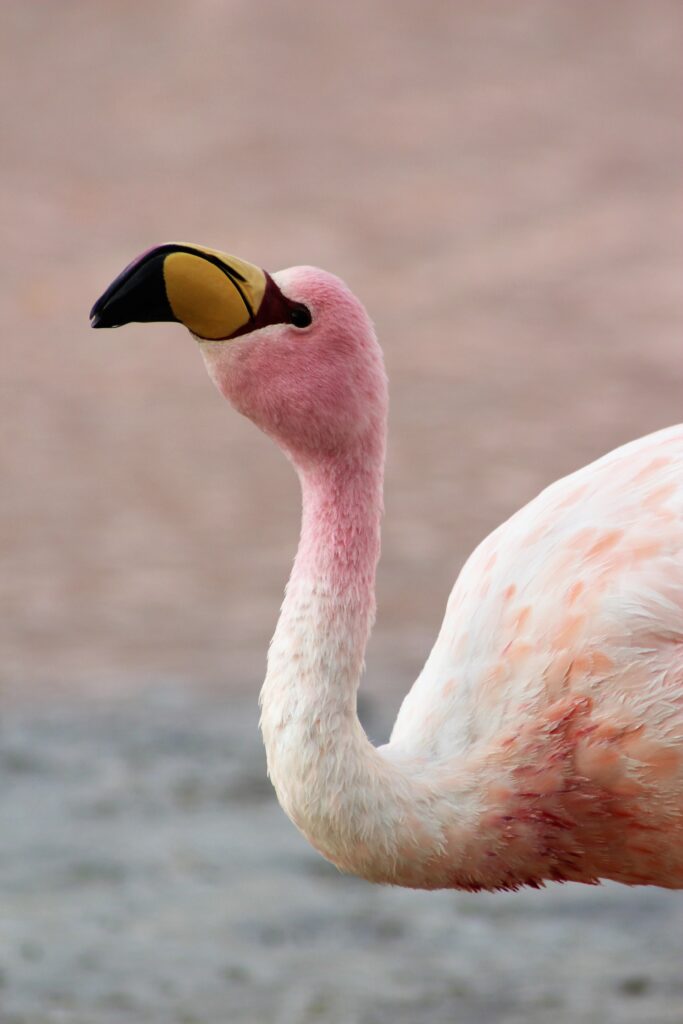
About Lesser Flamingo Chicks
This article provides an overview of Lesser Flamingo chicks (young birds) in terms of appearance, growth, and behavior.
1. Birth and Early Characteristics
Egg Number: Usually 1, at most 2
Incubation Period: Approximately 27-31 days
Weight and Size: Approximately 50-70 g immediately after hatching, approximately 10-15 cm in length
Feathers: Downy, gray to whitish; adult pink and red feathers have not yet developed
Beak, Legs, and Eyes: Small and pale
2. Growth and Development
Early Life: Carried and fed in the parent’s nest
Feeding: Parents feed them algae and tiny crustaceans that have been softened in their stomachs by mouth
Feather Development: At 2-3 weeks of age, their coat color approaches that of an adult, changing from gray to pink
Fledgeling: They begin to leave the nest at approximately 4 weeks of age and develop by foraging for food on their own
3. Behavior/Personality
Highly dependent on the nest: For a while after hatching, they barely move and are held by their parents.
Intra-nest movement: Within the first few weeks of life, they begin to practice flapping their wings and bracing themselves.
Foraging under the guidance of their parents: They continue to follow their parents and learn how to find food even after leaving the nest.
4. Ecological Points
Early life: Highly dependent on their parents.
Relatively fast growth, allowing them to leave the nest in about one month.
Flight and filter-feeding skills are mastered by the time they leave the nest.
Is the lesser flamingo an endangered species?
Unfortunately, the lesser flamingo is listed as an endangered species. At present, the main breeding grounds in Africa are suffering from air and river pollution, and the population is drastically decreasing. Recent numbers of lesser flamingos in Lake Nakuru and Lake Bogoria are thought to be affected by heavy metal pollution. It is a migratory bird that is protected under the United Nations Environment Programme.
1. IUCN Assessment
Classification: Near Threatened (NT) or Vulnerable (VU)
The IUCN Red List often lists this species as “Endangered” (close to the endangered category).
Reason for Assessment: Although the population is relatively large, it is dependent on specific lakes and wetlands, making it vulnerable to environmental changes.
2. Threats
Habitat Destruction and Environmental Change
Drawing, Pollution, and Reclamation of Salt and Alkaline Lakes
Habitat Reduction Due to Industrial Development and Agriculture Around Lakes
Impacts of Human Activities
Tourism, Poaching, and Lake Water Harvesting
Decrease in Algae and Microorganisms, Which Its Food Source
Climate Change
Frequent Water Level Fluctuations in Salt and Shallow Lakes
Changes in Migratory Routes and Impacts on Breeding Grounds
3. Conservation Status
Protected in Nature Reserves and National Parks
Conservation efforts are underway in key habitats, such as Lake Nakuru in Kenya.
Because it lives in groups, its population remains relatively stable when the environment is stable.
Continuous monitoring and habitat protection are important.
Can lesser flamingos be kept?
As mentioned above, they are extremely protected, so breeding them is extremely difficult. Let’s enjoy the zoo at the zoo, you can access information on events, etc. inside the zoo and see a list. Please note that there are often fixed periods.
1. Difficulty in Captivity
Large Flock Living Habits
Lesser flamingos live in flocks ranging from several thousand to several hundred thousand birds.
Small populations cause stress, which negatively impacts their behavior and health.
Unique Diet
They primarily filter cyanobacteria and microcrustaceans.
A specialized feeding environment (depth and water quality) is required.
Highly dependent on their habitat.
Specific water quality and water level are required, such as salt lakes and alkaline lakes.
Recreating shallow water feeding and salinity regulation in the home is difficult.
Migratory Habits
Long-distance migrations depending on the season.
Stress builds up in captivity due to their migratory instinct.
2. Laws and Regulations
This bird is close to being endangered and requires protection.
Special permits are required for import and breeding in Japan and many other countries.
Unauthorized breeding and sale are illegal.
3. Captivity scenarios
Zoos and wildlife sanctuaries
School-based, shallow-water, and filter-feeding environments
Kept for breeding programs, conservation, and exhibition purposes
Home captivity is not possible
Food, water environment, school-based lifestyle, and migratory habits cannot be replicated
Zoos Housing Lesser Flamingos (Japan & Worldwide)
The Lesser Flamingo (Phoeniconaias minor) is considered a difficult species to keep in captivity; consequently, only a limited number of zoos and facilities worldwide house them.
Key challenges include managing their specialized filter-feeding needs—specifically regarding their staple diet of blue-green algae (cyanobacteria)—and overseeing their breeding.
🇯🇵 Major Zoos in Japan Housing Lesser Flamingos
Kyoto City Zoo
Known as the first facility in Japan to successfully breed Lesser Flamingos.
Achieved the first domestic breeding success in 1988 and successfully carried out artificial incubation and rearing in 1997.
Possesses a track record of long-term research into their husbandry and breeding.
Chiba Zoological Park
Exhibits Lesser Flamingos.
They can be observed in the “Plains Zone.”
Visitors can observe their distinctive features, such as their small beaks with large black areas and their vividly colored legs.
Tennoji Zoo
Keeps and exhibits Lesser Flamingos.
They can be seen in the “African Savanna” area.
Information is also provided regarding the unique filter-feeding structures (lamellae) found in their beaks.
🌍 Notable Facilities Worldwide
🇺🇸 United States
San Diego Zoo
One of the leading zoos for the exhibition and conservation research of flamingos.
It conducts research on the husbandry of various flamingo species, including the Lesser Flamingo.
National Zoological Park
Known as a facility that keeps flamingos.
🇫🇷 France
Parc Zoologique de Paris
Cited as an example of a zoo housing Lesser Flamingos.
🇺🇸 Others
SeaWorld San Diego
San Antonio Zoo
These facilities also have a track record of keeping flamingos.
Introducing other animals
コメント