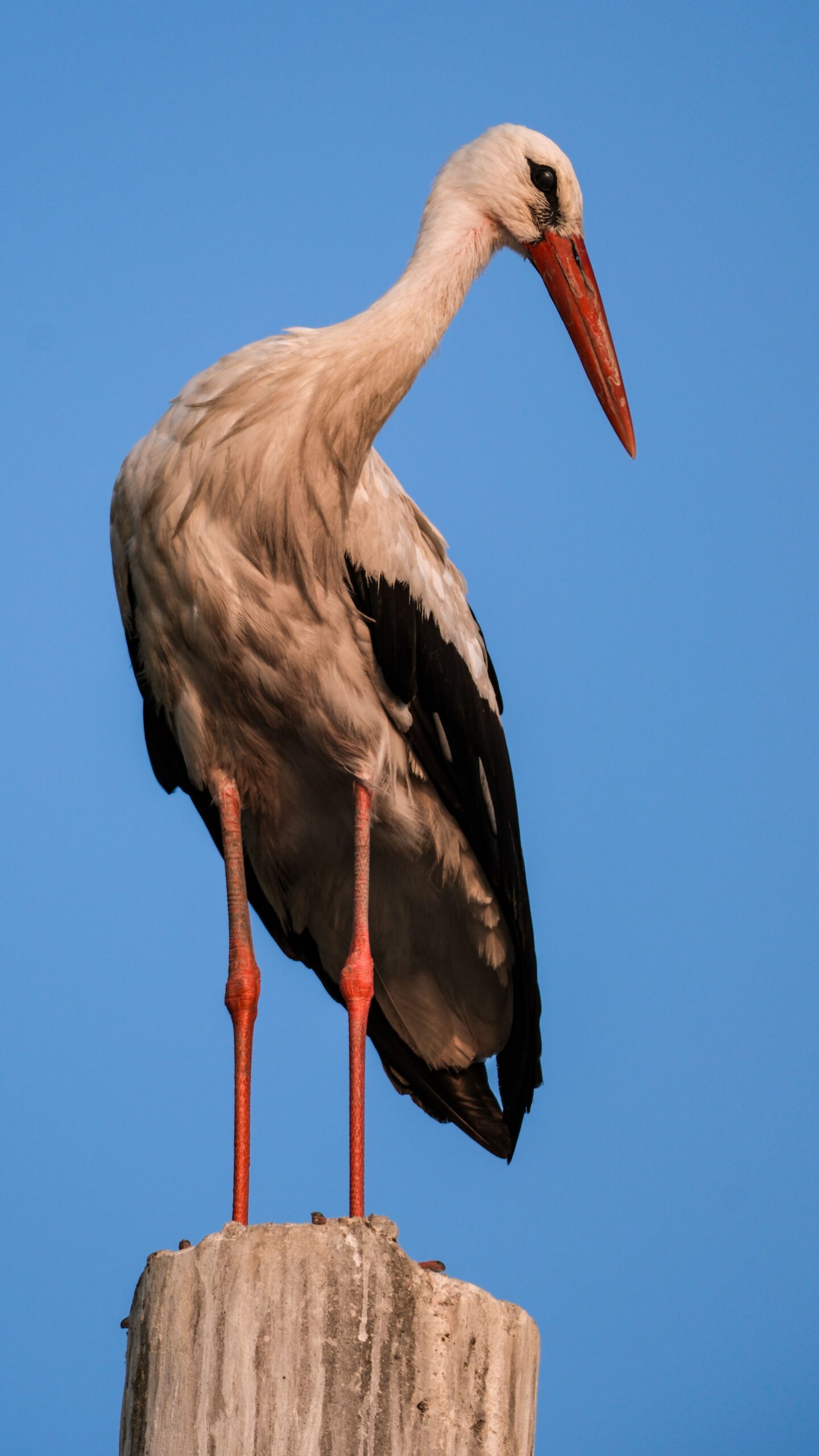
What kind of bird is a stork? We will explain its characteristics, ecology, and habitat. The stork is a carnivorous bird that lives near water, and I think Japanese people are very familiar with it. They are migratory birds and migrate to different areas.







- What is a stork? About basic status
- What are the roots and origins of the Oriental Stork?
- Where is its habitat?
- feature is? What kind of creature is it?
- What is the ecology like?
- Oriental Stork Vocalizations
- Seasonal Activities
- Flight Speed
- About Stork Chicks
- Is the stork an endangered species?
- Can storks be kept?
- Zoos Housing the Species (Japan & Worldwide)
- Introducing other animals
What is a stork? About basic status
The stork is a bird classified in the genus Stork, in the order Avena and the family Storkidae. The scientific name is Ciconia boyciana. The total length is 110 – 115 cm, the weight is 3 – 5 kg, the wingspan is 58 – 67 cm, and the wingspan is 195 cm. Research is ongoing and photos and videos can be viewed online.
| Japanese(和名) | コウノトリ |
| English(英名) | Oriental white stork/Japanese white stork |
| scientific name(学名) | Ciconia boyciana |
| classification(分類) | Ave、 Ciconiiformes、Ciconiidae、Ciconia 鳥綱、コウノトリ目、コウノトリ科、コウノトリ属 |
| IUCN Status(保全状況) | VULNERABLE |
| Length(体長) | 110 – 115cm |
| Weight(体重) | 3-5kg |
What are the roots and origins of the Oriental Stork?
The roots of the stork (specifically the Oriental Stork, Ciconia boyciana, which is currently the subject of conservation and reintroduction efforts in Japan) lie in large wetland birds that first appeared tens of millions of years ago.
Modern storks have evolved a lifestyle of using their long legs and large beaks to forage for prey in wetlands.
Origins of the Stork Family (Ciconiidae)
The stork family (Ciconiidae) represents a relatively ancient lineage among birds.
Origin: Approximately 30 to 40 million years ago (Cenozoic Era)
Center of distribution: The Old World (Africa, Europe, and Asia)
Early storks lived in environments such as:
Rivers
Lakes and ponds
Swamps
Watersides in grasslands
…and preyed on small animals.
What were their ancestors like?
The ancestors of the stork did not possess the large stature seen today; instead, they are believed to have been:
Relatively small waterside birds
Long-legged
Birds that walked through shallow water to forage for prey
Over the course of evolution, they adapted in the following ways:
Legs became longer
↓
Enabled foraging in deeper water
Necks became longer
↓
Enabled quick capture of prey
Beaks became larger
↓
Enabled predation on fish, frogs, insects, and small animals
Roots of the Oriental Stork
The Oriental Stork found in Japan is a species adapted to East Asia.
Distribution range:
Japan
Northeastern China
Korean Peninsula
Russian Far East
In Japan specifically, they have long lived by utilizing:
Rice paddies
Rivers
Wetlands
Japanese populations were once widely distributed, ranging from southern Hokkaido to Kyushu.
Why are they called “birds that bring happiness”?
Storks hold symbolic significance in various parts of the world. In Europe, the legend of the “baby-carrying bird” arose from observations of these migratory birds:
returning in the spring,
nesting near human homes,
and raising their young.
In Japan, too,
they have long been regarded as
birds of good fortune
and symbols of prosperous descendants.
About classification
Stork is a general term for birds belonging to the subfamily Storkinae. In Europe and northern Africa, there is a stork that is closely related to the white stork, and there is a strong opinion that they are the same species. However, both are now considered separate species.
分類体系(標準的な体系に基づく):
- 界(Kingdom):動物界(Animalia)
- 門(Phylum):脊索動物門(Chordata)
- 綱(Class):鳥綱(Aves)
- 目(Order):コウノトリ目(Ciconiiformes)
- かつてはペリカン目(Pelecaniformes)に含められることもあった
- 科(Family):コウノトリ科(Ciconiidae)
- 属(Genus):Ciconia
- 種(Species):代表的な種として
- Ciconia ciconia(コウノトリ、White Stork)
- Ciconia boyciana(オオコウノトリ、Oriental Stork)
- Ciconia nigra(クロコウノトリ、Black Stork)
Where is its habitat?
White storks are migratory birds that breed in the Amur and Ussuri river basins of northeastern China and southeastern Russia, and during the winter they migrate south to the Republic of Korea, Japan, Taiwan, and Hong Kong to overwinter.
1. White Stork (Ciconia ciconia)
Distribution: Europe, Africa, and western Asia
Migration: Winters in Africa and India
Habitat:
Waterside areas such as wetlands, rivers, lakes, and rice fields
Also found in open grasslands and around farmland
2. Great White Stork (Ciconia boyciana)
Distribution: Japan, China, the Korean Peninsula, and the Russian Far East
Habitat in Japan: Reintroduction and conservation efforts are underway in Hyogo Prefecture, Shiga Prefecture, and other areas
Habitat:
Around rivers, lakes, and wetlands
Wintering in wetlands in eastern China and the Korean Peninsula
3. Black Stork (Ciconia nigra)
Distribution: Eastern Europe, Central Asia, Siberia, East Asia (also migrates to parts of Japan)
Habitat:
Nests in rivers and wetlands within forests.
Prefers forest-like environments more closely related to the Oriental White Stork.
Migration: Winters in Southeast Asia and India.
4. Common Habitat Characteristics
Highly Water-Dependent: Prefers areas with an abundance of fish, frogs, and insects for prey.
Foraging in Open Lands: Forages in rice fields and grasslands.
Highly Migratory: Travels long distances depending on the season.
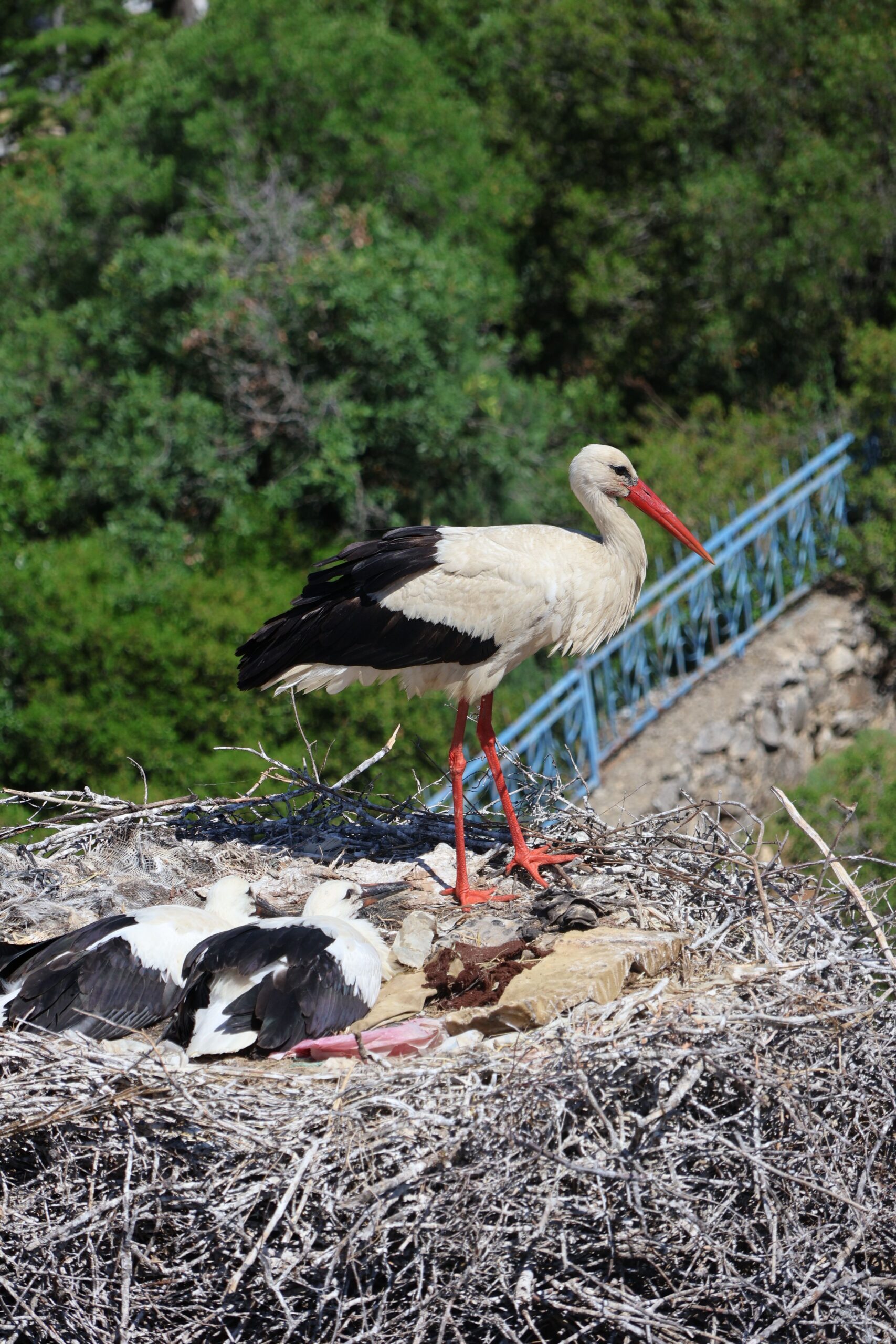
feature is? What kind of creature is it?
Storks look similar to cranes and are often mistaken for herons. White storks live in rivers, wetlands, and grasslands, and they are quite ferocious, as they often fight fiercely between members of the same species, leading to cases where they end up killing each other. A behavior called “cluttering” has been observed, where they violently peck at each other, as if slamming their beaks together. One characteristic of this bird is that it stops singing when it becomes an adult. Storks do not form colonies.
1. Physical Characteristics
Body Size: Large
Body Length: Approximately 100-115 cm
Wingspan: Approximately 155-215 cm
Weight: Approximately 2-4.5 kg (varies by species)
Body Color: Varies by species
White Stork (Ciconia ciconia): White body with black wings
Big Stork (Ciconia boyciana): White body with black wings and a red beak
Black Stork (Ciconia nigra): All black or a mix of black and white
Beak: Long and straight, adapted for foraging and grasping
Legs: Long and red to pink
Neck: Long, stretched during flight
2. Behavioral and Ecological Characteristics
Feeding Method
Preys on fish, frogs, insects, and small mammals near water
Uses its beak to search for prey in water and on land
Flight Ability
Capable of long-distance migration
Large wings enable energy-efficient movement by gliding and using thermal currents
Social
Travels in pairs during the breeding season
May migrate in flocks during the non-breeding season
3. Breeding and Nesting
Nests: In large trees, cliffs, roofs, etc.
Breeding: Oviparous, usually laying 2-5 eggs
Brooding: Both parents incubate and feed the eggs
Lifespan: May live for over 20 years in the wild
4. Overall Impression
Large, graceful waterbird
Long-distance migratory bird
White storks are known as “birds of good luck” and feature in legends and folktales
From a human perspective, they appear dignified, graceful, and approachable
What is the ecology like?
Storks mainly feed on small animals such as frogs, small fish, and insects. It needs to be in a place with a lot of living things and will eat 400-500g a day. Reproduction is oviparous. They court by arching their heads and clapping their beaks together (cluttering). They are monogamous and build nests in large trees. They lay 2 to 6 eggs and the brooding period is 55 to 70 days. The lifespan is about 35 years.
1. Habitat
Main Locations: Open water areas such as wetlands, rivers, lakes, rice fields, and grasslands
Distribution: Varies by species, including Europe, Asia, Africa, and Southeast Asia
Characteristics: Prefers environments with abundant food and easy nesting
2. Behavior
Diurnal
Forages and flies during the day
Many are migratory birds
Migrates long distances depending on the season (white storks range from Europe to Africa)
Flight Ability
Glides with their wings spread, using thermal air currents for energy-efficient flight
3. Diet
Omnivorous, but primarily feeds on aquatic organisms
Fish, frogs, insects, small mammals, etc.
Searches for prey in water and on the ground with their beaks
Foraging Behavior
Searches for food while walking in shallow water or rice fields
Quickly captures prey once found
4. Breeding and Nesting
Nests: On large trees or on building roofs
Breeding Season: Spring to early summer (varies by region)
Number of Eggs: 2-5
Brooding: Both parents incubate and feed
Development: Chicks leave the nest at about 2 months and begin foraging on their own
5. Sociality
Breeding Season: Pairs build nests and raise their young
Non-breeding Season: Sometimes migrate in flocks
Communication: Communicate through beak tapping, wing buzzing, and calls
6. Ecology Summary
Diurnal, migratory, large, water-dependent birds
Diet: Omnivorous, primarily feeding on fish and frogs
Both parents cooperate in nest building and brooding
High flying ability, capable of long-distance migration
Oriental Stork Vocalizations
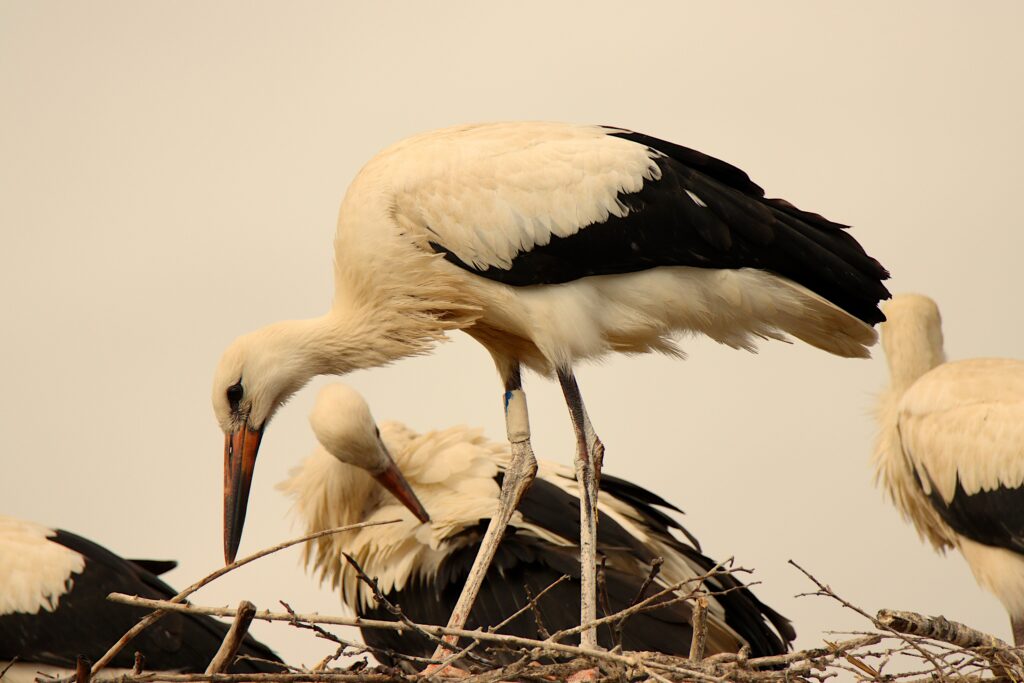
Storks (specifically the Oriental Stork, Ciconia boyciana) rarely “sing” like typical birds.
Their most distinctive characteristic is communicating through sound by clattering their beaks together—a behavior known as “bill-clattering.”
Characteristic Sound: Kata-kata-kata…
The primary sounds made by the stork are
“Kata-kata-kata-kata…” or
“Ka, ka, ka…“
—dry, rapid, repetitive sounds.
These sounds are not produced by the vocal cords;
instead, they are created by rapidly striking
the upper beak
against the lower beak.
Why don’t they vocalize?
As adults, storks lack a well-developed vocal organ (syrinx) in the throat, limiting their ability to produce complex vocalizations.
Instead, they convey their intentions using
their beaks,
posture, and
wing movements.
This is a trait common to large stork species.
Situations where bill-clattering is used
① Courtship and pair bonding
During the breeding season, pairs face each other and engage in behaviors such as:
arching their necks far back,
clattering their beaks, and
bobbing their heads up and down.
These actions serve to confirm their bond as a pair.
② Communication at the nest
At the nest, the sound is used for:
signaling between mates,
greeting a partner returning to the nest, and
stimulating the chicks.
Parent birds and chicks recognize each other through these sounds and movements.
③ Alerting and intimidation
When other birds or animals approach, they issue a warning by:
clattering their beaks vigorously,
extending their necks, and
making their bodies appear larger.
Seasonal Activities
The annual activity cycle of the Oriental Stork (Ciconia boyciana) consists of breeding, rearing young, migration, and overwintering.
In Japan, they inhabit areas such as Toyooka City, Hyogo Prefecture—where reintroduced populations are concentrated—utilizing wetlands, rice paddies, and rivers.
🌸 Spring (March–May): Breeding and Rearing Begin
Key Activities
Pair formation
Nest building
Egg-laying
Incubation
Spring is the most critical season for the Oriental Stork.
Behaviors:
Repairing the nest as a pair
“Clattering” (clicking their beaks together)
Courtship displays on the nest
Breeding
Number of eggs: Typically 2–6
Incubation period: Approx. 30–35 days
Male and female take turns incubating the eggs
☀️ Summer (June–August): Chick Growth and Fledging
Key Activities
Feeding chicks
Flight training
Hunting practice
Parent birds return to the nest multiple times a day to feed the chicks:
Fish
Frogs
Snakes
Insects
Small mammals
Chick Growth
Able to fly at about 2 months of age
Continue to receive food from parents for a while after fledging
Often remain in family groups until autumn
🍂 Autumn (September–November): Migration and Independence
Key Activities
Dispersal of young birds
Shifting foraging grounds
Searching for overwintering sites
Young storks move around,
Rivers
Rice paddies
Wetlands
Ponds
…searching for areas rich in food.
Adult birds also expand their range depending on the season.
❄️ Winter (December–February): Overwintering and Foraging
Key Activities
Foraging in wetlands and rice paddies
Resting in flocks
Preparing for the next breeding season
They do not enter a state of true hibernation in winter;
Fish
Frogs
Aquatic insects
Small animals
…they remain active while searching for these.
During cold periods, they engage in behaviors such as:
Resting on one leg
Fluffing up their feathers
Maintaining body heat in sunny spots
Flight Speed
The flight speed of storks (particularly the Oriental Stork, Ciconia boyciana) is typically around 40–60 km/h during normal flight, though it may be slower when gliding.
Normal Flight Speed
Approximately 40–60 km/h
During cruising flight, they move by slowly flapping their large wings.
As large birds, storks excel at gliding using thermal updrafts rather than relying on frequent flapping.
Migration and Long-Distance Travel
When migrating, storks gain altitude by utilizing:
Mountain slopes
Updrafts rising from ground heated by the sun
This flight method allows them to:
Reduce the frequency of wing beats
Conserve energy
Travel long distances
Flight Characteristics
Large wings
Wingspan of the Oriental Stork:
Approximately 2 meters
Their large wings enable them to:
Fly slowly
Glide for extended periods
Travel with minimal effort
Movement Between Nest and Foraging Grounds
In their daily routine, they:
Travel distances ranging from a few kilometers to several tens of kilometers from the nest
Fly to rivers or rice paddies
Return to the nest in the evening
Since there is no need to rush during these trips, their flight speed is relatively slow.
About Stork Chicks
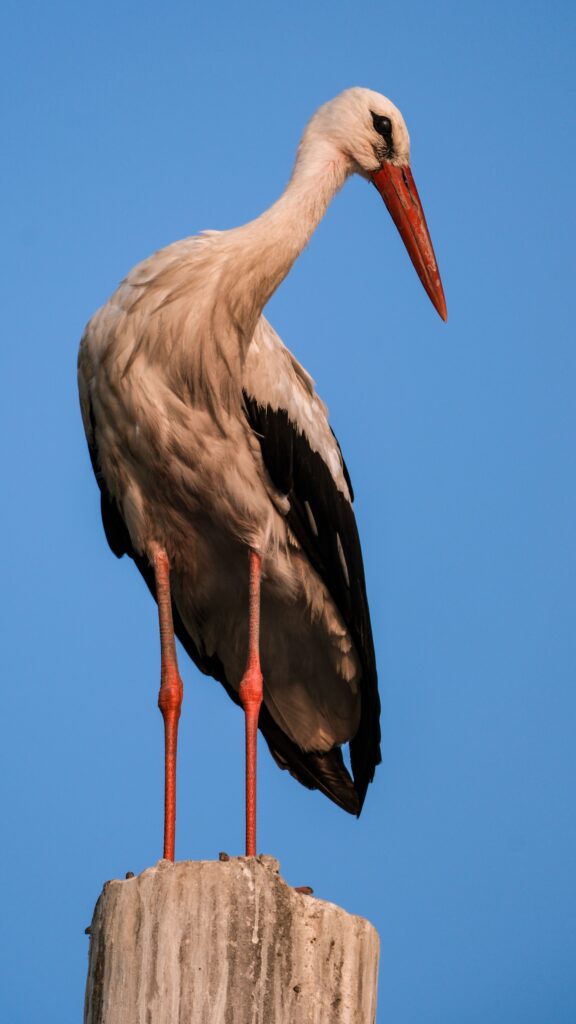
This article provides a detailed summary of stork chicks (young birds), covering their appearance, growth, and behavior.
1. Birth and Early Characteristics
Egg Number: Usually 2-5
Hatching: Hatch in approximately 32-34 days (varies slightly depending on species and climate)
Weight and Size: Approximately 70-90 g immediately after hatching, approximately 15 cm in length
Feathers: Soft, downy feathers; adult black and white or red feathers have not yet developed
Eyes, Beak, and Legs: Small, pale in color
2. Growth and Development
Early Life: Carried and fed by parents in the nest
Feeding: Parents feed them digested fish, frogs, etc. by mouth
Feather Development: At 2-3 weeks of age, their body fur begins to change to adult feathers
Flight Preparation: At 6-8 weeks of age, their feathers are fully developed and they are ready to leave the nest
3. Behavior/Personality
Long waiting time in the nest: At first, they are mostly immobile and dependent on their parents.
Highly dependent on their parents: They have difficulty surviving without feeding and protection.
As they grow, they begin to move within the nest: They practice flapping their wings and bracing themselves.
4. Fleeting and Independence
Fleeting: They begin flying at 6-8 weeks of age.
Foraging: After leaving the nest, they learn how to forage while accompanying their parents.
Independence: After several months, they become able to forage independently.
5. Ecological Points
Early Life: Highly dependent on parents.
Relatively fast growth rate, allowing them to leave the nest at about 2 months.
Flight and foraging skills are learned within the nest.
Is the stork an endangered species?
Unfortunately, the white stork is listed as an endangered species. It has also been designated as a special natural monument of the country. The causes are as follows. The estimated population is around 2,000 to 3,000 birds. In Japan, plans to release birds into the wild and reintroduce them are being implemented. Parenting activities have begun in order to allow the birds to fly outdoors. We are developing a business to help chicks leave the nesting area.
It is difficult to secure food
Due to overfishing and the effects of pesticides, the number of loaches that they feed on has drastically decreased. This made it impossible to get enough food. It has disappeared in the wild in Japan.
A stork gets entangled in an artificial object
Land exploitation by humans is also a major problem. In addition to agricultural damage, the number of storks becoming entangled in man-made objects such as electric wires and electrocution cases is also increasing. Therefore, a breeding program has been started. They lay eggs and grow in rice paddies, etc., and then depending on the situation, they are allowed to leave the nest.
Can storks be kept?
Storks are migratory birds and have no concept of permanent residence. In addition, it is extremely difficult for the general public to keep as it is designated as an endangered species.
1. Difficulty of Raising
Large bird with excellent flying ability
Body length: 100-115 cm, wingspan: 155-215 cm
Requires ample flying space, which is difficult to secure in a home environment
Unique diet
Mainly feeds on fish, frogs, and insects
Requires live food and an aquatic environment, making it difficult to provide food at home
Migratory habits
Many species migrate long distances seasonally, which can be stressful in captivity
Due to their strong migratory instincts, confined environments can lead to health and reproductive problems
Sociality and breeding habits
Requires paired nesting and chick-raising during the breeding season
Breeding is difficult in solitary or unsuitable environments
2. Laws and Regulations
Oriental white storks are sometimes designated as endangered species, and international trade and breeding require permission.
In Japan, they are regulated by the Convention on International Trade in Endangered Species (CITES), and illegal breeding and import are prohibited.
3. Cases where they can be kept
Zoos and wildlife conservation facilities
For breeding programs, conservation, or exhibition purposes
Environments with access to food, water, and flight space
Home keeping is not practical
Stress, malnutrition, and lack of flight can cause health problems
Zoos Housing the Species (Japan & Worldwide)
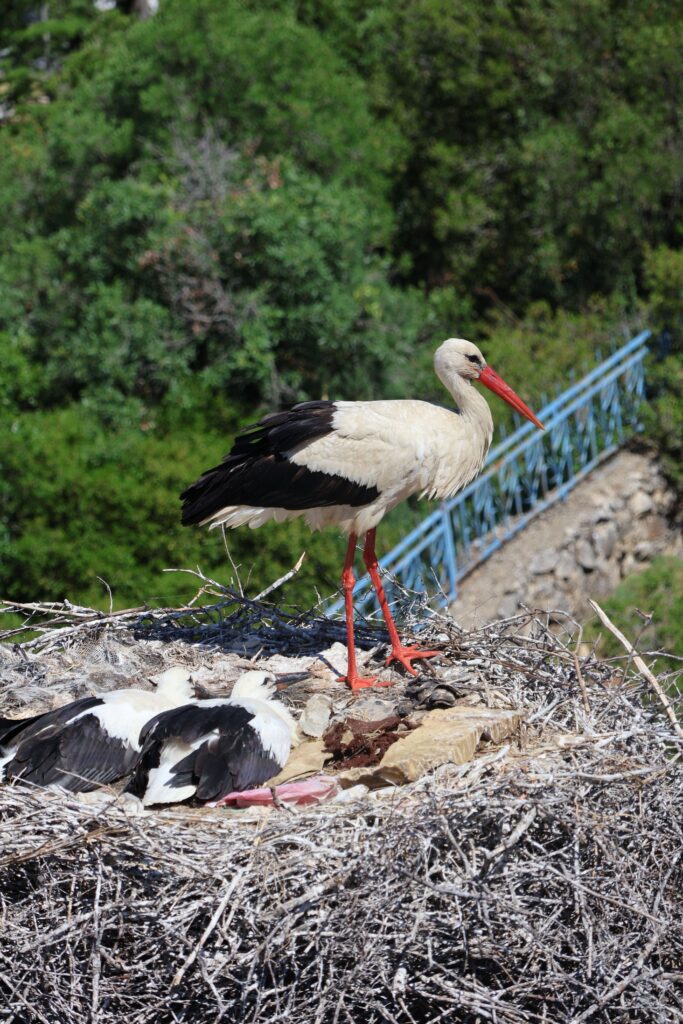
The Oriental Stork (Ciconia boyciana) is an endangered species kept in zoos and conservation facilities around the world for the purposes of breeding and reintroduction into the wild.
In Japan, many individuals are kept under managed pedigree programs; as of the end of 2022, approximately 185 storks were housed across 21 facilities nationwide.
🇯🇵 Major Facilities Housing Oriental Storks in Japan
Hyogo Park of the Oriental White Stork
The central facility for Oriental Stork conservation efforts in Japan
A hub for captive breeding, research, and reintroduction into the wild
Releases of captive-bred storks began in 2005, and the park continues to advance reintroduction initiatives.
Key activities include:
Breeding research
Individual management
Recovery of wild populations
Visitors can observe these activities.
Tama Zoological Park (Tokyo)
One of the largest facilities for housing Oriental Storks in Japan
Participates in breeding and pedigree management programs
Tama Zoological Park manages the Oriental Stork as a designated “Tokyo Zoo Stock” species.
Tennoji Zoo
Exhibits Oriental Storks
Provides information on their ecology and conservation efforts
Exhibits also explain how adults communicate not through vocalizations, but by clattering their beaks—a behavior known as “clattering.”
🌍 Major Facilities Housing the Species Worldwide
🇩🇪 Germany
Weltvogelpark Walsrode
A world-class facility specializing in birds
Houses a diverse range of bird species, including rare birds native to East Asia.
🇩🇪 Germany
Wilhelma
A zoo and botanical garden with a long history
Has a track record of keeping stork species.
🇧🇪 Belgium
Planckendael Zoo
Houses Oriental stork species.
🇰🇷 South Korea
Seoul Grand Park
Registered as a facility housing Oriental Storks (Ciconia boyciana)
Introducing other animals

コメント