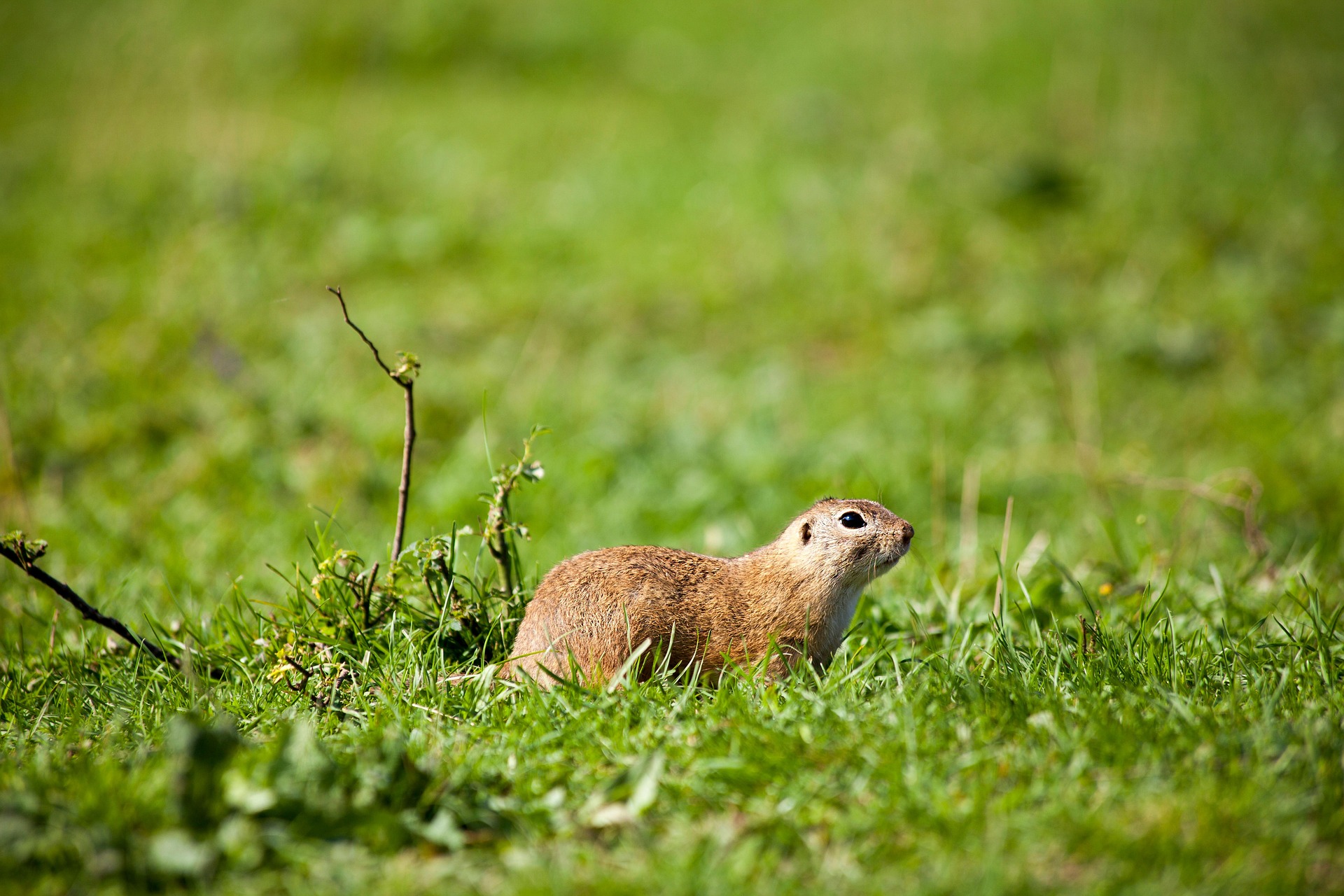
What is the European ground squirrel (Spermophilus citellus)? There are many photos and materials available online, but I will explain its characteristics, ecology, and habitat. As the name suggests, the European ground squirrel is a squirrel that lives in Europe. However, it is designated as an endangered species. It is already confirmed to be extinct in most of Europe.








- What is European ground squirrel? About basic status
- What are the roots and origins of the European ground squirrel?
- About habitat
- feature is? What kind of creature is it?
- What is the ecology like?
- Vocalizations of the European Ground Squirrel
- Seasonal Activities
- Locomotion Speed
- About Baby European Ground Squirrels
- Is the European ground squirrel an endangered species?
- Can European ground squirrels be kept?
- Zoos Housing the Species (Japan & Worldwide)
- Introducing other animals
What is European ground squirrel? About basic status
The European Ground Squirrel is a rodent classified in the Mammalia class Rodentia family Squirrel family Squirrel genus. The scientific name is Spermophilus citellus. The body length is 17.6 – 23cm and the weight is 0.2 – 0.4kg. As the name suggests, this is an animal that primarily lives in Europe. A list of basic information is below. If you search for keywords, you will often find free internet services and pages that feature images, photos, and other illustrations at the top.
| Japanese(和名) | ヨーロッパハタリス |
| English(英名) | European souslik/European ground squirrel |
| scientific name(学名) | Spermophilus citellus |
| classification(分類) | Mammalia、 Rodentia、 Sciuridae、Spermophilus 哺乳綱、齧歯目、リス科、ジリス属 |
| IUCN Status(保全状況) | ENDANGERED |
| Length(体長) | 17.6 – 23cm |
| Weight(体重) | 0.2 – 0.4kg |
What are the roots and origins of the European ground squirrel?
The European ground squirrel (Spermophilus citellus) traces its roots to a lineage of ancient squirrels (ground-dwelling squirrels) that adapted to the grasslands of the Eurasian continent.
Ancestry: From arboreal squirrels to ground-dwelling life
The distant ancestors of the European ground squirrel belonged to a ground-dwelling squirrel lineage that diverged from the group of typical arboreal squirrels.
The general evolutionary trajectory is as follows:
Primitive squirrels (over 30 million years ago)
↓
Marmotini tribe (evolved for ground-dwelling life)
↓
Spermophilus genus lineage
↓
European ground squirrel (Spermophilus citellus)
Ground squirrels developed by adapting to grassland and steppe environments rather than forests.
Origins of the genus Spermophilus
The ancestors of the genus Spermophilus are believed to be ground-dwelling squirrels that spread across Eurasia during the Neogene period (specifically the Miocene and Pliocene epochs).
Fossil records indicate that the European Spermophilus lineage existed from the late Miocene and diversified throughout the Pliocene and Pleistocene epochs.
Eastern Europe (specifically modern-day Ukraine and western Russia) is a particularly important region for understanding the evolution of early Spermophilus.
Where the European ground squirrel emerged
The modern European ground squirrel (Spermophilus citellus) is believed to have evolved in the vicinity of:
The Balkan Peninsula
The Danube River basin
Eastern Europe
Fossil evidence shows the species was present in southeastern Europe by the mid-Pleistocene, with the Balkan region likely serving as the center of its evolution.
Relationship with the Ice Age
The history of the European ground squirrel was significantly influenced by the Ice Age.
During the Pleistocene epoch (approximately 2.6 million to 10,000 years ago), there were repeated cycles of:
Glacial periods → Expansion of grasslands
Interglacial periods → Expansion of forests Ground squirrels adapted to the steppe (grassland) environments of cold periods, and the populations that survived gave rise to the regional groups found today. Genetic studies indicate that areas such as the southern Balkans served as crucial refugia during the Ice Age.
Why did they become ground-dwelling squirrels?
Their ancestral squirrels lived in trees, but the aridification of Eurasia led to:
an increase in grasslands
a decrease in trees
an increase in ground-level plant resources
Consequently, they evolved the following traits:
strong hind legs → for running quickly
sturdy claws → for digging burrows
cheek pouches → for transporting food
ability to hibernate → for surviving cold periods
Origin of the name
The scientific name Spermophilus is derived from Greek:
sperma (seed)
phileo (to love/prefer)
It translates to “seed-lover.”
Scientific name and classification
- 学名:Rattus norvegicus
- 目:ネズミ目(Rodentia)
- 科:ネズミ科(Muridae)
- 属:ラット属(Rattus)
- 種:ヨーロッパハタリス(Rattus norvegicus)
About habitat
The European ground squirrel was reintroduced in Poland. It used to be widely distributed throughout Europe, including Ukraine, Austria, Spain, Germany, Turkey, and Croatia, but it has become extinct.
- Geographic Distribution
Origin: Northern Asia (near northern China and Mongolia)
Current Distribution: Spread almost worldwide as an invasive species
Throughout Europe
North and South America
Africa, Australia
East Asia, including Japan
- Habitat Characteristics
Adapted to human activity: Commonly found in urban areas, farmland, harbors, sewers, and warehouses
Prefers proximity to water: Often breeds and moves along rivers, wetlands, and canals
Securing Hiding Places: Prefers dark, narrow places such as gaps between buildings, underground, under bushes, and under rocks
- Environmental Adaptability
Highly resistant to environmental changes such as urbanization and agricultural development
Omnivorous and highly reproductive, populations can be maintained in a variety of environments
feature is? What kind of creature is it?
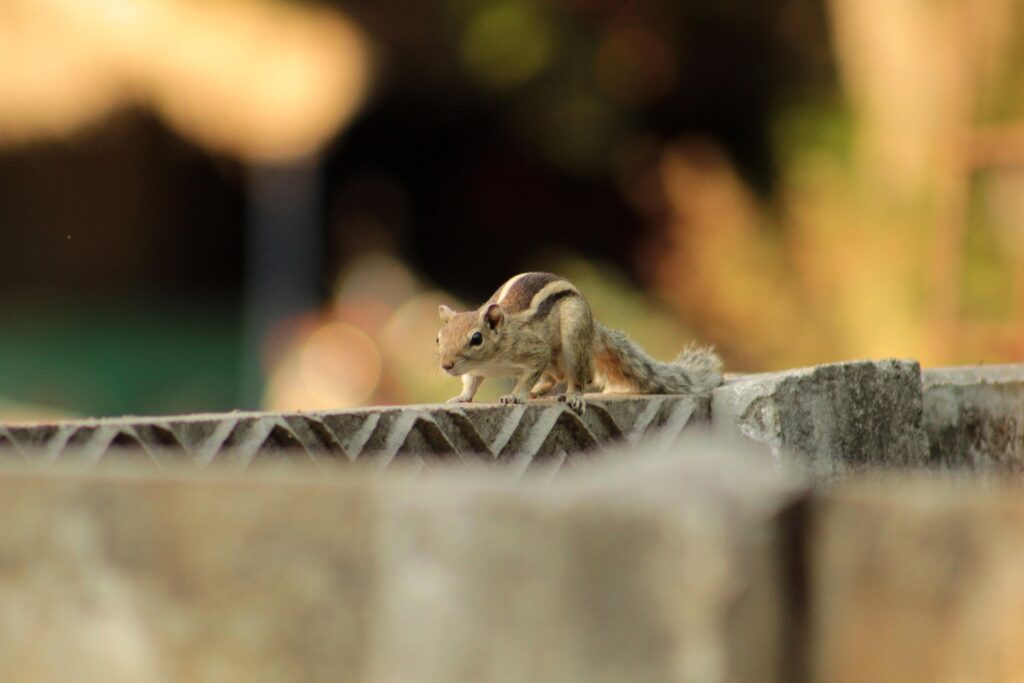
The European ground squirrel has a grayish-brown back with yellowish-white spots. It prefers to live in natural farmlands and grasslands at altitudes between 900 and 2,500 meters. They live in burrows about 1 meter underground, are mainly diurnal, and tend to live alone. During the winter, they hibernate in their burrows.
- Appearance and Physical Characteristics
Body Type: Large, sturdy rodent
Body Length and Weight:
Body Length: Approximately 20-25 cm (excluding tail)
Tail Length: Approximately 15-20 cm
Weight: Approximately 200-500 g
Fur Color: Brown to gray on the back, light colored underside
Head and Face: Round head, small ears, pointed nose
Tail: Slightly shorter than the body, relatively sparsely furred
- Behavior and Personality
Nocturnal/Crepuscular: Active primarily at night
Omnivorous: Eats anything, including grains, fruit, insects, and garbage
Social: May form groups, but territoriality varies from individual to individual
Highly Adaptable: Well adapted to human environments, including urban areas, farmland, and sewers
- Special Features
Excellent reproductive ability: Breeds year-round, allowing populations to grow rapidly.
Swimming and climbing ability: Capable of moving around water and inside buildings.
High learning ability: Easily learns how to find food and avoid danger.
What is the ecology like?
European ground squirrels subsist on grasses, roots, and berries. They stuff food into their cheek pouches and carry it to their burrows for storage. The gestation period is one month, and it is possible to give birth to 2 to 9 puppies at a time. The European ground squirrel has a lifespan of about 8 to 10 years.
- Diet (What they eat)
They are omnivorous, eating a wide variety of food, including human food, grains, fruits, insects, and small invertebrates.
In urban areas, they often use garbage and grain from warehouses.
They have a high predatory ability, searching for food on land, near water, and inside buildings.
- Reproduction and Growth
Highly reproductive
Breeding season is almost year-round (especially active during warm seasons).
Gestation period: Approximately 21-23 days.
Give birth to approximately 6-12 pups.
Baby Development
At birth, they are hairless and their eyes are closed.
Their eyes open at about 2 weeks, and they are weaned from their mother’s milk at 3-4 weeks.
They become independent and capable of breeding at about 2 months.
- Behavior and Lifestyle
Nocturnal/Crepuscular: They rest during the day in burrows or crevices in buildings.
Nesting: They build nests in underground tunnels or inside buildings.
Social: They may live in groups, but aggression can occur between individuals over food or nests.
- Movement and Habitat Use
Adapted to a wide range of environments, including riverbanks, wetlands, urban areas, farmland, warehouses, and sewers.
They also have excellent swimming and climbing abilities, and can move across building roofs and waterways.
Are there any natural enemies?
European ground squirrels have natural enemies such as weasels, foxes, and domestic cats. All large carnivores become natural enemies and are preyed upon.
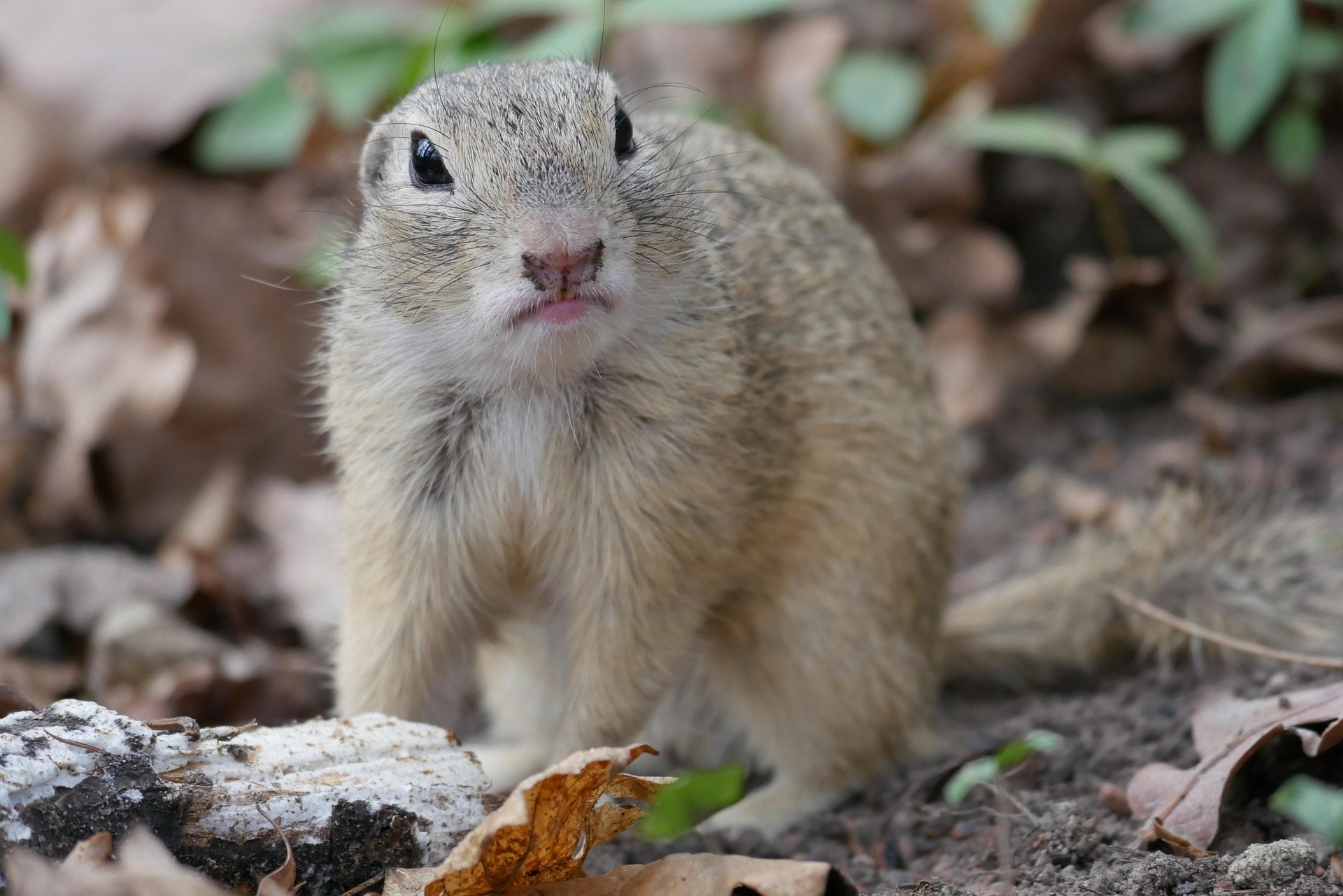
Vocalizations of the European Ground Squirrel
The European ground squirrel (Spermophilus citellus) is known for its highly distinctive, high-pitched, and sharp alarm calls. Among ground-dwelling squirrels, they are recognized for using sophisticated vocalizations to communicate with one another.
- Alarm Calls
This is their most well-known vocalization.
They emit short, high-pitched cries such as:
“Pee!” “Kwee!” “Chee!”
Functions:
Alerting the group to the presence of a predator
Signaling the need to flee into the burrow
Putting the entire colony on alert
Predators:
Foxes
Birds of prey (e.g., buzzards, kestrels)
Snakes
Mustelids (weasels, etc.)
- Reactions to Predators
When a bird of prey approaches from the air,
they emit a series of short, sharp “Peep!” sounds.
In the case of ground-based threats,
they tend to produce a longer alarm call.
This behavior is believed to have evolved
to allow the group to distinguish between
“danger from above” and
“danger from the ground.”
- Communication Among Individuals
While generally quiet,
during interactions such as
parent-offspring calls,
territorial checks, and
breeding season encounters,
they use:
soft vocalizations,
low growls, and
mouth-clicking sounds.
- Calls of the Young
Juveniles make
soft sounds like “chi-chi-chi” or “pi-pi-pi.”
These serve as signals to the mother regarding:
hunger,
danger, and
locating one another within the burrow.
Seasonal Activities
The activity patterns of the European ground squirrel (Spermophilus citellus) vary significantly by season.
Its most distinctive characteristic is spending nearly half the year underground in hibernation, with a lifestyle rhythm adapted to the changing climate of the grasslands.
Spring (March–May): “Waking from hibernation and breeding”
Activities
Waking from underground burrows
Beginning surface activity
Resuming foraging
Starting reproductive behavior
Having lost weight during hibernation, they first consume large amounts of plant matter to regain their strength.
Key Behaviors
Sunbathing
Vigilance (watching for danger)
Foraging for grass and seeds
Male-male competition
Reproduction
Mating is the major event of spring.
Males: Wake up earlier from hibernation to search for females
Females: Quickly prepare for reproduction
The gestation period is approximately three weeks, with births occurring in early summer.
Summer (June–August): “Peak activity period”
Activity Level: ★★★★★ (Maximum)
This is the most critical season for the European ground squirrel.
Activity Times:
Morning
Afternoon
They may rest in their burrows during the hottest part of the day.
Key Behaviors
Eating grass, seeds, and insects
Raising young
Vigilance around the burrow
Storing fat for hibernation
Juveniles emerge from the burrow in summer and begin independent lives.
Autumn (September–October): “Preparing for hibernation”
Activities
Food intake increases in preparation for winter.
Objectives:
Storing body fat
Maintaining burrows
Preparing hibernation sites
Changes
Reduced time spent above ground
Focus shifts to foraging
Increased vigilance
Body weight increases significantly before hibernation.
Winter (October–March): “Hibernation season”
Activity Level: ★☆☆☆☆ (Virtually inactive)
They hibernate in underground burrows during the cold season. During hibernation:
Body temperature drops
Heart rate slows
Metabolism slows
Energy consumption is conserved
Inside the burrow,
a bed is made using
dried plants
and grass nesting materials.
Locomotion Speed
While the European ground squirrel (Spermophilus citellus) moves at a leisurely pace during normal activity, it can run very quickly when it senses danger.
Walking Speed (Normal Movement)
Approximately 1–2 km/h (estimated)
When moving around its burrow, it walks quickly while keeping its body low to the ground.
The European ground squirrel does not travel long distances on foot; its life consists primarily of short-range movements between:
the area around its burrow
foraging sites
the territory shared with other squirrels
Running Speed (When Threatened)
When it senses danger, it switches from walking to a high-speed dash.
Top speed: Estimated at around 15–20 km/h
Primary purposes:
Escaping from birds of prey
Escaping from predators such as foxes
Returning to the burrow
Running Characteristics
The European ground squirrel exhibits the following running characteristics:
Well-developed hind legs
Running with the body held low
Moving rapidly over short distances
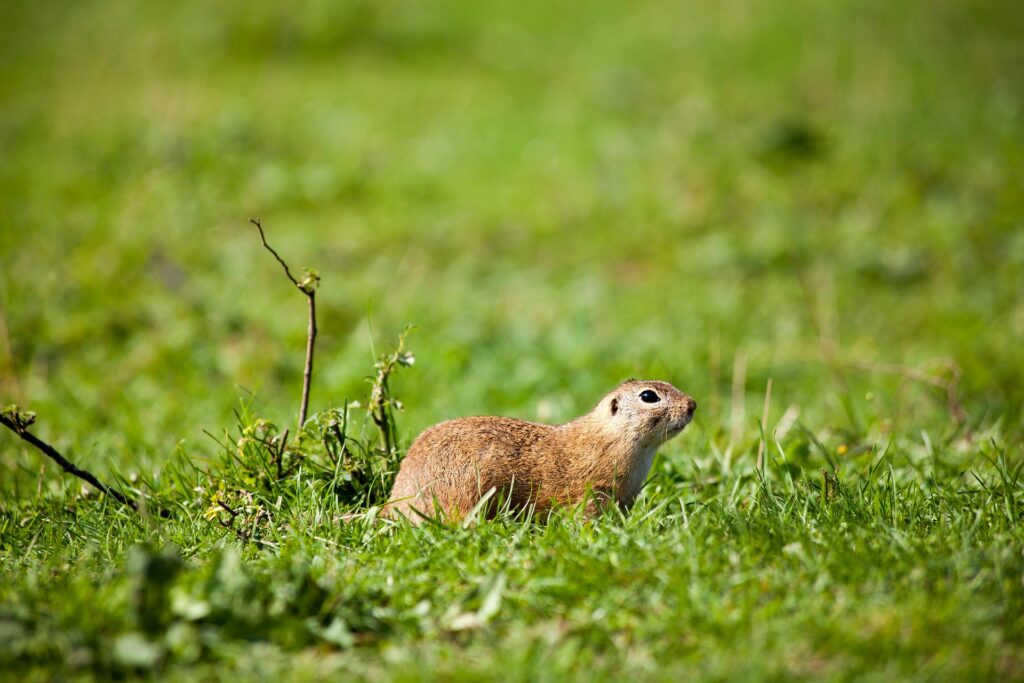
About Baby European Ground Squirrels
The following summarizes the appearance, growth, behavior, and mother-child relationship of baby European ground squirrels (Rattus norvegicus).
- Appearance and Physical Characteristics
Body Color: Immediately after birth, they are hairless and have pink skin.
Body Length and Weight:
Body Length: Approximately 3-5 cm
Weight: Approximately 5-7 g
Sensory Organs: Their eyes are closed, and their ears are still developing. Around 10 days after birth, their eyes open and they can hear.
- Growth and Development
Lactation: Breastfed for approximately 3 weeks
Weaning: Beginning to eat solid foods (grains and insects) gradually at 3-4 weeks of age
Independence: Leaves the burrow at 4-6 weeks of age and begins learning how to forage and hide
Sexual Maturity: Becomes capable of breeding at 2-3 months of age
- Behavior and Mother-Infant Relationships
Cubs are protected in their mother’s burrow
Mothers not only breastfeed but also teach their young how to forage and avoid danger
Cubs develop motor skills, socialization, and hunting skills through play with other animals
- Threats and Survival
Cubs are vulnerable to predators (owls, hawks, cats, etc.), and survival rates are low if burrows and maternal protection are inadequate.
In urban environments, poisoned bait and human activity also pose risks.
Is the European ground squirrel an endangered species?
Unfortunately, the European ground squirrel is listed as an endangered species. Over the past 10 years, more than 30% of the individuals have become extinct, and the situation is critical. The habitat of squirrels has been greatly reduced and fragmented due to conversion of pastureland to cultivation and forestry.
- IUCN Red List Assessment
Current Assessment: Not Endangered on the IUCN (International Union for Conservation of Nature) Red List
Native to northern Asia, but has spread worldwide as an invasive species, resulting in a very large population.
- Status in Japan
In Japan, it is not a native species, but has established itself as an invasive species.
It is not specifically designated as an endangered species, and is often targeted for extermination.
- Population and Distribution Characteristics
It has well adapted to human environments such as urban areas, farmland, warehouses, and sewers, and its population is stable or increasing.
It has a high reproductive rate and can quickly establish a population.
Can European ground squirrels be kept?
The European ground squirrel is designated as an endangered species, and it is extremely difficult for the general public to keep it. It is realistic to see them at zoos, etc.
- Breeding Possibilities
In fact, there are rats bred for pet use, such as “dwarf rats” and “laboratory rats.”
Wild rats can be kept as pets, but their wild personality and behavior can lead to extreme caution and aggressiveness.
- Breeding Requirements
Sufficient Space: They are active, have good jumping and climbing abilities, so their cages need to be large and tall.
Environmental Preparation: Provide nesting materials (paper, straw, etc.), hiding places, water, and exercise equipment.
Diet Management: They are omnivorous and require supplemental foods such as pet rat food, as well as vegetables, fruits, and insects.
Sociality: If keeping them together, be careful of the compatibility of the group. If they are highly aggressive, it is best to keep them alone.
- Laws and Regulations
Although they are an invasive species in Japan, private ownership is not prohibited.
Bred rats available at pet shops can be kept without any problems.
Catching wild rats and keeping them may be subject to local ordinances.
Zoos Housing the Species (Japan & Worldwide)
The European ground squirrel (Spermophilus citellus) is a rare, ground-dwelling squirrel that is seldom kept in captivity worldwide.
Due to declining wild populations, European zoos keep them for the purposes of conservation, breeding, and reintroduction research.
🇯🇵 Zoos in Japan
There are no facilities with permanent exhibits.
🇪🇺 Zoos in Europe
🇩🇪 Germany
Tierpark Berlin
Keeps European ground squirrels
One of the facilities where their ground-dwelling behavior can be observed in a spacious enclosure
Zoo Wuppertal
Records of keeping the species exist
Involved in the conservation of rare European rodents
Opel-Zoo
Keeps European ground squirrels
🇵🇱 Poland
New Zoo Poznań
A key facility for European ground squirrel research
Known for conducting behavioral research in captivity
Subject of research linked to reintroduction plans
🇫🇷 France
Bioparc de Doué-la-Fontaine
Keeps European ground squirrels (Souslik d’Europe)
Involved in supporting reintroduction efforts in Bulgaria
Ménagerie du Jardin des Plantes
Records of keeping the species exist
Introducing other animals



コメント