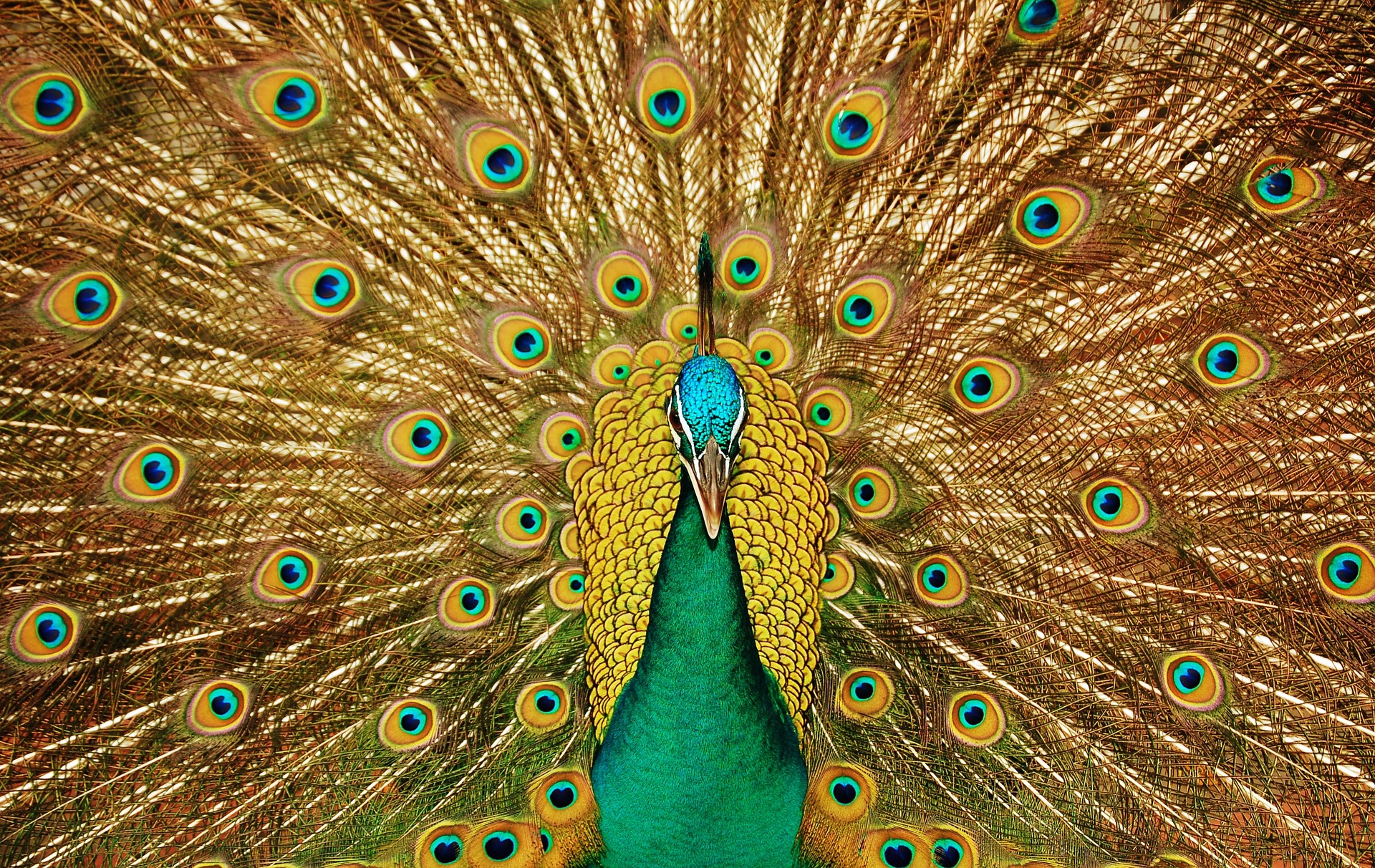
What kind of animal is a peacock? We will explain its characteristics, ecology, and habitat. They have large, bright decorative feathers that give them a very flashy impression, but did you know that they are actually an endangered species? From now on, we will explain the ecology and characteristics of this species, so please refer to it.


- What is a peacock? About basic status
- What are the roots and origins of the peacock?
- About habitat
- feature is? What kind of creature is it?
- What is your personality like?
- What is the ecology like?
- About Molting
- About Peacock Calls
- Seasonal Activities
- About Walking Speed
- About peacock chicks
- Are peacocks an endangered species?
- Can peacocks be kept as pets?
- Zoos Housing Peafowl (Japan & Worldwide)
- Introducing other animals
What is a peacock? About basic status
Peacocks are birds of the order Phasianidae. The total length is 180-250cm and the weight is 3-6kg. The list of information is as follows.
| Japanese(和名) | クジャク |
| English(英名) | Peafowl |
| scientific name(学名) | Hydrochoerus hydrochaeris |
| classification(分類) | Ave、Galliformes、 Phasianidae、Pavo 鳥綱、キジ目、キジ科、クジャク属 |
| IUCN Status(保全状況) | ENDANGERED |
| Length(体長) | 180 – 250cm |
| Weight(体重) | 3 – 6kg |
What are the roots and origins of the peacock?
Peacocks belong to the pheasant family (Phasianidae) and originated in the Indian subcontinent. The blue peacock (Indian peafowl)—the variety most commonly known today—bears the scientific name Pavo cristatus and is native to the region encompassing India and Sri Lanka.
Ancestry and Evolutionary Origins
Taxonomically, peacocks are members of the pheasant family (Phasianidae). They are believed to have evolved from ground-dwelling birds that shared a common ancestor with other pheasants. The genus Pavo currently comprises two main species:
Indian Peafowl (Blue Peacock)
Native to the Indian subcontinent
Famous for its blue plumage and massive ornamental feathers
Green Peafowl
Native to Southeast Asia (ranging from Myanmar to Java, etc.)
The two species are estimated to have diverged approximately 3 million years ago.
Why did they develop such flamboyant feathers?
The peacock’s most distinctive feature—its massive feathers adorned with eyespots—is the result of reproductive competition rather than a necessity for survival.
To be chosen by females, males developed:
Large feathers
A high number of eyespots
Brilliant coloration
Courtship displays involving the vibrating of feathers
This is a classic example of sexual selection, a concept proposed by Darwin. In other words, it is an evolutionary process where:
“Males with flamboyant feathers were more likely to be chosen by females and thus more successful in producing offspring.”
Relationship with Ancient Civilizations
Peacocks have long held a special place in human society.
India
In India, they have been considered sacred birds since ancient times,
Kingship
Beauty
Immortality
Wealth
serving as symbols of these concepts. Known as “Mayura” in Sanskrit, they appear frequently in mythology and temple art.
Ancient Greece and Rome
Peacocks spread westward from India in pre-Christian times and became a symbol of the goddess Hera in Greek mythology. Later, it was also prized in the Roman Empire as a symbol of wealth and power.
Origin of the name “peacock”
The English word “peacock” derives from the Latin pavo.
This word may have originated in languages from the region of India, passing through Ancient Greek and other languages along the way. In other words, the name itself reflects the history of the peacock spreading from India to the rest of the world.
About classification
The following subspecies of peacock exist:
Pavo cristatus
The Indian peafowl is a bird classified in the order Phasianidae, family Phasianidae. It is the national bird of India. This peacock lives in India, Sri Lanka, and Nepal, and has a total length of 230 cm and a fan-shaped feather extending from the top of its head. This peacock is diurnal and lives in agricultural areas. There is no danger of extinction as it is protected as a sacred bird in its habitat.
Afropavo congensis
The Congo peafowl is endemic to the Democratic Republic of the Congo. Slightly smaller with a total length of 64 to 70 cm for males and 60 to 63 cm for females. The back and thorax are dark purple, and the abdomen is black. They have a very limited habitat and are classified as a near-threatened species. Their population is decreasing due to habitat destruction due to deforestation, farmland development, mining, etc.
Pavo muticus
Peafowl are peacocks that live in India, Indonesia, Myanmar, Cambodia, and Thailand. With a maximum total length of 300 cm, it is the largest species not only in the genus Peacock, but also in the family Phasianidae and order Phasianidae. The head is blue and the abdomen is covered with black feathers, making it very showy. It is listed in Appendix II of the Washington Convention and is designated as an endangered species.
About habitat
Peafowl are distributed in South Asia, Southeast Asia, and Africa.
Peacock Habitat
Origin
Native to South Asia, including India, Sri Lanka, Pakistan, and Nepal
Commonly found in tropical and subtropical climates
Habitat
Open forests, grasslands, forest edges, and near agricultural fields
Prefers locations with nearby water sources and food sources
Adapted to open environments like forest edges and grasslands rather than deep forests
Altitude
Most commonly found in lowlands to altitudes up to about 1,000 meters
Relationship with Humans
Since ancient times, peacocks have often been protected around temples and villages, and can also be found near agricultural fields
Introduced to countries around the world for captivity and ornamental purposes
feature is? What kind of creature is it?
Peacocks are very showy birds. Males have large, bright decorative feathers that they spread out in a fan shape to attract females. Their feet have sharp claws that they use for hunting and fighting. The flight distance is only a few hundred meters per flight, and they cannot fly. Their showy feathers go through molt in the summer, and most of the feathers have grown back by the end of the summer. Their habitat is agricultural land, and they are social and live in groups.
Peacock Characteristics
Body Size and Shape
Body Length: Males approximately 100-125cm, Females approximately 95-100cm
Tail feathers (ornaments, male trains) can reach a maximum length of approximately 1.5-2m
Weight: Males approximately 4-6kg, Females approximately 3-4kg
Feathers and Color
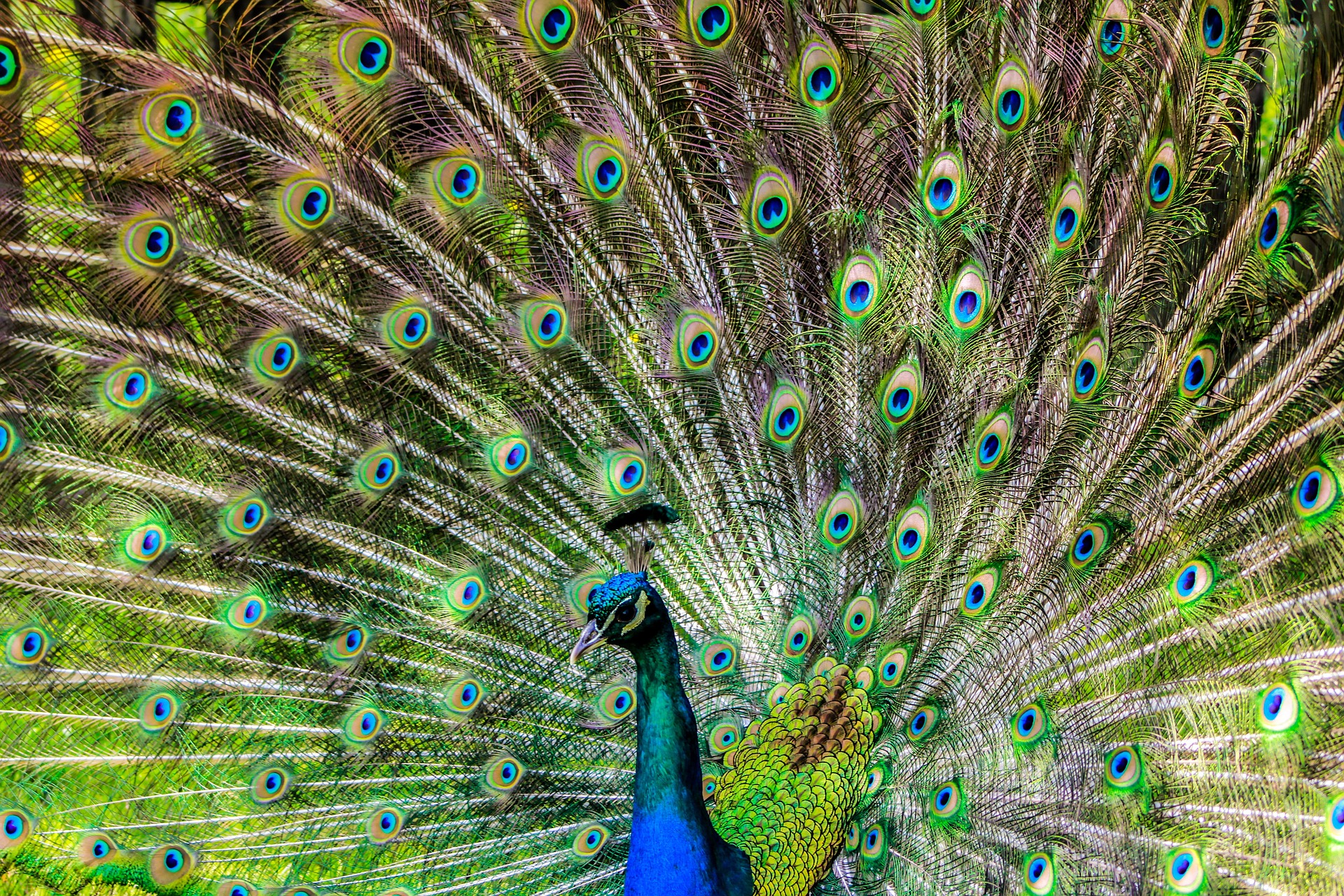
Males (showy courtship plumage): Characterized by a bright blue body and green, blue, and gold eye spots
Females (Peacock): A dull brown or gray color, acting as a camouflage
Ornaments are spread out during the breeding season Used for courtship displays
Head/Face
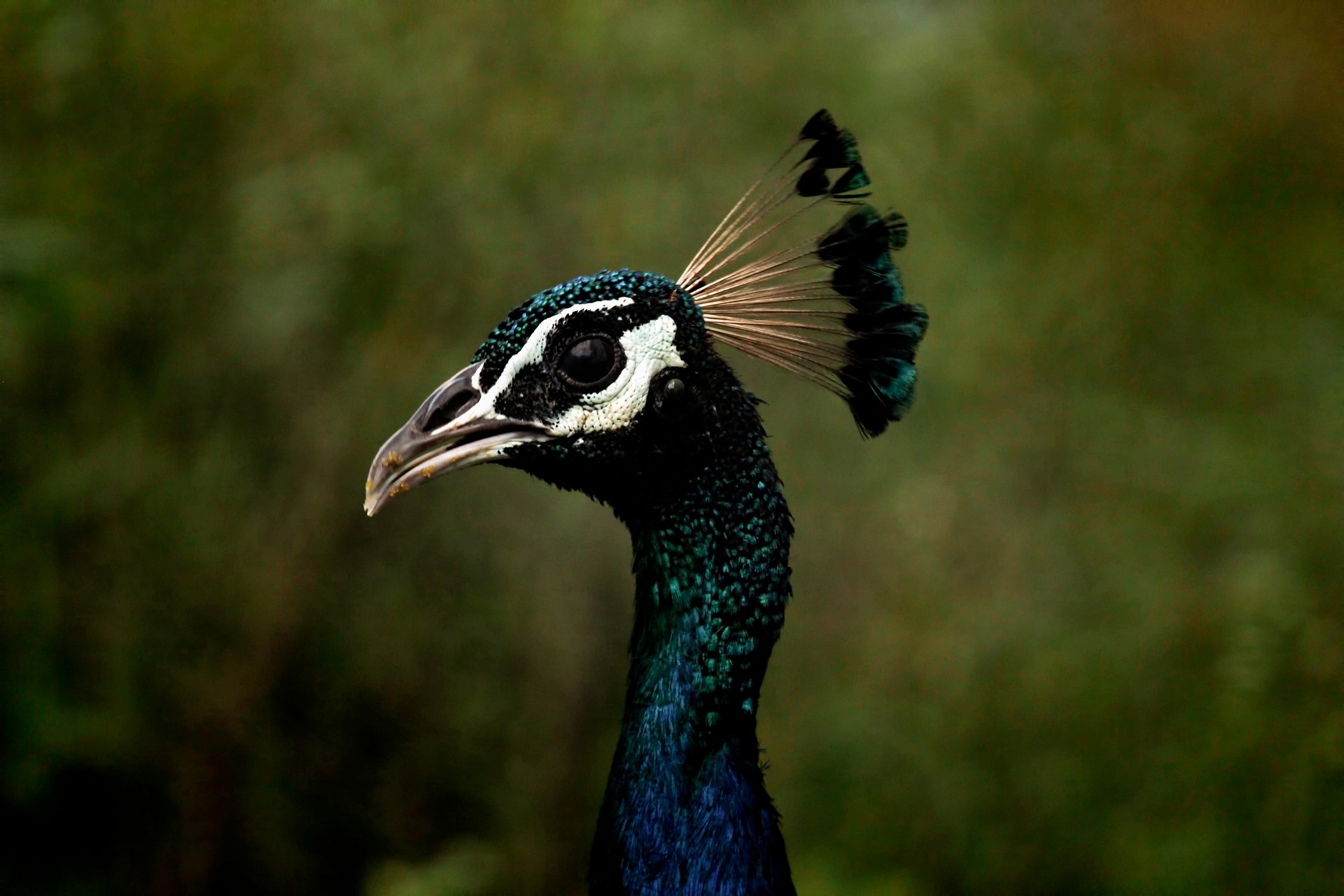
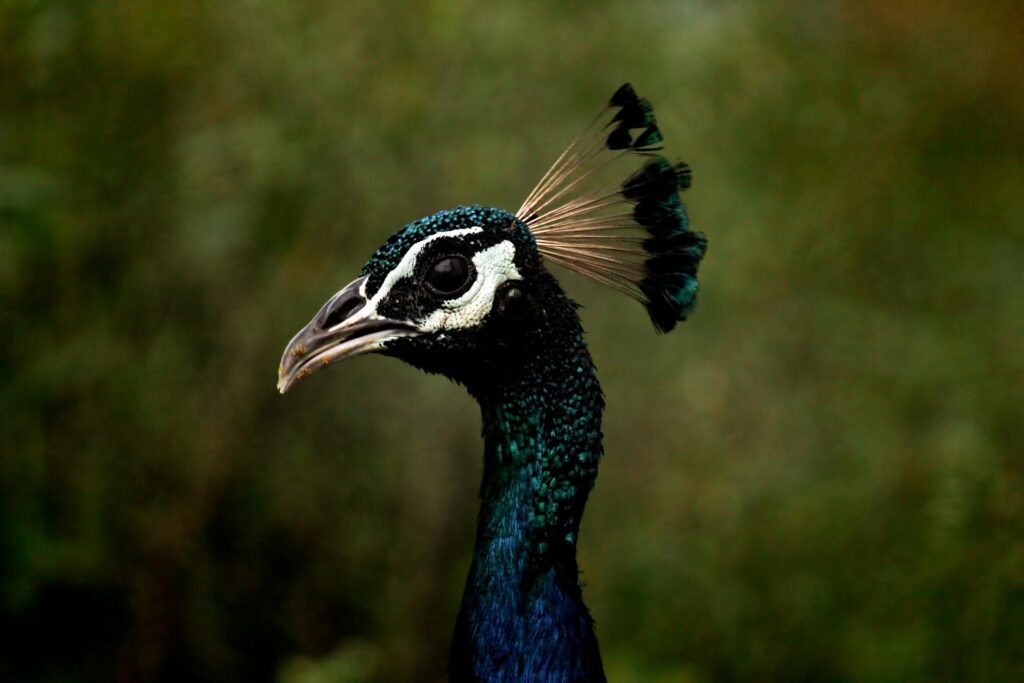
Has a small crest (head feather decoration)
Sharp eyes and high vigilance
Behavior
Mainly feeds on the ground (omnivorous: seeds, insects, fruit, small animals, etc.)
Can fly, but only for short distances to seek refuge in trees
During the breeding season, males spread their tail feathers and attract females with calls and displays
Personality/Biology
Moderately social, sometimes forming groups but often solitary
Diurnal and highly alert, sensitive to humans and predators
What is your personality like?
It’s safe to say that peacocks are very aggressive. Particularly during the breeding season, fierce battles take place even among the same species over females.
Peacock Personality and Behavior Tendencies
Highly alert
Sensitive to predators and humans, they will quickly fly away if they sense danger.
Even when foraging on the ground, they are always alert to their surroundings.
Curious
They may show interest in changes and new things in their surroundings.
In captivity, they may approach humans and objects.
Sociable
In the wild, they may live in small groups or family units.
During breeding season, males display to attract females.
Breeding Season Behavior
Males are very aggressive, spreading their tail feathers and singing to attract females.
They may also display territoriality to attract females.
Overall Personality
Generally calm, but highly alert and can become somewhat aggressive during breeding season.
They become relatively tame in captivity, but their free-flying habits remain.
What is the ecology like?
Peacocks are omnivorous, and live off plants such as grass, leaves, insects, nuts, and fruits. They breed in the spring, when males spread their beautiful eye-like feathers to attract attention and fight fiercely for mates. Females lay 3-8 eggs per breeding. They live for about 20 years.
Peacock Ecology
Habitat
South Asia (India, Sri Lanka, Pakistan, Nepal, etc.) – open forests, forest edges, grasslands, and near agricultural fields
Prefers water sources and shady areas
Activity Pattern
Diurnal, foraging and mating during the day
Resting in trees at night for protection from predators
Diet
Omnivorous: seeds, fruit, insects, small animals, etc.
Mainly forages on the ground, feeding near water and forest edges
Breeding and Breeding Behavior
Breeding The season is spring to summer.
Males spread their tail feathers and attract females with calls and displays.
Females build nests on the ground and incubate eggs (approximately 3-5 at a time).
Chicks can walk immediately after hatching, but flight develops gradually.
Social.
They may live in small groups outside of the breeding season.
Males may mark territories during the breeding season.
Natural enemies and defensive behavior.
Raptors and carnivorous mammals are natural enemies.
When they sense danger, they will fly up into the trees to escape.
Are there any natural enemies?
Peafowl’s natural enemies include leopards, tigers, and snakes.
About Molting
Molting in peacocks is the natural process of shedding old feathers and growing new ones. The molting of the male’s magnificent ornamental feathers (specifically the upper tail coverts) is a particularly iconic characteristic of the peacock.
Why do peacocks molt?
Unlike human hair, bird feathers cannot repair themselves once damaged.
Therefore, they replace feathers that have sustained damage—such as:
wear and tear from flight
deterioration from ultraviolet (UV) rays
damage from rain or dirt
wear caused by displays during the breeding season
—with new feathers.
The male’s long ornamental feathers shed every year
The famous fan-shaped feathers of the peacock are replaced almost every year.
The general cycle is as follows:
Spring to Summer (Breeding Season)
↓
Spreading beautiful ornamental feathers to attract females
↓
After the breeding season ends (around Summer to Autumn)
↓
Ornamental feathers shed
↓
New feathers grow
↓
Beautiful display again the following year
In short, a peacock does not keep the same feathers for its entire life.
What happens to the peacock during molting?
During the molting season, the male’s appearance changes drastically from his usual flamboyant self.
He loses his long ornamental feathers
His tail appears shorter
He becomes more agile in flight
He directs his energy toward feather growth
Because of these changes, he can look like an entirely different bird.
How feathers grow
New feathers initially emerge from the skin as tube-like structures called “quills” (or feather shafts).
During growth:
Blood flows through the interior
Proteins—the building blocks of feathers—are supplied
The outer protective sheath dries and opens up
…resulting in the formation of a beautiful feather.
Once fully formed, the blood supply ceases, leaving a structure that is both lightweight and durable.
About Peacock Calls
In contrast to their elegant appearance, peacocks have calls that are extremely loud, piercing, and far-reaching. The calls of the male, in particular, play a crucial role in breeding and territorial defense.
Characteristics of Peacock Calls
Peacocks (especially male Indian Peafowl) make loud calls that sound like:
“Kee-aw!”
“Pee-aw!”
Or sharp cries resembling “Caw, caw.”
In English, the call sounds somewhat like “may-awe,” a sound that has influenced older names for the bird.
Their calls are characterized by:
Very high volume
High frequency
Repetitive vocalization
Long-distance reach
Why do they call so loudly?
There are three main purposes:
① Attracting Females
During the breeding season, males engage in a combination of courtship behaviors, including:
Spreading their plumage
Shaking their feathers
Calling loudly
Through these calls, they signal their presence, effectively saying:
“A healthy male is here.”
② Asserting Territory
Peacocks maintain a specific home range.
Males use their calls to signal:
“This area is my territory.”
They call most frequently during the morning and evening hours.
③ Warning of Danger
Peacocks alert their flock to danger using their voices, not just their vision.
They emit alarm calls when they spot natural predators, such as:
Tigers
Leopards
Foxes
Large birds of prey
Seasonal Activities
The activity levels of peacocks (particularly the Indian Peafowl) vary significantly depending on the season. Most notably, they follow a cycle where breeding activity intensifies around the rainy season, followed by a molting period after breeding concludes.
🌸 Spring (approx. March–May): Breeding Preparation and Start of Courtship
As spring arrives, male activity gradually increases.
Male Behavior
Increased vocalization
Territorial awareness
Beginning of fan-like feather displays
Chasing after females
They loudly announce their presence, particularly during the morning and evening hours.
This is the season when the males’ ornamental plumage looks its most magnificent.
☔ Summer to Rainy Season (approx. May–September): Peak Breeding
This is the most critical season for peacocks.
Males
Breeding behavior reaches its peak.
Spreading feathers into a fan shape
Vibrating feathers rapidly
Dancing in front of females
Calling out loudly
They repeatedly perform these courtship displays.
The “eyespots” on their feathers are not merely decorative; they are a crucial factor for females when selecting a mate.
Females
Females choose their mates based on factors such as:
Feather size
Number of patterns
Gracefulness of movement
Health condition
After mating, the female builds a nest—often in ground-level thickets—and lays her eggs.
🍂 Autumn (approx. September–November): Molting Season
Once the breeding season ends, a major change occurs.
Males shed their ornamental plumage.
The long feathers used for breeding have served their purpose;
Old feathers fall out
New feathers grow in
…marking the start of the molting process.
During this time, the male’s appearance shifts
from a “magnificent figure”
to something resembling an “ordinary bird.”
Recovering Physical Strength
Producing feathers requires a vast amount of nutrients.
Consequently, they eat
insects
seeds
fruits
small creatures
…to replenish their energy.
❄️ Winter (approx. November–February): Flock Life and Energy Conservation
Winter is a time when breeding activity subsides. Key behaviors:
Moving with the flock
Foraging for food
Resting in a safe place
Spending the night in trees
Peafowl have a habit of climbing to high tree branches to rest at night.
They do this to:
Protect themselves from predators
Avoid dangers on the ground
About Walking Speed
Although peacocks are often perceived as flying birds due to their magnificent plumage, they are actually adept at walking and moving across the ground. They are adapted to a lifestyle of foraging while walking on the ground rather than flying long distances.
Walking Speed
A peacock’s normal walking speed is approximately:
2–4 km/h
(Comparable to a human’s leisurely walking pace)
They typically walk slowly while searching for:
Insects
Seeds
Fruits
Plant shoots
Small reptiles
Speed When Hurrying
When sensing danger or needing to move quickly, they run rather than walk.
Short-distance speed: approx. 10–16 km/h
They can escape quickly using their legs without spreading their wings.
Despite their large size, peacocks have strong legs and are capable of escaping on foot.
Why Are They Good at Walking?
Their bodies are well-suited for life on the ground.
Characteristics:
Strong legs
Capable of walking for long periods
Powerful ground-pushing ability
Able to clear low obstacles
Large body
Stable structure to support their weight
Suited for movement in forests and grasslands
Long tail feathers (males)
Evolved for courtship rather than flight
Complements behaviors like displaying feathers while walking
Comparison with Flight Speed
Peacocks are not flightless birds.
For short distances:
Flight speed: approx. 16–20 km/h
Flight distance: tens to hundreds of meters
They fly primarily to:
Avoid danger
Move to trees
Reach their nighttime roosts
Their lifestyle centers on walking, running, and short bursts of flight rather than long-distance flying.
Unique “Walking” During Courtship
During the breeding season, males do not simply walk; they perform unique movements such as:
Walking slowly
Swaying their bodies
Shaking their feathers
Circling the female This behavior is intended to showcase—rather than speed—
“wing size,”
“the beauty of the patterns,” and
“the power of the movement.”
About peacock chicks
By understanding peacock chicks, you can better understand their developmental process and behavioral characteristics.
Characteristics of Peacock Chicks
Size at Hatching
Body Length: Approximately 7-10cm
Weight: Approximately 40-50g
Feathers are grayish-brown or light brown, and do not yet have the flashy tail feathers of males.
Behavior
Able to walk immediately after hatching (adapted to terrestrial life)
Flight is underdeveloped and they travel close to their parents.
When sensing danger, they will hide with their parents or in bushes.
Diet
Initially, they eat insects, small invertebrates, and soft parts of fruit.
As they grow, they eat ground foods such as seeds, grass, and fruit.
Growth Process
Feathers become strong and become able to walk by 2-3 weeks after hatching.
At about 2 months of age, they develop the ability to fly and can follow their parents.
Sexual maturity is reached in approximately 2-3 years, with male tail feathers developing later.
Sociality
They form flocks with their parents and siblings, learning how to navigate, forage, and avoid danger.
Male display behavior during the breeding season is not observed in chicks.
Are peacocks an endangered species?
Peacocks are listed as an endangered species. Because it is designated as an endangered species, conservation efforts are being carried out in various places. Habitat destruction, primarily caused by humans, is the biggest problem.
Conservation Status Details
International Assessment (IUCN)
Classification: Least Concern (LC)
Reason: Widespread distribution and stable population
Distribution and Population
Widely distributed throughout South Asia (India, Sri Lanka, Pakistan, Nepal, etc.)
Adapted to areas with human activity, such as farmlands and around temples
Threats
Local population declines due to deforestation and hunting are possible
However, this has not significantly affected the overall population or distribution, and the risk of extinction is low
Can peacocks be kept as pets?
Peafowl are classified as an endangered species and are extremely difficult to keep in captivity. It is also listed in the Washington Convention, so international trade is strictly restricted.
Peacock Keeping Tips
Animal Care
Spacious space required: Males require ample space due to their long, spread-out tail feathers.
Because they are diurnal, outdoor habitats with plenty of sunlight or large cages are preferable.
Peacocks are less stressed in environments with trees and shade.
Personality and Care
Highly alert and sensitive to noise and movement.
Moderately social, they feel safe in groups.
Males can become aggressive during the breeding season.
Diet
Omnivorous, providing a balanced diet of grains, fruits, vegetables, and insects.
Feeding them in a manner similar to their natural feeding environment helps maintain their health.
Caution
Because their tail feathers are very long and delicate, care should be taken to avoid contact with other animals and humans.
Because they are loud, keeping them in residential areas can cause noise problems.
While there are few legal restrictions, capturing and keeping wild peacocks is prohibited.
Zoos Housing Peafowl (Japan & Worldwide)
Peafowl (primarily the Indian peafowl) are popular birds kept in zoos, parks, and gardens around the world. They are relatively easy to care for, and in spacious enclosures, they can often be seen wandering close to visitors. Indian peafowl are housed in facilities across the globe, with a vast number of registered zoos keeping them.
🇯🇵 Major Zoos in Japan Where You Can See Peafowl
Tama Zoological Park (Tokyo)
One of Japan’s leading facilities for keeping peafowl.
Features:
Exhibits Indian peafowl.
Males spread their upper tail coverts (ornamental feathers) during the breeding season.
Visitors can observe natural behaviors, such as resting on tree branches at night.
Tama Zoological Park also provides information on the males’ beautiful lower-back feathers (upper tail coverts) and their breeding behaviors.
Oshima Park Zoo (Tokyo)
A zoo located on Izu Oshima Island that keeps Indian peafowl.
Features:
Kept in a spacious environment.
Easy to observe the birds’ natural wandering behavior.
Notable for its setting within the natural environment of a volcanic island.
Ikeda Zoo (Okayama Prefecture)
Keeps Indian peafowl.
Features:
The best time to see males spreading their feathers is generally between March and July.
Courtship displays are a highlight for observation.
🌍 Notable Peafowl Facilities Worldwide
Smithsonian’s National Zoo (USA)
One of the premier zoos in the United States.
Features:
Exhibits Indian peafowl (Common peafowl).
Showcases the males’ massive ornamental feathers.
Highlights them as one of the largest species in the pheasant family.
Zoo Zürich (Switzerland)
A European facility well-known for keeping peafowl.
Features:
Exhibits that recreate natural environments.
Peafowl can sometimes be seen wandering freely within the zoo grounds.
Chester Zoo (UK)
A large zoo in the UK that keeps Indian peafowl. Features:
Exhibits featuring a wide variety of bird species
Known for creating environments that closely resemble nature
Pairi Daiza (Belgium)
One of Europe’s largest zoos; it houses Indian peafowl.
Features:
Vast grounds
An exhibit style that allows animals to move freely
Introducing other animals
コメント