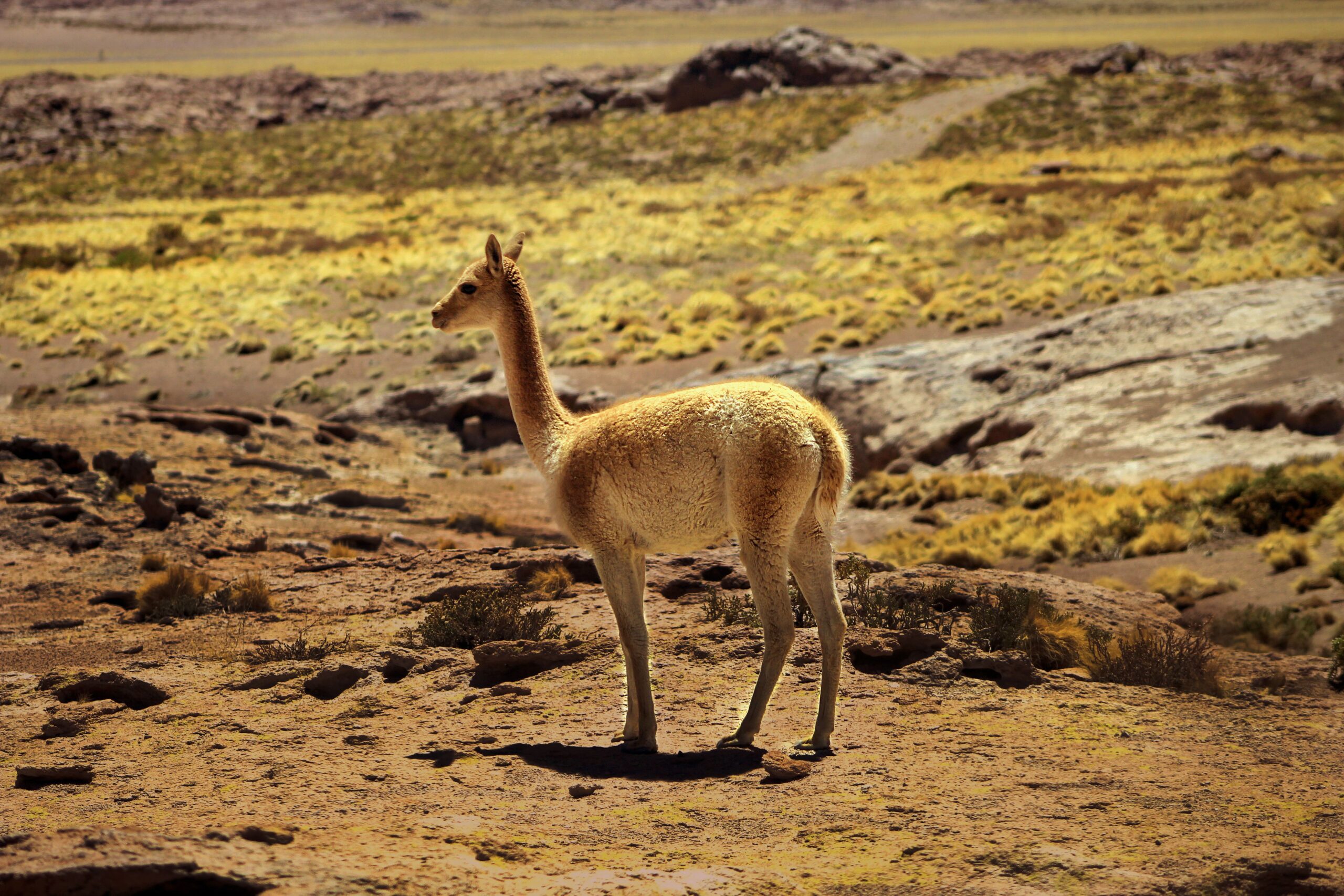
What kind of animal is a vicuña? We will explain its characteristics, ecology, and habitat. They are camels that live in Argentina, Bolivia, Chile, Peru, and Ecuador. We will explain in detail what characteristics and ecology they have.



- What is vicuña? About basic status
- What are the roots and origins of the vicuña?
- About habitat
- feature is? What kind of creature is it?
- What is your personality like?
- What is the ecology like?
- About Molting
- Vocalizations
- Seasonal Activities
- Walking Speed
- About Vicuna Baby Animals
- Is the vicuña an endangered species?
- Can vicuñas be kept as pets?
- Zoos Housing Vicuñas (Japan & Worldwide)
- Introducing other animals
What is vicuña? About basic status
The vicuña is a camel, a mammal classified in the mammalian order Artiodactyla (some say it is cetacean artiodactyla) and the camelidae. The body length is 120-190cm and the weight is 50kg. The scientific name is Vicugna vicugna.
| Japanese(和名) | ビクーニャ |
| English(英名) | Vicugna/Vicuna |
| scientific name(学名) | Vicugna vicugna |
| classification(分類) | Mammalia、Artiodactyl、 Camelidae、Vicugna 哺乳綱、偶蹄目/鯨偶蹄目、ラクダ科、ビクーニャ属 |
| IUCN Status(保全状況) | LEAST CONCERN |
| Length(体長) | 120 – 190cm |
| Weight(体重) | 50kg |
What are the roots and origins of the vicuña?
The vicuña (Vicugna vicugna) is a wild camelid native to the Andes Mountains of South America. Closely related to the ancestors of alpacas and llamas, they can be described as “survivors of ancient camelids that remained in the Andes.”
The distant ancestors of the vicuña originated in North America
Surprisingly, the camel family (Camelidae) did not originate in South America, but in North America.
Primitive camelids emerged in what is now North America approximately 40 to 45 million years ago (during the Eocene epoch).
Evolutionary lineage:
Approx. 45 million years ago
North America
Primitive camelids
↓
Small ancient camelids
↓
Diversification of the camel family
↓
├── Lineage that moved north
│ ↓
│ Dromedary and Bactrian camels
│
└── Lineage that moved south
↓
South American camelids
↓
Vicuña and Guanaco
After developing in North America, some camelids crossed into Asia via the Bering Land Bridge, eventually evolving into the camels we know today. Meanwhile, another lineage migrated into South America.
Camelids that migrated to South America
Camelids spread into South America approximately 3 to 7 million years ago.
During this period, the Isthmus of Panama began to form, facilitating an exchange of fauna between North and South America (an event known as the Great American Biotic Interchange).
Upon reaching South America, the camelids diverged into:
Large types adapted to grasslands
Small types adapted to high-altitude environments
This resulted in the emergence of:
Wild species
Vicuña (Vicugna vicugna)
Guanaco (Lama guanicoe)
Domesticated species
Alpaca
Llama
The Emergence of the Genus Vicugna
Taxonomically, the vicuña belongs to:
Camelid family (Camelidae)
↓
Llama subfamily (Laminae)
↓
Genus Vicugna
The four extant South American camelid species are:
- Vicuña: Wild; possesses the finest wool.
- Guanaco: Wild; large-bodied; ancestor of the llama.
- Alpaca: Domesticated; raised for wool.
- Llama: Domesticated; used for transport.
Why did they adapt to the Andean highlands?
Vicuñas inhabit extreme environments at altitudes of:
approximately 3,200 to 5,000 meters.
The Andean highlands present harsh conditions, including:
low oxygen levels
freezing temperatures at night
scarce vegetation
intense ultraviolet radiation
To survive there, they evolved the following characteristics:
① Ultra-fine wool
Vicuña wool is among the finest natural fibers in the world.
Characteristics:
Extremely fine
High heat retention
Lightweight
These traits are adaptations for survival in cold, high-altitude environments.
② Smaller body size
Compared to their larger ancestors, vicuñas have evolved a smaller body size.
Reasons:
Can survive on limited vegetation
Allows for efficient movement in high-altitude terrain
Reduces energy consumption
③ Specialized blood
To adapt to life at high altitudes, they possess:
a high red blood cell count
an enhanced ability to absorb oxygen
About classification
Vicunas are closely related to alpacas, llamas, and guanacos.
scientific classification
- 界(Kingdom):動物界(Animalia)
- 門(Phylum):脊索動物門(Chordata)
- 綱(Class):哺乳綱(Mammalia)
- 目(Order):偶蹄目(Artiodactyla)
- 科(Family):ラクダ科(Camelidae)
- 属(Genus):ビクーニャ属(Vicugna)
- 種(Species):ビクーニャ(Vicugna vicugna)
About habitat
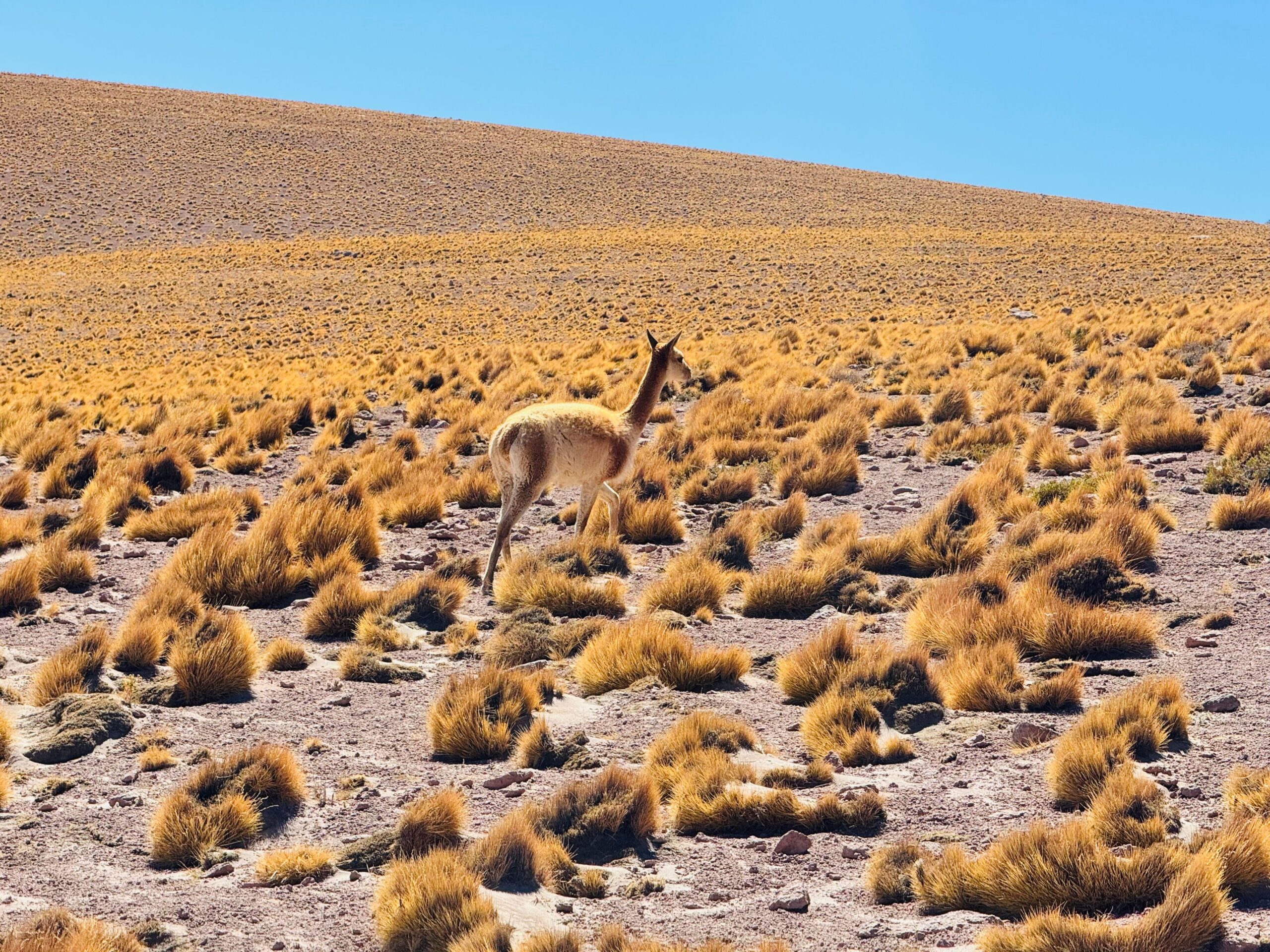
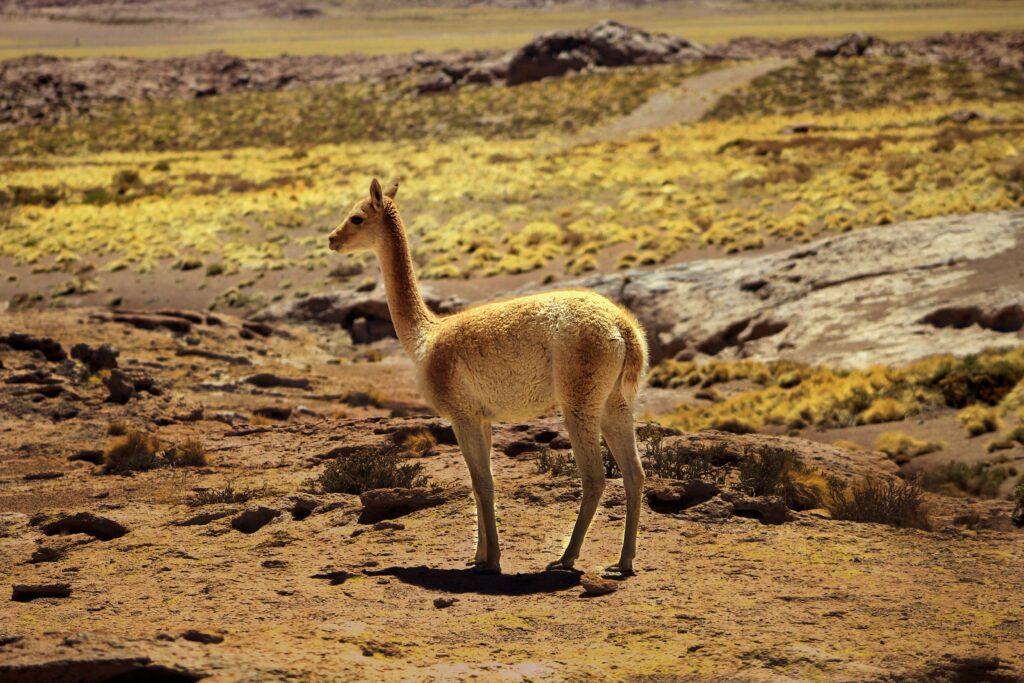
Its habitat is South America.
- Geographic Distribution
Mainly the central and southern Andes
Distribution by Country:
Peru: Widespread distribution in the Andes
Bolivia: Altiplano (approximately 3,600-4,500 m above sea level)
Northern Chile: Part of the Atacama Desert
Northwestern Argentina: Highlands at altitudes of 3,200-4,500 m
Historically, it was widely distributed in Argentina and southern Chile, but its population has declined due to hunting.
- Habitat
Dry highland grasslands (páramo and altiplano)
Altitude: 3,200-4,800 m
Climate:
Strong sunshine during the day, cold nights
Dry with little precipitation
Vegetation:
Mainly herbaceous plants, with short grasses and shrubs as its primary food source
- Social Structure and Groups
They often live in groups.
Family groups (one male, multiple females, and offspring)
Independent male groups: formed by young males or males without families.
- Movement and Behavior
They travel extensively across highland grasslands in search of food.
They obtain water primarily from plants.
feature is? What kind of creature is it?
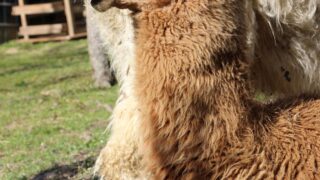
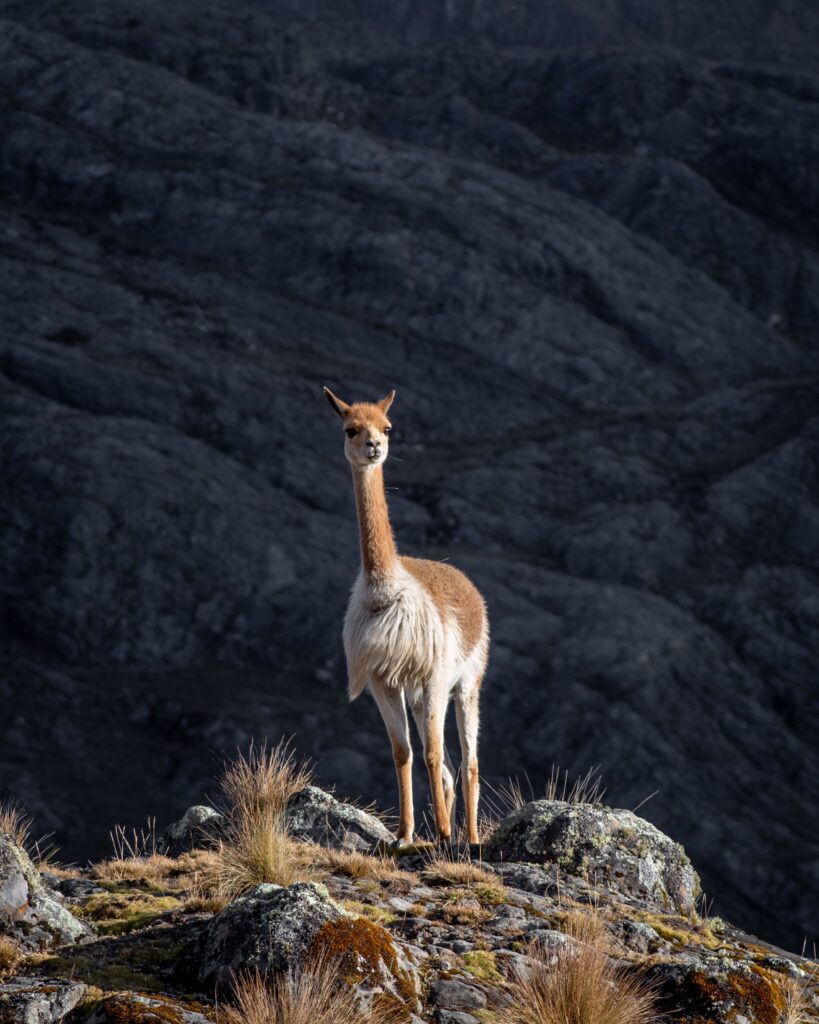
Vicunas, alpacas, and llamas are world-famous camelid animals that represent the Andes mountain range of South America. It is also distributed in Chile, Bolivia, Argentina, and Ecuador. Vicuna is prized for its high-quality body hair and meat. Vicuna wool is traded as a luxury item. Because the hair is thin, it is used by spinning it into thread. The coat color is cinnamon on the back, white on the belly, and a white tuft on the chest.
- Physical Characteristics
Size: Body length 1.5-2m, shoulder height 80-100cm
Weight: Approximately 40-65kg
Coat Color:
Back and dorsal area: Brown
Belly and under the neck: Whitish cream
Body Type:
Long, slender body
Long, thin legs, but easy to walk on rocky terrain and at high altitudes
Head:
Small face, pointed, erect ears
Large eyes, highly alert
- Ecology and Lifestyle
Diet: Herbivorous. They primarily feed on highland grasses and shrubs.
Migratory: They travel over wide areas in search of food and water.
Flocks:
Family groups: One male, several females, and young
Independent male groups: Formed by young males
Activity: Diurnal, searching for food during the day and resting in safe places at night.
- Personality and Behavior
Timid and cautious
They often flee immediately upon sight
However, within family groups, they are social and maintain order within the group.
They vocalize relatively little and communicate quietly.
- Distinctive Features
Ultra-high-quality fur:
Their down is extremely soft and shiny.
They are highly prized worldwide as a valuable fiber.
High-altitude adaptation:
They are tolerant of the low-oxygen environments of high altitudes.
Their soles are adapted to tackling rocky and hard surfaces.
What is your personality like?
Because vicuñas have a habit of setting up territory and fighting with other males, they are famous for being extremely difficult animals to raise as livestock. For this reason, it is difficult to breed them easily. However, vicuñas form groups based on family units, so they are very social animals.
- Timid and cautious
They are highly cautious, protecting themselves from predators (condors, pumas, and humans).
If one member of a pack senses danger, the entire pack will flee.
They flee immediately when approached, so in the wild, they rarely come into contact with humans.
- Sociality
They live in family groups and value relationships among their members.
Family packs consist of one male, several females, and their young, and the male protects the pack.
Independent young males may also form packs.
- Gentle and low aggression
Conflicts with other packs are limited to mild intimidation between males, with full-scale attacks rare.
They have a docile personality, leisurely grazing on grass.
- Learning Ability and Adaptability
They have excellent memories and observational skills to adapt to the harsh high-altitude environment.
They learn where food, water, and danger are located, and guide the pack.
What is the ecology like?
Vicunas mainly feed on grass. I also often drink salt water. Vicuna breeds around April and gives birth to one baby each time. Their lifespan in the wild is around 15 to 20 years, and in captivity they have been recorded for 24 years.
- Habitat
Altitude: 3,200-4,800m, Andean highlands
Climate: Dry, with large temperature variations
Vegetation: Mainly herbaceous plants, but also eats shrubs and alpine grasses
Characteristics: Ability to walk easily on rocky and dry terrain
- Diet
Herbivory: Eats mainly highland grasses and shrubs
Feeding Behavior:
Travels over a wide area during the day to search for food
In dry areas, obtains water from grass
Nutrition: Can sustain itself with a small amount of food, even in the harsh highland environment
- Group Structure
Family group: One male + multiple females + offspring
Solitary male group: Young males or males without families
Group Role: Males protect the group and warn when they sense danger
- Movement and Behavior
Migratory Behavior: Travels over a wide area in search of food and water.
Activity Period: Diurnal, searching for food during the day and resting in safe places at night.
Alert Behavior: When sensing danger, the entire herd will quickly flee.
- Reproduction
Breeding Season: Summer (December to March in the Southern Hemisphere)
Gestation Period: Approximately 11 months
Baby:
At birth: Approximately 1 meter in length, weighing approximately 6-7 kg (small, but large enough for the wild).
Fed by breast milk, they integrate into the herd within a few months.
Males protect females during the breeding season, and young males form groups.
- Biological Characteristics
Adapted to the dry environment of high altitudes, they can survive with limited water and food.
Very cautious and timid, but cooperate with the group to avoid danger.
Highly social, they maintain order within the group.
Are there any natural enemies?
Vicuna’s natural enemies include foxes, pumas, and coyotes.
About Molting
The molting process of the vicuña (Vicugna vicugna) is a vital physiological phenomenon that evolved to help the animal adapt to the extreme temperature fluctuations of the Andean highlands. Vicuñas possess some of the finest and densest fur (fiber) within the camelid family, and they renew this coat according to the season.
When Vicuñas Molt
Vicuñas primarily molt during:
Spring to early summer (around October to December in the Southern Hemisphere)
In their native Andean highlands, there are drastic temperature differences:
Winter: Dry and bitterly cold (temperatures drop below freezing at night)
Summer: Intense sunlight and high daytime temperatures
Consequently, they need to switch from:
Thick fur for the cold season → Lighter fur for the warm season
Characteristics of Vicuña Fur
The most distinctive feature of the vicuña is its fiber, which is among the finest in the animal kingdom.
Fiber thickness:
Approximately 12–14 microns
(Human hair is about 50–100 microns)
Because the fibers are so fine, the fur is:
Highly heat-retentive
Lightweight
Soft
Highly insulating
The Molting Process
① Old winter fur weakens
The fur used during the winter deteriorates due to:
Friction
Ultraviolet (UV) rays
Dryness
Dirt
↓
② New fur grows
New fibers are produced from the hair follicles in the skin, pushing out the old fur.
↓
③ Winter fur sheds
Fur on the neck, chest, and abdomen gradually sheds, giving way to a summer coat.
Vocalizations
While vicuñas (Vicugna vicugna) are relatively quiet compared to other members of the camel family, they live in herds and utilize a variety of vocalizations for communication among group members, issuing warnings, and interacting between mothers and offspring.
Common Vocalizations
High-pitched “pee” or “kwee” sounds (contact calls)
These are the most distinctive vocalizations of the vicuña.
Characteristics:
High-pitched, whistle-like sounds
Short and repetitive
Used to locate or check on distant group members
Functions:
Calling to herd members
Mothers checking on their young
Confirming the location of separated individuals
In the vast grasslands of the Andes, where visibility is wide, vocal communication is crucial for gauging distance and location.
Alarm Calls
When sensing danger, they emit
short alarm sounds such as “kuh,” “guh,” or “hyuh.”
Sources of danger include:
Foxes
Pumas
Humans
Large birds of prey
…and others.
When a member of the herd senses something amiss, it stretches its neck high and alerts the group with a vocal signal.
Vocalizations of Young Vicuñas
Young vicuñas (known as crías) are highly dependent on their mothers and exhibit behaviors such as:
Calling out with high-pitched sounds
Searching for their mothers
Vocalizing when anxious
Mothers identify their own offspring through sound and scent.
Male Vocalizations
Males become highly territorial during the breeding season.
They utilize:
Low-pitched growls
Threatening sounds
Short calls
Males that guard a harem (a herd containing multiple females) vocalize specifically to:
Intimidate other males
Maintain the integrity of the herd
Seasonal Activities
The annual activity cycle of the vicuña (Vicugna vicugna) is strongly influenced by the shift between the “wet season” and “dry season” in the Andean highlands. Living in the harsh environment of high altitudes (3,200–5,000 meters), they adjust their breeding, foraging, movement, and coat changes according to the season.
🌱 Summer (Southern Hemisphere: December–February)
Wet season; a time for breeding and rearing young
This is the period when rainfall increases and vegetation is most abundant in the Andean highlands.
Key Activities
Breeding
Birth
Increased foraging
Heightened herd activity
Birth
Vicuña births
mostly occur between
February and April.
Characteristics:
Gestation period: Approx. 11 months
Usually one offspring per birth
Newborns stand up shortly after birth
Because they must escape predators in the highlands, the young possess the ability to move quickly from an early age.
Foraging
During the wet season,
they consume large amounts of
grasses (Poaceae)
highland herbs
shrub leaves
and other vegetation.
Since vicuñas graze without uprooting the plants, they play a role in maintaining the sparse Andean vegetation.
🍂 Autumn (Southern Hemisphere: March–May)
Rearing young and herd formation
The wet season ends, and the dry period begins.
Key Activities
Growth of young
Herd maintenance
Selection of foraging grounds
Growth of Young
Within a few months of birth,
they begin to walk alongside their mothers
start eating grass
and learn herd behaviors.
Mothers
remain vigilant against predators
and select safe resting spots.
❄️ Winter (Southern Hemisphere: June–August)
Dry season; a time prioritizing survival
This is the harshest period in the Andean highlands. Environmental Conditions:
Low rainfall
Vegetation withers
Temperatures drop below freezing at night
Strong winds
Key Activities:
Efficient foraging
Energy-conserving behavior
Huddling for warmth
Role of the Coat:
In winter, the coat undergoes changes:
Increased fur density
Maximized insulation
Prevention of heat loss
The vicuña’s ultra-fine fleece serves as a vital mechanism for surviving in low-oxygen, cold environments.
Herd Behavior:
During cold periods, they minimize energy expenditure by:
Moving in herds
Resting in areas sheltered from the wind
Utilizing sunlit slopes
🌸 Spring (Southern Hemisphere: September–November)
Season for Molting and Breeding Preparation
This is the time when winter ends and temperatures rise.
Key Activities:
Molting
Breeding preparation
Territorial disputes
Molting:
From spring to early summer, the coat transitions:
Winter coat → Summer coat
Specifically, the fur on the following areas is replaced:
Chest
Neck
Back
In some regions, vicuña shearing (chaccu) takes place during this period.
Walking Speed
The walking speed of the vicuña (Vicugna vicugna) is characterized by “endurance-oriented” capabilities adapted to the environment of the high Andes. Rather than the burst speed of a cheetah, they excel at traveling for long periods at altitudes approaching 5,000 meters.
Normal Walking Speed
Approximately 3–5 km/h
This is the speed at which vicuñas typically move when:
Foraging for grass
Grazing in a herd
Heading to a watering hole
They walk slowly while remaining alert to their surroundings, allowing for efficient energy use.
Brisk Walk (Fast Walk)
Approximately 8–12 km/h
They increase their speed when sensing danger or when the herd is on the move.
Characteristics:
Holding the neck high
Checking the surroundings
Moving in the same direction as the herd
In the open Andean highlands, they utilize their wide field of vision to detect danger early.
Running Speed
Top speed: Approximately 45–50 km/h
Vicuñas are remarkably agile for their size.
Situations involving running:
Escaping predators like pumas
Conflicts between males
Herd migration
However, their strength lies in sustained movement at high altitudes rather than short-distance explosive speed.
Why can they move quickly at high altitudes?
At altitudes around 4,000 meters, oxygen levels are significantly lower than at sea level.
To adapt to this environment, vicuñas possess:
① Oxygen utilization capabilities
High red blood cell count
High hemoglobin oxygen-binding capacity
These traits allow them to remain active even in low-oxygen conditions.
② Slender legs and a lightweight body
Body weight:
Approximately 35–55 kg
They are small compared to other members of the camelid family.
Advantages:
Movement requires less energy
Easier to navigate rocky terrain and slopes
Less prone to fatigue at high altitudes
③ Specialized feet
Vicuña feet feature a structure unique to the camelid family. Features:
Two toes
Soft, paw-like soles
Adaptability to slippery terrain
This allows for
stable walking on
rocky areas,
wetlands, and
volcanic ash zones.
About Vicuna Baby Animals
Vicuna baby animals (young) are born and raised in the harsh high-altitude environment, and therefore have characteristics and behaviors that differ from adult animals. Here’s a detailed breakdown.
- Size at Birth
Body Length: Approximately 70-90cm
Weight: Approximately 6-7kg
Relatively small for a wild animal, but large enough to begin walking
- Growth and Nutrition
Nursing Period: Breastfeeding for approximately 6-7 months
Breast milk is high in protein and fat, aiding growth
Cubs stay close to their mothers and learn from the pack
- Behavior and Sociality
Able to stand and walk around immediately after birth (and may even immediately seek out and eat grass)
Travels with their mother and siblings within the pack
If they sense danger, they will quickly flee, following their mother and the pack
- Diet
At first, they are breastfed exclusively
After a few weeks to months, they begin to gradually eat grass
Even young ones learn the types of grass they can eat by observing their mother’s behavior
- Growth Rate
Grows to approximately 1.2-1.5m in length within one year
Becomes independent after 2-3 years
They rarely leave the pack during their development
Is the vicuña an endangered species?
Is the vicuña an endangered species? It is now classified as low concern. During the 19th and 20th centuries, they were overhunted for their meat and high-quality coats, causing their population to decline dramatically. Now that it is protected, the population is rapidly recovering.
- International Conservation Status
IUCN (International Union for Conservation of Nature) Red List: Least Concern
Previously classified as Endangered
Once drastically reduced due to overhunting, the population has recovered thanks to successful conservation efforts.
Current population size is estimated at approximately 350,000-400,000 individuals.
- Past Endangered Status
Before the 1960s:
Fur harvesting and hunting dramatically reduced the population.
In Argentina and Chile, the species was on the brink of extinction.
Protection efforts have led to the recovery of wild populations.
- Current Threats
Although less severe than in the past, the following risks remain:
Illegal hunting (for fur and meat)
Habitat destruction (cattle ranching and road construction)
Food shortages due to climate change
Can vicuñas be kept as pets?
As I explained above, vicuñas are not very suitable as pets. Because they have a habit of fighting with other males, they don’t listen to what you say.
- Wild Animals
Vicuñas are wild camelids and are not habituated to humans.
They are timid, cautious, and easily stressed.
They have difficulty surviving in environments where they cannot maintain their wild lifestyle (moving widely in herds and grazing).
- Environmental and Space Issues
They are adapted to the dry grasslands of high altitudes and require ample space for exercise.
Small gardens or ordinary homes prevent them from moving and foraging, which can lead to poor health.
- Dietary Issues
They primarily eat high altitude grasses and shrubs.
They obtain moisture from plants, but it is extremely difficult to artificially provide them with the same nutrients as in the wild.
- Legal and Conservation Issues
Vicuñas are protected wildlife.
Illegal capture and captivity is prohibited in most countries.
Use for fur and meat is permitted only in controlled areas.
- Actual Captivity
While they have been kept in zoos and ranches around the world, they must be kept in large pastures.
Keeping them as pets at home is both practically and legally impossible.
Zoos Housing Vicuñas (Japan & Worldwide)
The vicuña (Vicugna vicugna) is a rare South American camelid kept in relatively few zoos worldwide. In the wild, they inhabit the Andean highlands (spanning Peru, Bolivia, Chile, Argentina, etc.) and are adapted to environments at altitudes of 3,000 to 5,000 meters.
🇯🇵 Facilities in Japan where you can see vicuñas
Ueno Zoological Gardens (Tokyo)
One of Japan’s premier zoos where vicuñas can be viewed.
Features:
Displayed as a South American camelid.
Visitors can observe their wild physique, which differs from that of alpacas or llamas.
Visitors can see their fine, dense fur.
Ueno Zoo is a leading comprehensive zoo in Japan, housing a wide variety of rare animals.
Toyama City Family Park (Toyama Prefecture)
Has a track record of keeping and displaying South American animals, including vicuñas.
Features:
Exhibits designed to mimic natural environments.
Opportunities to observe herd behavior.
Visitors can observe their bodies, adapted for high-altitude living.
Higashiyama Zoo and Botanical Gardens (Aichi Prefecture)
A large zoo that houses many animals native to South America.
As the display status of vicuñas may change depending on the season or the condition of individual animals, it is recommended to check before visiting.
🌎 Major facilities worldwide housing vicuñas
Schönbrunn Zoo (Austria)
A leading zoo in Europe.
Features:
Vicuñas are displayed in the South American zone.
Participates in breeding management programs.
Exhibits that educate visitors on high-altitude adaptation.
At Schönbrunn Zoo, vicuñas are kept as camelids, with exhibits highlighting their ability to adapt to altitudes of up to 5,500 meters and their exceptionally fine fur.
Zurich Zoo (Switzerland)
A key facility involved in the international management of vicuña bloodlines. Features:
International management of vicuña husbandry
Coordination of the EEP (European Endangered Species Programme)
Maintenance of the breeding population
The international studbook for vicuñas is managed by Zurich Zoo.
Riga Zoo (Latvia)
One of the facilities involved in the conservation breeding of vicuñas.
Features:
Participates in the EAZA ex-situ conservation program
Subject to international population management
Dresden Zoo (Germany)
A European zoo that exhibits vicuñas.
Features:
Showcases the ecosystem of the South American highlands
Allows for the observation of herd behavior
Offers opportunities to learn about their diet and evolution
Introducing other animals
コメント