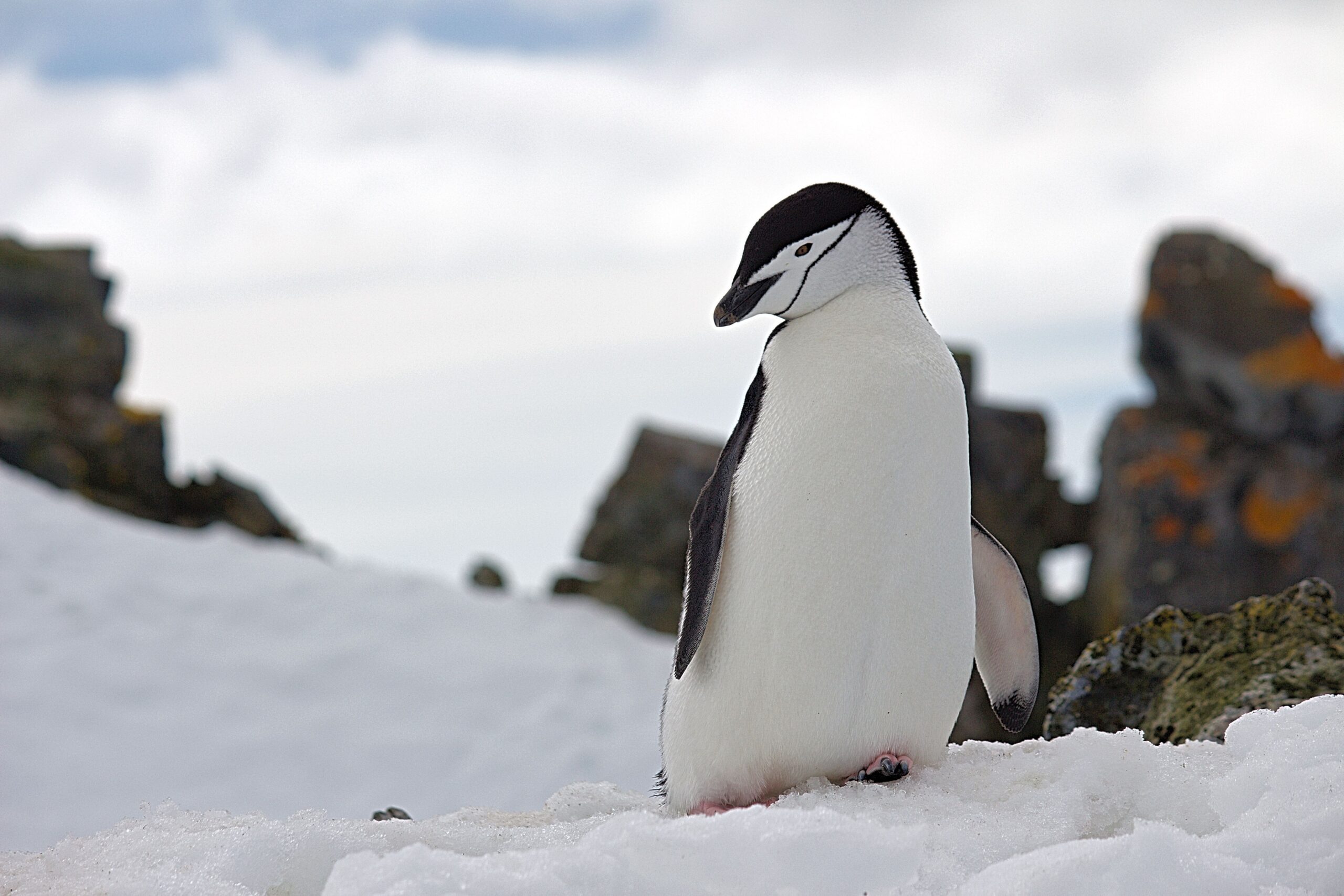
Here is an overview of the characteristics, ecology, and habitat of the chinstrap penguin. Distinguished by a “beard-like” line across its chin, this penguin inhabits the region surrounding the Antarctic continent in large numbers. It is a medium-sized species and holds the distinction of having the largest population of any penguin.



- Basic information about chinstrap penguins
- What are the roots and origins of the chinstrap penguin?
- How are they classified?
- About the habitat of chinstrap penguins
- What are its characteristics? What kind of creature is it?
- What will the personality be like?
- What are the characteristics of chinstrap penguin ecology?
- Chinstrap penguin molting
- Chinstrap penguin diving
- Chinstrap penguin call
- Seasonal Activities of Chinstrap Penguins
- About Chinstrap Penguin Chicks
- Are chinstrap penguins an endangered species?
- Is it possible to keep chinstrap penguins in captivity?
- Zoos where they are kept (Japan and worldwide)
- Fellow members of the same group
Basic information about chinstrap penguins
The chinstrap penguin is a bird belonging to the genus Pygoscelis (the same genus as the Adélie penguin); its scientific name is Pygoscelis antarctica. Standing 60–70 cm tall and weighing around 5 kg, it inhabits the region around the Antarctic continent. Information about the species is readily available online. These penguins have white plumage and live in mated pairs.
| Japanese(和名) | ヒゲペンギン |
| English(英名) | Chinstrap penguin |
| scientific name(学名) | Pygoscelis antarctica |
| classification(分類) | Sphenisciformes, Spheniscidae, Pygoscelis ペンギン目ペンギン科アデリーペンギン属 |
| IUCN Status(保全状況) | LEAST CONCERN |
| Height(身長) | 60-70cm |
| Weight(体重) | 2-5kg |
What are the roots and origins of the chinstrap penguin?
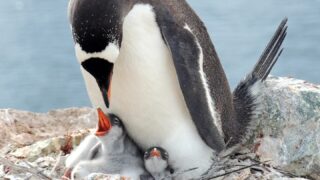
The roots and origins of the chinstrap penguin lie in an evolutionary lineage that diverged from the “Adélie penguin lineage”—a group closely related to the gentoo penguin.
■ Ultimate origins (penguins as a whole)
The ancestors of the Chinstrap penguin are the same as those of other penguins:
Approximately 60 to 70 million years ago
The ancestors of seabirds around the Gondwana supercontinent
Here, they evolved into “flightless seabirds,” and the basic form of the penguin was established.
■ Genus-level origin of the chinstrap penguin
The chinstrap penguin belongs to the following groups:
Order Sphenisciformes
Family Spheniscidae
Genus Pygoscelis
This genus consists of a group of medium-sized penguins adapted to the icy environments of Antarctica.
■ Divergence from Gentoo and Adélie penguins
Genetic analysis suggests the following sequence of events:
Approximately 19 million years ago: The Adélie penguin lineage diverged.
Approximately 14 million years ago:
Chinstrap penguins and Gentoo penguins diverged.
In other words, the Chinstrap penguin is:
A species that originated from a “very close relative” of the Gentoo penguin.
■ Where did it evolve?
The ancestors of the chinstrap penguin evolved in waters such as the Antarctic Peninsula, the South Shetland Islands, and sub-Antarctic islands—the same regions they inhabit today.
How are they classified?
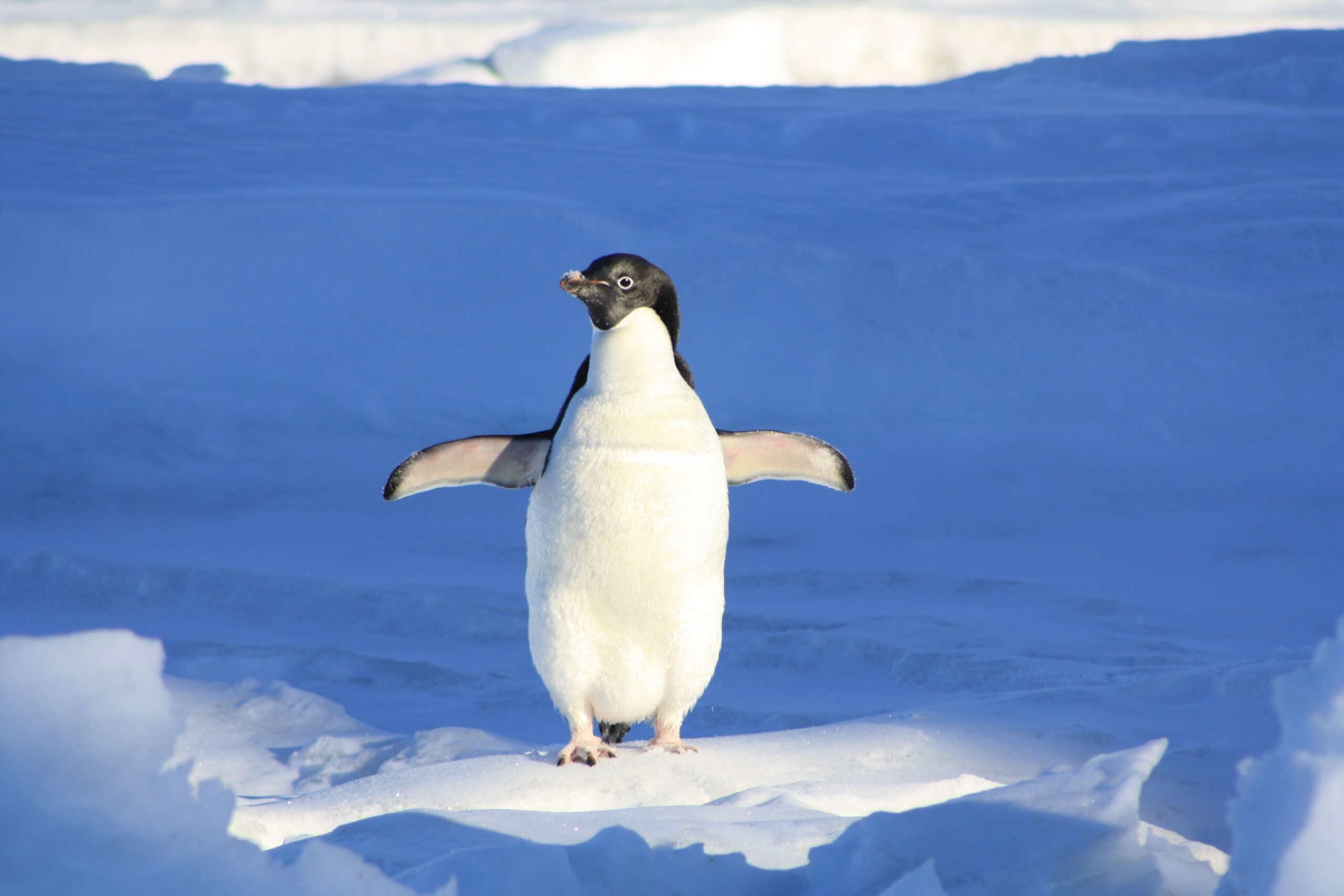
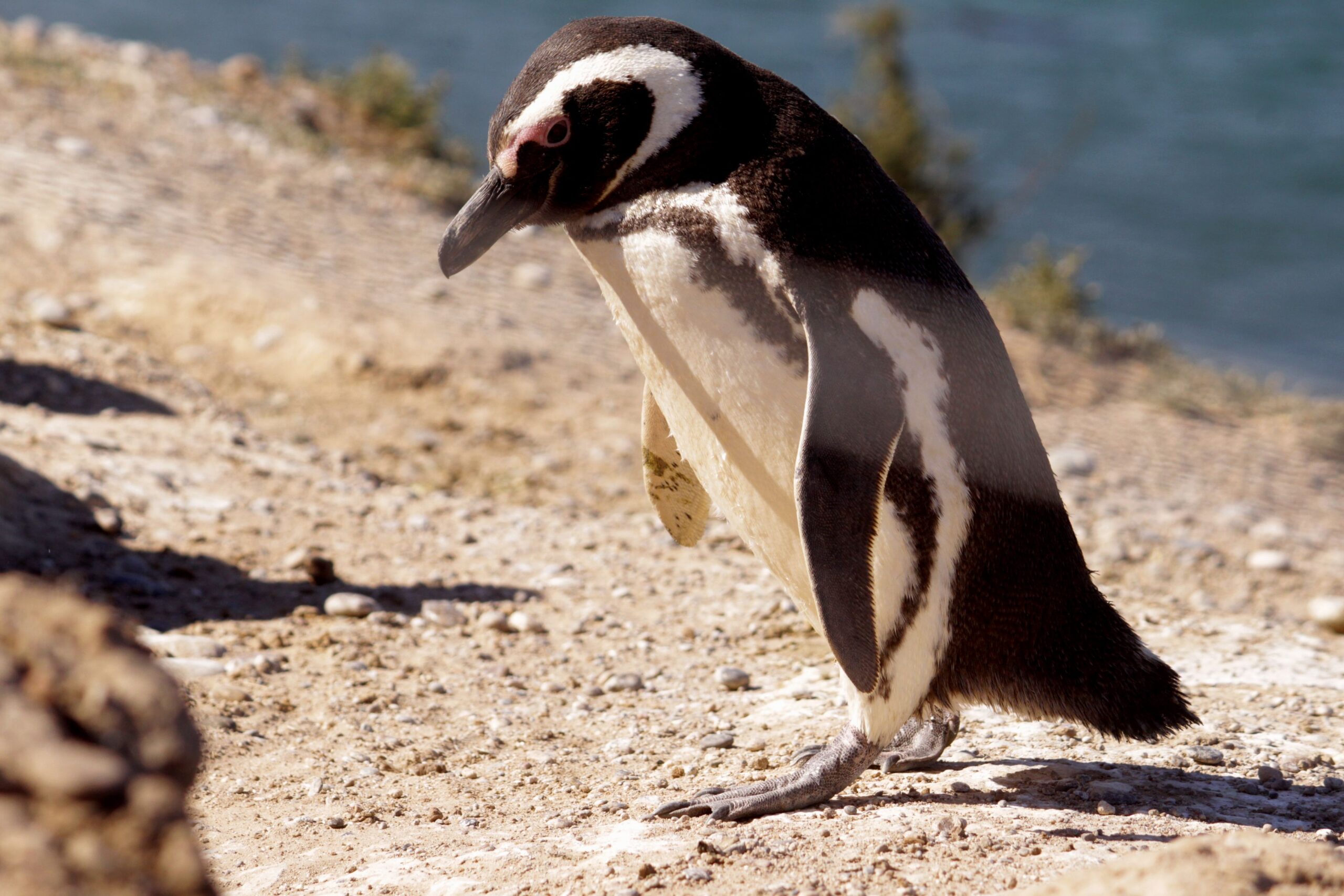
The chinstrap penguin belongs to the genus Pygoscelis (the Adélie penguin genus). It was given the scientific name Aptenodytes antarctica by Johann Reinhold Forster in 1781, initially placing it in the same genus as the king penguin and emperor penguin. However, this classification was revised in 1990, and it is now assigned to the genus Pygoscelis.
| 名前:Name | 属名:Group | 生息地:habit |
| アデリーペンギン(Adelie Penguin) | Pygoscelis アデリーペンギン属 | 南極大陸 Antarctica |
| ジェンツーペンギン(Gentoo Penguin) | Pygoscelis アデリーペンギン属 | 南極大陸 Antarctica |
| ヒゲペンギン(Chinstrap Penguin) | Pygoscelis アデリーペンギン属 | 南極大陸 Antarctica |
classification
- 界 (Kingdom): Animalia(動物界)
- 門 (Phylum): Chordata(脊索動物門)
- 綱 (Class): Aves(鳥綱)
- 目 (Order): Sphenisciformes(ペンギン目)
- 科 (Family): Spheniscidae(ペンギン科)
- 属 (Genus): Pygoscelis(アデリーペンギン属)
- 種 (Species): Pygoscelis antarcticus(ヒゲペンギン)
About the habitat of chinstrap penguins
As for the habitat of chinstrap penguins, they live in the areas surrounding the Antarctic continent.
1. geographical distribution
Primary locations: Sub-Antarctic regions such as the coast of the Antarctic Peninsula, the South Shetland Islands, and the South Sandwich Islands
Specific distribution:
Coasts of the Antarctic Peninsula
South Shetland Islands, South Georgia Island
Some populations also inhabit the area around the Falkland Islands
2. Habitat
- They build their nests on rocky reefs or sandy beaches.
- They select locations near the coastline that offer easy access to food.
- During the breeding season, they form colonies numbering in the thousands.
3. Ecological characteristics
- They live in groups and cooperate to forage for food.
- They feed primarily on small fish, krill, and squid.
- In areas with extensive sea ice, they live and move through cracks in the ice or near the coast.
What are its characteristics? What kind of creature is it?
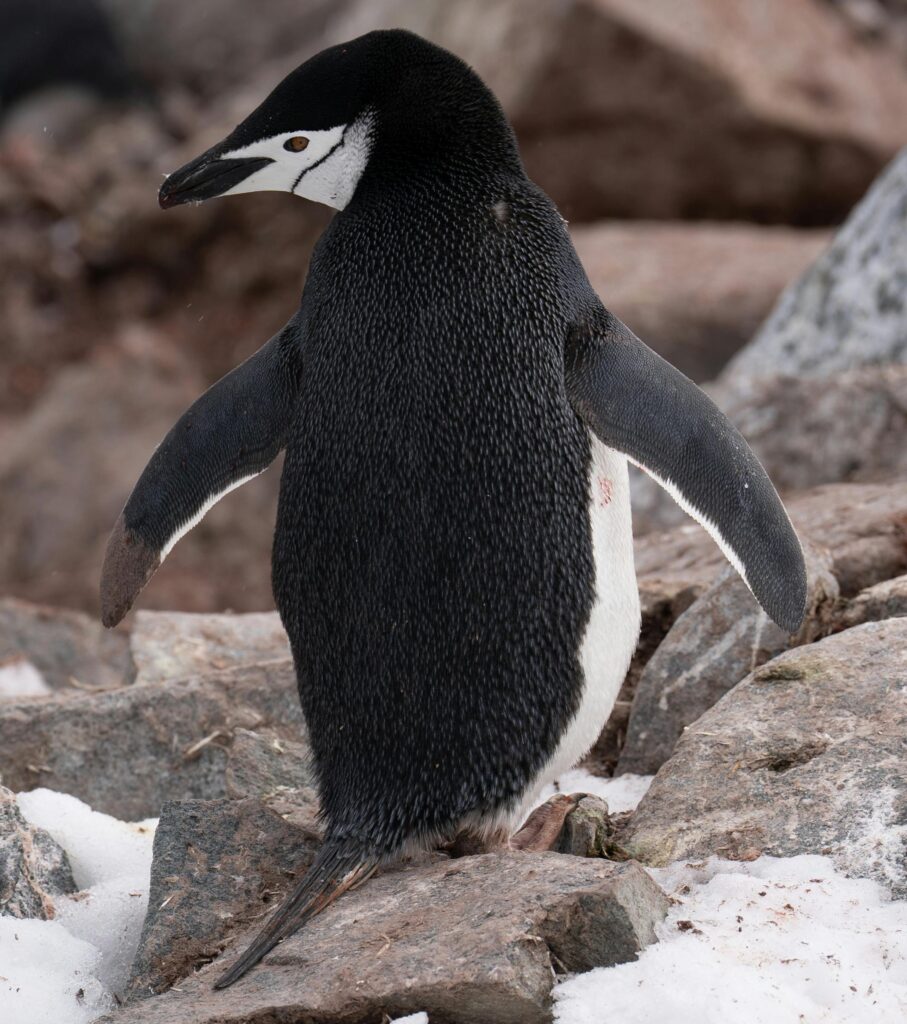
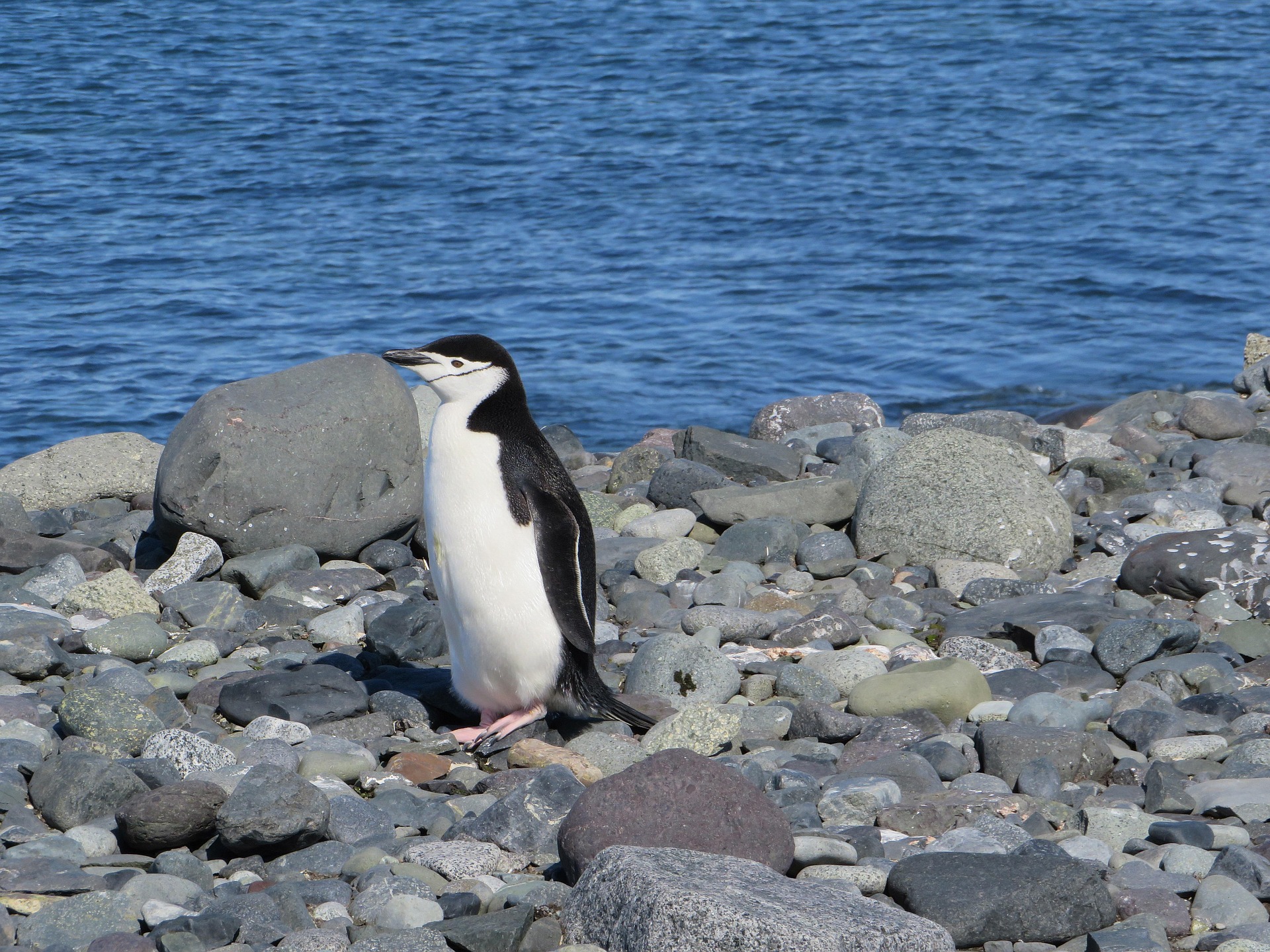
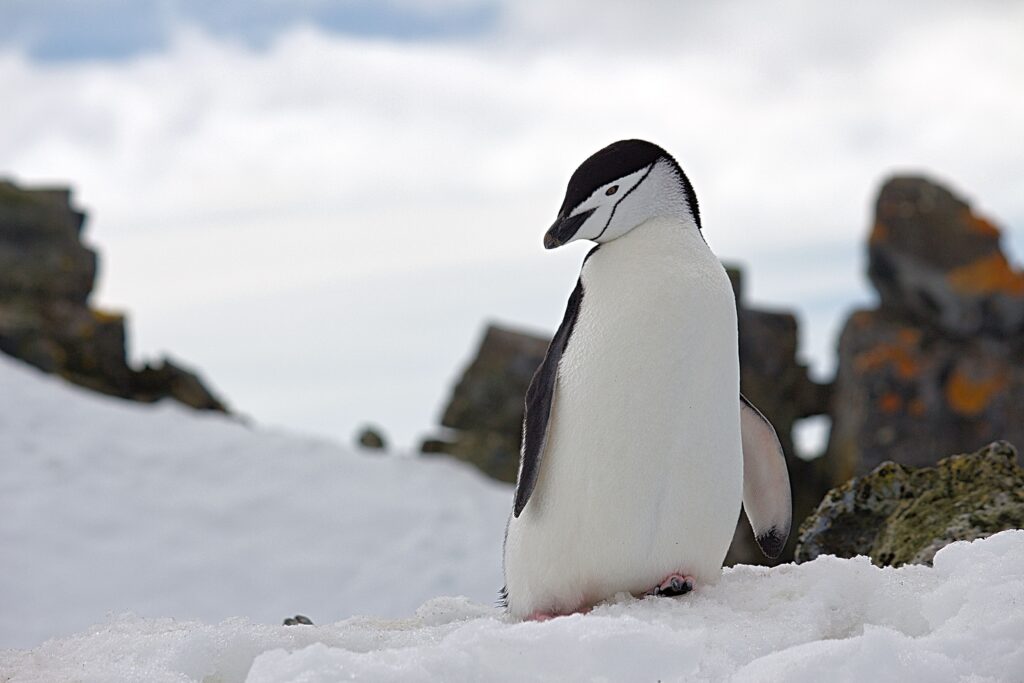
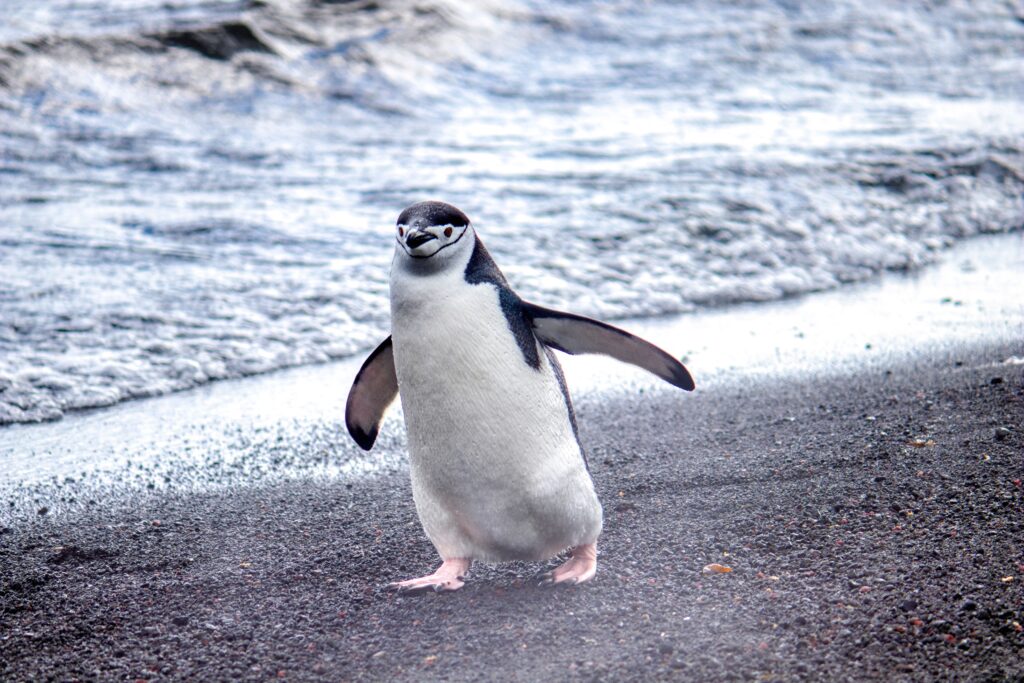
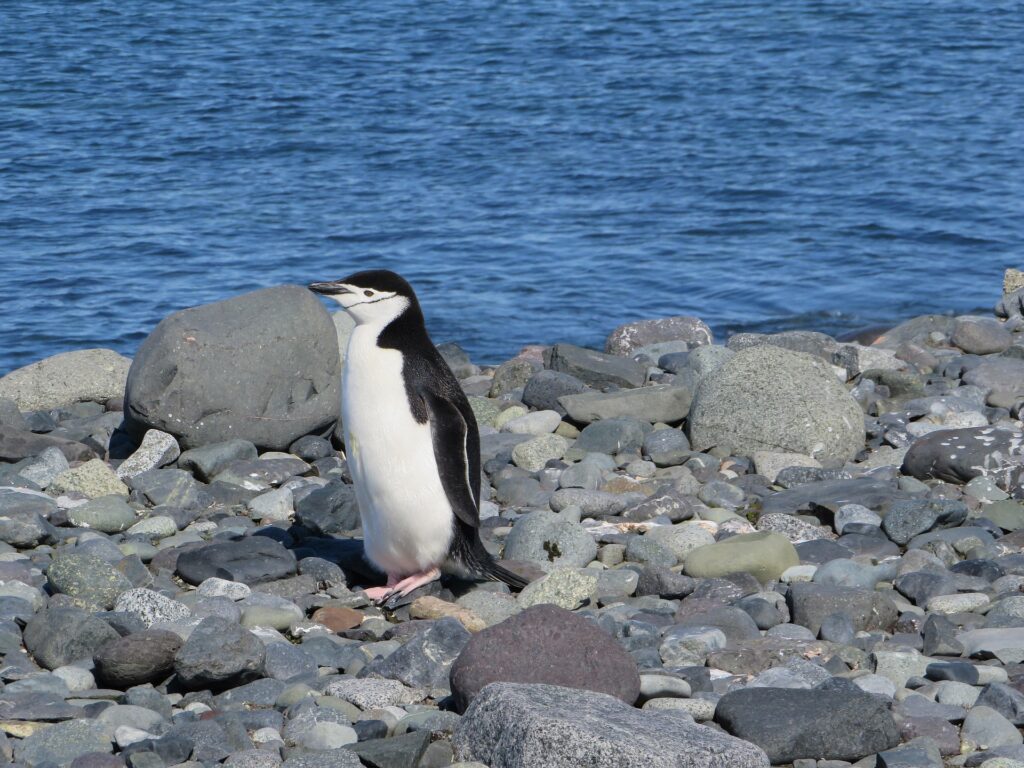
Chinstrap penguins spend most of their time in shallow waters. They are distinctive for having white faces with black eyes and a black band running from behind the eyes down to the throat—a marking that resembles a chin strap, giving the species its name. While their deepest recorded dive is 179 meters—demonstrating a respectable diving ability—there are instances where they dive even deeper.
1. Physical characteristics
- Body length: Approx. 68–76 cm
- Weight: Approx. 3.5–5.5 kg
- Body shape: Medium-sized and stocky
- Plumage and markings:
- Black back and white belly
- Black line extending from the head to the chin, resembling a “beard”
- White area above the eyes, giving the face a distinctive expression
- Black beak and relatively short tail
2. Actions and Movements
- Highly agile underwater, feeding on small fish and krill
- Waddles clumsily on land, but cooperates in flocks to build nests at breeding grounds
- Often forms colonies and is highly active during the breeding season
3. eating habits
- Staple diet consists of small fish, krill, and squid.
- Dives to catch prey.
- Moves to different feeding grounds depending on sea ice conditions and the season.
4. Reproduction/lifespan
- The breeding season is the Antarctic summer (November to February).
- They build nests on rocky areas or sandy beaches and typically lay two eggs.
- Both parents take turns incubating the eggs and raising the chicks.
- Their lifespan in the wild is approximately 10 to 15 years.
5. Characteristics of Personality and Behavior
- Highly social, living and cooperating in groups
- Agile and active in the water, but somewhat wary on land
- Displays territorial behavior during the breeding season to protect the nest and chicks
What will the personality be like?
Among penguins of the Pygoscelis genus, the chinstrap penguin is the most aggressive. They have a tendency to lunge at intruders who enter their territory, revealing a rather ferocious side to their nature; they frequently get into fights even among their own kind.
1. sociability
- They often live in flocks and cooperate in searching for food.
- During the breeding season, they form large colonies and live in groups numbering in the thousands.
2. vigilance
- On land, it is somewhat wary and cautious around humans and predators.
- In the water, it is agile and quickly flees when it senses danger.
3. Vigor
- Highly active and agile underwater
- They sometimes appear to be playing as they chase after fish or krill
- On land, they waddle and move at a relatively leisurely pace
4. Independence and stubbornness
- During the breeding season, they are highly territorial in order to protect their nests and chicks.
- Outside of the breeding season, they are cooperative and often follow the flock.
5. Impression from a human perspective
- On land, they have an adorable, waddling gait.
- In the water, they are agile and active.
- They have a personality that is both highly curious and cautious.
What are the characteristics of chinstrap penguin ecology?
Chinstrap penguins feed largely on krill and are particularly fond of fish. Breeding begins around summer; they build circular nests by stacking small stones on rocky ground and lay their eggs there. The male and female take turns incubating the eggs, switching every 5 to 10 days, with hatching occurring approximately 35 days after laying. The chicks remain in the nest for about a month, being fed by their parents before eventually becoming independent. Chicks form groups known as “crèches.” Their lifespan is estimated to be around 10 to 20 years.
1. Habitat
- Location: Sub-Antarctic regions, including the coast of the Antarctic Peninsula, the South Shetland Islands, and the South Sandwich Islands
- Environmental conditions:
- Nests on rocky reefs and sandy beaches
- Selects environments near the coast that facilitate easy foraging
- Forms large-scale colonies during the breeding season
2. eating habits
- Staple diet: Krill, small fish, and squid
- Hunting method: Diving underwater to catch prey
- The amount and type of food are influenced by the season, sea ice conditions, and ocean currents.
3. breeding
- The breeding season is the Antarctic summer (November to February).
- They build nests on rocky areas or sandy beaches and typically lay two eggs.
- Both parents take turns incubating the eggs and raising the chicks.
- The chicks fledge within a few weeks and learn how to swim and forage from their parents.
4. action
- They live in flocks and cooperate to forage for food.
- They waddle on land but swim agilely in the water.
- During the breeding season, they display territorial behavior to protect their nests and chicks.
5. lifespan
- About 10 to 15 years in the wild
- Survival rates vary depending on food availability, natural predators, and weather conditions.
What are the natural predators of chinstrap penguins?
Chinstrap penguins face predators such as leopard seals, while brown skuas prey on their eggs and chicks; they have natural enemies on both land and at sea.
Chinstrap penguin molting
Chinstrap penguins undergo the same “simultaneous molt” as Gentoo penguins; however, because this process takes place in harsher environments—such as ice edges and zones with strong winds—it places a significantly greater physical strain on them.
■ What is chinstrap penguin molting?
Once a year, chinstrap penguins replace all their feathers at once—
a process known as “catastrophic molt.”
In other words:
Old feathers fall out all at once,
and new feathers grow in simultaneously.
During this time, they are completely unable to fly or swim.
■ When will it happen?
Primarily:
Late summer to autumn in the Southern Hemisphere (roughly February to March)
It begins immediately after the breeding season ends.
■ Life During Molting (Quite Grueling)
Chinstrap penguins during the molting period:
● ① Cannot enter the sea
- The feathers completely lose their water-repellent properties.
- Entering the ocean poses a risk of hypothermia.
● ② Fasting state
- Unable to forage (cannot dive)
- Survives by relying on stored fat
- Fasts for approximately 2 to 4 weeks
● ③ Waiting in a tight group on the rocky terrain
- Huddling together to shield against the wind
- Conserving energy by remaining almost motionless
Chinstrap penguin diving
Chinstrap penguins exhibit a “moderate-depth, high-frequency” diving pattern; they pursue prey by making rapid, repeated dives into shallow to mid-depth waters.
■ Basic Diving Specifications
- Diving depth: Average of around 30–70 m
- Maximum diving depth: Approx. 100–200 m (varies by individual and conditions)
- Dive duration: Approx. 1–2 minutes (up to about 3 minutes)
- Swimming speed: Approx. 6–9 km/h
I’m better at “short bursts of work, many times” than “deep and long bursts of work.”
■ Characteristics of Diving Styles
● ① Chase at super-high speed
- Their main prey consists of krill and small fish.
- They hunt by herding and cornering schools of fish.
● ② Diving repeatedly for short periods
- Dive → Catch → Surface → Dive again immediately
- A style of repeating the process without a break.
● ③ Utilize the ice edge (boundary of the water)
- Prey concentrates around the drift ice.
- They efficiently patrol that area.
Chinstrap penguin call
The call of the chinstrap penguin is among the “sharp and noisy” variety; the entire colony creates a constant, clamorous din.
■ Characteristics of the call
In short, the chinstrap penguin’s call is:
A high-pitched, harsh sound—think “kee-kee,” “gyaa-gyaa,” or “kwah!”
It is often compared to:
The cries of seagulls
The sound of metal screeching
A small alarm siren
■ When do they make noise?
① Calling to each other at the breeding grounds (most important)
Identifying a partner
Locating the nest
Distinctive voices for each individual
Even if they look alike, “you can tell who it is by their voice”
② Intra-colony communication
Packed together in the tens of thousands
Cries filling the air
Essentially an “Antarctic noisy marketplace”
③ Intimidation and Territorial Disputes
- Cries loudly when approached
- Stretches its body to get attention
- Sometimes pecks with its beak as well
④ Parent-child identification
- The chick calls out to its parent.
- The parent also searches for the chick by its voice.
Even with similar voices, they can be clearly distinguished.
Seasonal Activities of Chinstrap Penguins
Chinstrap penguins follow a distinct seasonal activity cycle: they concentrate their breeding and chick-rearing during the brief Antarctic summer, while spending the rest of the year dispersed at sea. A notable characteristic is their strong association with the ice edge—the boundary of the sea ice.
■ Spring (October–November) | Breeding Preparation and Return
It is spring in the Southern Hemisphere—the time when the ice begins to recede.
Key Activities
Returning to breeding grounds (rocky areas)
Pair formation and reuniting
Nest building (gathering pebbles)
Intensifying territorial disputes
Key Points
Chinstrap penguins form dense colonies on rocky terrain.
A good nest becomes a valuable “resource.”
■ Summer (December–February) | Peak breeding and rearing season
This is the busiest time of the year.
Key activities
Egg-laying and incubation
Hatching and rearing of chicks
Parents take turns going to sea to bring back food
Behavior at sea
Consuming large quantities of krill
Frequent diving and returning to the nest
Making multiple round trips per day
The colony is in a constant state of commotion
■ End of Summer (February–March) | Molting Season
They begin molting immediately after the breeding season ends.
Key Activities
All feathers are replaced simultaneously
Remaining stationary on land (unable to swim)
Fasting for approximately 2 to 4 weeks
Characteristics
Living entirely on land, as they cannot enter the water
Huddling together to shelter from the wind
Significant depletion of energy reserves
■ Autumn to winter (March to September) | Marine dispersal period
They leave the colony after molting.
Key Activities
Dispersal into open waters
Living alone or in small groups
Migrating in pursuit of krill
Characteristics
Generally do not return to the breeding grounds
Heavily influenced by the location of the ice edge
A relatively quiet period
About Chinstrap Penguin Chicks
Here is a summary regarding chinstrap penguin (Pygoscelis antarcticus) chicks.
From Egg to Hatching
- Number of eggs: Usually two
- Nest: Built by stacking stones on rocky reefs or sandy beaches
- Incubation period: Approximately 35 days
- Both parents take turns incubating the eggs
Characteristics of the chicks
- Body covering: Soft gray or pale brown down
- Weight: Approximately 120–150g at hatching
- Color: Subdued tones for protection against predators
Growth and Fledging
- Time until fledging: Approximately 7–9 weeks
- They learn how to swim and forage from their parents.
- After fledging, they head out to sea with the flock and become independent in catching their own food.
Challenges regarding survival rates
- Vulnerable to natural predators (such as seabirds, seals, and scavengers)
- Survival rates fluctuate depending on food availability, weather, and ice conditions
- The chick stage is the most perilous, making parental protection essential
Are chinstrap penguins an endangered species?
Chinstrap penguins are not currently classified as an endangered species. While their overall population is thought to be declining, numbers are increasing or remaining stable in many areas. They are primarily threatened by climate change; climate change is causing a reduction in krill stocks, and some colonies appear to be at risk.
Current Situation
- IUCN Red List: Least Concern (LC)
- Global population estimated at approximately 7.9 million; relatively stable
- Widely distributed across the Antarctic Peninsula and sub-Antarctic islands
Major Threats
Climate Change
Potential fluctuations in food resources due to declining sea ice and rising water temperatures
Depletion of Food Resources by Fishing
Potential impact of fishing for small fish and krill
Natural Predators and Invasive Species
Chicks are vulnerable to predation by seabirds and marine mammals
Human Activities
Limited impact from tourism and research facilities
Conservation activities
- Protection of breeding grounds and marine areas
- Fisheries management and tourism restrictions
- Environmental monitoring and population surveys
Is it possible to keep chinstrap penguins in captivity?
Chinstrap penguins are extremely difficult to keep in captivity because they inhabit the Antarctic continent; the need to replicate that environment causes many people to give up right from the start. It would undoubtedly entail enormous costs.
Current Status of Rearing
- There is a track record of keeping and breeding them in select zoos and aquariums worldwide.
- As they are adapted to Antarctic and sub-Antarctic environments, conditions closely resembling their natural habitat must be recreated.
- Breeding is possible, but requires management that mirrors their natural environment.
Challenges in Rearing
Water and Air Temperature Management
As they are adapted to cold seawater, low temperatures must be maintained in both aquatic and terrestrial environments.
Dietary Management
Ensure a balanced diet centered on small fish (such as anchovies and sardines) and krill.
Breeding Challenges
Environments resembling rocky reefs or sandy beaches must be artificially recreated.
Protection of Wild Individuals
Subject to international regulations (such as CITES); capture and transport are strictly restricted.
Conclusion
- Keeping them in a typical home environment is impossible.
- Even in specialized facilities, advanced care is required—including temperature control, dietary management, and the replication of breeding environments.
- Protecting wild individuals and preserving their habitats is of the utmost importance.
Zoos where they are kept (Japan and worldwide)
Chinstrap penguins are kept in some aquariums and zoos in Japan and around the world, but they are not as numerous as in the wild, making them a somewhat limited exhibit species.
● Hokkaido
Asahiyama Zoo (Asahikawa)
Otaru Aquarium
Noboribetsu Marine Park Nixe
Hokkaido is a classic location, as its cold climate is well-suited for keeping them.
● Tohoku
Sendai Umino-Mori Aquarium
Oga Aquarium GAO (Akita)
● Kanto
Kamogawa Sea World (Chiba)
Hakkeijima Sea Paradise (Kanagawa)
Aqua Park Shinagawa (Tokyo)
● Chubu/Tokai
Port of Nagoya Public Aquarium (Aichi)
Nonhoi Park (Toyohashi)
Echizen Matsushima Aquarium (Fukui)
● Kansai
Osaka Aquarium Kaiyukan (Osaka)
Kyoto Aquarium (Kyoto)
Adventure World (Wakayama)
● Kyushu/Chugoku/Shikoku
Nagasaki Penguin Aquarium (Nagasaki)
Shimane Aquarium Aquas (Shimane)
Noichi Zoological Park (Kochi)
Nagasaki Penguin Aquarium, in particular, boasts a remarkably wide variety of penguin species.
■ Keeping them worldwide
As chinstrap penguins are an Antarctic species, facilities housing them overseas are also primarily located in cold-climate regions.
● Major regions
USA (e.g., Monterey Bay Aquarium)
UK (e.g., London Zoo)
Germany (e.g., Berlin Zoo)
Australia (e.g., Sydney Aquarium)
New Zealand (e.g., Antarctic-themed facilities)
Fellow members of the same group
コメント