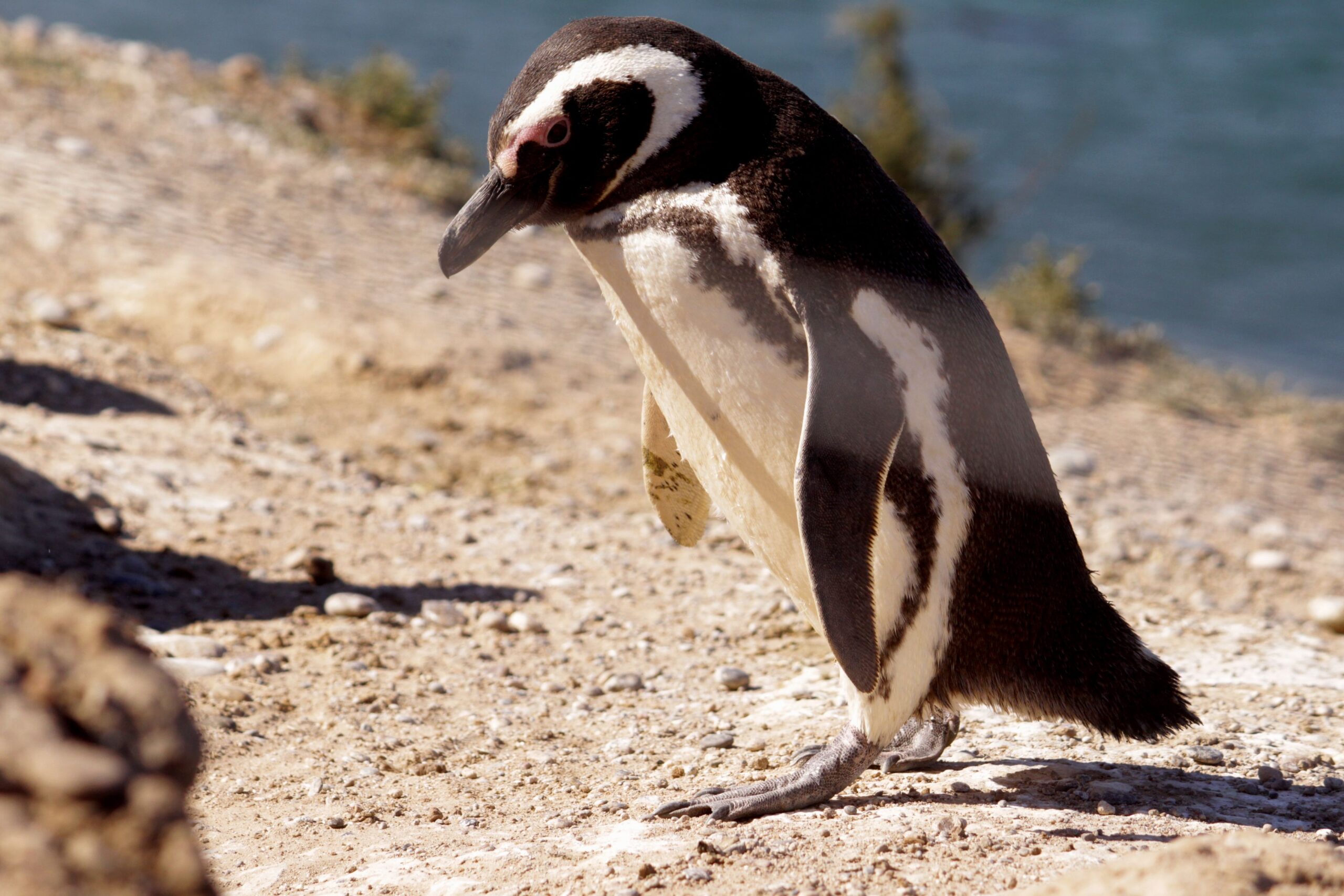
We will explain the characteristics, ecology, habitat, and origin of the name of Magellanic penguins. Magellanic penguins live in relatively warm areas, so they easily adapt to human environments, and some people keep them in captivity. I will explain in detail about Magellanic penguins.






- Basic information about Magellanic penguins
- What are the roots and origins of the Magellanic penguin?
- What will happen to the classification? What is the origin of the name?
- About the Magellanic Penguin Habitat
- feature is? What kind of creature is it?
- What will your personality look like?
- What is the ecology of Magellanic penguins?
- Magellanic Penguin Molting
- Magellanic Penguin Diving
- Magellanic Penguin Calls
- Seasonal Activities of Magellanic Penguins
- About Magellanic Penguin Chicks
- Are Magellanic penguins an endangered species?
- Is it possible to keep Magellanic penguins?
- Zoos where they are kept (Japan and around the world)
- Other companions
Basic information about Magellanic penguins
Magellanic penguins are birds that belong to the Humboldt penguin genus (Cape penguin genus). It is also known as the Patagonian penguin. The scientific name is Spheniscus magellanicus. This species is about 70cm long and can be found near the coasts of southern South America, such as Argentina and Chile.
| Japanese(和名) | マゼランペンギン、パタゴニアペンギン |
| English(英名) | Magellanic penguin |
| scientific name(学名) | Spheniscus magellanicus |
| classification(分類) | Sphenisciformes, Spheniscidae, Spheniscus ペンギン目ペンギン科ケープペンギン属 |
| IUCN Status(保全状況) | LEAST CONCERN |
| Height(身長) | 70cm |
| Weight(体重) | 2-5kg |
What are the roots and origins of the Magellanic penguin?
The Magellanic penguin is a penguin species that inhabits southern South America, with large breeding grounds along the coasts of Argentina and Chile, and in the Falkland Islands.
Origin of the name
The name “Magellanic penguin” comes from the 16th-century explorer Ferdinand Magellan.
In 1520, when Magellan’s fleet sailed near the southern tip of South America, the penguins were recorded and given their name.
Ancestors of penguins
Current research suggests that the ancestors of penguins were flightless seabirds that evolved in the Southern Hemisphere approximately 60 million years ago, after the extinction of the dinosaurs.
The oldest known penguin fossils have been found in:
New Zealand
Antarctica
and other locations.
Lineage of the Magellanic penguin
The Magellanic penguin belongs to the genus Spheniscus.
Closely related species include:
Humboldt penguin
African penguin
Galapagos penguin
Why are they in southern South America?
Magellanic penguins inhabit cool waters such as:
Argentina
Chile
Falkland Islands
In this region, the influence of the Falkland Current
Humboldt Current
creates an environment suitable for penguins because fish gather abundantly.
What will happen to the classification? What is the origin of the name?
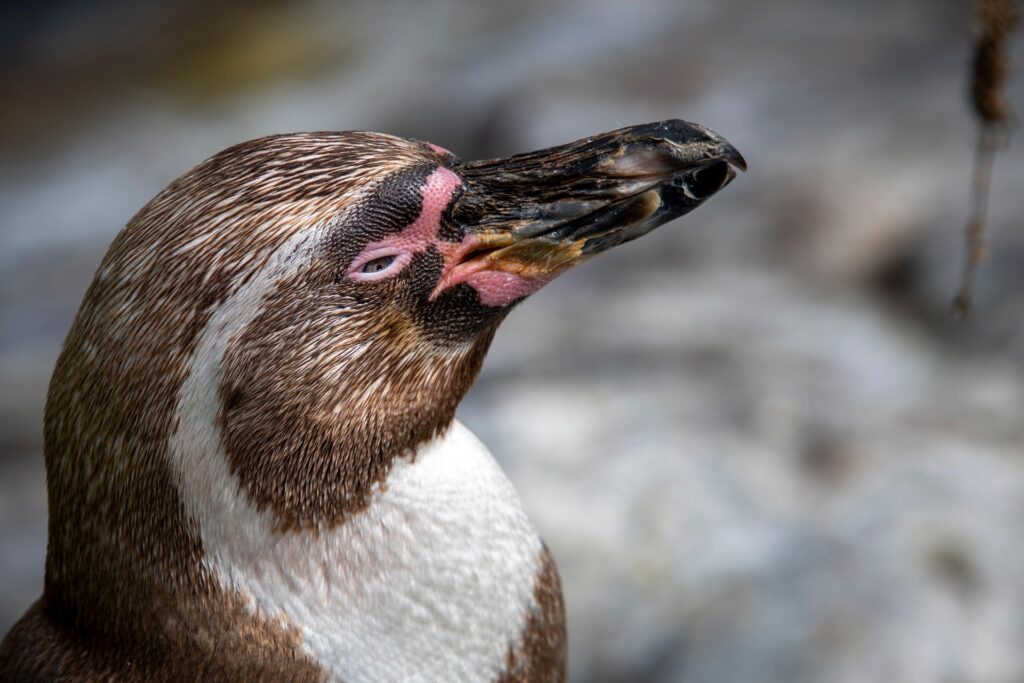
There are four species of Magellanic penguins in the Humboldt penguin genus (Cape penguin genus). However, the problem is that all penguins in the Cape penguin genus look similar, making it difficult to tell them apart. Therefore, some scholars believe that they are the same species. The name comes from the Portuguese navigator Ferdinand Magellan. While he was traveling through the area, he discovered this penguin and named it the Magellanic penguin.
| 名前:Name | 属名:Group | 生息地:habit |
| ガラパゴスペンギン(Galapagos Penguin) | Spheniscus フンボルトペンギン属 | ガラパゴス諸島 galapagos islands |
| ケープペンギン(African Penguin) | Spheniscus フンボルトペンギン属 | 南アフリカ South Africa |
| フンボルトペンギン(Humboldt Penguin) | Spheniscus フンボルトペンギン属 | チリ Chile |
| マゼランペンギン(Magellanic Penguin) | Spheniscus フンボルトペンギン属 | 南アメリカ太平洋岸 south america pacific coast |
classification
- 界 (Kingdom): Animalia(動物界)
- 門 (Phylum): Chordata(脊索動物門)
- 綱 (Class): Aves(鳥綱)
- 目 (Order): Sphenisciformes(ペンギン目)
- 科 (Family): Spheniscidae(ペンギン科)
- 属 (Genus): Spheniscus(フンボルトペンギン属)
- 種 (Species): Spheniscus magellanicus(マゼランペンギン)
About the Magellanic Penguin Habitat
Magellanic penguins live along the coastline from Argentina to Chile. In rare cases, they have been found wandering into Australia and New Zealand.
- Geographic Distribution
Location: Coast of the southern tip of South America
Specific Distribution Areas:
Coast of southern Argentina (Patagonia region)
Islands off the coast of southern Chile
Around the Falkland Islands (Islas Malvinas)
Seasonal north-south migration (breeding season along the southern tip of the coast, migrating northward during the non-breeding season)
- Habitat
Nests on reefs, sandy beaches, and island caves and burrows
Prefers environments near the coastline where it is easy to catch food
Breeds near the sea and lives in groups on land
- Ecological Characteristics
Depends on cold ocean currents (influenced by the Magellanic Current and Humboldt Current)
Live in groups and cooperate to forage
Reproduction and population size are affected by food availability and water temperature
feature is? What kind of creature is it?
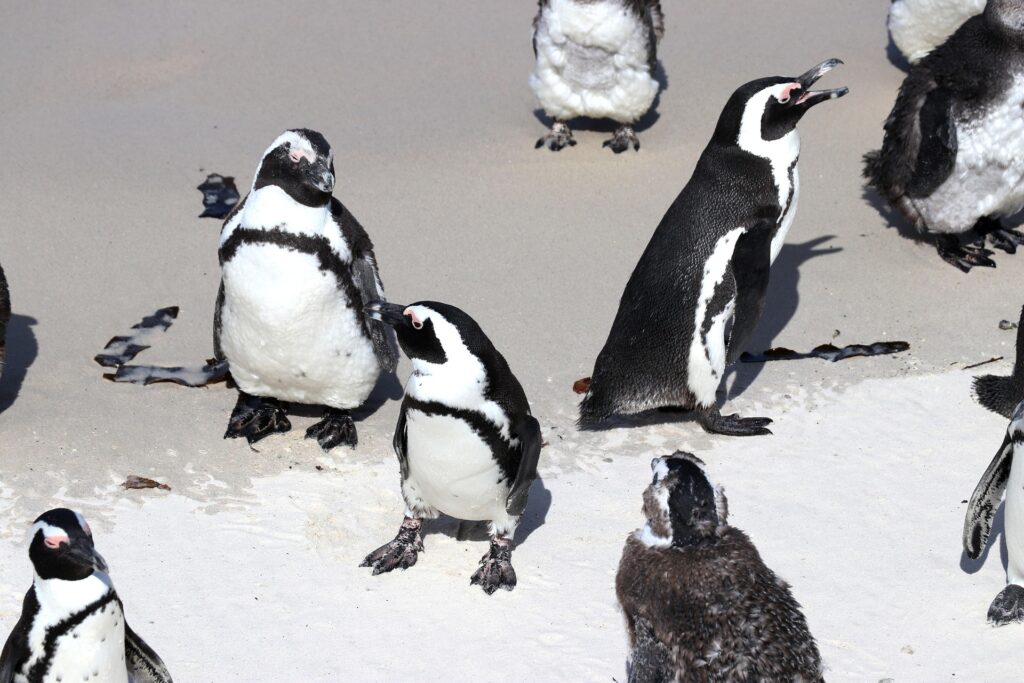
The Magellanic penguin has a black beak with a yellowish-white tip. Its most distinctive feature is that its legs are black and there are two black bands on its chest. Magellanic penguins are migratory birds that swim in the sea in colonies. They breed on the coasts of Patagonia and the Falkland Islands around April, and migrate north to the central coasts of Peru and Brazil, before returning home. They move according to the season when food is available.
- Physical Characteristics
Body Length: Approximately 61-76 cm
Weight: Approximately 2.7-6.5 kg
Body Type: Medium-sized and stocky
Plumage/Pattern:
Black back, white belly
Two black bands on the chest
Distinct black and white head pattern
Beak: Medium-length and sturdy, adapted for catching fish
- Behavior/Movement
Agile swimmers in the water, chasing small fish and squid
On land, they waddle and live in schools
During the breeding season, they build nests in pairs and work together to raise their chicks
- Diet
Mainly feeds on small fish (sardines, anchovies, etc.)
Also eats squid and crustaceans
The amount and type of food is affected by the season and ocean currents
- Reproduction and Lifespan
Breed once or twice a year
Lay one or two eggs in the shade of rocks or in a burrow
Both parents take turns incubating and raising the eggs
Lifespan in the wild is approximately 10 to 15 years
- Personality and Behavioral Characteristics
Highly social, they forage cooperatively in groups
Agile and active in the water, alert on land
During the breeding season, they exhibit territoriality to protect their nests and chicks
What will your personality look like?
Humboldt penguins tend to have the same overall personality, and some individuals are more thoughtful than others.
- Sociality
They often live in groups and cooperate to forage.
During the breeding season, they build nests in pairs or small groups.
- Vigilance
On land, they are cautious and wary of humans and predators.
In the sea, they are agile and will quickly flee if they sense danger.
- Activity
They are very active and agile when hunting in the water.
Their pursuit of fish can sometimes appear playful.
On land, they move slowly and with a waddling gait.
- Stubbornness/Independence
During the breeding season, they demonstrate territoriality to protect their nests and chicks.
Otherwise, they are cooperative and tend to follow their flock.
- Impression from Humans
On land, they have a cute waddling gait.
In the sea, they are agile and active.
They are curious but cautious.
What is the ecology of Magellanic penguins?
Magellanic penguins, like other penguins, feed on fish and crustaceans. During the breeding season, they become aggressive and will readily fight if another male is near their nest. They can bite you with their beaks or hit you with their flippers, causing serious injuries. They breed in September and lay two eggs. The lifespan is estimated to be about 15 years.
- Sociality
They often live in groups and cooperate to forage.
During the breeding season, they build nests in pairs or small groups.
- Vigilance
On land, they are cautious and wary of humans and predators.
In the sea, they are agile and will quickly flee if they sense danger.
- Activity
They are very active and agile when hunting in the water.
Their pursuit of fish can sometimes appear playful.
On land, they move slowly and with a waddling gait.
- Stubbornness/Independence
During the breeding season, they demonstrate territoriality to protect their nests and chicks.
Otherwise, they are cooperative and tend to follow their flock.
- Impression from Humans
On land, they have a cute waddling gait.
In the sea, they are agile and active.
They are curious but cautious.
What are the natural enemies of Magellanic penguins?
Magellanic penguins’ natural enemies are great shearwaters and skuas, and their eggs and chicks are often targeted.
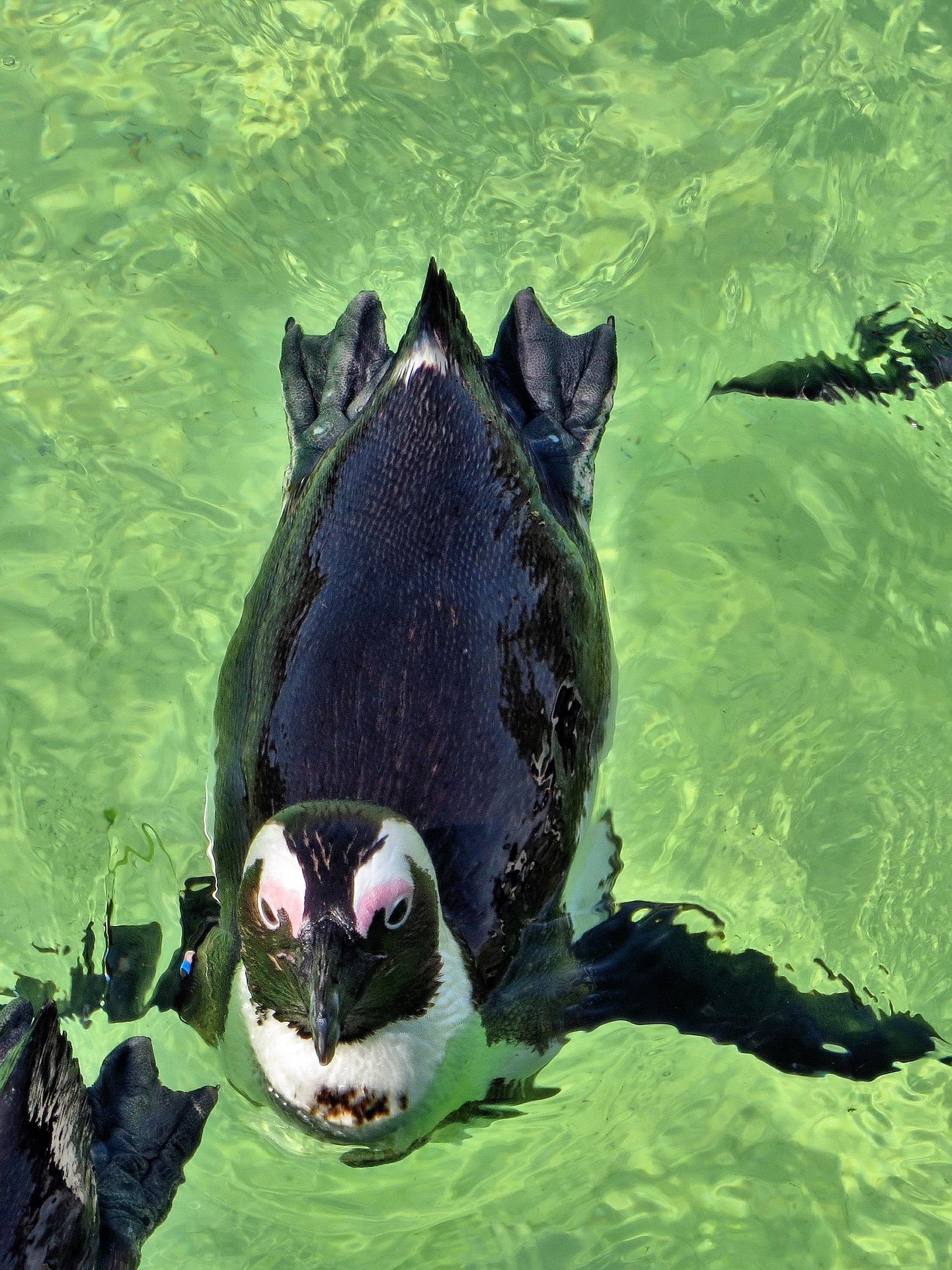
Magellanic Penguin Molting
Magellanic penguins undergo a complete molt once a year, replacing all of their feathers at once.
For penguins, feathers play important roles:
Waterproofing
Insulation
Buoyancy regulation
Therefore, damaged feathers need to be replaced regularly.
Before Molting
After the breeding season ends, Magellanic penguins feed actively in the sea.
The main purposes are:
To store fat
To increase weight
To prepare for fasting during molting
Individuals are at their heaviest weight of the year before molting.
During Molting
Once molting begins, they remain on land.
The duration is generally:
Approximately 2-4 weeks
During this time,
They shed a large amount of feathers
They lose their waterproofing
They cannot enter the sea
They cannot catch fish
Therefore, they are almost completely fasting. Why can’t they go into the sea?
During molting, their feathers are incomplete, which leads to problems such as:
They cannot maintain their body temperature.
Their waterproofing function is impaired.
Therefore, they stay on land until their new feathers have grown in.
After molting
Once molting is complete,
the new feathers are fully grown.
Their waterproofing is restored.
Their heat retention improves.
They then return to the sea to begin foraging again.
To regain the weight lost during fasting, they actively search for food for a while.
Magellanic Penguin Diving
Magellanic penguins are excellent divers living in the seas of southern South America. They dive in pursuit of fish and squid, and during the breeding season, they dive dozens of times daily to search for food.
Diving Depth
For normal foraging,
20-50m
Dives of 50-80m are not uncommon
In deeper cases, they may dive to over 100m
Records show dives exceeding 150m.
Dive Duration
Generally,
Approximately 1-3 minutes
In longer cases, they may dive for 4 minutes or more.
After diving, they briefly surface to breathe before diving again, repeating the process.
Swimming Speed
They use their wings for propulsion underwater,
Normally: Around 6-10km/h
When pursuing prey: Speeds can reach nearly 20km/h
They swim in a way that resembles flying underwater.
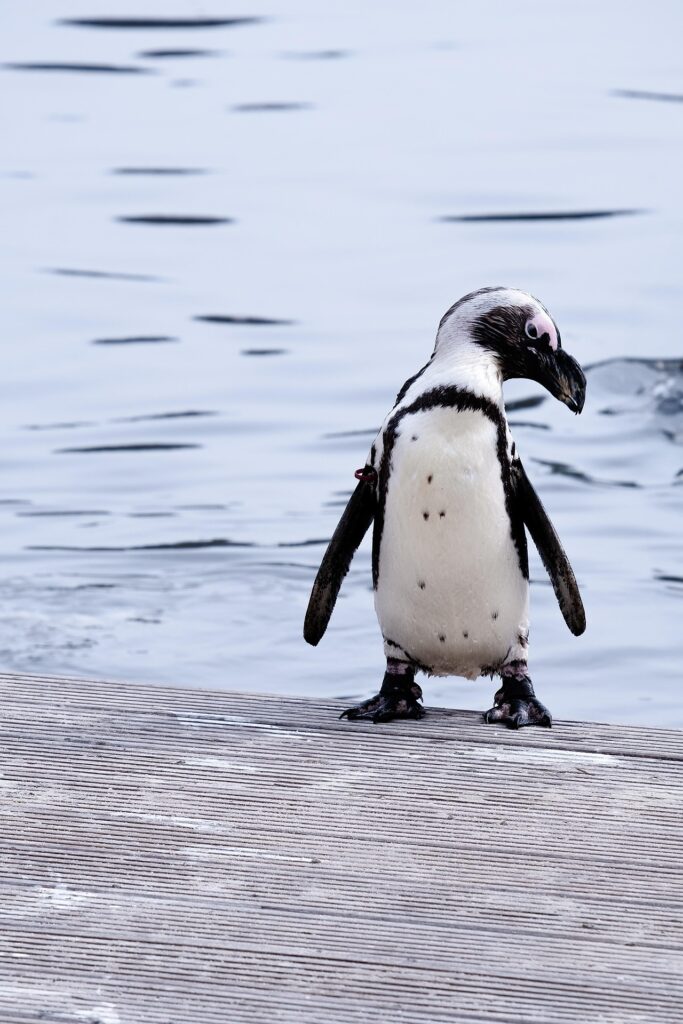
Magellanic Penguin Calls
Magellanic penguins are a relatively vocal species within the genus Scutellaria, and their calls are constantly heard in their colonies (breeding grounds).
What do they call?
Typically, they make calls like:
“Ah-oh, ah-oh”
“Ho-oh, ho-oh”
“Quack, quack”
“Quack, quack”
Their calls are low and slightly hoarse.
While not as extreme as the “donkey-like call” of their close relative, the African penguin, their calls are still quite resonant.
① Courtship and Pair Formation
During the breeding season, males call loudly to:
Attract females
Maintain the pair relationship
Claim nest ownership
A characteristic feature is that they puff out their chests and stretch their necks when calling.
② Territorial Claim
Around their burrows,
they call out to mean:
“This is my place”
“Don’t come near me”
Magellanic penguins use burrows, so they live close to each other, making vocal communication crucial.
③ Parent-Child Communication
Tens of thousands of penguins gather in densely populated breeding grounds.
Even among them,
parents can distinguish the calls of their chicks
chicks remember their parents’ calls
This allows them to reunite without getting lost.
This demonstrates their extremely high “vocal recognition ability.”
Seasonal Activities of Magellanic Penguins
Magellanic penguins inhabit the temperate to subarctic regions of the Southern Hemisphere, primarily living in Argentina, Chile, and the Falkland Islands.
Their annual cycle is basically “breeding → raising chicks → migration → molting.”
Spring (September-November): Start of Breeding
This period marks the beginning of the breeding season.
Courtship (calls and displays)
Pair Formation (often returning to the same partner each year)
Nest Construction (digging in sand or soil)
Egg-Laying Preparation
Magellanic penguins are characterized by digging burrows in the ground, a distinctive feature within their genus.
Summer (December-February): Peak of breeding season
Egg laying (usually 2 eggs)
Incubation (male and female take turns incubating)
Hatching of chicks
Feeding (parents regurgitate fish to feed the chicks)
During this period, parents repeatedly go out to sea to forage for food, traveling back and forth between the nest and the sea.
Autumn (March-May): Fledging and independence
Chicks complete their growth
Fledging (going out to sea)
Young birds begin independent life
Parents also recover their strength
During this period, young birds enter the sea for the first time and begin catching fish on their own.
Winter (June-August): Molting and migration
Molting (replacement of all feathers)
Fasting on land (approximately 2-4 weeks)
Strength recovery
Preparation for and start of migration
After molting, many individuals migrate north,
to the coasts of Brazil
Uruguay
Some may even travel as far as the coast.
About Magellanic Penguin Chicks
This article summarizes information about Magellanic penguin (Spheniscus magellanicus) chicks.
- From Egg to Hatching
Egg Laying: Usually 1-2
Nest: Built in the shade of rocks, holes in the sand, or caves
Incubation Period: Approximately 39-42 days
Both parents take turns incubating the eggs
- Chick Characteristics
Fur: Soft gray or light brown feathers
Weight: Approximately 100g at hatching
Color: Inconspicuous coloring protects them from predators
- Growth and Fledging
Until Fledging: Approximately 9-12 weeks
Learns how to swim and catch food from parents
After leaving the nest, they go out to sea with the flock and become independent hunters
- Survival Challenges
Susceptible to predators (crows, cats, rats, marine mammals)
Survival rates vary depending on food availability and environmental conditions
The chick stage is the most dangerous period, and parental protection is essential
Are Magellanic penguins an endangered species?
The population of Magellanic penguins is stable, but their numbers are decreasing and they are said to be an endangered species. Estimated population is 1,200,000 birds. It is predicted that the population will decline due to the following reasons.
- Current Status
International Union for Conservation of Nature (IUCN) Red List: Near Threatened
The wild population is estimated at approximately 1.2 million birds.
Distribution is limited to the southern coast of South America (southern Argentina, southern Chile, and the Falkland Islands).
- Major Threats
Decreased food supply due to fishing
A decline in small fish (sardines, anchovies, etc.) reduces reproduction rates.
Marine pollution and oil spills
Oil on feathers prevents swimming and increases the risk of death.
Natural predators and invasive species
Cats and rats attack chicks and eggs.
Climate change
Food resources are declining due to changes in ocean currents and water temperatures.
- Conservation Activities
Protection of breeding grounds (development of national parks and protected areas)
Securing food through fisheries management
Responding to oil spills and invasive species
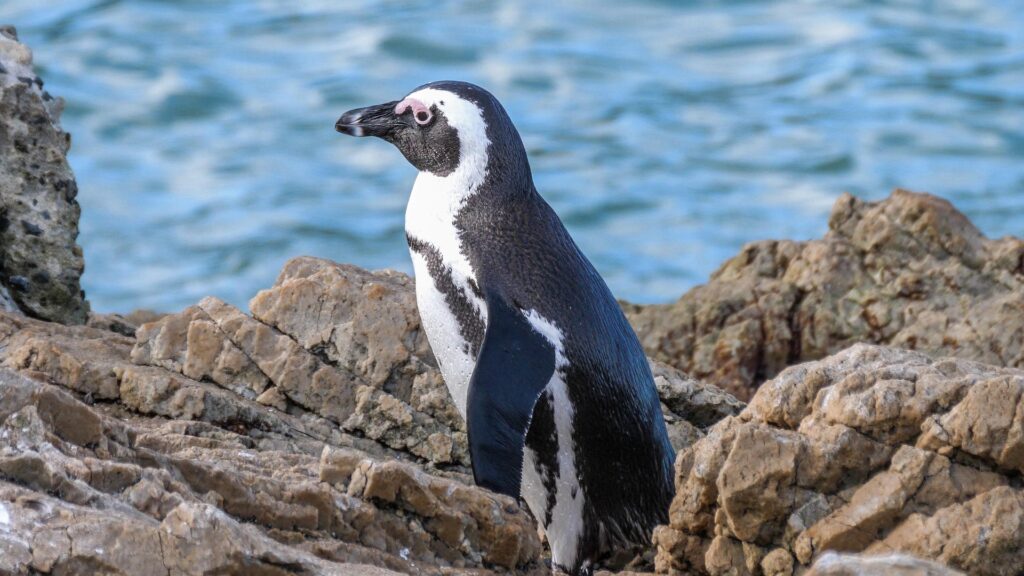
Is it possible to keep Magellanic penguins?
The population of Magellanic penguins is decreasing and it is extremely difficult to obtain them. The only option is to have the aquarium or zoo give it to you. However, it is also recommended because it can easily adapt to the environment where humans live.
- Current Status
There is a proven track record of breeding and rearing in zoos and aquariums around the world.
Keeping in specialized facilities is required, as conditions must be similar to their natural environment.
Breeding is possible, but requires management similar to that in the wild.
- Breeding Challenges
Water and Air Temperature Management
Because they are adapted to the cold water temperatures of the southern coast of South America, they are properly maintained in pools or air-conditioned rooms.
Feeding Management
Maintaining a balanced diet, primarily small fish (sardines, anchovies, etc.)
Breeding Difficulties
Necessity of artificially recreating environments resembling rock shelters and burrows
Breeding rates are often lower than in natural environments
Endangered Species
International regulations (e.g., CITES) strictly restrict capture and transportation
- Conclusion
Keeping in an ordinary home is impossible
Advanced environmental management is essential even for breeding and rearing in specialized facilities
Protection of wild individuals and preservation of their habitat are of utmost importance
Zoos where they are kept (Japan and around the world)
Humboldt penguins and Magellanic penguins are both representative species of the “Penguin genus” and are commonly kept in zoos and aquariums worldwide. Humboldt penguins, in particular, are the most common in Japan.
Major Facilities Where Humboldt Penguins Can Be Seen in Japan
Facilities with a Large Number of Humboldt Penguins
In Japan, they can be seen with a particularly high probability at the following locations:
Kasai Rinkai Aquarium (Large Exhibit)
Nagoya Port Aquarium
Adventure World
Nagasaki Penguin Aquarium
Asahiyama Zoo
Sapporo Maruyama Zoo
Kyoto Aquarium
Japan is one of the world’s leading countries for Humboldt penguin breeding (with many successful breeding programs)
Major Facilities Worldwide
Humboldt Penguins
Monterey Bay Aquarium (USA)
Lincoln Park Zoo (USA)
Chester Zoo (UK)
Tierpark Berlin (Germany)
Zoo Leipzig (Germany)
Magellanic Penguins
Conservation facilities around Punta Tombo (Argentina)
Temaikèn Zoo (Argentina)
Conservation facilities on the Falkland Islands
Some European and American zoos (Breeding populations)
Other companions
コメント