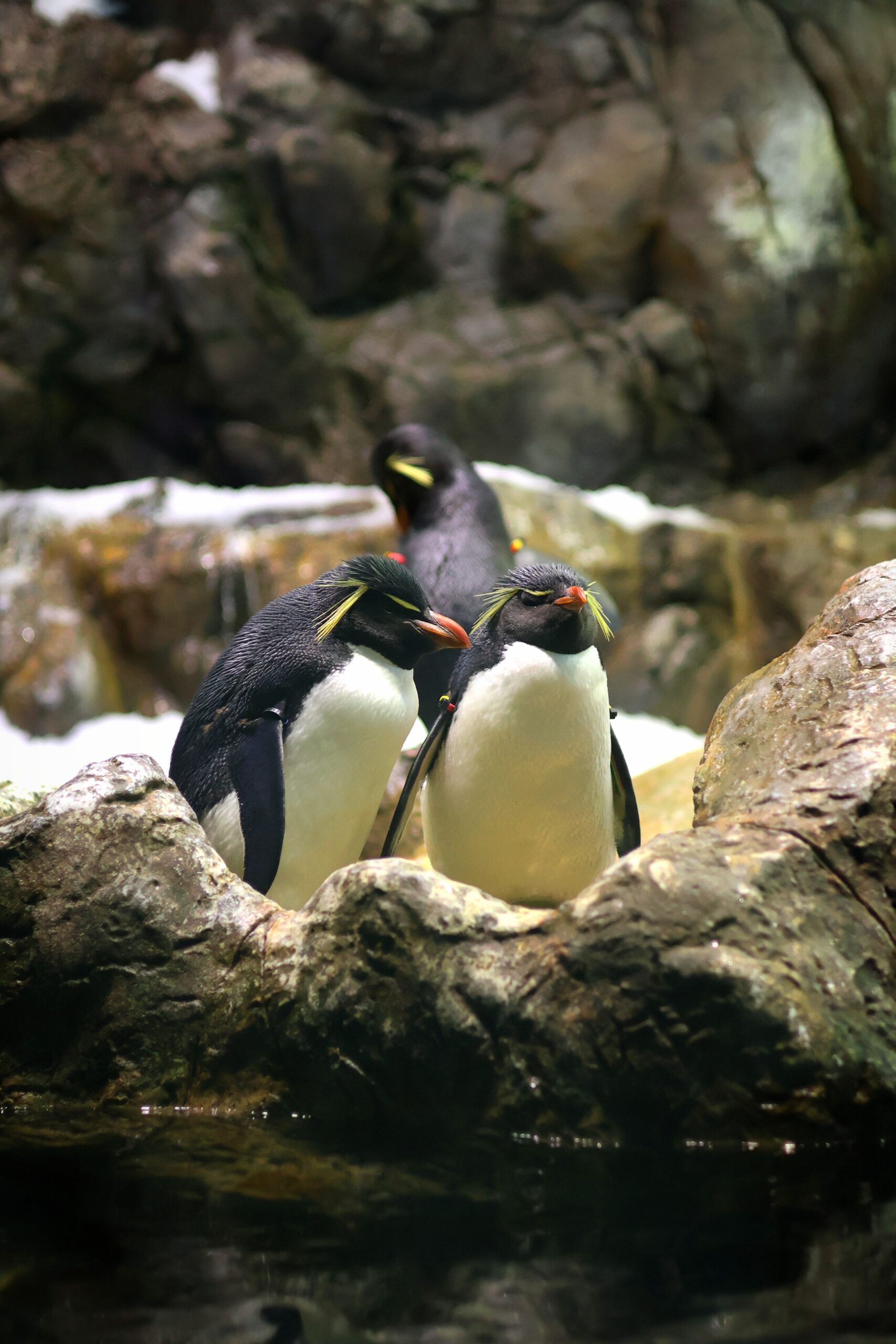
We will explain the characteristics, ecology, and habitat of the Royal Penguin. This penguin lives in and around Antarctica, and it is said that hybrids between the royal penguin and the macaroni penguin may occur. It also intersects with other penguin habitats.



- Basic information about Royal Penguin
- Origins and History of the Royal Penguin
- What will happen to the classification?
- About the Royal Penguin Habitat
- feature is? What kind of creature is it?
- What will your personality look like?
- What is the ecology of royal penguins?
- Royal Penguin Molting
- Royal Penguin Diving
- Royal Penguin Calls
- Seasonal Activities of Royal Penguins
- About Royal Penguin Chicks
- Are royal penguins an endangered species?
- Is it possible to keep royal penguins?
- Zoos Housing Royal Penguins (Japan and Worldwide)
- Fellow members of the same group
Basic information about Royal Penguin
The Royal Penguin is a bird belonging to the Macaroni Penguin genus. The scientific name is Eudyptes schlegeli. This penguin is 60-70cm long and lives near Antarctica. Royal penguins can interspecies hybridize with macaroni penguins.
| Japanese(和名) | ロイヤルペンギン |
| English(英名) | Royal Penguin |
| scientific name(学名) | Eudyptes schlegeli |
| classification(分類) | Sphenisciformes, Spheniscidae, Eudyptes ペンギン目ペンギン科マカロニペンギン属 |
| IUCN Status(保全状況) | LEAST CONCERN |
| Height(身長) | 60-70cm |
| Weight(体重) | 2-5kg |
Origins and History of the Royal Penguin
The Royal Penguin is believed to have diverged from the penguin lineage—which evolved into flightless seabirds following the extinction of the dinosaurs approximately 66 million years ago.
Current research suggests that penguin ancestors were flying seabirds inhabiting the region around New Zealand; over tens of millions of years, they evolved bodies specialized for swimming.
Royal Penguins are closely related to Macaroni Penguins; genetically, some studies classify them as a subspecies, while others treat them as a distinct species.
History
Approximately 60 million years ago
Penguin ancestors evolved in the Southern Hemisphere.
Wings transformed into “flippers” for swimming rather than flight.
Approximately 20 to 15 million years ago
The “Crested Penguin” group—characterized by yellow ornamental head feathers—emerged.
The ancestors of the Royal Penguin belong to this group.
Modern Day
The Royal Penguin is a rare species that breeds almost exclusively on Macquarie Island (an Australian territory).
While the breeding population is estimated at several hundred thousand to over a million pairs, their concentration in a single breeding location makes them vulnerable to environmental changes.
Why “Royal”?
The name “Royal” was chosen because their white heads and yellow crest feathers resemble a crown.
Characteristics
Scientific Name: Eudyptes schlegeli
Body Length: Approx. 65–76 cm
Weight: Approx. 4.5–8 kg
Lifespan: Approx. 15–20 years (in the wild)
Main Diet: Krill, small fish, squid
Natural Predators: Seals, orcas, large seabirds
History with Humans
From the 19th century through the early 20th century, they were hunted in large numbers for their oil and feathers, causing a temporary decline in their population. Since then, efforts to protect breeding grounds have progressed, and large-scale colonies are currently being maintained. However, factors such as climate change, shifts in the marine environment, and competition with fisheries are considered future challenges.
What will happen to the classification?
Royal penguins belong to the genus Macaroniformes. The genus name is derived from the ancient Greek eu “good” and dyptes “diver”. “Macaroni” is an 18th century British word that refers to “date man.”
| 名前:Name | Gropu:属名 | 生息地: habit |
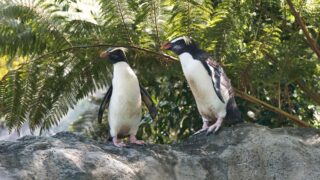
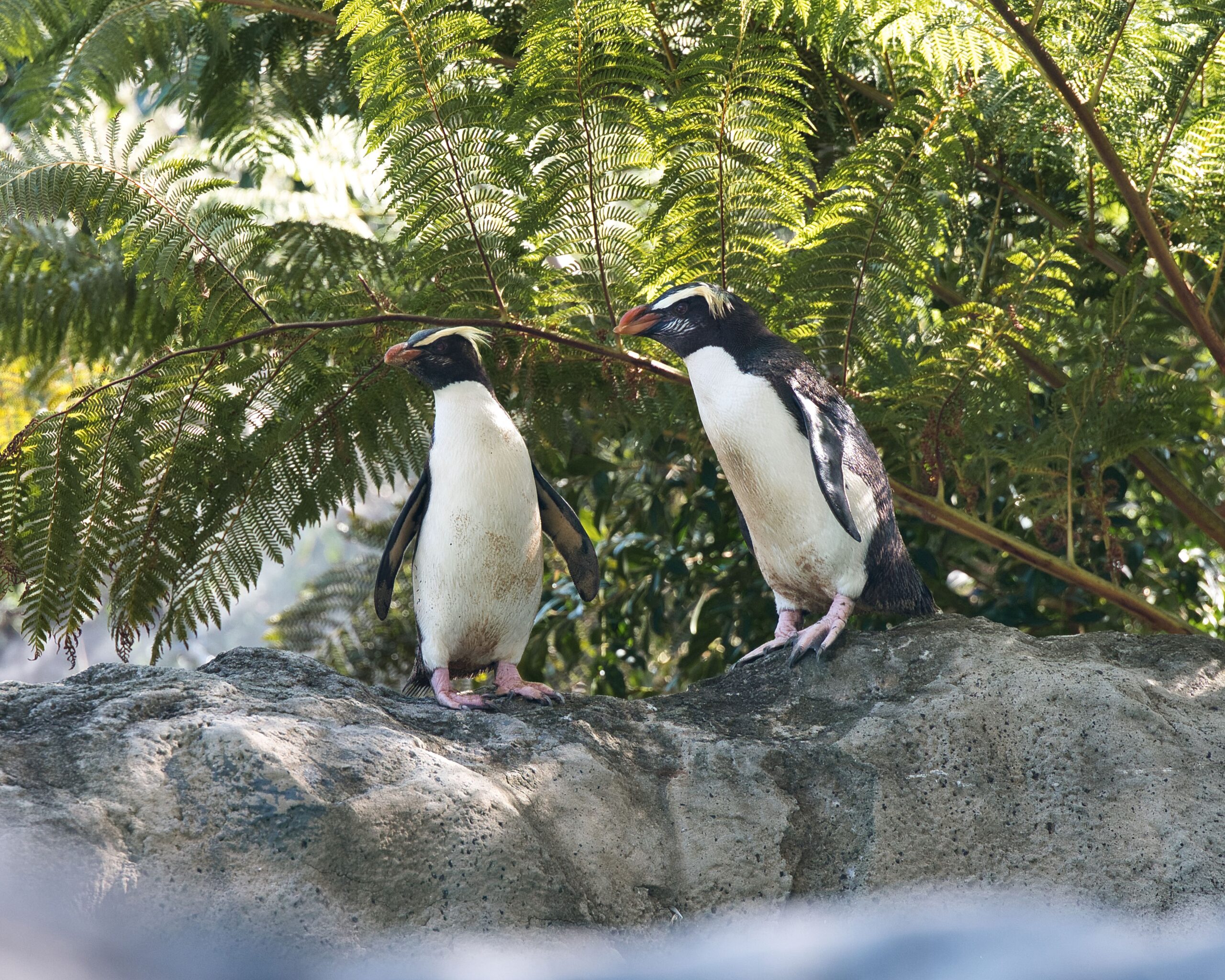
| フィヨルドランドペンギン(Fiordland penguin) | Eudyptes マカロニペンギン属 | New Zealand ニュージーランド |
| シュレーターペンギン(Erect-Crested Penguin) | Eudyptes マカロニペンギン属 | New Zealand ニュージーランド |
| スネアーズペンギン(Snares Islands Penguin) | Eudyptes マカロニペンギン属 | New Zealand ニュージーランド |
| マカロニペンギン(Macaroni Penguin) | Eudyptes マカロニペンギン属 | Antarctica 南極大陸 |
| ロイヤルペンギン(Royal Penguin) | Eudyptes マカロニペンギン属 | Antarctica 南極大陸 |
| イワトビペンギン(Rockhopper Penguin) | Eudyptes マカロニペンギン属 | South Atlantic, Indian Ocean, Falkland Islands 南大西洋、インド洋、フォークランド諸島 |
Royal Penguin Taxonomy
| 階級 | 分類 |
|---|---|
| 界 (Kingdom) | 動物界 (Animalia) |
| 門 (Phylum) | 脊索動物門 (Chordata) |
| 綱 (Class) | 鳥綱 (Aves) |
| 目 (Order) | ペンギン目 (Sphenisciformes) |
| 科 (Family) | ペンギン科 (Spheniscidae) |
| 属 (Genus) | Eudyptes |
| 種 (Species) | Eudyptes schlegeli |
About the Royal Penguin Habitat
Royal penguins live on islands near Antarctica.
Distribution
An endemic species, naturally found only on sub-Antarctic Macquarie Island.
Not found anywhere else.
- Habitat
Breeds on rocky or sandy coasts.
Forages at sea outside of the breeding season.
Prefers isolated environments with little human impact.
- Behavior and Movement
Forages for fish and krill in the sea.
Always returns to Macquarie Island during the breeding season.
Swims around the waters surrounding the island, sometimes foraging for food over distances of tens or even hundreds of kilometers.
feature is? What kind of creature is it?
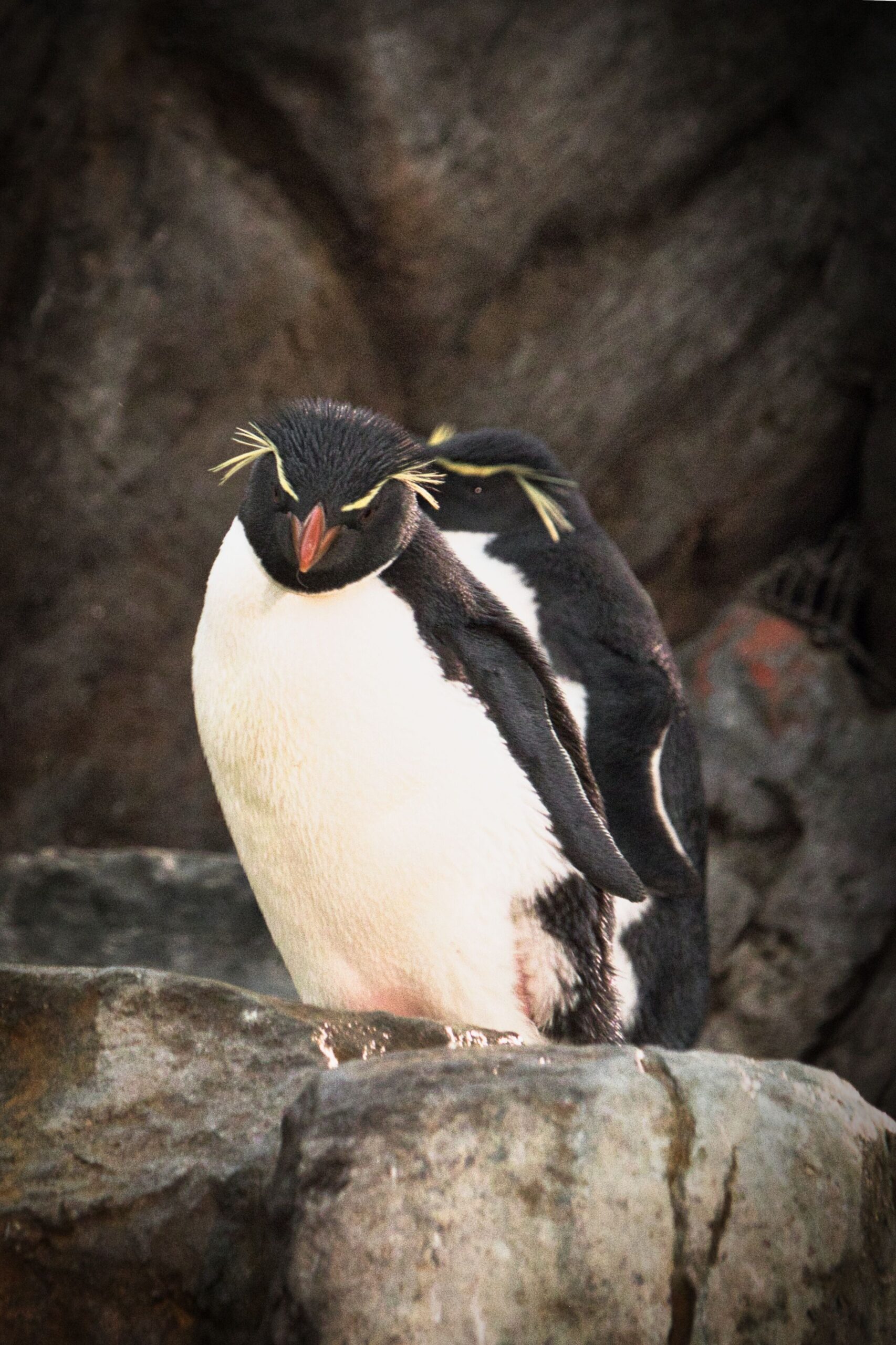
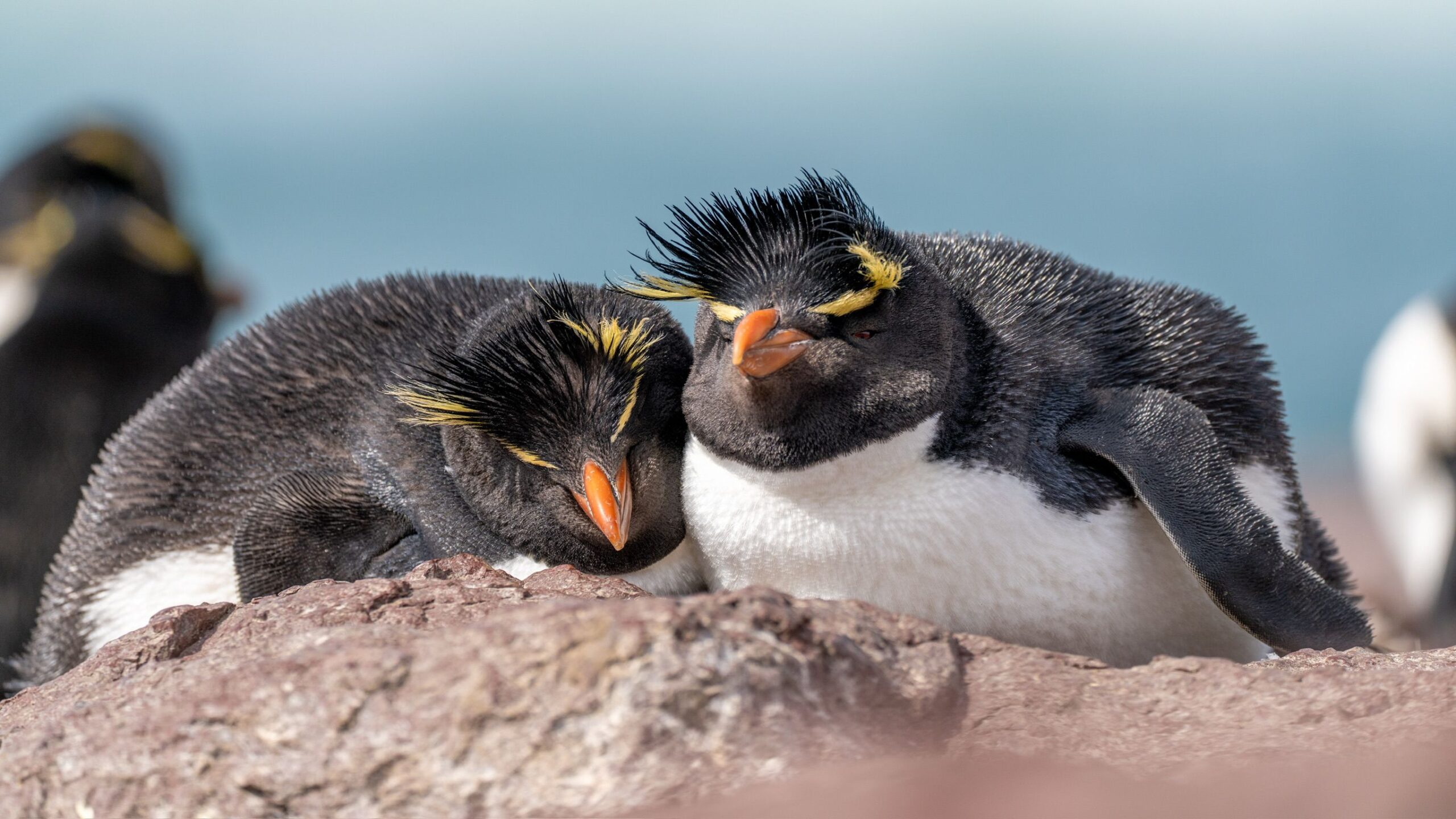
The Royal Penguin is quite similar to the Macaroni Penguin. Most of the characteristics are similar. Like other penguins, they spend most of their days in the ocean, coming ashore for the night when it’s time to sleep. The macaroni penguin has a black face, while the royal penguin has a white face, so this is the only way to tell them apart.
- Physical Characteristics
Size: Approximately 70 cm in length, 4-5 kg in weight (medium to slightly large penguin)
Body Type: Stocky, streamlined for underwater swimming
Feather Color:
Back: Black
Belly: White
Head: Bright yellow feather crest (extending from above the eyes to the back of the head)
Face: White, a major difference from the macaroni penguin
Beak: Orange-red, preys on fish and krill
Legs: Short, strong, and able to walk steadily on rocky or sandy areas
- Ecology and Behavior
Excellent Swimmer: Pursues fish and krill in the sea
Diet: Primarily fish, small squid, and krill
Reproduction:
Forms large colonies on the rocky and sandy areas of Macquarie Island
Egg-laying pairs, with males and females taking turns incubating
Sociality: Lives in groups and cooperates to raise chicks
- Personality and Characteristics
Sociable and cooperative: Lives in large groups during breeding season
Curious: Sensitive to surrounding movements and sometimes interested in humans
Loyal and tenacious: Devoted to their mates and breeding grounds, they tenaciously raise their young during breeding season
- Appearance
With their distinctive yellow feather crest and white face, they are flashy and unique.
They are agile swimmers in the ocean and adorable walkers on land.
The image of a “little gentleman with a white face and yellow feather crest”
What will your personality look like?
Royal penguins are adapted to living in groups by forming colonies and are considered to be highly social animals. This shows that they are highly cooperative creatures. Royal penguins build their nests without competing, even though there are king penguin nests nearby.
Royal Penguin Personality (Behavioral Characteristics)
Sociable and cooperative
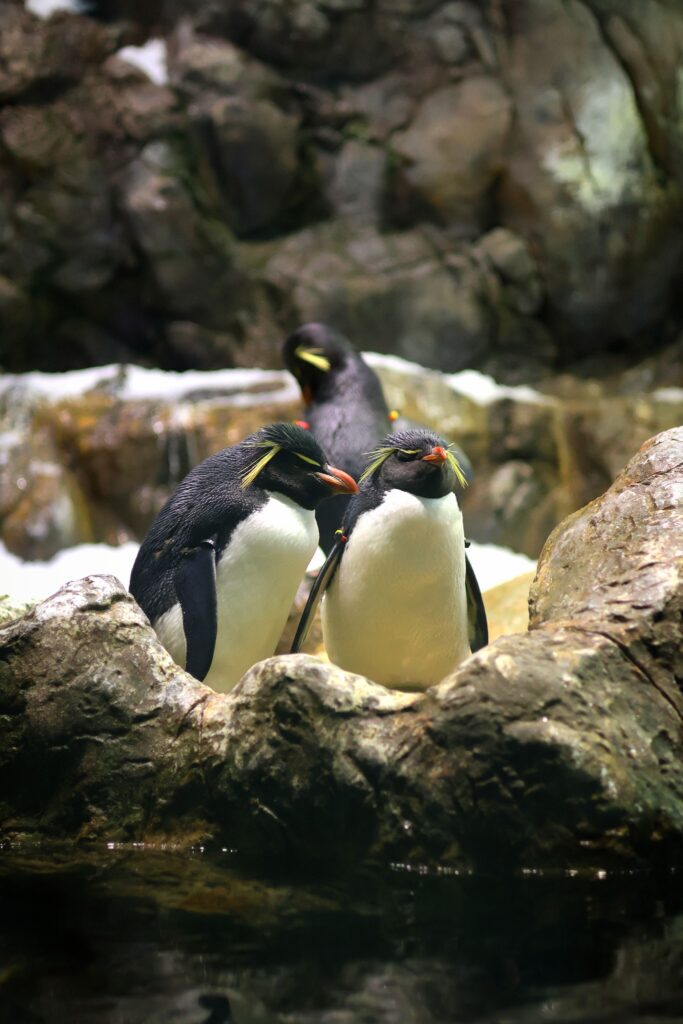
During the breeding season, they form large colonies and live together in groups.
Pairs work together to care for eggs and chicks.
Curious
Sensitive to movements and humans around them, they often observe them.
They show boldness when pursuing prey while foraging at sea.
Bold and tenacious
They breed in harsh environments such as rocky areas and sandy beaches.
They act tenaciously to protect their chicks and eggs.
Loyal
Strongly loyal to their mates and breeding sites.
They often return to the same breeding sites every year and breed with the same pair.
What is the ecology of royal penguins?
Royal penguins subsist mainly on fish and crustaceans. The breeding season is from September to October. They lay about 2 eggs, and the incubation period is about 30-40 days. The chicks form a crescent and then leave the nest. The average lifespan of a macaroni penguin is approximately 12 to 15 years.
- Habitat and Environment
Endemic to the sub-Antarctic Macquarie Island
During the breeding season, they form colonies on rocky or sandy coasts.
Forages in the ocean outside of the breeding season and is rarely seen on land.
Prefers isolated environments with little human interference.
- Diet (Prey)
Preys mainly on fish, krill, and small squid.
Dives to pursue prey.
Rarely feeds on land.
- Breeding and Rearing
Breeding season is during the Southern Hemisphere summer (November to February).
Builds large colonies on rocky or sandy areas.
Each pair takes turns incubating eggs.
Chicks grow while being fed by their parents, and once they have fully developed feathers, they become independent in the sea.
- Behavior
Highly social, living in groups
Living in groups to protect themselves from predators (such as seals and seagulls)
Swimming quickly in the ocean, they pursue prey
On land, they roam rocky areas and sandy beaches, focusing on breeding and protecting their chicks
- Adaptability
Feathers and blubber allow them to withstand the cold temperatures of the harsh sub-Antarctic waters
Streamlined body shapes suitable for diving
Social cooperation allows for successful reproduction
What are the royal penguin’s natural enemies?
The royal penguin’s natural enemies include birds such as the skuas, southern elephant seals, and giant petrels. There are many enemies from the sky.
Royal Penguin Molting
Molting in Royal penguins is the process of simultaneously replacing old feathers with new ones. It is a vital part of their annual life cycle.
Timing of Molting
Royal penguins molt from late summer to autumn (roughly February to March in the Southern Hemisphere), after the breeding season has ended.
Characteristics During Molting
The entire coat of feathers is replaced over a period of approximately 2 to 4 weeks.
Because the feathers lose their waterproofing during this time, the penguins cannot enter the ocean.
Before molting, they consume large quantities of fish and krill to build up fat reserves.
They fast throughout the molting period, surviving solely on their stored fat.
Once the old feathers have shed and the new feathers have fully grown in densely, they return to the ocean.
Why Is Molting Necessary?
Penguin feathers are crucial for maintaining waterproofing and heat retention. However, a year of constant swimming causes the feathers to wear down, reducing their waterproof capabilities.
Molting offers benefits such as:
Restoring waterproofing
Improving heat retention
Increasing swimming efficiency
Replacing damaged feathers and removing accumulated dirt or debris
Royal Penguin Diving
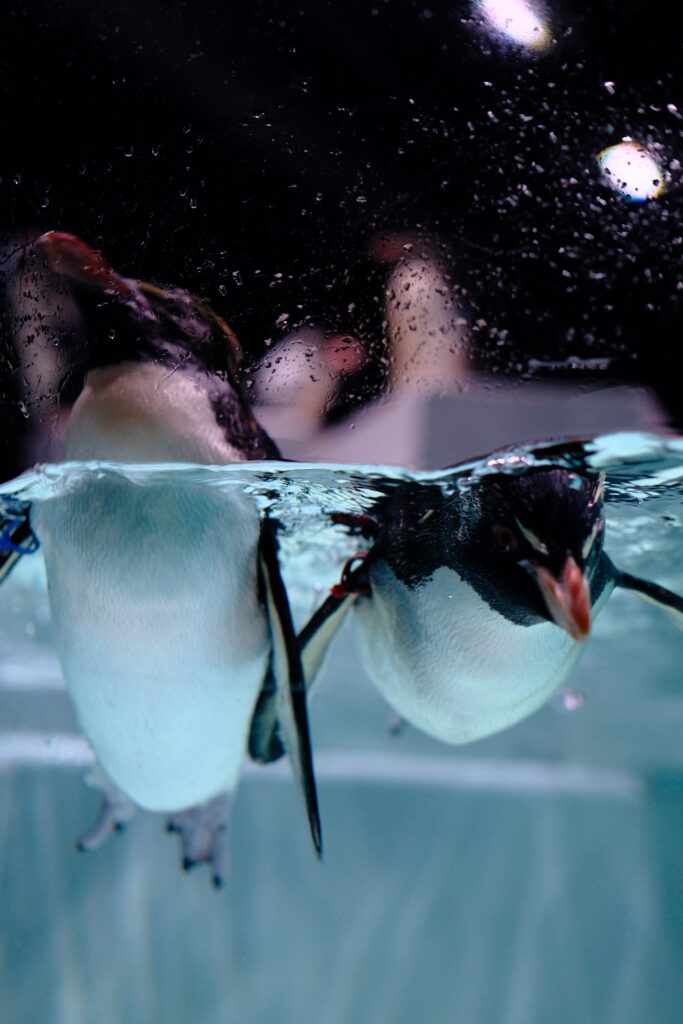
The Royal penguin is highly adapted to life at sea, repeatedly diving numerous times each day to forage for food.
Diving Capabilities
Typical diving depth: Approximately 20–80 meters.
Maximum diving depth: Reported to reach around 150 meters.
Dive duration: Usually around 1–3 minutes, though they can stay submerged for nearly 4–5 minutes.
As their close relatives, the Macaroni penguins, exhibit similar diving patterns, Royal penguins are also believed to forage primarily in relatively shallow to mid-depth waters.
Physical Adaptations for Diving
Royal penguins possess various characteristics adapted for an aquatic lifestyle:
Flipper-like wings that allow them to “fly” through the water.
A streamlined body shape that reduces water resistance.
Dense plumage that provides waterproofing and insulation.
Subcutaneous fat that helps maintain body temperature in cold waters.
A high capacity to store oxygen in their blood and muscles, enabling prolonged dives.
Swimming Speed
They cruise underwater at speeds of approximately 7–10 km/h, but can reach speeds exceeding 20 km/h when pursuing prey.
Diving Rhythm
While foraging, they follow a cycle of:
Breathing at the surface.
Diving to search for food.
Returning to the surface to breathe for several to over ten seconds.
Diving again.
This cycle is repeated dozens—and sometimes hundreds—of times.
Royal Penguin Calls
Royal penguins are very vocal birds. In breeding colonies where hundreds of thousands of them gather, their calls echo constantly.
What do they sound like?
Royal penguin calls are often described as follows:
“Gaa, gaa”
“Brrr, brrr”
“Quark, quark”
“Ehh, ehh”
To human ears, the sounds can resemble a loud, resounding trumpet blast or the braying of a donkey.
Why do they call?
① To find a mate
During the breeding season, males call loudly to announce their presence to females. Calling also serves to help mated pairs recognize each other’s voices.
② Parent-chick reunions
In colonies packed with tens or hundreds of thousands of birds, parents identify their own chicks by their calls upon returning from the sea. Chicks also distinguish their parents’ voices and approach them.
③ Territory and alertness
If other individuals come too close or a predator appears, they vocalize loudly to threaten the intruder or sound an alert.
Seasonal Activities of Royal Penguins
Since Royal penguins inhabit the Southern Hemisphere, their seasons are the reverse of those in Japan. Throughout the year, they cycle through breeding, chick-rearing, molting, and foraging.
Spring (September–November): The Start of Breeding
As spring arrives in the Southern Hemisphere, Royal penguins return to their breeding grounds on Macquarie Island.
During this period:
Males come ashore first to begin nest-building.
Courtship displays and mutual calling become active.
Pairs form or reunite.
Females typically lay two eggs (often, only the second egg successfully develops).
The colony bustles with hundreds of thousands of penguins.
Summer (December–February): Incubation and Chick-Rearing
Summer is the busiest season.
Males and females take turns incubating the eggs.
Chicks hatch.
Parents go to sea to forage, bringing back krill, small fish, and squid.
As the chicks grow, they form “crèches” (nursery groups) and spend time together in a crowd.
During this time, parents repeatedly dive to gather food almost every day.
Autumn (February–April): Molting Season
After rearing their chicks, Royal penguins undergo molting (shedding and replacing their feathers).
During this period:
They cannot enter the water.
They fast for approximately 2 to 4 weeks.
They stay on land until old feathers are shed and new ones have fully grown in.
Once molting is complete, their waterproofing and insulation are restored, and they return to the sea.
Winter (May–August): Life at Sea
They spend most of the winter in the open ocean.
They leave the breeding grounds.
They forage across vast areas of the ocean.
They replenish their strength by eating krill, fish, and squid.
They store energy for the upcoming breeding season.
They are rarely seen on land during this time.
About Royal Penguin Chicks
Here’s a summary of Royal Penguin (Eudyptes schlegeli) chicks.
- Hatching
Lays one or two eggs.
Incubation takes approximately 33-35 days.
Parents take turns incubating the eggs and protecting the chicks.
- Appearance and Physical Characteristics
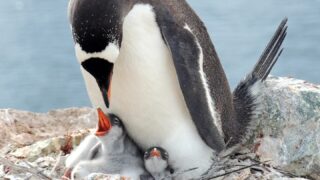
Immediately after hatching, they are covered in gray to pale down.
Their feathers are not yet waterproof, and they cannot swim.
They have a small, round body, and their limbs are underdeveloped.
- Growth and Development
Early Stage (1-2 weeks after hatching): They are warmed and protected by their parents.
Middle Stage (2-4 weeks): They are fed by their parents and gain strength.
Late Stage (4-7 weeks): Their feathers are replaced and become waterproof.
Chicks may form groups called “kreich” (chick groups).
- Diet
Parents feed their young with fish and krill they have caught, mouth-to-mouth.
Parents take turns foraging for food.
- Independence
Once their feathers have grown in and become waterproof, they begin foraging at sea.
They leave the sea and become independent at about 2-3 months of age.
They live cooperatively in flocks until they reach adulthood.
Are royal penguins an endangered species?
The estimated population of royal penguins is 850,000. The number seems to be decreasing year by year, and the reasons are as follows.
Competition with fishing industry
Human populations are also increasing, and we are now catching more fish through fishing. This makes it difficult for macaroni penguins to secure food. Furthermore, due to global warming, it is no longer possible to catch fish that used to be nearby.
Effects of marine pollution
There is also the impact of marine pollution. Chemicals are flowing into the ocean from oil tankers, causing further pollution. It is also believed that female penguins’ reproductive ability is declining.
Is it possible to keep royal penguins?
Royal penguins are listed as an endangered species. Furthermore, since the animals live near Antarctica, equipment that can reproduce that environment at room temperature is required, which can be quite a hurdle.
- Limitations as a Wild Species
Endemic to the Subantarctic Macquarie Island
Because they have adapted to the cold waters around Antarctica, captivity in an artificial environment is extremely difficult.
Few zoos around the world exhibit royal penguins.
- Difficulties in Captivity
Temperature Control: A low-temperature environment is essential.
Aquarium Size: A large saltwater pool is required for swimming.
Dietary Management: A stable and large supply of fish and krill is required.
Health Management: Wild species are susceptible to stress and disease, making it difficult for them to survive in an artificial environment.
Legal Restrictions: Import, export, and captivity are strictly restricted by the Convention on International Trade in Endangered Species of Wild Fauna and Flora (CITES).
- Summary
It is virtually impossible to keep royal penguins at home or in small facilities.
Captivity is only possible in specialized facilities or research institutes under specially controlled conditions.
There are few examples of actual captivity, and conservation and observation are primarily conducted in the wild.
Zoos Housing Royal Penguins (Japan and Worldwide)
Currently, there are no zoos or aquariums in Japan that keep or exhibit Royal penguins.
While many penguin species are kept in Japan, the Royal penguin is a species with extremely few examples of captivity worldwide.
Which facilities keep them globally?
There are very few facilities worldwide that keep Royal penguins.
The reasons for this include:
Their breeding grounds are almost exclusively limited to Macquarie Island;
The Australian government enforces strict wildlife protection regulations;
Their habitat is a World Heritage Site, making collection extremely restricted; and
They are difficult to keep and breed in captivity.
Fellow members of the same group
コメント