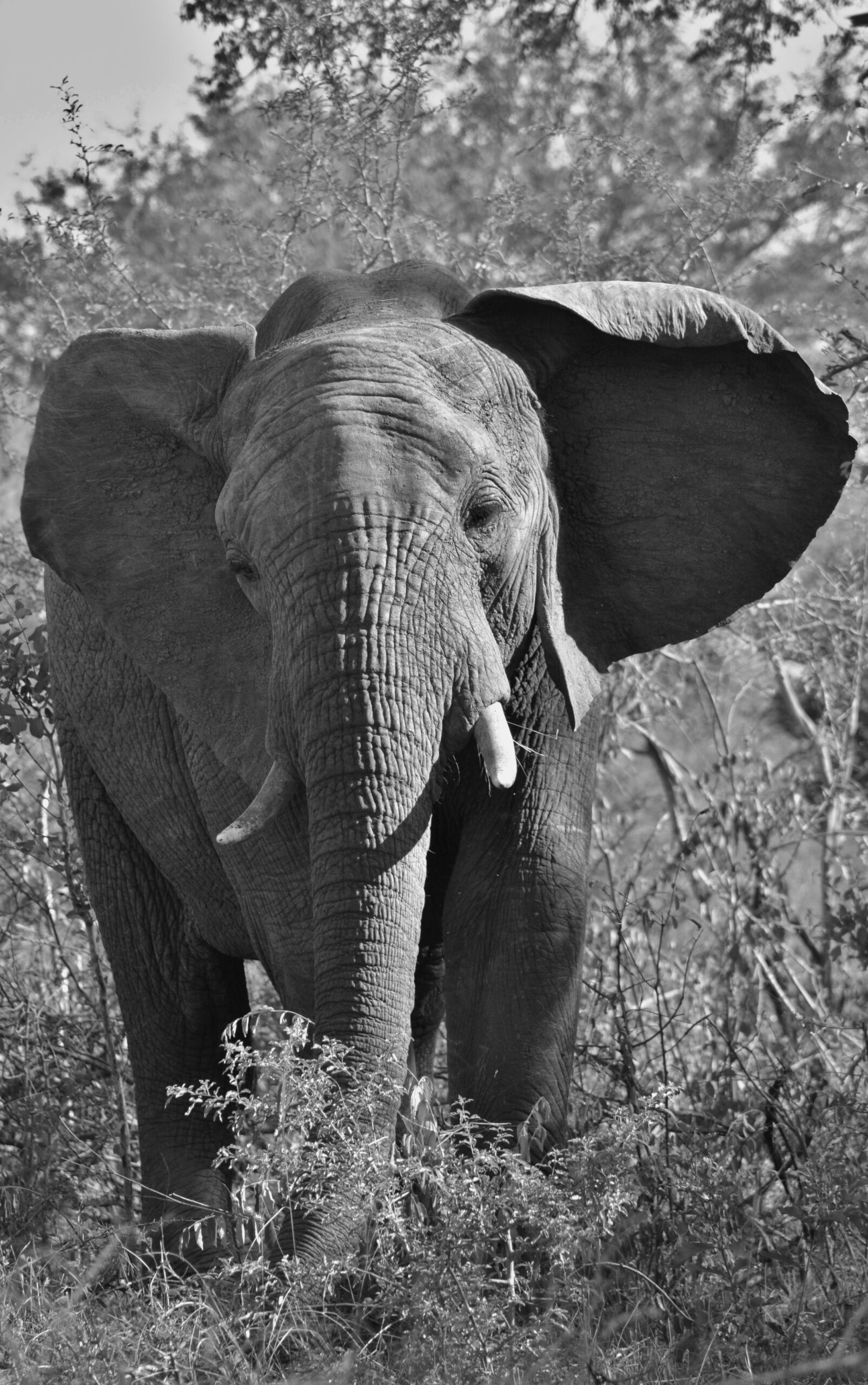
We will explain the characteristics, ecology, and habitat of forest elephants. The forest elephant was originally considered a subspecies of the African elephant, but it is increasingly being treated as a separate species. We are going to open this page to find out what characteristics the forest elephant has, so please use it as a reference.










- Basic information about forest elephants
- What are the roots and origins of the forest elephant?
- About the forest elephant habitat
- feature is? What kind of creature is it?
- What will your personality look like?
- What is the ecology of forest elephants?
- Forest Elephant Vocalizations
- Seasonal Activities
- Walking Speed
- About Forest Elephant Calves
- Is the forest elephant an endangered species?
- Can elephants be kept?
- Zoos Housing the Species (Japan & Worldwide)
- Introducing other animals
Basic information about forest elephants
The forest elephant is an elephant classified as a member of the Elephantidae family and the genus African Elephantidae. The scientific name is Loxodonta cyclotis. It is one of the largest land animals in the world, weighing up to 2-7 tons. It is a very large animal, with a body length of 4-6 meters. A famous animal both in Japan and around the world.
| Japanese(和名) | マルミミゾウ |
| English(英名) | African forest elephant |
| scientific name(学名) | Loxodonta cyclotis |
| classification(分類) | Mammalia、Proboscidea、Elephantidae、Loxodonta 哺乳綱、長鼻目、ゾウ科、アフリカゾウ属 |
| IUCN Status(保全状況) | ENDANGERED |
| Height(身長) | 4 – 6m |
| Weight(体重) | 2-7t |
What are the roots and origins of the forest elephant?
The forest elephant (scientific name: Loxodonta cyclotis) is a species of extant elephant native to Africa. While currently classified as a distinct type of African elephant, it was formerly considered a subspecies of the savanna elephant (Loxodonta africana). DNA analysis and skeletal studies have confirmed that the two are separate species.
From elephant ancestors to the forest elephant
The evolutionary trajectory of the forest elephant is roughly as follows:
Approximately 60 million years ago
↓
Early proboscideans (distant ancestors of elephants)
Originated in Africa
Small mammals that lived near water
↓
Approximately 7 to 5 million years ago
↓
Ancestors of the genus Loxodonta (African elephants) appeared
Diverged into the lineage of modern African elephants
↓
Approximately 5 to 2.5 million years ago
↓
A lineage adapted to forest environments diverged
Moved into tropical rainforests
Became smaller in size
Developed round ears
Developed straight, downward-pointing tusks
Evolved a body shape suited for navigating dense forests
↓
Modern forest elephant
The lineages of forest elephants and savanna elephants are believed to have diverged approximately 5 to 2.5 million years ago.
Why did they become smaller?
The reason forest elephants are smaller than savanna elephants is their adaptation to the tropical rainforest environment.
In the forest:
A large body makes it difficult to move between trees
Frequent, precise movements are required to forage for food
It is necessary to push through dense vegetation
Relationship with ancient elephants
Forest elephants are also related to extinct giant elephant species.
In particular,
Palaeoloxodon antiquus (an ancient elephant with straight tusks)
Mammoths (Mammuthus)
They are members of the order Proboscidea and share common ancestors with species such as these. However, the forest elephant did not evolve directly from the mammoth. Modern elephants are the surviving members of several proboscidean lineages that diverged in Africa.
Habitat and Evolutionary Environment
Current distribution:
West African rainforests
Congo Basin
Forest regions of Central Africa
Environments such as the Congo Basin—characterized by
high heat and humidity,
giant trees, and
dense vegetation—
drove the evolution of the forest elephant.
What will happen to the classification?
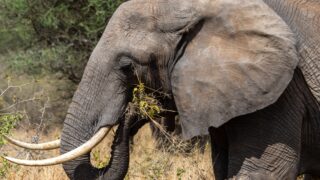
It has been revealed that the two existing elephant species, the African elephant and the Asian elephant, diverged genetically about 7.6 million years ago. It has since been revealed that African elephants and forest elephants diverged genetically at least 1.9 million years ago. Therefore, there are currently three types of elephants, and the African elephant is one of them.
| Name (名前) | academic name (学名) | body length (体長) | Weight (体重) | Habit (生息地) |
| African elephant アフリカゾウ | Loxodonta africana | 6〜7.5m | ~7.5t | South of the Sahara Desert サハラ砂漠以南 |
| Asian elephant アジアゾウ | Elephas maximus | 5〜6.4m | ~5.4t | Southeast Asia、South Asia 東南アジア、南アジア |
| African forest elephant マルミミゾウ | Loxodonta cyclotis | 4〜6m | 2.7〜6t | West Africa 西アフリカ |
分類学(Taxonomy)
| ランク | 分類 |
|---|---|
| 界 (Kingdom) | 動物界 (Animalia) |
| 門 (Phylum) | 脊索動物門 (Chordata) |
| 綱 (Class) | 哺乳綱 (Mammalia) |
| 目 (Order) | 長鼻目 (Proboscidea) |
| 科 (Family) | ゾウ科 (Elephantidae) |
| 属 (Genus) | アフリカゾウ属 (Loxodonta) |
| 種 (Species) | アフリカマルミミゾウ (Loxodonta africana) |
About the forest elephant habitat
Forest elephants are distributed in Angola, Ghana, Gabon, Cameroon, Guinea, Guinea-Bissau, Ivory Coast, Republic of Congo, Democratic Republic of Congo, Sierra Leone, Equatorial Guinea, Senegal, Central African Republic, Togo, Nigeria, Niger, South Sudan, and Liberia.
- Geographic Distribution
Distributed primarily across the African continent.
Mainly found in savanna zones (grasslands and dry forests).
Some species also live in tropical rainforests and wetlands.
They are commonly found in Botswana, Zimbabwe, Namibia, South Africa, Kenya, and Tanzania.
- Habitat
Savanna Zone: Areas containing a mixture of open grasslands and trees. They prefer to live near water sources.
Woodland Zone: In the tropical rainforests of West Africa, some populations live in dense forests.
Importance of Water Sources: Elephants require hundreds of liters of water per day, so they are often found near rivers, lakes, and swamps.
- Migration Patterns
Seasonal Migration (Migratory): Elephants move to areas near water sources during the dry season and to areas with abundant grass during the rainy season.
Large Territory: Each elephant can cover an area of tens to hundreds of square kilometers.
feature is? What kind of creature is it?
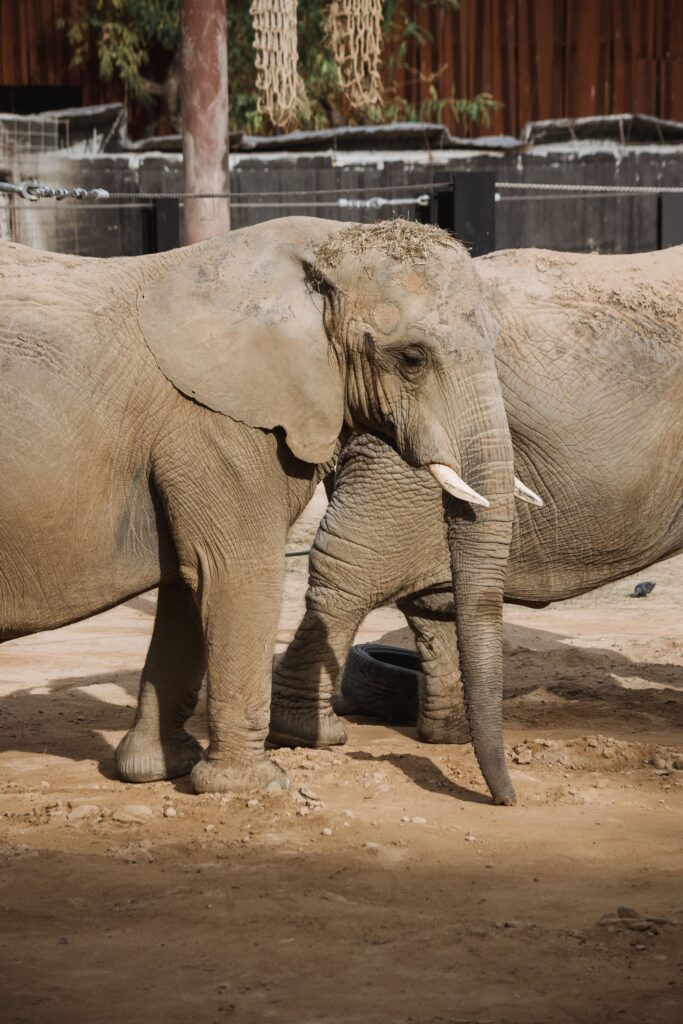
The most distinctive feature of the forest elephant is its auricle. The ear pinna is small and rounded, which is the difference between it and the African elephant. Forest elephants also differ from African elephants in that their incisors grow downwards. African elephants usually live in savannahs and forests, and range within an area of 3,700 square kilometers. They form herds of at least 3 – 10 individuals to protect themselves from predators.
- Physical Characteristics
Body Size: One of the largest elephants. Body length is 6-7.5m, shoulder height is about 3-4m, and weight is 4-6 tons.
Ears: As their name suggests, they are large and round. They help release heat and are important for regulating body temperature.
Truncus: Long and dexterous. Used for sucking water, grasping food, and communication.
Tusks: Both males and females have them. Primarily used for peeling bark and fighting.
Skin: Thick and wrinkled. Helps retain moisture and protects against injury.
- Ecology and Behavior
Diet: Herbivorous. Eats mainly grass, bark, fruit, and branches.
Eats approximately 150-300kg of plant matter per day.
Horde: Lives in female-dominated herds. Males tend to live alone or in small groups.
Sociality: Highly social. They live in a matriarchal society, with the most experienced female (matriarch) leading the pack.
Lifespan: Approximately 60-70 years in the wild.
Reproduction: Their gestation period is approximately 22 months, one of the longest of any mammal.
- Behavioral Characteristics
High Intelligence: They have excellent memories and the ability to use tools, and have been observed to mourn the death of companions.
Communication: They communicate over long distances using low-frequency calls (which are sometimes inaudible to humans).
Migration: They travel long distances in search of food and water. Their migration routes change depending on the season.
What will your personality look like?
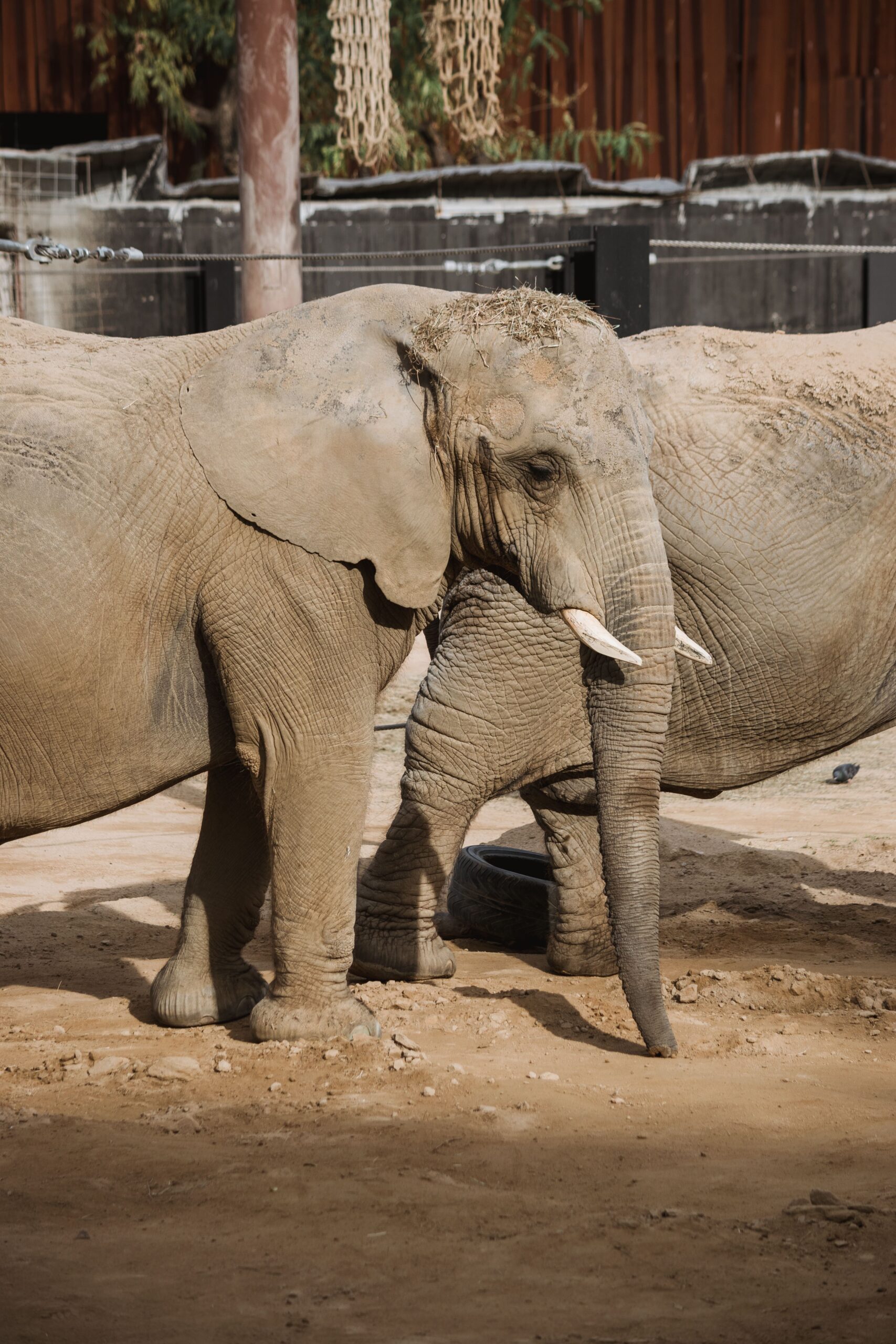
Forest elephants have extremely high cognitive abilities and will greet people who treat them kindly, and will attack people who treat them maliciously. Therefore, their cognitive abilities are extremely high, and can be said to be at a level that is not much different from humans.
- Sociality and Cooperation
Highly social, living in groups: Females and their offspring cooperate in raising their young.
Presence of a Leader (Matriarch): Experienced females lead the pack. The pack relies on her for decision-making and danger detection.
Caring: When a member is injured or dies, they may exhibit sad behavior (feeling for bones or surrounding others).
- Intelligence and Learning Ability
Highly Intelligent: They have excellent tool use and memory skills, and can remember the locations of water sources and food sources during the dry season for long periods of time.
Cautious and Observant: When they sense danger, they emit a low-frequency warning sound to the entire pack.
- Individual Personality Tendencies
Gentle and Gentle: Generally docile, but will be fiercely defensive when necessary.
Curious: Often interested in new objects and sounds.
Strong Maternal and Protective Instincts: They are extremely protective of their offspring and pack members.
- Aggression
Usually gentle, but defensive when threatened.
They are particularly aggressive when protecting their young, during male-male conflicts, and in defense against predators.
Lone males may also be aggressive toward rival males in territorial or reproductive battles.
What is the ecology of forest elephants?
Forest elephants drink 100 – 300 liters of water per day and eat large amounts of plants. The reproductive form is viviparous. Males compete over females that are in heat, and the gestation period is 22 months. They give birth to one cub at a time, and the lactation period is about two years. The lifespan is said to be 60 to 80 years.
- Diet
Herbivore: Eats mainly grass, bark, leaves, branches, and fruit.
Intake: Consume approximately 150-300 kg of plant matter per day.
Eating Method: Grabs branches with their trunks and sometimes peels bark off trees with their tusks.
- Water Use
Water Requirement: Drinks over 100-200 liters per day.
Water and Mud Bathing: Requires water to regulate body temperature, protect the skin, and remove parasites.
- Migration and Living Range
Large Territory: Travels long distances seasonally in search of food and water.
Seasonal Migration: Moves near water sources during the dry season and to areas with abundant grass during the rainy season.
Living Environment: Lives in a variety of environments, including savannas, forests, and wetlands.
- Sociality
Matrilineal: Lives in groups of females and their offspring.
Group Composition: Typical groups of 10-30 individuals.
Male Behavior: Mature males live alone or in small groups.
Communication:
Long-distance communication using low-frequency calls.
Communication through nose, ears, and physical contact.
- Reproduction
Gestation period: Approximately 22 months (one of the longest among mammals).
Birth: Usually one offspring, occasionally twins.
Rearing: The entire group, not just the mother, protects the young.
- Intelligence and Behavior
High intelligence: Excellent tool use, memory, and problem-solving skills.
Social learning: Experienced females teach young survival skills.
Emotional expression: Mourning behavior has sometimes been observed following the death of a mate.
- Natural Predators/Dangers
Adults have few natural predators.
Cub predators: Lions and crocodiles pose a risk.
Human Impact: Poaching and habitat destruction due to land development are the biggest threats.
What are the forest elephant’s natural enemies?
Forest elephants have no natural enemies. African elephants are very strong animals and can lift up to 350 kilograms. Therefore, only people with weapons can defeat them.
Forest Elephant Vocalizations
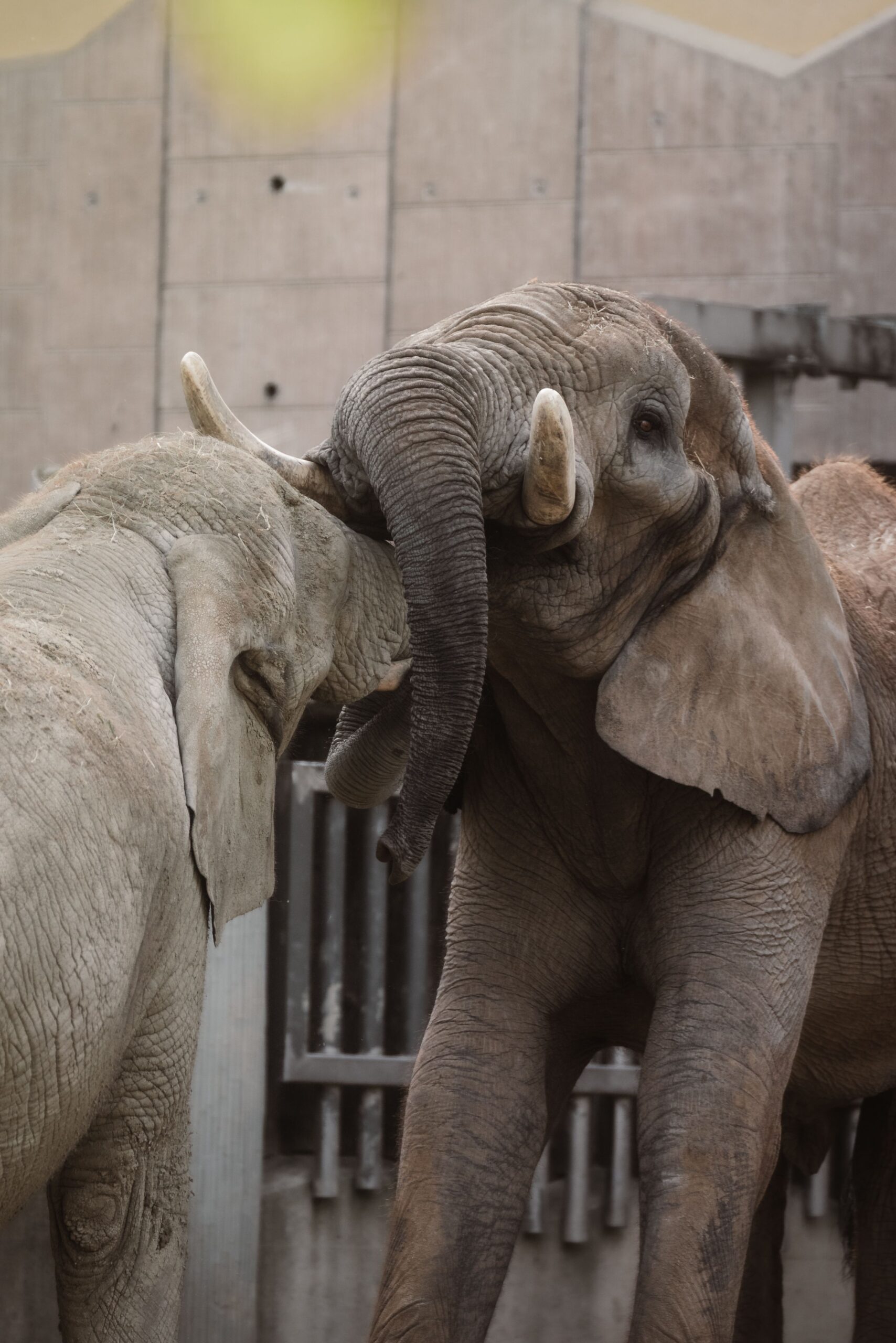
Like savanna elephants, forest elephants engage in highly sophisticated vocal communication. A particularly distinctive feature is their use of low-frequency sounds (infrasound), which are difficult for humans to hear.
① Rumble (Low-pitched growl/low-frequency sound)
“Rumble… hum…”
The most important form of communication
Reaches other elephants several kilometers away
Used to determine the herd’s location
Used for communication between mother and calf
Because visibility is poor in the rainforest, sound-based communication is crucial.
② Trumpet (Sound made with the trunk)
“Pa-oooh!”
Situations:
When startled
When on alert
To warn others of danger
When excited
Occurs less frequently than with savanna elephants; low-frequency sounds are more effective in dense forests.
③ Growl/Snarl
“Grrr…”
Situations:
Signaling to others
Intimidation/Threats
Expressing intent during the breeding season
④ Calf vocalizations
“Peep-peep,” “Squeak”
Calves make high-pitched sounds to:
Call their mothers
Express anxiety
Ask to nurse
Seasonal Activities
Since forest elephants inhabit the tropical rainforests of Central Africa, they do not experience the distinct four seasons (spring, summer, autumn, and winter) found in Japan.
Instead, their activity patterns shift primarily between the rainy season and the dry season.
🌧 Rainy Season (Approx. March–May & September–November)
Activity Level: ★★★★★ (Highly active)
Key Behaviors
Roaming widely through the forest
Consuming large quantities of fresh vegetation
Moving freely beyond just the immediate vicinity of water sources
Increased reproductive activity
Diet
Tree leaves
Young branches
Fruit
Tree bark
Grasses
The rainy season offers abundant vegetation, making it the most comfortable time of year for forest elephants.
Characteristic Behavior
Long-distance travel in search of fruit
Forest elephants are vital consumers of forest fruits; they play the role of “forest gardeners” by dispersing seeds over long distances.
☀️ Dry Season (Approx. December–February & June–August)
Activity Level: ★★★★☆
Key Behaviors
Moving primarily around water sources
Traveling over wide areas in search of food
Gathering near groundwater sources and rivers
As moisture levels in the forest drop, they increasingly utilize:
Rivers
Wetlands
Swamps
Walking Speed
Like other elephants, the forest elephant is capable of a range of speeds, from slow movement to high-speed dashes over short distances.
Approximate Speeds by Activity
Normal walking: ~2–5 km/h
Moving while foraging: ~1–3 km/h
Moving as a herd: ~3–6 km/h
When in a hurry: ~10–15 km/h
When charging (short distance): Up to ~25 km/h
① Moving slowly and cautiously
In the forest, there are many obstacles such as:
Tree roots
Wet ground
Dense vegetation
Swamps
Consequently, they prioritize safe movement over speed.
② High capacity for long-distance travel
They take advantage of their smaller bodies to roam widely through the forest.
They may travel anywhere from a few kilometers to over 10 kilometers in a single day,
searching for fruit
seeking water sources
maintaining the herd
as they patrol the forest.
🐘 Can they run?
Generally, elephants do not “run” in the traditional sense; instead, they engage in a form of high-speed walking where at least one foot remains in contact with the ground at all times.
However, forest elephants can move very quickly over short distances when:
sensing danger
alert to humans or predators
facing a sudden approach
About Forest Elephant Calves
- Birth and Size
Gestation Period: Approximately 22 months (one of the longest among mammals).
Birth Weight: Approximately 90-120 kg.
Body Length: Approximately 1 meter.
Appearance: Round, with small ears and nose, and slightly unsteady when first starting to walk.
- Rearing and Protection
Matriarchal Protection: The mother protects the calf nearly 24 hours a day.
Whole-group Rearing: Other females in the matriarchal group also care for the calf (all-oping).
Protection from Danger: Calves are vulnerable to predators such as lions and hyenas, and the group acts as a shield.
- Developmental Process
Lactation Period: Approximately 2-3 years. Initially, calves are primarily breastfed, but gradually begin to eat plants as well.
Walking and Play: Calves stand and begin learning to walk immediately after birth.
The Importance of Play: By playing with other calves in the group, they learn social skills and strategic behavior.
Learning: They learn how to select food and detect danger from their mother and other adults in the pack.
- Intelligence and Sociality
Young animals are highly curious and observant.
They learn to communicate within the pack, mastering communication through low-frequency calls and nose movements.
As they age, they gradually understand their role within the pack.
- Maturity
Males: Leave the pack at around 12-15 years of age to live alone or in small groups.
Females: Remain in the matriarchal pack and learn how to raise future offspring.
Is the forest elephant an endangered species?
The estimated population of forest elephants is 70,000. Unfortunately, it has been designated as an endangered species by the IUCN and is also listed in Appendix I of the Washington Convention, which places strong restrictions on international trade. Why have African elephants been designated as an endangered species? Let me explain why. It turns out that the problem is caused by us humans. For this reason, various projects and activities such as forest protection are currently underway.
Overhunting for ivory continues
Ivory is the reason why wild elephants have been overhunted in large numbers by humans. Ivory is a beautiful material and is highly sought after in the arts, crafts, and manufacturing industries, and sells for a high price. In some regions, illegal poaching and overhunting of living creatures has progressed in society without laws, and elephants are being killed one after another by humans.
Rapid progress in land development
Southeast Asia, South Asia, and Africa are all experiencing rapid economic development and land development. As I explained above, elephants eat large amounts of grass, so if there are no trees left in any place, it means that they will no longer be able to reproduce and survive.
Elephant Day is set
“World Elephant Day” was established on August 12, 2012 by Canadian film director Patricia Sims and a Thai conservation organization to call for the protection of elephants around the world. The purpose is to overcome the threat of extinction by collecting donations and exchanging information from friends to protect the species. We are currently asking for help to protect the declining population of elephants.
Can elephants be kept?
Can elephants be kept? It’s very difficult. First of all, all elephants are endangered species and are strictly protected. It is also wise to keep in mind that it is extremely difficult for the average person to raise them as they require a large amount of food. It is best to see them at a zoo or at a local national park.
- Legal Restrictions
In many countries, including Japan, elephants are classified as designated animals and endangered species, requiring strict permits and facility standards for individuals to keep them as pets.
Smuggling and illegal keeping are subject to severe penalties.
Keeping elephants is permitted only in specialized facilities such as zoos and safari parks.
- Physical Constraints
Large Body Size: Safely housing an elephant weighing 4-6 tons and measuring 6-7 meters requires a very large space.
Exercise Demands: Elephants have the habit of traveling several kilometers to several tens of kilometers per day, making cramped spaces unhealthy.
Diet: Elephants eat 150-300 kg of plants per day and require large amounts of water.
- Behavioral and Intelligence Issues
Highly Social: As a group-living animal, isolation can cause severe stress, leading to aggression and health problems.
Curious and Intelligent: Boredom or lack of stimulation can lead to harm to facilities and people.
Longevity: They can live for 60-70 years in the wild, requiring lifelong care.
- Conclusion
Private captivity is nearly impossible.
In reality, they can only be kept in zoos, safari parks, and conservation facilities.
Keeping them requires large facilities, specialized staff, and adequate food, medical care, and social care.
Zoos Housing the Species (Japan & Worldwide)
Due to declining wild populations and the difficulty of breeding them in captivity, the African forest elephant (often referred to in Japan as the “round-eared elephant”) is rarely kept in zoos worldwide. They are an exceptionally rare sight, particularly in Japan.
🇯🇵 Zoos in Japan
🐘 Hiroshima City Asa Zoological Park
This is the primary facility in Japan where African forest elephants can currently be seen.
Individual elephants in care:
Female: “Mei”
Male: “Dai”
Key features:
Engaged in breeding efforts—a rarity within the country
Conducting conservation research on the species
A rare facility with a track record of successful breeding in Japan
🌍 Facilities Worldwide
African forest elephants are not as common as African savanna elephants; examples of their exhibition even in major Western zoos are extremely limited.
Major examples of care and conservation research:
🇺🇸 Conservation research facilities near San Diego Zoo
Conducting conservation research on African elephants
Involved in conservation activities for African elephants, including forest elephants
🇨🇲 Conservation facilities in Central Africa
Regarding the conservation of African forest elephants,
there are facilities in forest regions such as
the Congo Basin,
Cameroon, and
Gabon
dedicated to:
supporting reintroduction into the wild,
caring for orphaned individuals, and
anti-poaching measures.
Introducing other animals


コメント