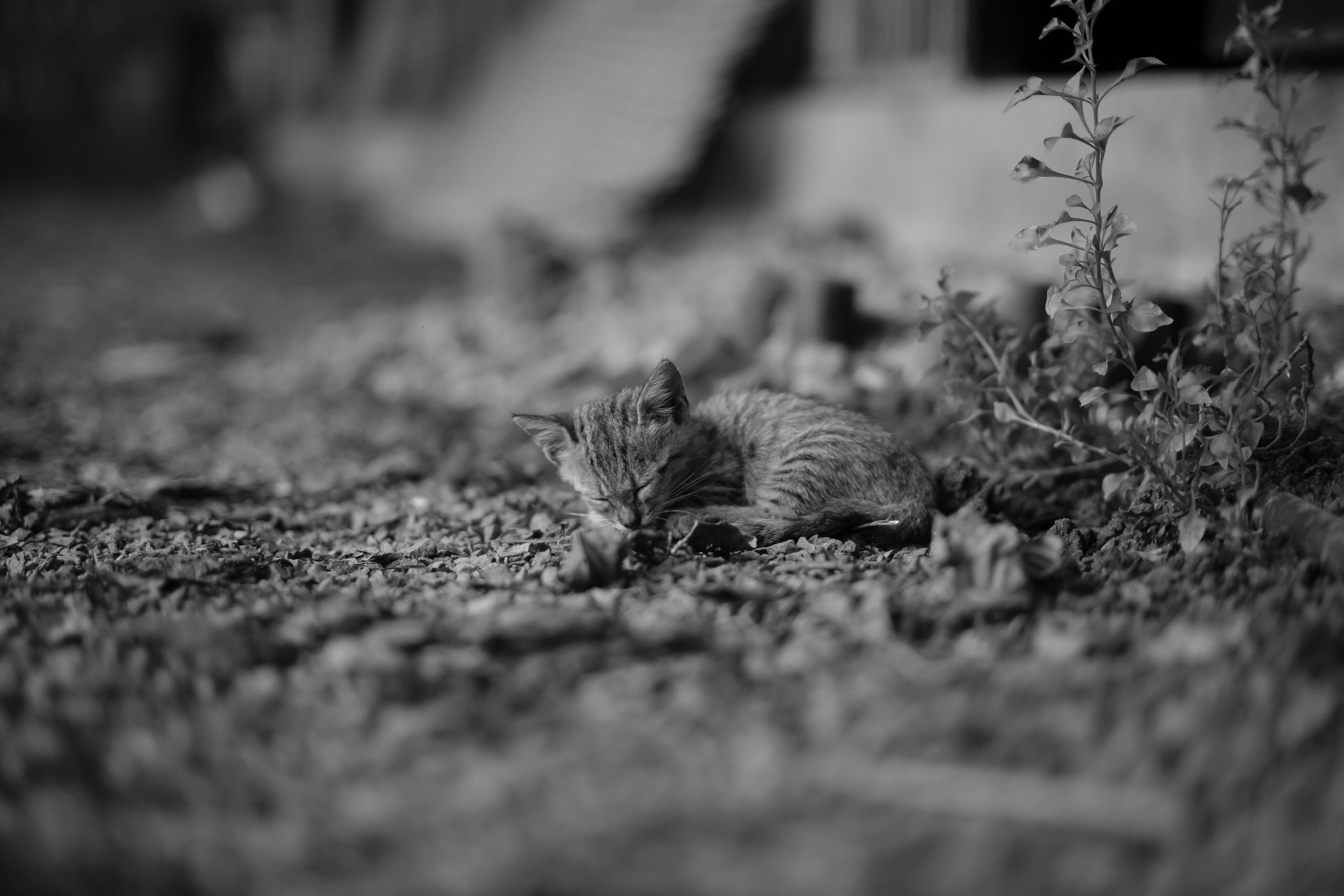
Are black-footed cats scary? We will explain its characteristics, ecology, and habitat. A wild cat that lives in Africa, it is said to be the smallest cat in the world and is very popular, but is it possible to keep it in captivity? Please refer to the article that summarizes what actually happens.









- What is a black-footed cat? About basic status
- What are the roots and origins of the black-footed cat?
- About the habitat of the black-footed cat
- feature is? What kind of creature is it?
- What is your personality like?
- What is the ecology of the black-footed cat?
- Black-footed Cat Vocalizations
- Seasonal Activity
- Walking Characteristics
- About Black-Footed Cat Pups
- Is the black-footed cat an endangered species?
- Can black-footed cats be kept?
- Zoos Housing the Species (Japan & Worldwide)
- Introducing other animals
What is a black-footed cat? About basic status
The black-footed cat is a carnivorous animal classified in the Carnivora order, Felidae family, Felidae genus. The scientific name is Felis nigripes, and the kanji is black-footed cat. The body length is 43-52cm and the weight is 1.75-2.45kg. It is one of the smallest cats in the world, and gets its name from the black soles of its feet.
| Japanese(和名) | クロアシネコ |
| English(英名) | Black-footed cat/Small-spotted cat |
| scientific name(学名) | Felis nigripes |
| classification(分類) | Mammalia、 Carnivora、Felidae、Felis 哺乳綱、食肉目、ネコ科、ネコ属 |
| IUCN Status(保全状況) | VULNERABLE |
| Length(体長) | 43 – 52cm |
| Weight(体重) | 1.75 – 2.45kg |
What are the roots and origins of the black-footed cat?
The black-footed cat (scientific name: Felis nigripes) is a small wild cat found only in southern Africa; it is a species that has evolved over millions of years to adapt to arid environments.
Roots and Origins
Origins: Asian Feline Ancestors
Modern felids (members of the cat family) are believed to have undergone significant diversification in Asia approximately 10 to 11 million years ago (during the Miocene epoch).
The ancestor of the black-footed cat was part of this lineage and later expanded into Africa.
Divergence from Close Relatives (Approx. 2.5–4 Million Years Ago)
Genetic analysis indicates that the black-footed cat belongs to a lineage that diverged early within the genus Felis—the same genus that includes domestic cats and the African wildcat—following the initial divergence of the jungle cat.
The black-footed cat underwent its own unique evolution while retaining characteristics of an ancient lineage.
Settling in Southern Africa
It is believed that the species migrated to Africa—likely due to factors such as falling sea levels during the Pleistocene epoch (starting around 2.6 million years ago)—and adapted to the arid grasslands and semi-deserts of the region encompassing present-day Namibia, Botswana, and South Africa.
Origin of the Name
The name “black-footed cat” derives from the fact that the soles of its feet are covered in black fur.
These black soles are considered adaptations for life in arid environments, serving to:
Protect the feet from hot sand
Allow for silent movement across soft sand
Provide traction (prevent slipping) while hunting
Close Relatives
The black-footed cat is closely related to the following cats:
African wildcat (ancestor of the domestic cat)
Domestic cat
Jungle cat
Sand cat
However, the black-footed cat is a rare species that diverged from these relatives at an early stage and continued to evolve independently, specializing in the arid environments of southern Africa.
About classification
The black-footed cat is a member of the genus Felidae, but this species is composed of two further subspecies.
| Academic Name (学名) | Habit (生息地) |
| Felis nigripes nigripes Burchell | Namibia, Botswana、South Africa ナミビア、ボツワナ、南アフリカ |
| Felis nigripes thomasi Shortridge | South Africa 南アフリカ |
Felis nigripes nigripes Burchell
This species lives in Namibia, Botswana, and other countries, and its coat is light, yellowish-brown or grayish-white, with brownish-black spots.
Felis nigripes thomasi Shortridge
This species lives in central and southern South Africa and has a tan coat with jet black markings.
About the habitat of the black-footed cat
Black-footed cats live in South Africa, Botswana, Namibia, and even Zimbabwe, and some can even be found in Angola.
- Geographic Distribution
Found primarily in South Africa, Namibia, Botswana, and northern Zimbabwe.
Its distribution is primarily in arid and semi-desert regions.
- Habitat
Prefers dry grasslands, savannas, and semi-deserts.
They can hide in environments with few trees and scattered low grasses and bushes.
They use burrows and crevices between rocks as hiding places and sleeping areas.
- Behavior and Living Area
They are nocturnal and solitary, resting in burrows or in the shade of rocks during the day.
They hunt at night, and their activity ranges can extend to several square kilometers depending on the individual.
They adjust their range depending on predation pressure and food availability.
- Food Source
They prey on small mammals, birds, reptiles, and insects.
They often ambush prey in the grasslands and bushes of their habitat.
feature is? What kind of creature is it?
Black-footed cats have brown coats, which fade to gray in winter. The inside of the limb is white with dark brown or black spots. The soles of their feet are covered with hair and are adapted to walking on hot sand. The black-footed cat’s territory is the savannah area of the Kalahari Desert, and like the domestic cat, it prefers to be solitary and is nocturnal and active at night. During the day, they hide in burrows or behind rocks and shrubs.
- Physical Characteristics
Body length: Approximately 36-52 cm, tail length: Approximately 16-22 cm, weight: Approximately 1-2 kg. They are very small.
Coat color: Yellowish brown to light brown, with dark spots and stripes on their backs.
Feet: As their name suggests, the soles of their feet are black, adapted for quiet walking in deserts and grasslands.
Face: They have a round face, small ears, and large eyes, giving them excellent nighttime vision.
- Behavior and Lifestyle
Nocturnal and solitary, they rest in burrows, bushes, and the shade of rocks during the day.
They are highly agile and patient hunters, preying on small mammals, birds, reptiles, and insects.
They catch prey by ambush hunting and short-distance sprints.
- Ecological Characteristics
Due to their small size and cautious nature, they are rarely seen by humans or other predators.
They have adapted to their arid habitats, using burrows and bushes as shelters.
They obtain moisture primarily from food and can survive in arid environments.
- Personality/Impression
They are very cautious and patient hunters.
They are solitary creatures, making them difficult to observe, but despite their small size, they possess extremely ferocious hunting abilities.
What is your personality like?
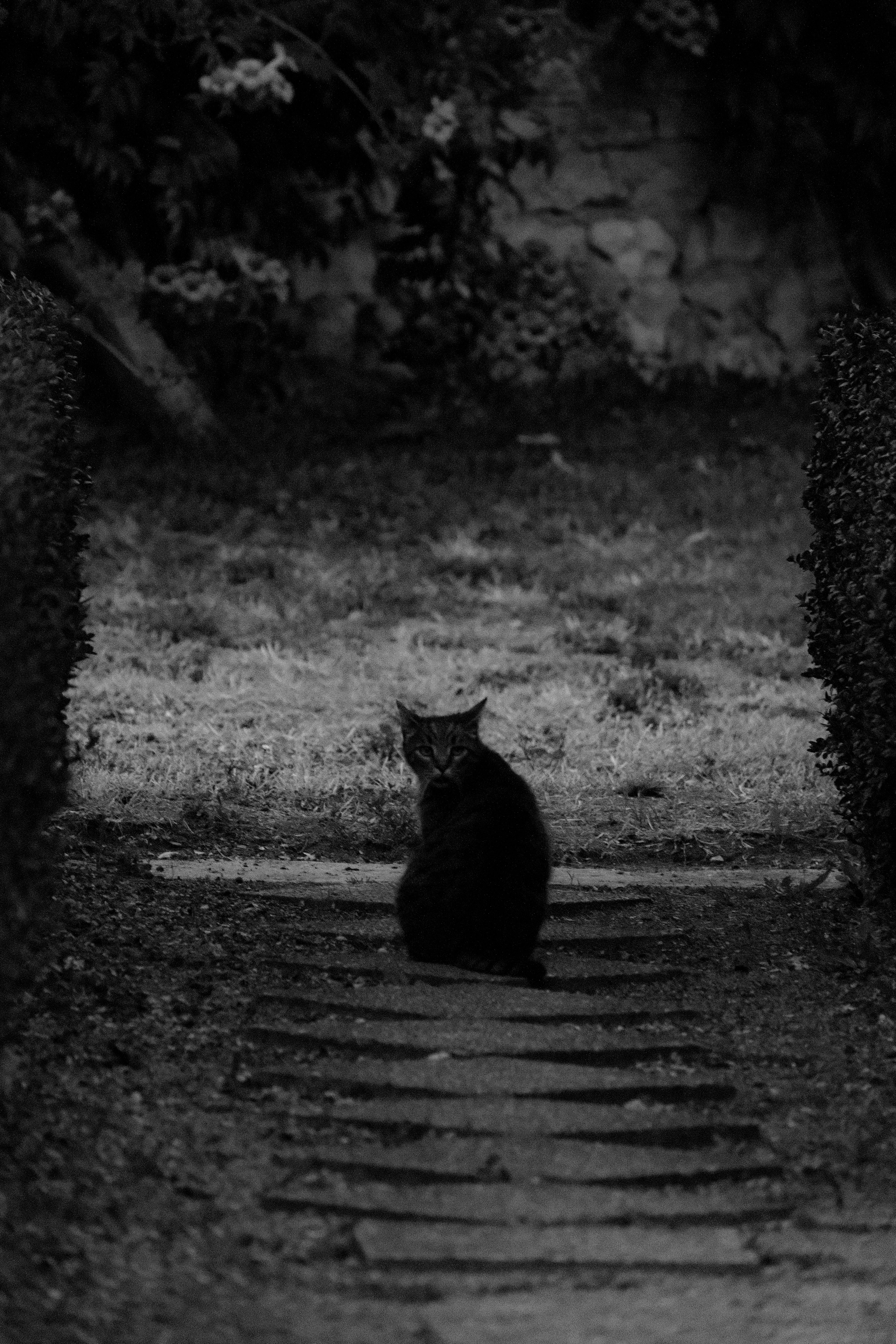
Black-footed cats have fearsome personalities. They have a very ferocious personality and may attack animals even larger than themselves. They are also very wary of humans and tend to run away quickly, making them unsuitable as pets.
- Cautious and Timid
Very cautious and timid.
They immediately hide when encountering humans or large animals.
They are solitary in the wild, so they are sensitive to danger and cautious.
- Independent
They prefer to act alone. They do not form groups, and tend to have territories.
They hunt and rest within their territories, only interacting with other individuals during breeding season.
- Patient and Focused on Hunting
They primarily hunt by ambush, and are patient enough to wait patiently for prey.
They capture prey with quick, short dashes, demonstrating their agility and concentration.
- Unsociable
They are generally solitary, rarely interacting with others.
They rarely interact with others outside of breeding season.
What is the ecology of the black-footed cat?
Black-footed cats live on small animals such as mice, small birds, reptiles, and insects. Breeding takes place from November to December. The gestation period is about two months, and one litter can give birth to two puppies. After about a year, the young will become territorial. Their lifespan is around 10 years in the wild, but it is said to be over 15 years in captivity.
- Habitat
Live in dry grasslands, savannas, and semi-desert areas.
Rest during the day in burrows, bushes, or rock shelters, and become active at night.
Getting moisture primarily from prey, they are able to survive in arid environments.
- Diet
Carnivorous, they prey on small mammals, birds, reptiles, and insects.
They capture prey by ambush or sprinting short distances.
They are highly agile and have excellent hunting abilities, and are adapted to survive on small amounts of food.
- Behavior
They are primarily nocturnal and solitary. They rest during the day and hunt at night.
Their ranges vary from individual to individual, ranging from a few square kilometers.
If they sense danger, they quickly hide in burrows or bushes.
- Breeding
Breeding season is from spring to autumn.
They breed in burrows and give birth to litters of 2-4 kittens at a time.
The mother nurses her kittens while guarding them in the den.
- Sociality and Defense
They do not live in groups; they are solitary and have territories.
Because of their small size, their ability to hide and their agility are important ways for them to protect themselves from predators.
What are the natural enemies of the black-footed cat?
The black-footed cat’s natural enemies are most carnivores. Because this cat itself is so small, it can be preyed upon by all large animals.
Black-footed Cat Vocalizations
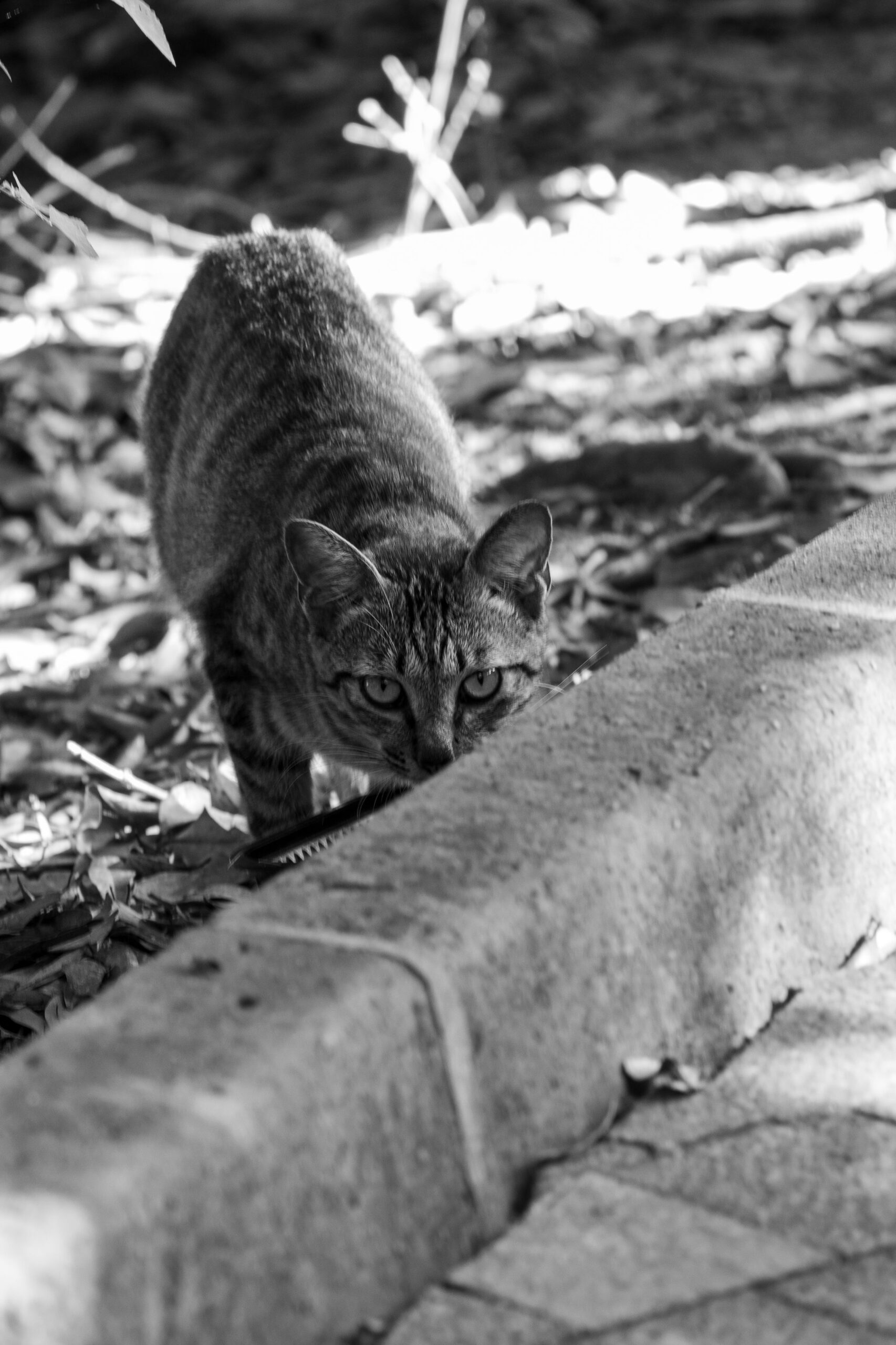
The black-footed cat (Felis nigripes) is a small feline, measuring about 35–50 cm in body length, yet it is known for producing a surprisingly loud and powerful voice relative to its size. As nocturnal, solitary animals, they primarily use vocalizations to assert their territory and communicate during the breeding season.
- Meow
A “meow” sound very similar to that of a domestic cat.
Used for communication between mother and offspring or during close-range interactions.
- Purr
They purr when feeling satisfied or at ease.
In captivity, this sound may be heard from individuals that have established a trusting relationship with their keepers.
- Hiss
A typical vocalization used for intimidation.
They flatten their ears and arch their backs while forcefully exhaling.
- Growl
A low growl directed at enemies or rivals.
This sound may also be heard when they are guarding their prey.
- Loud territorial call
During the breeding season or when asserting territory, they emit a loud, hoarse call—a sound one would not expect from such a small animal.
The call can reportedly carry for hundreds of meters, serving to signal their presence to others across vast grasslands.
Seasonal Activity
The black-footed cat’s activity patterns align with the seasons of the Southern Hemisphere (specifically southern Africa). While primarily nocturnal year-round, their activity times and behaviors shift in response to temperature and prey movement.
Spring (September–November)
Peak breeding season.
Territorial disputes between males increase.
After mating, females undergo a gestation period of approximately two months before preparing to give birth.
Summer (December–February)
Daytime temperatures can approach 40°C, so they rest in burrows.
Nights are relatively cooler, allowing them to actively hunt for mice, small birds, and insects.
The rainy season brings an increase in insects and small prey, resulting in abundant food resources.
Autumn (March–May)
As the heat subsides, conditions become more favorable for extended hunting sessions.
Offspring born in spring or summer mature, and an increasing number of individuals leave their parents to become independent.
Winter (June–August)
In some regions, nighttime temperatures drop close to freezing, but the cats withstand the cold thanks to their thick fur.
They continue hunting—primarily small mammals—and may travel anywhere from several kilometers to over ten kilometers in a single night.
Year-Round Characteristics
🌙 Strictly nocturnal
🏜️ Rests in burrows or termite mounds during the day
🐭 Hunts every night
🐾 Solitary lifestyle (except during breeding and rearing periods)
📍 Patrols territory and marks it with urine and scent
Adapted to arid savanna and semi-desert environments, the black-footed cat’s activity is influenced more strongly by temperature, rainfall, and prey availability than by the traditional “four seasons.”
Walking Speed
There is very little precise data on the walking speed of the black-footed cat (Felis nigripes) in the wild. However, based on behavioral studies and comparisons with closely related species, their approximate speeds are estimated as follows:
Estimated speeds: Slow walk (approx. 2–4 km/h); stalking prey (approx. 1–2 km/h); normal movement (approx. 4–6 km/h); short-distance dash (approx. 30–40 km/h).
Walking Characteristics
Silent movement with almost no sound
Keeps the body low to approach prey undetected
Skilled at “stealthy walking,” moving forward cautiously step by step
Black paw pads aid in walking on sandy terrain and help protect the feet from hot ground
Distance Traveled Overnight
Despite their small size, black-footed cats are highly active.
Females: Approx. 5–10 km
Males: Approx. 10–20 km
They may travel these distances in a single night, roaming over a wide area in search of prey.
Hunting Movements
Black-footed cats employ different hunting methods depending on the situation:
Stalking: Approaching slowly and then pouncing suddenly
Ambush: Waiting motionless near a burrow
Exploratory: Continuously searching for small animals while walking
Thanks to these hunting styles and their intense focus, black-footed cats are known as one of the most successful hunters among all feline species.
About Black-Footed Cat Pups
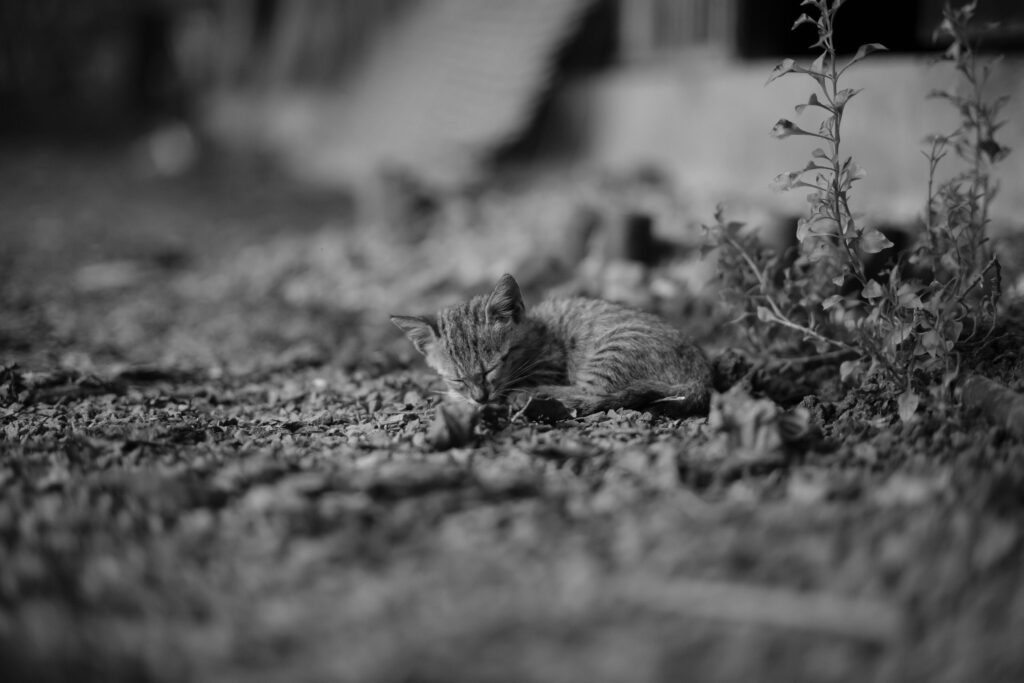
This section summarizes the development of black-footed cat (Felis nigripes) pups. Although they are small, nocturnal wild cats, their kitten development is quite unique.
- Birth
Mothers give birth in safe places such as burrows, bushes, or the shade of rocks.
They give birth to 2-4 kittens at a time.
Newborn kittens have closed eyes and short, soft fur. They weigh approximately 60-100g.
- Growth
Kittens are completely dependent on their mothers and are breastfed.
At approximately 2 weeks of age, they open their eyes and begin walking and simple play.
Weaning begins at 4-6 weeks of age, when they gradually begin to eat solid food (small mammals and insects).
- Behavior
Initially, they find safety in their burrows and learn hunting skills while playing under the mother’s protection.
Pups practice hunting through play, but do not begin fully hunting until around 2-3 months of age.
- Independence
At 3-4 months of age, pups leave their mothers and become independent, territorial individuals.
During this time, they master hunting and hiding techniques, developing survival skills.
Is the black-footed cat an endangered species?
The black-footed cat is listed as an endangered species. It is also listed in Appendix I of the Washington Convention, and its international trade is severely restricted. It is protected in most of its range, including Botswana and South Africa. Their population is decreasing due to the following reasons:
habitat destruction
Habitat destruction is progressing, especially in South Africa, and as land development progresses, the cat’s habitat is being shrunk and fragmented. This reduces the number of places they can hide and increases their chances of being preyed upon.
Decline in the population of black-legged rabbits
Black-footed cats are carnivores, so they cannot survive without preying on animals. The decline in the population of the black-legged rabbit, which is their favorite food, is having a big impact. Survival is difficult because food in this area is dwindling.
Can black-footed cats be kept?
Black-footed cats are an endangered species, and international trade is strictly restricted, making it extremely difficult for the average person to keep them. Furthermore, black-footed cats have a very ferocious personality, so they don’t easily get attached to humans, so be careful if you really want to keep them.
- Legal Restrictions
Black-footed cats are endemic to South Africa and are protected by wildlife conservation law, meaning that capture, import, and export of individuals are strictly regulated.
Private captivity is generally prohibited in Japan and other countries; only zoos and research institutions may keep them with special permission.
- Ecological Reasons
Nocturnal, solitary, highly cautious, and susceptible to stress.
Crowded environments limit their freedom of movement, which can adversely affect their health and mental health.
Their diet consists of small mammals, birds, reptiles, and insects, and it is difficult to perfectly replicate their nutritional balance with artificial diets.
- Housing Requirements
Sufficient space is required for free movement at night.
An environment that recreates hideouts and burrows and ensures psychological safety is essential.
Techniques to stimulate their hunting instincts (such as simulated capture of prey) are necessary.
Arid climates and temperature control are also important.
- Difficulties in Health Management
As wild animals, they are prone to illness and stress-related health problems.
Without proper feeding and environmental management, their health is likely to deteriorate in a short period of time.
Conclusion
Private captivity is not practical from a legal, ecological, or environmental perspective.
To better observe and understand them, visiting a zoo or nature reserve is the most practical option.
Zoos Housing the Species (Japan & Worldwide)
The black-footed cat (Felis nigripes) is an extremely rare small felid, and only a limited number of zoos worldwide keep them in captivity.
Zoos in Japan
Currently, there are no confirmed zoos in Japan that house or exhibit black-footed cats.
They are not listed in the Japanese Association of Zoos and Aquariums (JAZA) database of captive animals, and the species is not currently on public display in the country.
Major Zoos Worldwide
North America
Cincinnati Zoo & Botanical Garden
Boasts an extensive track record of breeding black-footed cats and is actively involved in conservation efforts.
San Antonio Zoo
Participates in the North American breeding program.
The Living Desert Zoo and Gardens
Renowned for the breeding and research of black-footed cats, with rare instances of successful breeding.
Kansas City Zoo & Aquarium
Prospect Park Zoo
Europe
Port Lympne Wild Animal Park
Known for its conservation-focused exhibits featuring rare felids.
Introducing other animals



コメント