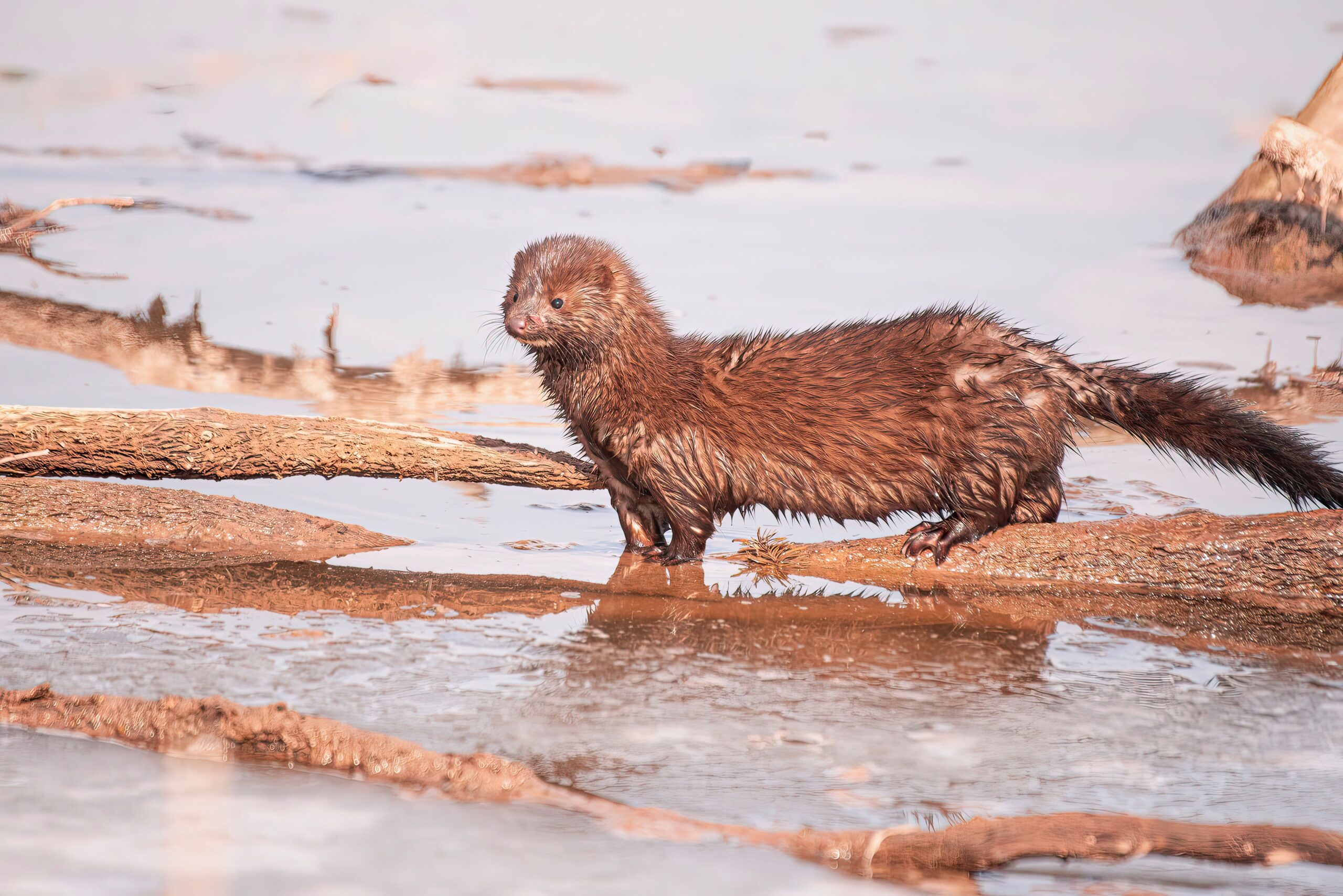
We will explain the characteristics, ecology, and habitat of the European mink (Mustela lutreola). The European mink used to be widespread throughout Europe, but their numbers have decreased considerably and the situation is critical. They are listed as an endangered species because their numbers have become so small.








- What is European mink? About basic status
- What are the roots and origins of the European mink?
- About habitat
- feature is? What kind of creature is it?
- What is the ecology like?
- European Mink Vocalizations
- Seasonal Activities
- Locomotion Speed
- About European Mink Cubs
- Is the European mink an endangered species?
- Can European mink be bred?
- Zoos Housing the Species (Japan & Worldwide)
- Introducing other animals
What is European mink? About basic status
The European mink is a carnivorous animal classified in the order Mammalia, order Felidae (order Carnivora), suborder Canis, family Mustelidae, genus Mustela. Body length is 28-43cm. The weight is 0.5-0.8 kg and the tail length is 12-19 cm. The scientific name is Mustela lutreola.
| Japanese(和名) | ヨーロッパミンク |
| English(英名) | European mink |
| scientific name(学名) | Mustela lutreola |
| classification(分類) | Mammalia、 Carnivora、Mustelidae、Mustela 哺乳綱、食肉目、イヌ亜目、イタチ属 |
| IUCN Status(保全状況) | CRITICALLY ENDANGERED |
| Length(体長) | 28-43cm |
| Weight(体重) | 0.5-0.8kg |
What are the roots and origins of the European mink?
The roots of the European mink (Mustela lutreola) trace back to members of the Mustelidae family (weasels and their relatives) that evolved on the Eurasian continent millions of years ago.
Although currently an endangered species, they were once widely distributed across regions ranging from Europe to West Asia.
Taxonomic Classification
The European mink belongs to:
Order: Carnivora
Family: Mustelidae
Genus: Mustela
Its evolutionary lineage is as follows:
Ancient carnivores (approx. 50 million years ago)
↓
Ancestors of the Mustelidae family (approx. 20–30 million years ago)
↓
Divergence of the genus Mustela
↓
Ancestors of mink species
↓
European mink (Mustela lutreola)
The Emergence of Minks
“Minks” are not members of the marten genus (Martes); rather, they are semi-aquatic weasels closely related to the genus Mustela.
Their weasel-like ancestors were forest-dwelling predators characterized by:
Small size
Elongated bodies
Short legs
Agile movements
From this group, some members expanded into:
Riverbanks
Lakes
Wetlands
…and developed the ability to hunt underwater.
Evolution for a Semi-Aquatic Lifestyle
The European mink’s most distinctive feature is its adaptation to a semi-aquatic lifestyle.
Through evolution, it acquired specific physical traits:
Dense, waterproof fur
A long torso
A body shape optimized for underwater movement
Slight webbing between the toes
These adaptations enabled it to prey on:
Fish
Frogs
Crayfish
Waterfowl
Small mammals
When Did the European Mink Emerge?
Based on fossil records and genetic studies, the lineage leading to the modern European mink is believed to have formed:
Between approximately 1 million and several million years ago (during the Early to Middle Pleistocene epoch). Amidst the environmental changes of the Eurasian continent—characterized by alternating glacial and interglacial periods—
they adapted to and survived in
rivers,
wetlands, and
forest fringes.
About classification
The European mink family is said to be a branch of the American mink. There are also variants such as:
- Mustela lutreola lutreola
- Mustela lutreola biedermani
- Mustela lutreola torovi
Scientific name and classification
- 学名:Mustela lutreola
- 科:イタチ科(Mustelidae)
- 属:イタチ属(Mustela)
- 種:ヨーロッパミンク (Mustela lutreola)
About habitat
The European mink lives in Ukraine, Spain, France, and Romania. It used to be distributed in Serbia, Estonia, the Czech Republic, and Kazakhstan, but a large number of them have become extinct.
- Geographic Distribution
Originally distributed throughout Europe, the population has now drastically declined.
Currently, its habitat is limited to the following regions:
Eastern Europe: Western Russia, Ukraine, and Belarus
Central Europe: Moldova and Hungary
Small-scale distribution: The Baltic states, southern Scandinavia, etc.
- Habitat Characteristics
Prefers wetlands along rivers and streams.
Waterside thickets and grasslands with burrows and hiding places are important.
Depending on freshwater environments, it cannot survive in dry rivers or polluted waters.
Requires an environment rich in aquatic life (fish, frogs, etc.).
- Migration/Home Range
Migrates over a range of several kilometers, mainly around waterside areas, for breeding and to find feeding grounds.
Invaders (e.g., the invasive American mink) and human activity can sometimes limit its range.
- Conservation Considerations
Habitat is shrinking due to urbanization, agricultural expansion, dam construction, and the impact of invasive species.
Conserving wetlands and river environments is directly linked to the survival of the European mink.
feature is? What kind of creature is it?
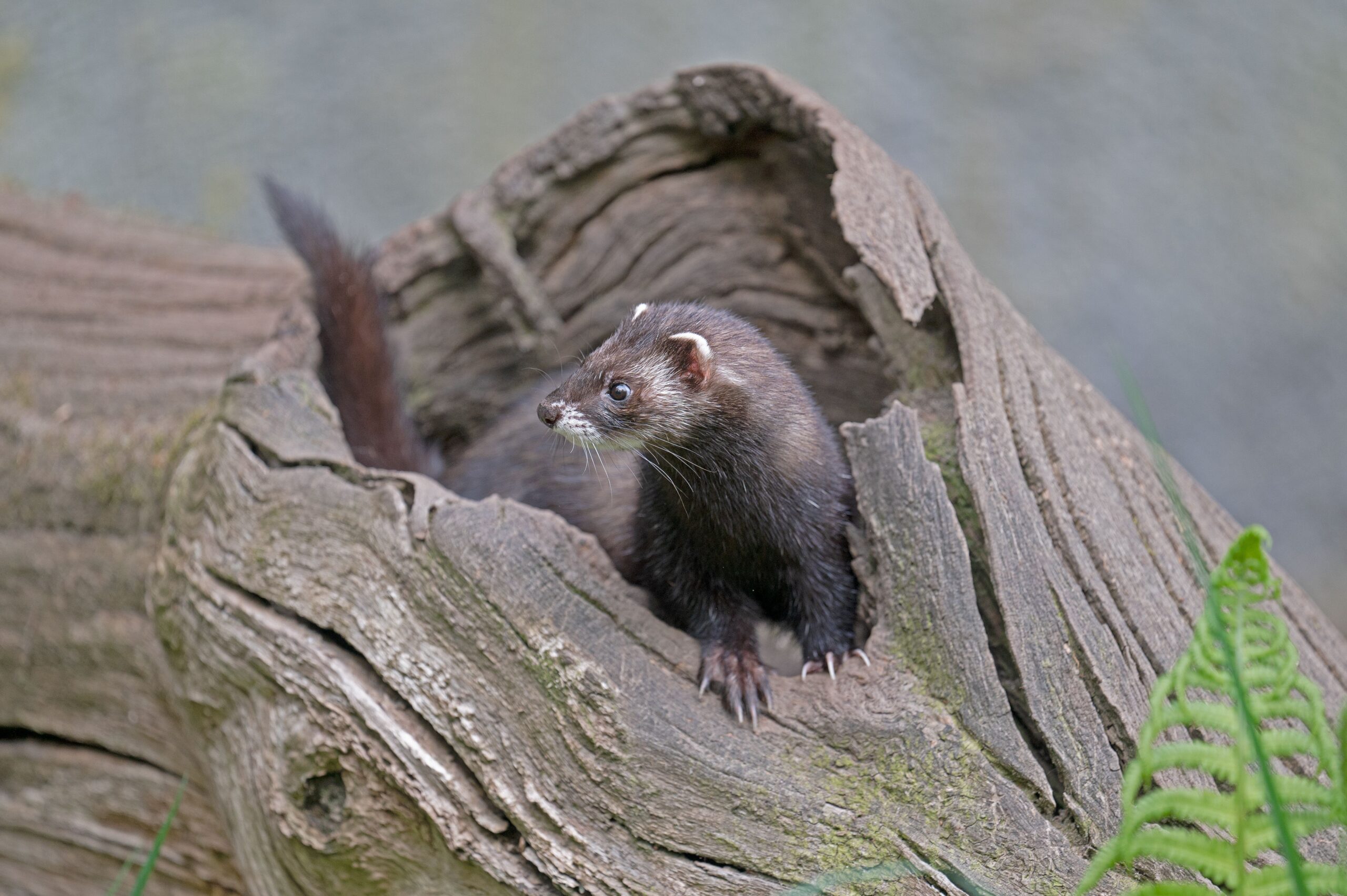
The European mink is characterized by a long upper coat and multiple undercoats surrounding it, and its body color is dark brown or reddish brown. The auricles are small and webbed. In the summer, the body is covered with brown fur, and in the winter, it becomes dark-colored. It is nocturnal and lives in forests and reed beds near water. They prefer to live alone and are quite territorial. European mink are most active before dawn and in the evening. The home range is about 200 to 2,000 meters.
- Appearance and Physical Characteristics
Body Type: Well-balanced, slender, flexible body with short legs and a relatively long tail.
Body Length and Weight:
Body Length: Approximately 30-45cm (excluding tail)
Tail Length: Approximately 12-20cm
Weight: Approximately 0.5-1kg (varies by individual)
Fur Color: Dark brown to blackish-brown on the back, light cream to pale yellow on the underside.
Head and Face: Small, rounded head with small, rounded ears. Pointed nose and well-developed sense of smell.
- Behavior and Ecology
Semi-aquatic: Excellent swimmers, adapted to catching prey near water.
Diet: Carnivorous, feeding on fish, frogs, crustaceans, small mammals, and bird eggs.
Nocturnal and Solitary: Hide in burrows or bushes during the day and hunt at night.
Territoriality: Each individual has a territory and marks it with scent to distinguish it from other individuals.
- Special Characteristics
Flexible Body: Allows them to move quickly through narrow holes and underwater.
Excellent Sense of Smell and Hearing: Allows them to find prey even in the dark or murky water.
Camouflage: Their dark back and light belly make them less noticeable near water or in thickets.
What is the ecology like?
The European mink eats small mammals such as mice, birds, amphibians, crustaceans, fish, and insects. Breeding occurs from February to March every year. The gestation period is 35 to 70 days, and it is possible to give birth to 4 to 5 puppies at a time. Children are weaned by 10 weeks of age. Their lifespan is approximately 8 years in captivity.
- Diet (What they eat)
They are carnivorous and primarily feed on the following:
Fish, frogs, crustaceans, small mammals, and bird eggs and chicks.
Hunting Method: They catch prey while swimming underwater or along rivers.
Activity: They are primarily nocturnal, hunting actively at night.
- Reproduction and Development
Breeding Season: Spring to Summer
Gestation Period: Approximately 30 days
Birth: They give birth to approximately 3-7 pups at a time.
Baby Development: Immediately after birth, they hide in burrows. Their eyes open within a few weeks and they learn to hunt while accompanying their mother.
Sexual Maturity: They are capable of breeding at approximately one year of age.
- Behavior and Sociality
Solo Life: They have a territory and generally act alone.
Territory Scope: They claim a portion of a river or wetland as their territory and distinguish themselves from other individuals by marking (urine and feces).
Swimming and Diving: They are adapted to aquatic habitats and excel at swimming and diving.
- Movement and Habitat Use
They primarily live along rivers and wetlands, sometimes traveling several kilometers depending on food and burrow availability.
They tend to move their habitat when water quality or vegetation changes.
Are there any natural enemies?
The European mink’s predators include hawks and eagles.
European Mink Vocalizations
The European mink (Mustela lutreola) is generally a very quiet animal, though it does produce high-pitched sounds or threat calls depending on the situation.
As solitary animals that live near water, their vocal communication is limited, serving primarily for alertness, mating, and interactions between mother and offspring.
Alert and Threat Calls
When sensing danger or confronting other individuals, they emit sharp, high-pitched sounds such as:
“Kee!”
“Kik-kik!”
“Gya!”
“Shaa!” (hissing)
These serve to:
Intimidate predators
Warn others
Assert territorial claims
Calls of the Young
Young European minks make soft sounds toward their mothers, such as:
“Chee-chee”
“Pee-pee”
“Kuk-kuk”
Inside the den, these sounds are used to:
Signal hunger
Call the mother
Check the location of littermates
Mating Season Calls
During the breeding season (mainly spring), they may emit:
Soft vocalizations
Low growls
Short calls
Males and females rely not only on vocalizations but also on information exchange via:
Scent
Urine
Anal gland secretions
Sounds of Anger
When cornered, they may produce cat-like threat sounds such as:
“Hoo!”
“Haa!”
“Gigi!”
This is a characteristic shared with other members of the weasel family (mustelids), such as ferrets, stoats, and weasels.
Reasons for Limited Vocalization
European minks are:
Nocturnal or crepuscular (active at dawn and dusk)
Solitary
Quiet hunters near water
Consequently, they rely more on the following for communication than on vocalizations:
Sense of smell
Scent marking
Body posture
Seasonal Activities
The European mink (Mustela lutreola) is a semi-aquatic member of the weasel family (Mustelidae) that inhabits rivers, lakes, and wetlands. Its activity patterns, diet, and reproductive behaviors shift significantly with the seasons.
🌸 Spring (March–May): Breeding Season
Key Activities
Onset of the breeding season
Males range over wide areas
Increased territorial disputes along the water’s edge
Spring is the period of peak activity.
Diet
As aquatic and riparian wildlife increases, they prey on:
Frogs
Fish
Crayfish
Waterfowl eggs
Rodents
Reproduction
Mating: Primarily late winter to spring
Gestation period: Approximately 1–2 months (may involve delayed implantation)
Birth: Spring to early summer
Several offspring are born per litter.
☀️ Summer (June–August): Rearing and Hunting Season
Key Activities
Raising young
Teaching hunting skills
Increased activity near the water
As the young grow, they learn:
How to swim
How to catch fish
How to use dens
Diet
Food is abundant in summer.
They consume a wide range of riparian animals, such as:
Fish
Frogs
Aquatic insects
Crayfish
Small birds
Behavior
They rest in dens or waterside hiding spots during the hot day,
becoming more active in the:
Evening
Night
Early morning
🍂 Autumn (September–November): Preparing for Winter
Key Activities
Increased hunting time
Building up energy reserves
Young individuals becoming independent
Young mink born in the summer leave their parents during this period to seek their own territories.
Diet
Dietary variety increases in autumn.
They utilize:
Fish
Frogs
Crustaceans
Small mammals
Birds
depending on availability.
❄️ Winter (December–February): Activity in Cold Conditions
Key Activities
European mink do not hibernate.
Even in winter, they remain active, utilizing:
Riverbanks
Cracks in the ice
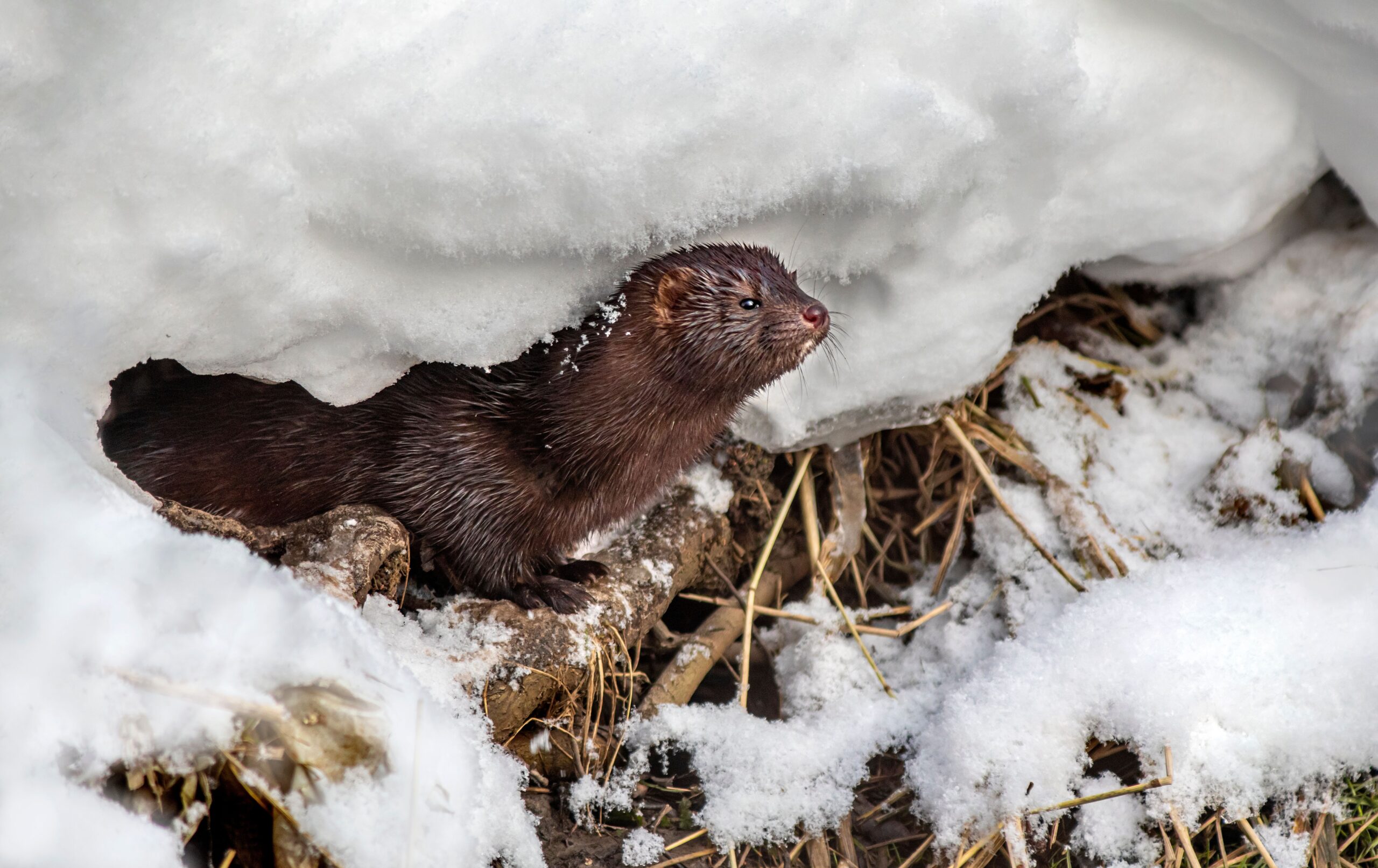
Areas beneath the snow
Waterside dens Diet
As food becomes scarce in winter,
fish,
mice,
waterfowl,
and frogs (including those in hibernation)
are sought out as prey.
Physical Changes
In winter,
fur becomes denser,
heat retention improves,
and maintaining body temperature underwater becomes easier;
these adaptations occur.
Daily Activity Rhythm
The European mink is primarily active
at night,
at dawn,
and at dusk.
However,
depending on the season,
food availability,
and human activity,
they may also appear during the day.
Locomotion Speed
While there is little data on the exact top speed of wild European mink (Mustela lutreola), their speed can be estimated based on their physique and the athletic capabilities of closely related species (such as weasels and other mink).
Estimated Speeds for European Mink
Normal walking: Approx. 2–4 km/h
Trotting while moving: Approx. 5–10 km/h
Short-distance running/chasing: Approx. 15–25 km/h (estimated)
Underwater swimming: Approx. 1–3 km/h (varies by situation)
Note: No official recorded “top speed” (in km/h) exists for wild European mink.
① Slender body
Allows for quick movement through:
Rock crevices
Burrows in riverbanks
Waterside vegetation
② Flexible spine
A characteristic feature of the weasel family (Mustelidae),
enabling them to:
Arch their backs significantly
Accelerate instantly
Change direction sharply
③ Short legs and strong muscles
Despite their small appearance,
they excel at:
Dashing
Diving
Rapidly closing in on prey
How fast are they underwater?
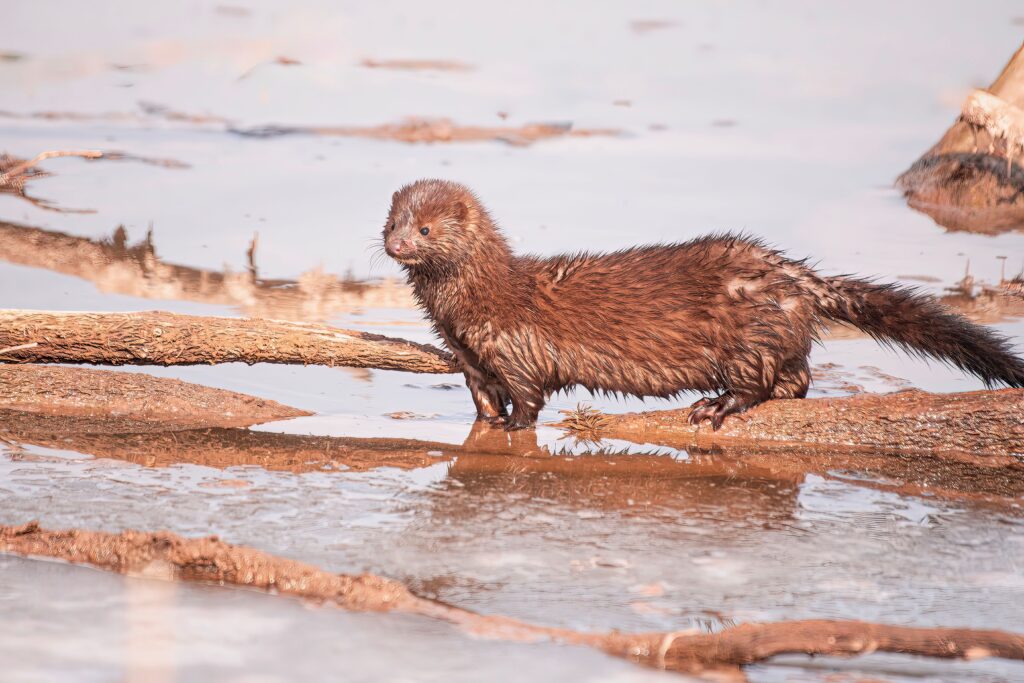
European mink are better adapted to aquatic environments than to land.
When swimming, they:
Steer with their forelegs
Generate propulsion with their hind legs
Control their posture with their tail
About European Mink Cubs
This article provides a detailed explanation of European mink (Mustela lutreola) cubs, covering their appearance, growth, behavior, and mother-calf relationships.
- Appearance and Physical Characteristics
Body Color: Immediately after birth, they are light brown to gray, with a lighter belly. As they mature, they turn the same dark brown as adults.
Body Length and Weight:
Body Length: Approximately 10-15 cm (excluding tail)
Weight: Approximately 25-40 g
Body Type: Very small and flexible, with short legs and a slender body.
- Growth and Development
Lactation: They are breastfed for approximately one month.
Weaning: They begin to gradually eat solid foods (small fish and insects) at 4-6 weeks of age.
Independence: They leave the den at 2-3 months of age and begin practicing swimming and hunting near water.
Sexual Maturity: They become capable of breeding at approximately one year of age.
- Behavior and Mother-Child Relationships
Cubs live closely with their mothers and are protected in dens and near water.
Mothers teach their young how to hunt, swim, and avoid danger.
Cubs learn athletic and hunting skills through play with other animals.
- Threats and Survival
Cubs are more vulnerable to predators than adults and are often targeted by birds of prey and large mammals.
Insufficient protection from dens and their mothers reduces their chances of survival.
Is the European mink an endangered species?
Once widely distributed, the European mink has disappeared from more than 85% of its habitat and is at risk of extinction. Why has it decreased so much? Reintroductions are being planned and implemented to protect the European mink. The current estimated population is 1,000 to 1,500 individuals.
hunting for fur
Mink fur can be made into coats, etc. Their winter fur is especially dense and thick, making them very valuable. Apparently they were hunted for their fur. As a result, their population is rapidly decreasing.
habitat destruction
The European mink has become unable to survive due to environmental changes caused by human activities.
Bringing in American mink
American mink were brought from the United States to European fur farms in the early 1900s for the production of high-value fur. The European mink is now on the verge of extinction, as the artificially introduced American mink has displaced the European mink.
Can European mink be bred?
Unfortunately, as they are listed as an endangered species, their population is extremely low, making it almost impossible for the average person to keep them.
- Ecological Reasons
Requires a Wide Range of Movement: Because they travel several kilometers along rivers and in wetlands, small tanks or enclosures can be very stressful.
Semi-aquatic and Excellent Swimmers: Because they depend on watersides and wetlands for their survival, it is difficult to provide water areas similar to their natural environment.
Special Diet: Because they are carnivorous, they feed on fish, frogs, and small mammals, it is difficult to obtain sufficient nutrition from artificial feed alone.
- Laws and Regulations
They are designated as an Endangered Species, and international trade is regulated by the Convention on International Trade in Endangered Species (CITES).
Wild capture and captivity are prohibited in many European countries.
In Japan, due to nature conservation and invasive species regulations, private captivity is not permitted.
- Conditions in Captivity Facilities
Captivity is extremely limited, and is only permitted in specialized facilities for conservation, breeding, and research purposes.
Raising them requires a large tank, a supply of fresh water, adequate food, specialized staff, and veterinary care, and is very expensive.
Zoos Housing the Species (Japan & Worldwide)
The European mink (Mustela lutreola) is rarely exhibited to the public in zoos; instead, it is primarily kept in facilities dedicated to the conservation breeding of endangered species.
Currently, there are no known zoos in Japan that have a permanent exhibit of European minks. Globally, only a limited number of facilities keep them for conservation purposes.
Zoos in Japan
There are virtually no instances of European minks being kept or exhibited.
Reasons:
Their natural habitat is primarily in Europe.
They are an endangered species subject to international breeding management.
Japanese zoos tend to focus on exhibiting closely related mink or weasel species.
Closely related species that can be seen in Japan include:
Japanese weasel
Japanese marten
Ferret (domesticated weasel)
etc.
🇪🇪 Tallinn Zoo (Estonia)
A key facility for European mink conservation.
Features:
Has conducted a European mink breeding program for many years.
Maintains one of the largest captive populations.
Participates in reintroduction projects.
Research on captive breeding has been underway since the 1980s, and the European Endangered Species Programme (EEP) for the European mink was launched in 1992.
🇪🇸 Conservation Breeding Facilities in Spain
In Spain, efforts focused on the Western European lineage of the European mink include:
Captive breeding
Genetic management
Research on reintroduction into the wild
Representative facility:
Fundación para la Investigación en Etología y Biodiversidad (FIEB)
Activities:
Captive breeding of European minks
Behavioral research
Preparation for reintroduction
etc.
Introducing other animals


コメント