
What kind of animal is marten? We will introduce and explain its characteristics, ecology, appearance, and habitat. A marten is a mammal that can be seen mainly in Japan. Martens live throughout Japan, and like weasels, they sometimes appear in private homes and cause damage. I will explain what characteristics it has.





- What is Ten? About basic status
- What are the roots and origins of the Japanese marten?
- About habitat
- feature is? What kind of creature is it?
- What is your personality like?
- What does the ecology look like?
- Vocalizations of the Japanese Marten
- Seasonal Activities
- Locomotion Speed
- About Marten Cubs
- Are martens listed as an endangered species?
- Difference between weasel and marten
- Can martens be kept?
- Zoos Housing Martens (Japan & Worldwide)
- Introducing other animals
What is Ten? About basic status
Martens are carnivores classified in the class Mammalia, order Felidae (order Carnivora), suborder Canis, family Mustelidae, genus Marten. The scientific name is Martes melampus. The body length is 44-55cm, the tail length is 17-23cm, and the weight is 1-1.5kg. It has a lot of hair and lives in Hokkaido and Honshu. Below is a list of basic information. It looks similar to palm civet or weasel species.
| Japanese(和名) | テン |
| English(英名) | Japanese marten |
| scientific name(学名) | Martes melampus |
| classification(分類) | Mammalia、 Carnivora、Mustelidae、Martes 哺乳綱、食肉目、イタチ科、テン属 |
| IUCN Status(保全状況) | LEAST CONCERN- ENDANGERED |
| Length(体長) | 44-55cm |
| Weight(体重) | 1-1.5kg |
What are the roots and origins of the Japanese marten?
The roots of the Japanese marten (Martes melampus) trace back to the ancestors of the Mustelidae (weasel) family, which appeared tens of millions of years ago.
Taxonomic ancestry
The Japanese marten is a mammal belonging to the following classifications:
Order: Carnivora
Family: Mustelidae
Genus: Martes
Tracing its ancestry reveals the following evolutionary path:
Ancient carnivores (approx. 50 million years ago)
↓
Ancestors of the Mustelidae family (approx. 20–30 million years ago)
↓
Genus Martes
↓
Modern Japanese marten
Why the marten emerged from the Mustelidae family
Early mustelids were small, slender-bodied forest hunters.
In a forest environment, the following abilities were advantageous:
Squeezing into crevices in trees
Pursuing small animals
Changing direction quickly
As a result, they evolved a body shape similar to that of modern martens and weasels, characterized by:
A long torso
Short legs
Sharp teeth
High agility
Origins of the genus Martes
The genus Martes evolved primarily across the Eurasian continent.
Its members include:
Sable
Pine marten
American marten
Japanese marten
The Japanese marten is believed to have originated from continental marten species that crossed over to the Japanese archipelago and diverged independently within the island environment.
How did the Japanese marten arrive?
It is possible that the ancestors of the martens found in the Japanese archipelago migrated there during a time when the islands were connected to the continent by land.
The sequence of events is thought to be:
Marten species on the Eurasian continent
↓
Distribution around the Korean Peninsula
↓
Migration into the early Japanese archipelago
↓
Differentiation by island
↓
Evolution into the Hondo marten and Tsushima marten
The Tsushima marten, in particular, is a subspecies that developed unique characteristics after becoming isolated on Tsushima Island.
Why does the marten’s fur turn yellow
The marten’s distinctive yellow winter coat is an adaptation to cold environments.
In winter, the following changes occur:
Fur becomes dense to retain body heat
Coat color provides camouflage against snow and forest backgrounds
Fur color changes with the season
Among Japanese martens, some individuals develop a pronounced yellow hue in winter (kiten), while others retain a dark brown coat (susten).
About classification
There is a theory that sable and pine martens are combined into one species in the genus Marten, but the basic classification is as follows. The Tsushima marten has been designated as a national natural monument.
| Name (名前) | Scientific Name (学名) | Habit (生息地) |
| Japanese marten ホンドテン | Martes melampus melampus | Japan 日本の本土 |
| Tsusima marten ツシマテン | Martes melampus tsuensis | Hokkaido 北海道 |
| Korean marten コウライテン | Martes melampus coreensis | Korea 韓国 |
About habitat
Most martens live in Japan (Hokkaido, Honshu, Shikoku, and Kyushu). However, some of them can also be seen on the Korean Peninsula. However, they are also pests, and if you find them nearby during daylight hours, they are easy to eliminate.
- Geographical Distribution
Distributed widely across Eurasia. It mainly lives in the following regions:
Europe: Britain, France, Germany, Scandinavia, and western Russia
Asia: Siberia, Mongolia, northern China, and Japan (Honshu, Shikoku, and Kyushu)
Distributed in cold regions in the north and mountainous and forested areas in the south.
- Habitat Characteristics
Forest: Prefers forests rich in trees, such as deciduous broadleaf forests, mixed forests, and coniferous forests.
Also adapted to arboreal life: Skilled at climbing trees, they use tree holes and gaps in fallen logs for nests and resting places.
Near water: They may also live near rivers and lakes, where there are many small animals to feed on.
- Movement and Home Range
They are primarily solitary, with each individual having its own territory.
Males have territories of 2-4 km², while females have territories of 1-2 km².
They are nocturnal and crepuscular, often resting in burrows or tree cavities during the day.
- Relationship between Diet and Ecology
They are omnivorous, but tend to be carnivorous: they eat small mammals such as squirrels and mice, as well as birds, insects, and fruit.
As they are skilled tree climbers, squirrel and bird nests are also included in their diet.
feature is? What kind of creature is it?
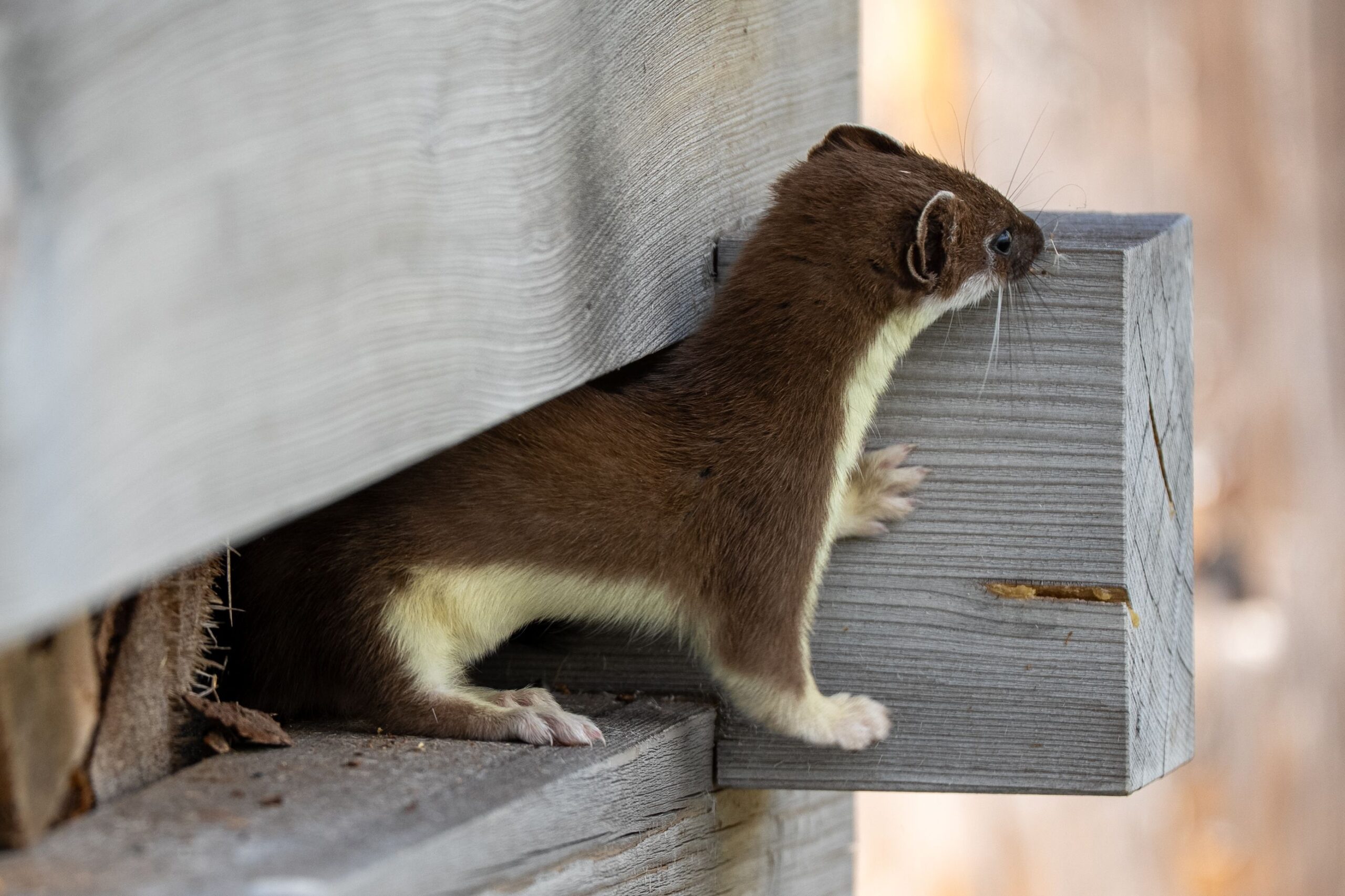
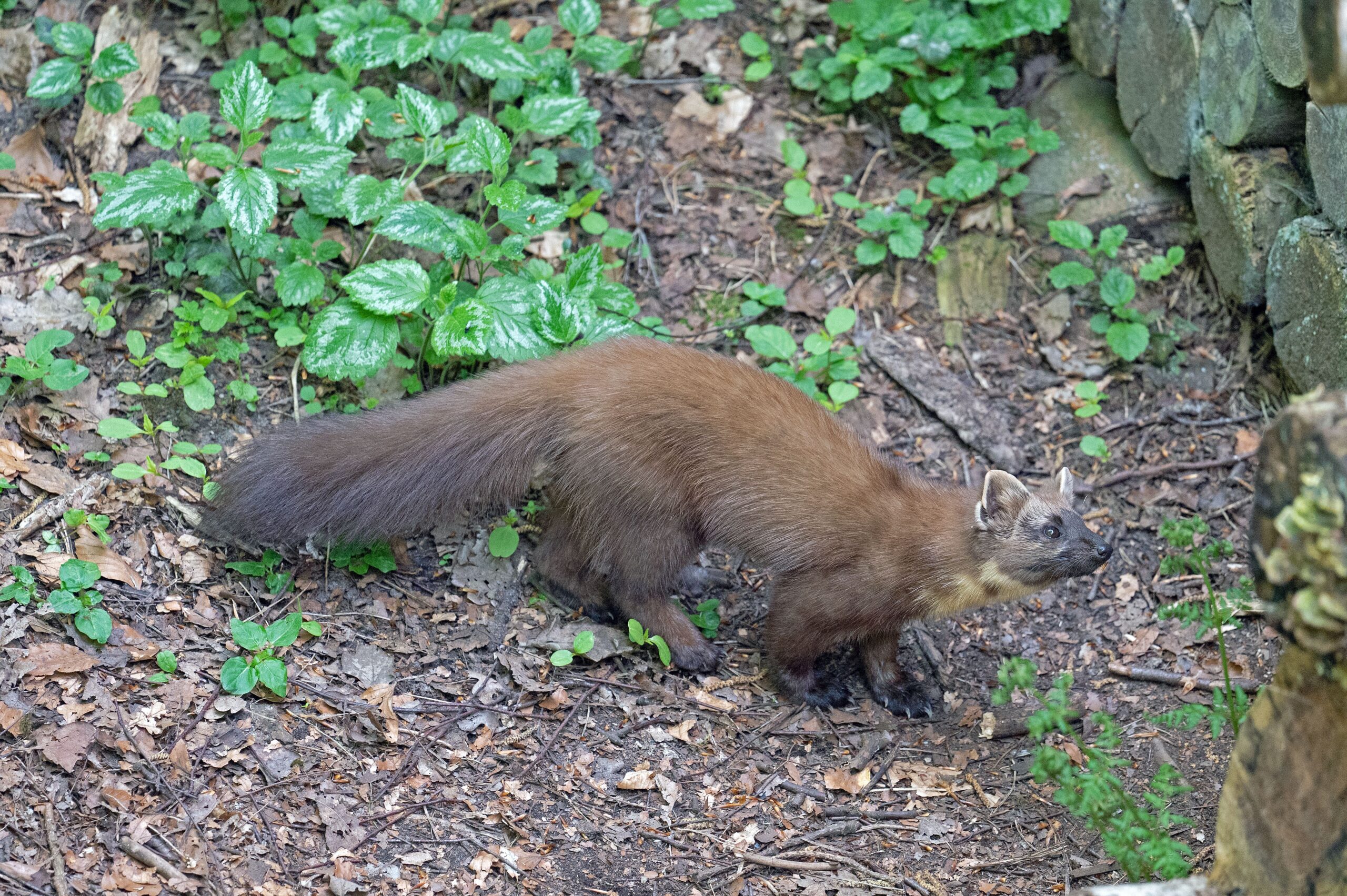
Martens live in low mountains to subalpine coniferous forests, and are mainly solitary. Martens have the unusual property that their coat color changes between summer and winter. In the summer it is tan with a black face, and in the winter it is tan with a white face. It is good at climbing trees and moves with agility.
- Appearance and Physical Characteristics
Body Type: Slender, flexible body, short legs, and a long, bushy tail.
Body Length and Weight:
Body Length: Approximately 40-50 cm (Tail Length: Approximately 20-25 cm)
Weight: Approximately 0.8-1.5 kg
Fur Color: Back is dark brown to reddish-brown, belly is slightly lighter in color.
Face and Head: Rounded face, small ears, and pointed nose.
Distinctive Chest Hair: Many individuals have yellow-orange markings on their throats and chests.
- Behavior and Ecology
Nocturnal and Crepuscular: Rests during the day in tree hollows and fallen logs.
Solitary Lifestyle: Generally maintains a territory, only encountering other individuals during breeding season.
Arboreal Lifestyle: Skilled at climbing trees, they use branches and fallen logs to navigate and search for food.
Diet: Omnivorous, eating small mammals (such as mice and squirrels), birds, eggs, insects, and fruit.
- Special Characteristics
Agility: Able to move quickly both in trees and on the ground.
Highly territorial: Marks territory (with urine and anal gland secretions).
Low sociality, but males and females will come into contact during breeding season; females are primarily responsible for raising the young.
What is your personality like?
If you just look at the outside, the marten looks like a very cute animal. However, they are quite aggressive and you need to be careful when encountering them. They may attack you here. They become very strong-willed animals.
- Basic Personality
Timid but curious: They are wary of predators and humans, but may also show interest in new environments and objects.
Highly cautious: Because they are susceptible to predation, they always pay close attention to their surroundings.
- Sociality/Behavior
Solitary: They have territories and only interact with others during breeding season.
Highly territorial: They mark their territory (with urine and anal gland secretions).
Resting quietly during the day, active at night: They are nocturnal, hunting and exploring mainly during the dark hours.
- Predation/Hunting Personality
Strong hunting instinct: They are very agile and patient when targeting small mammals, birds, and insects.
Skilled in arboreal behavior: They are adept at climbing trees and crossing branches, and are also cautious when hunting.
- Overall
Martens are cautious, agile, and solitary small predators.
At the same time, they have a strong curiosity and hunting instinct, and are very active in climbing trees and exploring.
What does the ecology look like?
Martens are omnivorous animals and eat everything from small animals to fruits, mice, birds, and insects. Breeding begins in July-August and multiple offspring are born in April-May. The lifespan is about 10 years.
- Diet (What they eat)
Omnivorous, but leaning towards carnivory:
Mainly small mammals (mice, squirrels, etc.)
Birds and eggs
Insects and frogs
Fruit (especially fall berries)
Hunting method: Quickly captures prey both on the ground and in trees.
- Reproduction and Development
Breeding Season: Winter to Spring (varies by region)
Gestation Period: Approximately 9 months (including delayed embryo implantation)
Birth: Usually gives birth to 2-5 pups in burrows or tree cavities
Baby Development: Mothers nurse their young while teaching them hunting and tree climbing skills
Sexual Maturity: Reproduction begins at 1-2 years of age
- Behavior and Sociality
Solo Life: Males and females generally have their own territories.
Territory Range: Males are approximately 1-4 km², females are approximately 0.5-2 km²
Nocturnal and Crepuscular: Rest during the day in tree cavities and fallen logs
Tree and Ground Activity: Skilled at climbing trees, using branches and fallen logs for mobility
- Movement and Habitat Use
Uses burrows, fallen logs, and tree cavities in the forest
Frequently moves within their territory depending on food and breeding needs
Are there any natural enemies?
Natural enemies of martens include Steller’s sea eagle and white-tailed eagle. Because their bodies are more than one size larger, they are easily caught and eaten. Foxes and wild dogs are also natural enemies.
Vocalizations of the Japanese Marten
While the Japanese marten is generally quite quiet, it emits high-pitched sounds—such as “ki,” “kii,” “kuk-kuk,” or “gya”—depending on the situation.
Alarm and Threat Calls
When encountering a predator or another marten, it emits sharp, high-pitched sounds such as:
“Kii!”
“Kiki”
“Gya”
These serve to:
Intimidate the other party
Signal danger
Announce its presence
Calls of the Young
To call out to their parents, young martens make soft sounds such as:
“Chi-chi-chi”
“Pii-pii”
“Kuk-kuk”
They use these vocalizations to communicate with their mothers, particularly while inside the den.
Breeding Season Calls
During the breeding season (primarily in summer), males and females may produce the following sounds when interacting:
Low growls
Short calls
Vocalizations made while chasing
Why Martens Rarely Vocalize
The marten’s quiet nature is linked to its hunting style.
As a predator, the marten:
Is active at night or during twilight hours
Moves swiftly through the forest
Approaches prey silently
Consequently, it relies more on the following methods than on vocalizations to exchange information:
Scent (from scent glands)
Footprints
Droppings (feces)
Body posture
Seasonal Activities
The activity patterns of the marten (specifically the Japanese marten) vary significantly by season.
Living in forests, these martens adjust their behavior in response to temperature, food availability, and their reproductive cycle.
Spring (March–May): A Period of Increased Activity
Behavior
Molting from winter coat to summer coat
Moving widely within their territory
Increased foraging for food
Diet
Rodents
Birds
Insects
Frogs
Nuts and seeds
As snow recedes and movement through the forest becomes easier, their range expands compared to winter.
Summer (June–August): Breeding and Rearing Season
Behavior
Breeding season
Males travel more extensively in search of females
Rearing young
Mating occurs around summer, but a distinctive feature is “delayed implantation,” where the fertilized egg does not immediately implant in the uterus.
Offspring
Young born in spring or early summer grow
They learn hunting and movement skills from their mother
Diet
Food is abundant in summer.
Insects
Small birds
Eggs
Fruit
Insects
They utilize a wide variety of food sources.
Autumn (September–November): Preparation for Winter
Behavior
Storing nutrients for winter
Consuming large amounts of fruit
Expanding activity range
Diet
Plant-based foods increase, particularly in autumn.
Wild grapes
Hardy kiwi (Actinidia arguta)
Nuts and seeds
Fruits such as persimmons
While martens are primarily carnivorous, they consume significant amounts of fruit depending on the season.
Winter (December–February): Energy-Conserving Activity
Behavior
Adjusting activity times
Changes in travel distance in areas with deep snow
Utilizing warmer locations
Martens do not hibernate.
Even during cold periods,
Rodents
Birds
Small mammals
…they remain active in search of these prey.
Winter Coat
In winter,
Fur becomes denser
Insulation improves
Some individuals develop a yellow to yellowish-brown coat color
…adapting to the cold environment.
Locomotion Speed
While there is little precise data measuring the exact walking speed (e.g., “X km/h”) of the Japanese marten, an analysis of its physical structure reveals that it moves slowly during casual walking but is capable of running quite fast when traveling or pursuing prey.
Estimated Movement Speeds for the Japanese Marten
- Casual walking: Approx. 2–4 km/h
- Brisk movement/exploratory travel: Approx. 5–10 km/h
- Short-distance sprinting/pursuit: Estimated at approx. 15–25 km/h
Note: There are few recorded measurements of the exact top speed of wild individuals; these figures are estimates.
① Slender, elongated body
Allows for quick passage through:
- Tree bases
- Rock crevices
- Gaps between fallen logs
② Flexible spine
Allows the back to flex and extend significantly while running,
enabling:
- Instantaneous acceleration
- Sharp changes in direction
③ Strong legs and claws
Well-suited for:
- Climbing trees
- Leaping
- Moving across snow

About Marten Cubs
This article provides a detailed explanation of marten (Martes martes) cubs, covering their appearance, growth, behavior, and mother-calf relationships.
- Appearance and Physical Characteristics
Body Color: Immediately after birth, they are pale brown, with a slightly lighter belly. As they grow, they turn the same dark brown as adults.
Body Length and Weight:
Body Length: Approximately 10-15 cm (excluding tail)
Weight: Approximately 30-50 g
Body Type: Very small and flexible, with short legs and a slender body.
- Growth and Development
Lactation: They are breastfed for approximately four weeks.
Weaning: They begin to eat a diet of small mammals and insects at four to six weeks of age.
Independence: They leave the den at two to three months of age and learn hunting and climbing skills from their mother.
Sexual Maturity: They are capable of breeding at approximately one year of age.
- Behavior and Mother-Child Relationships
Cubs spend close time with their mothers and are protected in dens and other safe areas.
Mothers teach their young how to hunt, climb trees, and avoid danger.
Cubs develop athletic and hunting skills through play with other animals.
- Threats and Survival
Cubs are more vulnerable to predators than adults, and are often targeted by birds of prey and foxes.
Insufficient protection from dens and their mothers reduces their chances of survival.
Are martens listed as an endangered species?
The Tsushima marten, which is a subspecies of the marten, is designated as a near-threatened species. There are several reasons why it is an endangered species.
be exterminated because it is a pest
Martens are pests that cause a variety of damage to humans. They can invade the ceilings and attics of houses and make noise. Manure smells bad. Additionally, martens are aggressive and can develop infections if bitten or scratched. Martens are also omnivorous pests, so they often target crops and livestock. Due to these factors, it will be exterminated.
Habitat destruction, traffic accidents
Habitat destruction and traffic accidents are also cited. Due to land development by humans, their habitat is shrinking, and they are now appearing in residential areas where humans live, causing a negative spiral where they are often run over by cars.
Difference between weasel and marten
Martens are often mistaken for weasels, but they are different creatures. Let’s explain the differences in each item.
Differences in hair color and pattern
Both weasels and martens change their body color between summer and winter, but the difference is that weasels are brownish-brown and martens are yellowish-brown. Weasels have dark brown markings around their eyes, and martens have whitish throats.
Difference in body shape
Weasels have a body length of 16 to 39 cm, while martens have a body length of 25 to 60 cm. The weasel weighs 80 to 800g, and the marten weighs about 0.5kg to 2kg.
difference in behavior
There are also behavioral differences. Weasels tend to be active during the day and night. Martens, on the other hand, are nocturnal and often rest in tree caves during the day.
Can martens be kept?
As explained above, martens have quite aggressive personalities, so it is quite difficult for the average person to keep them.
- Ecological Reasons
Requires a Wide Range of Movement: They have territories in forests, climbing trees and moving on the ground, which can cause stress in small captive cages.
Requires both arboreal and terrestrial activity: They are prone to lack of exercise, which can lead to stress and health problems.
Omnivorous but highly predatory: They have an instinct to catch small mammals and birds, making it difficult to satisfy their appetites with artificial diets alone.
- Laws and Regulations
In Japan, wild martens are not designated as designated invasive species or protected species, but wild capture may be restricted by local governments or nature conservation laws.
In European countries, martens are treated as natural monuments and protected species, and captivity requires permission.
- Conditions in Captivity
Captivity is very limited, and they are only kept in zoos, research facilities, and breeding shelters.
Keeping them requires ample space for exercise, arboreal structures, water sources, adequate food, and veterinary care, making it virtually impossible for individuals to maintain an appropriate environment.
Zoos Housing Martens (Japan & Worldwide)
The Japanese marten (Martes melampus) is a relatively rare animal to see in zoos.
This is because they are strongly nocturnal and solitary, and require a spacious forest environment. In Japan, they are kept and exhibited at only a limited number of zoos.
🇯🇵 Major Zoos in Japan Where You Can See Martens
Inokashira Park Zoo (Tokyo)
Species kept: Japanese marten, Tsushima marten
Exhibit location: Japanese Satoyama/Forest Animal Exhibit Area
Features:
A premier facility for observing martens native to Japan
Also features the Tsushima marten (a subspecies endemic to Tsushima Island)
Visitors can observe seasonal changes in fur color
Sendai City Yagiyama Zoological Park (Fujisaki no Mori)
Species kept: Japanese marten (Martes melampus melampus)
Features:
Exhibits individuals known as “ki-ten” (yellow martens), whose winter fur turns yellow
Introduced as a familiar wild animal inhabiting Japanese forests
Kochi Prefectural Noichi Zoological Park
Keeps Japanese martens
One of the facilities where you can learn about the martens inhabiting Shikoku.
🌍 Marten Species Kept in Zoos Worldwide
Globally, species closely related to the Japanese marten are more commonly kept in captivity.
Sable (Martes zibellina)
Sable (Martes zibellina)
Distribution:
Russia
Siberia
Northern China
Features:
Beautiful dark brown fur
Adapted to cold climates
A representative species of the genus Martes
Examples of facilities keeping them:
Russian zoos
Wildlife sanctuaries
Fur research facilities, etc.
Pine Marten (Martes martes)
Pine Marten (Martes martes)
Distribution:
Europe
Northern Asia
Examples of facilities keeping them:
Wildlife sanctuaries in the UK
European zoos
American Marten (Martes americana)
American Marten (Martes americana)
Distribution:
North America
Examples of facilities keeping them:
North American zoos and sanctuaries
Introducing other animals



コメント