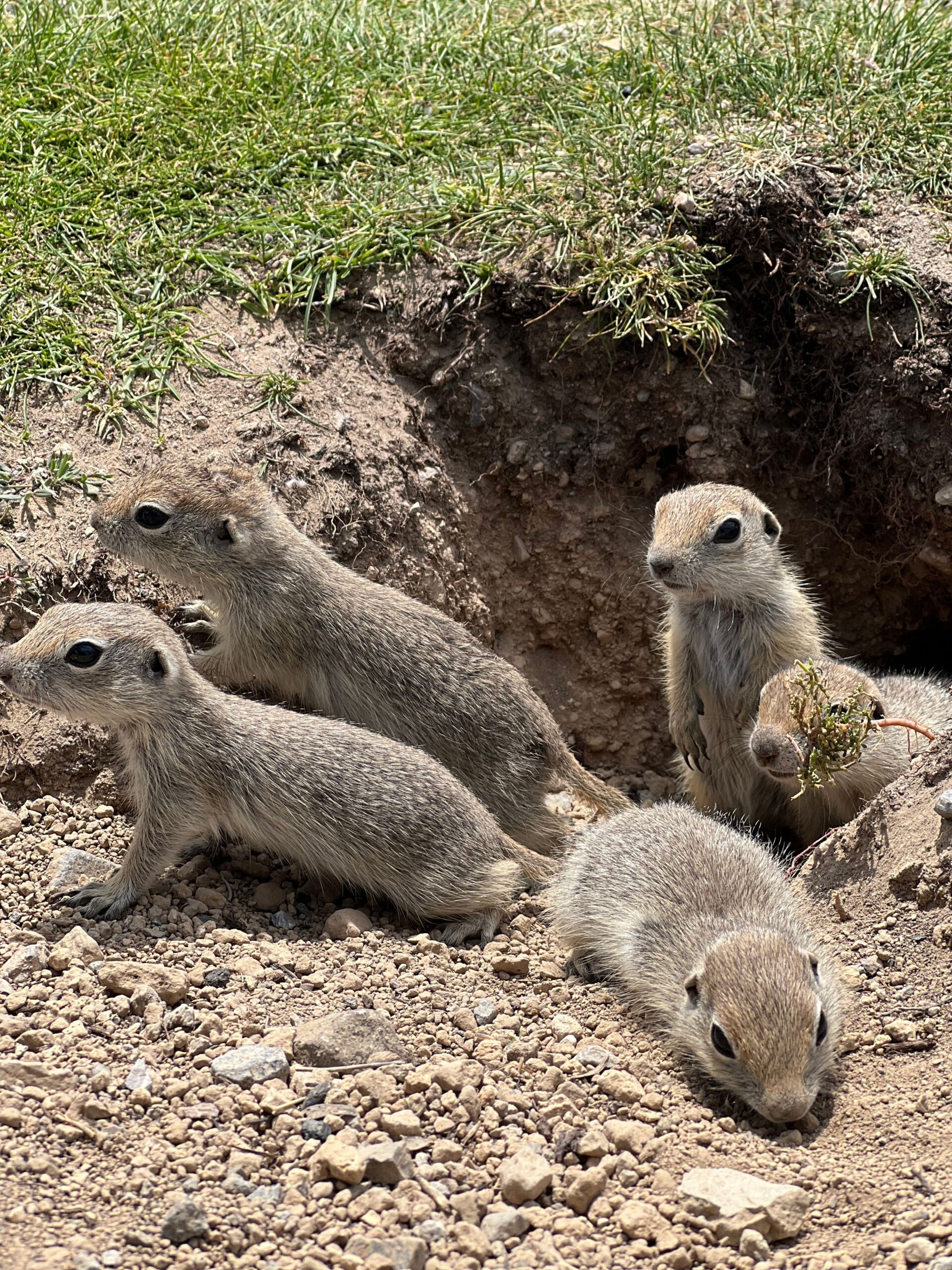
What kind of animal is a prairie dog? We will explain its characteristics, ecology, and habitat. Prairie dogs are also popular pets as some people keep them. It is a member of the ground squirrel family found in North America, and is very cute, so it has received a lot of attention from many people.



- What is a prairie dog? About basic status
- What are the roots and origins of the prairie dog?
- Where is its habitat?
- feature is? What kind of creature is it?
- What is your personality like?
- What is the ecology like?
- Prairie Dog Vocalizations
- Seasonal Activities
- Walking Speed
- About Prairie Dog Babies
- Are prairie dogs an endangered species?
- Can prairie dogs be kept?
- Zoos Housing Prairie Dogs (Japan & Worldwide)
- Introducing other animals
What is a prairie dog? About basic status
Prairie dogs are mammals in the order Rodentia, family Squirrel, and genus Prairie Dog. The scientific name is Cynomys. Body length: 30-38cm, tail length: 8-10cm, weight: 1-2kg. It is a member of the ground squirrel family that is distributed in North America.
| Japanese(和名) | プレーリードッグ |
| English(英名) | Prairie Dog |
| scientific name(学名) | Cynomys |
| classification(分類) | Mammalia、 Rodentia、Sciuridae、Cynomys 哺乳綱、ネズミ目、リス科、プレーリードッグ属 |
| IUCN Status(保全状況) | ENDANGERED |
| Length(体長) | 30-38cm |
| Weight(体重) | 1-2kg |
What are the roots and origins of the prairie dog?
The roots (origins) of the prairie dog are believed to trace back to ground-dwelling rodents of the squirrel family that evolved in North America approximately 3 to 5 million years ago (during the late Pliocene epoch). Fossil records indicate that the earliest members of the genus Cynomys (prairie dogs) already existed during the late Pliocene.
Taxonomic roots
Despite having “dog” in their name, prairie dogs are not related to domestic dogs.
Their taxonomic classification is as follows:
Class: Mammalia
Order: Rodentia
Family: Sciuridae (squirrel family)
Genus: Cynomys (prairie dogs)
Their closest relatives include:
Ground squirrels
Marmots
Chipmunks
…all of which belong to the squirrel family.
Where did they originate?
They originated on the North American continent.
Vast grasslands (prairies) were beginning to form in North America at that time, and burrowing into the ground offered a survival advantage. It is believed that they evolved into the modern prairie dog while adapting to this environment.
Why did they come to live in groups?
This is because the grasslands had few trees and a large number of natural predators.
Their main predators include:
Eagles
Hawks
Coyotes
Badgers
Foxes
Living in groups allows them to:
Assign lookouts
Alert others to danger via vocalizations
Quickly retreat into underground tunnels
About classification
Prairie dogs belong to the genus Prairie Dog, but there are actually many subspecies. I will introduce each of them.
| Name (名前) | Scientific name (学名) |
| black-tailed prairie dog オグロプレーリードッグ | Cynomys ludovicianus |
| white-tailed prairie dog オジロプレーリードッグ | C. leucurus |
| Mexican prairie dog メキシコプレーリードッグ | C. mexicanus |
| Gunnison’s prairie dog ガニソンプレーリードッグ | C. gunnisoni |
| Utah prairie dog ユタプレーリードッグ | C. parvidens |
Cynomys ludovicianus
The black-tailed prairie dog is the most abundant of the common species. This species does not hibernate and has white fur. They are well known for creating “towns”, which are collections of burrows underground. It is distributed in the grasslands of central North America, and is about the size of a domestic cat, with a brown, tan, or grayish brown back.
C. leucurus
As the name suggests, the white-tailed prairie dog has a white tail. Preferring high mountains, they do not build large burrows and live over a wide area. In winter, they hibernate and eliminate ground squirrels for food security. The population is very stable.
C. mexicanus
Mexican prairie dogs are found only in Mexico (Coahuila, Zacatecas, San Luis Potosi, and Nuevo Leon). It has a head and body length of 28-35cm and lives in grasslands at an altitude of 1,600-2,200m. It has been exterminated as a pest and is designated as an endangered species.
C. gunnisoni
The Gunnison prairie dog is a prairie dog that lives in states such as Colorado and Arizona in the United States, and its population is very stable. Gunnison prairie dogs shed their coats twice a year, once in the spring and once in the fall. In spring, they begin to shed their skin from head to tail. The eyes are located on the sides of the head, giving you a wide peripheral vision.
C. parvidens
Utah Prairie Dogs are extremely rare and endemic to Utah. The fur is multicolored, consisting of black, brown, and dark brown tips. Their faces have dark brown cheeks and a whitish color around the chin and mouth. Unfortunately, it is listed as an endangered species.
Where is its habitat?
As mentioned above, prairie dogs are quite widely distributed from the United States to Mexico.
- Geographic Distribution
Their primary habitat is the grasslands of the Midwestern North America.
United States: Montana, Wyoming, South Dakota, North Dakota, Colorado, etc.
Also found scattered habitats in southern Canada and northern Mexico.
- Habitat
Prefers vast grasslands and prairies.
Open grassland terrain with good visibility.
Dry to semi-arid soil makes it easy to dig holes.
Burrows and tunnels.
They build complex underground burrows (colonies) and live in groups.
They use these burrows to ensure the safety of parents, offspring, and their flock, and to defend themselves against predators.
- Habitat Characteristics
Living in groups (colonies).
Colonies range from dozens to hundreds of individuals.
Highly social, they cooperate in vigilance and foraging.
Range of Activity
They move in response to food and water needs, but primarily stay close to their burrows.
feature is? What kind of creature is it?
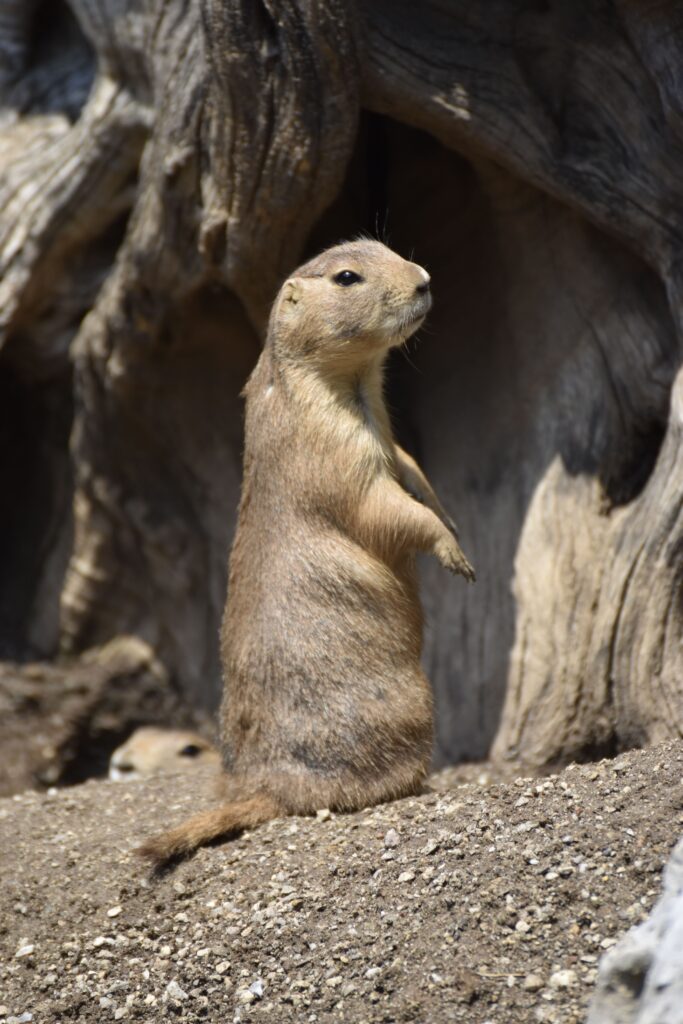
Prairie dogs, like members of the squirrel family, have short limbs. There are considerable differences depending on the species, with some inhabiting open grasslands and savannahs, and others inhabiting mountainous areas. Unusual among the squirrel family, they live in large groups, with males being larger than females. They are active during the day and hibernate in the winter. During the winter when the temperature drops, they live in burrows.
- Body Size and Appearance
Body Length: Approximately 30-40 cm (including tail)
Weight: Approximately 0.7-1.5 kg
Body Type: Small, rounded, and stocky
Coat Color: Light brown to brown, a protective coloration that blends in with the grassland floor
- Face, Teeth, and Legs
Round face, large eyes, and wide field of vision
Well-developed front teeth, suitable for gnawing on grass and roots
Forelegs with strong claws suitable for digging
- Behavior and Personality
Highly social
Live in colonies
Sends guards and warns others of danger
Alerts and Agility
Sensitive to predators (coyotes, eagles, snakes, etc.)
Makes alarm calls to alert others and quickly retreats to their den
- Diet
Herbivore
Eats grasses, roots, seeds, leaves, etc.
Forages around burrows
Gathers food efficiently within a safe distance
What is your personality like?
Prairie dogs are sociable and gentle. In addition, they are highly social animals as they can live in groups. He is also said to have good communication skills. They are very territorial and will attack any enemy that enters their territory.
- Highly Social
Living in colonies (packs), cooperation with fellow members is essential
They assign lookouts to warn others of predators and danger
There is hierarchy and division of roles within the colony, maintaining order.
- Vigilance and Agility
Sensitive to predators (coyotes, birds of prey, snakes, etc.)
When they sense danger, they quickly retreat to their dens.
They communicate information to their peers using alarm sounds (such as “click-clack” or “cue” sounds).
- Cooperative and Pack-Oriented
The pack also cooperates in feeding and den maintenance.
The entire colony cooperates in raising children and protecting their young.
- Curiosity and Playfulness
They often play with their young and within the pack, developing social skills and motor skills through play.
Behaviors such as digging and exploring tunnels are driven by curiosity.
What is the ecology like?
Prairie dogs live by eating leaves and stems of plants. The nest is made by digging a hole in the ground, forming a vast burrow, which they hide in during the winter. They are polygamous and the breeding season is from January to April. It is possible to give birth to 1-6 cows at a time. The lactation period is 30 to 50 days, and they reach maturity in 1 to 2 years. The lifespan is said to be about 3-5 years.
- Lifestyle
Mainly underground
Dig complex burrows (tunnels/cavities) and move between above and below ground
Live in colonies
Form groups of tens to hundreds of individuals
Groups cooperate to guard, forage, and breed
- Diet
Exclusively herbivorous
Eat grasses, seeds, roots, leaves, etc.
Foraging Behavior
Efficiently forage around the burrow
May use stored food during dry seasons and winter
- Breeding
Breeding Pattern
Breed once a year, from spring to summer
Gestation Period
Approximately 30 days
Birthing
3-8 cubs per birth (depending on species and individual)
Cubs are raised in the burrow and protected by the group
- Defense/Vigilance
Sentinel
Stands near dens and monitors the surroundings
Makes an alarm call when detecting predators (coyotes, birds of prey, snakes)
Flees in groups
When danger approaches, the entire pack retreats to their dens
- Movement/Activity Range
Diurnal Feeding and Activity
Forages mainly around dens during the day
Activities are centered around dens
Migration distances are limited, but they change depending on food and water sources
Are there any natural enemies?
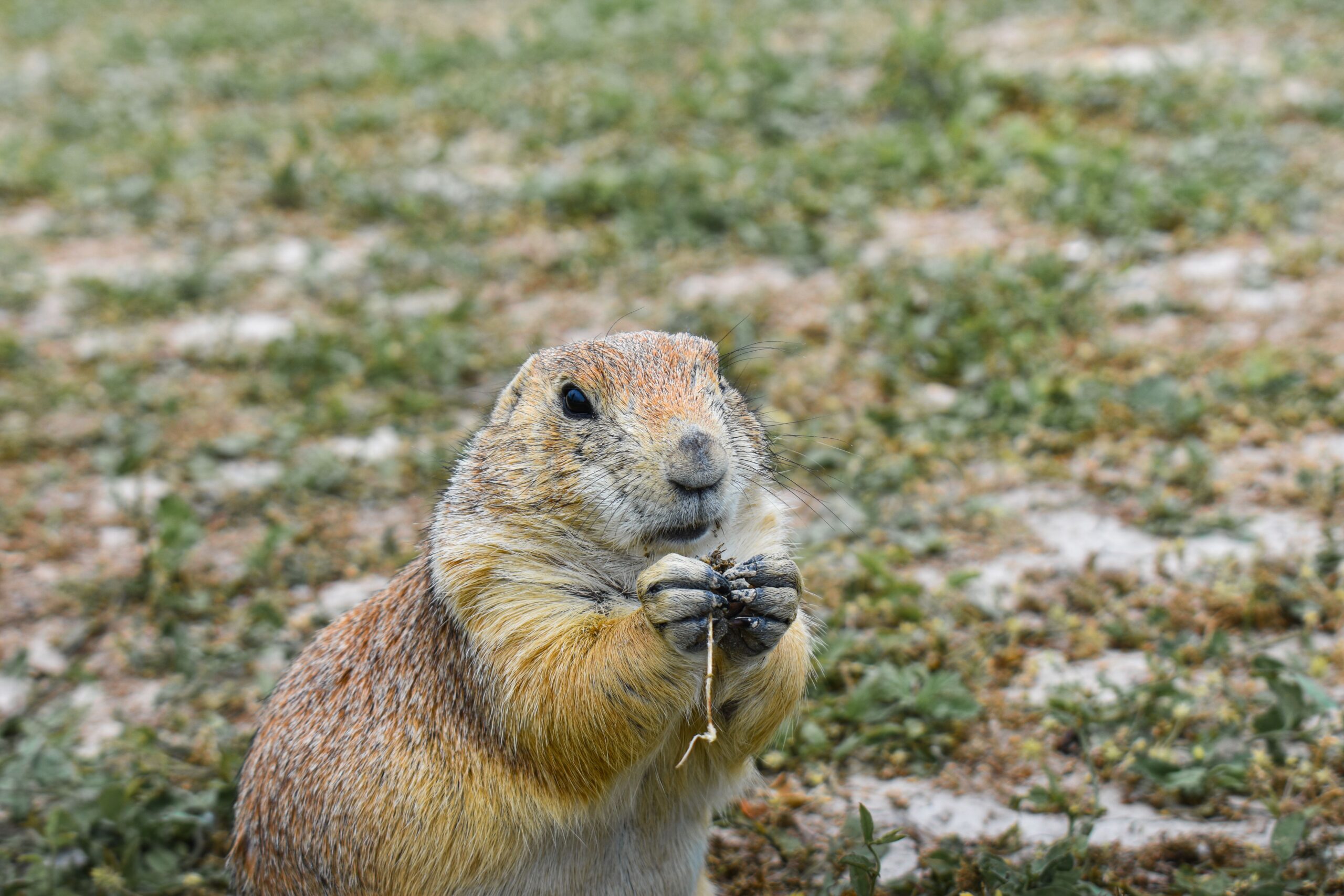
Prairie dogs are preyed upon by coyotes, badgers, and lynx. For this reason, prairie dogs are very wary and always keep watch around their burrows. They are called prairie dogs because their barks resemble those of dogs, as they let out a sharp cry to alert their friends when danger approaches.
Prairie Dog Vocalizations
Contrary to their appearance, prairie dogs possess highly sophisticated communication skills, particularly regarding “alarm calls.” While they make dog-like yapping sounds—which is how they got their name—they are actually members of the squirrel family.
Alarm Calls
This is their most well-known vocalization.
They emit high-pitched sounds such as:
“Kip!” “Yap!” or “Pee!”
They use these calls to alert their companions when they spot a natural predator.
Examples:
Hawks or eagles → Signals danger from the sky
Coyotes → Warns of ground-based predators
Humans → Sometimes triggers a reaction as a potential threat
Upon hearing the alarm call, other prairie dogs will:
Stand upright
Scan their surroundings
Flee into their burrows
Communication Among Colony Members
Since prairie dogs live in groups (colonies), they also use vocalizations for everyday communication.
Soft “chut-chut” sounds
Short calls
Low-pitched sounds during physical contact
These are used for:
Recognizing fellow colony members
Communication between parents and offspring
Locating the group
“Kiss-like” Greeting Sounds
Prairie dogs have a unique greeting behavior.
Colony members approach one another and may:
Touch noses
Lightly touch teeth together
They often make soft sounds during this interaction, which serves to confirm the identity of fellow colony members.
Seasonal Activities
Prairie dog activity varies significantly by season. Because the North American prairies experience drastic temperature differences between summer and winter, these animals adjust their surface activity, feeding habits, breeding, and overwintering strategies according to the season.
🌱 Spring (March–May): Breeding and Resumption of Activity
Key Activities
Waking up from the low-activity winter period
Increasing time spent above ground
Beginning breeding behavior
Repairing burrows
Characteristics
Spring is the most critical season for prairie dogs.
Males establish their territories and mate with females.
The gestation period is approximately one month, with pups born toward the end of spring.
Diet
As vegetation—which was scarce in winter—begins to grow, they feed on:
New shoots
Grass
Roots
Flowers
☀️ Summer (June–August): Peak Activity Season
Key Activities
Spending long periods active above ground
Raising young
Socializing with the colony
Foraging
Characteristics
Summer marks the peak of prairie dog activity.
They emerge from their burrows early in the morning and repeat behaviors such as:
Eating grass
Sunbathing
Standing upright to scan the surroundings
Calling to one another
Growth of Young (Pups)
Pups born in the spring begin to emerge from the burrow in summer, learning to:
Play
Dig
Recognize alarm calls
Understand colony rules
🍂 Autumn (September–November): Preparing for Winter
Key Activities
Foraging
Burrow maintenance
Building up physical reserves
Characteristics
Autumn is a time for winter preparation.
Unlike squirrels, prairie dogs rarely store large quantities of food underground; instead, they survive the winter primarily by:
Accumulating body fat
Preparing safe underground areas
Diet
They consume items such as:
Grasses that have begun to wither
Seeds
Roots
Rhizomes
❄️ Winter (December–February): Low-Activity Period
Key Activities
Spending more time in the burrow
Reducing time spent outside
Conserving energy
Characteristics
Prairie dogs do not undergo true hibernation. In particular,
black-tailed prairie dogs
emerge above ground on warm days, even in winter.
On the other hand,
white-tailed prairie dogs
and Gunnison’s prairie dogs
—among other species—may enter a state resembling hibernation (dormancy).
Walking Speed
While prairie dogs usually walk slowly, they can move quite quickly when they sense danger.
Normal Walking Speed
Approximately 1–3 km/h
The speed at which they move around their burrows or walk while grazing.
Prairie dogs do not typically travel long distances in a hurry; instead, they live within the vicinity of their colony (communal living area).
Running Speed (Maximum)
Approximately 15–20 km/h
When they spot a predator, they engage in escape behaviors such as:
Running in a low-slung posture
Moving in a zigzag pattern
Dashing straight back to their burrow
Skilled at Short-Distance Dashes
Prairie dogs are specialized for:
Escaping within a range of a few dozen meters
Moving at high speed to reach their burrow
…rather than for endurance running.
This is because, on the open grassland, the survival rate is higher if they flee into a nearby underground tunnel rather than trying to run far away.
Standing Up to Stay Alert
The well-known posture of standing on their hind legs serves to:
Check the surroundings
Spot predators
Warn other members of the colony
When they sense danger, the sequence of actions is:
Stand up
Emit an alarm call
Run to the burrow
A Body Suited for Underground Life
Prairie dogs excel at digging and explosive bursts of movement rather than high-speed running.
Characteristics:
Short, sturdy legs
Strong forelimbs (for digging)
Ability to change direction quickly
Body shape close to the ground
These traits allow them to escape from predators like coyotes and birds of prey.
About Prairie Dog Babies
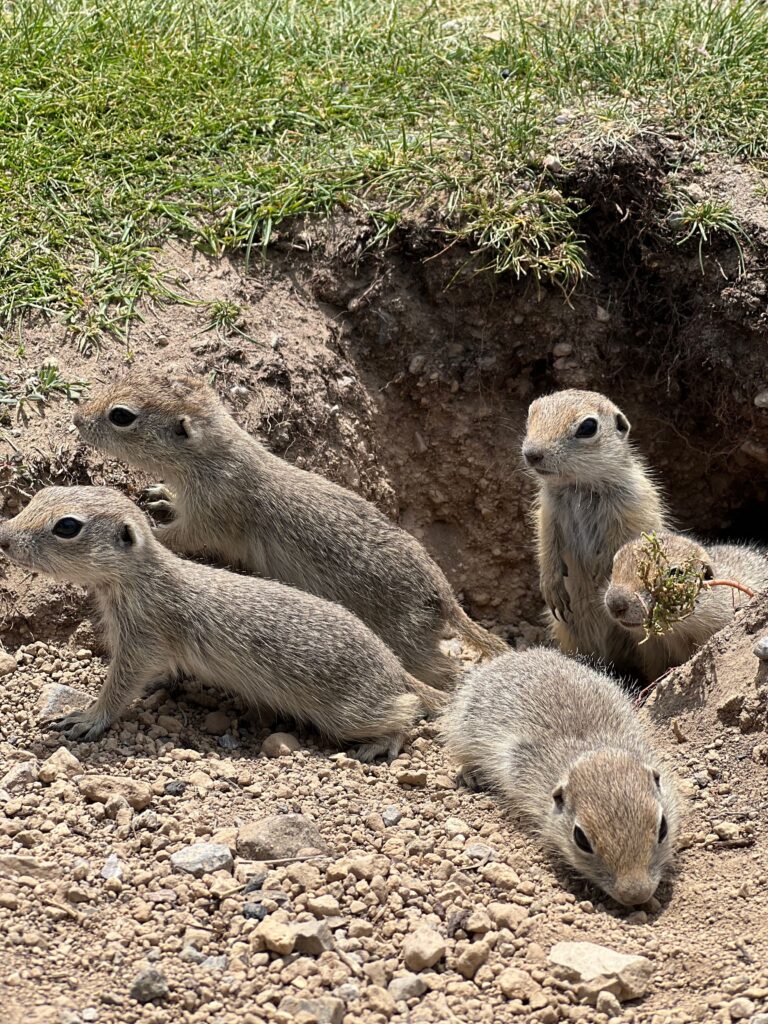
This section summarizes the prairie dog (genus Cynomys) cubs. Cooperation with the pack and den life are important from the pup stage.
- Birth and Early Characteristics
Birthing Period
Most births occur in spring and early summer, influenced by temperature and food availability.
Litter Size
Approximately 3-8 pups per litter
Weight and Size
Birth Weight: Approximately 30-40g
Body Length: Approximately 10cm
Appearance
Soft, pale fur
Eyes are born closed and open within a few days
- Growth and Behavior
Lactation Period
Drinks milk for approximately 4-6 weeks
Den Life
Spends the first few weeks of life in the den with its mother and siblings
Play and Learning
Pups play with each other and learn how to dig dens and understand alarm calls.
Activity Outside the Den
After a few weeks of age, they begin to venture out into the den area and begin foraging and pretending to keep watch.
- Protection within the pack
Chubby animals are protected within the den by their mother and other pack members.
They protect themselves from predators by acting as lookouts and ensuring safety around the den.
Chubby animals learn social skills within the den through eating, resting, and playing.
- Independence and Maturity
Weaning: They are no longer breastfed at approximately 4-6 weeks of age.
Independence in the den: Within a few months of birth, they learn to dig their own burrows, forage, and be on guard.
Sexual maturity: Both males and females are capable of breeding at approximately one year.
Are prairie dogs an endangered species?
Unfortunately, prairie dogs are designated as endangered species. The Mexican prairie dog and the Utah prairie dog are particularly dangerous, and are listed in the Washington Convention, so international trade is strictly restricted. According to information, they live in rooms and are increasingly being protected on land.
Extermination as a pest
Due to extermination as a pest, their population has decreased significantly. This is often retaliated against by farmers, as prairie dogs dig large underground tunnels that damage pastures and crops. Because they dig holes, they are often considered pests.
Can prairie dogs be kept?
It is possible to keep prairie dogs as pets. However, please be aware of the following points. Although they are tame animals, you will need to buy expensive dog supplies such as food to keep them. Currently, the number of prairie dogs in the wild as families is decreasing, and it is becoming difficult to obtain them.
Has a distinctive odor
Prairie dogs are very smelly when raised, so be careful. When they are nervous or stressed, their scent glands emit a smell. Also, no matter how much you train your child to use the toilet, he will never remember.
It is best to keep 2 or more dogs.
It is best to keep two or more. Prairie dogs do not travel alone; they form groups. Therefore, it is a good idea to keep multiple animals when breeding them.
Special pellets are recommended for bait.
We recommend special pellets and hay for prairie dogs. It also contains a good balance of nutrients. As for hay, there are products available online that are specifically designed for prairie dogs.
It is advisable to keep them in a cage.
Prairie dogs are active animals and move well, so it is preferable to keep them in cages. The ideal temperature for prairie dogs is 20-22 degrees. Use an air conditioner or heater to keep the temperature above 15 degrees.
I have a disease that I’m susceptible to
Prairie dogs are prone to odontomas, liver disease, hepatitis, and fatty liver disease. A prairie dog’s incisors continue to grow throughout their life. Incisor teeth may break and no longer grow through the gums. This can lead to illnesses that cause breathing difficulties and symptoms such as rhinitis. Prairie dogs also have weak livers, so take them to the vet as soon as possible.
Zoos Housing Prairie Dogs (Japan & Worldwide)
Prairie dogs are relatively common in zoos, with the Black-tailed prairie dog being the species most frequently exhibited.
Some zoos feature exhibits that replicate underground tunnels, allowing visitors to observe behaviors such as the animals standing upright to keep watch over their surroundings.
🇯🇵 Major Zoos in Japan
🐾 Ueno Zoo (Tokyo)
Species: Black-tailed prairie dog
Exhibit recreating North American grasslands
Features displays allowing observation of burrows and underground life
Ueno Zoo exhibits black-tailed prairie dogs in the “World of Prairie Animals and Monkeys” area.
🐾 Sapporo Maruyama Zoo
Species: Black-tailed prairie dog
Showcases their social nature (living in groups) and burrow-dwelling lifestyle
Introduces them as animals native to the Great Plains of central North America that form family units known as “coteries.”
🐾 Shizuoka City Nihondaira Zoo
One of the zoos housing black-tailed prairie dogs
Popular for their active foraging and upright standing poses
🐾 Kagoshima City Hirakawa Zoological Park
Houses black-tailed prairie dogs
One of the few facilities in southern Kyushu where they can be observed
🐾 Ikeda Zoo
Has housed prairie dogs in the past
As the current status of their care may have changed, it is recommended to check before visiting
🌎 Major Facilities Worldwide
🇺🇸 San Diego Zoo
A major, world-renowned zoo in North America
Offers opportunities to see prairie dogs in a North American grassland animal exhibit
🇺🇸 Denver Zoo
Located in Colorado, close to the prairie dog’s natural habitat
Known for its North American grassland ecosystem exhibit
🇩🇪 Cologne Zoo (Kölner Zoo)
One of the zoos in Europe known for its prairie dog exhibit
Features a colony-style exhibit that closely mimics their natural environment
🇨🇦 Toronto Zoo
A large zoo featuring diverse exhibits, including North American wildlife
Introducing other animals




コメント