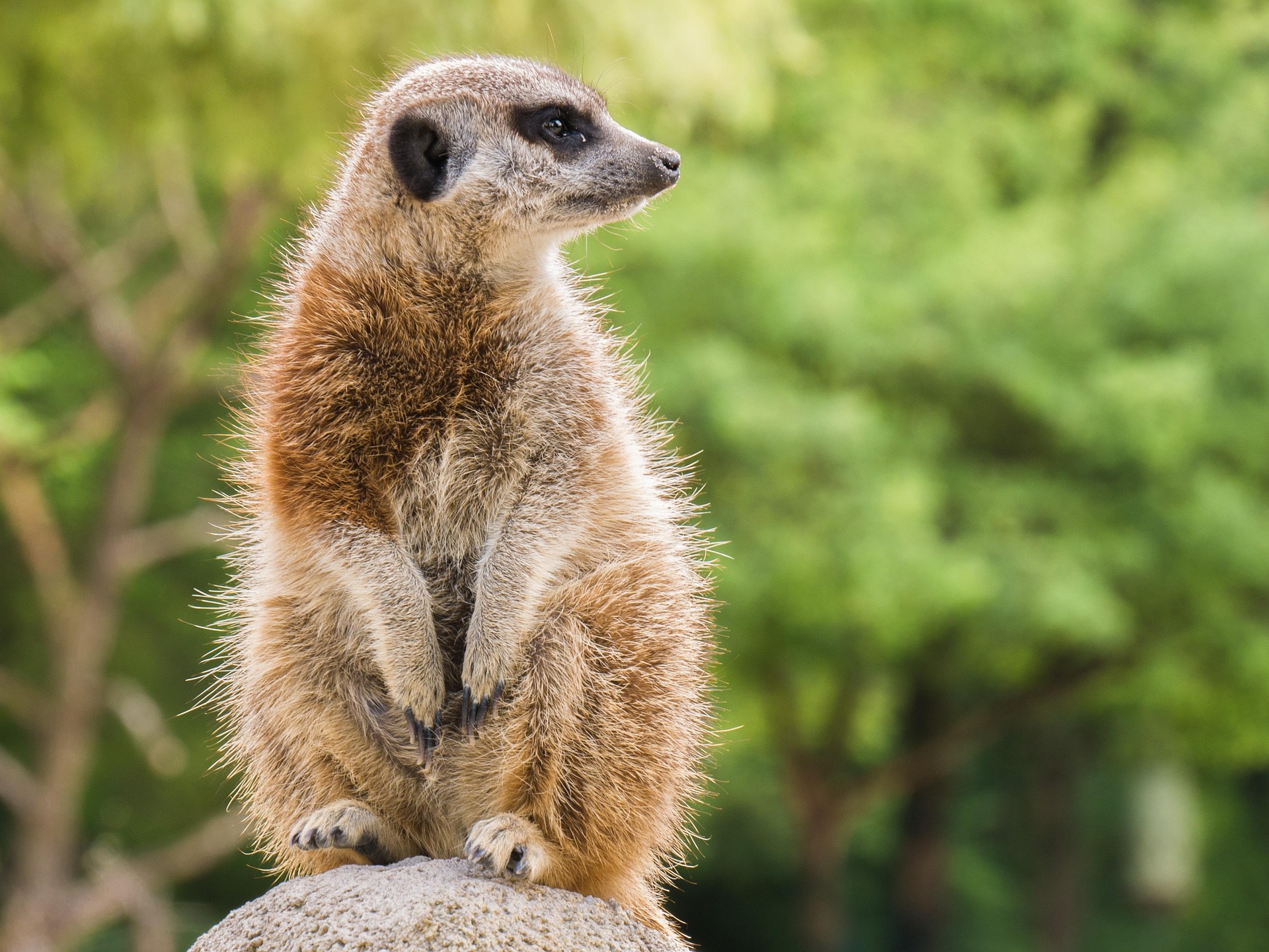
What kind of animals are the meerkats that can be seen at animal parks? We will introduce and explain its characteristics, ecology, and habitat. Meerkats, known as desert gangsters, live in groups, and their watchful behavior is very impressive. By the way, you might think it’s a cat based on its name, but be careful as it’s actually a completely different animal.






- What is a meerkat? About basic status
- What are the roots and origins of the meerkat?
- About habitat
- feature is? What kind of creature is it?
- What is your personality like?
- What is the ecology like?
- Meerkat Molting
- Meerkat Vocalizations
- Seasonal Activities
- Walking Speed
- About Meerkat Pups
- Are meerkats an endangered species?
- Can you keep meerkats?
- Zoos Housing Meerkats (Japan & Worldwide)
- Introducing other animals
What is a meerkat? About basic status
Meerkat is a carnivorous mammal classified in the class Mammalia, order Carnivora, family Mongoose, genus Suricata. The scientific name is Suricata suricatta. Also known as suricata or meerkat. The body length is 25 – 31cm, the tail length is 17 – 25cm, and the weight is 600 – 900g, so it can be easily lifted by a human with one hand. In the wild, males are larger than females.
| Japanese(和名) | ミーアキャット、ミーアカット、スリカータ |
| English(英名) | Meerkat |
| scientific name(学名) | Suricata suricatta |
| classification(分類) | Mammalia、 Carnivora、 Herpestidae、Suricata 哺乳綱、食肉目、マングース科、スリカータ属 |
| IUCN Status(保全状況) | LEAST CONCERN |
| Length(体長) | 25 – 31cm |
| Weight(体重) | 600 – 900g |
What are the roots and origins of the meerkat?
If you trace the roots of the meerkat (Suricata suricatta), you find that they belong to the mongoose family, not the cat family. Despite having “cat” in their name, they are not classified as felines.
Ancestry: The mongoose lineage from about 20 million years ago
The mongoose family (Herpestidae), to which meerkats belong, is thought to have emerged approximately 21 to 22 million years ago (during the early Miocene epoch). Current research suggests a high probability that this lineage originated in Africa.
The general evolutionary progression is as follows:
Common ancestor of carnivorous mammals
↓
Feliformia (cat-like carnivores)
↓
Herpestidae (mongoose family; approx. 20 million years ago)
↓
Social mongoose lineage
↓
Meerkat (genus Suricata)
The “standing habit” evolved for desert life
The meerkat’s famous posture—standing on two hind legs to survey the surroundings—is not a trait inherited from ancient ancestors but an adaptation to the arid environment of southern Africa.
Reasons for this evolution:
🦅 To quickly spot natural predators, such as birds of prey
🌵 To protect the group in shrublands with poor visibility
🐜 To search for insects and small animals on the ground
Because meerkats live in groups, they developed a social system where one individual acts as a “sentry.”
The meerkat’s direct ancestors
Within the mongoose family, meerkats belong to the group known as:
Social mongooses (subfamily Mungotinae)
Close relatives include:
Dwarf mongoose
Banded mongoose
Kusimanse (long-nosed mongoose)
This group evolved to live in packs or colonies rather than leading solitary lives.
The History of Meerkats Revealed Through Fossils
Fossils of the genus Suricata (meerkats) have been discovered in places like South Africa, with known specimens dating back to relatively recent times (several million years ago).
In summary, the evolutionary history is as follows:
Herpestidae (mongoose family) → Emerged approximately 20 million years ago
Social mongoose lineage → Diverged sometime after 20 million years ago
Modern-type meerkat → Established in relatively recent times
Why Did They Develop Such “Cute Faces”?
Meerkat characteristics—
Large eyes
Small ears
Slender, elongated bodies
Short legs
Sharp claws
—are all features suited to a life spent digging burrows.
While their mongoose ancestors were primarily hunters of small animals, meerkats evolved from:
“Animals that hunt” → “Animals that live underground and cooperate with their group”
About classification
Meerkats are members of the genus Suricata, but the following subspecies exist:
Suricata suricatta suricatta
Meerkats living near the Republic of South Africa fall into this category.
Suricata suricatta iona
Meerkats also live in Angola, and these populations fall into this category.
Suricata suricatta marjoriae
Meerkats also live in Namibia, and these populations fall into this category.
About habitat
Meerkats are distributed in South Africa, Angola, and Namibia.
- Geographic Distribution
Distributed mainly in Southern Africa
South Africa, Namibia, Botswana, southern Angola, western Mozambique, etc.
- Habitat
Dry grasslands (savanna)
Semi-desert areas: around the Kalahari Desert, etc.
Prefers open plains and shrublands
Burrow Use:
Digs holes in sandy or dry soil and rests in them during the day
Maintains burrows to avoid danger and high temperatures
- Environmental Characteristics
Adapted to hot, dry, and low-precipitation areas
Requires soft soil for burrow digging in sparsely grassy and shrub-covered environments
Determines activity range based on the availability of food (insects and small animals)
feature is? What kind of creature is it?
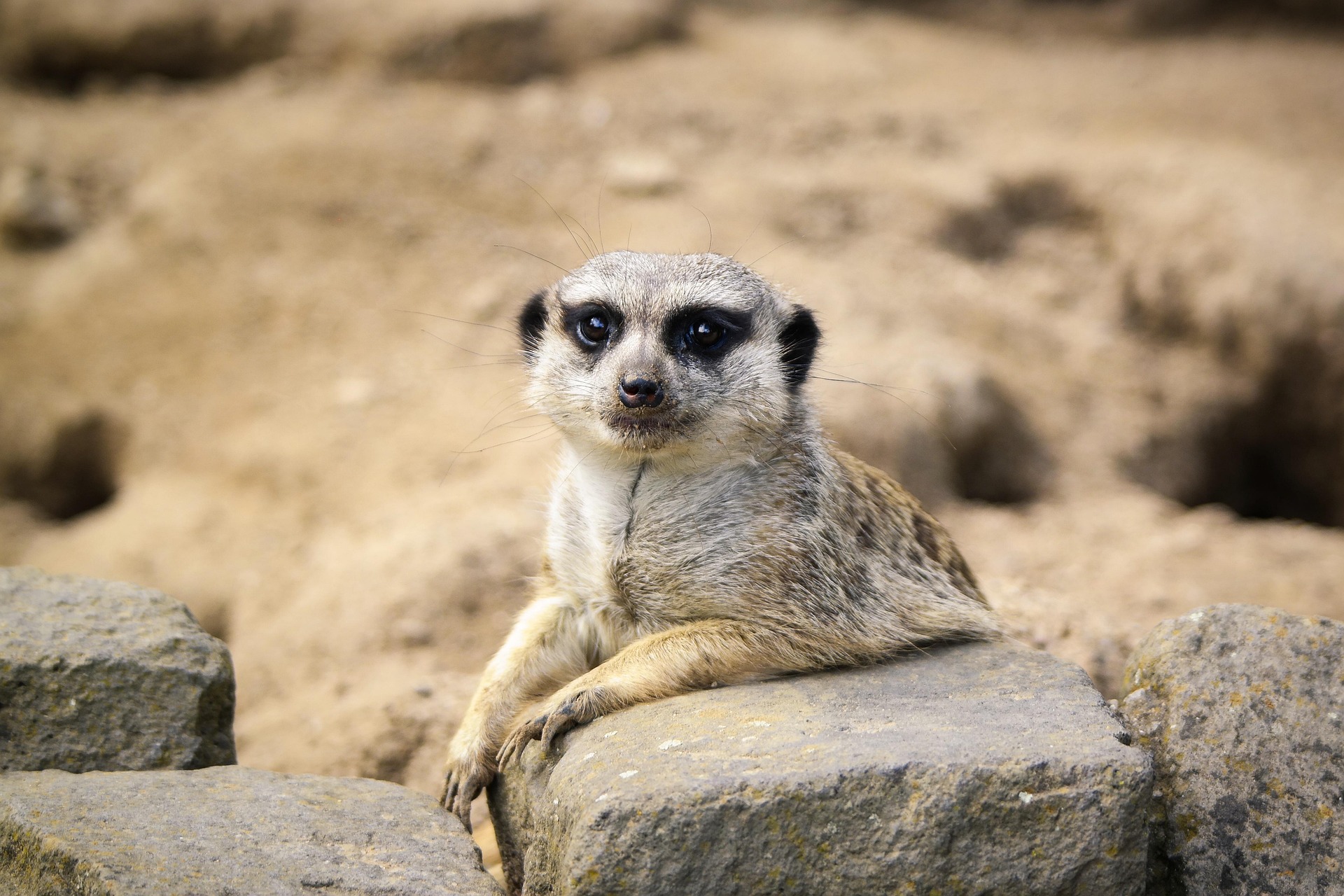
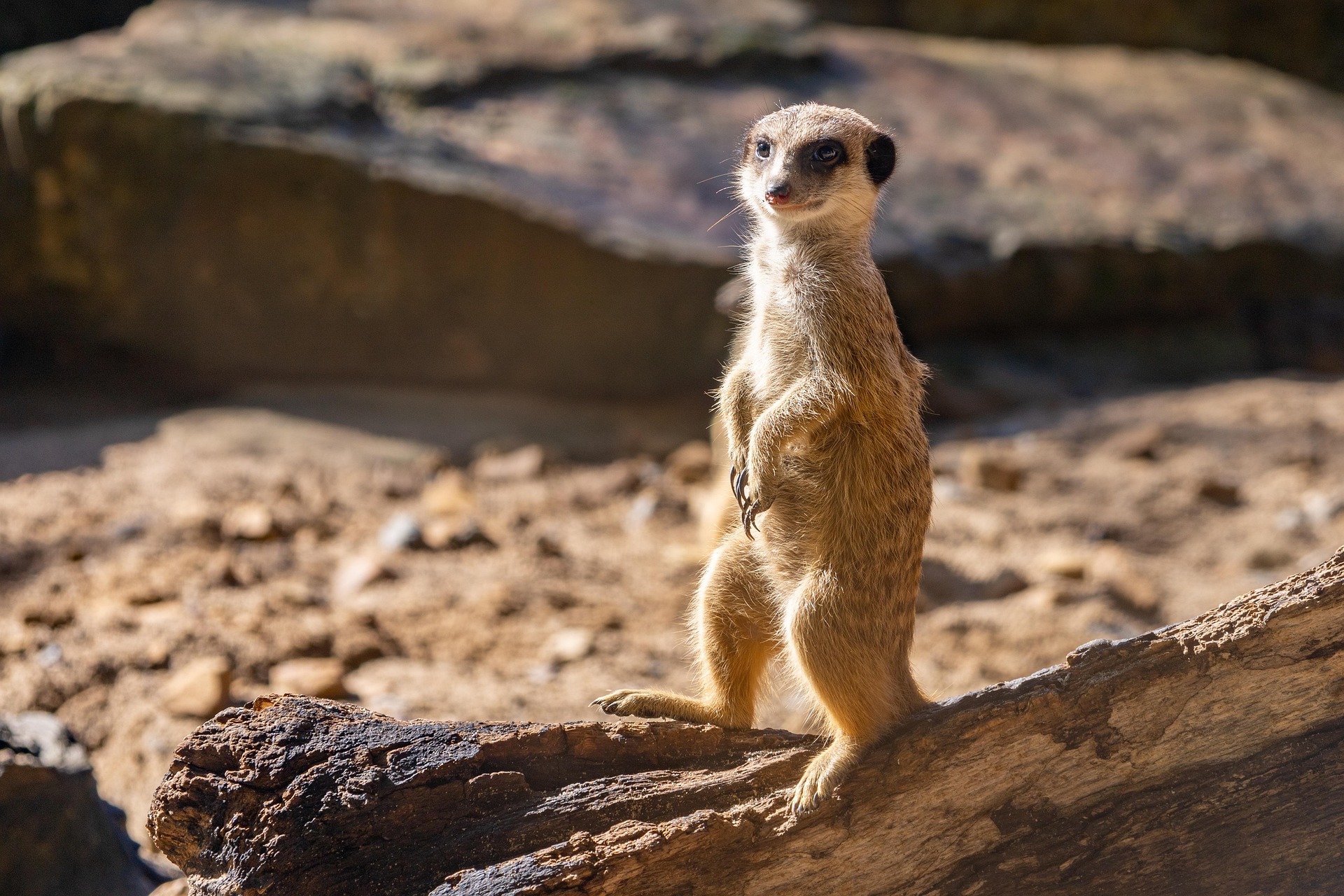
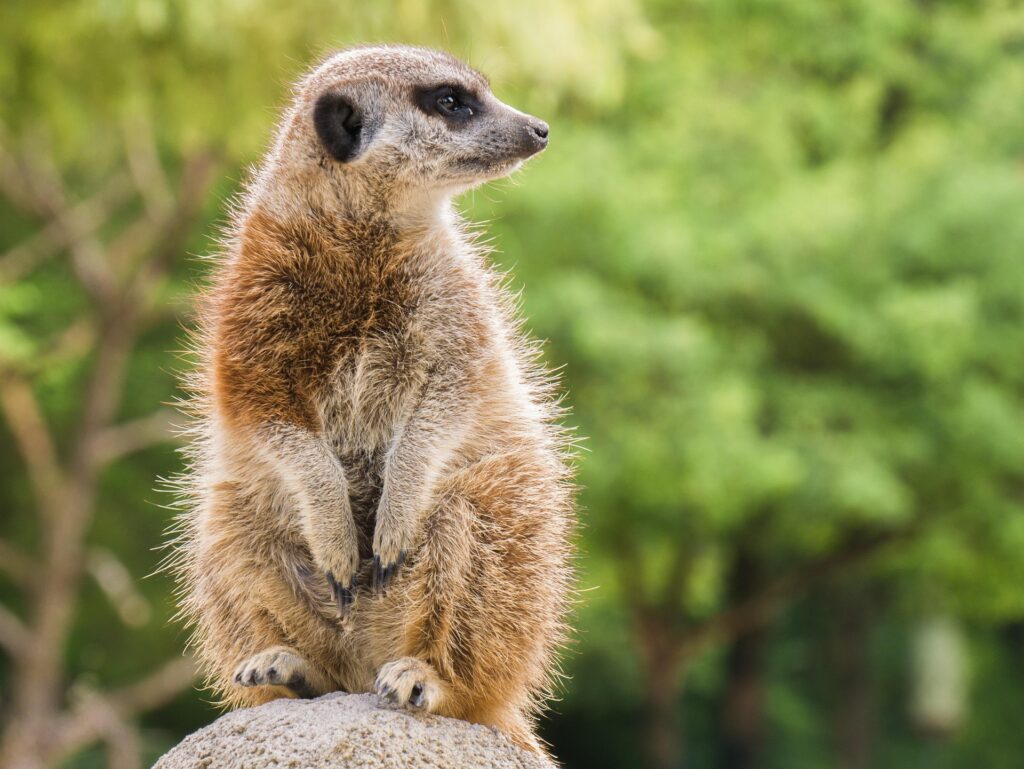
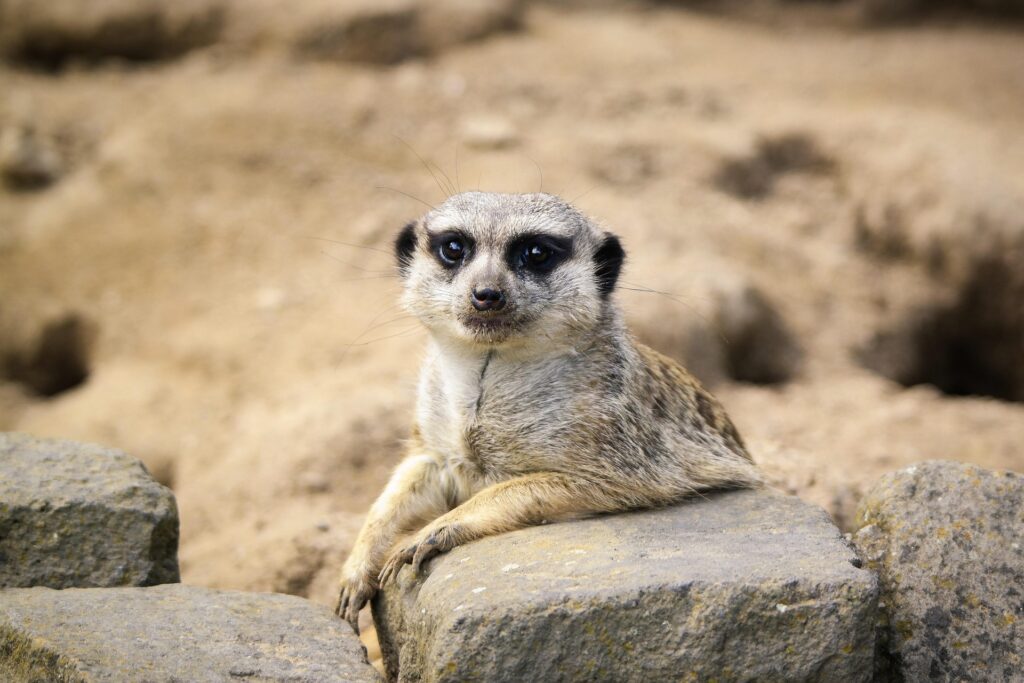
Meerkats are members of the mongoose family. Although it has “Kat” in its name, it has nothing to do with cats. In Dutch it is called the lake cat. The body color is beige or yellowish brown, with black around the eyes and ears, and a striped pattern on the back. They build nests and live in groups in rough areas with lots of stones and rocks, or in savannahs, and are diurnal. They have a habit of standing upright facing the sun with their tails as support to warm their bodies.
- Body Size and Appearance
Body Length: Approximately 25-35cm
Tail Length: Approximately 17-25cm
Weight: Approximately 0.6-1kg
Body Type and Coat Color:
Small, slender body
Back: Grayish-brown to yellowish-brown with black stripes
Belly: Light-colored
Face, Eyes, and Ears:
Large, black eyes and a pointed nose
Small, round ears with well-developed hearing
- Behavior and Personality
Highly social: Live cooperatively in groups (colonies)
Curious and active
Distinctive “sentinel” behavior: standing up and monitoring their surroundings
- Diet
Omnivorous and small predator:
Insects, spiders, small mammals, bird eggs, fruit, etc.
Diet adapted to grassland and desert environments
- Ecological Characteristics
Diurnal and active
Digs burrows and rests in them during the day
Highly social, raising young cooperatively in groups
What is your personality like?
Meerkats live in pairs or families, and are very social animals as multiple families live together in groups. However, meerkats also engage in wars with other meerkat groups, competing for territory. They are timid and wary animals, and it takes a long time to get used to them.
Meerkat Personality and Behavior
Highly Social
Live cooperatively in groups (colonies)
Divide roles such as guarding and raising children
Curious and active
Enjoys exploring, often moving around the ground and around their burrows
Actively involved in food and the environment
Alert and cooperative
When a predator approaches, the guard will alert the entire group
Shy in the face of danger, but will cooperate as a group to deal with it
Cooperate in raising children
Individuals in the group cooperate in raising children
Other individuals also participate in raising children as “babysitters”
What is the ecology like?
Meerkats subsist on insects, spiders, scorpions, myriapods, reptiles, birds, and small mammals. The breeding pattern is viviparous, with breeding occurring from October to April, and the gestation period is 11 weeks. Females can give birth to 2-5 cubs at a time. Breastfeeding lasts for 4 to 6 weeks and becomes independent at 10 weeks. The lifespan is said to be about 12 to 14 years.
- Life Rhythm
Diurnal: Active during the day and forage for food.
Resting in Burrows: They dig burrows in sandy or dry soil and rest during the day.
Burrows serve as a base for protection from predators and extreme temperatures.
- Diet
Omnivorous:
Insects, spiders, small mammals, reptiles, bird eggs, fruit, etc.
Flexibly adapts their diet to suit their environment.
- Sociality/Swarm Life
Living in Colonies:
Typical populations are around 10-30 individuals.
The group shares the roles of watchkeeping and raising children.
Watchful Behavior:
One individual stands up and keeps watch over the surroundings.
When a predator approaches, they make a warning call to alert the entire group.
- Breeding
Breeding Season: Once a year, spring to summer.
Birthing in Burrows: Usually gives birth to 2-5 babies.
Brooding:
Other individuals help care for the babies (babysitting behavior).
Begins independent behavior at approximately 2 months of age.
- Habitat Relationship
Adapted to dry grasslands and semi-deserts
Digs burrows in open plains and shrublands, and moves around where food is available
Flexibly adjusts movement range depending on the environment
Are there any natural enemies?
Meerkat’s natural enemies include black-backed jackals, ratels, and birds of prey, and large mammals and birds are quite troublesome and end up being preyed upon. When a natural enemy approaches, they loudly alert their friends and flee all at once into their burrows.
Meerkat Molting
Seasonal Molting
Meerkats inhabit the arid regions of southern Africa, and their fur changes in response to temperature fluctuations.
Spring to Summer (Hot Season)
Winter coat is shed
Fur becomes slightly thinner
Prevents body temperature from rising
Adapts to daytime activity
Autumn to Winter (Cold Season)
Transition from summer coat to winter coat
Fur becomes denser
Adapts to cold nighttime temperatures
Regulating their fur is crucial, especially in the Kalahari Desert—their natural habitat—where there is a significant temperature difference between day and night.
Molting Periods
Generally, the cycle is as follows:
Spring (Around September–November in the Southern Hemisphere)
Transition from winter coat to summer coat
Autumn (Around March–May in the Southern Hemisphere)
Transition from summer coat to winter coat
*Note: For meerkats kept in Japanese zoos, the timing may vary slightly depending on seasonal temperatures and lighting conditions.
Characteristics of Meerkat Fur
Meerkat fur is specialized for life in the desert.
Back
Brownish-gray to grayish-brown
Black horizontal stripes
Camouflage against the sandy terrain
Belly
Sparse fur
Regulates body temperature by absorbing sunlight
Tail
Thick and furry
Helps with balance
Provides support when standing upright
Meerkat Vocalizations
Meerkats possess a wide variety of vocalizations. Because they live in groups, they use these calls to communicate specific details such as the presence of danger, food sources, and the locations of their companions.
Alarm Calls (Warning of Danger)
“Kip! Kip!” or “Kyuk-kyuk”
When spotting airborne birds of prey (eagles, hawks, etc.)
When a snake or carnivore is nearby
Alerts the entire group
Characteristics:
Short, sharp sounds
Triggers an immediate, collective reaction from the group
Different calls are used for ground-based versus aerial threats
Meerkat sentinels stand at high vantage points to monitor their surroundings and use these calls to signal when they sense danger.
Warnings for Aerial Threats
“High-pitched whistling sounds”
Targets:
Eagles
Hawks
Owls
Characteristics:
High-pitched sounds
Causes the group to quickly retreat into their burrows
Since attacks from above pose a major threat in the desert environment, they have developed specialized calls for aerial vigilance.
Warnings for Ground-based Threats
“Low-pitched growling or rumbling sounds”
Targets:
Jackals
Snakes
Large lizards
Characteristics:
Signals to the group that an enemy is nearby
Sometimes involves several meerkats gathering to intimidate the threat
Foraging Calls
“Soft ‘chit-chit’ sounds”
Meaning:
“I am here”
“It is safe”
“Checking the distance to companions”
Meerkats often dig in the ground while searching for insects or scorpions, which can obstruct their line of sight; consequently, they use these sounds to keep track of their companions’ locations.
Seasonal Activities
Meerkats inhabit the Kalahari Desert and arid grasslands of southern Africa; their activity times and behavioral patterns shift with the seasons. Key factors influencing these changes include temperature, rainfall, and the availability of food (insects and small animals).
🌸 Spring (Approx. September–November: Southern Hemisphere)
A season of increased activity
Characteristics
Winter cold begins to subside
Insects and small animals start to increase in number
The start of the rearing season
Key Behaviors
🟤 Increased foraging time
Actively searching for:
Scorpions
Insects
Spiders
Lizards
Small rodents
🟤 Breeding and rearing
Breeding often occurs around the rainy season
Raising young in the group’s burrow
Adults take turns standing guard
🟤 Burrow maintenance
Digging new burrows
Repairing old burrows
☀️ Summer (Approx. December–February)
Activity while avoiding the heat
Temperatures in the Kalahari Desert can approach 40°C during the day.
Key Behaviors
🌅 Early morning activity
Emerging from the burrow after sunrise
Sunbathing to warm up the body
Starting to forage
🌡 Heat management
Reduced activity during the hottest part of the day
Resting in the burrow
Resuming activity in the evening
🐜 Increased food intake
With the arrival of the rainy season,
Insects
Larvae
Small reptiles
become abundant.
🍂 Autumn (Approx. March–May)
Preparation for winter
Key Behaviors
🟤 Storing fat
Preparing for winter when food becomes scarce
Increasing foraging time
🟤 Strengthening group bonds
Mutual grooming
Resting together in the burrow
🟤 Molting
Transitioning from summer coat to winter coat
Adapting to cold nights
❄️ Winter (Approx. June–August)
A season of energy conservation
Winters in the Kalahari Desert are dry, and temperatures can drop near freezing at night. Key Behaviors
🌅 Delayed start to activity
Summer:
Active immediately after sunrise
Winter:
Emerges only after body temperature rises from sunlight
☀️ Increased sunbathing
Exposes belly to the sun
Raises body temperature
🕳 More time spent in burrows
Huddles together in a group at night
Prevents drop in body temperature
🐜 Changes in foraging methods
Slow-moving insects
Roots and plants
Subterranean organisms
—increasingly searches for these.
Basic Daily Rhythm (Consistent throughout the year)
| Time | Activity |
|---|---|
| Before sunrise | Waiting in the burrow |
| Morning | Sunbathing and starting lookout duty |
| Mid-morning | Peak foraging activity |
| Midday | Resting to avoid the heat |
| Afternoon | Foraging resumes |
| Evening | Returning to the burrow |
| Night | Sleeping in a group |
Walking Speed
While meerkats do not move particularly fast during routine travel, they can move quite rapidly when sensing danger or pursuing prey.
Approximate movement speeds: Normal walking: ~1–3 km/h; moving while foraging: ~2–5 km/h; hurried movement: ~8–10 km/h; short-distance dash: ~15–30 km/h.
Normal Walking Style
Meerkats walk on all fours, but their movement is characterized by an “exploratory” style:
Lifting their heads to check their surroundings
Stopping frequently
Sniffing the ground
Digging with their forepaws as they move forward
Although they may travel several kilometers in a day, they tend to move in a zigzag pattern while searching for food rather than traveling in a straight line.
Running Speed
They accelerate suddenly when they sense danger.
Upon spotting a predator:
They raise their tails
They emit short alarm calls
The group runs toward their burrow
In these instances, they can reach speeds of around 20 km/h over short distances.
Relationship with Digging
Meerkats have highly developed digging abilities—even more so than their walking capabilities.
Characteristics:
Strong forepaws
Long claws
A body shape designed to efficiently kick out sand
When foraging, they repeat a cycle of walking, stopping, and digging.
About Meerkat Pups
By summarizing the behavior of meerkat (Suricata suricatta) pups, we can understand their developmental stages from birth to independence and their behavior within the group.
- Birth/Nest
Breeding Season: Spring to Summer (Most common at the end of the dry season)
Birth in the Den:
They give birth safely in dens dug in sandy areas or under shrubs.
They hide in the den to avoid danger and high temperatures.
Litter Size: Usually 2-5 pups
- Pup Characteristics
At birth, their eyes are closed and their ears are small and underdeveloped.
They weigh approximately 25-40g.
They depend on their mother and other members of the group (babysitters) within the den.
- Growth Stages
Growth and Behavior: From 0-2 weeks, they remain closed and are held by their mother in the den for feeding and warmth. From 2-4 weeks, their ears open and become erect. At 4-6 weeks, they begin to play with their siblings. They begin walking around the burrow and practicing nibbling. At 6-8 weeks, they learn to keep watch and simple exploratory behaviors. They also gradually begin hunting practice. At about 2 months, they begin to move independently, participating in group activities and gradually becoming independent.
- Survival Considerations
High risk of predation from natural enemies (raptors, snakes, weasels, etc.)
Cooperation within the group (watching and babysitting) is important for improving survival.
Are meerkats an endangered species?
Meerkats are not an endangered species. It is classified as a low concern, and although it is stable, there is a possibility that it will be killed to prevent rabies, and its population is decreasing. As a result, they live in several protected areas such as the Kalahari Border Park and Lake Makgadikgadi. Meerkat projects have already been launched in Africa.
Conservation Status
IUCN Red List: Least Concern (LC)
Reason:
Wide range, found in large numbers in the dry grasslands and semi-desert regions of southern Africa
Their social nature, living cooperatively in groups, gives them a relatively high survival rate
Threats:
Predation by natural enemies (birds of prey, snakes, weasels, etc.)
Agricultural development and human activity in some parts of their habitat have impacted their survival
Can you keep meerkats?
Some people keep meerkats as pets. However, they are hard to get used to, so breeding them is for advanced users. There are events held in Japan, and visitors are invited to interact with small animals within the park. We recommend that you take a look at the recruitment and then take a look inside the facility. Please check the access map etc.
What does the food look like?
In addition to zoo food (horse meat, bananas, apples, etc.), zoos feed snakes, crickets, and worms. Therefore, it is common to prepare these if you want to breed them. I’m an omnivorous child, so I can eat anything.
Can’t stay in the cage for a long time
Meerkats are very active animals. Therefore, they cannot live forever in a cage. They have a wide home range and can travel long distances in a day while searching for prey. Free range is the norm. I also don’t remember using the toilet.
Multiple dogs are the basics.
Meerkats normally live together in groups, so they can become stressed if they don’t have friends. Sufficient consideration is required. They may dig into carpets, flooring, and furniture to relieve stress. They have a habit of keeping watch and digging tunnels underground.
can be aggressive
Meerkats are hard to get attached to. It takes some time to get used to it. Be careful as they may bite you with their sharp teeth if they are not used to it.
Zoos Housing Meerkats (Japan & Worldwide)
Meerkats are popular small mammals kept in zoos around the world. They are frequently exhibited because visitors can easily observe their habit of living in groups, their behavior of standing upright to keep watch, and their child-rearing activities. They are housed in numerous facilities globally; records confirm their presence in over 252 zoos across 34 countries.
🇯🇵 Major Zoos in Japan Where You Can See Meerkats
Chiba Zoological Park
Features:
Observe group living
Sentry-like lookout behavior can be seen
Exhibited in the “Plains Zone”
Meerkats form family-based groups and have a habit of having one individual keep watch over the surroundings.
Ichikawa City Zoo & Botanical Garden
Features:
Long history of keeping meerkats
Successful breeding record
Focuses on housing them in family groups
This facility has continuously kept meerkats since opening in 1986.
Sapporo Maruyama Zoo
Features:
Exhibited in the “Africa Zone”
Enclosure designed to mimic a desert environment
Sunbathing and alert postures can be observed
In captivity, they can live longer than in the wild, sometimes reaching 10 to 15 years of age.
Okazaki City Higashi Park Zoo
Features:
Comprehensive educational displays on meerkat ecology
Learn about their physical characteristics and group behavior
Nagasaki Bio Park
Features:
Known for exhibits that encourage natural meerkat behaviors
Has previously featured exhibits where the animals roam freely within the park
🌍 Notable Zoos Worldwide Housing Meerkats
🇬🇧 ZSL London Zoo
A premier zoo in the UK
Famous for its meerkat exhibit
🇩🇪 Zoologischer Garten Berlin
One of Europe’s most historic zoos
Houses a diverse range of mammals
🇳🇱 Burgers’ Zoo
A zoo with a long history of keeping meerkats
🇺🇸 Houston Zoo
A zoo known for its meerkat exhibit
Introducing other animals
コメント