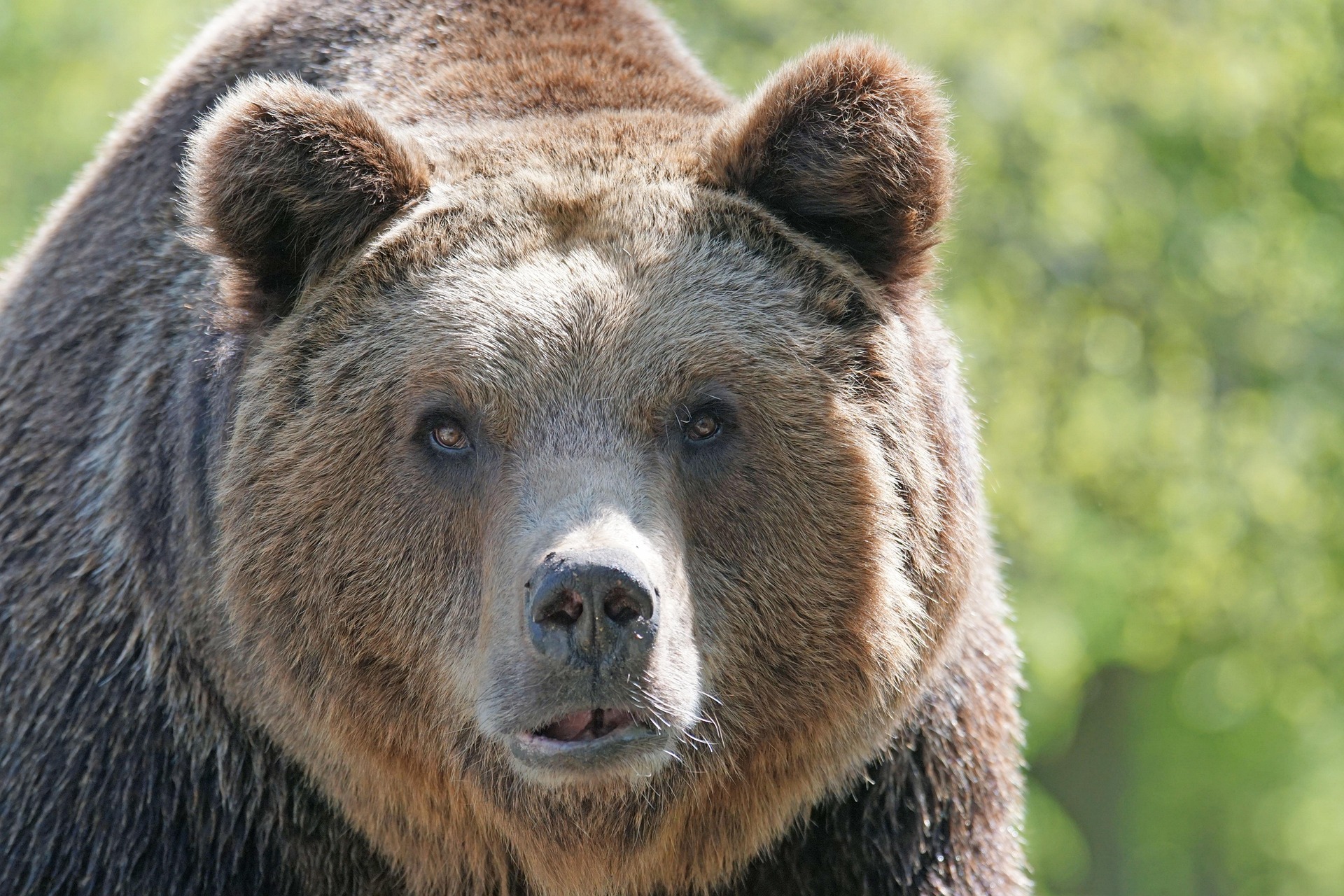
What kind of animal is the brown bear that lives in America, Europe, Hokkaido, etc.? We will introduce and explain its characteristics, ecology, and habitat. Brown bears are widely distributed in the Northern Hemisphere and live in a variety of natural environments. However, because they are larger than humans, they may attack humans, so you need to be careful.



- What is a brown bear? About basic status
- What are the roots and origins of the brown bear?
- Where is its habitat?
- feature is? What kind of creature is it?
- What is your personality like?
- What is the ecology like?
- Brown Bear Vocalizations
- Seasonal Activities
- Walking Speed
- About Brown Bear Cubs
- Are brown bears an endangered species?
- Can brown bears be bred?
- Zoos Housing Brown Bears (Japan and Worldwide)
- Introducing other animals
What is a brown bear? About basic status
Brown bears are mammals that belong to the bear family. I feel like it’s a brown fox, a scarlet bear, or a hikuma. In English, it is also called grizzly bear. The scientific name is Ursus arctos. They are 2-3 meters long and weigh 100-300 kg, making them larger carnivores than humans. The information is listed below.
| Japanese(和名) | ヒグマ |
| English(英名) | Brown bear、Grizzly bear |
| scientific name(学名) | Ursus arctos |
| classification(分類) | Mammalia、 Carnivora、 Ursidae、Ursus 哺乳綱、食肉目、クマ科、クマ属 |
| IUCN Status(保全状況) | LEAST CONCERN |
| Length(体長) | 2-3m |
| Weight(体重) | 100-300kg |
What are the roots and origins of the brown bear?
Tracing the roots of the brown bear (Ursus arctos) leads back to ancient bears that inhabited the Eurasian continent millions of years ago.
Origins
Current research suggests that the ancestors of the brown bear emerged in Eurasia approximately 800,000 to 1.2 million years ago.
Their direct ancestor is considered to be
the Etruscan bear (Ursus etruscus).
The Etruscan bear lived across a range extending from Europe to Asia between approximately 5 million and 1 million years ago.
Groups that evolved from this species
branched out into modern bear species, such as
brown bears,
polar bears, and
American black bears.
Evolutionary Timeline
The general lineage is as follows:
Approximately 20 million years ago
Early ursids (bear family members)
⬇
Approximately 5 million years ago
Etruscan bear
⬇
Approximately 1 million years ago
Brown bear (Ursus arctos) emerges
⬇
Subsequently,
they spread widely across
Europe,
Siberia,
Northern China,
Japan, and
North America.
Roots of Brown Bears in Japan
The brown bears inhabiting Hokkaido did not, in fact, arrive in a single migration event.
During the Ice Age, sea levels were more than 100 meters lower than they are today, creating land bridges that connected Hokkaido to the continent and Sakhalin.
DNA analysis has revealed that, during this era,
brown bears of different lineages migrated to Hokkaido on multiple occasions—
approximately 160,000 years ago,
70,000 years ago, and
over 10,000 years ago.
Consequently, multiple genetic groups exist within the Hokkaido brown bear population.
Expansion into North America
Between approximately 70,000 and 100,000 years ago, brown bears crossed the Bering Land Bridge (the site of the modern-day Bering Strait) into North America.
They subsequently
expanded their range into
Alaska,
Canada, and
the western United States.
The massive Kodiak bear is also a population that evolved from this North American lineage.
About classification
There are several subspecies of the species, so check them out when you have time. They are also being studied in some areas. They are not found in some areas because they are extinct.
| 名前 | Name | Scientific Name (学名) |
| ハイイログマ(灰色熊) | Grizzly bear | Ursus arctos horribilis |
| コディアックヒグマ | Kodiak bear | Ursus arctos middendorffi |
| エゾヒグマ(蝦夷羆) | Ezo brown bear | Ursus arctos yesoensis |
| ヒマラヤヒグマ | Himalayan brown bear | Ursus arctos isabellinus |
| メキシコハイイログマ | Mexican grizzly | Ursus arctos nelsoni |
| カリフォルニアハイイログマ | California golden bear | Ursus arctos californicus |
| カムチャッカオオヒグマ | Bergman’s Bear | Ursus arctos piscator |
| マルシカヒグマ | Marsican brown bear | Ursus arctos arctos |
Ursus arctos horribilis
Grizzly bears are also known as American brown bears. The largest specimens are said to weigh more than 450 kilograms, and are so large that they can chase prey at speeds of 48 km/h, which is quite astonishing. The subspecies as a whole is classified as “endangered” in the United States and “of special concern” in Canada.
Ursus arctos middendorffi
The Kodiak brown bear is also known as the Alaskan brown bear. Females weigh between 180 and 315 kg, and males between 270 and 635 kg. It is an extremely large bear, reaching a height of 3 meters when the male stands on his hind legs. The population in 2005 was 3,526, and the estimated population is increasing.
Ursus arctos yesoensis
Ezo brown bears are distributed in the forests and fields of Hokkaido. It is large, reaching 2-3 meters in length. They are good at being independent and are active day and night. Ezo brown bears are being exterminated and are now designated as an endangered species.
Ursus arctos isabellinus
The Himalayan brown bear, also known as the Himalayan red bear or Isabeline bear, is a subspecies of brown bear that lives in the western Himalayas. It is the largest mammal in this region. Males are 1.5 to 2.2 meters long and brown in color. It is also listed in the Washington Convention.
Ursus arctos nelsoni
The Mexican grizzly bear is a subspecies that lived from Mexico to the United States, but is now confirmed to be extinct. The Mexican grizzly bear was thoroughly exterminated as a pest.
Ursus arctos californicus
The California grizzly bear is a bear that lived in California. The body color was brown, the body length ranged from 1.8m to 3m, and the weight ranged from 130kg to 680kg. However, it became extinct due to hunting for its fur.
Ursus arctos piscator
The Kamchatka brown bear lived on the Kamchatka Peninsula in Russia. However, in 1920, complete extinction was confirmed.
Ursus arctos arctos
The Marsican brown bear is also known as the Apennine brown bear, or in Italian, Orso Bruno Marsicano. It is a European brown bear and is protected in Italy’s Abruzzo National Park, Lazio Emolise. This bear is designated as an endangered species.
Where is its habitat?
Brown bears are found mainly in the Americas, but are also distributed in Japan (Honshu) and Europe.
Brown Bear Habitats in Japan
In Japan, brown bears are found in Hokkaido and parts of Honshu.
Hokkaido Brown Bear (Ursus arctos)
Mainly in the mountainous and forested areas of Hokkaido.
Living mainly in forests and along rivers.
Scattered throughout Hokkaido, but particularly common in the mountainous areas of northern and eastern Hokkaido.
Honshu Brown Bear (Different from Asiatic Black Bear)
Mountainous areas north of central Honshu (Iwate, Akita, Nagano, etc.).
Honshu brown bears are extremely rare and are sometimes designated as endangered.
Although it is easy to confuse the two, Honshu is primarily home to Asiatic black bears, while Honshu brown bears are found in very limited areas.
Brown Bear Habitats Around the World
Brown bears are distributed widely around the world.
North America
Alaska, British Columbia, Canada, and the Rocky Mountains, among other areas.
Europe
Scandinavian Peninsula and forested areas of western Russia.
Asia
Siberia, Mongolia, northern China, etc.
Environmental Requirements:
Prefers forested and mountainous areas.
Gathers along rivers and in areas with abundant berries, where food sources are abundant.
Needs a safe place, such as a hole or cave, to hibernate during the winter.
feature is? What kind of creature is it?
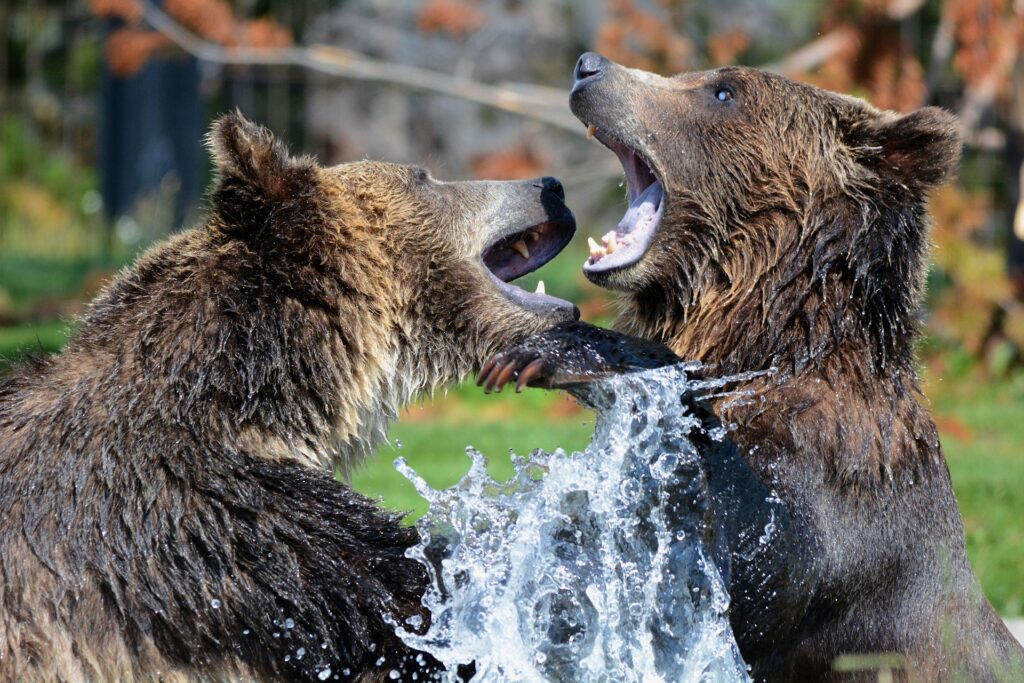
Brown bears have a sturdy and sturdy physique, and are characterized by being larger than humans. There are differences in the color of the body hair depending on the population. They also tend to be solitary, preferring to live in forest areas.
- Physical Characteristics
Size:
Male: Approximately 1.8-2.8m in length, weighing 100-400kg (some Hokkaido brown bears can weigh over 500kg)
Female: Smaller than males, weighing approximately 50-200kg
Fur Color:
Brown to dark brown (varies slightly by region and season)
Hokkaido brown bears have thick fur, and are covered in thick fur in winter
Face:
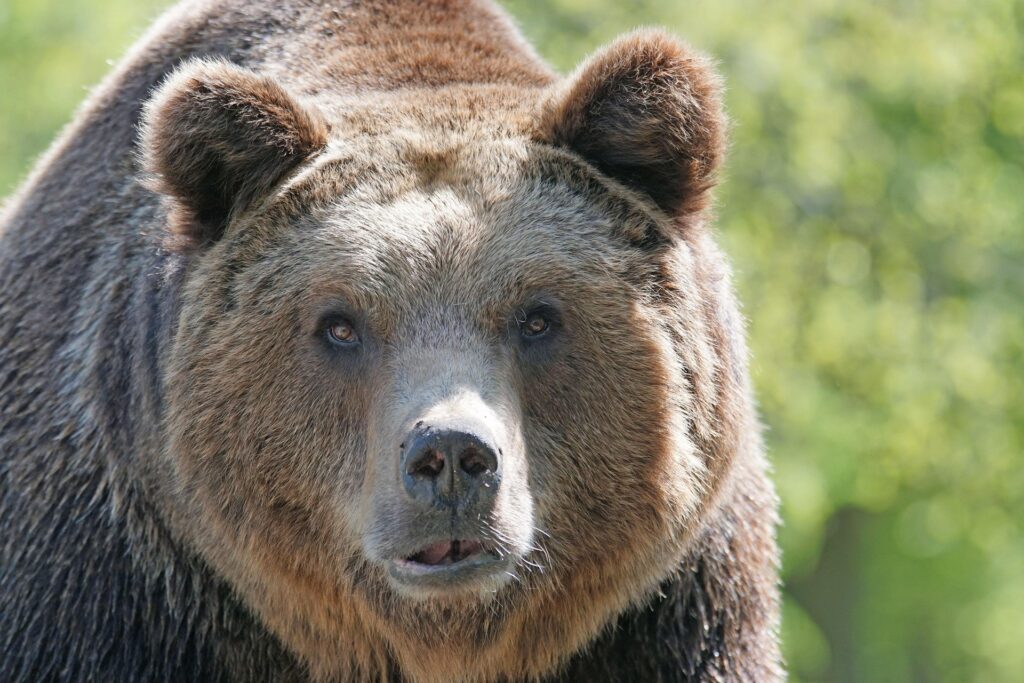
Sturdy, round face with a pointed nose
Small eyes and small ears
Limbs:
Thick, powerful limbs
Long, sharp claws on front paws (used for climbing trees and digging)
- Ecology and Behavior
Diet: Omnivorous
Spring to Summer: Grasses, wild vegetables, berries, insects, fish
Autumn: Eat acorns and nuts to store fat for winter
Prey on small animals and deer as needed
Activity: Generally active day and night (tends to be nocturnal in areas with human activity)
Hibernation:
Hibernates in winter in Hokkaido and other cold regions
Sleep in dens, caves, and tree bases
Reproduction:
Give birth once every 2-3 years
Mother bears give birth to 1-4 cubs and raise them for 1-2 years
- Personality and Behavior
Generally timid but highly aggressive
Often solitary and territorial
Very dangerous when guarding food or cubs
- Appearance
Huge and sturdy, giving a powerful and imposing impression
Their fluffy fur makes them appear especially large in winter
They support their body with all four limbs and walk leisurely
What is your personality like?
Brown bears usually avoid people. Most of them are very cautious and tend to avoid people, but if they happen to encounter a human and provoke them, they become excited and often attack. They don’t like winter, so they tend to rest there.
- Basic Personality
Timidity
Generally avoid humans.
Even if they encounter a human in the forest, they tend to flee first.
Highly Vigilance
Sensitive to smells and noises.
Very wary of anything approaching their territory or food source.
- Aggression
Usually gentle, but can become aggressive under certain conditions.
Mother bears protecting their cubs are extremely dangerous.
Individuals weakened by injury or illness can also become aggressive.
They can also become aggressive in fights over food.
- Sociality
Solitary behavior is the norm.
Males are particularly solitary.
Females tend to stay with their cubs.
Territorial.
Mark their territory with scent and claw marks.
- Learning Ability/Intelligence
Intelligent Animals
Learns the location of food and danger.
Individuals that venture into human habitats may memorize the location of garbage and fish.
What is the ecology like?
Brown bears are omnivorous. In the wild, they eat a wide variety of foods, including fruits, nuts, acorns, plants, and even insects and fish. Depending on the time of year and location, they may cause damage to large agricultural crops in order to obtain nutrients. In winter, they hibernate in their dens. Brown bears reach sexual maturity at around 3 to 5 years of age and become able to breed. The breeding season is from May to July. Their lifespan is around 20 to 30 years.
- Habitat
Living mainly in forested areas, mountainous regions, and along rivers
Living in vast forests and mountainous areas in Hokkaido, and limited mountainous areas in Honshu
Living mostly away from human habitations
- Diet
Brown bears are omnivorous, and their diet changes depending on the season and region.
Spring: New shoots, wild vegetables, insects, and animal carcasses
Summer: Fruits, berries, and fish (such as salmon)
Fall: Eat nutritious plants like acorns and nuts to store fat in preparation for hibernation.
If necessary, they also prey on small animals and deer meat.
- Behavior Patterns
Activity: Active day and night (tends to be nocturnal in areas with many people)
Hibernation: Hibernates in cold regions
Hibernates for approximately 3-5 months without food.
Sleep in dens, caves, and tree bases.
Migration: May travel extensively in search of food.
- Breeding and Rearing
Breeding Season: Spring (April-May)
Birth: During hibernation (give birth to 1-4 cubs)
Rearing: Mother bear raises cubs for 1-2 years
Learns hunting and foraging skills alongside their mother
Cubs travel with their mother and depend on her until they become independent
- Social Structure
Primarily solitary
Males sometimes fight over territory.
The strongest bond exists between mother bears and their cubs.
- Intelligence and Learning
They have a high ability to remember the location of food sources and dangers.
Some individuals use garbage and fields in human habitations.
They behave flexibly according to the situation, employing unique strategies to find food.
Are there any natural enemies?
Brown bears are the largest bears on land and have no rivals. If I had to guess, it would be human. In the past, there was a history of people shooting at brown bears.
Brown Bear Vocalizations
Brown bears (Ursus arctos) rarely let out loud roars like lions; instead, they employ a variety of vocalizations and sounds depending on the situation. In fact, sounds other than vocalizations—such as snorting or teeth-clacking—serve as important means of communication.
Key Vocalizations
“Wooo!” / “Gaooo!” (Roar)
The most powerful vocalization, emitted during displays of aggression or actual attacks.
Heard during territorial disputes or when the bear is highly wary of humans or other animals.
Not frequently produced.
“Hoo!” / “Buf!” (Snort)
One of the most commonly heard sounds.
Indicates wariness, dissatisfaction, or a mild threat.
Can also be heard during encounters with humans.
“Grrrrr…”
A low growl.
Serves as a warning: “Do not come any closer.”
“Sniff-sniff”
A snuffling sound.
Often heard when the bear is exploring its surroundings while investigating scents.
“Kyu” / “Pee-pee”
Sounds made by cubs to call their mother.
Frequently heard when they are hungry or anxious.
“Moo” / “Uun”
A low, soft sound sometimes made by a mother bear to call her cubs.
Heard in calm situations.
Seasonal Activities
The activity patterns of brown bears (Ursus arctos) vary significantly by season. In Hokkaido, in particular, their behavior shifts distinctly in accordance with hibernation, breeding, and changes in food availability.
| Season | Activity Details | Activity Level |
|---|---|---|
| Spring (Mar–May) | Waking from hibernation; foraging | ★★★☆☆ |
| Summer (Jun–Aug) | Wide-ranging movement; foraging & breeding | ★★★★☆ |
| Autumn (Sep–Nov) | Heavy feeding before hibernation | ★★★★★ |
| Winter (Dec–Mar) | Hibernation | ★☆☆☆☆ |
🌸 Spring (March–May)
Waking from hibernation
They emerge from hibernation around March or April (timing varies by region and climate).
Males wake up first, while females and those with cubs wake up slightly later.
They may lose 20–40% of their body weight during the winter.
Diet
Butterbur (fuki)
Asian skunk cabbage (mizubasho)
Young grass
Tree buds
Deer/Ezo deer carcasses
Insects
As food is still scarce, they travel over wide areas to forage.
☀️ Summer (June–August)
The most active season
They may travel 10–30 km in a single day.
They roam widely across rivers, forests, and grasslands.
Diet
Berries
Ants
Bee larvae
Insects
Herbaceous plants
Young deer (fawns)
Fish (depending on the region)
Breeding season
The breeding season is from May to July.
Males may fight with one another.
Females may mate with multiple males.
🍂 Autumn (September–November)
The period of heaviest feeding
Known as the “hyperphagia” phase; they store vast amounts of energy in preparation for hibernation.
Diet
Acorns
Walnuts
Grapes
Wild grapes
Salmon (in areas with rivers)
Nuts/Tree fruits
They may consume over 20,000 kcal per day.
During this period, they may appear near human settlements, and the risk of encounters tends to increase.
❄️ Winter (December–March)
Hibernation
They hibernate in places such as:
Rock crevices
Beneath fallen trees
Burrows dug into the ground
Characteristics during hibernation
Body temperature drops by only a few degrees Celsius.
Heart rate decreases significantly.
They rarely excrete waste.
They are able to relatively maintain muscle and bone mass.
Birth
Pregnant females give birth to 1–3 cubs (rarely 4) around January or February while hibernating.
Newborn cubs are tiny, characterized by:
Weight: Approximately 300–500g
Eyes: Closed
Diet: Exclusively mother’s milk
Walking Speed
The walking speed of the brown bear (Ursus arctos) varies significantly depending on the situation.
Movement Speeds: Slow walk (approx. 3–5 km/h); Normal walk (approx. 5–8 km/h); Brisk walk (approx. 8–12 km/h); Running/Sprinting (short distance) (approx. 40–50 km/h; sometimes cited as up to 56 km/h).
Normal Walking
When foraging for food, they walk slowly at about 3–5 km/h.
When traveling long distances, they move at about 5–8 km/h and may cover tens of kilometers.
Running Speed
They accelerate rapidly when sensing danger or pursuing prey.
Top speed: Around 50 km/h.
There are reports of speeds reaching approximately 56 km/h under certain conditions.
They can generally maintain this speed only over short distances (around a few hundred meters).
This is faster than a human sprinter; it is virtually impossible for an average person to outrun them.
Capabilities by Terrain
Brown bears are not only fast but can also navigate various terrains with ease.
🏔️ Steep slopes: Capable of powerful climbing.
🌲 Forests: Move quickly while maneuvering around obstacles.
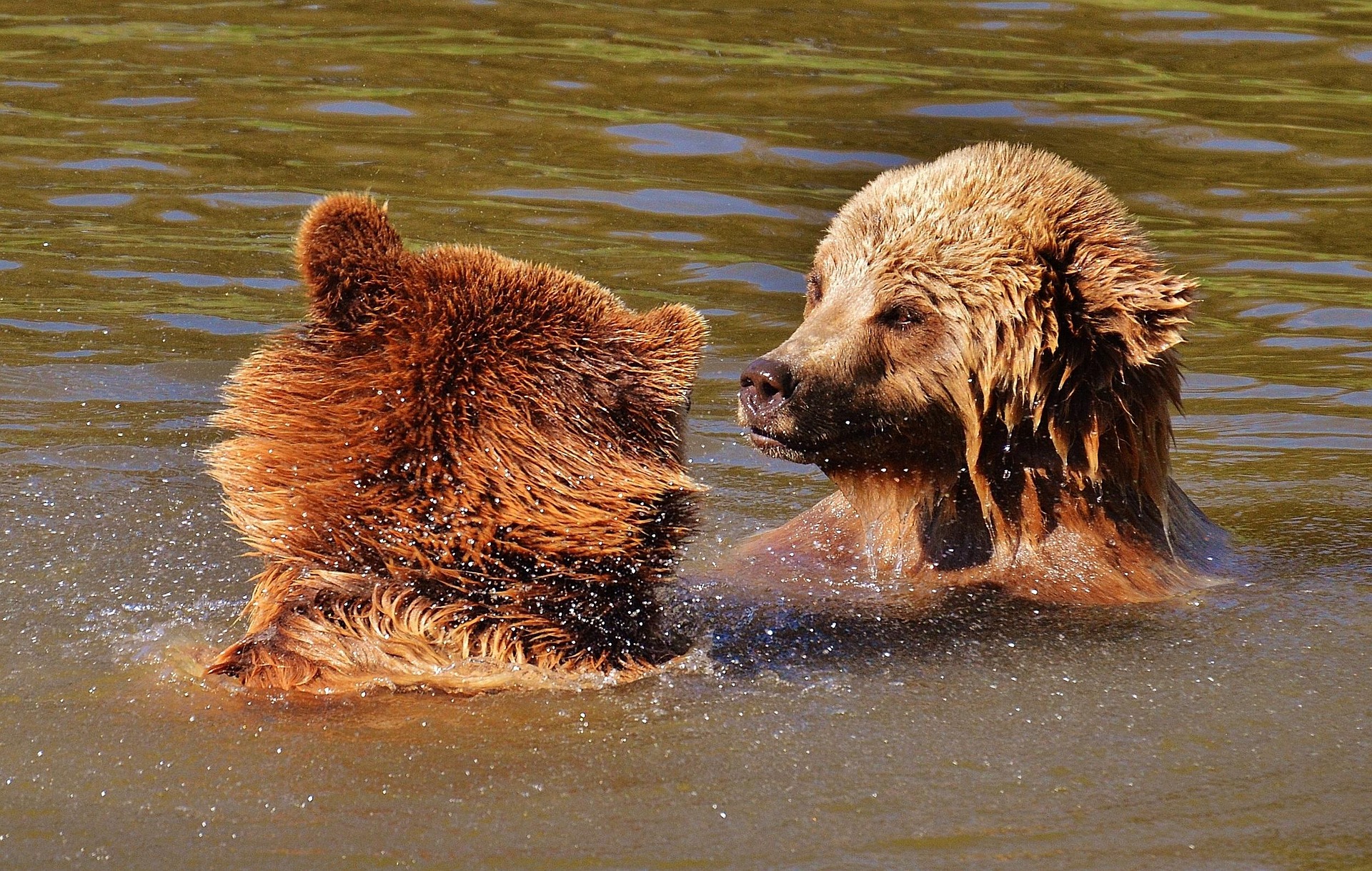
🏞️ Rivers: Strong swimmers; capable of swimming several kilometers.
❄️ Snow: Large paws prevent them from sinking too deeply.
About Brown Bear Cubs
This article summarizes the characteristics of brown bear cubs. They vary from birth to independence.
- Birth
Time: Hibernation (January-February)
Location: A safe place such as the mother bear’s den, a cave, or the base of a tree
Weight and Size: Newborns are very small, weighing approximately 300-500g, with short, soft fur.
- Growth
They feed on their mother’s milk (mother’s milk is highly nutritious).
They open their eyes within a few weeks of birth and become increasingly active.
Within a few months, their fur grows thick and their bodies grow rapidly.
- Behavior
They rarely leave their den for about a month after birth.
While protected by their mother, they gradually become accustomed to the outside environment.
They learn how to forage and survive in the forest with their mother.
- Until Independence
Rearing Period: They stay with their mother for 1-2 years.
They become independent around 1.5-2 years of age.
During this time, they learn how to hunt, find food, and avoid danger.
Are brown bears an endangered species?
Statistics show that the European brown bear, which is a subspecies of the brown bear, has decreased dramatically and is now an endangered species. Among them, the Marsica brown bear that we introduced is on the verge of extinction and can only be seen in a few areas of Italy. They also cause damage to areas where people live, so they have been exterminated as wild animals in the past. There are also fewer industries and volunteers to support.
- Japan
Hokkaido Brown Bears
The population is considered stable (estimated at approximately 3,000-5,000 in Hokkaido).
Currently, they are not endangered.
However, there is a risk of habitat fragmentation due to habitat development and road construction, as well as traffic accidents.
Honshu Brown Bears (Rarely found outside of Hokkaido)
There are very few brown bears in Honshu, and they are at high risk of extinction.
The Ministry of the Environment may assess each regional population separately.
- Global Situation
The brown bear (Ursus arctos) as a whole is classified as “Least Concern” on the International Union for Conservation of Nature (IUCN) Red List.
Global populations are relatively stable.
However, some regions have small populations and are at risk of extinction.
Examples: Brown bear populations in southern Europe and parts of Central Asia.
- Conservation Status
In Japan, they are protected under the Wildlife Protection Act.
Because their feeding grounds and territories are sometimes threatened by human development, they are managed and public warnings are issued.
In Hokkaido, electric fences and warning signs have been installed to prevent damage from brown bears.
Can brown bears be bred?
Unless you are an experienced zookeeper, you cannot keep them as pets. They can attack and eat people, so it is very dangerous. If you come across one in the wild, the best thing to do is not to provoke it. If you want to see one, we recommend going to a zoo or other tourist spot and viewing the facility, where there will be guided tours. In recent years, due to changes in the environment, the Ministry of the Environment and organizations in Japan are also working to protect them.
- Legal Status
In Japan, brown bears are designated as designated animals (Regulations on the Keeping of Designated Animals).
Designated animals are those deemed dangerous or rare and therefore cannot be kept without permission.
Keeping one requires permission from the prefectural governor, and the following conditions must be met:
Professional knowledge and facilities are required.
Safe enclosures, cages, and escape prevention devices are required.
Measures to prevent harm to the surrounding area must be in place.
- Difficulties in Keeping Brown Bears
Because they are very large and powerful, inadequate cages and facilities pose a danger to humans and the surrounding area.
Securing food is difficult.
A balanced diet of large amounts of meat, fish, fruits, and vegetables is required.
Providing living space.
They live in mountainous areas and require a high level of exercise.
Small enclosures can easily cause stress.
- In what circumstances are brown bears kept as pets?
Zoos and wildlife sanctuaries
Mainly kept for research, education, and conservation purposes
Managed by specialized animal care staff
Private ownership is nearly impossible
While there have been cases of private ownership in the past, it is extremely dangerous and almost always illegal
Zoos Housing Brown Bears (Japan and Worldwide)
Brown bears (Ursus arctos) are kept in zoos around the world. In Japan, they are particularly common in Hokkaido, while internationally, they are frequently seen in zoos across Europe and North America.
Major Facilities in Japan Where Brown Bears Can Be Seen
| Facility | Location | Features |
|---|---|---|
| Noboribetsu Bear Park | Hokkaido | One of Japan’s largest facilities dedicated to bears, housing over 60 Ezo brown bears. Includes an on-site museum. |
| Sahoro Resort Bear Mountain | Hokkaido | A popular facility where visitors can observe brown bears in a vast environment that closely resembles their natural habitat. |
| Ueno Zoo | Tokyo | Exhibits Ezo brown bears. At the “Bear Hill” area, visitors can observe them alongside Japanese black bears and polar bears for comparison. |
| Oji Zoo | Hyogo | Houses Ezo brown bears. |
| Kamine Zoo | Ibaraki | Exhibits Ezo brown bears. |
| Hirakawa Zoological Park | Kagoshima | One of the few facilities in Kyushu where Ezo brown bears can be seen. |
| Izu Animal Kingdom | Shizuoka | Exhibits Ezo brown bears. |
Famous Brown Bear Facilities Worldwide
Berlin Zoo
Helsinki Zoo
Prague Zoo
Bronx Zoo
Smithsonian National Zoo
Calgary Zoo
These facilities may house various regional subspecies, such as the European brown bear, the grizzly bear (a North American subspecies), and the Kodiak bear.
Introducing other animals
コメント