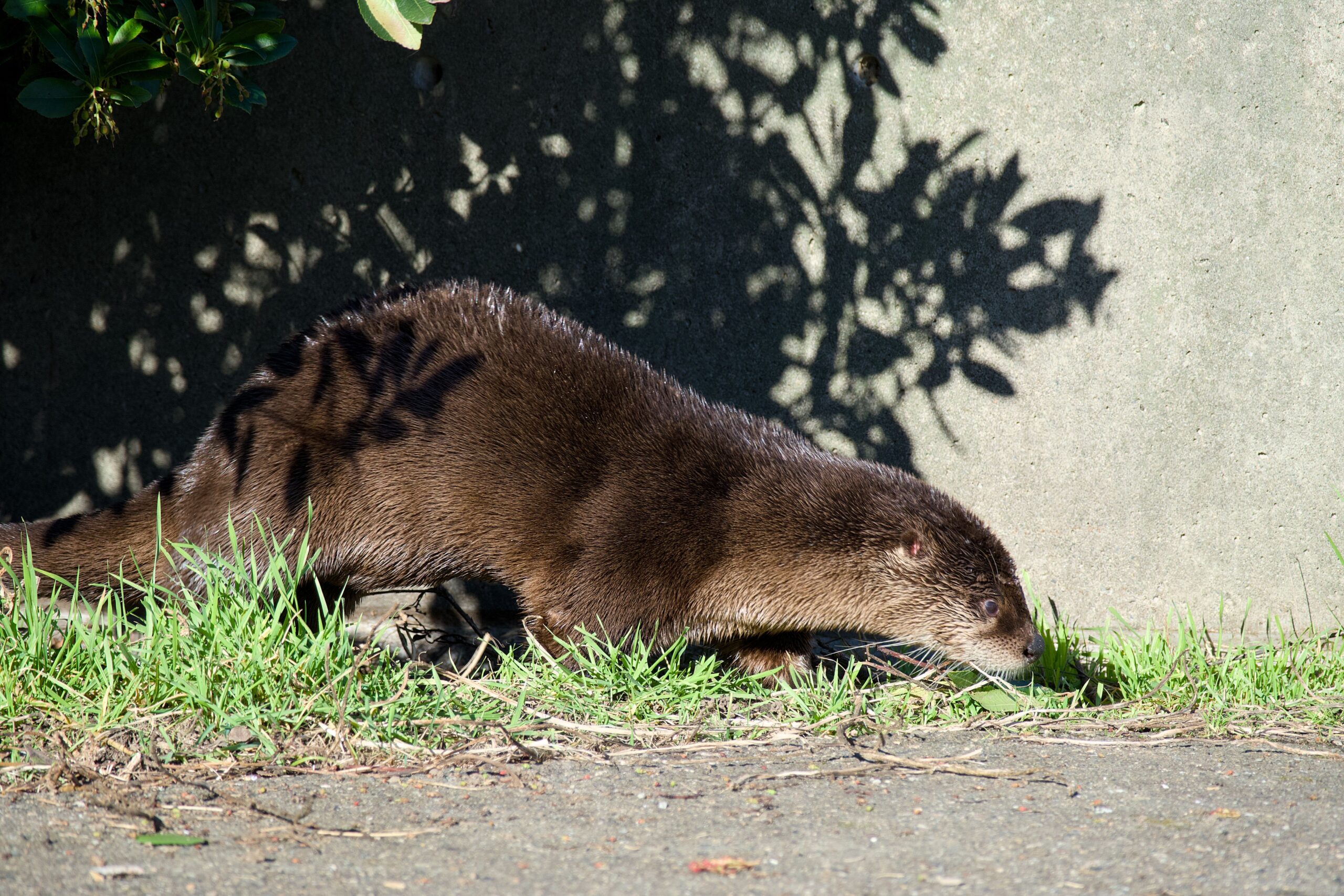
Can you keep a pet otter that is capricious and only pays attention to you when you are in a good mood? We will explain its characteristics, ecology, and habitat. They are the smallest of the otter family, and live in small rivers in Africa, and many families keep them as pets, but they are actually designated as an endangered species.





- What is a long-tailed otter? About basic status
- What are the roots and origins of the clawless otter?
- About habitat
- feature is? What kind of creature is it?
- What is your personality like?
- What is the ecology like?
- Diving Behavior of the Clawless Otter
- Vocalizations of the Clawless Otter
- Seasonal Activities
- Walking Speed
- About baby Asian small-clawed otters
- Is the long-tailed otter an endangered species?
- Can you keep a black-tailed otter as a pet?
- Zoos Housing the Species (Japan and Worldwide)
- Introducing other animals
What is a long-tailed otter? About basic status
The long-tailed otter is a mammal belonging to the class Mammalia, order Carnivora, family Mustelidae, genus Long-tailed otter. The scientific name is Aonyx capensis. The body length is 76.2 – 88 cm, the tail length is 46.5 – 51.5 cm, the body height is 20 cm, and the weight is 11.5 – 21 kg. The information will look like this:
| Japanese(和名) | ツメナシカワウソ |
| English(英名) | Cape clawless otter African clawless otter |
| scientific name(学名) | Aonyx capensis |
| classification(分類) | Mammalia、 Carnivora、Mustelidae、Aonyx 哺乳綱、食肉目、イタチ科、ツメナシカワウソ属 |
| IUCN Status(保全状況) | NEAR THREATENED |
| Length(体長) | 76.2 – 88cm |
| Weight(体重) | 11.5 – 21kg |
What are the roots and origins of the clawless otter?
The name “clawless otter” generally refers to the African clawless otter (note: the Asian small-clawed otter is a different species). Its roots and origins are understood as follows:
Roots in the weasel family
The clawless otter is a mammal belonging to the family Mustelidae (the weasel family).
Current genetic analysis suggests the following:
Ancestors of the Mustelidae family appeared approximately 25 to 30 million years ago.
Subsequently, a lineage adapted to life near water evolved into the group known as otters.
By about 5 to 10 million years ago, the ancestors of the modern clawless otter had spread to Africa.
Earliest ancestors
The ancestors of otters are believed to have inhabited Eurasia during the Miocene epoch (approximately 23 to 5.3 million years ago).
Early otters were not as specialized for aquatic life as modern ones;
they caught fish near the water’s edge
and lived actively on land as well,
making them semi-aquatic animals.
From there, they acquired:
streamlined bodies
webbed feet
dense, waterproof fur
excellent swimming abilities
Why “clawless”?
The name comes from the characteristics of their forepaws.
The African clawless otter is called “clawless” because:
the claws on its forepaws are extremely small or barely visible
the sense of touch in its fingertips is highly developed
Using these sensitive fingers,
it feels around to locate and catch prey such as
crabs
shrimp
shellfish
frogs
Close relatives
Its closest relatives include:
Asian small-clawed otter (Southeast Asia)
Eurasian otter (Europe and Asia)
Sea otter (marine)
All of these belong to the Mustelidae family.
About classification
The following subspecies exist in the genus Ceratopsium. You can also check other creatures and types on the internet pages and links. I made a list.
| Name (名前) | Scientific Name (学名) | Habit (生息地) |
| African clawless otter ツメナシカワウソ | Aonyx capensis | Sub-Saharan Africa サブサハラアフリカ |
| Congo clawless otter ザイールツメナシカワウソ | Aonyx congicus | rainforest of central Africa アフリカ中央部の熱帯雨林 |
| Asian small-clawed otter コツメカワウソ | Aonyx cinereus | South Asia/Southeast Asia 南アジア・東南アジア |
Classification class
- 界(Kingdom):動物界(Animalia)
- 門(Phylum):脊索動物門(Chordata)
- 綱(Class):哺乳綱(Mammalia)
- 目(Order):食肉目(Carnivora)
- 科(Family):イタチ科(Mustelidae)
- 属(Genus):Pteronura
- 種(Species):Pteronura brasiliensis(ツメナシカワウソ / Giant Otter)
About habitat
The long-tailed river otter is widely distributed throughout Africa. Angola, Uganda, Ethiopia, Eritrea, Ghana, Cameroon, Gambia, Guinea, Guinea-Bissau, Kenya, Ivory Coast, Republic of Congo, Democratic Republic of Congo, Zambia, Sierra Leone, Zimbabwe, Sudan, Eswatini, Senegal, Tanzania, Chad, Nigeria, Namibia, Niger, Burkina Faso, Benin, Malawi, South Africa, South Sudan, Mozambique, Liberia, Rwanda, Lesotho, and others.
1. Geographic Distribution
Region: South America
Amazon River Basin: Brazil, Peru, Colombia, Bolivia, Ecuador
Orinoco River Basin: Venezuela, Colombia, Guyana
Distribution Characteristics: Widespread, but locally distributed due to riverine environment
2. Habitat
Freshwater rivers, lakes, and wetlands
Slow-flowing areas with abundant fish and crustaceans
Riverside burrows
Builds burrows on banks and at the bases of fallen trees
Environments with abundant aquatic vegetation
Prefers mangroves and areas with dense aquatic vegetation
Also uses open water
Suitable for foraging, swimming, and schooling
3. Habitat Key Points
Highly dependent on water
Foraging, resting, movement, and social activities all occur near water
Family-based behavior
They form family groups along rivers and lakes, where they cooperate to hunt and use burrows
Vulnerable to human activity
Habitat loss due to river development, poaching, fishing, and deforestation
feature is? What kind of creature is it?
The long-tailed otter lives in freshwater areas. They mainly live alone, but form family groups consisting of pairs and 2-3 young. It got its name from its small claws. It is diurnal, but may be active at night. The back is grayish brown or light blackish brown, and the throat is white or grayish white. The long-tailed otter exhibits strong territorial behavior. Territories are marked by odor secreted by anal glands.
1. Physical Characteristics
Body Size: One of the largest among otters
Body Length: Approximately 1.2–1.8 m (including tail)
Weight: Approximately 22–32 kg
Body Type: Slender and muscular, adapted to aquatic life
Fur Color: Brown to reddish-brown back, light-colored underside
Tail: Flat, used for propulsion while swimming
Limbs: Small, dexterous claws, making them easy to handle prey
2. Behavioral and Personality Characteristics
Highly Social
Live in family groups
Cooperative hunting and burrow management
Playful
Frequent underwater chases and playful interactions
Wary
Sensitive to humans and predators, they quickly flee when they sense danger
3. Ecology & Lifestyle
Perfectly adapted to aquatic life
Forages in rivers, lakes, wetlands, and mangrove forests
Diet: Carnivorous
Food is primarily aquatic organisms such as fish, frogs, shrimp, and crabs
Excellent swimmers and dives
Dives last for about 1-2 minutes
Mostly diurnal
Forages, swims, and builds burrows in the morning and evening
What is your personality like?
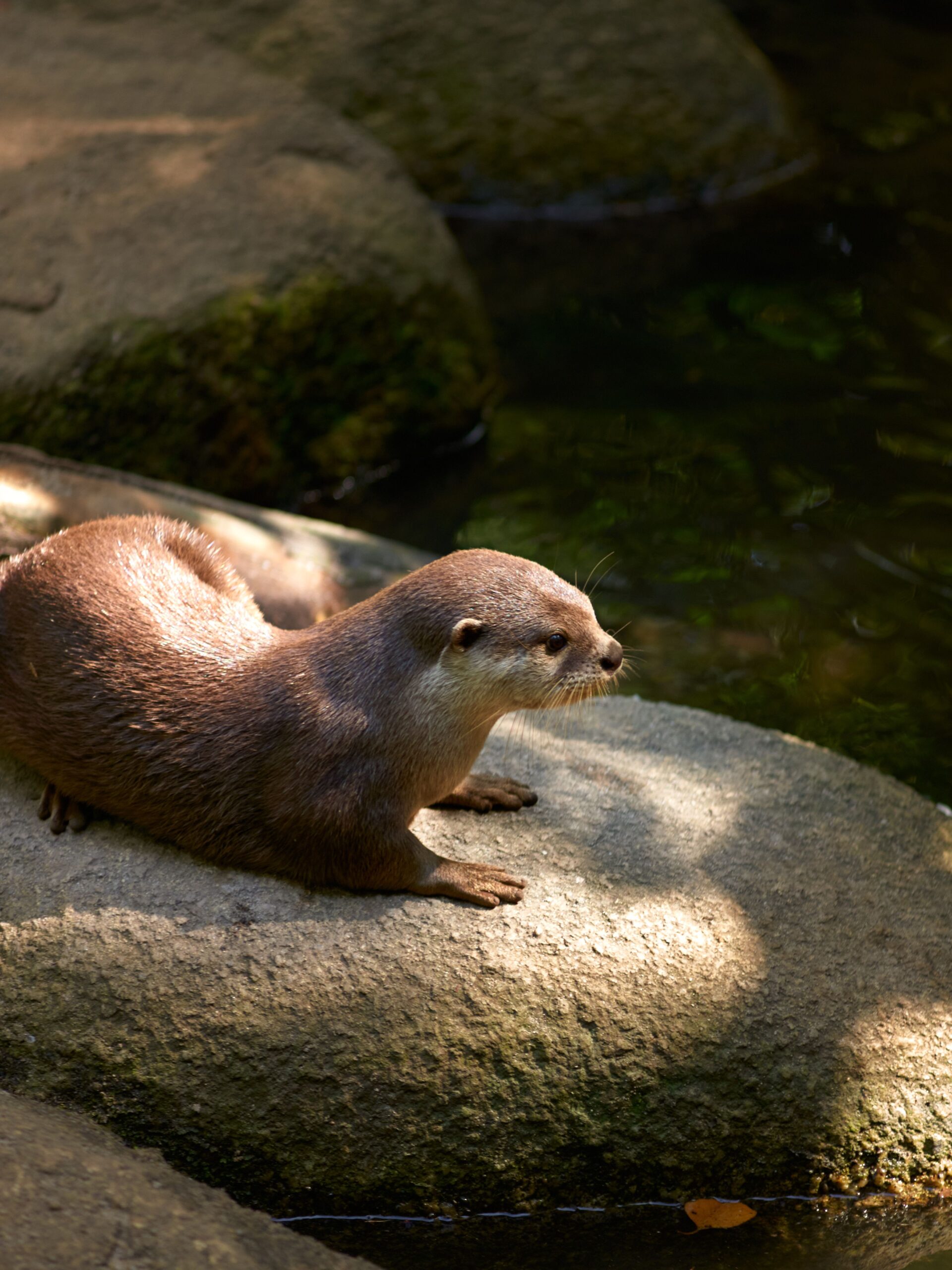
Black-crowned otters love to play. Since they require a lot of exercise, it is necessary to give them toys to keep them from getting bored. This animal is suitable for people who want to actively engage in physical contact with their pets, and they also have a very loud sound.
1. Sociality
Living in family groups
Typically, they live in groups of 5-20 individuals, usually consisting of parents, children, or siblings.
They cooperate to hunt and maintain their dens.
Highly Cooperative
Safety and hunting efficiency are ensured through group communication and cooperative behavior.
2. Playful and Curious
Learning through play
Underwater chases, playful interactions, diving practice, etc.
They learn swimming and hunting techniques while playing.
Highly Intelligent
Ability to learn how to catch prey through observation.
3. Vigilance and Timidity
Highly cautious
Sensitive to predators and humans, they will flee when they sense danger.
Although timid, they cooperate with the group to defend themselves.
Although weak as individuals, they ensure safety by acting in groups.
What is the ecology like?
Clawless otters dive from the shore and swim in the water with their webbed feet, watching for prey as they feed on crabs, fish, frogs, crustaceans, shellfish, insects, fish, reptiles, etc. They are viviparous and have a rutting interval of 24-30 days. They can breed all year round. They can give birth to 1-3 pups at a time. They reach sexual maturity in about 1 year, and can live for 13 years in captivity.
1. Habitat
Freshwater-based habitat
Rivers, lakes, wetlands, mangrove forests
Burrow use
Builds burrows on riverbanks or at the base of fallen trees
Family units use these burrows for raising children and resting
Highly dependent on water
Foraging, resting, movement, and social behavior all occur near water
2. Behavior
Diurnal
Foraging, swimming, and burrow construction occur morning to evening
Social
Forms family groups and cooperates in hunting and defense
Communication
Communicates with the group through vocalizations and body movements
3. Diet/Foraging
Mainly carnivorous
Aquatic organisms such as fish, frogs, shrimp, and crabs
Foraging Method
Uses dexterous hands to catch and eat prey
Captures by diving and swimming
Hunts cooperatively
May hunt in schools to chase and hunt fish
4. Reproduction/Rearing
Reproduction: Viviparous
Gestation: Approximately 65 days
Number of cubs born: Usually 2-5
Rearing
Parents cooperate to nurse and feed their young
Raise their young safely in burrows, and they become independent within a few months
Are there any natural enemies?
The natural enemies of the black otter are carnivores that live near water, such as crocodiles.
Diving Behavior of the Clawless Otter
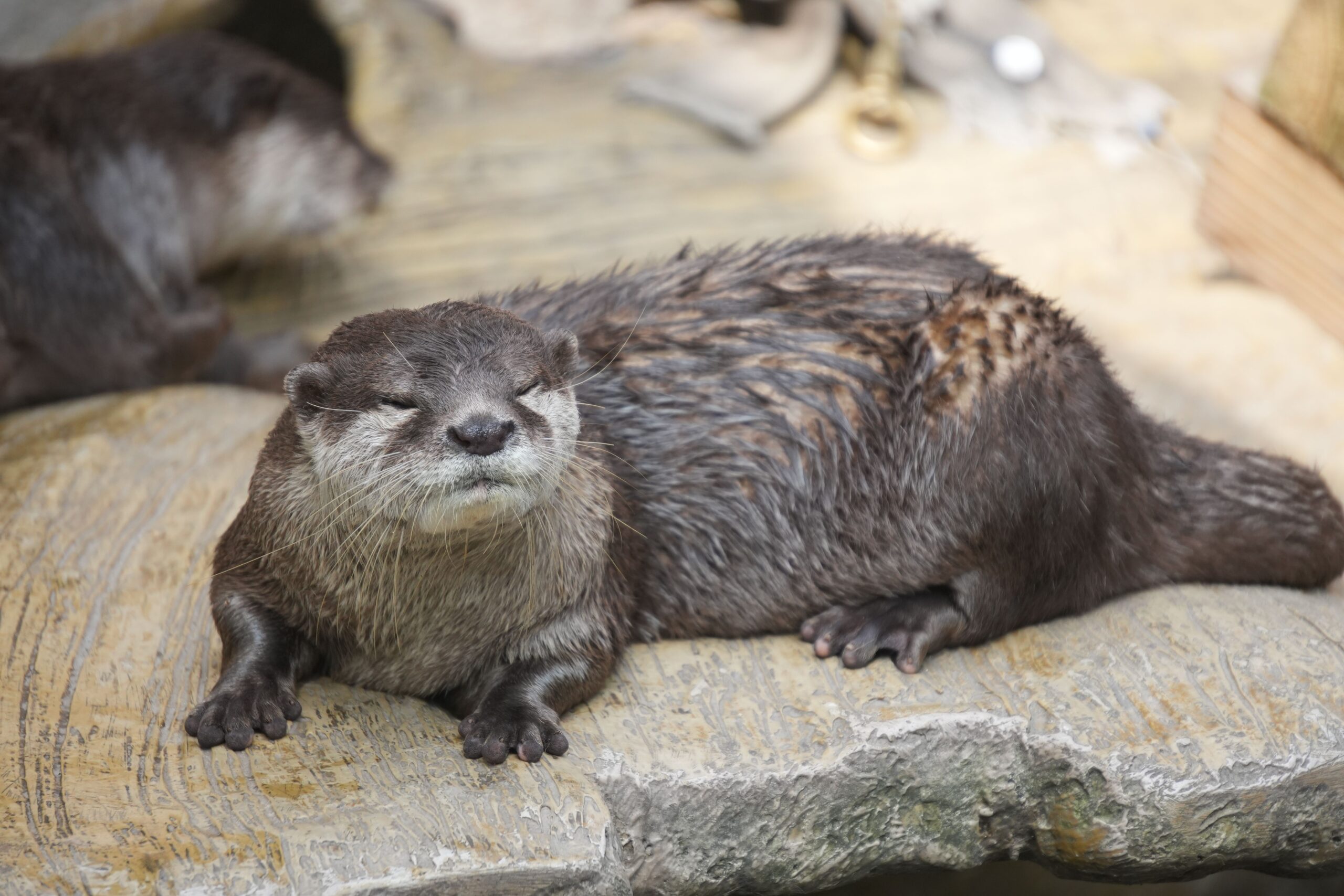
The clawless otter (specifically the African clawless otter) is a semi-aquatic animal inhabiting rivers and lakes, possessing excellent diving capabilities. They frequently dive not only to hunt for fish but also to search for crabs and shellfish on the riverbed.
Dive Duration
Dives typically last between 20 and 40 seconds.
In some cases, they may remain submerged for around one minute.
Unlike marine mammals, they do not stay underwater for extended periods; instead, they forage by repeatedly performing short dives.
Diving Depth
While this varies depending on the habitat:
Depths usually range from 1 to 5 meters.
In deep rivers or lakes, they may dive to depths approaching 10 meters.
They generally swim while exploring the riverbed or searching among the rocks.
Vocalizations of the Clawless Otter
The clawless otter (specifically the African clawless otter) is an animal with a highly expressive nature and a wide variety of vocalizations. While they may sometimes act alone, they use vocal signals to communicate with their mates or offspring.
① High-pitched squeaks or peeps
When a pup calls for its mother
When seeking affection or expressing hunger
Communication between parent and pup
Young otters frequently make particularly high, thin-sounding calls.
② Soft “kuk-kuk” or “chat-chat” sounds
Greetings between companions
Checking each other’s location
Calm, casual communication
These sounds are often heard when the otters are relaxed.
③ Screeches or hisses
Intimidation
Territorial disputes
When sensing danger
These sounds are emitted to show strong wariness toward enemies or intruders.
④ Growling (grrr…)
When angry
When guarding food
Conflicts during the breeding season
A low, rumbling sound used to intimidate others.
Seasonal Activities
The African clawless otter inhabits rivers, lakes, and wetlands across Africa. Rather than the four distinct seasons found in places like Japan, their activity patterns shift in response to the alternation between the rainy and dry seasons.
Rainy Season (High-Water Period)
Activity Characteristics
Rivers and wetlands expand, leading to a wider range of movement.
Prey such as crabs and frogs becomes more abundant, making foraging easier.
They venture into flooded grasslands and wetlands to search for food.
Due to the high water levels, foraging takes place primarily underwater.
Dry Season (Low-Water Period)
Activity Characteristics
Water levels drop, causing prey to congregate near the water’s edge.
They efficiently catch crabs and fish in shallows and pools.
As water sources become limited, their range of movement may become somewhat restricted.
During the dry season, they are frequently seen resting on riverbanks and rocky areas.
Breeding Season
While the breeding season varies by region, in many areas, the rearing of young tends to begin during or immediately after the rainy season.
This is because:
Food is abundant.
The waterside environment is stable.
Conditions are favorable for raising offspring.
Walking Speed
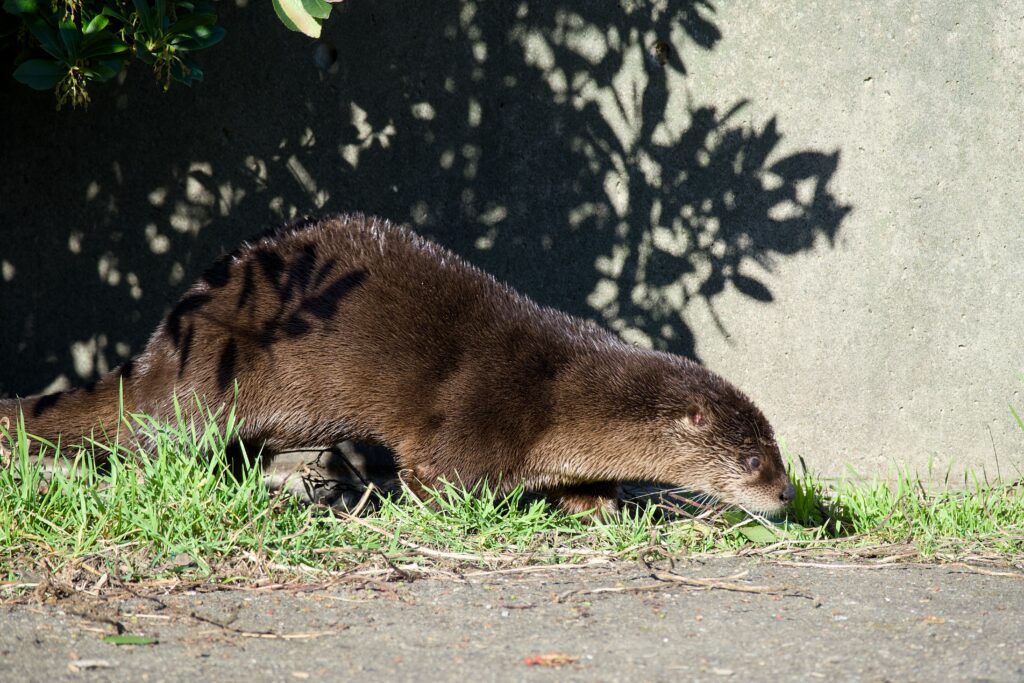
Although the African clawless otter is adapted for an aquatic lifestyle, it can also walk on land without difficulty.
Walking Speed
While few studies have precisely measured their walking speed in the wild, observational records indicate the following characteristics:
Normal walking speed: Approximately 3–5 km/h
When moving hurriedly: Approximately 8–10 km/h
Short-distance running: Estimated to reach speeds of around 10–15 km/h
However, these figures are estimates based on observation; unlike with animals such as cheetahs, their exact top speeds have not been scientifically measured.
Walking Characteristics
They walk in a low-slung posture using all four limbs.
They move with a nimble gait, advancing their front and hind legs alternately.
They can move stably across rocky terrain and muddy ground.
When necessary, they may also move quickly by keeping their bellies close to the ground.
About baby Asian small-clawed otters
This article summarizes the developmental stages, behavioral, and lifestyle characteristics of baby Asian small-clawed otters (Pteronura brasiliensis).
1. Birth and Early Characteristics
Litter Size: Usually 2-5
Weight and Length: Approximately 0.5-1 kg at birth, approximately 30-40 cm in length
Coat Color: Light brown on the back, light brown on the belly
Senses: Eyes open and ears function, but behavior is dependent on the parents
2. Growth and Development
Early Life: Carried and nursed by parents in the burrow
Nursing Period: Approximately 2-3 months
Weaning: Begins learning to eat fish and crustaceans with parents at 2-3 months of age
Motor Skills: Begins swimming and diving practice within the burrow at around 1 month of age
Social Learning: Learns hunting and communication through playful interactions with siblings and parents
3. Behavior & Personality
Playful and active
Playing in burrows and shallow waters improves physical abilities and hunting skills
Highly dependent on parents
Returns to parents when threatened
Acquires cooperation
Learns group life and cooperative behavior with siblings
4. Growth Guidelines
| 年齢 | 発達の特徴 |
|---|---|
| 0〜1か月 | 授乳中心、巣穴で過ごす |
| 1〜2か月 | 巣内で泳ぎ・潜水の練習、親の捕食行動を観察 |
| 2〜3か月 | 離乳開始、親と一緒に採餌練習 |
| 3〜6か月 | 独立性が高まり、群れでの狩りに参加 |
| 6か月以降 | 自力で餌を獲得でき、群れ生活に完全参加 |
Is the long-tailed otter an endangered species?
Unfortunately, the Japanese otter is listed as an endangered species. Furthermore, international trade is severely restricted by the Washington Convention.
Pests destroying rice fields
As you can see by actually touching the otter, it moves very well. That’s why I love pranks so much. They are sometimes considered pests and are often exterminated by farmers. Habitat destruction due to agricultural land development and deforestation is progressing, and the population is decreasing.
hunting for fur, etc.
They are overhunted for their fur. Furthermore, the black-fronted river otter is also in high demand as a pet, so it is overhunted for this reason as well. The reality is that poaching and smuggling are rampant.
Can you keep a black-tailed otter as a pet?
It is a pet that is extremely difficult to care for. This is because it is designated as an endangered species, and international trade is strictly restricted by the Washington Convention.
What is the average cost of otters?
The average cost of otters is said to be over 1 million yen per animal when converted to Japanese yen. Consider adopting individuals already in the country or those born from such pairs from zoos or aquariums.
Things needed for breeding
What you need for breeding is a room for the otter, a toilet, toys, and food. We recommend a dog or cat cage for the toilet. Small-clawed otters love to play, so toys are a must. The main food should be cat food, and fish and crustaceans should be given as side foods. It would also be nice to have a pool.
Getting used to skinship
Black-fronted river otters have friendly personalities and love physical contact with their owners. They may bite their owners, but be careful not to pull your fingers back as this can cause injury. It has extremely well-developed jaw muscles and is said to have the strength of a large dog. Most of the time it will be a sweet bite, but please be careful.
Be careful of illness
Otters are at risk of parasites, loss of appetite, and diarrhea. In particular, there are cases where the seafood that is fed as food contains parasites. You will need to take measures such as freezing them instead of giving them in the purchased state.
Zoos Housing the Species (Japan and Worldwide)
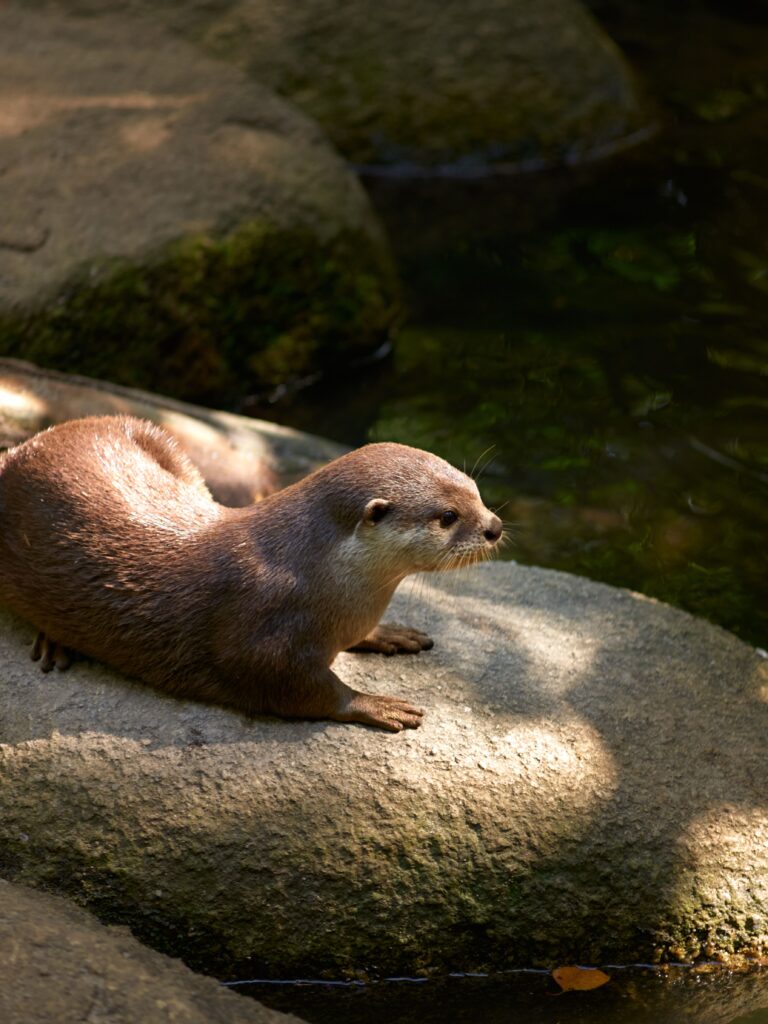
Although not as commonly kept as the Asian small-clawed otter, the African clawless otter is housed in select zoos across Japan and around the world.
Major Zoos in Japan
The following are the primary facilities in Japan currently housing African clawless otters:
Yokohama Zoological Gardens “Zoorasia”
Higashiyama Zoo and Botanical Gardens
Kobe Animal Kingdom
Adventure World
Izu Shaboten Zoo
*Please note that the status of the animals may change due to factors such as breeding or transfers.
Major Zoos Worldwide
They are also kept in zoos across Europe, North America, and Africa.
Notable facilities include:
San Diego Zoo
Zoo Leipzig
Chester Zoo
Pairi Daiza
Prague Zoo
…where they are exhibited and bred.
Introducing other animals

コメント