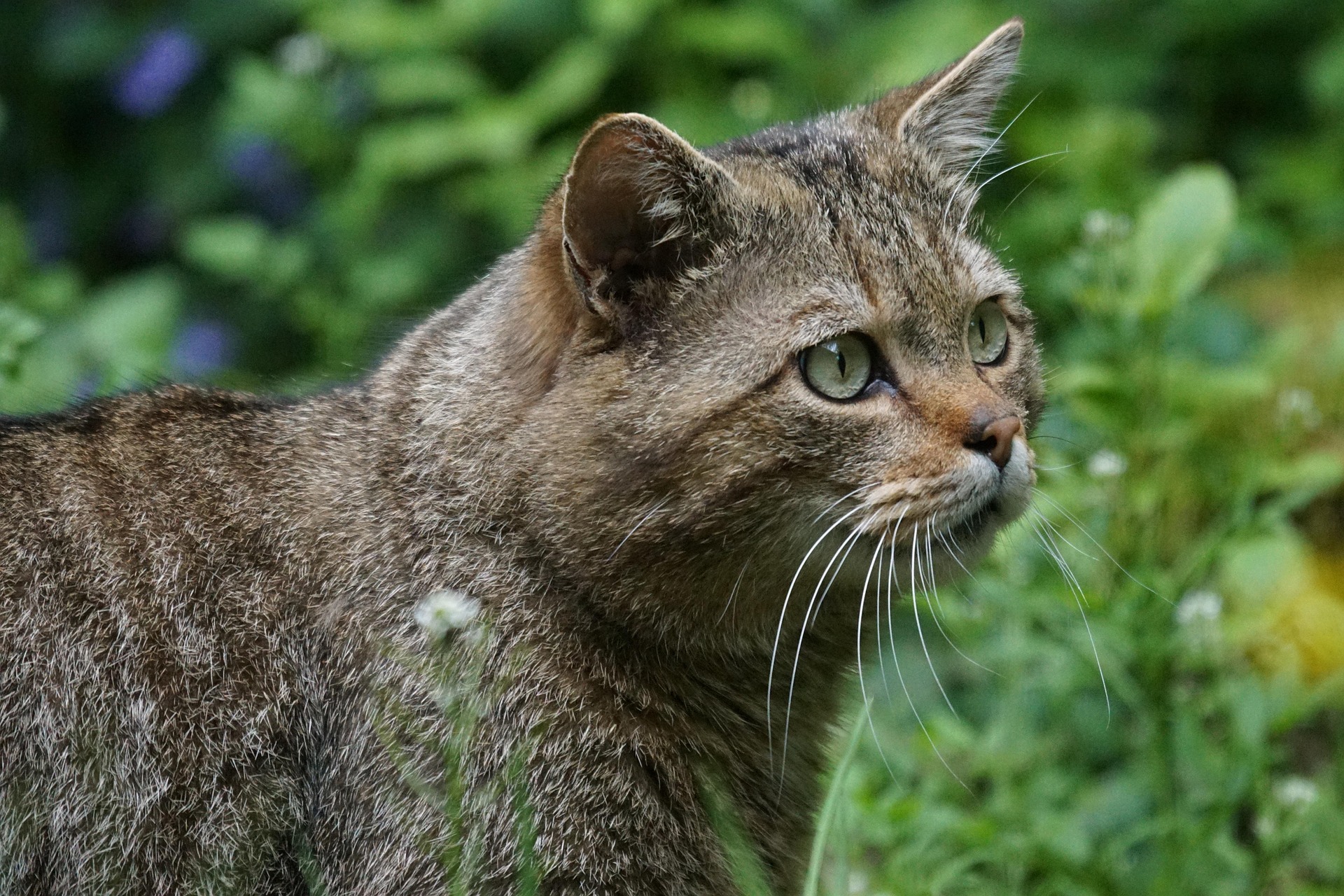
What kind of animal is the European wildcat? We will explain its characteristics, ecology, and habitat. The European wildcat is very similar to the domestic cat, and their ecology is also very similar. Their main characteristic is that they are larger and slightly stockier than domestic cats, so I will explain them.










- What is a European wildcat? About basic status
- What are the roots and origins of the European wildcat?
- About the habitat area
- feature is? What kind of creature is it?
- What is the ecology like?
- Vocalizations of the European Wildcat
- Seasonal Activities
- Walking Speed
- About European wildcat cubs
- Is the European wildcat an endangered species?
- Can you keep European wildcats?
- Zoos Housing the Species (Japan & Worldwide)
- Introducing other animals
What is a European wildcat? About basic status
The European wildcat belongs to the class Mammalia, order Carnivora, and family Felidae. Body length 45-80 cm, weight 3-8 kg, tail length 30 cm. The scientific name is Felis silvestris.
| Japanese(和名) | ヨーロッパヤマネコ |
| English(英名) | European wildcat |
| scientific name(学名) | Felis silvestris |
| classification(分類) | Mammalia、 Carnivora、 Felidae 哺乳綱、食肉目、ネコ科 |
| IUCN Status(保全状況) | LEAST CONCERN |
| Length(体長) | 45-80cm |
| Weight(体重) | 3-8 kg |
What are the roots and origins of the European wildcat?
The European wildcat is not the ancestor of the modern domestic cat; rather, it is a wild feline species that has inhabited Europe since ancient times. The ancestor of the domestic cat is a different subspecies, the Near Eastern wildcat (Felis silvestris lybica); while closely related to the European wildcat, they belong to distinct lineages.
Origins
The ancestry of the European wildcat traces back to early members of the genus Felis that evolved in Asia approximately 2 to 3 million years ago.
Subsequently:
During the glacial periods between roughly 500,000 and 200,000 years ago, ancestral populations expanded into Europe.
They adapted to cold forest environments and diverged into the modern European wildcat.
They were widely distributed across Europe during the Pleistocene epoch (the Ice Age).
Lineage
The European wildcat is a subspecies of the wildcat species Felis silvestris.
Its lineage is as follows:
Felidae (Cat family)
└── Felis (Cat genus)
└── Felis silvestris (Wildcat)
├── F. s. silvestris (European wildcat)
├── F. s. lybica (Near Eastern wildcat)
├── African wildcat (classification varies)
└── F. s. ornata (Asiatic wildcat)
Relationship with the domestic cat
The key points are:
The ancestor of the domestic cat (Felis catus) is the Near Eastern wildcat.
The European wildcat is not the ancestor of the domestic cat.
About 10,000 years ago, the Near Eastern wildcat began living alongside humans in the Fertile Crescent of the Middle East, a process that eventually led to the domestic cats found worldwide today.
In contrast, the European wildcat did not become habituated to humans and has continued to live in the wild to this day.
About classification
The European wildcat has the following subspecies:
| 名前 | Name | Scientific Name(学名) |
| リビアヤマネコ | African wildcat | Felis lybica |
| ハイイロネコ | Chinese Mountain Cat | Felis bieti |
Felis lybica
The Libyan wildcat is the very origin of the domestic cat. The African wildcat and steppe wildcat are also among these subspecies. They have longer legs than domestic cats, and their sitting posture and walking style are unique. With a body length of 45 – 80 cm, weight of 3 – 8 kg, and a tail length of 30 cm, it is classified as of low concern and its population is stable. The Libyan wildcat lives in Africa and the Middle East.
Felis bieti
The gray cat is a cat that can only be found in some areas, such as China’s Sichuan province, and is designated as an endangered species due to its extremely small population.
About the habitat area
Their habitat is wide-ranging. The European wildcat is distributed mainly in Europe and also in Africa.
- Geographic Distribution
Western Europe
Scotland (Scottish Wildcat)
Central to Eastern France
Forests of Southern Germany, Switzerland, etc.
Eastern Europe
Poland, Czech Republic, Romania, Bulgaria
Woodlands of the Balkans
Southern Europe
Northern Italy, around the Pyrenees Mountains
Live primarily in broadleaf and mixed forests in Central and Eastern Europe
- Environment and Habitat Conditions
Mainly forested areas: broadleaf, coniferous, and mixed forests
Prefers locations far from human settlements
Hidden areas such as rivers, brush, and rocky areas are important
Highly territorial, preferring areas with abundant food (small mammals)
- Habitat Characteristics
Generally solitary
Nocturnal, resting during the day
Habitat ranges range from a few to several dozen km² depending on the individual
Habitat fragmentation due to human activity has led to population declines in some areas
feature is? What kind of creature is it?
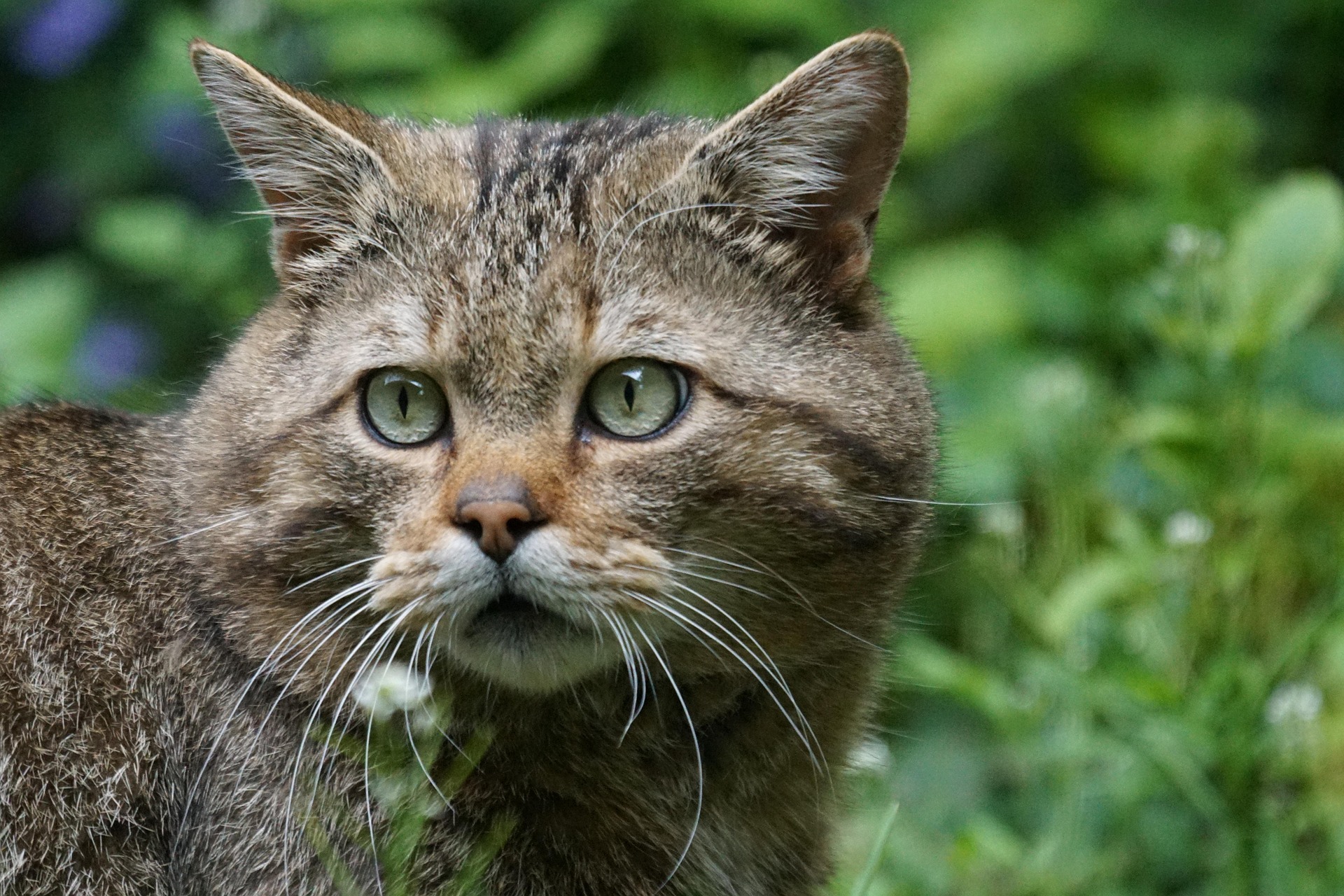
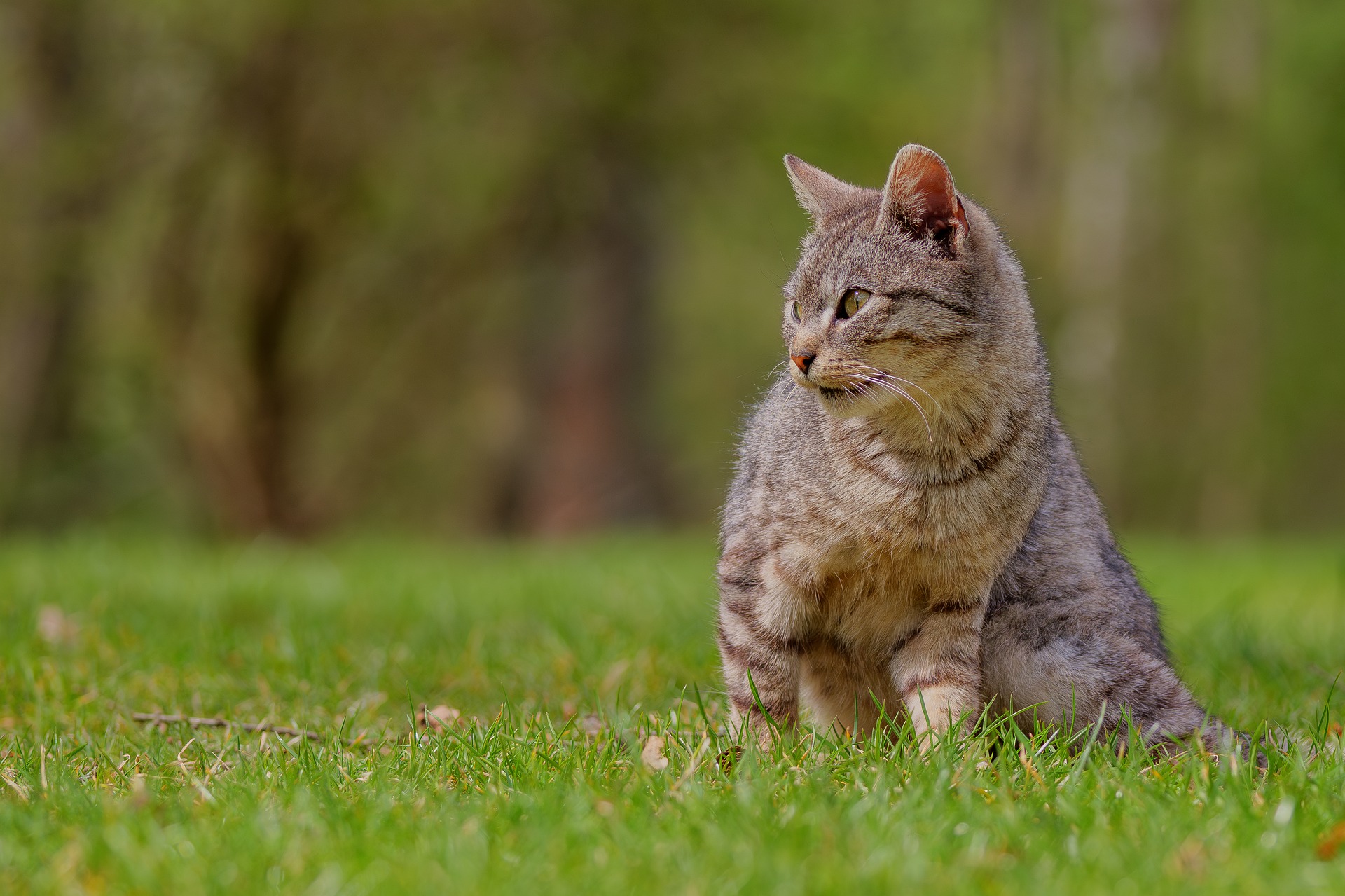
European wildcats are larger than domestic cats, and are characterized by a medium-tone brown color with black stripes. European wildcats often live in mixed broad-leaved forests, but they also live in grasslands and steppes. Although they are primarily nocturnal, they are known to be active during the day as well. Their home range is between 1 square kilometer and 9 square kilometers.
- Physical Characteristics
Body Size:
Body Length: Approximately 50-80 cm (excluding tail)
Tail Length: Approximately 25-35 cm
Weight: Approximately 3-8 kg
Coat Color/Pattern:
Gray to brown fur
Characterized by black stripes on the back and black rings on the tail
May also have slight stripes on the face or spots on the cheeks
Body Type:
Stout and muscular
Short, sturdy legs
Ears/Eyes:
Rounded ears
Large eyes suited to nocturnal behavior
- Behavior/Personality
Nocturnal: Rests in bushes or in the shade of rocks during the day
Solitary: Both males and females generally live alone
Highly territorial: Communicates presence through markings and claw marks
Highly cautious: Will rarely approach humans
- Biology and Abilities
Mainly feeds on small mammals (such as rodents and rabbits)
Can climb trees and swim
Has keen eyesight, hearing, and sense of smell, making it well-adapted for hunting
Has become feral, and has a more developed body and muscular structure than modern domestic cats
- Differences from Domestic Cats
Slightly larger and more muscular than domestic cats
Has a thick tail and distinct stripes
Very cautious and unsociable
Has a strong wild instinct, exhibiting pronounced hunting behavior
What is the ecology like?
The European wildcat’s main diet is rodents, as well as rabbits. Breeding occurs in late winter and can produce several offspring at a time. It takes about 4 months to wean. They become independent and sexually mature at 10 months. The lifespan is about 10 to 15 years.
- Activity Patterns
Nocturnal: They are primarily active at night, resting in bushes or under rocks during the day.
Solitary Activity: Both males and females generally act alone.
Territoriality: Both males and females have territories and communicate their presence by marking and scratching.
- Diet
Exclusively carnivorous (mainly small mammals).
Mice, rabbits, birds, insects, etc.
If food is scarce, they may also consume small amounts of plants and fruit.
They have a strong hunting instinct and capture prey using their keen eyesight, hearing, and sense of smell.
- Breeding and Rearing
Breeding Season: Winter to Spring (varies by region).
Gestation Period: Approximately 2 months.
Living: Gives birth to 2-4 pups at a time.
Rearing: The mother cat nurses and protects them for approximately 2 months, then teaches them hunting skills.
Kittens begin to become independent and independent at around 4 months of age.
- Habitat
Mainly forested areas: broadleaf forests, coniferous forests, and mixed forests
Prefers remote locations, but can also adapt to mountain forests and barren areas
Hidden areas, such as rivers and rocky areas, are important
- Intelligence and Behavioral Characteristics
High hunting ability, agile, and sensitive
Highly alert and highly alert, they have a high level of danger detection
Because they live solitary lives, they have a high learning ability and are adaptable to their environment
Vocalizations of the European Wildcat
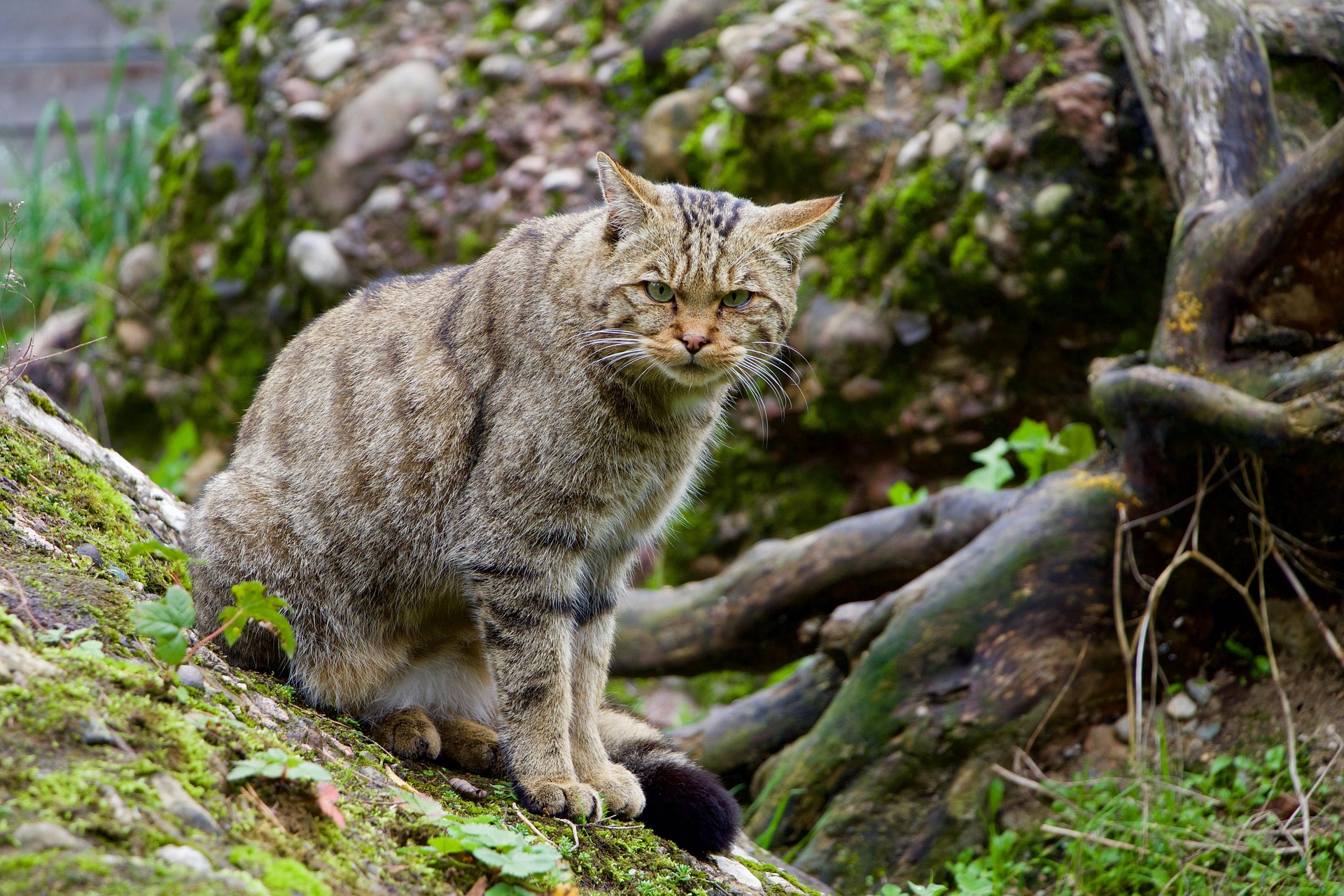
The vocalizations of the European wildcat (Felis silvestris silvestris) are characterized by being lower in pitch and more “wild-sounding” than those of domestic cats; they also vary significantly depending on the situation. As they are solitary animals by nature, they do not frequently communicate with others of their kind through vocalization.
- Threatening Sounds (Hissing/Spitting)
Sounds made toward enemies or intruders.
Characteristics:
“Shhh” (hissing)
“Fuuu” (spitting)
“Grrrrr…” (low growl)
Uses:
Warning other wildcats
Defense against foxes, dogs, etc.
Caution toward humans
While similar to the threat sounds of domestic cats, their larger physique gives these sounds a lower, more imposing quality.
- Screams and Fighting Calls (Nighttime Vocalizations)
During the breeding season (mainly winter to spring), males engage in territorial disputes,
letting out very loud cries such as:
“Gyaaa!”
“Awoooo”
“Uwaaa…”
In the forest at night, these sounds can sometimes be mistaken for a crying baby or the scream of an animal when heard from a distance.
- Mother-Kitten Vocalizations
When communicating with kittens,
they use short sounds such as:
A soft “mew”
“Nya”
“Kururu” (a trilling or purring-like sound)
However, they do not vocalize as frequently as domestic cats kept by humans.
- Courtship Calls
During the breeding season, males searching for females
emit sounds such as:
A low “ooo”
A long “aaao”
A distinctive, howl-like call
These are most often heard on winter nights.
Seasonal Activities
The European wildcat (Felis silvestris silvestris) is a wild cat whose breeding, hunting, and ranging behaviors shift significantly with the seasons. While generally solitary throughout the year, their activity patterns change markedly during the winter breeding season and the spring rearing season.
Spring (March–May): Breeding and Rearing Season
Activities
Males expand their home ranges
Females search for birthing sites
Rearing of young begins
Breeding
Mating period: Primarily January–March
Gestation period: Approx. 65–70 days
Birth: Most commonly April–May
Behavioral Characteristics
Males travel over wide areas at night
Territory marking increases
Females utilize safe dens, rock crevices, spaces beneath fallen logs, etc.
Diet
In spring, they target:
Rodents (mice/voles)
Small birds
Frogs
Small mammals
Summer (June–August): Peak Hunting Capability
Activities
Kittens grow
Mothers hunt more actively
Activity increases during the night and early morning
Rearing
Around 2–3 months of age:
Kittens emerge from the den
Learn hunting skills from the mother
Master stalking and ambush techniques
Hunting
Prey is abundant in summer.
Main prey:
Voles
Field mice
Rabbits/hares
Birds
Insects
They rest during the hot daytime and are active from evening through the night.
Autumn (September–November): Preparing for Winter
Activities
Period for building up physical reserves
Hunting frequency increases
Young individuals become independent
Characteristics
As autumn arrives, winter coats develop:
Fur becomes thicker
Body weight increases
Fat reserves are accumulated (especially in cold regions)
Young Individuals
Kittens born in spring:
Begin hunting at 5–6 months old
Often separate from their mothers between autumn and winter
Winter (December–February): Breeding Season and Territorial Disputes
Activities
Winter is the most distinctive season of the year. Males, in particular, engage in:
Long-distance travel
Territorial patrolling
Conflicts with other males
Breeding behavior
On winter nights, the following become frequent:
Loud calls
Growling
Marking
Hunting
In snowy areas, they:
Track footprints
Search for rodents beneath the snow
Hunt by lying in ambush
Their thick winter coats allow them to remain active even in cold regions.
Walking Speed
While there is limited precise data on the walking speed of wild European wildcats (Felis silvestris silvestris), estimates based on the locomotive capabilities of felids and observational records suggest the following:
Normal walking speed
Approximately 2–4 km/h
Speed when moving quietly through the forest
Walking slowly while searching for prey
Walking very carefully to minimize noise
The European wildcat is a “stalking” hunter rather than an animal that travels long distances at high speeds.
Patrolling (territory rounds)
Approximately 3–6 km/h
Males, in particular, travel along routes such as
forest roads,
forest edges,
and riverbanks
during the breeding season or to check their territory.
They may travel anywhere from a few kilometers to over 10 kilometers in a single night.
Speed when approaching prey
A few km/h or less (very slow)
During a hunt, they repeat a sequence of movements:
lowering the body,
keeping the tail horizontal,
approaching slowly,
and pausing briefly.
This is an ambush-style hunting method, distinct from the pursuit-based hunting seen in animals like the cheetah.
About European wildcat cubs
This article provides information about European wildcat (Felis silvestris silvestris) cubs (kittens).
- Birth
Season: Mainly spring (March-May)
Location: Mother cats give birth in safe dens, such as in bushes, under rocks, or under fallen trees.
Weight and Size: Newborns are small, weighing approximately 70-120g.
Coat Color: Gray to brownish-gray with light stripes on their backs.
- Growth
They grow by drinking their mother’s milk (mainly breast milk for the first 4-6 weeks).
Their eyes open around one week after birth.
They begin walking at two to three weeks, developing their hunting instincts and athletic ability through play.
They begin to gradually introduce solid foods at one to two months of age.
- Behavior
They learn hunting and survival skills by playing safely with their mother.
At around two months of age, they leave the den and begin to become accustomed to their surroundings.
Through play and imitation, they develop their hunting instincts and alertness.
- Independence
Time until independence: Approximately 4 months with mother
After independence, they are primarily independent
During this time, they learn how to catch prey and avoid danger
- Characteristics and Personality
Curious and playful
Highly alert, they are in danger without their mother
Agile and have a pronounced hunting instinct
Is the European wildcat an endangered species?
The European wildcat is not an endangered species. Populations are generally stable and stable because they are so widely distributed.
- International Status
On the International Union for Conservation of Nature (IUCN) Red List, the European wildcat is often rated as “Near Threatened” or “Low Risk, but Local Populations May Be at Risk of Extinction.”
While the species exists globally, its population is declining.
- Major Threats
Habitat Destruction and Fragmentation: Deforestation, urbanization, and agricultural expansion
Interbreeding with Domestic Cats: Interbreeding between wild and domestic cats threatens its genetic purity.
Road Accidents and Hunting: Risk of death from human activities.
Food Shortage: Food shortages due to the decline of small mammals.
- Conservation Status
Protected by law in many European countries.
Conservation efforts are underway in nature reserves and national parks.
Genetic protection and population management are also implemented to prevent interbreeding with domestic cats.
Can you keep European wildcats?
Can you keep European wildcats? Speaking of which, it’s difficult. They are very similar to domestic cats, but because they are wild cats, it is known that they do not easily get attached to humans.
- Legal Status
Listed as an endangered species or protected wild animal in many European countries.
Capturing and keeping them without permission is illegal.
Even when kept, they are only permitted in zoos, research facilities, and conservation facilities.
- Difficulties in Keeping
Very wary and unsociable.
They have a strong wild instinct and can become aggressive when stressed.
Dietary management is difficult.
They must adapt to their natural prey habits of small mammals, birds, and insects.
They require a high level of exercise and need to adapt to their environment.
They require ample space and hiding places.
- Actual Breeding Examples
They are primarily kept in zoos and wildlife sanctuaries.
For conservation, research, and educational purposes.
They are managed by specialized staff and are kept in a natural environment.
Keeping them privately is extremely dangerous and illegal.
Zoos Housing the Species (Japan & Worldwide)
While not as commonly kept as large felids, the European wildcat (Felis silvestris silvestris) is housed in select zoos and wildlife parks for conservation, breeding, and educational purposes. Captive populations exist—particularly in Europe—to support habitat conservation and genetic management.
🇯🇵 Zoos in Japan
Currently, there are no confirmed facilities in Japan that have a permanent exhibit featuring purebred European wildcats (Felis silvestris silvestris).
🌍 Major Facilities Worldwide
🇩🇪 Germany
Zoo Duisburg
One of the zoos that has kept European wildcats.
Germany is a country where conservation research on European wildcats is actively conducted.
Tierpark Berlin
A facility that places great emphasis on exhibiting animals native to Europe.
There are records of European wildcats being kept here.
🇦🇹 Austria
Alpenzoo Innsbruck
Specializes in exhibiting animals from the Alpine region.
Features an exhibit of European wildcats for conservation education purposes.
🇵🇱 Poland
Kraków Zoo
Listed as a facility that houses European wildcats.
Wrocław Zoo
A zoo known for its exhibits of European wildlife.
There are records of the species being kept here.
Introducing other animals



コメント