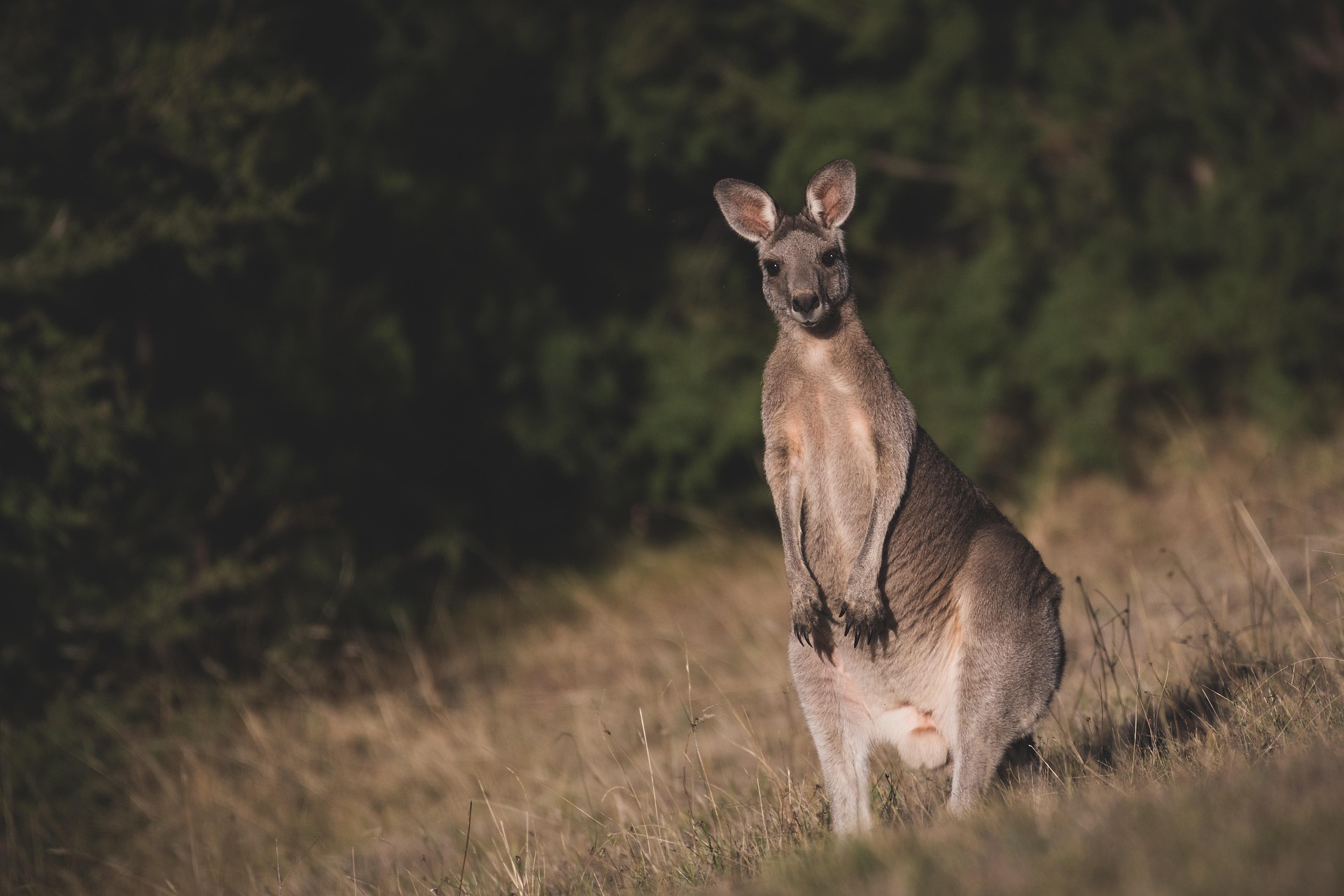
What kind of animal is a kangaroo? We will explain its characteristics, ecology, and habitat. This animal is very famous in Australia and you can definitely see it at the zoo. They have excellent jumping ability, and their hind legs are much stronger than other animals. I will explain the details.



- What is a kangaroo? About basic status
- What are the roots and origins of the kangaroo?
- About habitat
- feature is? What kind of creature is it?
- What is your personality like?
- What is the ecology like?
- About Molting
- About Vocalizations
- Seasonal Activities
- About Kangaroo Locomotion Speeds
- About Baby Kangaroos
- Are kangaroos an endangered species?
- Can kangaroos be kept as pets?
- Zoos Housing Kangaroos (Japan & Worldwide)
- Introducing other animals
What is a kangaroo? About basic status
Kangaroos are marsupial mammals that belong to the order Diprodontidae and family Macropodidae of the class Mammalia. Depending on the subspecies, kangaroos can grow to be 60-100cm long and weigh 7-15kg. Their scientific name is Macropodidae. A list of information is below. They are the most well-known species among humans and many live in the wild.
| Japanese(和名) | カンガルー |
| English(英名) | Capybara |
| scientific name(学名) | Macropodidae |
| classification(分類) | Mammalia、Diprotodontia、 Macropodidae 哺乳綱、双前歯目、カンガルー科 |
| IUCN Status(保全状況) | LEAST CONCERN |
| Length(体長) | 60 – 100cm |
| Weight(体重) | 7-15kg |
What are the roots and origins of the kangaroo?
The roots of the kangaroo trace back to small marsupials (mammals with pouches) that lived in Australia about 30 million years ago. Their transformation into the large, bipedal, hopping animals we see today is the result of a long evolutionary process.
Their ancestors were small animals that didn’t look like kangaroos
Early kangaroo-like creatures were quite different from modern kangaroos.
Size: Ranged from the size of a mouse to a small wallaby
Movement: Walked on four legs rather than hopping
Habitat: Lived in forests
Appearance: Resembled possums
Between approximately 23 million and 15 million years ago, there were species that walked on the ground or climbed trees, rather than being specialized “hoppers.”
Why did they evolve in Australia?
The reason lies in the continent’s isolation.
Marsupials—including the ancestors of kangaroos—are believed to have originally spread from the direction of modern-day South America, crossing via Antarctica to reach Australia.
Subsequently, Australia separated from other continents and became isolated.
The result:
Lions
Wolves
Deer
Horses
There was a scarcity of placental mammals—such as the ones listed above—creating an environment where marsupials could evolve independently.
The ability to hop evolved later
While high-speed hopping is the most distinctive feature of modern kangaroos, they were not always this way.
The evolutionary progression went like this:
Small marsupials
↓
Forest-dwelling kangaroo-like creatures
↓
Expansion into grasslands
↓
Acquisition of long hind legs and strong tails
↓
Transition to efficient hopping locomotion
Hopping offered several advantages:
Easier long-distance travel
High-speed movement with minimal energy expenditure
Easier escape from predators in open terrain
Giant kangaroos also existed
In the past, Australia was home to kangaroos that were much larger than those found today. A prime example:
Procoptodon goliah
Weight: Approximately 200 kg or more
Larger than a human
Possessed a massive face and a short snout
Lived until around 50,000 years ago
Unlike modern kangaroos, it may have moved in a way that resembled walking more than hopping.
A key fossil linked to modern kangaroos
Of particular importance is:
Ganguroo robustiter
It lived approximately 14 million years ago and is considered to be close to the ancestral lineage that gave rise to modern kangaroos and wallabies. In its early stages, it did not possess the powerful hopping ability seen in modern species.
About classification
There are many subspecies of kangaroo. The following is a quote from Wikipedia. There are so many subspecies that I can’t list them all. It consists of the genus Tree-kangaroo, Dorcopsis, Himedorcopsis, Rabbit-wallaby, Kangaroo, Tsume-wallaby, Rock-wallaby, Quokka-wallaby, Thrush-wallaby, and Black-tailed wallaby.
- Dendrolagus bennettianus ベネットキノボリカンガルー Bennett’s tree-kangaroo
- Dendrolagus dorianus ドリアキノボリカンガルー Doria’s tree-kangaroo
- Dendrolagus goodfellowi セスジキノボリカンガルー Goodfellow’s tree-kangaroo
- Dendrolagus inustus ゴマシオキノボリカンガルー Grizzled tree-kangaroo
- Dendrolagus lumholtzi カオグロキノボリカンガルー Lumholtz’s tree-kangaroo
- Dendrolagus matschiei アカキノボリカンガルー Huon tree-kangaroo
- Dendrolagus mbaiso シロハラキノボリカンガルー Dingiso
- Dendrolagus pulcherrimus コンジキキノボリカンガルー Golden-mantled tree-kangaroo
- Dendrolagus scottae スコットキノボリカンガルー Tenkile
- Dendrolagus spadix クリイロキノボリカンガルー Lowlands tree-kangaroo
- Dendrolagus stellarum セリキノボリカンガルー Seri’s tree-kangaroo
- Dendrolagus ursinus クロキノボリカンガルー Ursine tree-kangaroo
- Dorcopsis atrata クロドルコプシス Black dorcopsis
- Dorcopsis hageni セスジドルコプシス White-striped dorcopsis
- Dorcopsis luctuosa ハイイロドルコプシス Gray dorcopsis
- Dorcopsis muelleri オオドルコプシス Brown dorcopsis
- Dorcopsulus macleayi ヒメドルコプシス Macleay’s dorcopsis
- Dorcopsulus vanheurni ヤマドルコプシス Small dorcopsis
- Lagorchestes asomatus ヒメウサギワラビー Lake Mackay hare-wallaby(絶滅種)
- Lagorchestes conspicillatus メガネウサギワラビー Spectacled hare-wallaby
- Lagorchestes hirsutus コシアカウサギワラビー Rufous hare-wallaby
- Lagorchestes leporides ウサギワラビー Eastern hare-wallaby(絶滅種)
- Macropus agilis スナイロワラビー Agile wallaby
- Macropus antilopinus アカワラルー Antilopine kangaroo
- Macropus bernadus クロワラルー Woodward’s wallaroo
- Macropus dorsalis セスジワラビー Black-striped wallaby
- Macropus eugenii ダマヤブワラビー Tammar wallaby
- Macropus fuliginosus クロカンガルー Western grey kangaroo
- Macropus giganteus オオカンガルー Eastern grey kangaroo
- Macropus greyii シマワラビー Toolache wallaby(絶滅種)
- Macropus irma クロテワラビー Western brush wallaby
- Macropus parma パルマヤブワラビー Parma wallaby
- Macropus parryi エレガントワラビー Pretty-faced wallaby
- Macropus robustus ケナガワラルー Wallaroo
- Macropus rufogriseus アカクビワラビー Red-necked wallaby
- Macropus rufus アカカンガルー Red kangaroo
- Onychogalea fraenata タヅナツメオワラビー Bridled nail-tail wallaby
- Onychogalea lunata ミカヅキツメオワラビー Crescent nail-tail wallaby(絶滅種)
- Onychogalea unguifera スナイロツメオワラビー Northern nail-tail wallaby
- Petrogale assimilis ニセイワワラビー Allied rock-wallaby
- Petrogale brachyotis コミミイワワラビー Short-eared rock-wallaby
- Petrogale burbidgei バービッジイワワラビー Monjon
- Petrogale coenensis クーエンイワワラビー Cape York rock-wallaby
- Petrogale concinna ヒメイワワラビー Nabarlek
- Petrogale godmani ミミナガイワワラビー Godman’s rock-wallaby
- Petrogale herberti ハーバードイワワラビー Herbert’s rock-wallaby
- Petrogale inornata ジミイワワラビー Unadorned rock-wallaby
- Petrogale lateralis ワキスジイワワラビー Black-flanked rock-wallaby
- Petrogale mareeba マリーバイワワラビー Mareeba rock-wallaby
- Petrogale penicillata オグロイワワラビー Brush-tailed rock-wallaby
- Petrogale persephone プロサーパインイワワラビー Proserpine rock-wallaby
- Petrogale purpureicollis パープルイワワラビー Purple-necked rock-wallaby
- Petrogale rothschildi アカイワワラビー Rothschild’s rock-wallaby
- Petrogale sharmani シャーマンイワワラビー Mt. Claro rock-wallaby
- Petrogale xanthopus シマオイワワラビー Yellow-footed rock-wallaby
- Setonix brachyurus クアッカワラビー Quokka
- Thylogale billardierii アカハラヤブワラビー Tasmanian pademelon
- Thylogale browni ブラウンヤブワラビー Brown’s pademelon
- Thylogale brunii コゲチャヤブワラビー Dusky pademelon
- Thylogale calabyi カラビーヤブワラビー Calaby’s pademelon
- Thylogale lanatus ヤマヤブワラビー Mountain pademelon
- Thylogale stigmatica アカアシヤブワラビー Red-legged pademelon
- Thylogale thetis アカクビヤブワラビー Red-necked pademelon
- Wallabia bicolor オグロワラビー Swamp wallaby
- Lagostrophus fasciatus シマウサギワラビー Banded hare-wallaby
Source : Wikipedia
Difference between kangaroo and wallaby
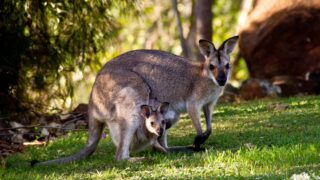
I have introduced the classification above, but there is a difference between kangaroos and wallabies. Kangaroos and wallabies are both members of the kangaroo family. So what’s the difference? It’s body size. A “wallaby” is a species with a body length of 25 to 75 cm and an average weight of less than 25 kg. Anything larger than this is called a kangaroo.
Why do kangaroos fly?
Why do kangaroos fly? Kangaroos can jump long distances by using their leg tendons like springs. This allows for efficient movement. As for why they fly, it is said that kangaroos originally used their front legs as well. However, it gradually became difficult for them to find food nearby, and they began to have to travel longer distances. And I learned how to fly. This allows it to travel further. Instead, the front legs degenerated.
About habitat
Kangaroos are endemic to Australia. Kangaroos can be seen in mainland Australia, Tasmania, and New Guinea. They can be seen active in large natural grasslands.
- Basic Information
Scientific Name: Varies by genus and species (e.g., Macropus rufus: red kangaroo)
Classification: Mammalia, Marsupialia, Macropus family
Characteristics: A marsupial with long hind legs adapted for jumping and balancing on its tail.
- Habitat
Kangaroos are native to Australia, and their habitats vary depending on the species.
Red Kangaroo (Macropus rufus)
Habitat: Arid regions of central Australia, grasslands near deserts
Characteristics: Prefers large, open areas
Wallaroo (e.g., Macropus robustus)
Habitat: Forests and rocky mountainous areas
Characteristics: Often hides in rocky areas or under trees
Chinese Kangaroo (small species)
Habitat: Wetlands and rainforest areas
- Environmental Characteristics
Arid regions and grasslands: Common red kangaroos and large reddish-brown kangaroos
Forests and forest edges: Common small kangaroos and wallabies
Near water sources: Prefers areas with abundant drinking water and vegetation
- Migration Patterns
Wide-Range Migration: May travel tens of kilometers in search of food and water
Group Life: Kangaroos live in groups known as “mobs”
feature is? What kind of creature is it?
Kangaroos have well-developed hind legs, and from birth they hop from head to toe, using their thick tails to balance. This is a rare form of locomotion among large mammals, and hopping has been seen in fossils dating back 20 million years. Red kangaroos can jump at speeds of up to 70km per hour. They can also travel long distances, sometimes traveling up to 100km per day during mating season.
- Physical Characteristics
Size: Varies by species
Red kangaroo (largest species): Males are 1.5-2m long and weigh 50-90kg.
Small species (such as wallabies): 40-100cm long and weigh 2-20kg.
Body shape: Long hind legs adapted for jumping, small dexterous front legs.
Tail: Long and thick, used for balance when jumping or standing.
Fur color: Brown to reddish-brown, gray, black, etc., varies by species and gender.
- Ecological Characteristics
Movement: Hopping on hind legs, fast running.
Diet: Herbivorous, eating grass, leaves, buds, bark, etc.
Reproduction: Marsupials; baby kangaroos (joeys) grow in their mother’s pouch.
Lifespan: Approximately 6-8 years in the wild, sometimes over 12 years in captivity.
- Behavior and Personality
Social Life: They live in mobs and are highly social with their companions.
Alertness: They are sensitive to humans and predators, and will jump to escape if they sense danger.
Mostly Nocturnal: They rest during the hot days and are active in the evening.
- Biological Characteristics
Marsupials: They are viviparous and raise their immature young in a pouch after giving birth.
Jumping Adaptation: They use their hind legs and tail for energy-efficient movement.
Arid Land Adaptation: They conserve body water and are well-adapted to the arid Australian environment.
What is your personality like?
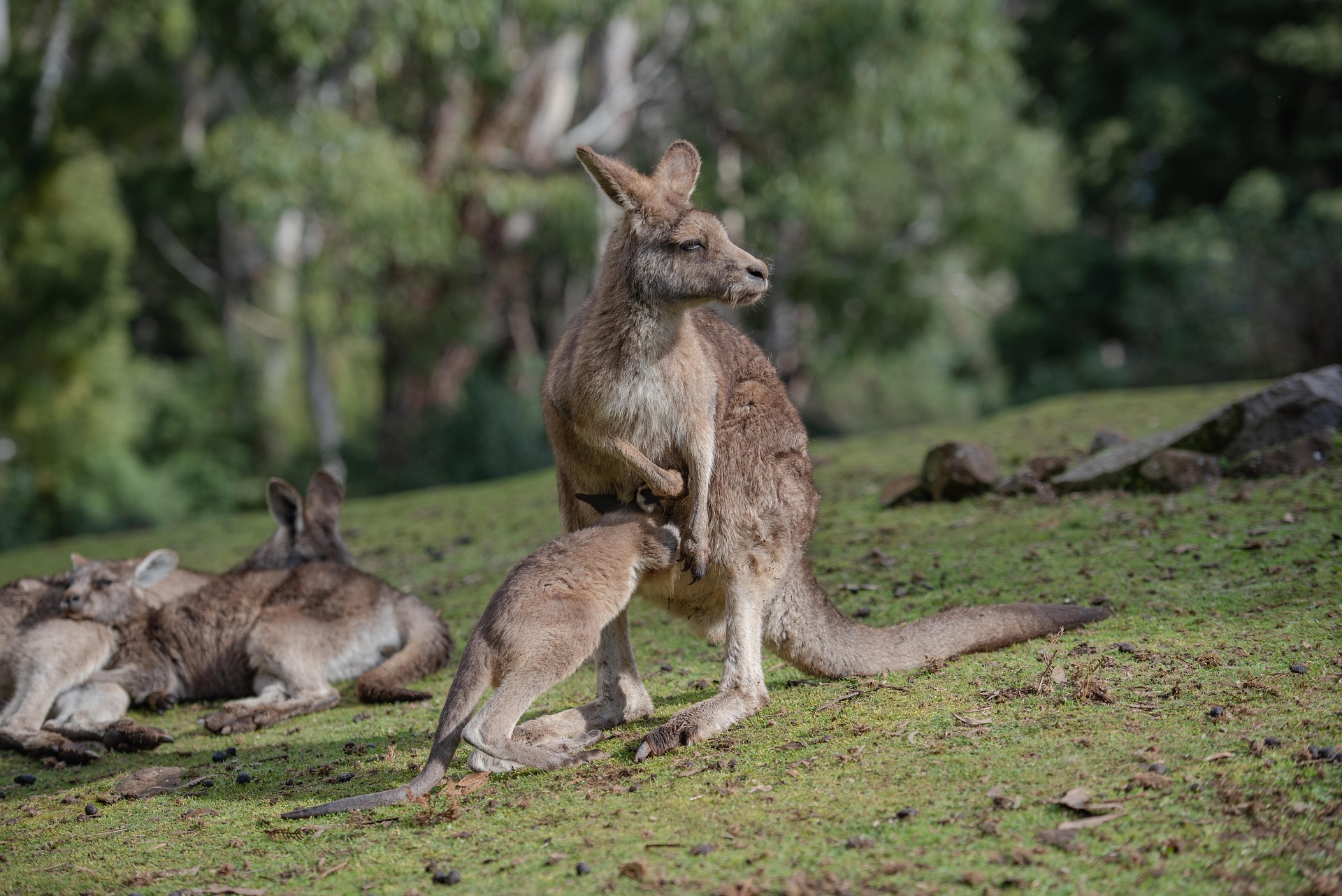
Kangaroos are naturally nervous and tend to live in groups. Therefore, they are very social and follow the rules together with their friends. They have a very timid personality, so if you are breeding them, please be aware that it will take quite a while to get used to them.
- Basic Personality
Dominant: Generally non-aggressive, with the gentleness typical of herbivores.
Highly alert: Sensitive to humans and predators, they quickly flee when they sense danger.
Timid but curious: They will approach anything that interests them, but remain vigilant.
- Sociality
Public life: They live in groups called mobs and cooperate with their peers.
Hierarchical: Dominant males exist within the group, affecting the order of feeding and mating.
Communication with peers: They express their opinions through clapping, calls, and body movements.
- Sexual Differences between Males and Females
Males (large individuals): They have a strong sense of territory and may engage in petty fights with other males during the breeding season.
Females (mothers): They have a strong maternal instinct to protect their young.
- Interactions with Humans
In the wild, they generally keep their distance, but individuals that are habituated to humans are relatively calm.
They rarely attack, only kicking with their hind legs when they sense danger.
What is the ecology like?
Kangaroos live on a diet of grass, insects and leaves. As with other marsupials, they breed in a pouch, where they raise their young until they are big enough. During breeding season, males compete for females and engage in activities such as boxing. The gestation period is about one month, and they live for 15 to 20 years. As they are a wild marsupial, they raise their almost immature young inside their mother’s womb. They are raised even more carefully than humans until they actually grow up.
- Living Environment
Origin: Throughout Australia (excluding islands and Tasmania)
Adapted Areas: Grasslands, desert areas, forest fringes, etc. (varies by species)
Social Life: They live in groups called mobs and cooperate with others.
- Diet
Herbivore: They primarily eat grasses, leaves, buds, and bark.
Foraging Time: They are active in the evening and at night, eating mostly and resting during the day.
Hydration: They can survive on little water in arid regions. Obtaining moisture from plants
- Locomotion and Behavior
Jumping: Using the muscles in their hind legs and tail to jump efficiently
Wide-Range Movement: They may travel several kilometers to several tens of kilometers in search of food and water
Alert Behavior: When sensing danger, they leap to escape and alert the herd
- Reproduction
Marsupials: Baby kangaroos (joeys) are born immature and grow in their mother’s pouch.
Estrus and Birth: Some species can breed year-round, but this depends on the environment, water, and food availability.
Rearing: Joeies spend several months in the pouch and remain protected by their mother.
Are there any natural enemies?
In fact, due to the structure of their bodies, kangaroos can only move forward. Therefore, they have the problem of not being able to move backwards. They have multiple natural enemies, such as dingoes, and their young are especially targeted. Mothers have the habit of managing their young in a pouch to protect them from everything from food to life. It is necessary to be careful in daily life.
About Molting
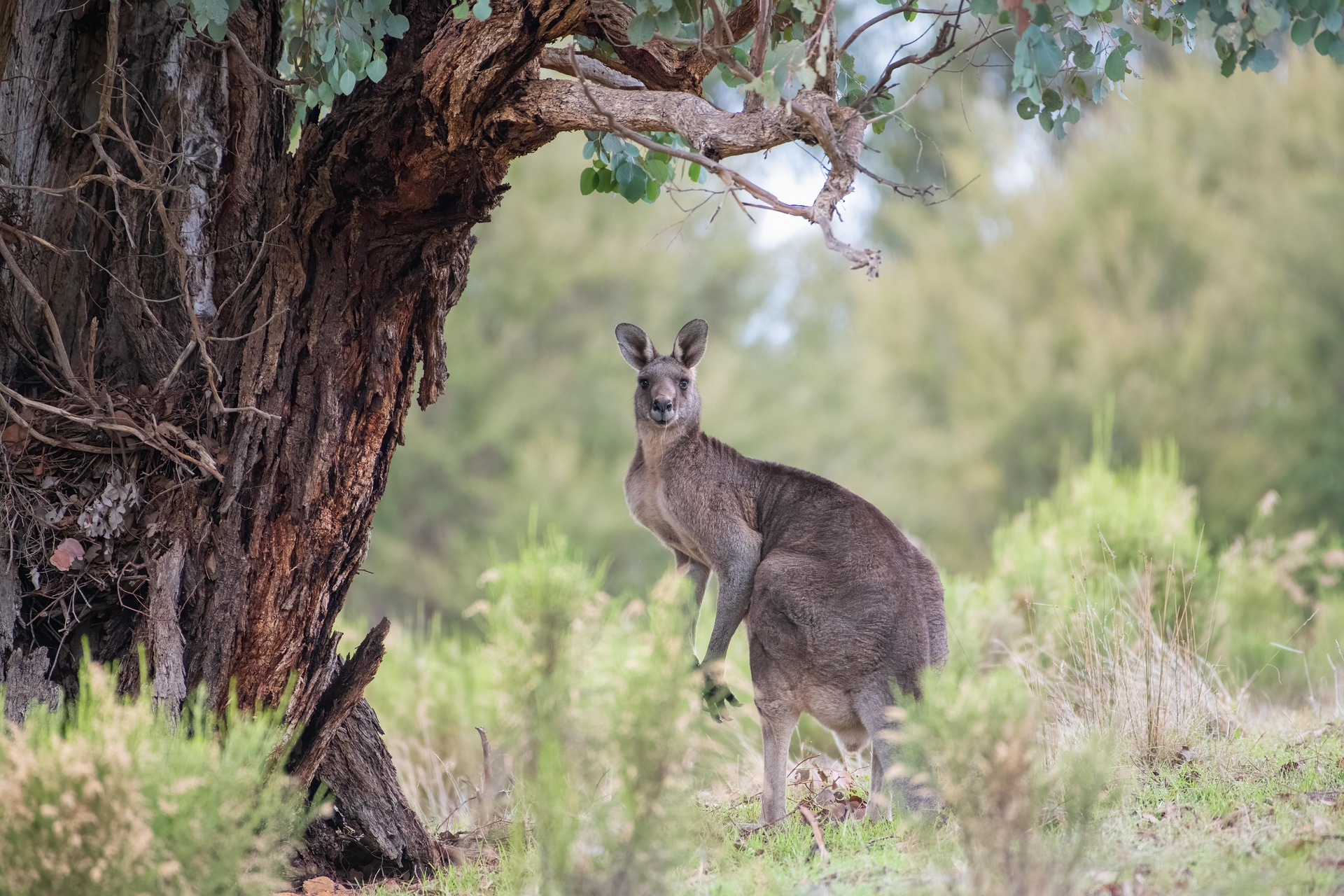
Molting in kangaroos is the process where old fur sheds and is replaced by new fur. As mammals, kangaroos—like humans with their hair—constantly renew their fur little by little. However, this process differs somewhat from the massive “coat changes” seen in dogs or cats.
Fur Changes with the Seasons
Kangaroos molt primarily to adapt to seasonal changes.
Winter: Fur becomes denser to improve heat retention.
Summer: Fur becomes shorter and lighter to prevent body temperature from rising.
For Red Kangaroos living in the Australian interior, the condition of their fur is particularly important due to the significant temperature difference between day and night.
Changes in Fur Color
Because the condition of the fur changes during molting:
Winter → Appears darker and more reddish.
Summer → Appears lighter in color and brownish.
Additionally, male Red Kangaroos may develop darker, redder fur on their shoulders and chests due to age and hormonal influences.
The Molting Process
Kangaroos do not shed their entire coat all at once.
Generally, the process follows this sequence:
Old fur weakens
↓
Rubbing the body or grooming with the tongue and forepaws
↓
Old fur sheds
↓
New fur grows in
Why Their Fur Can Look “Hot”
Kangaroo fur has evolved for hot climates.
Surprisingly, the fur actually helps manage the heat.
Reasons:
It prevents direct sunlight from hitting the skin.
It prevents the skin’s surface temperature from rising.
It facilitates heat dissipation via the wind.
In other words, the fur serves not only as “cold-weather gear” but also as a “sunshade.”
About Vocalizations
Although kangaroos are often thought of as animals that rarely make noise, they actually use a variety of vocalizations and sounds to communicate with one another. While they do not vocalize as frequently as dogs or cats, they do have specific “voices” suited to different situations.
- “Kuk-kuk” or “Kok-kok” sounds to call the mother
Young kangaroos (joeys) make soft sounds to address their mothers.
Characteristics:
High-pitched, short sounds
Used for close-range calls
Used to confirm the mother’s location
These sounds are typically used when the joey is inside the pouch or near its mother and seeking reassurance.
- “Foot-stomping” sounds to signal danger
The most famous sound associated with kangaroos is not a vocalization, but the loud stomping of their hind legs.
When they sense danger, they
“Thump! Thump!”
strike the ground.
This serves to:
Warn other kangaroos
Intimidate predators
Alert the mob (group) to danger
This is a crucial means of communication, especially for wallabies and kangaroos that live in groups.
- Low growls during disputes between males
During the breeding season, males may produce:
Low growls
Snorting sounds
Hissing or heavy exhalations
These serve as displays of intimidation, signaling:
“Stay away”
“I am stronger”
In fights (boxing matches) between male kangaroos, vocalizations and body posture also serve to assert dominance or challenge the opponent.
- Sounds made when captured or in extreme fear
When cornered, kangaroos may emit:
Low-pitched shouts
Screams
Sounds indicating distress or pain
As they are generally quiet animals, such vocalizations indicate a state of extreme stress.
Seasonal Activities
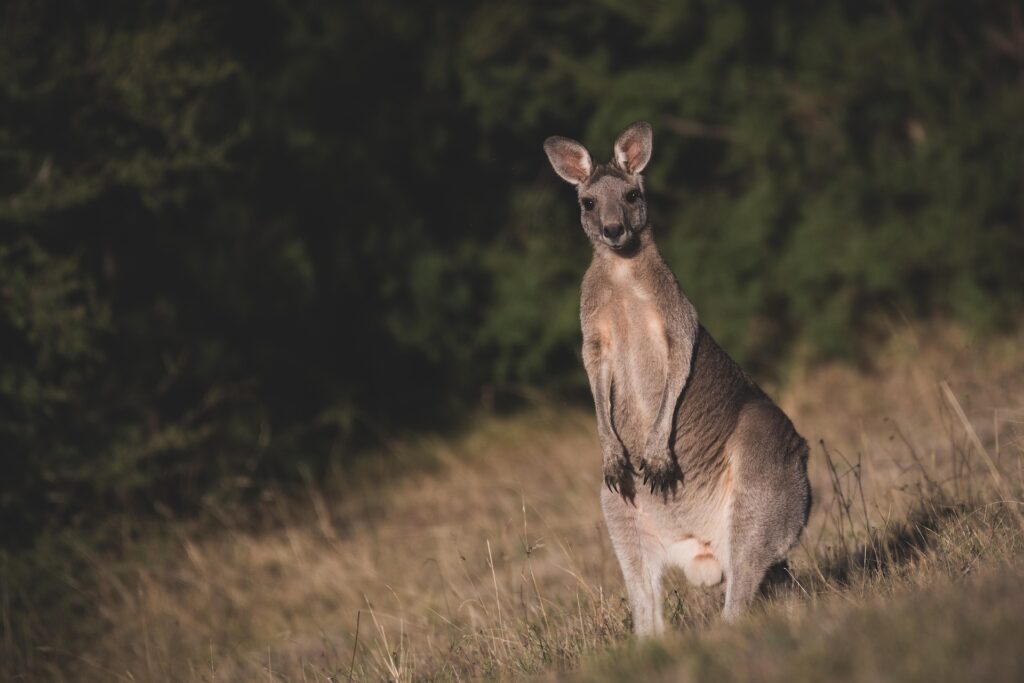
Kangaroo activity varies significantly by season. Because Australia experiences vast climatic differences across regions, kangaroos adjust their behavior based on temperature, rainfall, vegetation conditions, and breeding cycles.
Spring (approx. September–November): “Season of Breeding and Growth”
Key Activities
Increased activity levels
Longer periods spent foraging
Active breeding behavior
Growth and development of young
Spring is a time of abundant vegetation, with plenty of grass and fresh shoots available.
Males, in particular, engage in increased competition for females by:
Making themselves look larger
Displaying their muscles
Wrestling with their forelimbs
Intimidating rivals with low-pitched vocalizations
Summer (approx. December–February): “Battling the Heat”
Australian summers bring extreme heat, prompting kangaroos to adopt behaviors that help them avoid the heat.
Daytime
Resting in the shade
Minimizing movement
Preventing body temperature from rising
Morning, Evening, and Night
Moving actively
Grazing
Traveling to water sources
Since kangaroos have few sweat glands, they avoid strenuous activity during the hottest parts of the day.
They also engage in cooling behaviors such as:
Licking their forelimbs
Taking advantage of the breeze
Lying down to lower their body temperature
Autumn (approx. March–May): “Securing Food and Maintaining Strength”
Conditions become more comfortable in autumn, leading to increased activity.
Key Activities
Increased foraging time
Expanded range of movement
Building up physical strength in preparation for winter
In areas with high rainfall, vegetation flourishes, making this a crucial period for kangaroos to replenish nutrients.
Winter (approx. June–August): “Season of Energy Conservation”
Winters can be bitterly cold, depending on the region.
Behavioral Characteristics
Warming their bodies in the daytime sun
Foraging in the morning and evening
Adjusting activity schedules
Their fur becomes denser for winter, improving heat retention.
In cold regions, they tend to:
Gather in groups
Rest in wind-sheltered areas
Conserve energy
About Kangaroo Locomotion Speeds
A kangaroo’s speed varies significantly depending on how it moves. While the general image of a kangaroo is one of high-speed hopping, the way they use their bodies differs completely between slow walking and rapid movement.
Normal Walking Speed (Slow Movement)
When moving short distances, kangaroos employ a unique gait in which they move their hind legs alternately.
Approximate speed:
2–6 km/h
At this speed, they engage in routine activities such as:
Foraging for grass
Checking their surroundings
Moving within the mob (group)
Low-Speed Movement (Movement Resembling Quadrupedal Locomotion)
Because kangaroos have short forelimbs, they cannot walk like typical four-legged animals.
When moving slowly, they perform a motion resembling “five-point support”:
Placing their forelimbs on the ground
Using their large tail as a prop
Swinging their hind legs forward
This movement is less like “walking” and more like a specialized form of locomotion that involves supporting the body while moving forward.
High-Speed Movement (Hopping)
Hopping is where the kangaroo truly excels.
For the Red Kangaroo:
Normal speed: 15–25 km/h
Long-distance travel: Approx. 20–30 km/h
Top speed: Can reach over 60–70 km/h
Why Don’t They Tire Easily at High Speeds?
Kangaroo hopping is designed for energy efficiency.
The secret lies in:
Large Achilles tendons
The tendons in their hind legs expand and contract like springs.
Landing
↓
Storing energy in the tendons
↓
Releasing it during the next hop
This is the mechanism at work.
Consequently, even when moving at high speeds, they do not expend vast amounts of muscular energy the way humans do when running.
About Baby Kangaroos
Let’s take a closer look at baby kangaroos (joeys).
- Birth and Size
Marsupial Characteristics: Kangaroos are marsupials, and young are born very immature.
Birth Weight: Approximately 0.7-1.5g (about the size of a pinky fingertip)
Appearance: Eyes are still closed, limbs are underdeveloped, and there is almost no body hair.
- Life in the Pouch
Entering the Mother’s Pouch: Immediately after birth, they enter the mother’s pouch and attach to her nipples.
Development Period: They grow in the pouch for approximately 6-9 months.
Development Process: At first, they barely move in the pouch, but gradually gain the ability to use their front and back legs.
- Time to Leave the Pouch
First Outing: They begin to peek out of the pouch and observe their surroundings around 6 months of age.
Fully Outdoor Activity: At approximately 9-12 months of age, they leave the pouch and begin to move freely around their mother’s side.
- Relationship with Mother
Nursing: They grow exclusively on breast milk while in the pouch.
Protection: They remain protected by their mother even after leaving the pouch.
Independence: They gradually become independent around 12 months of age.
- Growth Characteristics
Growth Rate: Very rapid, they are able to leave the pouch within a few months.
Social Learning: By living with their mother and in a group, they learn how to escape and feed.
Play: From the time they leave the pouch, they develop motor skills through light hopping and play.
Are kangaroos an endangered species?
Kangaroos have many subspecies that are classified as endangered species. It is also listed in the Washington Convention, and international trade is strictly restricted. The main reason for this is habitat destruction. Conservation efforts have begun.
- Overall Conservation Status
Kangaroos are endemic to Australia, but overall they are not endangered.
Populations of many kangaroo species (e.g., red kangaroos and grey kangaroos) are large and stable or increasing.
- Species Differences
Red Kangaroo (Macropus rufus)
Population in Australia is in the tens of millions.
Not endangered (IUCN classification: Least Concern)
Eastern Grey Kangaroo (Macropus giganteus)
Stable population in the tens of millions.
Not endangered.
Small or endemic species (e.g., forest kangaroos, some rock-dwelling wallabies).
Limited habitat and small populations.
Some species are classified as vulnerable or endangered.
- Conservation Considerations
Human Impact: Concerns about habitat loss due to agricultural land development, traffic accidents, and deforestation.
Conservation Measures: Populations are maintained through management in national parks and protected areas, hunting restrictions, and other measures.
Can kangaroos be kept as pets?
Kangaroos are very difficult to keep as pets. Because they travel a very long distance in a day, it is extremely difficult to raise them unless you have a large area of land. Therefore, it is not a realistic choice. Big events are held at zoos, etc., so it’s a good idea to ask someone to guide you.
- Basic Concept
As wild animals, kangaroos are generally not suitable as pets.
They require special care and legal permission, making them difficult to keep in an average household.
- Laws and Regulations
Australia: The Wildlife Protection Act strictly regulates the capture and sale of kangaroos.
Japan and other countries: Kangaroos are designated as designated animals and large mammals, requiring permission from the prefectural governor and facility standards.
As designated animals, kangaroos require permission from the prefectural governor and facility standards.
Keeping them in an average household is virtually impossible.
- Difficulties of Raising
Large space required: An environment where they can jump and exercise is essential.
Dietary management is difficult: While they are herbivores, different species have different plant preferences and nutritional balances.
Highly social: As they are herbivores, they become stressed when alone.
Special health management requirements: They are vulnerable to health risks from wild-borne diseases and stress.
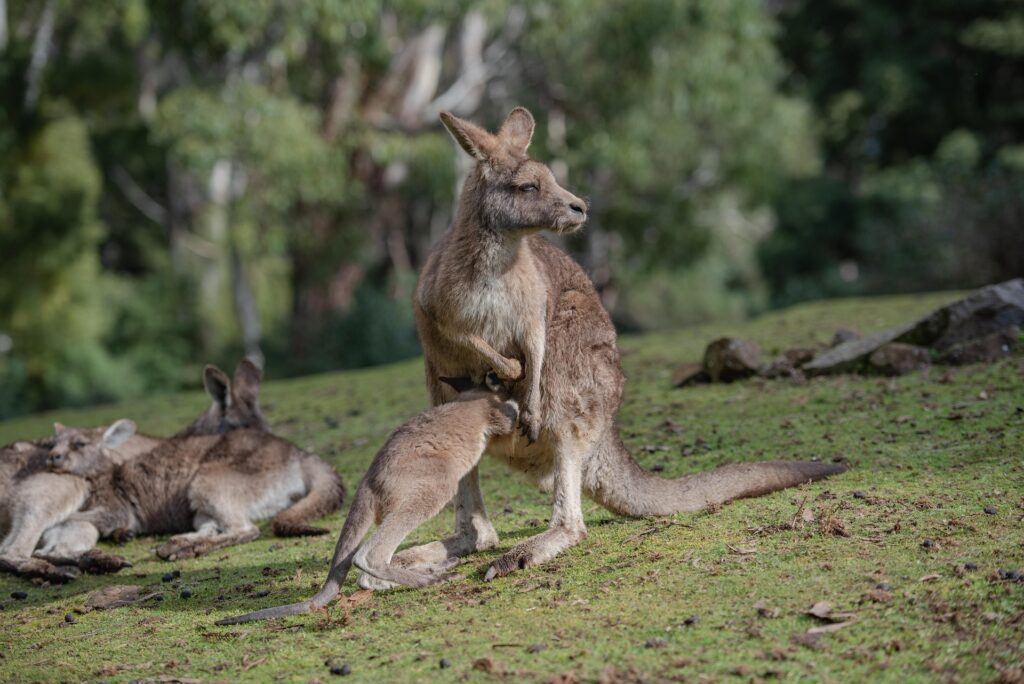
Zoos Housing Kangaroos (Japan & Worldwide)
Kangaroos are kept in zoos and safari parks around the world. The Red Kangaroo is the most common species, and it is also frequently seen in Japan.
🇯🇵 Major Zoos in Japan Where You Can See Kangaroos
Tama Zoological Park (Tokyo)
Tama Zoological Park is one of Japan’s leading facilities for keeping kangaroos.
Features:
Red Kangaroos are kept in a group (mob).
Visitors can observe behaviors close to those in the wild within a spacious enclosure.
Active breeding programs are in place.
The park conducts planned breeding and individual management of Red Kangaroos.
Fukuoka City Zoo (Fukuoka)
They keep Red Kangaroos.
Features:
Multiple individuals are on display.
Visitors may see joeys (young kangaroos) peeking out of their mothers’ pouches or being raised.
Information on their diet and ecology as herbivores is presented.
The zoo shares information about individual Red Kangaroos and their care.
Higashiyama Zoo and Botanical Gardens (Aichi)
Features:
Red Kangaroos are kept here.
Seasonal behavioral changes and breeding activities are showcased.
Careful attention is paid to the enclosure environment, such as measures to combat summer heat.
Husbandry records and news regarding the Red Kangaroos are also made public.
🌏 Famous Kangaroo-Keeping Facilities Worldwide
🇦🇺 Australia Zoo
One of Australia’s premier zoos.
Features:
Includes an area for close-up interactions with kangaroos.
Conducts conservation activities for animals native to Australia.
Focuses heavily on wildlife conservation education.
🇦🇺 Taronga Zoo Sydney
A famous zoo in Sydney.
Features:
Displays a wide variety of species native to Australia.
Conducts conservation education involving kangaroos and related species.
Notable for its location offering views of the harbor and city skyline.
🇦🇺 Featherdale Sydney Wildlife Park
A wildlife park known for allowing close proximity to kangaroos.
Features:
Enclosures designed to allow animals to roam relatively freely.
Opportunities for feeding experiences may be available.
Focuses on animals native to Australia.
🇦🇺 Perth Zoo
A leading zoo in Western Australia. Key Features:
Protection of species native to Australia
Breeding programs
Support for reintroduction into the wild
Zoos in the Australia-New Zealand region conduct conservation and breeding programs in a systematic manner.
Introducing other animals

コメント