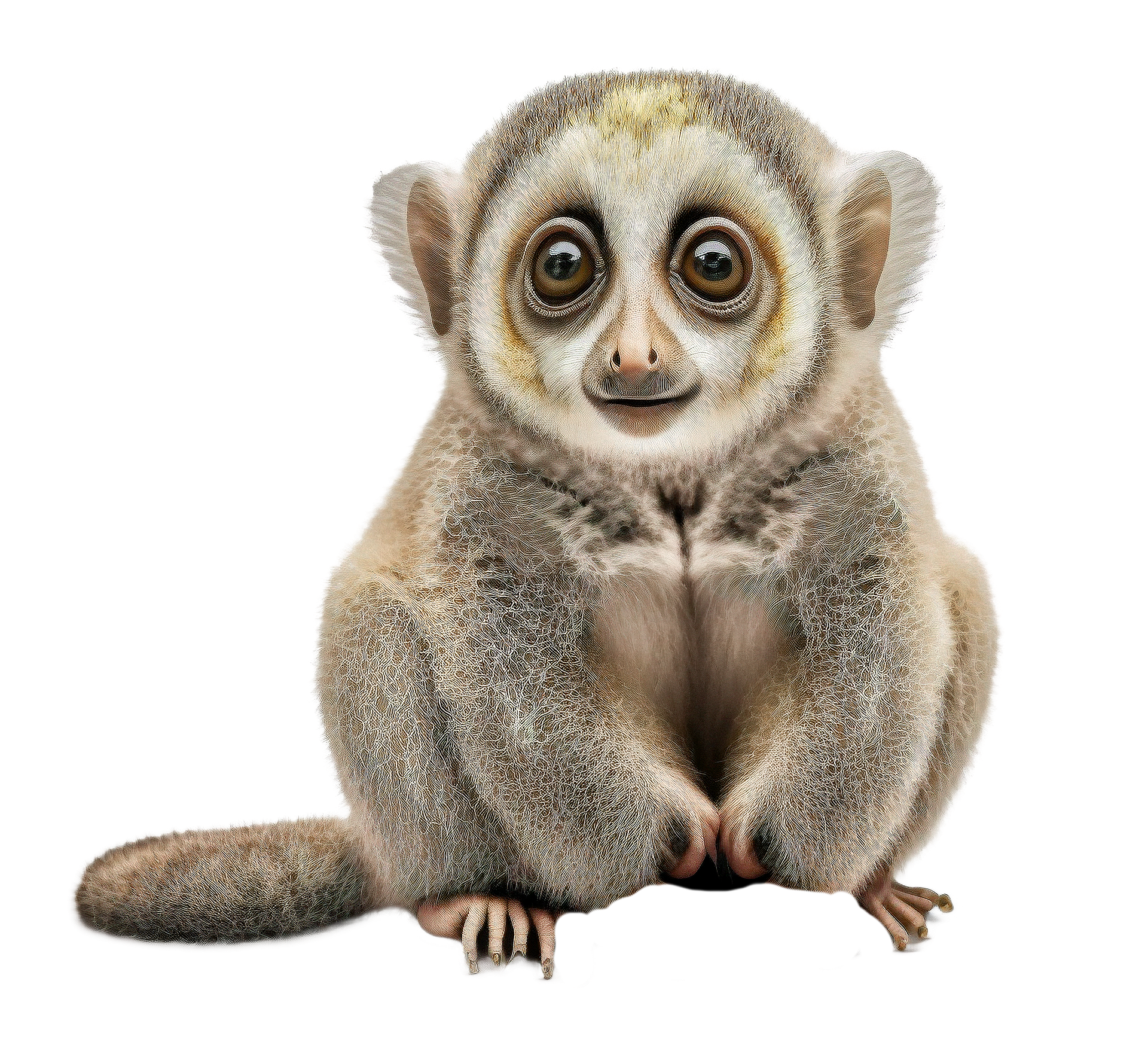
What kind of animal is a slow loris? We will explain its characteristics, ecology, and habitat. This cute squirrel animal, which looks like a stuffed animal, is very popular all over the world. This time, I will introduce the ecology and habitat of the slow loris, so I hope you will find it useful.






- What is a slow loris? About basic status
- What are the roots and origins of the slow loris?
- About habitat
- feature is? What kind of creature is it?
- What is your personality like?
- What is the ecology like?
- Slow Loris Vocalizations
- Seasonal Activities
- Walking Speed
- About Slow Loris Babies
- Is the slow loris an endangered species?
- Can slow lorises be bred?
- Zoos Housing Slow Lorises (Japan & Worldwide)
- Introducing other animals
What is a slow loris? About basic status
The slow loris is an animal of the genus Slow Loris, which is classified as a primate and belongs to the family Lorisidae. The body length is 26.5 – 38 cm and the weight is 0.4 – 2 kg.
| Japanese(和名) | スローロリス |
| English(英名) | slow loris |
| scientific name(学名) | Nycticebus |
| classification(分類) | Mammalia、 Primates、Lorisidae、Nycticebus 哺乳綱、霊長目、ロリス科、スローロリス属 |
| IUCN Status(保全状況) | ENDANGERED |
| Length(体長) | 26.5 – 38cm |
| Weight(体重) | 0.4 – 2 kg |
What are the roots and origins of the slow loris?
Tracing the roots of the slow loris leads back to ancient primates that lived approximately 40 million years ago. Modern slow lorises belong to the “Strepsirrhini” (wet-nosed primates) group, a lineage that preserves characteristics of very early primates.
Origins: “Small Ancient African Primates”
The Lorisidae family, to which the slow loris belongs, is part of the Strepsirrhini group—the same group that includes lemurs.
The general evolutionary progression is as follows:
Early primates (from approx. 65 million years ago)
↓
Strepsirrhines (diverged approx. 40 million years ago)
↓
Lorisids (Lorisidae)
↓
Lorisinae subfamily (migrated to Asia)
↓
Slow loris genus (Nycticebus)
Did they originally come from an African lineage?
Modern slow lorises inhabit Southeast Asia, including:
India
Bangladesh
Myanmar
Thailand
Malaysia
Indonesia
However, their ancestral lorisids are considered highly likely to have originated in Africa. From there, certain lineages migrated to Asia, eventually giving rise to the modern slow loris.
Why did they evolve to move so slowly?
As their name suggests, slow lorises move very slowly; however, this is not a weakness, but rather an evolutionary strategy.
To survive in a forest environment, they developed:
A nocturnal lifestyle
Slow, quiet movement
Strong hands capable of maintaining a firm grip on branches
Movement patterns that make them difficult for predators to detect
Furthermore, the slow loris is a rare example of a venomous primate.
They mix saliva with secretions from glands near their elbows to create a toxic substance, which they use against predators and in conflicts with other members of their species.
Is the slow loris a “living fossil”? They are often referred to as “living fossils,” but to be precise,
they are not animals that have remained unchanged since ancient times; rather, they are animals that have evolved in their own unique way while retaining characteristics of early primates.
In particular, features such as
large eyes (an adaptation for nocturnal activity),
a moist nose (indicating a reliance on the sense of smell),
finger structure,
and a slow metabolism
evoke the characteristics of early primates.
About classification
The slow loris was first described in 1785 under the scientific name Tardigradus coucang. Several species of the genus slow loris were reported between 1800 and 1907, leading to the classification of all slow lorises discovered up to that time as one species. The following subspecies exist, but they are listed as endangered species.
| Name (名前) | Scientific Name (学名) |
| Bengal slow loris ベンガルスローロリス | Nycticebus bengalensis |
| Sunda slow loris スンダスローロリス | Nycticebus coucang |
| Javan slow loris ジャワスローロリス | Nycticebus javanicus |
| Bornean slow loris ボルネオスローロリス | Nycticebus menagensis |
| Lesser slow loris レッサースローロリス | Nycticebus pygmaeus |
Nycticebus bengalensis
It is a type of slow loris that is native to the Indian subcontinent and Indochina. It is the largest species of slow loris, measuring 26-38 cm from head to tail and weighing 1-2.1 kg. It has a round head, flat face, large eyes, and small ears, and is currently listed as an endangered species.
Nycticebus coucang
The Sunda slow loris is native to Indonesia, western Malaysia, southern Thailand, and Singapore. Like other slow lorises, it has a wet snout, a rounded head, and small ears hidden under thick fur. It is currently designated as an endangered species.
Nycticebus menagensis
The Javan slow loris lives in the western and central parts of Java, Indonesia. There is a prominent white diamond pattern on the forehead. The weight is 565-687 g, and the head and body length is approximately 293 mm. It is listed on Appendix I of CITES and is listed as an endangered species.
Nycticebus borneanus
A slow loris that lives in the south-central part of Borneo, Indonesia. Like other slow loris, this arboreal and nocturnal animal is threatened by the illegal wildlife trade. It is currently designated as an endangered species.
Nycticebus pygmaeus
The lesser slow loris and pygmy slow loris are a type of slow loris found in Vietnam, Laos, eastern Cambodia, and China east of the Mekong River. The body length is approximately 19-23 cm and the tail is very short. It is currently designated as an endangered species.
About habitat
Its habitat is mainly from Southeast Asia to South Asia. There are many subspecies, so the type you can meet varies depending on the region.
1. Basic Information
Scientific Name: Nycticebus
Distribution: Mainly found in Southeast Asia
Northeastern India, Sri Lanka, Indonesia (Java, Sumatra, Kalimantan), Malaysia, Thailand, Vietnam, etc.
Habitat:
Tropical rainforests, secondary forests, bamboo groves, and woodlands surrounding agricultural fields
A nocturnal primate that primarily lives in trees
2. Habitat Characteristics
Mainly found in lowland to hilly forests
Prefers densely wooded areas with many branches
Because they are nocturnal, they rest motionless among leaves or on branches during the day
To avoid danger, they choose places with few predators and easy hiding places
feature is? What kind of creature is it?
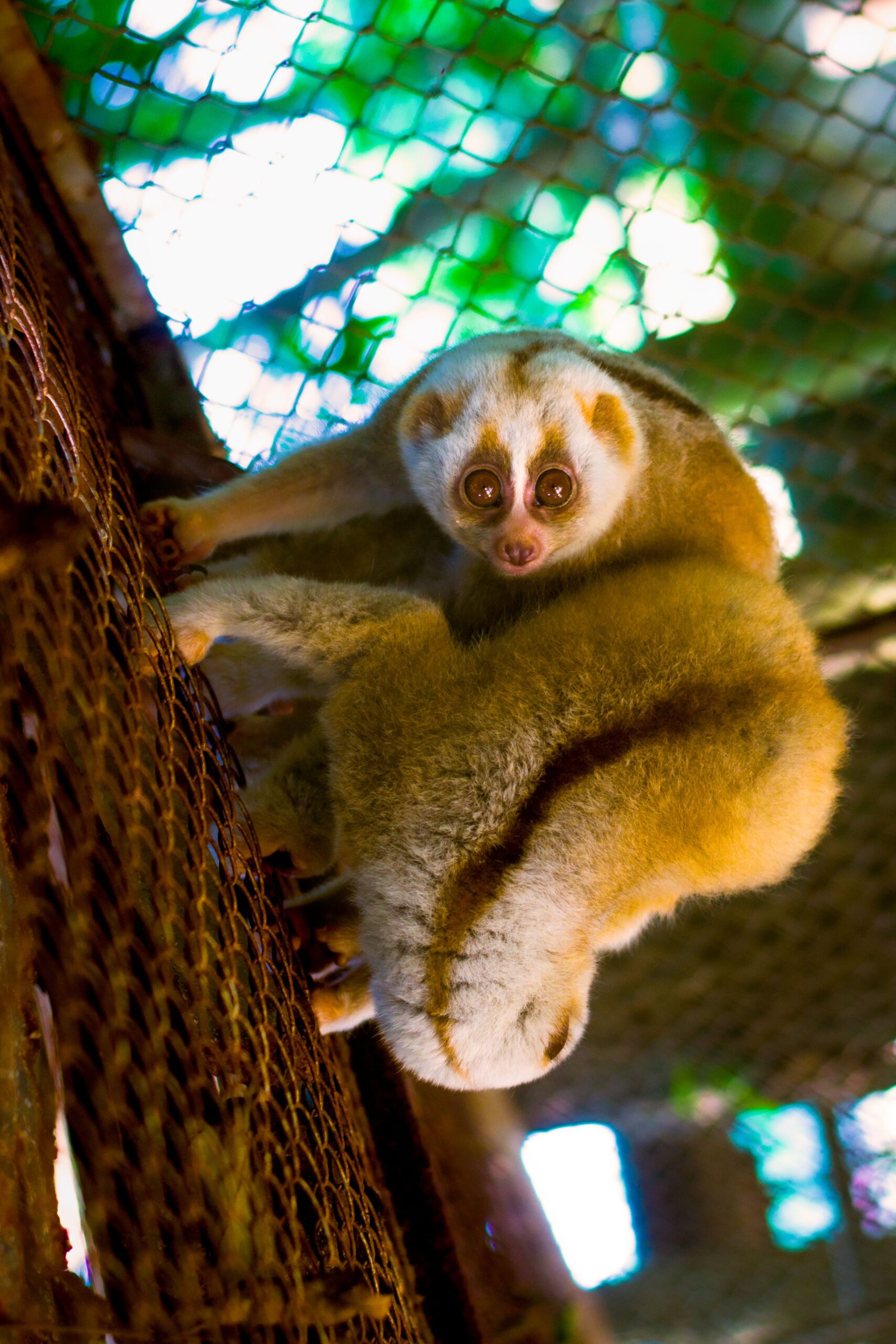
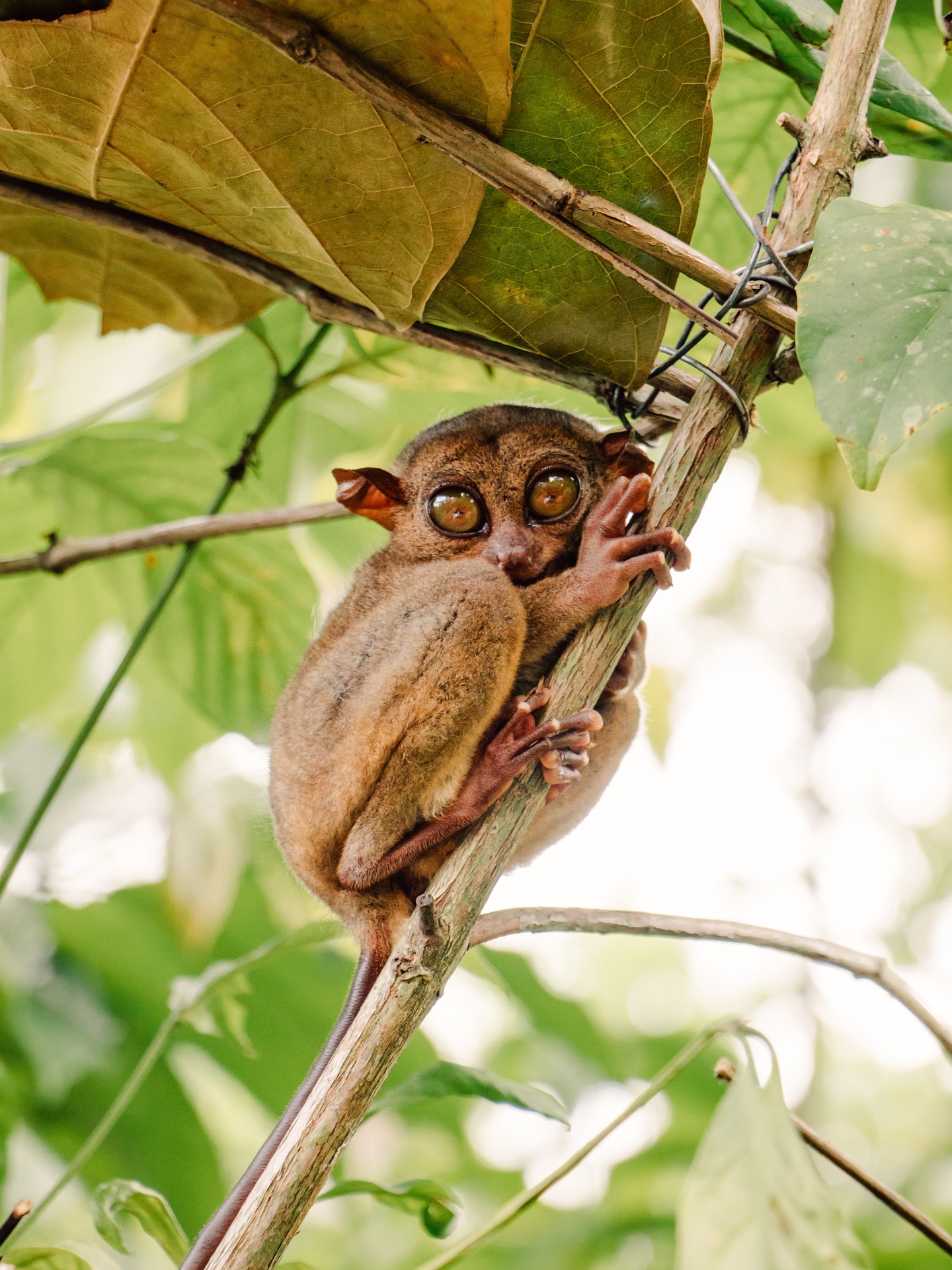
The slow loris is an unusual squirrel that cannot escape by running or jumping. Slow loris are arboreal and nocturnal. As it moves from branch to branch, it makes little noise and can maintain a slow speed, making it unnoticed by enemies. During the day, they take a nap between branched trees. They have short wool-like hairs all over their bodies, and the color ranges from grayish-brown to reddish-brown on the back. The tail is very short and is hidden under the body fur, making it almost invisible.
1. Physical Characteristics
Body Size: Small to Medium
Body Length: Approximately 18-38 cm (varies by species)
Weight: Approximately 265-600 g
Face: Characterized by round, large eyes
Nocturnal, allowing them to see clearly in the dark
Their large eyes make them look like “adorable stuffed animals,” but they are also very cautious
Limbs: Adapted to arboreal life
Long fingers allow them to firmly grip tree branches
Hin legs are also well-developed, allowing them to move slowly but surely
Fur: Soft, gray to brown
Some species have a “V” pattern on their heads or black rings around their eyes
2. Behavioral and Personality Characteristics
Nocturnal
Active at night, resting motionless among tree branches and leaves during the day
Very slow movements
As their name suggests, they are “slow” and quiet
Move cautiously to avoid being noticed by predators
Typically solitary
They have small territories and tend to spend their time alone
3. Diet
Omnivorous, but primarily feeds on fruit, sap, and insects
Eats sap, bark juice, nectar, and fruit
Also preys on insects and small invertebrates
Slowly selects food
Eats little by little while perched in the tree
4. Distinctive Biology
Venomous primates (only members of the Nycticebus genus)
Venom secreted from glands in their elbows mixes with saliva for defense and predation
Highly cautious
Despite their large eyes, they are timid and easily hide from humans and other animals
Perfectly adapted to arboreal life
Can move safely, even slowly, without falling off branches
What is your personality like?
Slow lorises are cautious and nocturnal, so they act cautiously. Loud noises can cause stress, so care must be taken when handling them. Especially if you keep your pet as a pet, you should try to keep it quiet. They are generally solitary and only make noises when threatening.
1. Basic Personality
Timid and cautious
Highly sensitive to predators and humans
Reacts to sound and light and hides
Cautious and wary
When moving through trees, they move slowly and securely, grasping branches.
Avoids sudden movements and is sensitive to stress.
2. Sociality/Solitary
Primarily solitary
Active within their territory at night
Although they may live in small groups or parent-child units, they generally prefer solitude.
Territorial
Announces their presence by scent and calls, keeping others at bay.
3. Communication
Calls: Low, quiet calls to signal to fellow members
Scent: Secretions from glands in the elbows and armpits mark territory and identify individuals.
Warning Behavior: Not aggressive, but may bite with venom mixed in their saliva if threatened.
4. Diet and Behavior
Cautious forager
Perched on a branch, they slowly observe while eating.
Their slow movements make them less likely to be noticed by predators.
Nocturnal and highly observant.
They can find insects and tree sap even in the dark.
They may move slowly, but their judgment is sharp.
What is the ecology like?
Slow lorises subsist on tree sap, nectar, fruit, and insects. Breeding is not seasonal; females give birth every year. The gestation period is approximately 190 days, and it is possible to give birth to one calf at a time. The lifespan is said to be about 15 to 20 years.
1. Habitat
Region: All over Southeast Asia
Northeastern India, Sri Lanka, Thailand, Malaysia, Vietnam, Indonesia (Sumatra, Java, Kalimantan)
Environment: Tropical rainforests, bamboo forests, secondary forests, and woodlands surrounding agricultural land
Habitat: Mostly arboreal (lower to mid-level branches)
Characteristics: Resting motionless among leaves and branches during the day
2. Behavior
Nocturnal
Resting quietly among trees during the day
Becoming active at night, searching for food and moving around
Slow Movement
As their name suggests, they move “slowly” and quietly
Cautious, making them less likely to be noticed by predators
Solitary and Territorial
Primarily solitary
They have small territories and communicate their presence through scent and vocalizations
3. Diet
Omnivorous (mainly fruit, sap, and insects)
Intake of fruit, nectar, sap, and bark juices
Also prey on small insects and invertebrates
Feeding Behavior
Eats small amounts of food while perched on a branch
Slow movement but highly observant
4. Reproduction and Growth
Reproduction: Viviparous (Mammalian)
Birth: Usually 1-2 pups at a time
Gestation: Approximately 6 months
Rearing: Carried by the mother
Growth: Ability to move up branches within a few months, and capable of independent movement by 6 months
5. Defense and Special Ecology
Venomous Primates
Venom secreted from the cubital glands is mixed with saliva for defense and predation
Highly cautious, cautious, and solitary
Perfectly adapted to arboreal life
Able to move safely without falling, even at a slow pace
Are there any natural enemies?
Slow lorises are poisonous mammals. Enemies lick or rub the toxins, causing damage and protecting themselves. It can cause death in small animals and can cause anaphylactic shock in humans. For this reason, poisonous slow loris are rarely preyed upon.
Slow Loris Vocalizations
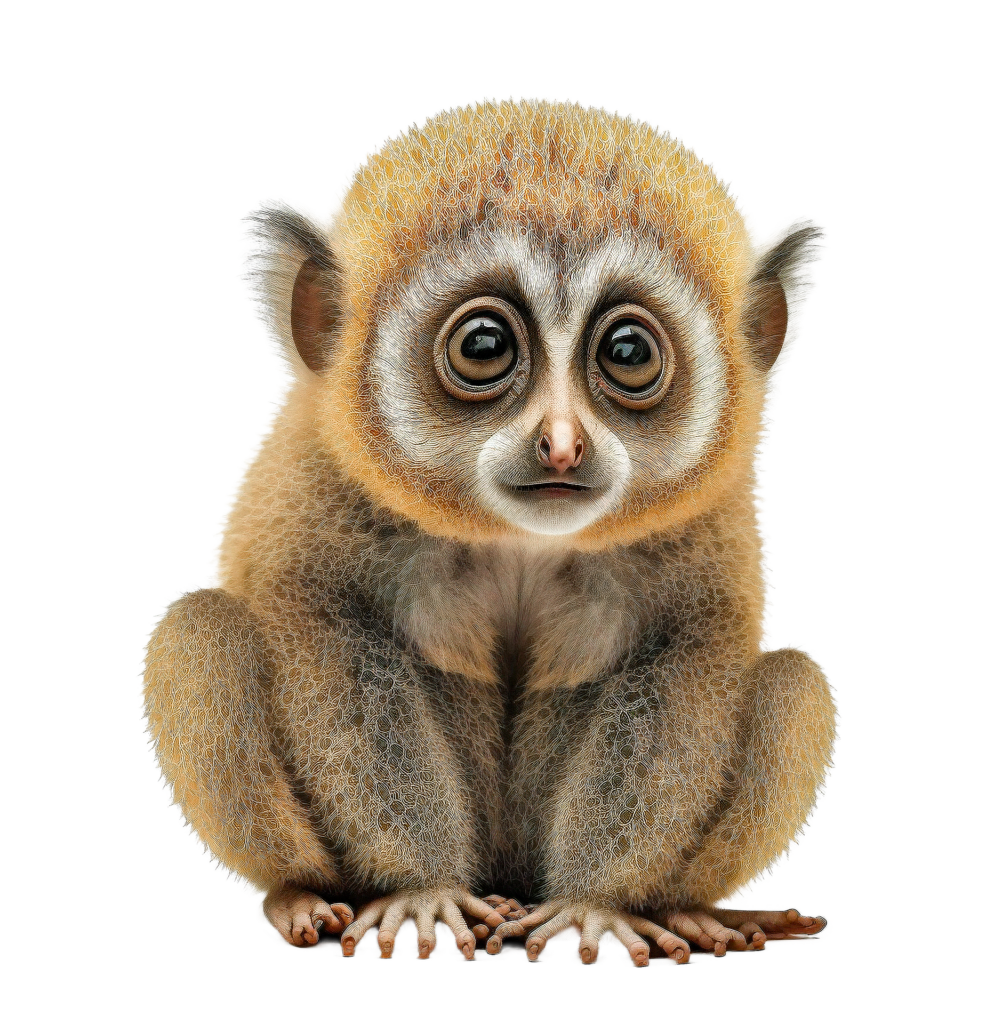
Contrary to their cute appearance, slow lorises produce a surprisingly diverse range of vocalizations, spanning from soft, high-pitched sounds to sharp alarm calls.
Some typical vocalizations include:
High-pitched sounds like “chee-chee” or “kee”
Used for:
Communicating with others in the group
Offspring calling to their mother
Expressing anxiety or tension
Alarm calls like “shaa” or “gya”
Produced when the animal senses danger.
Because slow lorises move slowly, rather than fleeing, they adopt defensive behaviors such as:
Freezing in place
Intimidating the threat
Preparing to use their venom
High-frequency sounds bordering on ultrasonic
Some slow loris species produce sounds at very high frequencies that are difficult for the human ear to detect.
These are believed to be used for:
Alerting others to predators
Signaling to group members
Communication between mother and offspring
Mating season calls
Males and females locate each other using short calls such as:
“Pi-pi”
“Kyu-kyu”
Seasonal Activities
Slow loris activity patterns shift in response to environmental changes associated with the rainy and dry seasons—such as food availability, temperature, and breeding conditions—rather than undergoing drastic seasonal changes like hibernation or migration seen in animals from temperate regions like Japan.
Spring (Start of the rainy season; vegetation increases)
Activity level: Slightly increased
Increase in new shoots, fruits, and insects
Nocturnal foraging becomes more active
Breeding behavior observed in some regions
Key behaviors:
Moving slowly along branches to find new feeding grounds
Licking tree sap and nectar
Catching insects
Slow lorises rely more on their sense of smell than on vision, so they search for food in the forest at night by following scents.
Summer (Rainy season; abundant food)
Activity level: High
This is the season when the forest is most bountiful.
Increased behaviors:
Eating fruit
Drinking nectar
Preying on insects and small animals
Moving over wide areas within the canopy
Insect populations surge, making this a season for high protein intake.
However, they rest for most of the day.
Daytime:
Sleeping curled up in tree hollows,
dense foliage,
or between branches.
Nighttime:
Activity begins after sunset
Slow foraging over several hours
Autumn (Transition to the dry season)
Activity level: Normal to slightly decreased
As food supplies begin to dwindle, they tend to:
Shorten travel distances
Utilize efficient feeding grounds
Conserve energy
Also, since they do not store large amounts of fat, they do not prepare for winter in the way hibernating animals do.
Winter (Dry season)
Activity level: Decreasing trend
In Southeast Asia, “dryness” is a greater challenge than the cold.
Changes:
Fewer insects
Scarcity of fruit
Nighttime activity duration may shorten
Behaviors:
Foraging within a limited range
Consuming tree sap, bark, and leaves
Adopting an energy-saving lifestyle
Although they do not live in cold regions, their activity may slow down when temperatures drop.
Walking Speed
As their name suggests, slow lorises move very slowly. While the exact speed varies depending on the species and situation, they generally move at a leisurely pace of just a few centimeters per second.
Typical Movement Speeds
Normal walking: Approx. 0.1–0.3 km/h
Moving along branches: A few centimeters to over ten centimeters per second
Even when fleeing in a hurry, they do not sprint like other primates.
(*In the wild, they spend almost all their time moving through the trees rather than running on the ground.)
Evolution to Avoid Detection
Rather than trying to outrun predators, slow lorises employ a strategy of:
Moving slowly
Remaining silent
Blending in with surrounding branches and leaves
This is because moving quickly causes branches to sway, making them easier for predators like owls and snakes to spot.
Energy-Efficient Movement via Powerful Grip
Slow lorises possess the ability to:
Firmly grasp branches with their hands and feet
Maintain the same posture for extended periods
Move while expending minimal muscular energy
This allows them to remain active for long periods while slowly traversing a single branch.
One of the “World’s Slowest Primates”
Many members of the monkey family have the ability to:
Jump
Quickly leap between branches
Flee in groups
In contrast, the slow loris is a primate that:
“Uses stillness itself as a weapon”
About Slow Loris Babies
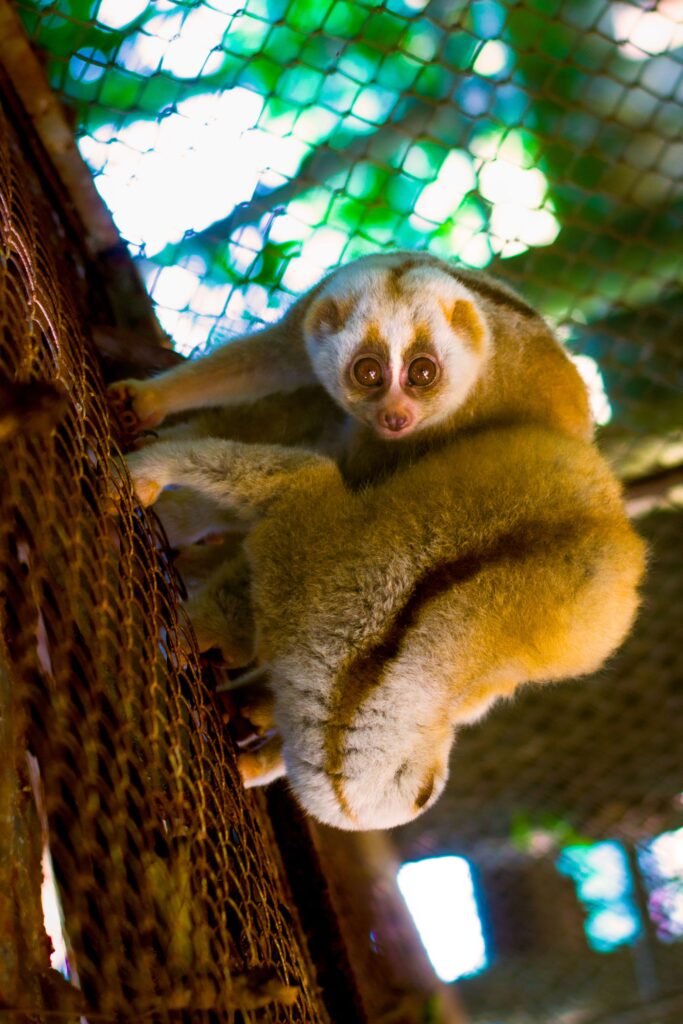
This article provides a detailed summary of the biology and growth of slow loris cubs (babies and calves).
1. Birth and Early Characteristics
Birth: Usually 1-2 pups per litter
Weight and Size: Approximately 50-150 g at birth, 10-15 cm in length
Fur: Soft, dense fur
Eyes: Large, adapted for nocturnal activity, but eyesight is still immature
Limbs: Long fingers, able to grasp branches, but unable to jump or travel long distances
2. Growth and Development
Nursing Period: Cuddled by mother and completely dependent on breast milk
Independence: Gradually moves between branches at 3-6 months of age
Learning to Live in Arboreal Environments: Learns how to grasp branches and move slowly by observing their mother and other animals
Adult Size: Reaches adult size by about one year of age
3. Behavior/Personality
Highly dependent on their mother
For the first few months, they spend all their time in their mother’s arms
Highly cautious
Even young ones are naturally timid and sensitive to sound and light
Acquire motor skills through play
By playing while perched on branches, they develop the jumping ability of their hind legs and dexterity of their limbs
4. Adaptation to Nocturnal Behavior
At first, they spend the night in their mother’s arms
As their eyes and senses develop, they become able to forage and explore independently at night
Is the slow loris an endangered species?
The slow loris is listed as an endangered species. This may be due to the following reasons: Conservation measures are not taken for each species, so it is left up to the national government.
habitat loss
Southeast Asia or South Asia is the most developed land in the world. As the forests that serve as the slow loris’ home disappear, there will gradually be no place for them to hide, and they will be preyed upon.
rampant poaching
Poaching targeting slow lorises is also on the rise. Because they are very popular as pets, they are overhunted, causing habitat fragmentation and shrinkage.
Can slow lorises be bred?
Slow lorises are extremely rare creatures as they are an endangered species. If you keep a pet as a pet, you will need to register it in your country of residence.
How much does a slow loris cost?
The slow loris is a very rare animal, and if you were to buy one, it is said to cost between 200,000 and 1 million yen in Japanese yen. There are a few living creatures that have risen in price considerably. Furthermore, you will only be able to obtain one that has been bred domestically or through adoption as a foster parent.
What kind of things do you need?
A cage, food, perch, and nest box are the minimum requirements. Slow lorises live in trees, so a perch is essential. Slow lorises are omnivorous and can be substituted with fruits, vegetables, and dog food. Temperature control is also essential. Slow lorises are basically creatures that are strong in heat and weak in cold. Adjust at 27℃.
Zoos Housing Slow Lorises (Japan & Worldwide)
Because slow lorises are unique primates—nocturnal, arboreal, and venomous—relatively few zoos keep them. However, they can be seen at several zoos in Japan.
🇯🇵 Major Zoos in Japan
Ueno Zoo (Tokyo)
Ueno Zoo has a history of exhibiting Lesser Slow Lorises (Pygmy Slow Lorises) and other slow loris species. They are housed in the small primate area and kept in a nocturnal animal exhibit.
Characteristics:
Weight: Around 200g
Large eyes
Nocturnal activity
Diet: Fruits, insects, etc.
Chiba Zoological Park (Chiba)
Chiba Zoological Park houses the Lesser Slow Loris (Nycticebus pygmaeus). They are displayed as nocturnal animals.
Highlights:
Unique, slow movements
Grasping branches with a strong grip
Watching them move within the darkened exhibit
Sapporo Maruyama Zoo (Hokkaido)
Sapporo Maruyama Zoo houses the Sunda Slow Loris (Greater Slow Loris).
Characteristics:
Native to Southeast Asia
A relatively large species
Can be seen moving quietly through the trees
🌏 Major Facilities Worldwide
Internationally, slow lorises are primarily kept in zoos, rescue centers, and breeding programs.
Notable examples:
🇬🇧 ZSL London Zoo
Famous for the conservation and research of small primates
Has a track record of exhibiting nocturnal animals
🇺🇸 San Diego Zoo
A large zoo engaged in conservation activities for rare primates
🇸🇬 Singapore Zoo
Features many animals native to Southeast Asia
Focuses on the conservation and educational exhibition of lorises
🇲🇾 Rescue Centers in Southeast Asia
In their native habitats—such as
Malaysia
Indonesia
Vietnam
Cambodia
—there are rehabilitation facilities for individuals rescued from smuggling or the illegal pet trade.
Introducing other animals

コメント