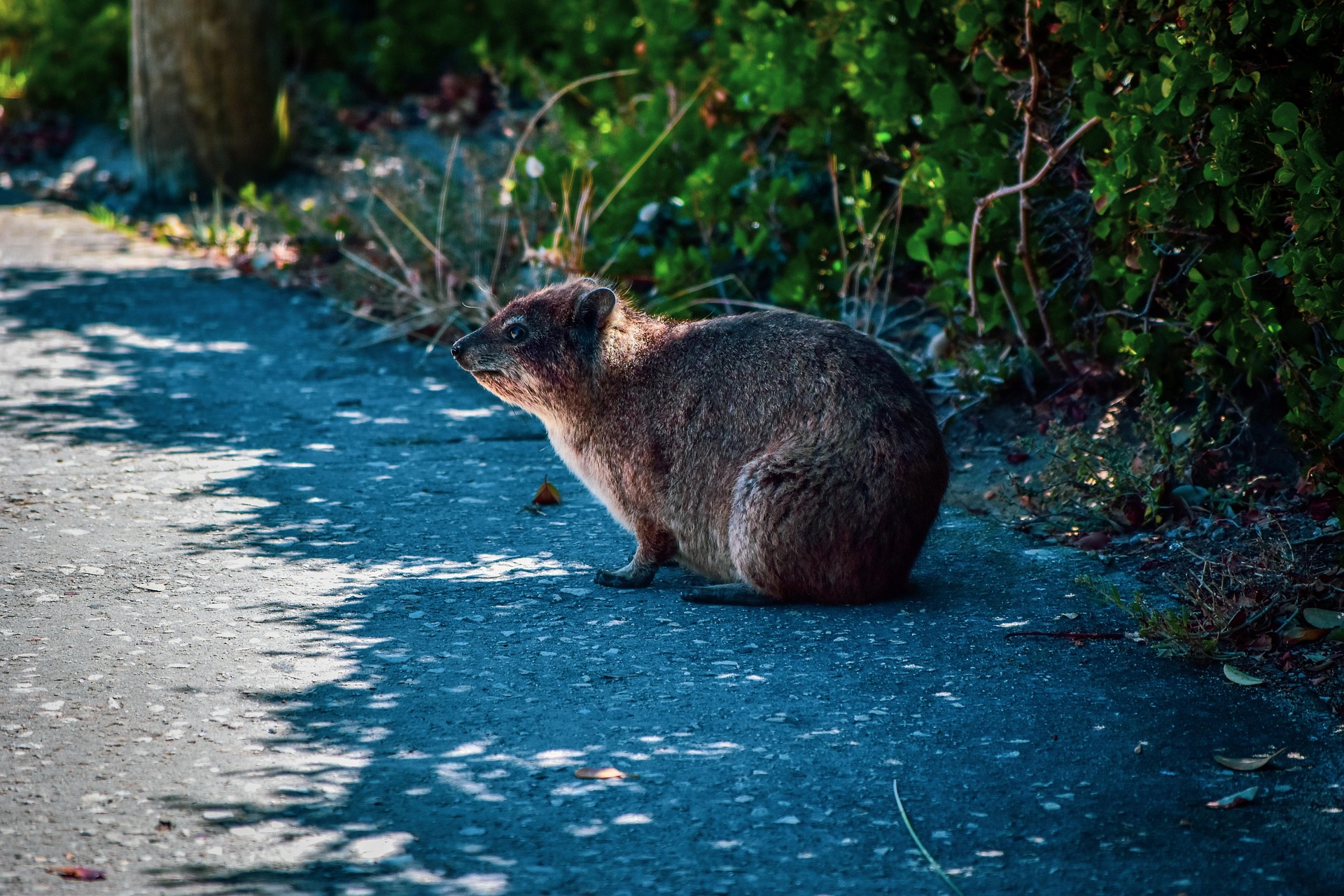
What kind of animal is a hyrax? We will explain its characteristics, ecology, and habitat. The Cape Hyrax is very famous and is often kept in zoos, but there are other subspecies as well. And are they an endangered species? We will also introduce them to you, so please use them as a reference.





- What is Hilux? About basic status
- What are the roots and origins of the hyrax?
- About habitat
- feature is? What kind of creature is it?
- What is your personality like?
- What is the ecology like?
- About Molting
- About Their Vocalizations
- Seasonal Activities
- About Walking Speed
- About Hyrax Baby Animals
- Is the hyrax an endangered species?
- Can you keep a Hyrax as a pet?
- Zoos Housing Hyraxes (Japan & Worldwide)
- Introducing other animals
What is Hilux? About basic status
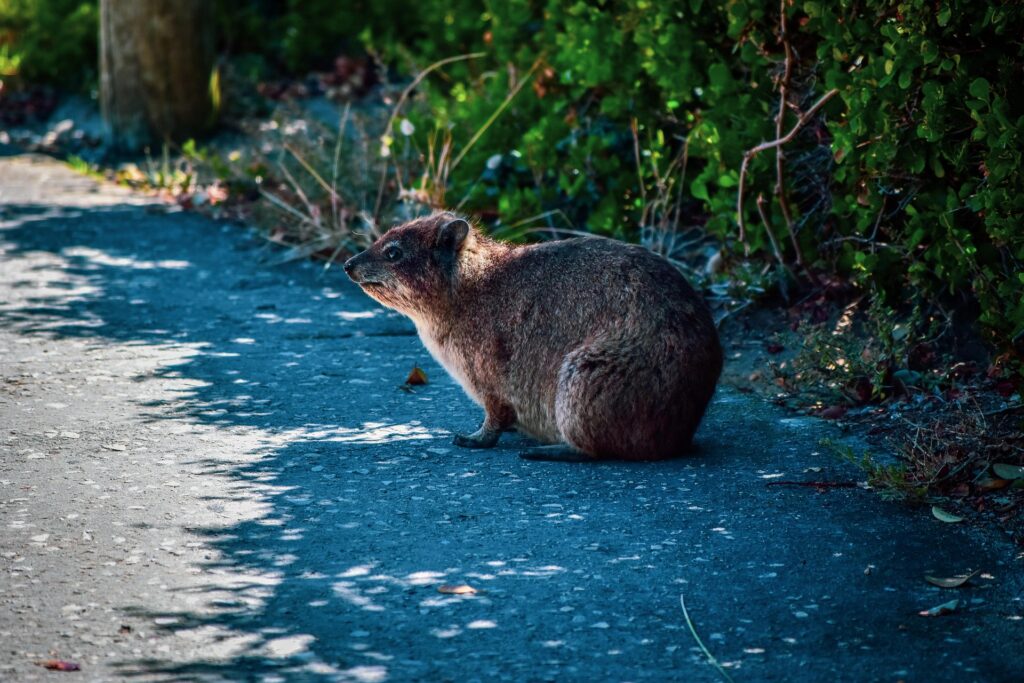
The hyrax is a mammal that belongs to the Hyraxidae family of the order Apocalyptiformes. The body length is 40-50 cm and the weight is 2.5-5 kg. The scientific name is Procavia capensis. The list of information is as follows.
| Japanese(和名) | ハイラックス |
| English(英名) | Hyrax |
| scientific name(学名) | Procavia capensis |
| classification(分類) | Mammalia、Hyracoidea、 Procaviidae 哺乳綱、イワダヌキ目、ハイラックス科 |
| IUCN Status(保全状況) | LEAST CONCERN |
| Length(体長) | 40~50cm |
| Weight(体重) | 2-5kg |
What are the roots and origins of the hyrax?
Although the hyrax resembles a small rabbit or guinea pig in appearance, it belongs to a surprisingly different evolutionary lineage.
Origins dating back approximately 55 million years
Hyrax ancestors are believed to have appeared
around 55 to 60 million years ago (during the Eocene epoch of the Cenozoic era)
in the region of Africa.
Hyraxes of that time differed significantly from modern ones;
they were large,
had body shapes resembling pigs or tapirs,
and some species weighed anywhere from several tens to hundreds of kilograms.
Ancient hyraxes were huge
Modern hyraxes:
Body length: approx. 40–60 cm
Weight: approx. 2–5 kg
However, their ancestors were massive.
Representative ancient species:
Titanohyrax
Characteristics:
Some species are estimated to have weighed over 100 kg.
Large herbivores distinct from modern hyraxes.
Additionally,
Megalohyrax
also flourished in Africa.
Why did they become smaller?
Evolutionary progression:
Era of large herbivores
↓
Environmental changes and intensified competition
↓
Small species adapted to forests and rocky areas survived
↓
Evolution into modern hyraxes
Large ancestors
faced a competitive disadvantage against
large herbivores such as
rhinoceroses,
horses,
and bovines.
Meanwhile, lineages that became smaller
survived by utilizing niches (ecological spaces) such as
rocky areas,
cliffs,
and arid regions.
About classification
This is the only mammal belonging to the Hyrax family. The following variants exist:
- キノボリハイラックス属 Dendrohyrax
Dendrohyrax arboreus ミナミキノボリハイラックス Southern tree hyrax
Dendrohyrax dorsalis ニシキノボリハイラックス Western tree hyrax - イワハイラックス属 Heterohyrax
Heterohyrax brucei キボシイワハイラックス Yellow-spotted hyrax - ハイラックス属 Procavia
Procavia capensis ケープハイラックス Rock hyrax
About habitat
Hyraxes live mainly in southern Africa.
- Geographic Distribution
Major Regions: African Continent and the Middle East
Specific Distribution:
All of Sub-Saharan Africa
Part of the Arabian Peninsula
Mountainous, rocky, and savanna areas
- Habitat Characteristics
Rocky Areas/Cliffs:
Hide in rock crevices and caves
Safe places to protect from predators
Forests/Savannas:
Feed in trees and shrubs
Live hidden in rocky areas and holes, even in open grasslands
Water Sources:
Independent of water; can obtain moisture from leaves and plants
Adapted to dry areas
- Habitat Conditions
Safe hiding places are essential
Areas with forageable plants
Environments where they can live in groups
Live in groups in rocky areas and caves
Adapted to a wide range of habitats, from high-altitude mountainous areas to dry savannas
feature is? What kind of creature is it?
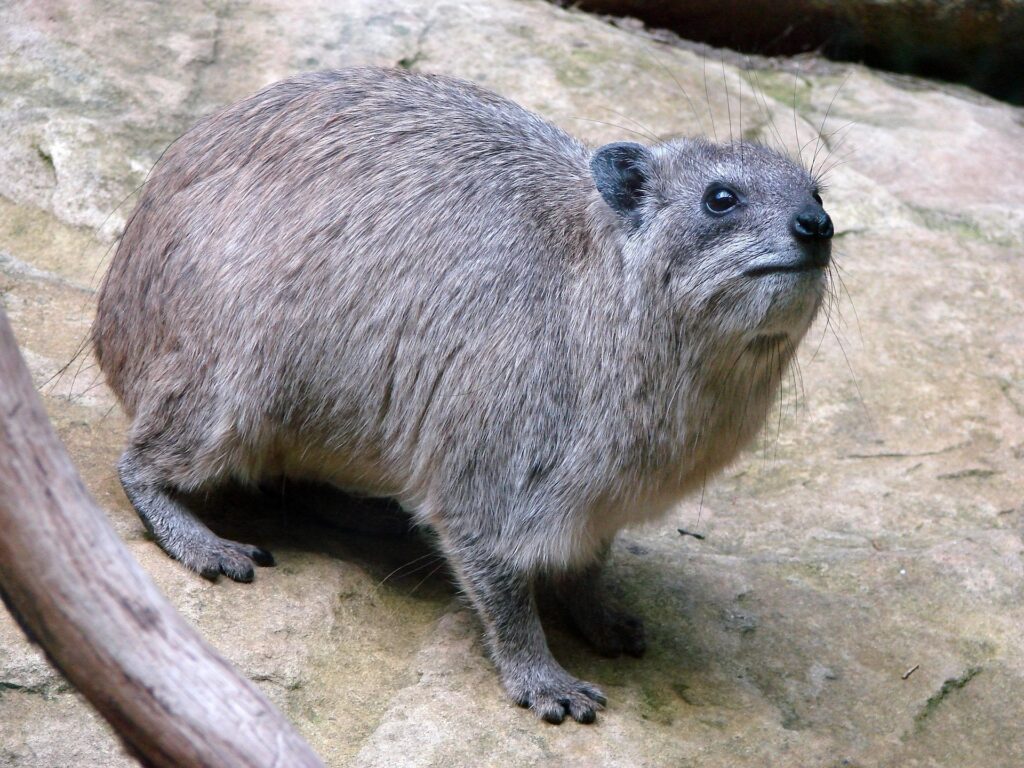
Hyraxes are primitive animals with characteristics similar to elephants and are not rats. There is a scent gland (dorsal gland) on the back, and the forelimbs have four fingers. There are three toes on the hind legs. Like elephant tusks, the upper incisors continue to grow throughout life. They are relatively small animals and usually spend their time secretly hiding in cracks in rocks. Because they have a weak ability to regulate their body temperature, they tend to raise their body temperature by sunbathing or huddled together, or lower their body temperature by hiding behind rocks.
- Physical Characteristics
Physique
Body Length: Approximately 30-50 cm
Weight: Approximately 2-5 kg
Small and stocky
Coat Color
Mostly brown, gray, or light brown
Some species have stripes or spots on their backs
Head/Face
Round face, short ears
Large eyes, giving an inquisitive impression
Legs/Feet
Padded soles allow them to walk easily on rocky areas and cliffs
Small, dexterous front paws allow them to grasp plants
Tail
Depending on the species, tail is absent or short
- Behavior/Personality
Activity Period
Diurnal (active during the day)
Feeds and rests during the day
Personality
Highly curious and cautious
Highly social, lives in groups
Group Life
Gathers in small groups (approximately 5-30 individuals) around rocky areas or caves
Keeps watchful of others and warns of danger with calls
- Ecological Characteristics
Diet: Herbivores, leaves, fruit, bark, etc.
Defense:
Protect themselves from predators (birds of prey, snakes, carnivorous mammals) by hiding in rock shelters or caves.
Standing guard in groups, they quickly hide when they sense danger.
Adaptations:
Ability to move skillfully over rocky areas and cliffs.
Ability to survive in arid and water-scarce environments.
What is your personality like?
Hyraxes are said to be very small animals, and they are wary and timid. However, when attacked by a foreign enemy, they become very aggressive and may bite you with their sharp incisors, threatening you.
Hyrax Personality Traits
Curious and observant
Interested in their surroundings and other animals
Keeps watchful of rocky areas and caves as they move
Highly cautious
Sensitive to predators (birds of prey, snakes, carnivorous mammals, etc.)
Quickly hides in the shade of rocks or caves when sensing danger
Communicates with other members of the herd by vocalization
Social and prefers to live in groups
Live in small groups (5-30 individuals)
Students stay alert and keep watch over each other to ensure safety
Often rest close together
Gentle and non-aggressive
Generally gentle and rarely fights
Responds to danger or stress by fleeing
Activity Patterns
Diurnal and active during the day
Alternates between feeding and resting
Regulates body temperature by sunbathing on rocky areas
What is the ecology like?
Hyrax eat grass, fruits, and flowers. Breeding occurs once a year, and the timing varies by region. The gestation period is about 7 months, and the lifespan is said to be about 10 to 15 years.
- Lifestyle
Living in groups
Group sizes are around 5-30 individuals
Group members keep watch over each other and detect danger early
Diurnal
Forage and move during the day
Rest and regulate body temperature during the day
Using hiding places
Use rock crevices, caves, and tree holes as shelter
Essential for protection from predators
- Diet
Primarily herbivorous
Eats grass, leaves, bark, and fruit
Little dependent on water; can obtain moisture from plants
Foraging Behavior
Groups often forage together
Eat in safe places while moving
- Breeding and Rearing
Breeding Season
Breeding is possible throughout the year
Gestation Period
Approximately 7-8 months
Giving Birth
1-3 cubs
Raised by the mother within the group
Growth of Cubs
Soon after birth, they accompany their mother and the group
Learn to forage independently within a few weeks
- Adaptations and Behavior
Defends against predators
Hides in rocky areas and caves
Stands watch in groups and warns of danger with calls
Environmental Adaptations
Adapts to a variety of environments, including hot, dry areas, mountains, and rocky terrain
Can maneuver skillfully across rocky areas and cliffs
Are there any natural enemies?
Hyraxes are said to be very small creatures, and they have many natural enemies such as lions, jackals, snakes, and owls. Because it is so small, it is actually full of external enemies.
About Molting
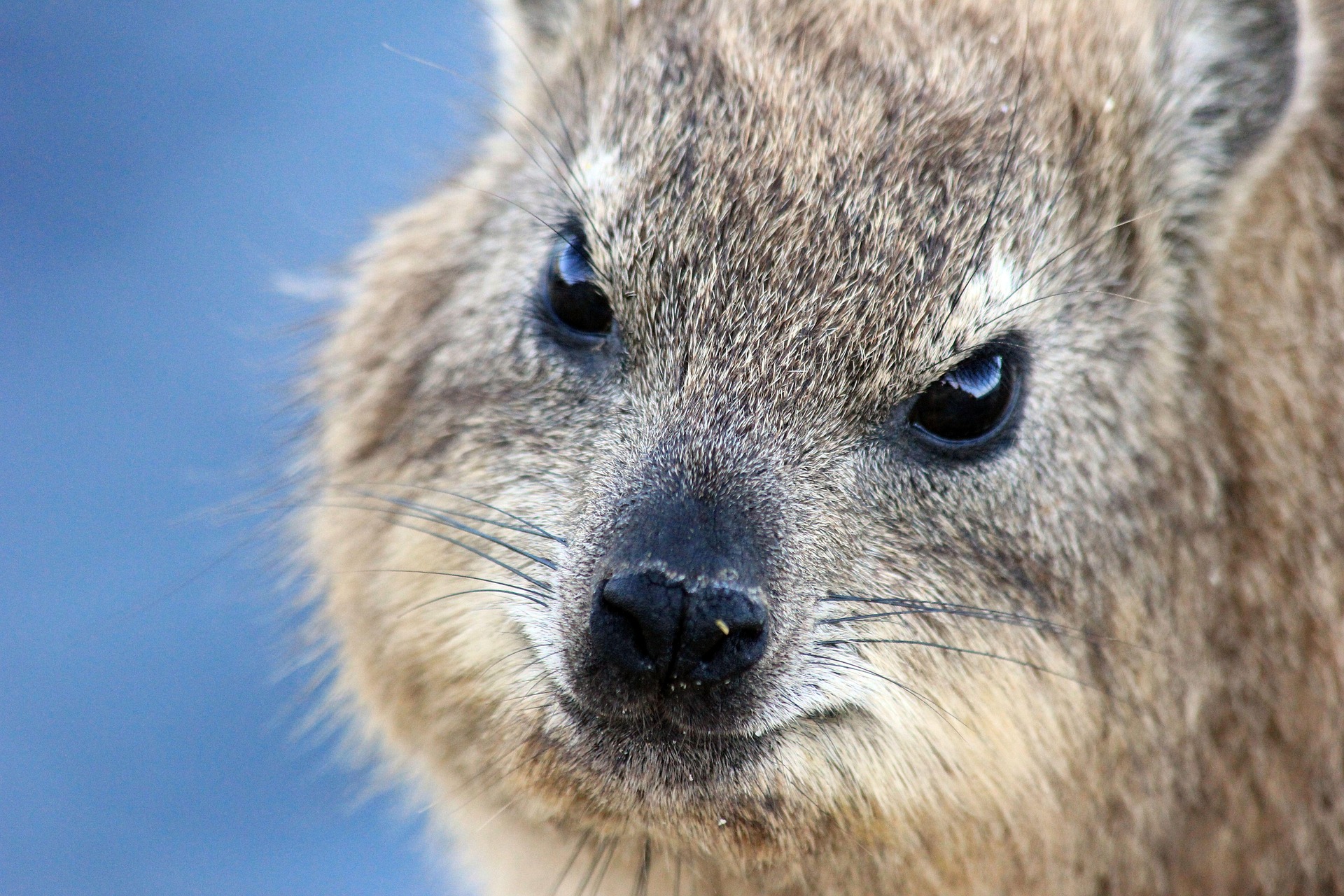
At first glance, the hyrax appears to be a small animal with short, dense fur; however, they actually undergo a molting process (shedding) to replace their coat according to the season.
Characteristics of Hyrax Fur
Hyrax fur consists of:
Short outer fur (guard hairs)
Dense inner fur (undercoat)
This structure allows them to cope with:
Temperature differences between day and night
Temperature fluctuations in rocky terrain
Dry environments
The rock hyrax, in particular, lives in the highlands and rocky mountains of Africa, making adaptation to environments that are hot during the day and cold at night crucial for survival.
Molting Seasons
🌸 Spring (Transition from dry season to warmer weather)
The coat changes from winter fur to summer fur.
What happens:
Density of winter fur decreases
Old fur sheds
Coat becomes more breathable
Purpose:
→ To prevent body temperature from rising due to heat
🍂 Autumn (Preparation for colder weather)
In autumn, they transition to a winter coat.
Changes:
Undercoat increases
Fur density rises
Heat retention improves
Purpose:
→ To withstand low temperatures at night and in the early morning
The Hyrax’s Unique “Sunbathing” and Molting
Hyraxes frequently sunbathe on rocks.
This is not merely a rest; it serves to:
Raise body temperature
Promote blood circulation
Dry the fur
Reduce parasites
In regions where morning temperatures drop significantly, sunbathing helps raise their body temperature so they can begin their daily activities.
About Their Vocalizations
Hyraxes possess a vocal range that is surprisingly loud and complex given their small size. The rock hyrax, in particular, engages in highly developed vocal communication—a rarity among mammals.
Key Characteristic: “Loud Screams”
The most iconic hyrax vocalizations are
“Kee!”, “Pee!”, or “Hyaaa!”
—high-pitched, piercing sounds.
These calls carry over surprisingly long distances for an animal weighing only a few kilograms.
They are frequently heard:
While sunbathing in the morning
When resting on rocks
When sensing danger
Alarm Calls
When a hyrax spots a predator, it alerts the rest of the colony.
Natural predators include:
Eagles
Snakes
Leopards
Jackals
Large birds of prey
…and others.
When on alert, they emit a sharp
“Pee!”
…to which the entire colony reacts.
Behavioral sequence:
One individual acts as a sentry
↓
Spots danger
↓
Emits an alarm call
↓
Colony members flee into rock crevices or burrows
The “Sentry” Call
Rock hyrax colonies feature
“sentinel” (lookout)
roles.
They survey the surroundings from high atop rocks,
monitoring for threats from the sky
and threats on the ground.
When there is no danger,
they use quiet chirps,
growls,
and low-frequency communicative sounds.
Male Vocalizations (Territory and Mating)
Males produce distinctive calls during the breeding season.
Common examples include:
Low growls
Whistle-like sounds
Prolonged screams
These serve to:
Attract females
Intimidate other males
Assert territorial claims
Seasonal Activities
Hyraxes inhabit the rocky areas and forests of Africa, with activity patterns adapted to extreme temperature fluctuations. The rock hyrax, in particular, is a rare example of a small mammal that is active during the day.
🌸 Spring (Approx. September–November: Southern Hemisphere)
Note: Seasons in Southern Africa are the reverse of those in Japan.
Activity
Activity levels rise as the winter cold subsides.
Key behaviors:
Increased time spent sunbathing
More time spent on rocky outcrops
Expanded foraging range
Increased group activity
Food availability improves in spring as plants begin to grow.
Diet
They primarily consume:
Grass
Soft leaves
New shoots
Flowers
Fruit
Preparation for Breeding
Among many hyraxes, the following occur:
Increased vocalization by males
Intensified territorial behavior
Shifts in social dynamics within the group
☀️ Summer (Approx. December–February): Peak Activity
Summer is their most active season.
However, their behavior is adapted to avoid the intense African sun.
Morning: Sunbathing
After sunrise, they:
Gather on rocks
Warm their bodies
Dry their fur
Sunbathing is crucial because hyraxes have limited ability to regulate their body temperature.
Midday: Foraging and Resting
As temperatures rise, they spend more time:
Seeking shade among rocks
Resting with the group
Grooming
Evening
They become active again as temperatures drop.
They graze on grass, move across rocky terrain, and care for their young.
🍂 Autumn (Approx. March–May): Preparing for Winter
Temperatures begin to drop in autumn.
Activity:
Searching for edible plants
Storing nutrients
Increased sunbathing
Physical Changes
In preparation for winter:
Fur becomes denser
Body heat retention improves
Increased shedding
❄️ Winter (Approx. June–August): Energy Conservation
Mornings and evenings can get quite cold in the highlands of Southern Africa during winter. Hyraxes do not hibernate,
but they adjust their activity times to avoid the cold.
Winter Routine
Morning
Wait in the shelter of rocks until the sun hits
Bask in the sunlight once the sun is out
Midday
Active during the warmest hours
Foraging
Night
Rest in rock crevices or burrows
Daily Changes by Season
Seasonal Activity Patterns: Spring – Resume activity, increase foraging; Summer – Active mainly in early morning and evening, frequent sunbathing; Autumn – Preparation and food stockpiling; Winter – Active only during the warmest hours to conserve energy.
About Walking Speed
The hyrax is not an animal built for high-speed running. Instead, it is specialized for stable movement and climbing on rocky terrain, as well as agile changes of direction.
Normal Walking Speed
The hyrax’s normal speed of movement is estimated to be:
Approximately 2–4 km/h
Characteristics:
Firmly gripping rocks with all four feet
Moving with a low posture
Advancing while checking surroundings
Moving slowly in a group
This is slightly slower than the average human walking speed (approx. 4–5 km/h).
Speed When Hurrying
If they spot a predator, they can move quite quickly over short distances.
Their top speed is said to reach:
Around 25–30 km/h
However, they lack the stamina for long-distance running.
Their objectives are:
Escaping into rock crevices
Moving to a safe location
Alerting the group to danger
Their Greatest Asset: Rock Climbing, Not Running Speed
The hyrax is at its best on rocky terrain rather than on flat ground.
Characteristics:
Specialized foot structure
The soles of their feet feature:
Soft pads
Moist, adhesive skin
This allows them to move across:
Slippery rocks
Steep slopes
Cliffs
Reasons They Can Climb Near-Vertical Rocks
Although small, hyraxes can climb to surprisingly high places.
Reasons:
Strong hind legs
Flexible ankles
Suction-cup-like foot pads
On rocky terrain, they employ a combination of movements:
Walking
↓
Leaping
↓
Scrambling/Climbing
Escaping Predators
Natural predators:
Eagles
Snakes
Leopards
Jackals
…and others.
When they sense danger, they take the following actions:
A lookout issues an alarm call
The group moves in unison
They dash into rock crevices
They remain hidden until safe
About Hyrax Baby Animals
This article provides a detailed overview of the characteristics and developmental stages of Hyrax baby animals.
- Birth
Gestation Period: Approximately 7-8 months
Litter Size: Usually 1-3 pups
Newborn Characteristics:
Weight: Approximately 50-150 g (depending on species)
Body Length: Approximately 10-15 cm
Fur is short and lighter in color than the mother
Pups are often born with their eyes open, allowing them to quickly recognize their surroundings
- Relationship with Mother
They spend time with their mother immediately after birth
They stay safe under the protection of the pack
The mother keeps them warm by licking and cuddling them
- Growth and Behavior
A few days to a few weeks after birth:
Rests near their mother
Learns hiding spots in rocky areas and caves
2-3 weeks after birth:
Begins foraging on their own
Accompanies the pack
1-2 months after birth:
Fully adapts to the pack
Learns how to sense danger and hide from their mother and the pack
- Characteristics
Personality: Curious and observant
Defense: Protected by their mother and herd, they are protected from predators.
Adaptations: Quickly adapted to life in rocky areas and caves.
Is the hyrax an endangered species?
None of the subspecies are currently endangered. Therefore, the population is relatively stable.
- Global Conservation Status (IUCN Red List)
Species Classification (Threat Level) Comments
Rock Hyrax (Procavia capensis) LC (Least Concern) Widely distributed in southern and eastern Africa, populations are relatively stable.
Tree Hyrax (Dendrohyrax spp.) LC (Varies by species, but mostly stable) Adapted to forested and arboreal habitats, populations are relatively stable.
Other rare species (e.g., mountain hyrax) Some NT (Near Threatened) May be declining due to habitat loss or localized hunting.
Key Points: Common rock hyraxes and tree hyraxes are not endangered and populations are stable.
Some species in limited habitats may be Near Threatened (NT).
- Factors of Extinction Risk
Habitat Destruction: Agricultural land development and deforestation
Hunting Pressure: In some areas, extermination is carried out for food or as a pest
Local Population Decline: Particularly in mountainous and limited rocky areas
- Conservation Status in Japan
No natural distribution
Very few captive specimens
Keeping for research or educational purposes is regulated by the Convention on International Trade in Endangered Species of Wild Fauna and Flora (CITES) and other regulations.
Can you keep a Hyrax as a pet?
It is possible to keep them as pets. However, it is not easy to bring them into your home as a pet. This is because they have an aggressive personality, which makes them quite difficult for ordinary people. Obtaining a Hilux is not easy. Since it is rarely available for purchase at your local pet store, please inquire at the zoo. Once you enter the park, you will be given information about events within the park, so we recommend that you first interact with the exhibits and admire them when you have time.
Temperature control is essential
Hiluxes are not good at regulating their body temperature. Therefore, it is necessary to keep the temperature above 25 degrees during the day and around 20 degrees at night using air conditioners, heaters, and fans. For this reason, it is necessary to protect it indoors.
hideout
Hyraxes usually tend to hide in rock crevices. You will need a hideout. Set up something inside the cage that will serve as a hiding place. Please also prepare bedding materials.
pet food
Hyraxes like grass, fruits, plants, and flowers. Even in captivity, fresh vegetables and fruits that can be purchased at supermarkets are appropriate.
Zoos Housing Hyraxes (Japan & Worldwide)
While hyraxes are still rare exhibit animals in Japan, the species primarily kept in captivity is the Rock Hyrax (Procavia capensis).
🇯🇵 Major Zoos in Japan
Ueno Zoo
Species: Rock Hyrax
One of the most prominent facilities in Japan where you can see hyraxes.
Features:
Exhibit utilizing a rocky terrain
Visitors can see them living in groups
Their sunbathing behavior is popular
Things to watch for:
Warming their bodies on the rocks
Huddling close to one another
Calling out with high-pitched voices when alert
Higashiyama Zoo and Botanical Gardens
Species: Cape Hyrax (Rock Hyrax)
Kept as part of the African animal exhibit.
Highlights:
Moving quickly across rocky areas
Resting in groups under the sun
Despite their small size, they share an evolutionary lineage close to elephants
Yokohama Zoological Gardens “Zoorasia”
Visitors can observe hyrax ecology in an exhibit that recreates an African environment.
Features:
Recreated rocky habitat
Observation of herd behavior
Opportunities to see them active during the day
Kyoto City Zoo
Hyraxes are kept as part of the African animal exhibits.
Things to watch for:
Life on the rocks
Sunbathing
Communication through vocalizations
🌍 Zoos Worldwide
🇿🇦 South Africa
National Zoological Gardens of South Africa
Located near the hyrax’s natural range, it features extensive exhibits of animals native to Africa.
Features:
Exhibits that closely resemble their natural environment
Observation of herd behavior
Behaviors similar to those seen in the wild
🇬🇧 United Kingdom
ZSL London Zoo
A historic zoo known for its African animal exhibits.
It houses small African mammals, including hyraxes.
🇺🇸 United States
San Diego Zoo
A world-renowned zoo with a vast array of African animal exhibits.
🇨🇿 Czech Republic
Prague Zoo
Features extensive African animal exhibits and houses hyraxes.
Introducing other animals
コメント