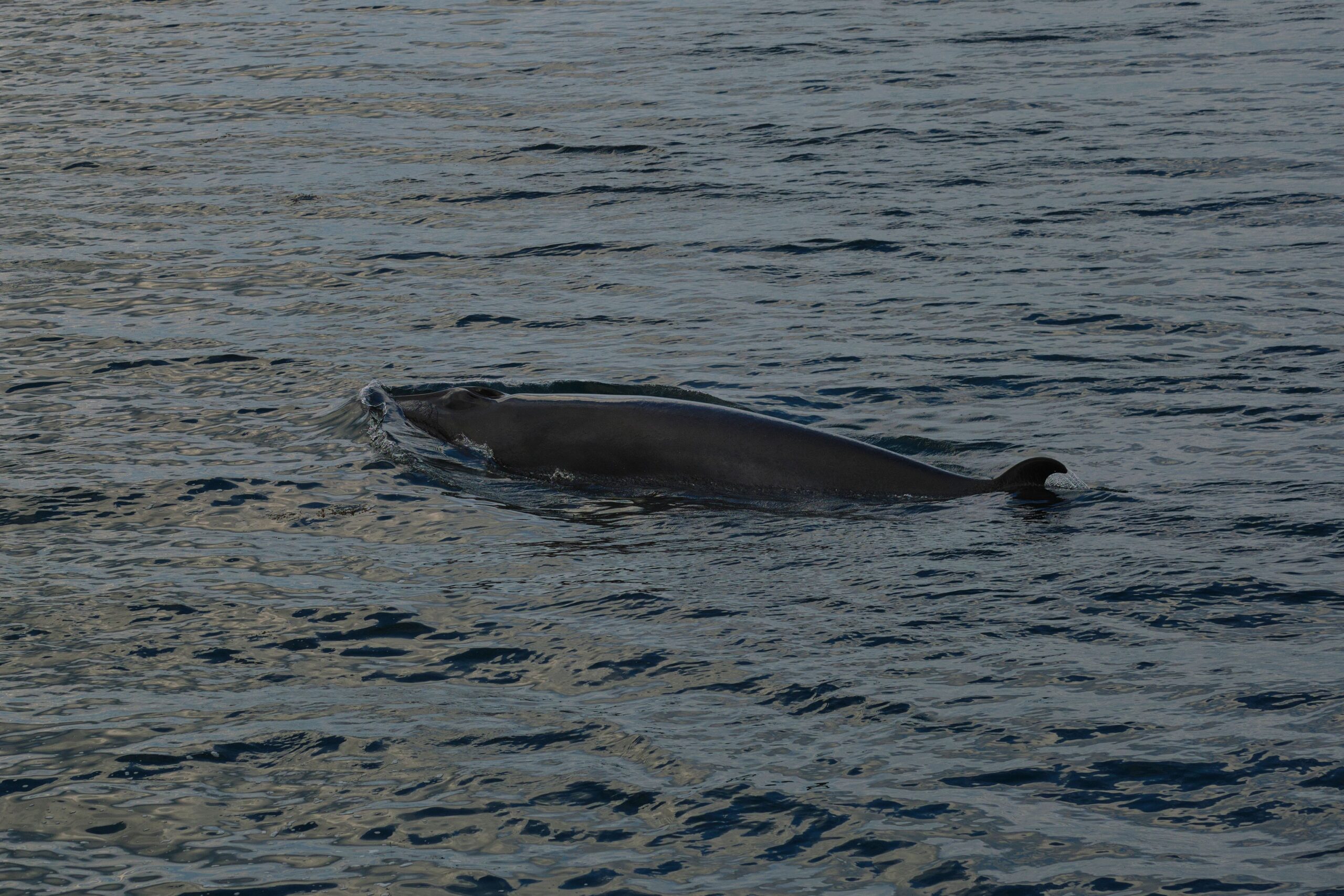
What kind of animal is the false killer whale? We will explain its characteristics, ecology, and habitat. It is widely distributed in warm seas around the world and is the best-known whale in the world. It is also known as the killer whale, and its huge size is its biggest feature. However, it is actually designated as an endangered species.








- What is a False Killer Whale? Basic Stats
- What are the roots and origins of the false killer whale?
- Habitat
- What are its characteristics? What kind of creature is it?
- What is their personality like?
- What is their ecology like?
- About Diving
- Regarding their vocalizations
- Seasonal Activities
- Regarding Swimming Speed
- About the baby false killer whale
- Is the False Killer Whale an Endangered Species?
- Can False Killer Whales be kept as pets?
- Facilities Housing False Killer Whales (Japan & Worldwide)
- Introducing other animals
What is a False Killer Whale? Basic Stats
The false killer whale is a whale belonging to the genus Pseudorca, family Delphinidae, suborder Odontoceti, order Cetacea. Its scientific name is Pseudorca crassidens, English is False Killer Whale, and kanji is oki-gi-tou. It can reach a body length of 6m and weigh 1500kg. The list of information is as follows. Because it is a large species, it is also called the false killer whale and the cucumber pilot whale.
| Japanese(和名) | オキゴンドウ |
| English(英名) | False Killer Whale |
| scientific name(学名) | Pseudorca crassidens |
| classification(分類) | Mammalia、Cetartiodactyla、 Delphinidae、Pseudorca 哺乳綱、クジラ目、ハクジラ亜目、オキゴンドウ属 |
| IUCN Status(保全状況) | NEAR THREATENED |
| Length(体長) | 6m |
| Weight(体重) | 1500kg |
What are the roots and origins of the false killer whale?
The roots of the false killer whale (scientific name: Pseudorca crassidens) lie in the evolutionary lineage of primitive cetaceans that transitioned from a land-based lifestyle to the ocean tens of millions of years ago. Today, it is classified as a toothed whale belonging to the Delphinidae family (oceanic dolphins).
① From land mammal to the sea (approx. 50 million years ago)
The distant ancestors of the false killer whale belonged to the Artiodactyla (even-toed ungulates)—a group that includes lineages closely related to modern hippopotamuses.
The general evolutionary progression is as follows:
Primitive land-dwelling ungulates
↓
Semi-aquatic ancestors (approx. 50 million years ago)
↓
Ancient cetaceans (Archaeoceti)
↓
Toothed whales (Odontoceti)
↓
Delphinidae (Oceanic dolphins)
↓
False killer whale
② Evolution as a toothed whale
Although the false killer whale is a member of the dolphin family, it belongs to a group that has grown larger than typical dolphins.
Classification:
Order: Cetartiodactyla
Suborder: Odontoceti (Toothed whales)
Family: Delphinidae (Oceanic dolphins)
Genus: Pseudorca
Closely related species include:
Killer whale (Orcinus orca)
Pilot whales
Risso’s dolphin
③ Why is it called the “False Killer Whale”?
Its English name, “False killer whale,” was given because its skull and body shape resemble those of the killer whale (orca).
Similar characteristics:
Black body color
Rounded head
Carnivorous diet
Hunting in pods
Occasionally attacks other dolphin species
However, in evolutionary terms, it belongs to a different lineage than the killer whale. Research suggests that the predatory styles of the false killer whale and the killer whale (specifically the ability to prey on marine mammals) likely evolved independently.
④ When did it emerge?
The lineage leading to the modern Pseudorca genus is believed to have emerged during the Late Miocene to Pliocene epochs (approximately 10 to 3 million years ago).
During this period:
Marine environments changed
Populations of large fish and marine mammals increased
Toothed whales (odontocetes) exhibiting sophisticated schooling behavior developed
…leading to the evolution of large, predatory dolphins like the false killer whale.
⑤ Habitat and Distribution
False killer whales are currently distributed widely across the world’s oceans, ranging from warm tropical waters to temperate zones.
Key regions:
Pacific Ocean
Indian Ocean
Atlantic Ocean
Waters surrounding Japan
They are an open-ocean (pelagic) species that lives in large pods.
False killer whale taxonomy
- 界(Kingdom): 動物界 (Animalia)
- 門(Phylum): 脊索動物門 (Chordata)
- 綱(Class): 哺乳綱 (Mammalia)
- 目(Order): 鯨偶蹄目 / 鯨目 (Cetacea)
- 亜目(Suborder): 歯鯨亜目 (Odontoceti)
- 科(Family): ハクジラ科 (Delphinidae)
- 属(Genus): オキゴンドウ属 (Globicephala)
- 種(Species): オキゴンドウ (Globicephala macrorhynchus)
Habitat
False killer whales live in temperate, subtropical and tropical waters around the world.
- Main Habitat
Tropical to subtropical open ocean
Pacific Ocean (south of Japan, around Hawaii, etc.), Indian Ocean, Atlantic Ocean
Found near Japan’s Ryukyu Islands and the Ogasawara Islands
Pelagic
Most likely live offshore rather than nearshore
Migrates long distances following ocean currents and food sources
- Habitat Characteristics
Water Temperature: Prefers warm waters between 20 and 28°C
Depth: Capable of diving from mid- to deep-sea depths
School: Lives in schools of 10 to 100 or more
Migratory Behavior: Migrates long distances depending on food sources and the season
- Points of Interest
Rarely enters rivers or shallow waters; entirely marine
Highly skilled diving ability, feeding on squid and fish in the deep sea
Sometimes cooperate in hunting groups
What are its characteristics? What kind of creature is it?
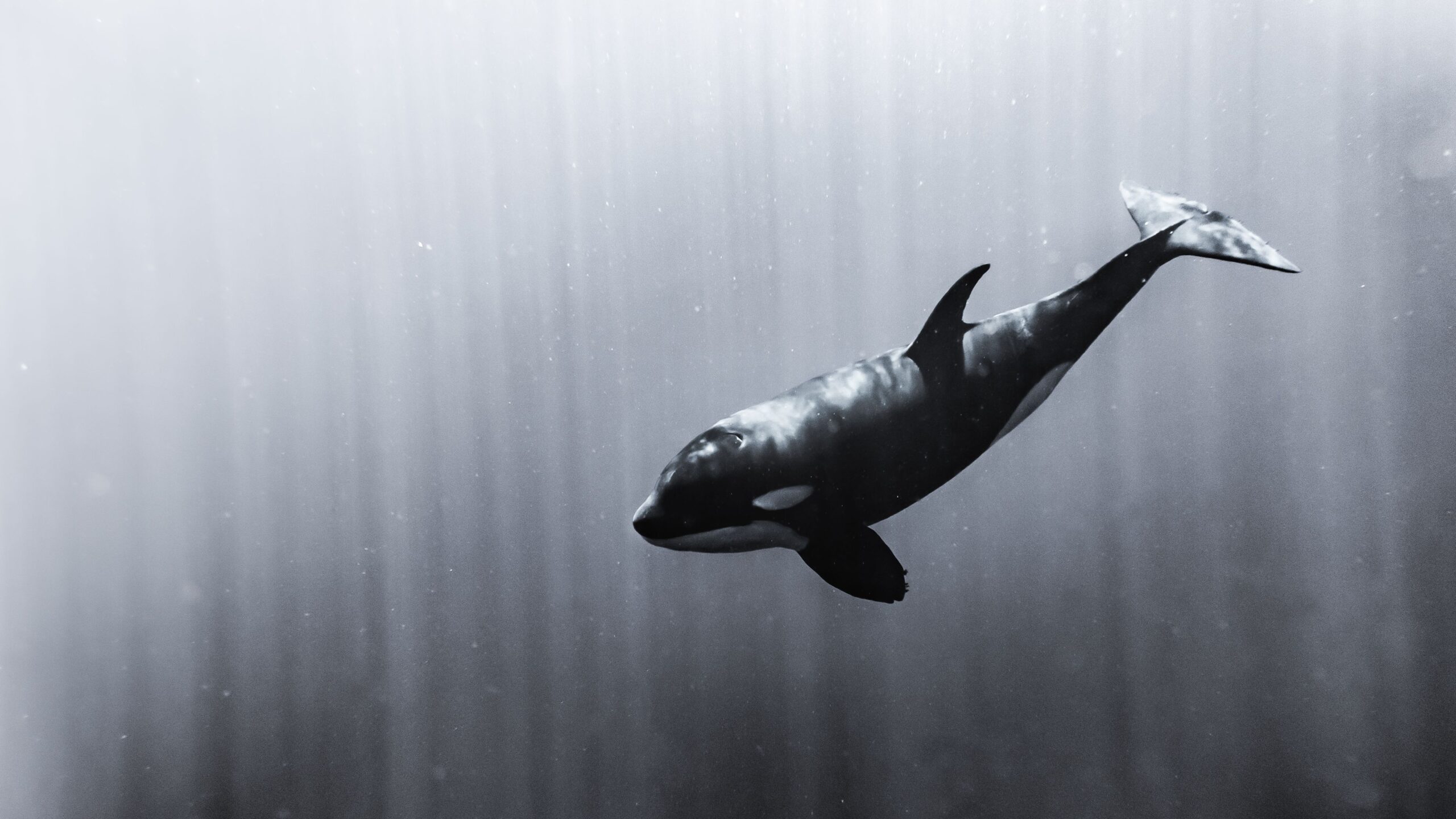
False killer whales are characterized by their large, black body. The teeth in their mouths are sharp and black, and the name False Killer Whale (Oki Giant Head) means “pilot whale that lives offshore”. They are very dark gray and have a gray pattern on the ventral chest area. Due to their long and slender shape, they are also known as cucumber pilot whales. They are known for breaching, jumping out of the water and surfacing their entire body above the water, then crashing the side of their body into the water to land.
- Physical Characteristics
Body Color: Blackish or dark gray throughout
Body Length and Weight:
Adults are approximately 4-6 m long (males are slightly larger)
Weight: Approximately 1-3 tons
Dorsal Fin: Triangular, Largely Curved
Snout: Short, Rounded
Body Type: Muscular and Sturdy, Adapted for Open Ocean Diving and High-Speed Swimming
- Behavior and Personality
School Life: Lives in small to large schools (10-100 or more individuals)
Cooperative: Sometimes drives prey together
High Diving Ability: Capable of Preying on Deep Sea Squid and Fish
Active and Agile: Capable of High-Speed Swimming in the Open Ocean
- Biological Characteristics
Diet: Fish, squid, crustaceans, etc.
Reproduction: Gives birth to a single offspring at a time
Peco-adapted: Migrates over a wide area and is adapted to life in the deep sea and mid-depths
What is their personality like?
False killer whales are very social and disciplined animals, as they usually live in groups of about 10 to 50. They can usually be seen in groups. However, they often act alone.
- Sociable and Cooperative
Live in small to large groups (10-100 or more)
Sometimes cooperate with other members of the group to catch food
Strong bonds exist between mothers and young members of the group
- Active and Agile
Able to swim at high speeds in the open ocean
Highly skilled diving, they are capable of foraging in deep waters
- Protective Instinct and Schooling Behavior
Tend to protect young and weaker individuals as a group
When sensing danger, the group will change its behavior in unison
- Mysterious and Timid
Often diving deep in the open ocean, and there have been few observations
Highly wary of ships and humans, and often avoid them
What is their ecology like?
False killer whales live by eating fish, crustaceans, invertebrates, etc. Their lifespan is about 60 years.
- Habitat
Pelagic: Widely distributed across tropical and subtropical open oceans
Water Temperature: Prefers warm waters between 20 and 28°C
Depth: Capable of diving from mid- to deep waters
School Life: Forms schools of 10 to 100 individuals or more
Migratory: Travels long distances depending on food resources and the season
- Diet
Preys primarily on fish, squid, and crustaceans
Dives to pursue prey, sometimes working together as a group
- Reproduction and Rearing
Gestation Period: Approximately 12 months
Birth: One calf at a time
Cub Rearing: Under the protection of the mother and herd, calves learn hunting and social behaviors through play
- Social Behavior
Cooperative hunting and defense in groups
Highly diving ability, able to catch prey even in deep waters
Swimming at high speeds across the open ocean, they travel to areas with abundant food
- Adaptability
Muscular and sturdy body → Adapted to diving and high-speed swimming
Developed cooperative behavior in schools
Able to migrate and secure food even in the dynamic environment of the open ocean
Do they have any natural enemies?
The false killer whale is one of the largest marine mammals and has no significant natural predators.
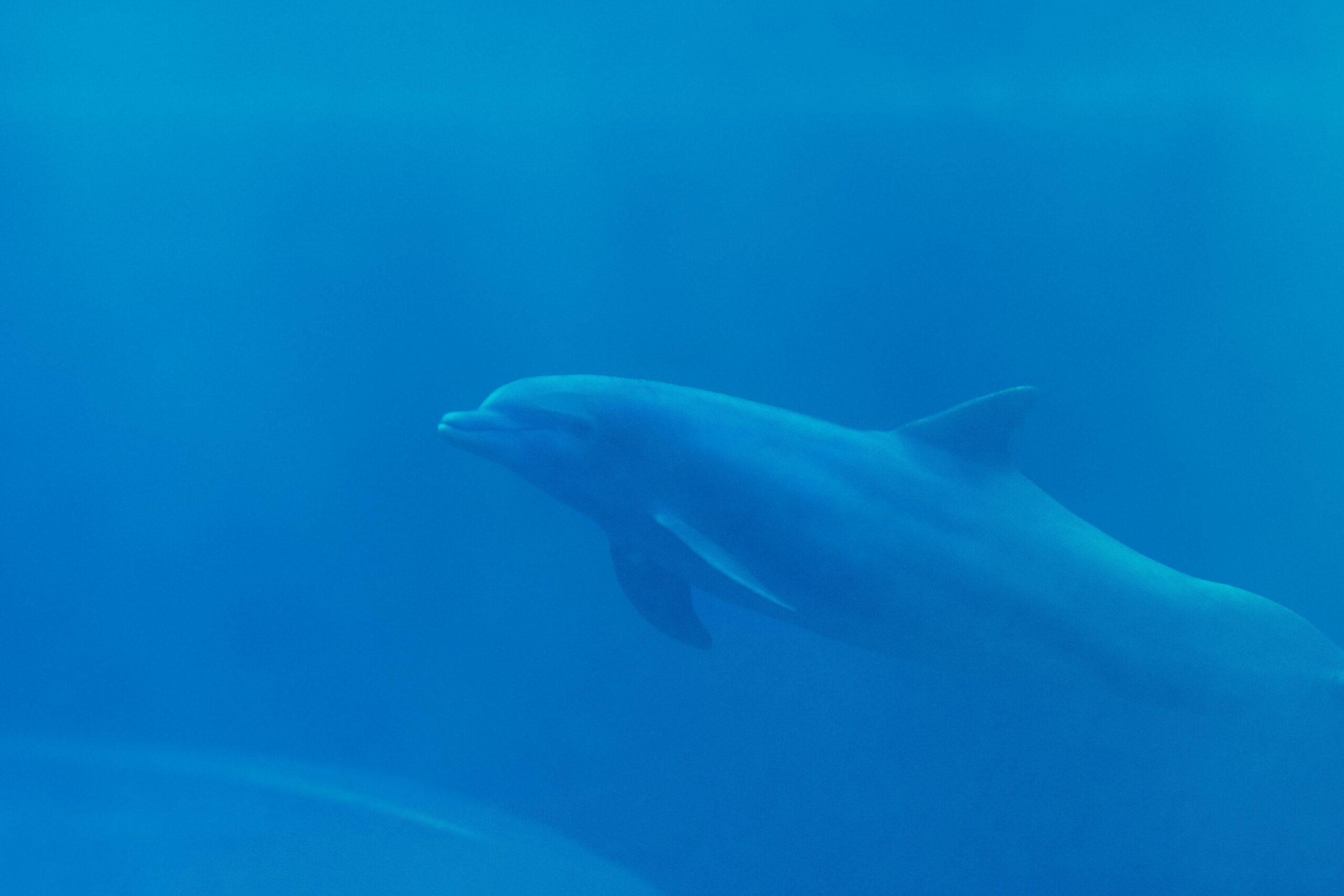
About Diving
The false killer whale (Pseudorca crassidens) possesses relatively impressive diving capabilities among dolphin species; it is capable of deep dives while traveling at high speeds across the open ocean.
Diving Depth
Typical dives: Tens of meters to around 100 meters
Deep dives: Capable of reaching depths of approximately 500 meters
Maximum record: Estimated to have a diving capacity of around 1,000 meters
However, they are not as specialized for deep-sea diving as orcas or sperm whales.
Dive Duration
Typical: Approximately 5 to 10 minutes
Long dives: Can exceed 15 minutes
Dive duration varies depending on factors such as hunting activity or travel.
Diving Mechanisms
① A body designed for efficient oxygen use
Unlike land mammals, false killer whales possess the following capabilities:
High levels of hemoglobin in the blood
High levels of myoglobin in the muscles
Ability to lower heart rate to conserve oxygen
② Diving Reflex
When diving:
Heart rate decreases
Blood flow is concentrated on vital organs
Oxygen in the muscles is utilized efficiently
These mechanisms allow them to remain active for extended periods while holding their breath.
Regarding their vocalizations
The vocalizations of false killer whales (Pseudorca crassidens) are primarily used for echolocation and communication among themselves. They are highly social among dolphins and engage in complex vocal communication within their groups.
① Click Sound
Purpose: Echolocation
Short, high-frequency sounds like “click-click” or “crack-crack”
Emitted from the nasal organ (melon)
Used to perceive the surroundings and prey by listening to reflected sounds
Situations of Use:
Searching for fish and squid
Confirming location in dark ocean waters
Measuring distance to other dolphins
② Whistle Sound
Purpose: Communication with other dolphins
High-pitched, extended “peep-peep” or “wheeze” sound
Important for maintaining the group
Role:
Calling other dolphins
Confirming location while moving
Communicating excitement and alertness
③ Burst Pulse Sound
Purpose: Advanced social communication
False killer whales use burst pulses, which are rapid, continuous sounds unique to dolphins.
Examples of use:
Hunting coordination
Signals to companions
Social interaction
Vocal characteristics
The voice of a false killer whale is lower and more powerful than that of a bottlenose dolphin
More short clicks
They tend to produce a variety of sounds in groups.
Sound travels very well underwater, allowing them to communicate with companions several kilometers away.
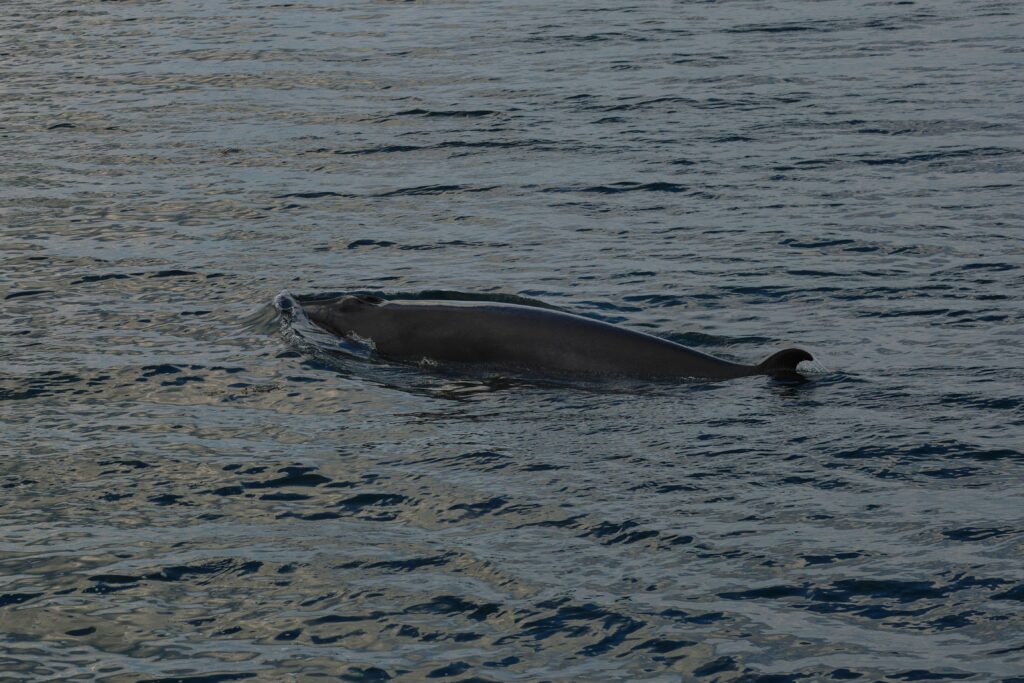
Seasonal Activities
False killer whales (Pseudorca crassidens) do not undergo major seasonal changes—such as hibernation or molting—like land animals do. As an open-ocean species, their behavior is primarily driven by factors such as water temperature, prey distribution, ocean currents, and reproductive activity.
🌸 Spring (March–May)
Activities
Increased movement in search of food
Pods explore wide areas
Movement aligns with the distribution of fish and squid
Characteristics
Spring sees a rise in marine productivity, leading to an increase in prey fish across many waters. Cooperative hunting within pods becomes more frequent.
☀️ Summer (June–August)
Activities
Period of high activity levels
Active in waters with higher temperatures
May appear close to the coast
Characteristics
In the waters around Japan, sightings increase in certain regions during summer.
Specifically, they move in pursuit of prey in areas such as:
The vicinity of the Kuroshio Current
Warm-water zones
Areas where marine life congregates
🍂 Autumn (September–November)
Activities
Increased long-distance movement
Expansion of the pod’s home range
Tracking schools of fish
Characteristics
Behavior aligns with the seasonal migration of fish. False killer whales are a species characterized more by mobility (traveling over wide areas) than by residency in a fixed location.
❄️ Winter (December–February)
Activities
Some populations migrate to warmer waters
Potential increase in foraging behavior in deep waters
Pods remain closely grouped
Characteristics
As prey distribution shifts in cooling waters, they migrate to areas with stable water temperatures.
Regarding Swimming Speed
The false killer whale (Pseudorca crassidens) possesses exceptional athletic ability relative to its body size. Among large dolphin species, it is particularly adept at high-speed swimming and long-distance travel.
Estimated Swimming Speeds
- Normal movement: Approx. 5–15 km/h
- Cruising in a pod: Approx. 15–25 km/h
- Chasing prey: Approx. 30–40 km/h
- Burst speed (peak): Approx. 50–55 km/h
Note: While accurately measuring peak speed in the wild is difficult, this range is estimated based on their body shape and close relatives.
Reasons for High-Speed Swimming
① Streamlined Body
The false killer whale has:
- A slender, elongated torso
- Small pectoral fins
- A powerful tail fluke
It has evolved a shape that minimizes water resistance.
② Powerful Tail Fluke
Unlike fish, cetaceans generate propulsion by moving their tails up and down rather than side to side.
The false killer whale’s tail fluke is highly muscular, making it well-suited for:
- Rapid acceleration
- Dashing toward prey
- High-speed movement within a pod
③ High Endurance
A defining characteristic of the false killer whale is its ability to swim continuously for long periods, rather than just achieving high burst speeds.
In the wild, they:
- Travel distances spanning tens of kilometers
- Conduct wide-ranging searches as a pod
- Migrate along ocean currents
About the baby false killer whale
- Physical Characteristics
Body Length: Approximately 1.2-1.5 m at birth
Weight: Approximately 20-30 kg
Body Color: Gray to blackish, turning dark black as they grow
Dorsal Fin/Snout: Same shape as adults, but smaller and rounder
- Behavior/Personality
Dependent on Mother
For the first few months of life, they swim close to their mother, protecting them from food and danger.
Playful
They play tag with their podmates.
They learn diving and hunting skills by playing on the surface using their tails and bodies.
Learning Behavior
They learn hunting, migration, and social behaviors by observing the behavior of their mother and pod.
- Biological Features
Diet: Breastfed for the first few months
Weaning: Begins eating fish, squid, etc. after a few months to a year
Growth: Reaches near adult size after 2-3 years and begins participating in pod activities
Dangers: Young are sensitive to predators, ships, and food shortages in the open ocean.
Is the False Killer Whale an Endangered Species?
The False Killer Whale is listed as Near Threatened. False Killer Whales are often caught as by-catch in fisheries, which is of great concern. The worldwide population is over 40,000, but is declining. As a result, the National Oceanic and Atmospheric Administration has listed the population of about 150 whales in Hawaii as endangered. False Killer Whales are covered by the Agreement on the Conservation of Small Cetaceans in the Baltic Sea, Northeast Atlantic, Irish Sea, and North Sea (ASCOBANS) and the Agreement on the Conservation of Cetaceans in the Black Sea, Mediterranean Sea, and Adjacent Atlantic Waters (ACCOBAMS).
- International Union for Conservation of Nature (IUCN) Assessment
The IUCN Red List classifies false killer whales as “Least Concern (LC).”
They are found in a wide range of tropical and subtropical waters, and their populations are considered relatively stable.
- Why are they not considered endangered?
They are found in a wide range of tropical and subtropical open oceans.
They live in groups and have a stable reproductive rate.
Their only natural predators are killer whales and large sharks.
- Cautions
Fishery bycatch: They may be accidentally caught in purse seines or squid fishing.
Environmental change: Marine pollution and climate change may affect their prey resources and habitat.
Can False Killer Whales be kept as pets?
False Killer Whales are too large for ordinary people to keep as pets. If you are looking for one, we recommend visiting an aquarium or other place to view them and getting guided or guided by events.
- Legal and Conservation Issues
False killer whales are internationally protected marine mammals.
Capturing and selling wild specimens is prohibited in most countries.
Even in Japan, keeping wild specimens as pets is illegal.
Only aquariums and research facilities with special permission can keep them in captivity.
- Ecological and Breeding Environment Issues
Pelagic: Their migration habits over large ocean areas in schools make this impossible to replicate in homes or small facilities.
Highly social: They primarily live in schools, and keeping them alone can be extremely stressful.
Unique diet: They require large quantities of fish and squid, and they must learn to feed.
Water temperature control is difficult: They require warm tropical to subtropical waters.
- Aquarium Breeding
Care cases are extremely rare worldwide.
Even in Japan, care is limited to a limited number of facilities.
Large aquariums, specialized staff, and veterinary supervision are required.
Facilities Housing False Killer Whales (Japan & Worldwide)
The false killer whale (Pseudorca crassidens) is a large toothed whale species that is rarely kept in captivity worldwide. While not as commonly seen as orcas or bottlenose dolphins, they are housed in select aquariums and marine facilities, including those in Japan.
🇯🇵 Major Facilities in Japan
Okinawa Churaumi Aquarium
A prominent facility in Japan where false killer whales can be seen
Renowned for the husbandry and exhibition of dolphins and whales
Allows for the observation of false killer whale behavior in a large pool
Visitors can watch them jump, swim, and participate in training sessions
Kamogawa Sea World
A marine facility famous for its orca exhibits
Has a history of housing false killer whales
Possesses expertise in the care of large marine mammals
Enoshima Aquarium
Extensive experience in caring for dolphins and other marine mammals
One of the facilities known for housing and exhibiting false killer whales
Note: As the population of false killer whales is limited, whether they are currently being housed or exhibited depends on the specific time period.
🌎 Major Facilities Worldwide
🇺🇸 United States
SeaWorld Orlando
A facility with extensive experience in marine mammal husbandry
Has a history of housing toothed whales, including false killer whales
SeaWorld San Diego
Renowned as a facility for the research and husbandry of dolphins and whales
Has a history of housing false killer whales
Introducing other animals



コメント