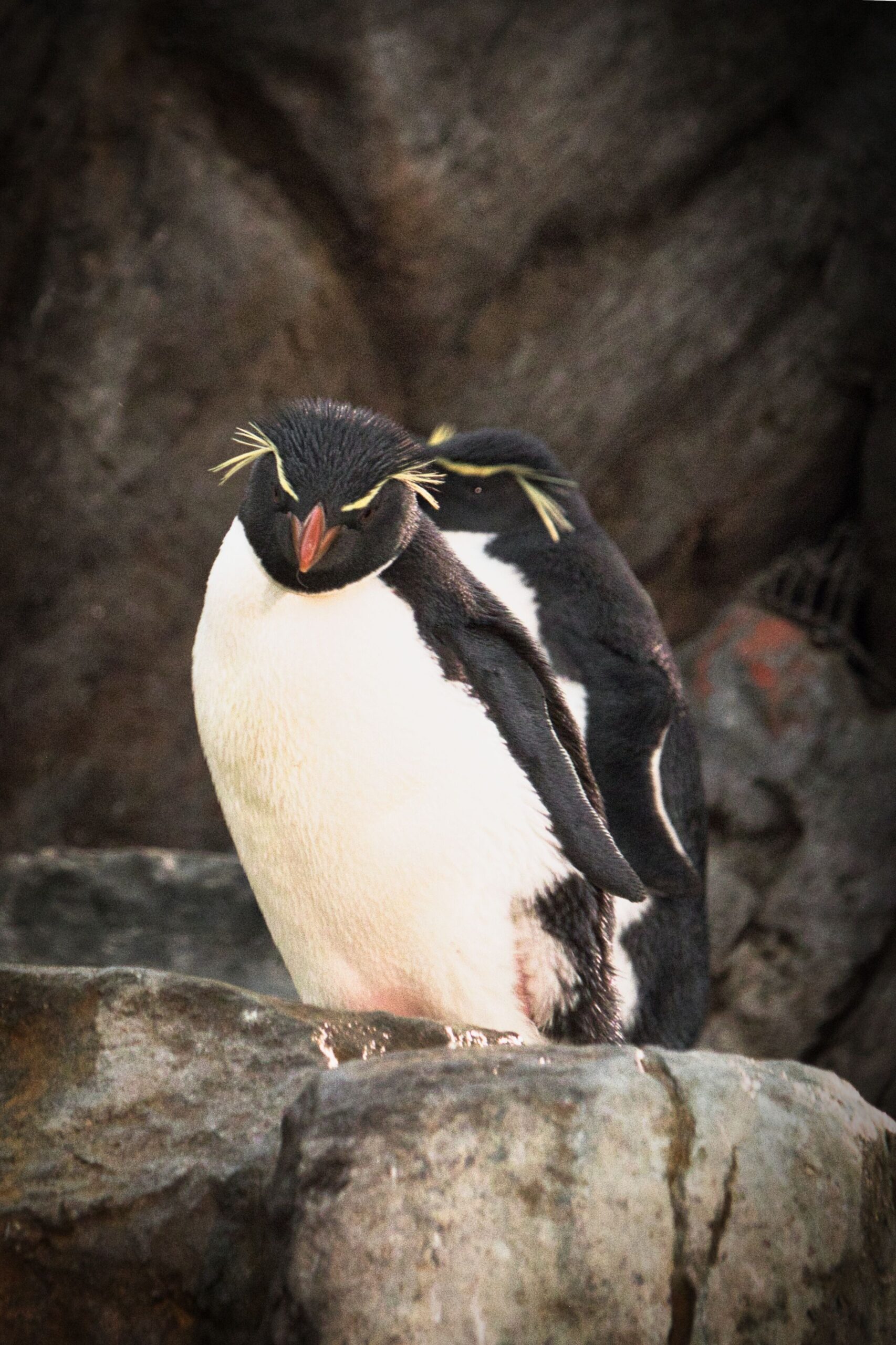
We will explain the characteristics, ecology, habits, and habitat of the Schroeter penguin. The Schroeter penguin is a penguin endemic to New Zealand, and there are many mysterious aspects about it that we still don’t understand. Entry to the island is strictly restricted to non-researchers, so most people can’t even touch it.




- Basic information about Schroeter penguins
- What are the roots and origins of the Eudyptes penguin?
- What will happen to the classification?
- About the Schroeter Penguin Habitat
- feature is? What kind of creature is it?
- What will your personality look like?
- What is the ecology of Schroeter penguins?
- Molting in Schleigh’s Penguins
- Diving of the Erect-crested Penguin
- Schleigh Penguin Calls
- Seasonal Activities of the Erect-crested Penguin
- About Schlater penguin chicks
- Are Schroeter penguins an endangered species?
- Is it possible to keep Schroeter penguins in captivity?
- Zoos that keep them (Japan and around the world)
- Fellow members of the same group
Basic information about Schroeter penguins
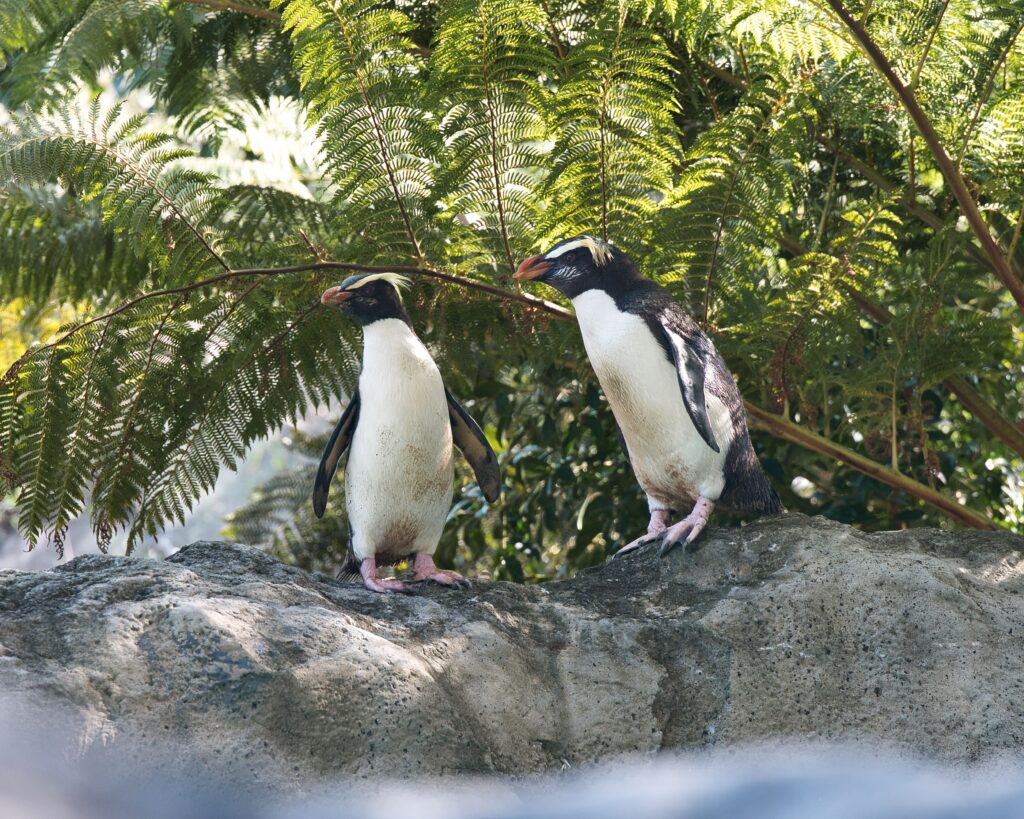
Schroeter penguins belong to the Macaroni penguin genus. The male is larger, with a body length of about 60-70 cm. It is the only penguin with an upright brush-like crest. The scientific name is Eudyptes sclateri.
| Japanese(和名) | シュレーターペンギン |
| English(英名) | Erect-crested Penguins |
| scientific name(学名) | Eudyptes sclateri |
| classification(分類) | Sphenisciformes, Spheniscidae, Eudyptes ペンギン目ペンギン科マカロニペンギン属 |
| IUCN Status(保全状況) | ENDANGERED |
| Height(身長) | 40-60cm |
| Weight(体重) | 2kg |
What are the roots and origins of the Eudyptes penguin?
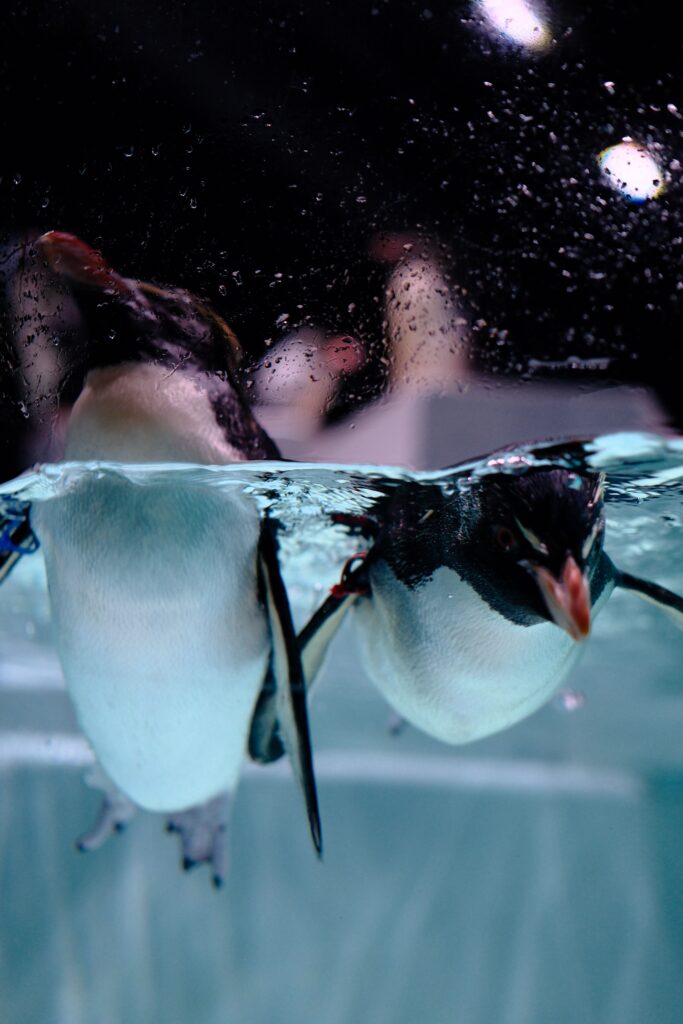
The origin of this penguin lies in the “Eudyptes genus,” which evolved in the sub-Antarctic region around New Zealand.
Points of Origin
Ancestor: An ancient penguin lineage that lived in the Antarctic Circle
Branching: Differentiated as the “Eudyptes genus” approximately several million years ago
Evolutionary Region: The seas around New Zealand (especially the sub-Antarctic islands)
Evolutionary Flow (Rough Overview)
Branched from ancestral penguins in Antarctica
Population fragmented by ocean current changes due to glacial periods
Isolated on islands around New Zealand
Evolved on each island, diversifying as Eudyptes
The “Electric Crest Penguin” was established within this diversification.
Current Habitat (Important)
Main Breeding Grounds:
Bounty Islands
Antipodes Islands (New Zealand)
They are found almost exclusively in a very limited area unique to New Zealand.
Characteristics and Evolutionary Significance
Characterized by a yellow crest
Adapted to breeding in rocky areas
Primarily marine life (comes ashore only during the breeding season)
What will happen to the classification?
The Schreter penguin’s name comes from the British zoologist Philip Lutley Sclater. The genus name is derived from the ancient Greek eu/ευ “good” and dyptes/δύπτης “diver”.
| 名前:Name | Gropu:属名 | 生息地: habit |
| フィヨルドランドペンギン(Fiordland penguin) | Eudyptes マカロニペンギン属 | New Zealand ニュージーランド |
| シュレーターペンギン(Erect-Crested Penguin) | Eudyptes マカロニペンギン属 | New Zealand ニュージーランド |
| スネアーズペンギン(Snares Islands Penguin) | Eudyptes マカロニペンギン属 | New Zealand ニュージーランド |
| マカロニペンギン(Macaroni Penguin) | Eudyptes マカロニペンギン属 | Antarctica 南極大陸 |
| ロイヤルペンギン(Royal Penguin) | Eudyptes マカロニペンギン属 | Antarctica 南極大陸 |
| イワトビペンギン(Rockhopper Penguin) | Eudyptes マカロニペンギン属 | South Atlantic, Indian Ocean, Falkland Islands 南大西洋、インド洋、フォークランド諸島 |
Schroeder penguin taxonomy
| 階級 | 分類 |
|---|---|
| 界 (Kingdom) | 動物界 (Animalia) |
| 門 (Phylum) | 脊索動物門 (Chordata) |
| 綱 (Class) | 鳥綱 (Aves) |
| 目 (Order) | ペンギン目 (Sphenisciformes) |
| 科 (Family) | ペンギン科 (Spheniscidae) |
| 属 (Genus) | Pygoscelis |
| 種 (Species) | Pygoscelis antarcticus |
About the Schroeter Penguin Habitat
According to information on the habitat and nesting sites of Schlater penguins, they are only found in the Antipodes Islands and Bounty Islands in New Zealand. Landing on their habitat, the Antipodes Islands and Bounty Islands, is restricted by the New Zealand government, so it is not possible to enter them in the first place. Even if you want to investigate the species in the Schlater category, you cannot see them up close. Research on birds is being conducted, and they can only be seen on online links and pages such as blogs.
Habitat
Main Distribution Areas
Antarctic Peninsula: Large colonies are formed, particularly along the western coast.
Antarctic Islands:
South Shetland Islands
South Georgia Island
South Sandwich Islands
Ice-free coastal areas around the South Atlantic and Antarctic Ocean
Habitat
Coastal areas suitable for breeding, such as rocky areas and sandy beaches with little ice.
They tend to form colonies along the coasts of land or islands rather than on the ice.
Movement and Movement
In winter, they forage near ice or in the ocean.
They leave their colonies and hunt for fish and krill in the sea.
In summer, they return to the safety of rocky areas along the coast to breed.
Key Points
Even in the harsh Antarctic environment, they prefer coastal areas with relatively little ice.
They tend to breed in large groups.
feature is? What kind of creature is it?
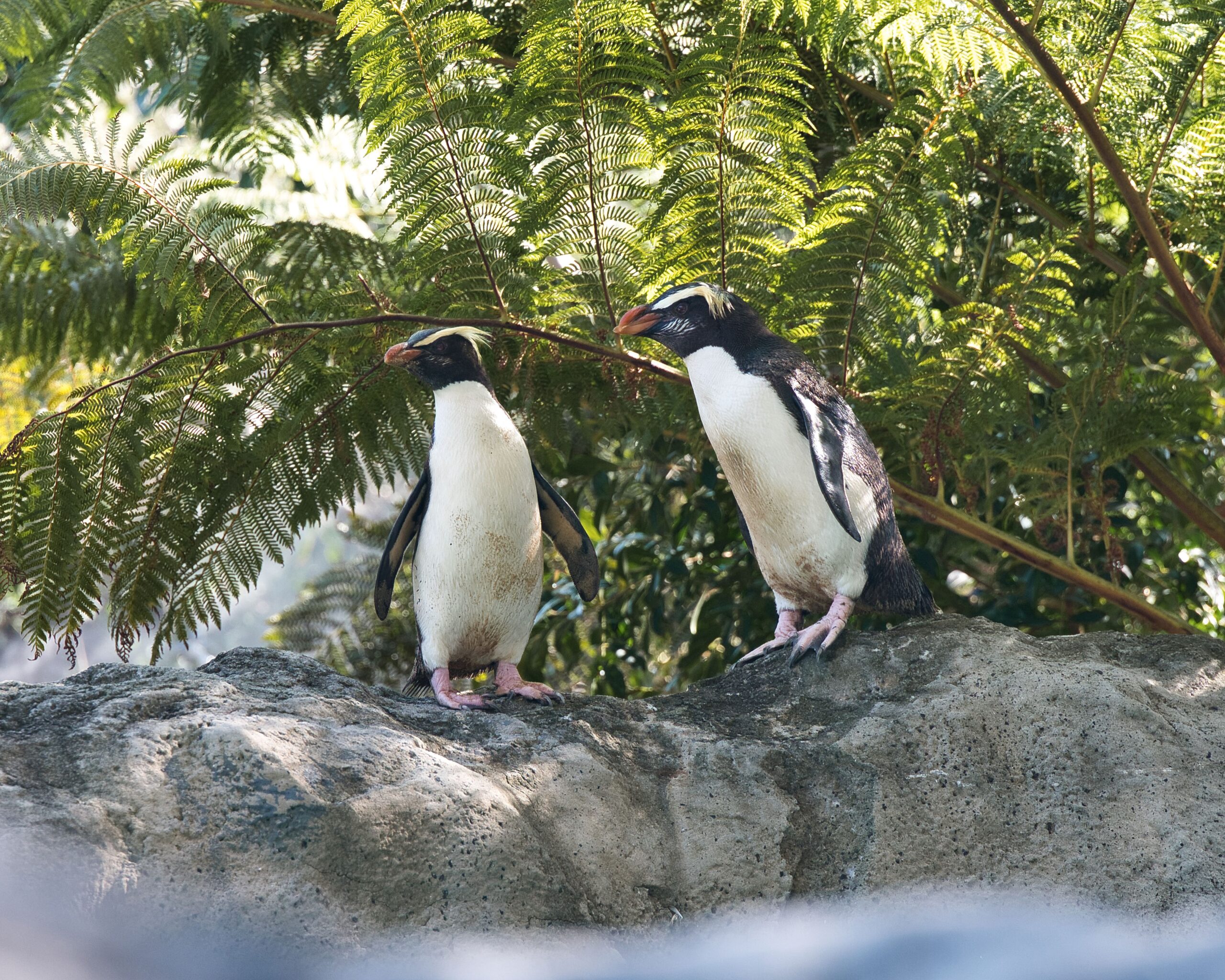
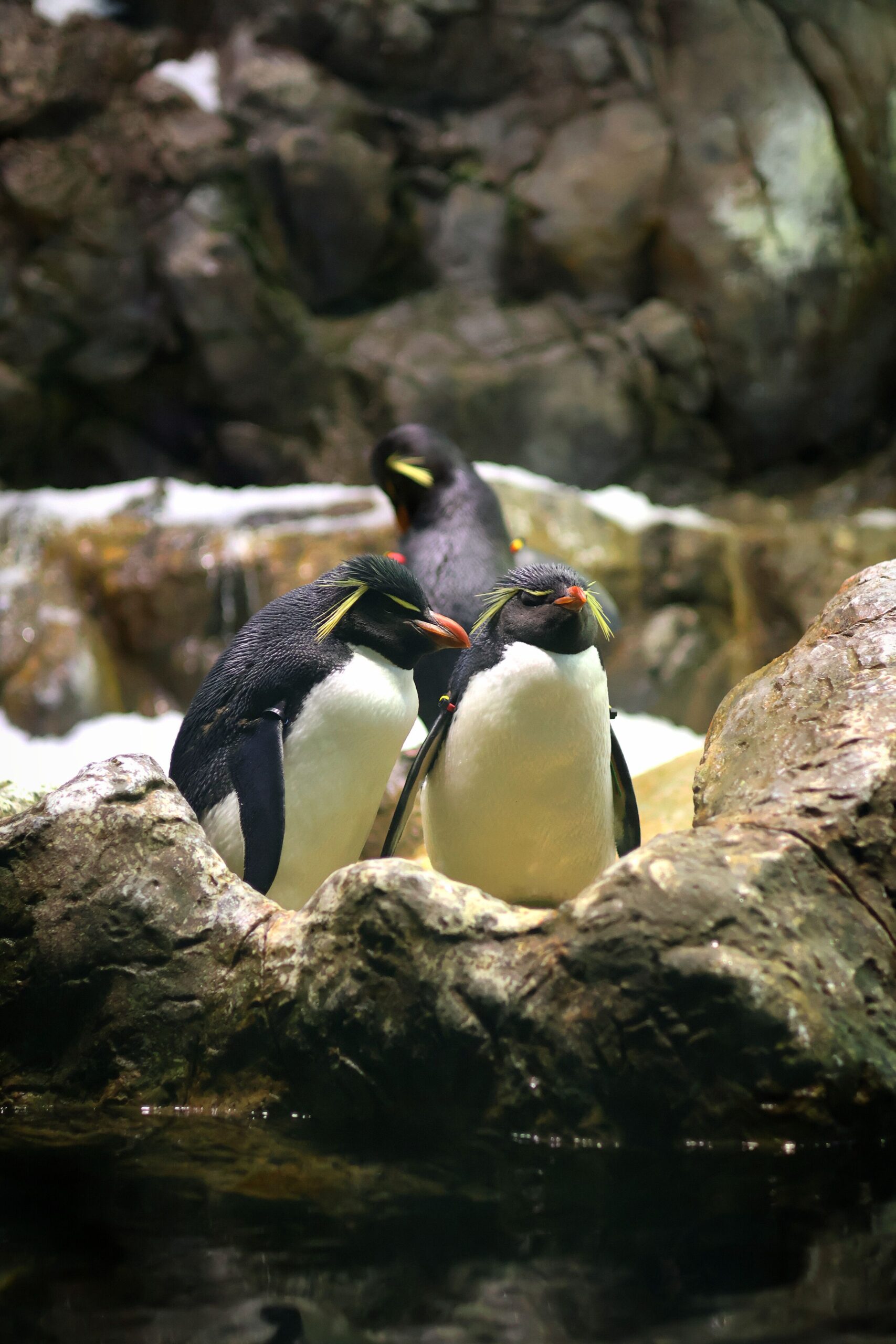
The Schroeter penguin has a black back, face, and throat, a white front, and an orange-brown beak that stands out against the white skin around it. Perhaps the most distinctive feature of this penguin is its crested feathers. It is also called the Mayudachi penguin because of its appearance.
- Physical Characteristics
Size: Body length 50-70 cm, weight 3-6 kg
Body Type: Medium-sized penguin with a stocky, streamlined body well suited to swimming
Feather Color:
Back: Black
Belly: White
Chest: Black band (a distinctive pattern of Schlater penguins)
Beak: Thin, medium length, adapted for catching fish and krill
Legs: Short and strong, excellent for swimming but also capable of walking on land
- Ecology and Behavior
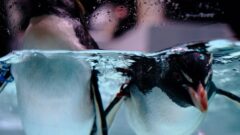
Excellent Swimmer: Dives in pursuit of fish and krill underwater
Diet: Mainly small fish, krill, and crustaceans
Reproduction:
Builds large colonies on rocky or sandy areas
Eggs are laid by pairs, with males and females taking turns incubating them
Sociality: Lives in groups and cooperates within the colony in raising their young
Calls: Each individual has its own distinctive vocalizations, allowing them to recognize their mates and mates
- Appearance
Looking like a “little gentleman in a black and white formal suit”
Its impressive appearance is seen marching along rocky terrain and swimming at high speeds in the ocean.
What will your personality look like?
Schroeter penguins live in colonies. Therefore, they can be said to be highly cooperative and highly social animals. Furthermore, they are not very aggressive and are considered to be gentle penguins.
Schlater Penguin Personality (Behavioral Characteristics)
Sociable and Cooperative
Living in large colonies, they cooperate with each other in raising and defending their young.
They also have strong pair bonds, with males and females taking turns incubating eggs, demonstrating their cooperative nature.
Bold and Adaptable
They have adapted to the harsh Antarctic environment and are skilled swimmers and land swimmers.
They live in groups to protect themselves from predators and are wary.
Curious
They may observe humans or other animals approaching with surprise.
When hunting in the ocean, they exhibit curiosity and a desire to explore, pursuing their prey.
Loyal and Tenacious
During the breeding season, pairs are extremely loyal, often mating with the same partner year after year.
They tenaciously protect their eggs and chicks, even in harsh environments.
What is the ecology of Schroeter penguins?
Schlater penguins live on krill, squid, fish and crustaceans. They are monogamous and breed from October to February. They show courtship behaviour by bobbing their heads up and down. They lay eggs on rocks and other places, and after about 35 days of incubation, the chicks are protected by their parents for the first 2-3 weeks and form a “creche”. They then leave the nest. Their lifespan is around 17 years, but some have lived for over 20 years.
- Habitat and Environment
Coastal areas of the Antarctic Peninsula and surrounding islands (South Georgia, South Shetland, etc.)
They form colonies on rocky or sandy areas with little ice.
They forage in the ocean in winter and breed on land in summer.
- Diet (What they eat)
Mainly fish, krill, squid, and other marine organisms.
They dive underwater to catch prey.
They are highly skilled in speed and maneuvering underwater.
- Reproduction and Rearing
Breeding season is summer (November to February).
They form large colonies on rocky or sandy areas.
The pair cooperates in rearing:
The female and male take turns incubating the eggs.
The parents take turns incubating and raising the chicks.
The chicks grow up together in groups (which provides protection).
- Behavior
Highly social, living in groups
Living in groups to protect themselves from predators (such as seals and seagulls)
Swimming quickly in the ocean to pursue prey
On land, they move within their colony in a marching fashion
- Adaptability
Fur (waterproof feathers and fat) that withstands the harsh Antarctic cold
Streamlined body shape for diving and foraging
Successful reproduction through cooperation with mates and groups
What are the natural enemies of Schroeter penguins?
Natural enemies include the great skua and the giant petrel.
Molting in Schleigh’s Penguins
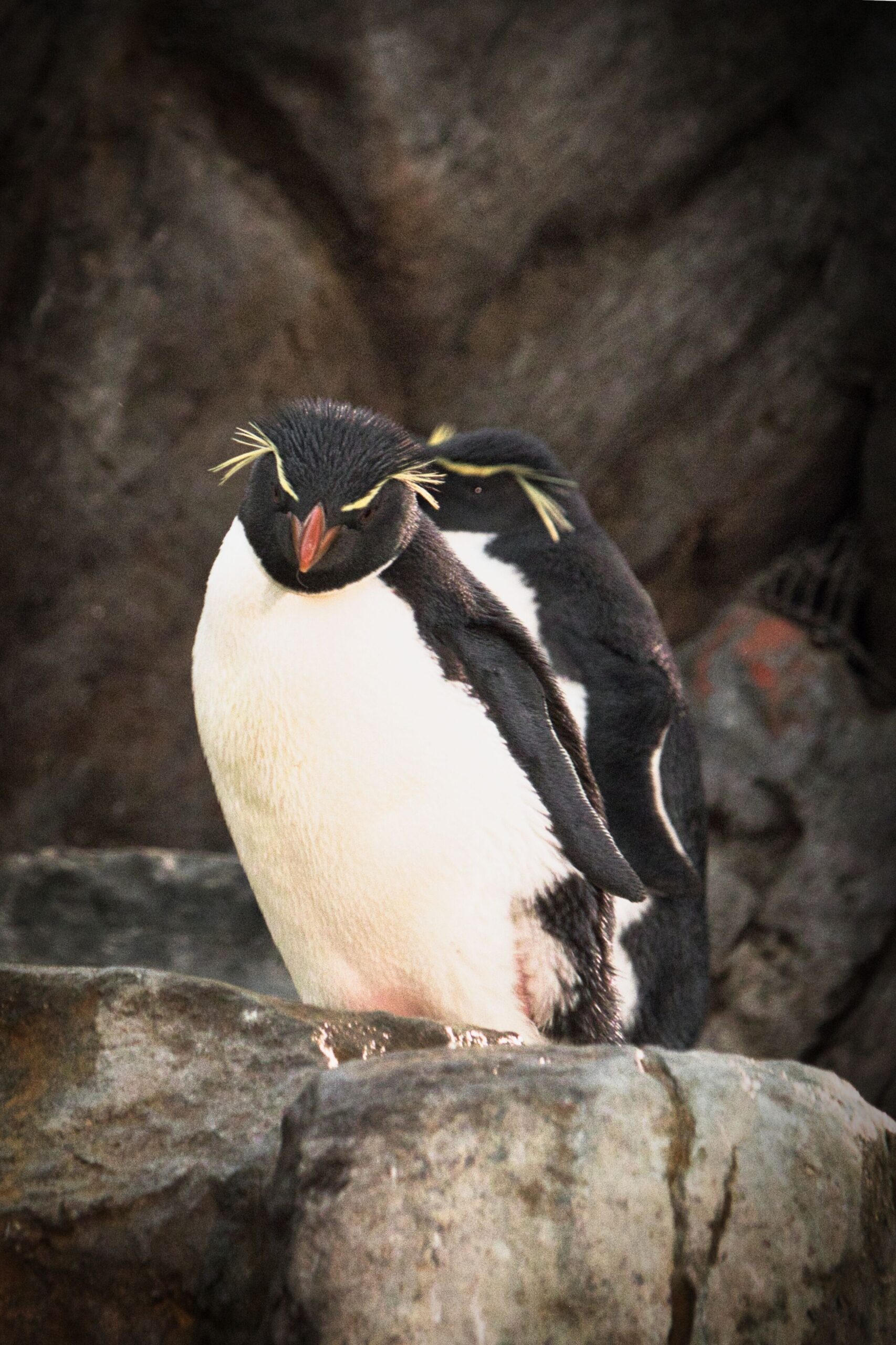
Molting in Schleigh’s penguins (also known as Erect-crested penguins) is quite distinctive and stressful compared to other penguin species.
Molting Basics (What Happens?)
Molting is the phenomenon where old feathers fall out all at once and are replaced by new ones.
For Electocrest Penguins:
Once a year
Complete molt (total molt)
All feathers are replaced at once
⏱️ Timing and Duration
Timing: Primarily after breeding (Summer to Autumn in the Southern Hemisphere, around February to April)
Duration: Approximately 2-3 weeks
They are almost completely unable to do anything during this time
⚠️ Characteristics during molting (important)
Molting in this species is quite harsh:
They cannot enter the sea (their feathers are not fully developed and not waterproof)
They cannot forage for food
They spend their time motionless on land
They may experience significant weight loss
In short, it’s a period of enduring while fasting.
Diving of the Erect-crested Penguin
The Erect-crested penguin (Erect-crested penguin) is a type of crest penguin that repeatedly makes medium to deep dives.
Basic Diving Characteristics
Average Diving Depth: Approximately 20-50m
Maximum Diving Depth: Approximately 100m
Diving Time: Approximately 1-3 minutes per dive
Foraging Style: Repeated short dives
Why do they dive?
Main prey:
Krill
Small fish
Squid
A type of hunting where they “quickly chase and catch” their prey in the ocean
① An “efficient” type that doesn’t dive too deep
They don’t dive as deep as Gentoo penguins
Instead, they rely on a style of hunting that involves many attempts
② Adapted to the waters around the islands
Their habitat (Bounty Islands and Antipodes Islands) has little continental shelf
Therefore, they have evolved to hunt prey in the mid-water column
③ Skilled at continuous diving
Surface → Breathe → Immediately dive again
They repeat a “short-cycle hunt”
Schleigh Penguin Calls
The calls of Schleigh penguins (Erect-crested penguins) are particularly distinctive among crest penguins, characterized by a strong call that combines growls with metallic nodding sounds.
① Male Display Call
A low, rough “grrr, grrr” sound.
Includes a growl that vibrates the throat midway through.
Repeated with chest out.
An important call used for territorial claims and courtship.
② Female Response Call
Shorter and slightly higher pitched than the male’s.
A sharp, staccato sound like “quack” or “keh.”
Used for communication between pairs.
③ Colony Call of the Entire Group
Many call simultaneously, resulting in a “noisy cacophony.”
More like “beach noise” than individual calls.
Strong reverberation echoing across the entire rocky area.
Seasonal Activities of the Erect-crested Penguin
The Erect-crested penguin (also known as the Erect-crested penguin) inhabits the sub-Antarctic islands of New Zealand and has a very extreme seasonal cycle: it comes ashore during the breeding season and spends almost the entire rest of the time at sea.
Spring to Summer (Breeding Season: October to February)
The most important time of the year
Around May to July: Return to the breeding colony
Males secure territory and perform courtship displays
Egg laying (usually 2 eggs)
However, in most cases:
Only one of the two eggs survives (the second is a backup egg)
Parents take turns incubating the eggs (approximately 30-40 days)
Chicks hatch → Parents take turns feeding for several weeks
Key Points:
Live in dense colonies on land
Intense calls and fighting
❄️ Autumn (Molting Season: around February to April)
“A period of complete immobility”
Molting begins immediately after breeding ends
Remains on land for approximately 2-3 weeks
Cannot enter the sea (waterproofing function is lost)
Consumes fat in a fasting state
Key Points:
Life-sustaining mode
A period of immobility and endurance
Winter (Marine Life: May-September)
Spends almost entirely in the ocean
Leaves the colony and heads to the open ocean
Focuses on foraging
Preys on krill, small fish, and squid
Also migrates long distances
Key Points:
Almost a “drifting lifestyle”
Rarely returns to land
About Schlater penguin chicks
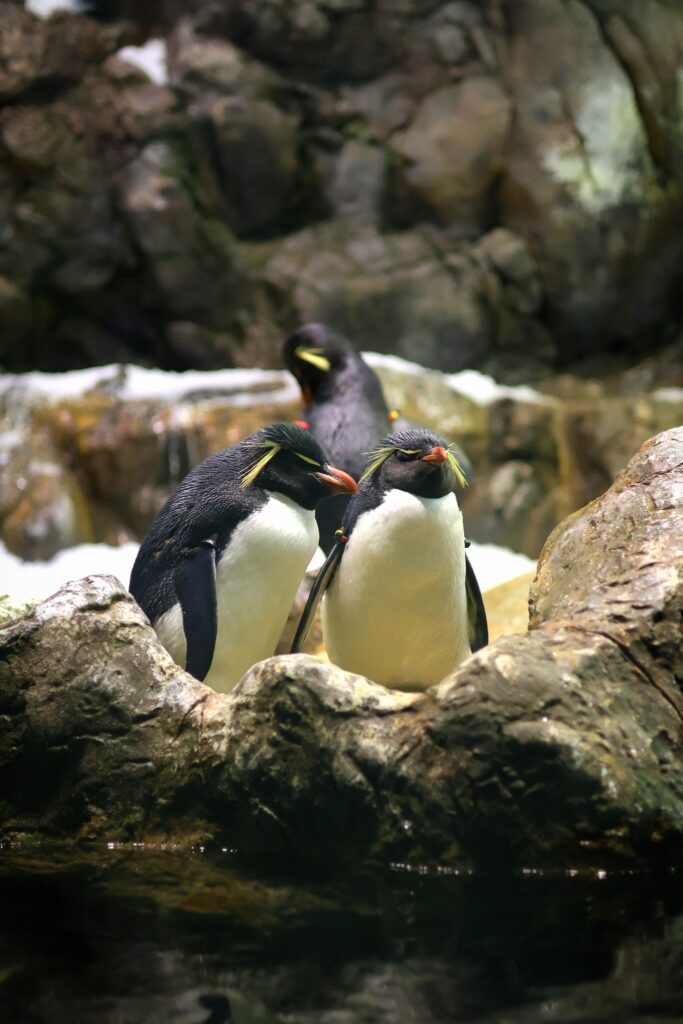
- Hatching
Lays one or two eggs.
Hatching takes about 35 days.
Females and males take turns incubating the eggs.
- Appearance and Physical Characteristics
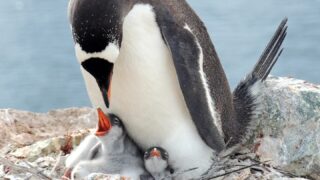
Immediately after hatching, they are covered in fluffy gray to whitish down.
They are small and their limbs are underdeveloped, but their parents keep them warm and protect them.
Their feathers are not yet waterproof, so they cannot swim.
- Development and Growth
Early Stage (1-2 weeks): They are protected almost entirely by their parents’ warmth.
Middle Stage (2-4 weeks): They receive small amounts of food from their parents.
Late Stage (4-7 weeks): The chicks molt and prepare to swim.
Chicks may form groups called “kreich” (chick schools).
- Diet
Parents feed their young fish and krill by mouth.
After the egg stage ends, the parents take turns foraging for food.
- Independence
Once their feathers are fully grown and waterproof, they are able to enter the sea and catch food on their own.
They begin living in the sea at about 2-3 months of age.
Even after they grow up, they remain part of a group and continue to be active in groups.
Are Schroeter penguins an endangered species?
Schroeter penguins are listed as an endangered species. The estimated population is said to be around 230,000. The population has been decreasing steadily since the 1900s. In the United States, it became a protected species under the ESA (Endangered Species Act) in 2010.
Classification of Threatened Species
The International Union for Conservation of Nature (IUCN) Red List classifies the Schlater penguin as “Least Concern.”
This means that the risk of extinction is currently considered relatively low.
Population and Distribution
A large number of individuals live on the Antarctic Peninsula and surrounding islands.
Colonies can breed with thousands to tens of thousands of birds.
The population is generally stable, but climate change and declining marine resources are concerns.
Major Threats
Climate Change
Decreased sea ice impacts breeding and feeding grounds.
Risk of declining breeding success and food shortages.
Predators (natural enemies)
In Antarctica, seals and seagulls prey on chicks.
Impact of Human Activities
Past resource declines due to fishing and interference from tourism.
Is it possible to keep Schroeter penguins in captivity?
Is it possible to keep Schlater penguins in captivity? It’s difficult. Landing on their habitat, the Antipodes Islands and Bounty Islands, is restricted by the New Zealand government, so you can’t even enter them. Therefore, you can’t even touch them. Adult individuals are limited to activities such as marine areas, and you can only see them picking up pebbles on the shore. It’s very difficult compared to Gentoo penguins, Emperor penguins, and Humboldt penguins.
- Constraints of Wild Penguins
Scottish penguins are wild animals that have adapted to the harsh Antarctic environment.
Because they are adapted to the icy waters, low temperatures, and vast ocean foraging areas of Antarctica, life in an artificial environment is extremely difficult.
Zoos in Japan and around the world primarily display species that are relatively well adapted to captivity, such as Adelie penguins and Gentoo penguins.
- Difficulties of Breeding
Temperature Control: Requires an environment close to freezing.
Aquarium Size: Requires ample swimming space.
Diet: Requires a large, steady supply of fish and krill.
Health Management: Wild species are sensitive to stress, and care must be taken to avoid illness.
Legal Restrictions: The Convention on International Trade in Endangered Species of Wild Fauna and Flora (CITES) strictly restricts the import and export of wild animals.
- Summary
Scottish penguins are virtually impossible to keep in an ordinary household.
Keeping them requires specialized care in a large zoo or research facility.
Even in Japan, there are few examples of captivity, and capturing them for captivity is prohibited.
Zoos that keep them (Japan and around the world)
The Erect-crested penguin (Schleaf penguin) is an extremely rare exhibit species, almost never kept in zoos anywhere in the world. In short:
There are basically no zoos in Japan or around the world that keep them on a permanent basis (almost zero).
Fellow members of the same group
コメント