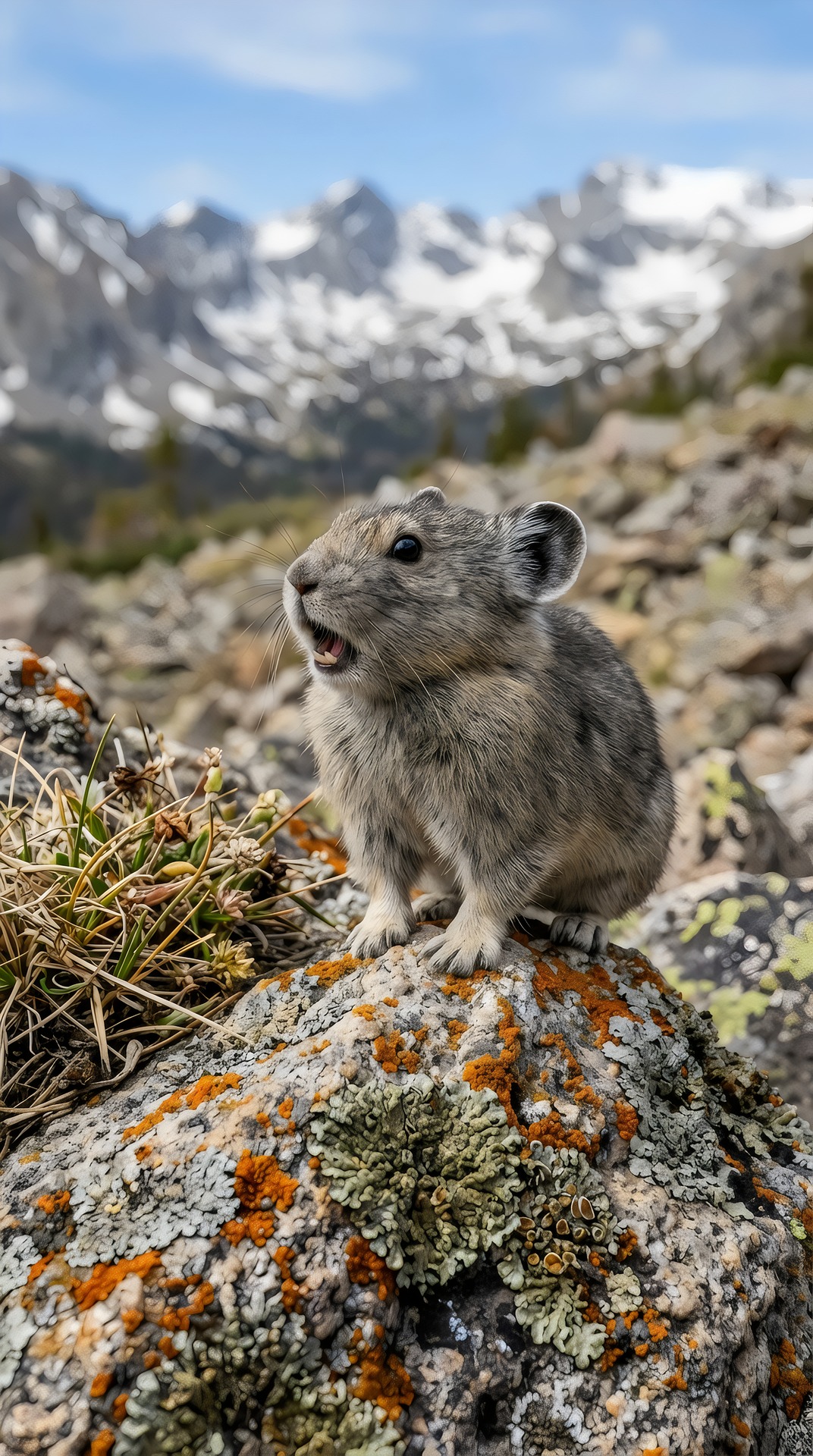
What kind of animal is a pika? We will explain its characteristics, ecology, and habitat. This rabbit is a very small animal and tends to be very wary, so it is difficult to see it because it often lives secretly in rocky places. I will explain what kind of animal it is.









- What is a pika? About basic status
- What are the roots and origins of the pika?
- About habitat
- feature is? What kind of creature is it?
- What is your personality like?
- What is the ecology like?
- Pika Vocalizations
- Seasonal Activities
- Locomotion Speed
- About Baby Pikas
- Is the pika an endangered species?
- Can pikas be kept?
- Captivity in Zoos (Japan and Worldwide)
- Introducing other animals
What is a pika? About basic status
Pikas are animals classified in the order Lagomorpha (order Lagodonta) and the family Pikadae. The scientific name is Ochotona. The body length is only about 20 cm, and the weight is only around 200 g. The list of information is as follows.
| Japanese(和名) | ナキウサギ |
| English(英名) | Pika |
| scientific name(学名) | Ochotona |
| classification(分類) | Mammalia、 Lagomorpha、 Ochotonidae、Ochotona 哺乳綱、ウサギ目、ナキウサギ科、ナキウサギ属 |
| IUCN Status(保全状況) | ENDANGERED |
| Length(体長) | 18-20cm |
| Weight(体重) | 75-290g |
What are the roots and origins of the pika?
The roots of the pika (known in Japanese as naki-usagi, or “calling rabbit”) trace back to primitive lagomorphs that appeared approximately 50 million years ago (during the Eocene epoch of the Cenozoic era). While modern pikas belong to the same order—Lagomorpha—as rabbits and hares, they are small mammals that have followed their own unique evolutionary path.
Where did they originate?
Pika ancestors are believed to have evolved in the region spanning northern to central Asia.
Early lagomorphs possessed more primitive physical characteristics than modern rabbits and inhabited forests and grasslands. Subsequently, due to climate and topographical changes, certain lineages adapted to cold, high-altitude environments, eventually becoming the ancestors of the pika.
Evolutionary history of the pika family (Ochotonidae)
The general lineage is as follows:
Approx. 50 million years ago
↓
Early lagomorphs
↓
Primitive pikas
↓
Many extinct pika lineages
(e.g., Alloptox)
↓
Modern pika genus (Ochotona)
Fossil records indicate that pikas were once highly diverse, comprising around 25 genera. Today, only the genus Ochotona survives.
Where did Japan’s pikas come from?
Japan’s representative species, the Ezo pika, inhabits only Hokkaido.
Its ancestors were pikas from the Asian mainland; they are believed to have migrated to the region during the Ice Age, when Hokkaido was connected to the continent.
In particular, Hokkaido’s alpine zones retained some of the cool environmental conditions of the Ice Age, effectively serving as “cold-climate islands” that allowed the pika to survive.
Why did they evolve to be small with short ears? The pika is a classic example of adaptation to cold environments.
Small ears
→ To prevent body heat loss
Round body shape
→ To reduce surface area and retain heat
Life among rocks
→ A strategy of hiding in rock crevices rather than fleeing from predators
High-pitched calls
→ To signal warnings to others in mountainous terrain
In short, their current form is the result of evolution enabling them to survive in cold, high-altitude environments.
What kind of animal were their ancestors?
Surprisingly, the ancestors of pikas were not the “small rock-dwelling animals” we see today, but rather more typical small herbivorous mammals.
Ancient pika species included some that were larger than those found today; fossils of an extinct pika genus (Alloptox) dating back approximately 17.5 million years have been discovered in Japan. This serves as important evidence that Japan was connected to the mainland at that time.
About classification
Because pikas live in large numbers throughout Europe, Asia, and North America, there are many subspecies within the genus Pika. The following is a quote from Wikipedia. Pika lives in the north. Ochotona is a species that lives in the steppes. Conothoa is a species that lives in mountainous areas.
Scientific name – English Name – Japanese Name
- Ochotona alpina Alpine Pika タカネナキウサギ
- Ochotona argentata Silver Pika ギンナキウサギ
- Ochotona collaris Collared Pika クビワナキウサギ
- Ochotona hoffmanni Hoffmann’s Pika ホフマンナキウサギ
- Ochotona hyperborea Northern Pika / Siberian Pika キタナキウサギ
- O. h. yesoensis Japanese Pika エゾナキウサギ
- Ochotona pallasi Pallas’s Pika アルタイナキウサギ
- Ochotona princeps American Pika アメリカナキウサギ
- Ochotona turuchanensis Turuchan Pika トゥルチャンナキウサギ
- Ochotona cansus Gansu Pika / Gray Pika カンシュクナキウサギ
- Ochotona curzoniae Plateau Pika / Black-lipped Pika クチグロナキウサギ
- Ochotona dauurica Daurian Pika ダウリアナキウサギ
- Ochotona huangensis Tsing-ling Pika チンリンナキウサギ
- Ochotona nubrica Nubra Pika ヌブラナキウサギ
- Ochotona pusilla Steppe Pika ステップナキウサギ
- Ochotona rufescens Afghan Pika アフガンナキウサギ
- Ochotona thibetana Moupin Pika チベットナキウサギ
- Ochotona thomasi Thomas’s Pika トマスナキウサギ
- Ochotona erythrotis Chinese Red Pika チュウゴクナキウサギ
- Ochotona forresti Forrest’s Pika フォレストナキウサギ
- Ochotona gaoligongensis Gaoligong Pika ガオリゴンナキウサギ
- Ochotona gloveri Glover’s Pika グローバーナキウサギ
- Ochotona himalayana Himalayan Pika ヒマラヤナキウサギ
- Ochotona iliensis Ili Pika イリナキウサギ[4]
- Ochotona koslowi Kozlov’s Pika コズロフナキウサギ
- Ochotona ladacensis Ladak Pika ラダックナキウサギ
- Ochotona macrotis Large-eared Pika オオミミナキウサギ
- Ochotona muliensis Muli Pika ムリナキウサギ
- Ochotona nigritia Black Pika クロナキウサギ
- Ochotona roylei Royle’s Pika ロイルナキウサギ
- Ochotona rutila Turkestan Red Pika アカナキウサギ
About habitat
Pikas are found in areas from Europe to Asia and North America. They can also be seen in Hokkaido, Japan (they have been photographed near the Hidaka and Yubari mountains). Their cries and sounds can be heard in rocky areas at high altitudes. There are many different populations of them. These wild animals have beautiful fur and are also known as survivors of the ice age.
Pika Habitat in Japan
In Japan, pikas live mainly in the central mountainous region, including Nagano, Gunma, Toyama, and Gifu prefectures. They are particularly found in high-altitude rocky and gravelly areas, such as the Northern Alps, Central Alps, and Yatsugatake mountain range.
Altitude: Approximately 2,000-3,000 meters (alpine zone)
Terrain: Rock crevices and gravel areas (areas with a lot of rubble)
Environment: Cold, well-ventilated areas with grassy areas
Habitat Conditions
Pikas live in open rocky areas and alpine grasslands, rather than forests.
In winter, they may be active under the snow, which provides protection from the cold.
In summer, they dry and store grass in rock crevices or burrows (storing dried grass for winter food).
feature is? What kind of creature is it?
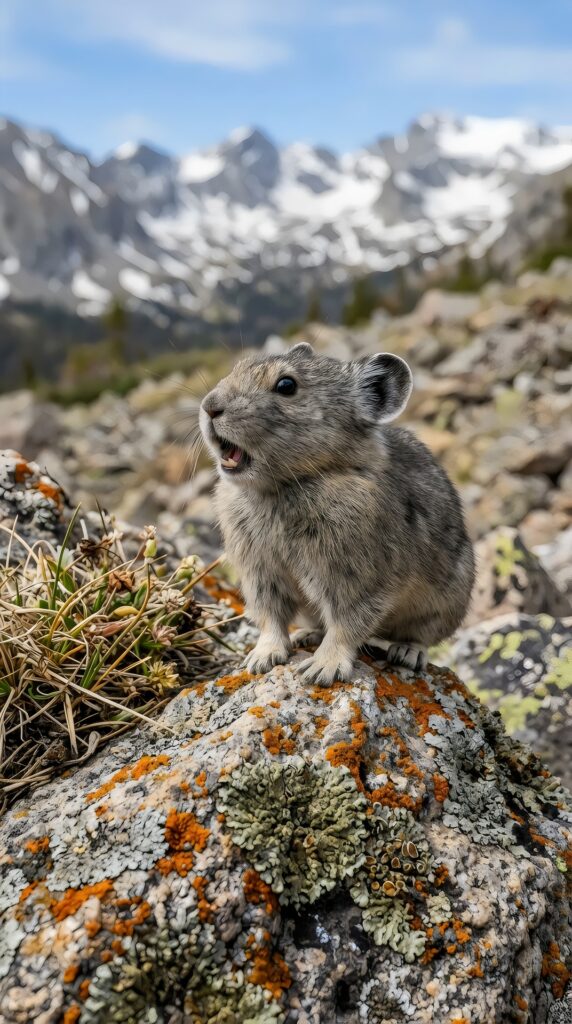
Pikas are small, large hamster-like animals with short limbs, round ears, and a short tail. They are mammals that prefer cold climates and live alone in fairly large territories on rocky areas of high mountains with crevices that serve as hiding places. This is because there are many predators. In warm climates, some species make burrows and live in them. Like rabbits, they defecate here and there after eating. Pikas are diurnal and are usually more active during the day.
Characteristics of Pikas
Size/Body Type
Body Length: Approximately 15-20cm
Weight: Approximately 120-200g
Round and stocky, with small ears and a barely visible tail
Fur/Color
Fur is gray to brown, providing camouflage against rocky terrain.
Some species change color with the seasons (they may become slightly whitish in winter).
Call
As their name suggests, they make high-pitched squeals, often chirping.
They make these calls to communicate with others and warn off predators.
Diet
Herbivore: They eat alpine plants, leaves, and flowers.
They collect and dry grass in the summer and store it for winter.
Behavior/Ecology
Active during the day (diurnal).
They live in crevices and burrows, quickly hiding when they sense danger.
They are less social, living alone or in small families.
Lifespan
Approximately 3-5 years in the wild.
What is your personality like?
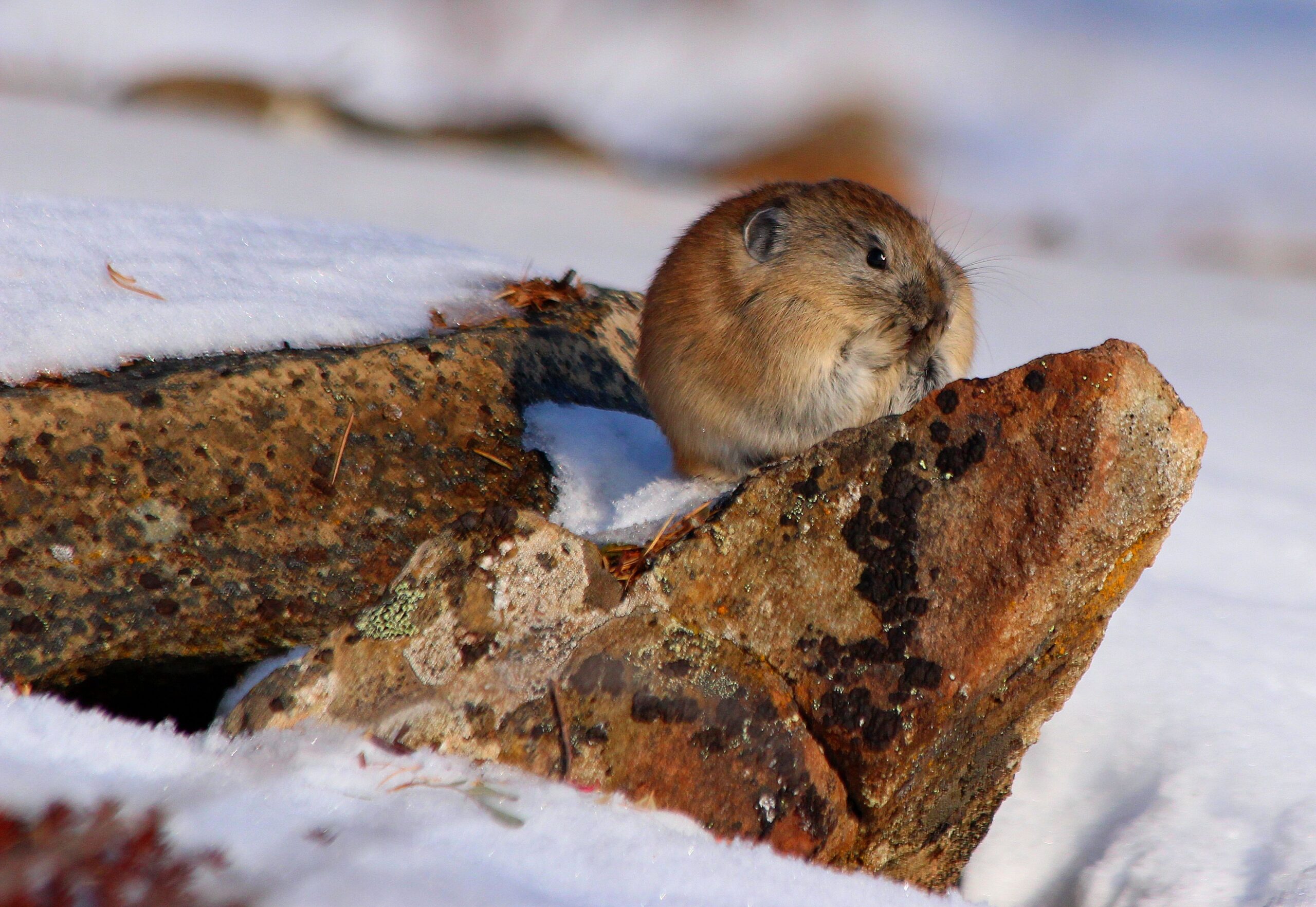
Pikas have many predators, so they are very wary and nervous creatures and rarely show themselves in front of humans. They are very curious, but can also be described as quite cautious animals. They don’t make much noise and often live curled up in small holes or crevices on rocks. They can now be observed in the mountains.
Pika Personality and Behavior Tendencies
Highly cautious
Living in high mountain environments where predators (such as hawks and martens) are plentiful, they quickly hide in rock crevices.
They almost always flee when humans approach.
Cautious and careful
They move quickly and in small steps, constantly on guard around rocks and burrows.
They are sensitive to sound and presence, and can sense danger even from the cries of their peers.
Highly independent
They generally live alone or in small family units.
They are less social and have a territorial consciousness.
Active but short-term focus.
They gather food and dry grass in their burrows efficiently and quickly.
They often rest in the shade of rocks afterward.
Curious but timid
If there are no changes in their surroundings, they will observe the situation.
However, if they sense danger, they will immediately flee.
What is the ecology like?
Pikas are herbivores, living off alpine plants, mice, flowers, and other plants. They mate during the breeding season from spring to summer. Pikas can give birth to five pups at a time. The gestation period is about 30 days. Pikas only live for about three years. Pikas do not hibernate, so they engage in “food storage” behavior, storing food from summer to winter.
Pika Biology
Habitat
Elevation: Alpine zone, approximately 2,000-3,000 meters
Terrain: Rock crevices, gravel areas, open grasslands
Can be active under the snow in winter and spend the winter in burrows
Activity Period
Diurnal: Active during the day
Especially active in the cooler mornings and afternoons
Gathers food when predators are scarce
Diet
Exclusively herbivorous
Grass, leaves, flowers, stems, etc.
Dries plants eaten in summer in burrows to store as winter food
Selects alpine plants according to the season Eating
Breeding
Breeding Season: Spring to Summer (Varies slightly depending on altitude and climate)
Births: 1-2 times per season
Baby: 2-5 pups per litter
Raises young in dens, with parents bringing and caring for them.
Winter Habits
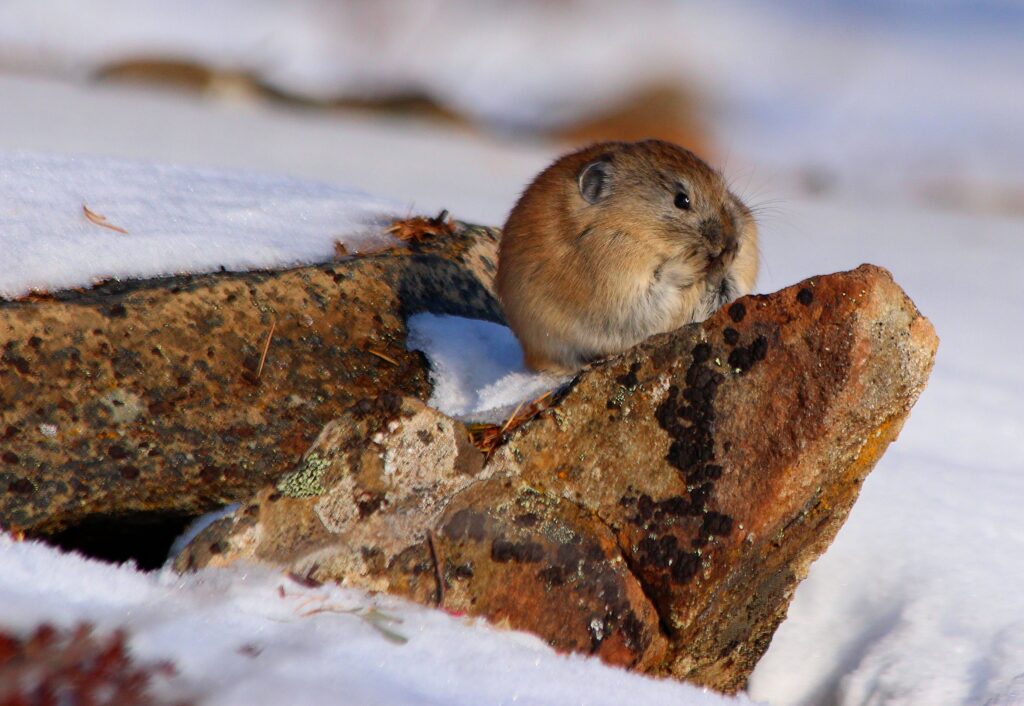
They do not hibernate, but stay still under the snow or in dens to avoid the cold.
They survive winter by eating hay collected in summer.
Social Behavior
They generally live alone or in small families.
They communicate with each other vocally.
They are territorial, defending their dens and food sources.
Are there any natural enemies?
Pikas’ natural enemies are stoats, sables, and foxes. They also need to be careful of attacks from the sky by owls. Individual pikas often cooperate with each other and hide under rocks.
Pika Vocalizations
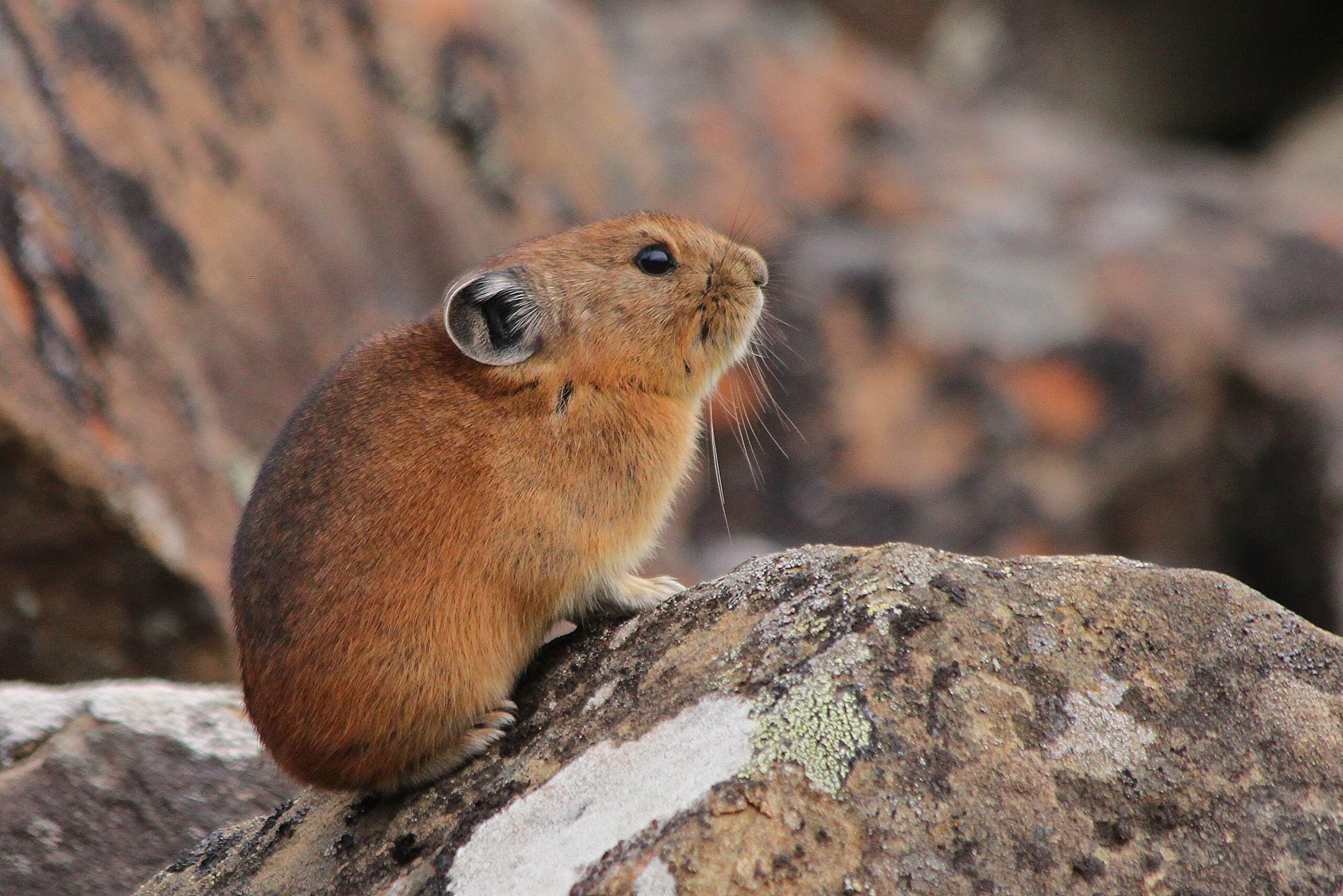
True to their name, pikas are characterized by high-pitched, highly resonant calls. The Japanese pika (specifically the Ezo pika found in Hokkaido) calls out from rocky alpine areas to communicate with others or sound an alarm.
① Alarm calls: “Pee!” or “Kichi!”
These are their most well-known calls.
High-pitched, sharp, single-note sounds
Heard suddenly from atop rocks or out of the undergrowth
Emitted upon spotting a predator (such as a fox or bird of prey)
To human ears, they may sound like:
“A quick blast on a whistle”
“The chirp of a small bird”
② Continuous calls: “Pi, pi, pi”
Used for communication between individuals.
Functions:
Confirming the presence of others
Asserting territory
Interactions during the breeding season
Because sound echoes off the rocks, their calls carry over long distances despite their small size.
③ Screams: “Kee!”
A vocalization made when startled or during a confrontation.
For example, emitted when:
Another individual intrudes on their territory
They are suddenly nearly grabbed
They sense danger
Seasonal Activities
Pikas (specifically the Ezo pika in Hokkaido) are adapted to cold climates, and their activity patterns shift significantly with the seasons. A key characteristic is that they remain active year-round rather than hibernating.
Spring (April–June): “Resuming activity as the snow melts”
Activities:
Emerging from rocky areas as the snow melts
Beginning to feed on vegetation
Starting reproductive activities
Behaviors:
Increased interaction between males and females
More frequent vocalizations
Territory checks
Although snow may still linger in early spring, pikas overwinter in rock crevices beneath the snowpack, allowing them to become active immediately after the thaw.
Summer (July–August): “The peak season for activity”
Activity Level: ★★★★★ (Maximum)
Summer is the most critical time of year for pikas.
Key behaviors:
Consuming large quantities of grass and leaves
Raising young
Defending territory
Communicating via vocalizations
Plants consumed:
Grasses
Alpine plants
Leaves
Flowers
Mosses
They are most active during the cooler hours of the morning and evening.
Autumn (September–October): “Gathering food for winter”
Activity Level: ★★★★☆
Autumn brings the pika’s most important task.
“Food caching” (storing food)
Since pikas do not hibernate, they gather vegetation from late summer through autumn.
Behaviors:
Cutting grass
Laying it out on rocks to dry
Transporting it into rock crevices
Creating winter food stores
This behavior is known as “haymaking.”
A single pika gathers a substantial amount of vegetation, creating a vital stockpile to survive the winter months.
Winter (November–March): “Quiet life beneath the snow”
Activity Level: ★★☆☆☆
Pikas do not hibernate.
Once snow accumulates, they live in:
Rock crevices
Underground spaces
Tunnels beneath the snow Food:
Hay made in the autumn
Dried plants
They eat these little by little.
Locomotion Speed
While there is limited precise field data on the pika’s walking (or movement) speed, as a small mammal, it is the type of animal that moves quickly over short distances.
Approximate Movement Speeds
- Normal walking: Approx. 0.5–1 km/h
- Moving across rocky terrain: Approx. 1–3 km/h
- Running while alert: Approx. 5–10 km/h (estimated)
- Short-distance escape: Potentially faster than the above
Why is there no need to run fast?
Pikas inhabit areas such as:
- Rock crevices
- Talus slopes (areas of piled-up rocks)
- High-altitude mountain slopes
Consequently, they do not need to flee at high speeds across open grasslands like rabbits or hares.
Instead, they employ the following strategy:
Spot a predator
↓
Sound an alarm call (“Pee!”)
↓
Run a few meters
↓
Vanish into a rock crevice
Hopping or Running?
Although the Japanese name for the pika includes the word “rabbit” (usagi), it does not hop with large bounds like a hare.
Its movement consists primarily of:
- Short, quick steps
- Small jumps
- Running while navigating across rocks
About Baby Pikas
To summarize in detail, baby pikas have some adorable characteristics, both in appearance and behavior, that make them slightly different from their parents.
Characteristics of Baby Pikas
Birth and Growth
Birth: Approximately 7-10cm in length, weighing approximately 20-30g
Fur: They are born with fur and are not hairless like baby rabbits.
Vision and Hearing: Moderately developed from birth (they can easily hide in rock crevices, just like their parents).
Behavior
Spending time with their parents in the burrow immediately after birth.
In the early stages, they rarely leave the burrow, with their parents bringing them food.
After a few weeks, they gradually leave the burrow and begin walking on rocky areas. They begin practicing turning.
They sometimes play with other youngsters, which helps develop their motor skills and alertness in the future.
Diet
They initially drink their mother’s milk.
They begin to eat plants gradually at 2-3 weeks of age.
They also practice making hay with their parents during the summer.
Alertness
Even youngsters are highly alert.
They share the same habit of quickly retreating to their dens when they sense danger.
Adulthood
They are almost independent at 1-2 months of age.
At 3 months of age, their physique approaches that of an adult, and they begin to have their own dens and feeding areas.
Is the pika an endangered species?
Many subspecies of the pika are classified as endangered species. This is because pikas are losing their habitat and becoming predated as humans continue to destroy their habitat. Conservation efforts are also underway.
Endangered Status of Pikas
Status in Japan
The Ministry of the Environment’s Red List classifies pikas as “Vulnerable (VU)” in the wild.
This means that the wild population may decline in the near future, increasing the risk of extinction.
Their habitat is limited to the Northern and Central Alps, making their distribution highly localized.
Causes of Decline
Habitat Destruction and Environmental Change
The construction of hiking trails and tourism development are reducing rocky areas and grasslands.
Deforestation is reducing open alpine rocky areas.
Climate Change
As snow levels decrease due to global warming, winter protection and food security become more difficult.
Impact of Natural Predators
Predation by hawks and martens also affects populations.
Conservation Efforts
Habitat Protection in Natural Environment Protection Areas and National Parks
Caution is being exercised for hikers and tourists (e.g., avoid disturbing rocky areas).
Ecological surveys and population monitoring are being conducted.
Can pikas be kept?
Pikas are classified as an endangered species, so it is difficult to keep them in captivity. We recommend that you go to a zoo or other zoo to see them. Please stop taking things in nature.
Why pikas cannot be kept as pets
They are wild animals
Japanese pikas are sometimes designated as natural monuments or endangered species, and capture and captivity are prohibited by law.
Capturing or captivity without permission is illegal.
Specialized for alpine environments
Adapted to the cold, open rocky areas at altitudes of 2,000-3,000 meters
They live in rock crevices and gravel areas, making them difficult to recreate in a standard cage or home environment.
It is extremely difficult to meet the appropriate temperature, humidity, and exercise requirements.
Special diet and behavior
They are herbivores, collecting and drying alpine plants to eat in winter.
They need to hide in burrows and among rocks, which creates stress in small cages.
They are highly cautious, making it nearly impossible to tame them.
Health management is difficult.
As wild animals, disease and nutrition management are difficult.
They are unable to adapt to their environment and are at high risk of dying within a short period of time.
Captivity in Zoos (Japan and Worldwide)
Pikas are currently rarely kept in zoos. In particular, there are no known facilities currently exhibiting the Ezo pika, a lineage endemic to Japan.
Status in Japanese Zoos
None at present
What about zoos worldwide?
🇺🇸 United States
Representative species:
American pika (Ochotona princeps)
While there have been past instances of keeping them in research facilities or specific locations for conservation and study purposes, examples of public exhibition are extremely rare.
They are, however, a subject of wildlife observation in places such as national parks.
Introducing other animals



コメント