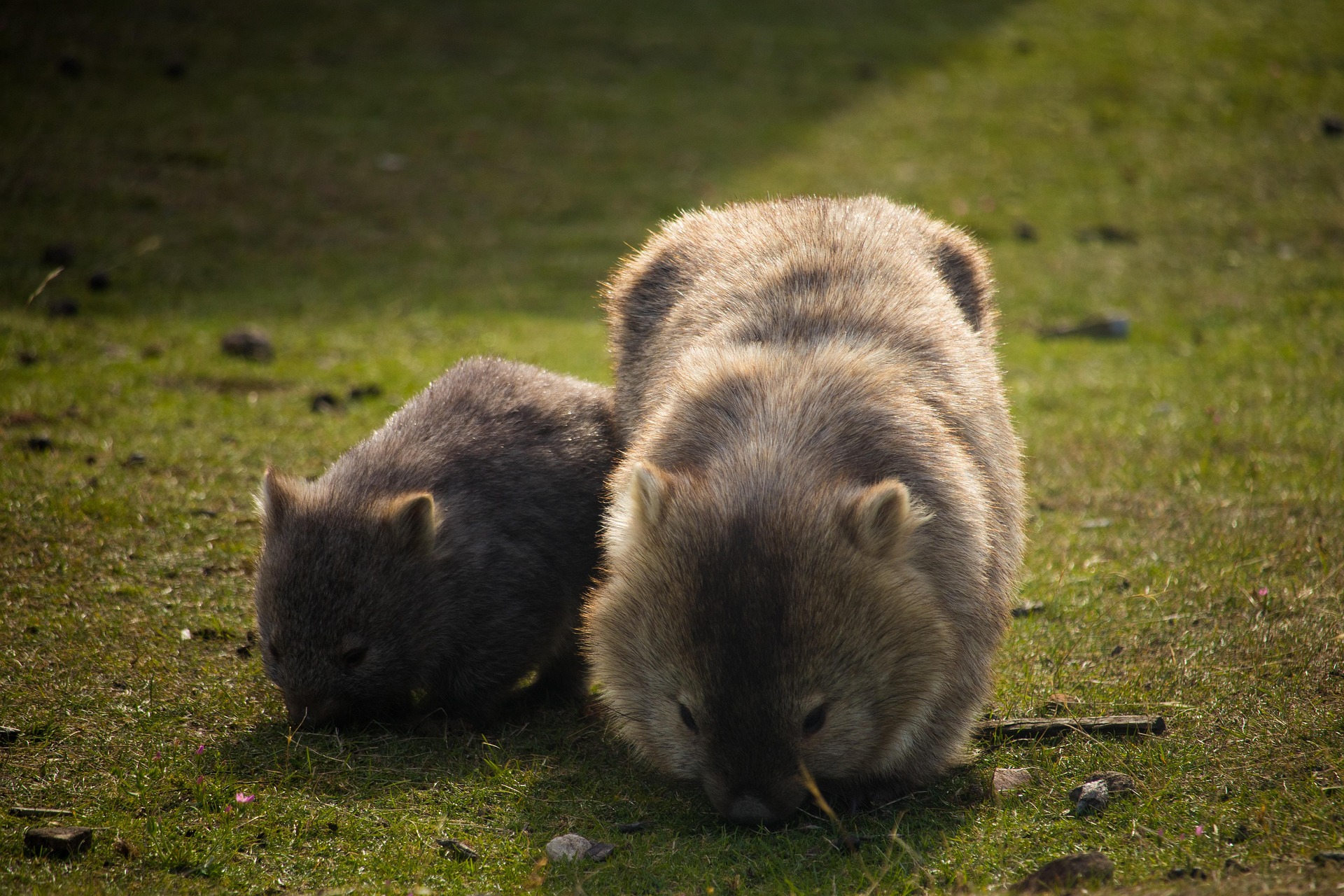
What kind of animal is a wombat? We will explain its characteristics, ecology, and habitat. This animal can only be seen in Australia, making it a very rare and interesting animal. They live in eucalyptus forests and shrub forests, and are nocturnal. They are very cute and beloved animals.



- What is a wombat? About basic status
- What are the roots and origins of the wombat?
- About habitat
- feature is? What kind of creature is it?
- What is your personality like?
- What is the ecology like?
- Wombat Vocalizations
- Seasonal Activity
- Walking Speed
- About Baby Wombats
- Are wombats an endangered species?
- Can you keep wombats?
- Zoos Housing Wombats (Japan & Worldwide)
- Introducing other animals
What is a wombat? About basic status
Wombats are marsupials classified in the class Mammalia, order Diprodontida, family Wombatidae, genus Wombat. The scientific name is Vombatus ursinus. The name is derived from the Daruk language, and another name is the lesser wombat. Body length: 90 – 115 cm, tail length: 2.5 cm, weight: 22 – 39 kg, head and body length: 70 – 110 cm.
| Japanese(和名) | ウォンバット、ヒメウォンバット |
| English(英名) | Common wombat/Coarse-haired wombat |
| scientific name(学名) | Vombatus ursinus |
| classification(分類) | Mammalia、 Diprotodontia、 Vombatidae、Vulpes 哺乳綱、双前歯目、ウォンバット科、ウォンバット属 |
| IUCN Status(保全状況) | LEAST CONCERN |
| Length(体長) | 90 – 115cm |
| Weight(体重) | 22 – 39kg |
What are the roots and origins of the wombat?
The roots of the wombat trace back to ancient marsupials (mammals with pouches) that lived in Australia over 25 million years ago. Modern wombats are the “survivors” of this long evolutionary history.
Origins: Evolved from ancient Australian marsupials
Taxonomically, wombats belong to the following lineage:
Marsupials (Marsupialia)
↓
Diprotodonts (Diprotodontia)
↓
Vombatiformes (Wombat-like marsupials)
↓
Wombat family (Vombatidae)
The group known as “Vombatiformes” includes not only modern wombats but also their close relatives, the koalas, as well as extinct giant animals.
Ancestors were small
Surprisingly, wombat ancestors were not always large, stocky animals.
Fossils dating back about 26 million years (Late Oligocene) reveal that the wombat lineage evolved from small-to-medium-sized herbivorous marsupials. Early members were not as specialized for burrowing as modern wombats; over time, they evolved to possess strong jaws, durable teeth, and sturdy bodies.
There was once an “Era of Giant Wombats”
While modern wombats measure about 1 meter in length and weigh between 20 and 40 kg, there were once giant relatives in the past.
A prime example:
Diprotodon optatum
Weight: Approximately 2 tons
Lived during the Pleistocene epoch (approx. 2.6 million to 10,000 years ago)
Sometimes referred to as a “giant wombat,” though technically a close relative rather than a wombat itself.
Large species also existed within the wombat family (Vombatidae) that evolved in ways quite different from the modern form.
Why did they become burrowing animals? Characteristics of modern wombats:
Powerful forelimbs
Sturdy claws
Fossorial (burrowing) lifestyle
Thick skin
Slow metabolism
These traits are evolutionary adaptations for survival in Australia’s arid environment.
Origin of the name
The name “wombat” is believed to originate from an Indigenous Australian language.
When Europeans discovered the animal in eastern Australia during the late 18th century, they transcribed the name used by the Indigenous people into spellings such as “wombat” or “wambat.”
About classification
The wombat is the only species in the genus Wombat, and there are two subspecies: the northern hairy-nosed wombat and the southern hairy-nosed wombat.
classification class
| 分類階級 | 名称 |
|---|---|
| 界 | 動物界 (Animalia) |
| 門 | 脊索動物門 (Chordata) |
| 綱 | 哺乳綱 (Mammalia) |
| 目 | 有袋目 (Diprotodontia) |
| 科 | ウォンバット科 (Vombatidae) |
| 属 | ウォンバット属 (Vombatus、Lasiorhinus) |
About habitat
Wombats are endemic to Australia and can be found in Queensland, Tasmania and Victoria.
- Common Wombat (Vombatus ursinus)
Distribution: Southeast Australia (including Tasmania)
Environment: Widely adapted to forests, grasslands, and open areas
Characteristics: May be found in farmlands and parks near human settlements
- Southern Hairy Wombat (Lasiorhinus latifrons)
Distribution: Southwestern Australia
Environment: Dry grasslands, shrublands, and open areas around deserts
Characteristics: Skilled burrowers, living hidden in their own burrows
- Northern Hairy Wombat (Lasiorhinus krefftii)
Distribution: Northern Australia (Queensland)
Environment: Dry grasslands and shrublands
Characteristics: Most restricted habitat, and at risk of extinction
- Habitat Commonalities
Burrowing Lifestyle: Lives by digging tunnels and burrows in the ground
Rests in burrows during the day and is active at night and during crepuscular twilight
Herbivorous, eating grasses, roots, and tree bark
feature is? What kind of creature is it?
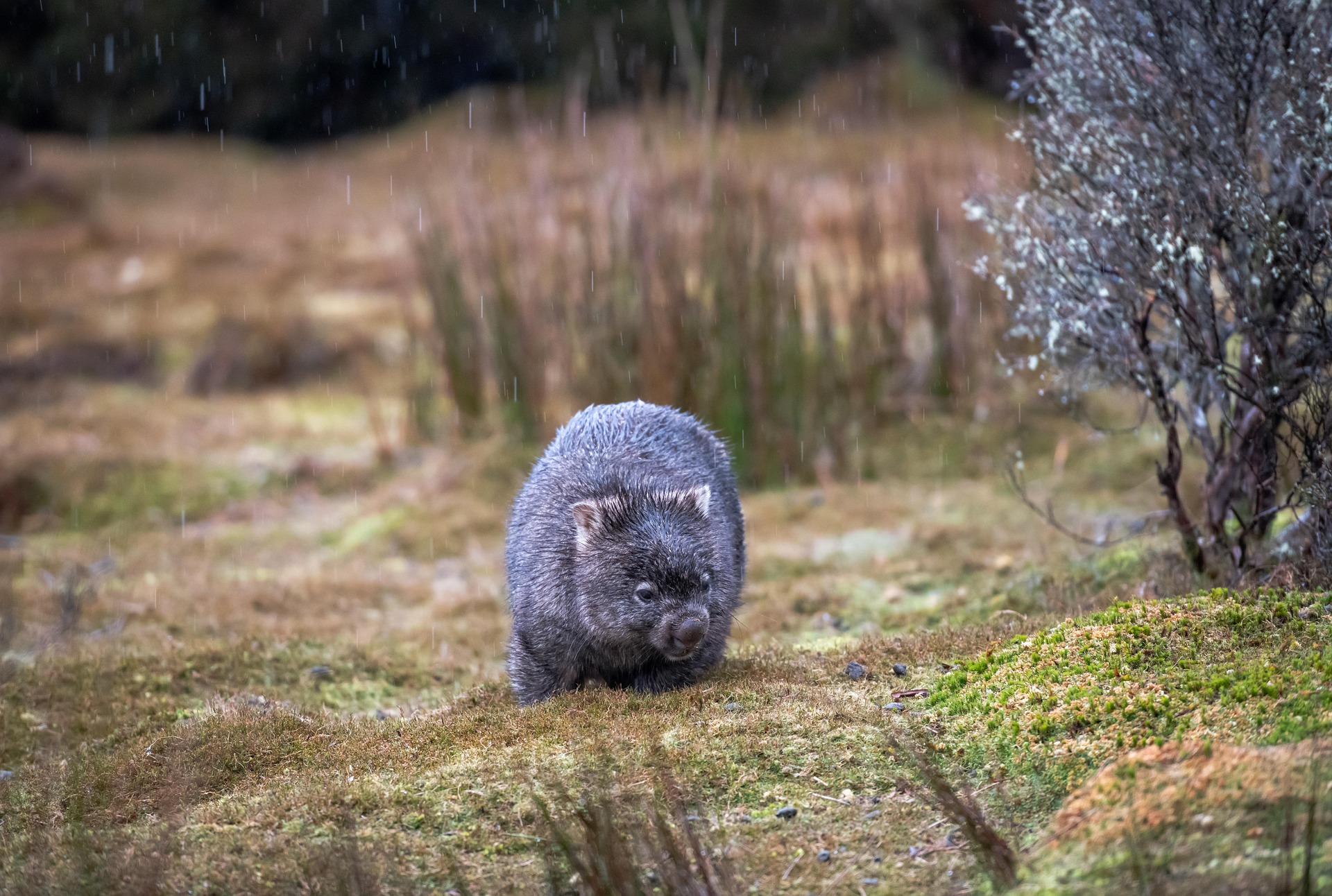
Wombats are black, brown, or gray in color. The pinna is short and rounded. It has strong front legs and has the habit of digging burrows. Wombats live in eucalyptus forests and shrublands, and usually live in burrows. They are nocturnal in the summer, and may be active during the day in the winter. It is an excellent animal that can run at speeds of about 40km/h over short distances.
- Physical Characteristics
Body Type: Stocky and muscular, with short, sturdy limbs.
Body Length and Weight:
Body Length: Approximately 70-120 cm
Weight: Approximately 20-35 kg (varies by species)
Fur Color: Gray to brown, with the southern hairy wombat having particularly long, dense fur.
Teeth: Their front teeth are constantly growing, adapted to their herbivorous lifestyle.
Tail: Very short
- Behavior and Personality
Nocturnal or Crepuscular: Rests in burrows during the day and is active at night or in the morning and evening.
Excellent Burrowing: Digs burrows into the ground and uses them as shelters.
Personality: Generally docile, but has a strong territorial sense and will defend their burrows and surroundings.
Sociability: Generally solitary. Sometimes, multiple individuals gather around their burrows.
- Ecology and Abilities
Diet: Herbivorous, eating grass, roots, bark, and leaves.
Athletics: Possess sturdy forelimbs and claws suited to digging.
Durability: Able to live in dry and cold regions, and adapted for long periods of digging and traveling.
What is your personality like?
Wombats are stocky but have a very gentle personality and tend to get attached to humans. If you startle a wombat, it may attack you with its sharp claws and teeth. Some wombats may become depressed if they are not petted. Wombats also have the habit of digging holes with their noses. These are different habits from kangaroos.
- Basic Personality
Gentle: Usually calm and composed
Tenured: Able to endure digging, long journeys, and feeding
Wary: Wary of anything approaching their burrow or territory
- Sociality and Behavior
Generally Solitary: Each burrow has its own territory
Strongly Territorial: May threaten or attack other individuals if they intrude
Low Sociability: Occasionally, multiple individuals may be found in close proximity around feeding areas or burrows, but they are not sociable
- Relationships with People
In the wild, they tend to avoid people
In zoos and captivity, they are calm and docile, and rarely aggressive toward humans
- Characteristic Behaviors
Digging: Spends a lot of time building and maintaining burrows
Grazing Leisurely: Generally moves slowly
What is the ecology like?
Wombats are herbivorous and feed on the leaves and roots of plants. Reproduction is viviparous, giving birth to one young at a time. Since they are marsupials, they raise their babies in a pouch. Sexual maturity is possible after 2 years of age. Wombats can only live about 5 years, but in captivity they can live up to 20 years.
- Activity Patterns
Nocturnal or Crepuscular: Rest in burrows during the day, active in the evening and at night
Generally solitary, with each burrow having its own territory
Burrowing: Uses sturdy forelimbs and claws to dig tunnels and burrows, which it uses as hideouts and nests
- Diet
Herbivore: Consume mainly grasses, roots, bark, and leaves
Feeding Behavior: Grazes slowly, but acquires necessary nutrients over a long period of time
Adaptability: Can live in dry and cold regions, adapting to seasonal changes in diet
- Breeding and Rearing
Breeding Season: Varies seasonally, most commonly in spring
Gestation Period: Approximately 20-22 days (short marsupial period), followed by several months in the mother’s pouch
Rearing: After growing in the mother’s pouch, the mother nurses and protects them in the burrow
Independence: The young leave the burrow and become independent after a few months
- Habitat
Adapts to a wide range of habitats, including forests, grasslands, and arid regions.
Burrow Use: Important for daytime resting and hiding from predators.
Depending on the environment, they may also be found near human settlements.
- Adaptability
Burrowing Ability: Used for avoiding predators, building nests, and regulating temperature.
Durability: Able to withstand dry, cold, and high temperatures.
Ability to Live Alone: Ability to secure food and shelter independently.
Are there any natural enemies?
Wombats have a natural enemy called the Tasmanian devil. They tend to compete over food, which can lead to fights. Dingoes are also natural enemies, and in the wild they can run at speeds of around 40km/h, so they can easily escape.
Wombat Vocalizations
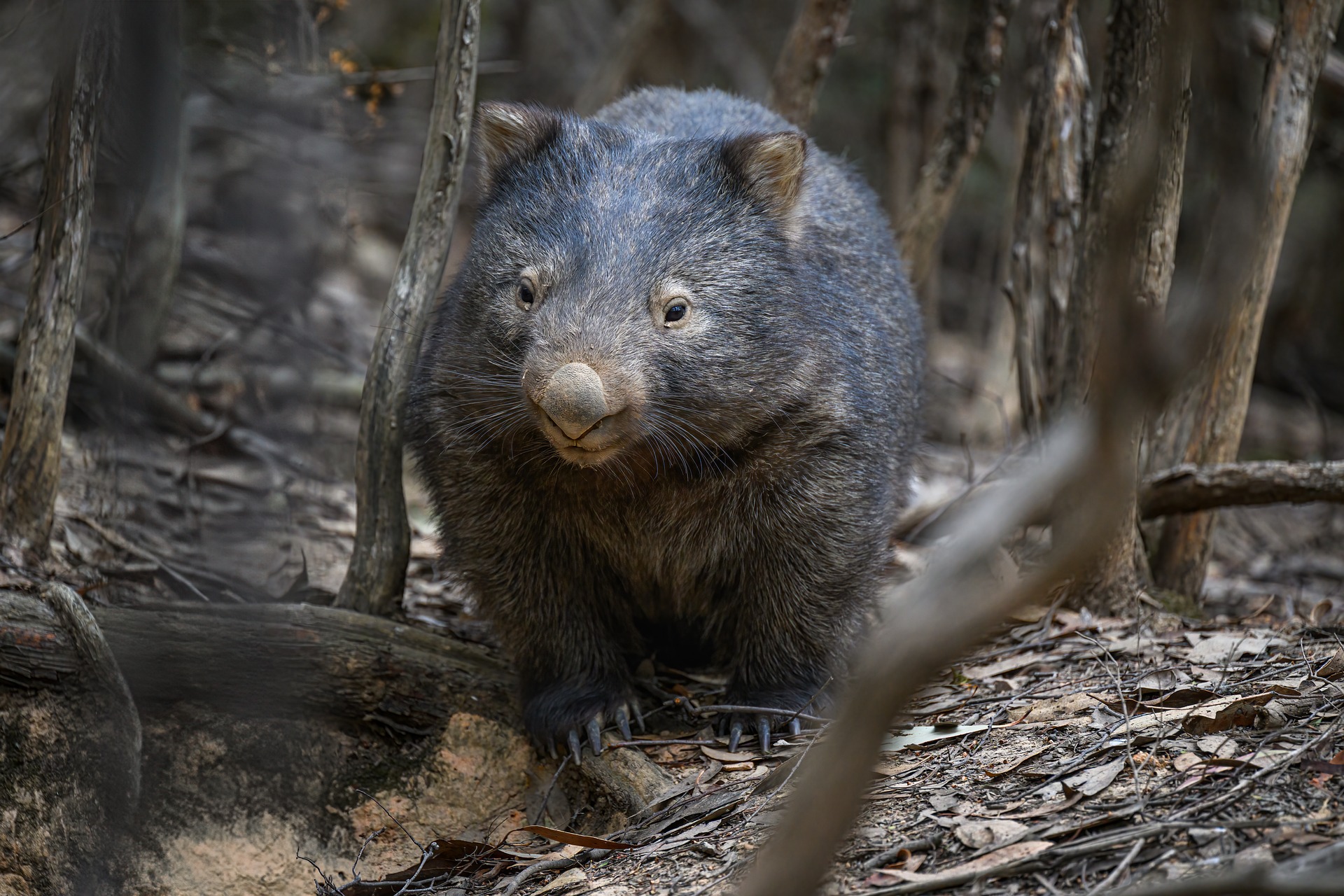
Contrary to their laid-back appearance, wombats produce surprisingly deep and powerful vocalizations.
- Low growls and grunts (e.g., “boo-boo” or “grrr”)
This is their most common vocalization, typically used when:
Intimidating others
Asserting territory
Warning other wombats
The sound resembles the grunting or snorting of a large rodent.
- High-pitched sounds (e.g., whistling or squealing)
Surprisingly, wombats can also produce high-pitched sounds.
Situations include:
When startled
When sensing danger
When a joey (baby wombat) calls for its mother
Joey wombats, in particular, may emit high-pitched, bird-like squeals.
- Grunts and snorts
Since wombats have poor eyesight, they rely on scent and sound to assess their surroundings.
Consequently, behaviors such as:
Snorting
Sniffing
Soft grunting
…are also part of their communication.
Characteristics of Wombat Vocalizations
Wombats are generally quiet animals that do not vocalize often.
This is because:
They lead primarily solitary lives
They live in underground burrows
They exchange information through scent (scent marking)
Seasonal Activity
Wombat activity patterns shift according to the seasons in Australia (which are the reverse of those in Japan). Key factors influencing this include temperature, rainfall, and grass growth.
☀️ Summer (Dec–Feb): More time spent underground
Australian summers are dry, and daytime temperatures can be extremely high.
Wombats:
Rest in their burrows during the day
Emerge in the evening or at night
Graze during cooler hours
Conserve moisture
…adopting a lifestyle suited to the heat.
Burrows experience less temperature fluctuation than the outside air, serving as a refuge to escape the heat.
🍂 Autumn (Mar–May): A peak time for activity
As temperatures drop and vegetation becomes more abundant, wombats:
Spend more time foraging
Roam around the area surrounding their burrows
Check their territory
Mark their territory with droppings
…making this a prime season for activity.
It is considered a relatively good season for spotting wombats.
❄️ Winter (Jun–Aug): Emerging during the day
Wombats are relatively cold-tolerant animals.
In winter, they may:
Bask in the sun
Graze during the day
Remain active for longer periods
You may catch sight of them during the day in winter, especially in colder regions like Tasmania.
🌱 Spring (Sep–Nov): Breeding and raising young
Spring is the season when plants begin to grow.
During this time:
Breeding activity increases
Mothers care for their young
Joeys (babies) may be seen peeking out of the pouch
…such scenes can be observed.
Wombat babies (joeys) are tiny at birth and spend several months developing inside their mother’s pouch.
🕒 Daily Activity Rhythm
Regardless of the season, their basic routine is:
Daytime
↓
Resting in the burrow
↓
Evening to Night
↓
Grazing, moving about, checking territory
↓
Dawn
↓
Returning to the burrow
However, they may also emerge during the day in winter or on cool, rainy days.
Walking Speed
Wombats move slowly in their day-to-day lives, just as their appearance suggests, but they can run surprisingly fast when necessary.
🐾 Normal Walking Speed
Approximately 2–4 km/h
They walk slowly while exploring the ground.
They often move while grazing on grass.
Due to their short legs and stocky build, they are not animals designed for rapid, long-distance travel.
🏃 Top Speed (When Running)
Reportedly around 20–40 km/h.
It is hard to imagine given their appearance, but when they sense danger, they can run quite fast over short distances.
Why can they run fast?
Wombats possess bodies adapted for a life of burrowing rather than running.
Characteristics:
Strong forelimbs → Power for digging burrows
Thick, short legs → Powerful propulsion
Sturdy body → Resilient against shoving and for defense
Low center of gravity → Skilled at making sharp turns
🦡 Surprising Ability: Strong in Reverse
When escaping from predators (such as dingoes), wombats retreat into their burrows.
In doing so, they employ the following defensive tactics:
Positioning their rear toward the entrance
Defending with their back (which has thick skin)
Pushing back with their hind legs
About Baby Wombats
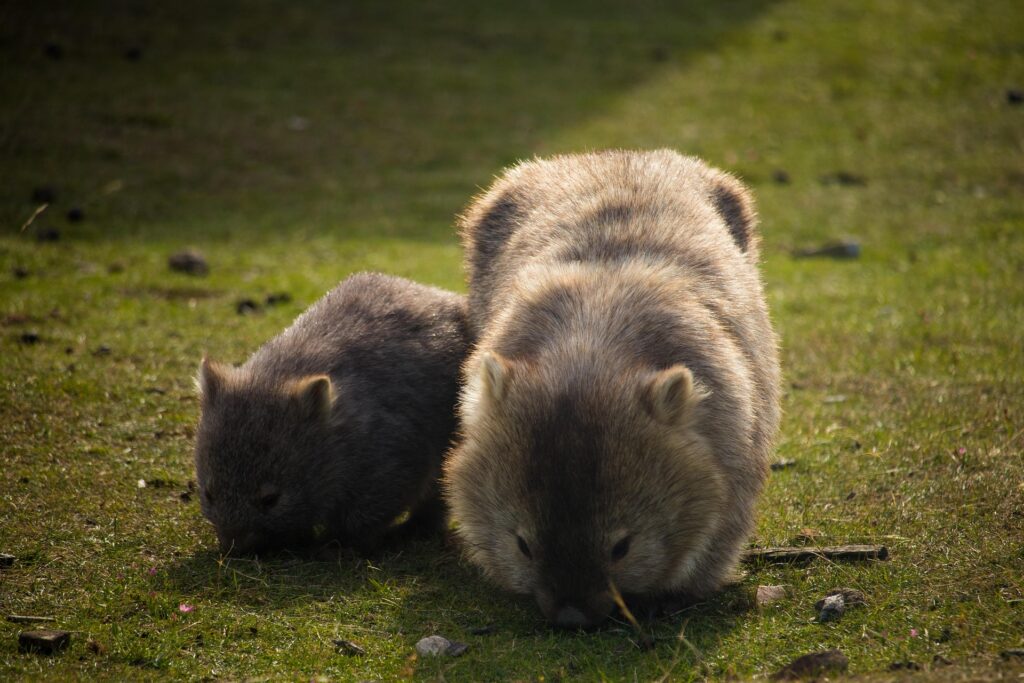
Let’s take a look at baby wombats. As marsupials, wombats have unique characteristics in their birth and rearing.
- Birth
Time: Varies by species, but most occur between spring and summer.
Method: As marsupials, mothers give birth to very immature babies.
Weight and Size: Newborns weigh approximately 0.3-0.5 kg and are sparsely furred.
- Growth
Life in the Mother’s Pouch: After birth, the baby enters its mother’s pouch and grows while nursing for approximately 5-6 months.
Hair Development: Hair gradually grows within the pouch, and its muscles and skeleton also develop.
Life in the Burrow: The baby transitions from breast milk to solid foods in the burrow dug by the mother.
- Behavior
Dependence on the Mother: The baby stays safe and protected in the mother’s pouch or burrow.
Play and Exercise: By the time they leave the pouch, they acquire motor skills with their forelimbs and hind limbs through play.
Pre-independence Learning: Practice digging holes, eating grass, and learning to avoid danger.
- Independence
Time of Independence: Approximately 12 months of age.
After independence, the baby is primarily independent, digging its own burrows and securing food.
- Characteristics/Personality
Quiet and highly dependent on their mother
Curious and playful, but wary of the outside world
Are wombats an endangered species?
Wombats have a stable population and are not endangered. However, there has been an increase in wombat deaths in road accidents in recent years, which is of concern to the government. Wombats also dig holes to live in human habitats, especially in grasslands above ground, and are sometimes considered pests. Due to widespread extermination, the natural population is declining.
- Common Wombat (Vombatus ursinus)
IUCN Red List: Least Concern (LC)
Relatively stable population and wide range
Widely adapted to forests, farmlands, parks, and other habitats
- Southern Hairy Wombat (Lasiorhinus latifrons)
IUCN Red List: Near Threatened (NT)
Habitat restricted to arid regions, population size is low
Habitat fragmentation due to human activity and aridity
- Northern Hairy Wombat (Lasiorhinus krefftii)
IUCN Red List: Endangered (EN)
Highly restricted habitat, extremely low population size
Strict conservation measures required
- Threats
Habitat destruction (farm development, road construction, etc.)
Predators (introduced dogs and foxes, etc.)
Food shortages due to drought and climate change
Can you keep wombats?
You cannot keep wombats as pets. Wombats are currently protected animals in Australia, and the government prohibits their sale, breeding, and importation for commercial purposes. Therefore, it is strictly prohibited. You can see cute babies at the zoo.
- Legal Status
Native to Australia and protected by law.
Northern and southern hairy wombats are endangered (EN or NT), and capturing or keeping them without a license is illegal.
Capturing or keeping common wombats in the wild is also prohibited in principle.
They can only be kept in zoos, conservation facilities, or for research purposes.
- Difficulties in Keeping
Strong burrowing habits: They require ample space and a subterranean environment.
They are nocturnal and rest in burrows during the day, making them difficult to observe and manage.
Diet: They are herbivorous, but require a constant supply of suitable grasses, roots, and other foods.
Wary and territorial: They can become aggressive due to stress.
- Actual Breeding Examples
They are primarily kept in zoos and conservation facilities.
For conservation, research, and educational purposes.
Professional staff manage their environment, diet, and health.
Private ownership is illegal and extremely difficult.
Zoos Housing Wombats (Japan & Worldwide)
Wombats are rare animals kept in only a limited number of zoos worldwide. They are particularly rare in Japan, with only a few facilities where they can currently be seen.
🇯🇵 Zoos in Japan Where You Can See Wombats
🥇 Satsukiyama Zoo (Osaka Prefecture)
The most famous facility for keeping wombats in Japan.
Features:
Boasts one of the longest histories of wombat husbandry in Japan
Conducts ongoing research into wombat breeding and care
Home to many friendly individuals that have become crowd favorites
Notable Wombats:
Wine
Fuku
Yuki
Riku
Sora
(Note: The specific animals housed are subject to change.)
🥈 Chausuyama Zoo (Nagano Prefecture)
A zoo located in Nagano City where you can see wombats.
Features:
Exhibits that closely resemble their natural environment
Allows visitors to observe the wombats’ leisurely movements
Popular on social media and in online videos
🇦🇺 Major Facilities in Australia
🦘 Australia Zoo
One of Australia’s premier zoos.
Species Housed:
Common Wombat
Southern Hairy-nosed Wombat
Features:
Spacious exhibit areas
Visitors can observe natural behaviors such as digging, walking, and grazing
🦔 Taronga Zoo Sydney
A famous zoo in Sydney.
Features:
Extensive exhibits of animals native to Australia
Renowned for showcasing marsupials, including wombats
🦘 Featherdale Sydney Wildlife Park
Features:
A wildlife park specializing in animals native to Australia
Popular for offering close-up views of animals like wombats
Introducing other animals
コメント