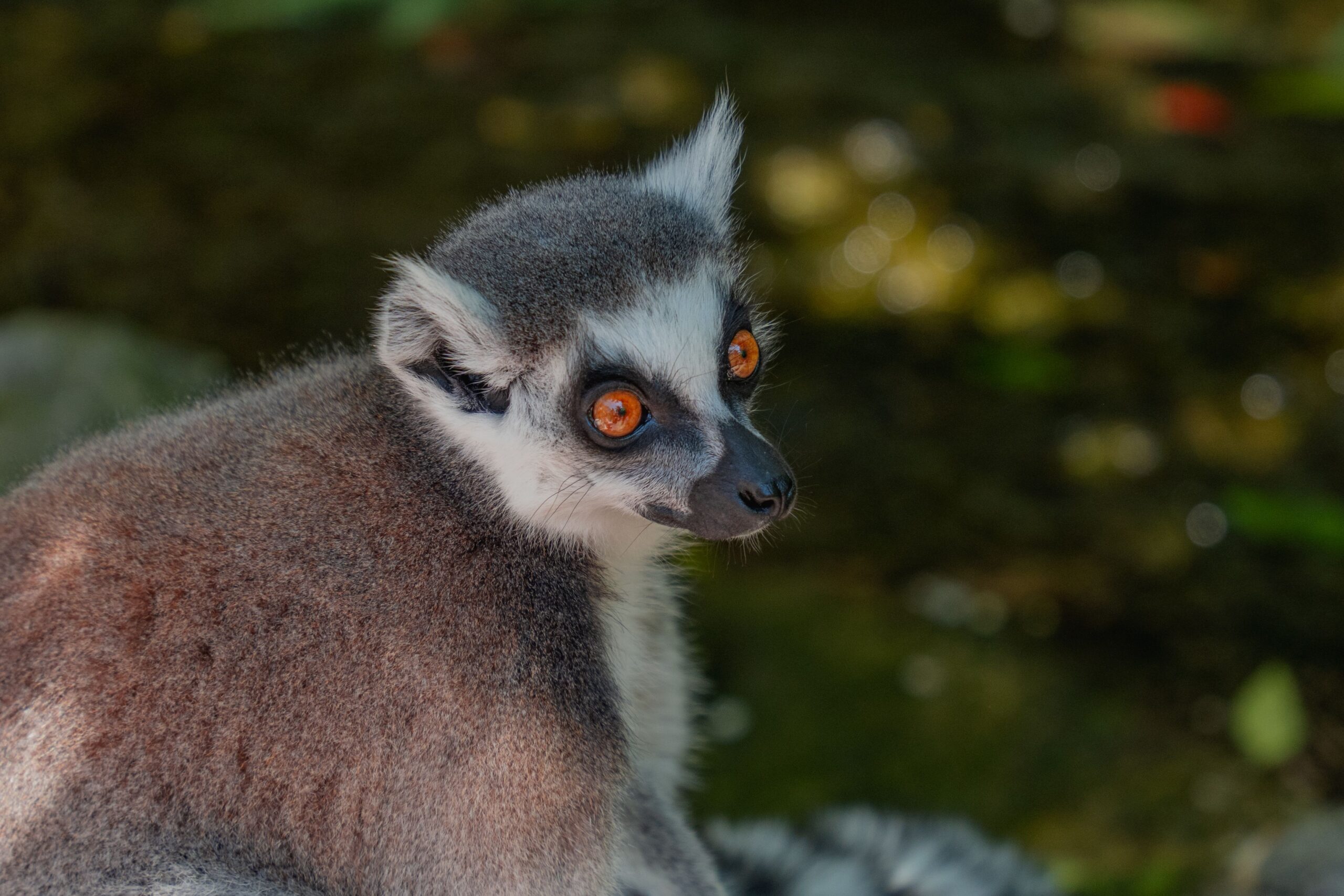
What kind of animal is a ring-tailed lemur? We will explain their characteristics, ecology in trees and on the ground, how they live, how they live in groups, and their habitat. This lemur is said to live in Madagascar, Africa, and is a very special monkey. They are primitive primates called prosimians.








- What is a ring-tailed lemur? About basic status
- The Roots and Origins of the Ring-tailed Lemur
- About habitat
- feature is? What kind of creature is it?
- What is your personality like?
- What is the ecology like?
- About Molting
- Vocalizations
- Seasonal Activities
- Walking Speed
- About baby ring-tailed lemurs
- Is the ring-tailed lemur an endangered species?
- Can ring-tailed lemurs be kept as pets?
- Zoos Housing Ring-tailed Lemurs (Japan & Worldwide)
- Introducing other animals
What is a ring-tailed lemur? About basic status
Ring-tailed lemurs are primates classified in the order Primates and family Lemuridae. The scientific name is Lemur catta, which is written and written in kanji as ring-tailed fox monkey. The body length is 38.5 – 45.5cm and the weight is 2.3 – 3.5kg. The list of information is as follows. This monkey is also known as a monkey that spreads its arms and legs and basks in the sun. Ring-tailed lemurs do not have a well-developed thermoregulatory system, so they warm themselves up by basking in the sun when it’s cold.
| Japanese(和名) | ワオキツネザル |
| English(英名) | Ring Tailed Lemur |
| scientific name(学名) | Lemur catta |
| classification(分類) | Mammalia、Primate、 Lemuridae、Lemur 哺乳綱、霊長目、キツネザル科、ワオキツネザル属 |
| IUCN Status(保全状況) | ENDANGERED |
| Length(体長) | 38.5 – 45.5cm |
| Weight(体重) | 2.3 – 3.5kg |
The Roots and Origins of the Ring-tailed Lemur
The ring-tailed lemur (scientific name: Lemur catta) is a primate that evolved independently on Madagascar, an island nation off the east coast of Africa. Today, in the wild, they inhabit almost exclusively the southern and southwestern regions of Madagascar.
Ancestors: Primitive Lemurs from Africa
The ancestors of lemurs—including the ring-tailed lemur—are believed to have been primitive primates that originally lived on the African continent.
Between approximately 50 and 80 million years ago (spanning the early Eocene to late Paleocene epochs), a small ancestral group crossed over to Madagascar. The leading theory suggests they arrived via “rafting,” crossing the ocean on floating vegetation or debris.
At that time, Madagascar was an isolated island separated from Africa; with few natural predators or competitors, lemurs underwent rapid diversification.
The Emergence of the Ring-tailed Lemur
The evolutionary timeline is as follows:
Primitive primates (Africa)
↓
Approx. 60 million years ago
Arrival in Madagascar
↓
Independent evolution on the island (adaptive radiation)
↓
Approx. 20–30 million years ago
Divergence of the family Lemuridae
↓
Subsequently
Emergence of the genus Lemur
The ring-tailed lemur belongs to a relatively ancient lineage within the family Lemuridae. Genetic studies support the theory that all extant lemurs in Madagascar evolved from a single common ancestor.
Why Are They Found Only in Madagascar?
The reason is “island isolation.”
Madagascar has been isolated from surrounding continents for over 90 million years, allowing the small number of ancestral lemurs that arrived there to evolve independently. As a result,
Ring-tailed lemurs
Indris
Sifakas
Mouse lemurs
…and other unique primate groups found nowhere else in the world but Madagascar emerged.
Unique evolutionary traits of the ring-tailed lemur
Black-and-white striped tail
Their most distinctive feature—a long, striped tail—is used for:
Signaling to troop members
Serving as a visual guide while moving
Intimidating rivals during territorial disputes
Adaptation to life on the ground
While many lemurs are arboreal (tree-dwelling), ring-tailed lemurs spend a relatively large amount of time on the ground.
Consequently, they have developed:
Strong hind legs
A body structure suited for walking on the ground
A habit of sunbathing
Unique social behavior
In a rarity among primates, ring-tailed lemurs exhibit:
A female-dominant social structure
Troops of approximately 10 to 30 individuals
A habit of moving with their tails held high
About classification
This species alone constitutes the ring-tailed lemur genus. The genus name Lemur is derived from the Latin word lemures, meaning “ghost”.
Taxonomy of Ring-Tailed Lemurs
| 分類階級 | 名称 | 補足 |
|---|---|---|
| 界(Kingdom) | 動物界(Animalia) | 多細胞生物、真核生物 |
| 門(Phylum) | 脊索動物門(Chordata) | 背骨を持つ |
| 綱(Class) | 哺乳綱(Mammalia) | 恒温・乳腺で授乳する |
| 目(Order) | サル目(Primates) | 指先が器用、社会性の高い哺乳類 |
| 亜目(Suborder) | キツネザル亜目(Strepsirrhini) | 鼻が湿っていて嗅覚が発達、原始的なサル |
| 科(Family) | キツネザル科(Lemuridae) | マダガスカル固有種の原始的サル |
| 属(Genus) | ワオキツネザル属(Lemur) | 尾が環状模様のキツネザル |
| 種(Species) | ワオキツネザル(Lemur catta) | 代表的な尾が輪模様の種 |
About habitat
Ring-tailed lemurs are endemic to Madagascar. It is distributed in the south from Moundava to Fort Dauphin.
- Geographic Distribution
Native to southern and southwestern Madagascar
In the wild, they are limited to Madagascar’s dry forests, shrubs, and rocky areas.
Notable habitats:
Antsirabe Mountains (Andringitra)
Isalo National Park
Dry forests around Antananarivo
- Habitat Characteristics
Forest Type: Dry Deciduous Forest, Spiny Forest, Mixed Rocky Forest
Climate:
Dry with low annual precipitation
Large temperature difference between day and night
Altitude:
Live between 0 and 1,600 meters above sea level
Food Resources:
They feed on fruits, leaves, flowers, bark, and insects, so forests and shrubs with food sources are important to them.
- Social and Spatial Habitat
Public Group Living: Groups of 10-30 individuals are common.
Territoriality: Each group has its own area of activity, using trees and rocks for mobility.
Diurnal: Forage and move during the day, resting in the shade or on rocky areas at night.
- Relationship with Conservation Status
Habitat is shrinking due to deforestation, pasture conversion, and development.
Ring-tailed lemurs are endangered in the wild (IUCN: EN, Endangered).
Protection in national parks and protected areas is important.
feature is? What kind of creature is it?
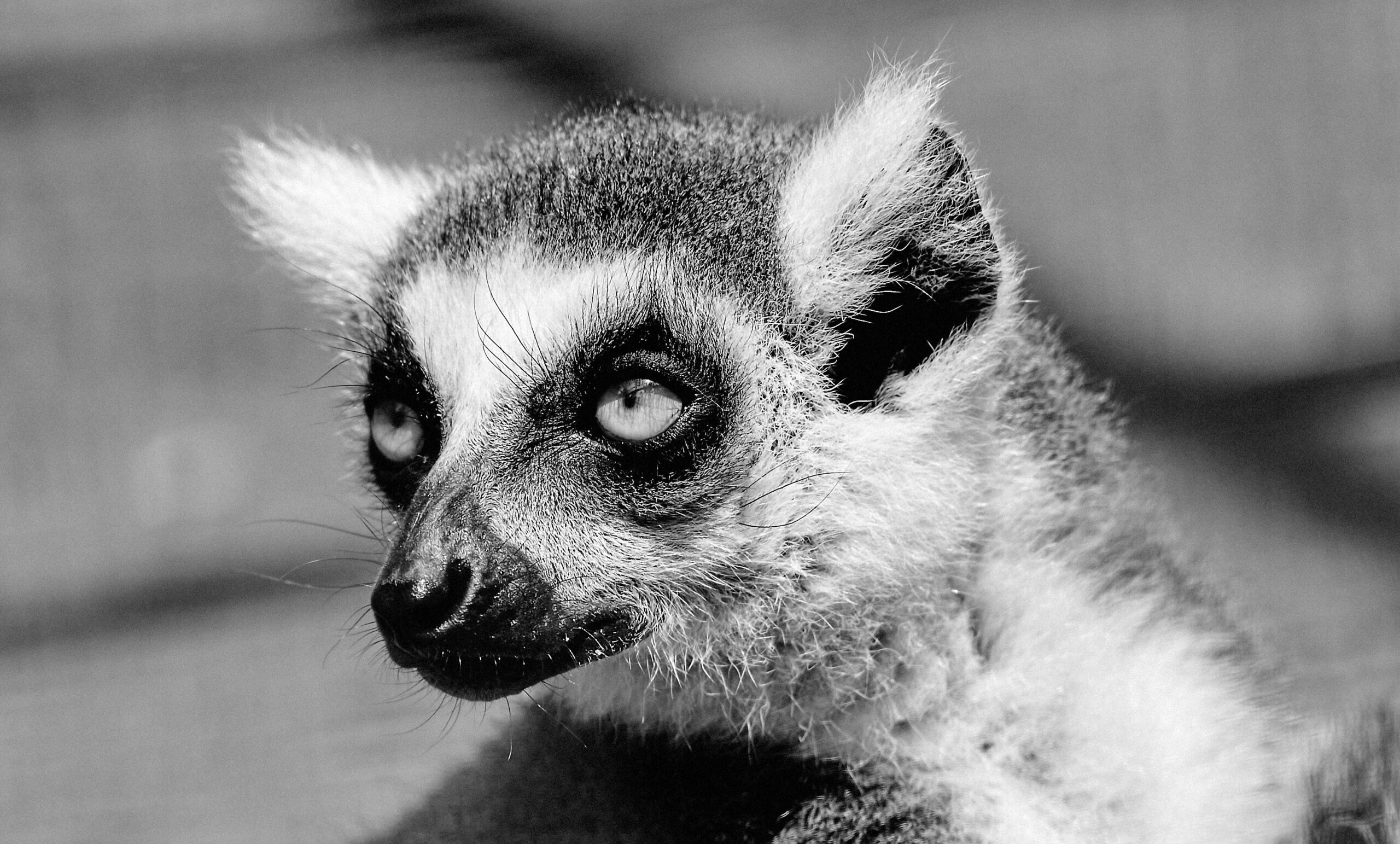
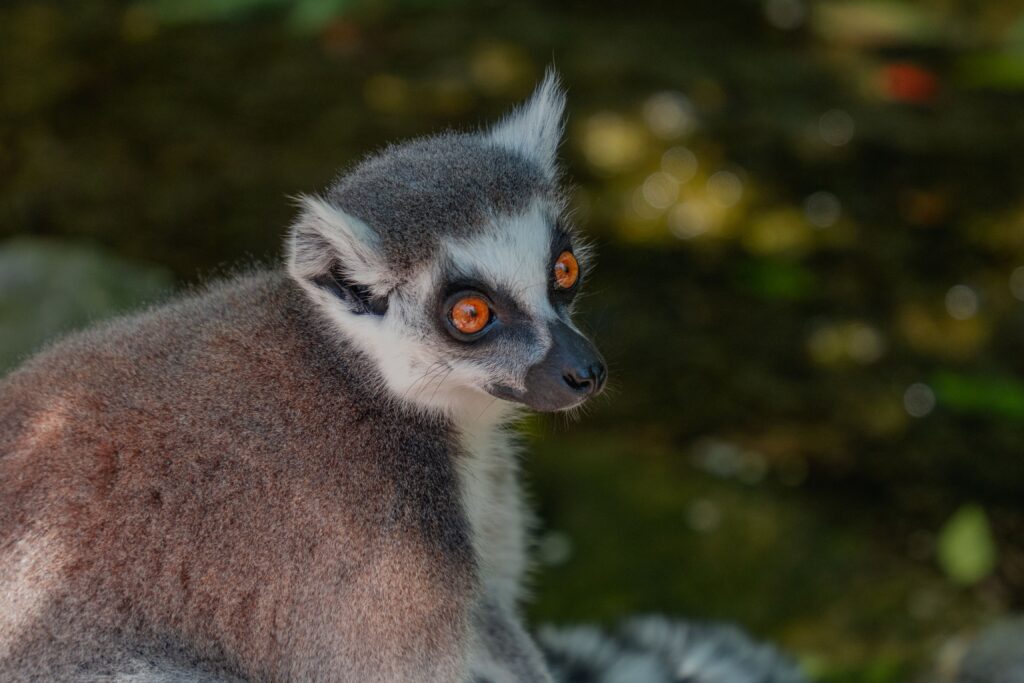
Ring-tailed lemurs have gray backs, light colored bellies and limbs (front and hind limbs) with white tips, black on the top of the head, around the eyes, and on the snout, and white and black ring-shaped markings on the tail. They have sharp claws and use them skillfully. There is a claw on the second toe of the hind leg, which is used for grooming. Ring-tailed lemurs live in trees, such as deciduous forests. Males mark by rubbing their wrists directly against tree branches, or by rubbing their tails and then waving them around.
- Appearance and Physique
Body Length: Approximately 40-45cm (head and body length)
Tail Length: Approximately 50-60cm
Weight: Approximately 2.2-3.5kg
Coat Color:
Body is gray to brown
Face has a distinctive black and white pattern
Tail has a striking black and white striped pattern (ring pattern)
Limbs:
Long, slender fingers are dexterous, making them adept at climbing trees and manipulating branches
Tails are used for balance, but not for grasping
- Personality and Behavior
Highly Social:
Live in groups (approximately 10-30 individuals)
Hierarchical relationships within the group are female-dominant (female-dominant)
Curious and Active:
Diurnal, active during the day
Often engages in play and chasing
Communication:
Signals by raising and wagging the tail
Warning and communication sounds (humming, shouting, etc.)
- Ecological Characteristics
Diurnal: Forages in the morning and afternoon, rests at night
Diet: Omnivorous (fruit, leaves, flowers, bark, insects, etc.)
Social Structure:
Matrilineally dominant (females are leaders)
Her territories are maintained within the group
Athletic Ability:
Excellent at climbing trees and walking on rocky terrain
Often moves on the ground, balancing with its tail held high
- Vision, Hearing, and Smell
Vision: Developed color vision due to diurnal activity
Hearing: Important for communication within the group
Smell: Used for territorial marking and social communication
What is your personality like?
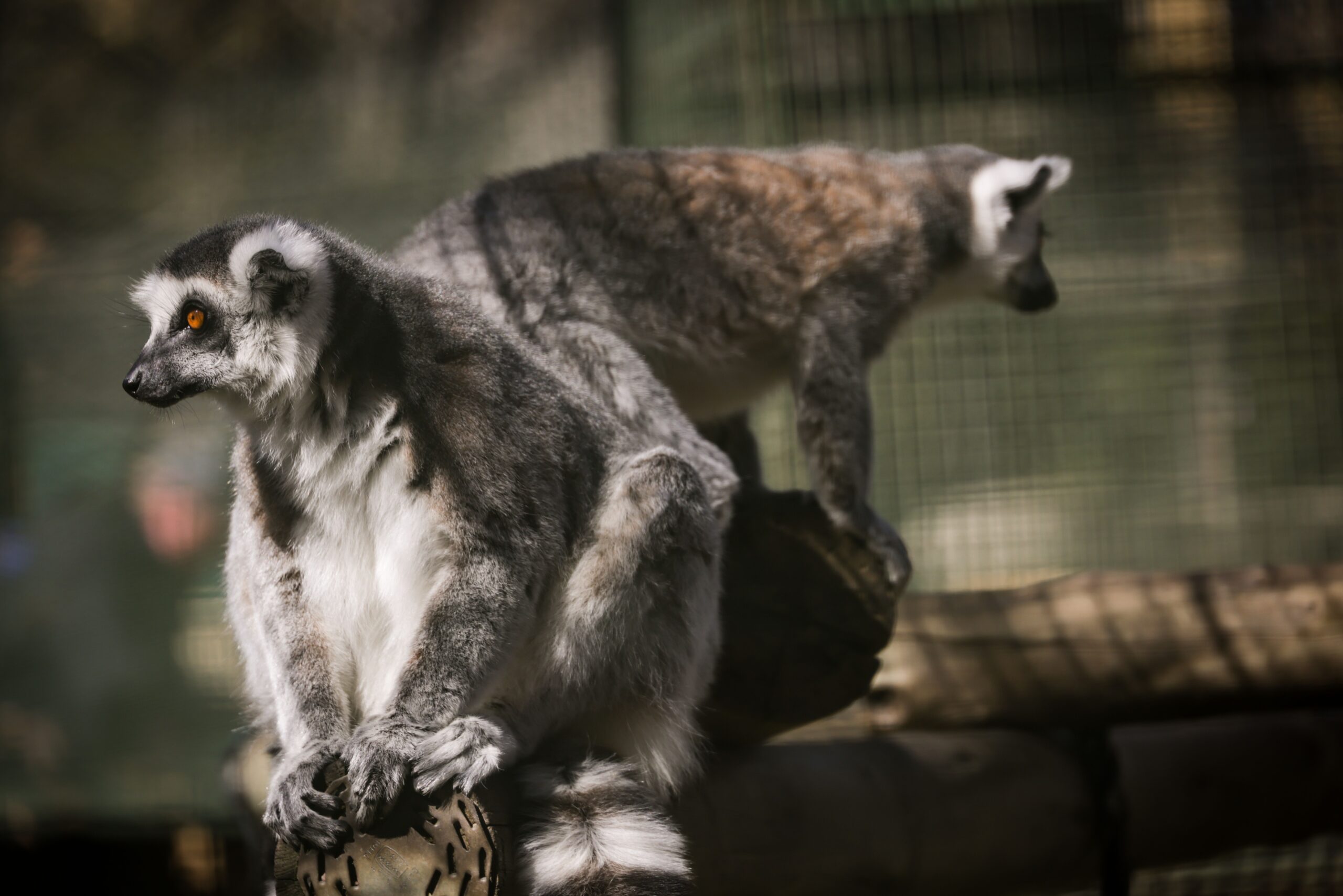
Ring-tailed lemurs are very friendly and easy-to-tame monkeys. They are also highly social animals and tend to live in groups. They travel in herds and are very disciplined.
- Highly Social
They live in groups, with each group consisting of 10-30 individuals.
There is a clear hierarchy within the group.
Female dominance is particularly prevalent (females are the leaders).
They huddle together and signal by raising their tails.
- Curious and Active
They are diurnal and active during the day.
They have high athletic ability, climbing trees and jumping across rocky areas.
Young individuals are particularly playful and enjoy chasing each other.
- Vigilance and Defense Instinct
They are sensitive to predators and danger, and will warn with calls and tail movements.
When they sense danger:
They raise their tails high to alert others.
They may also spit (primarily as a threat).
They will quickly flee.
- Intelligence and Learning Ability
They are highly intelligent and learn the social rules of their group.
They easily get used to people and their environment in captivity.
They do not use tools, but cooperate with the group to manage food and territory.
What is the ecology like?
Ring-tailed lemurs feed on leaves, fruits, flowers, leaves, herbs, insects, chameleons, etc. The form of coexistence is viviparous. They breed from April to May every year. The gestation period is about 4 months, and 1-3 young are born at a time in August-September. The lifespan is about 16 to 19 years.
- Habitat
Region: Southern to Southwestern Madagascar
Environment:
Dry Deciduous Forest
Spiny Forest
Mixed areas with rocky terrain and open grasslands
Altitude: 0-1,600m
Climate: Dry, with large temperature differences between day and night
- Diet
Omnivorous
Main Food:
Fruits, leaves, flowers, and bark
Occasionally eats insects and small animals
Foraging Behavior:
Feeds during the day while moving in groups
Uses tail and paws to manipulate food
- Social Structure
Live in groups (approximately 10-30 individuals)
Matrilineal dominance (female leader)
Hierarchy within the group is clear, and fighting is rare
Communicates through tail movements, vocalizations, and physical contact
- Behavior Patterns
Diurnal: Active during the day, resting at night
Athletic Ability:
Excellent at climbing trees, jumping, and moving around rocky areas
Active on the ground
Defensive Behaviors:
Warn predators with vocalizations
Threaten by holding their tail high
Escape if necessary
- Reproduction
Sexual Maturity:
Females: Approximately 3 years old
Males: Approximately 4 years old
Breeding Season: Mainly the dry season (April-June)
Gestation Period: Approximately 4-5 months
Birth:
Usually one cub (twins are rare)
Breastfed, and begin to eat solid food around 2 months of age
Rearing:
Keeps watch over cubs in a group
Social learning involves learning hierarchical relationships within the group and avoiding danger
- Lifespan
Wild: Approximately 16-19 years
Captive: Can live for more than 20 years
Are there any natural enemies?
There are no large carnivores living nearby, so there are no natural enemies.
About Molting
Ring-tailed lemurs are animals that undergo “molting,” a process where their fur changes according to the season. Adapted to the arid environment of southern Madagascar, they adjust the condition of their fur in response to changes in temperature and the alternation between the rainy and dry seasons.
When Molting Occurs
Molting in ring-tailed lemurs is primarily observed:
From the end of the dry season to the beginning of the rainy season (around August to November)
During the transition from the rainy season to the dry season
However, for individuals kept in Japanese zoos, the timing may vary slightly depending on:
Temperature
Daylight hours
Diet
Indoor and outdoor environments
How Does the Fur Change?
Ring-tailed lemurs do not shed their entire coat all at once; instead, old fur falls out gradually and is replaced by new fur.
During the molting period, you may observe:
Fur on the back and flanks appearing loose or raised
Tail fur shedding
Temporary changes in the sheen of the fur
Increased mutual grooming among group members
The Role of Fur
A ring-tailed lemur’s fur serves purposes beyond simply keeping the animal warm.
① Body Temperature Regulation
Southern Madagascar is an environment with significant temperature fluctuations:
Daytime: Can exceed 30°C
Nighttime: Can drop below 10°C
Their dense fur plays a role in:
Protecting the body from the cold at night
Buffering against rapid temperature changes during the day
② Protection Against UV Rays
In dry forests and rocky areas where sunlight is intense, their fur protects their skin from ultraviolet (UV) rays.
The behavior often seen in ring-tailed lemurs—
“Sunning” (sitting facing the sun)—
is also linked to body temperature regulation.
③ Communication
The condition of their fur is also related to their relationships with other group members.
In particular, actions such as:
Raising the tail
Bristling the fur
Scent marking
are used to convey intentions and signals within the troop.
Vocalizations
The ring-tailed lemur (Lemur catta) is a primate that uses a wide variety of vocalizations to communicate with its group members.
① Low-pitched “coo” or “kururu” sounds (contact calls)
Purpose: Checking in with group members
Used when the troop is moving to convey messages such as:
“I’m right here.”
“Follow me.”
Since visibility is often limited in the forest, they use these sounds to keep track of each other’s locations.
② “Ho-ho-ho” sounds (alarm calls)
Purpose: Detecting danger
When they spot a predator or something unfamiliar, they emit:
Short, repetitive sounds
Higher-pitched sounds
This puts the entire troop on alert, leading to behaviors such as:
Freezing in place
Scanning the surroundings
Climbing trees
③ “Oo” or “grrr” sounds (threat calls)
Purpose: Conflict and defense
These are emitted in situations such as:
When another individual is too close
Defending food
Territorial disputes
Males, in particular, use these threats in conjunction with “stink fights” (using scent glands).
④ Infant vocalizations
Infants call out to their mothers using:
High-pitched “peep-peep” sounds
Soft cries
The mother recognizes these specific sounds and responds by:
Nursing
Moving
Protecting the infant
Seasonal Activities
Ring-tailed lemurs are adapted to the dry forests and scrublands of southern Madagascar. Rather than the four distinct seasons found in Japan, their behavior shifts primarily between the rainy season (a time of food abundance) and the dry season (a time of aridity).
🌧 Rainy Season (Approx. November–April)
A period of peak activity
During the rainy season, vegetation flourishes, providing an abundance of food.
Key Activities
① Increased foraging time
With food plentiful, they consume a wide variety of items, including:
Fruits
Young leaves
Flowers
Grasses
Insects
The early rainy season, in particular, sees a surge in new shoots, allowing them to access highly nutritious plant matter.
② Rearing offspring
Ring-tailed lemurs generally breed around the rainy season.
Mating: Around April
Birth: Around August–September (late dry season)
This is the typical cycle.
Mothers carry their infants on their bellies initially, then move them to their backs as they grow.
③ Increased troop movement
In search of food-rich areas, they engage in behaviors such as:
Moving through the forest
Expanding their daytime foraging range
Exploring as a troop
☀️ Dry Season (Approx. May–October)
A time to endure harsh conditions
Rainfall is scarce during the dry season, and plant growth halts.
Southern Madagascar, in particular, experiences:
High temperatures
Water scarcity
Food shortages
① Increased morning sunbathing
This is a well-known behavior of ring-tailed lemurs.
In the morning, they sit facing the sun and adopt a posture where they:
Spread their arms wide
Expose their bellies to the sun
The purpose is to:
Raise body temperature
Warm up a body chilled by the cool air
Conserve energy
② Adjusting activity times
They avoid expending unnecessary energy during the heat of the day.
Activity pattern:
Early morning
↓
Foraging and moving
Midday
↓
Resting and staying in the shade
Evening
↓
Foraging again
③ Changes in Diet
During the dry season,
fruit becomes scarce,
leaves harden, and
water becomes scarce;
consequently, they also feed on
tree leaves,
tree bark,
succulents, and
ground-level vegetation.
🌱 Molting Season (Around August–November)
Molting occurs as the dry season ends and the rainy season begins.
During this period, one can observe:
shedding of old fur,
increased grooming, and
changes in the texture and appearance of their coat.
🐒 Breeding Season (Around Spring; varies by region)
Male activity, in particular, intensifies.
Characteristics:
Increased vocalization
Marking territory with scent glands
Competition among males
Ring-tailed lemurs concentrate their mating activity within a short breeding period.
Walking Speed
The ring-tailed lemur (Lemur catta) is a species that spends a significant amount of time walking on the ground compared to other lemurs, primarily moving on all fours. Rather than being built for high-speed movement like cheetahs or large monkeys, they are adapted for endurance-based locomotion that allows them to travel over long periods.
Normal Walking Speed
The typical movement speed of a ring-tailed lemur is estimated to be:
Approximately 2–4 km/h
This is comparable to a slow human walking pace (about 3–4 km/h).
When moving as a troop, they walk at a steady, unhurried pace while:
Holding their tails high
Checking their surroundings
Maintaining distance from other troop members
Speed When Hurrying or Fleeing
Their speed increases when they sense danger or become excited.
Estimate:
They can run at speeds of up to approximately 15–20 km/h
…for short bursts.
However, rather than relying on high-speed running, ring-tailed lemurs often choose defensive behaviors such as:
Fleeing into trees
Staying alert as a group
Hiding
Characteristics of Their Gait
Quadrupedal Locomotion (Plantigrade)
Ring-tailed lemurs walk on the ground using:
Their forelimbs (hands)
Their hind limbs (feet)
Characteristics:
Placing their palms and soles flat on the ground
Keeping their backs horizontal
Using their tails for balance
The Tail as a “Balancer”
The long, striped tail—the ring-tailed lemur’s most distinctive feature—plays a crucial role during movement.
Functions:
Adjusting balance when changing direction
Locating other troop members
Signaling during movement
This long tail is particularly useful for a lifestyle that involves traveling extensively across the ground.
About baby ring-tailed lemurs
This article provides detailed information about baby ring-tailed lemurs (Lemur catta).
- Name
They do not have a specific name, and are called “infant lemurs” or “young lemurs.”
The juvenile stage is from birth to about one year of age.
- Birth
Gestation Period: Approximately 4-5 months
Birthing Period: Mainly during the dry season (April-June)
Litter Size: Usually one cub (twins are rare)
Birth Weight: Approximately 60-80g
Behavior:
They are held by their mother immediately after birth and breastfeed.
They remain largely immobile and dependent on their mother for the first few weeks.
- Growth and Development
Nursing Period: Approximately 4-6 months
Weaning: From around 3-4 months of age, they begin to gradually eat solid foods (fruits, leaves, etc.).
Hair Development:
They are born with thin fur and are held by their mother to maintain body heat.
As they grow, they develop the same gray color and black and white striped tail pattern as their parents.
- Behavior/Personality
Highly dependent on their mother, they grow up under the protection of their mother and the group.
Playful and curious:
They chase and play with other baby monkeys in the group.
Learning behavior:
They learn tree climbing, food gathering, and social rules from their mother and other adults in the group.
Vigilance:
They cling to their mother when they sense danger.
They learn through observation of behaviors that ensure the safety of the group.
- Sociality
They learn hierarchical relationships and communication methods within the group from an early age.
Playing with other young monkeys and physical contact with their mothers are important for the development of social skills and cooperation.
Is the ring-tailed lemur an endangered species?
The ring-tailed lemur is designated as the national animal of Madagascar. However, it is designated as an endangered species. It is also listed in Appendix I of the Washington Convention, so international trade is severely restricted. As of 2017, it is estimated that only about 2,000 ring-tailed lemurs remain in the wild, and extinction is imminent. There is a sharp decline due to the following reasons.
habitat destruction
Habitat destruction is caused by humans. Ever since humans settled the island, forests have been cleared to create pastures and farmland. Currently, it is said that 90% of Madagascar’s original forest cover has been lost, which is a significant blow.
Overhunted for pets
They are also overhunted by humans for pets. This has disrupted their collective ecology, making it difficult for them to survive.
Can ring-tailed lemurs be kept as pets?
Ring-tailed lemurs are designated as an endangered species as mentioned above, so there are very strict restrictions and there is no chance for the general public to keep them. At the zoo, you will be guided through events and other events, so let’s take a look. Or you could go to Madagascar when you have time. Please visit the website for information on events and recruitment within the park.
- Legal Restrictions
Ring-tailed lemurs are a near-endangered wild animal native to Madagascar.
In many countries and regions, keeping them as pets is prohibited without special permission.
In Japan:
Ring-tailed lemurs may be classified as designated animals.
Breeding and import require permission from the prefectural governor.
Keeping is also restricted in the United States and the EU, making it extremely difficult for individuals to keep them.
- Difficulty of Keeping
Because they are highly social and live in groups, keeping them alone can be stressful.
Their diet is diverse, including fruits, leaves, flowers, and insects, making nutritional management complex.
They are active and require a large exercise area and climbing facilities.
Because they move around actively using their tails and limbs, keeping them in small spaces is unsuitable.
- The Reality of Keeping Pets
Compared to smaller monkeys, noise, odor, aggression, and biting habits are more difficult to manage.
Due to their long lifespan (16-19 years in the wild and over 20 years in captivity), they require long-term care.
This is virtually impossible for individuals without experience.
Zoos Housing Ring-tailed Lemurs (Japan & Worldwide)
The ring-tailed lemur (Lemur catta) is a species that has been successfully bred in captivity, and they can be seen in zoos all over the world. With numerous instances of successful breeding in captivity, they are a key focus for conservation efforts in zoos globally.
🇯🇵 Major Zoos in Japan
Sapporo City Maruyama Zoo (Hokkaido)
Sapporo City Maruyama Zoo houses and exhibits ring-tailed lemurs.
Features:
Visitors can watch them in an outdoor enclosure.
They can sometimes be seen sunbathing.
Visitors can observe their striped tails and group behaviors.
Shizuoka City Nihondaira Zoo (Shizuoka Prefecture)
Houses and exhibits ring-tailed lemurs.
Features:
Visitors can observe the group behavior of multiple individuals.
They can sometimes be seen calling to one another.
Natural behaviors such as grooming and sunbathing can be observed.
Ichikawa City Zoo and Botanical Garden (Chiba Prefecture)
Known for its ring-tailed lemur exhibit.
Features:
They are famous for a behavior called “Ring-tail Dango” (Ring-tail Dumpling), where they huddle together for warmth during cold weather.
It is easy to observe the social dynamics of the troop.
🌎 Notable Facilities Worldwide
Duke Lemur Center (USA)
A world-renowned research facility dedicated to lemurs.
Features:
Conducts research on ring-tailed lemurs.
Runs breeding programs.
Conducts conservation research.
It is also a key facility for behavioral research in captivity.
Saint Louis Zoo (USA)
A facility involved in wildlife conservation efforts in Madagascar.
Features:
Engages in lemur conservation activities.
Hosts educational exhibits.
Collaborates on breeding programs.
Lemur Conservation Foundation (USA)
A facility specializing in lemur conservation.
Features:
Conducts conservation breeding of ring-tailed lemurs.
Conducts behavioral research.
Supports conservation efforts in Madagascar.
Notable Zoos in Europe
Ring-tailed lemurs are extremely popular in Europe and are kept in many zoos across the region. Representative examples:
Tierpark Berlin (Germany)
Zoo Frankfurt (Germany)
Zoo Antwerpen (Belgium)
Zoo Barcelona (Spain)
Introducing other animals


コメント