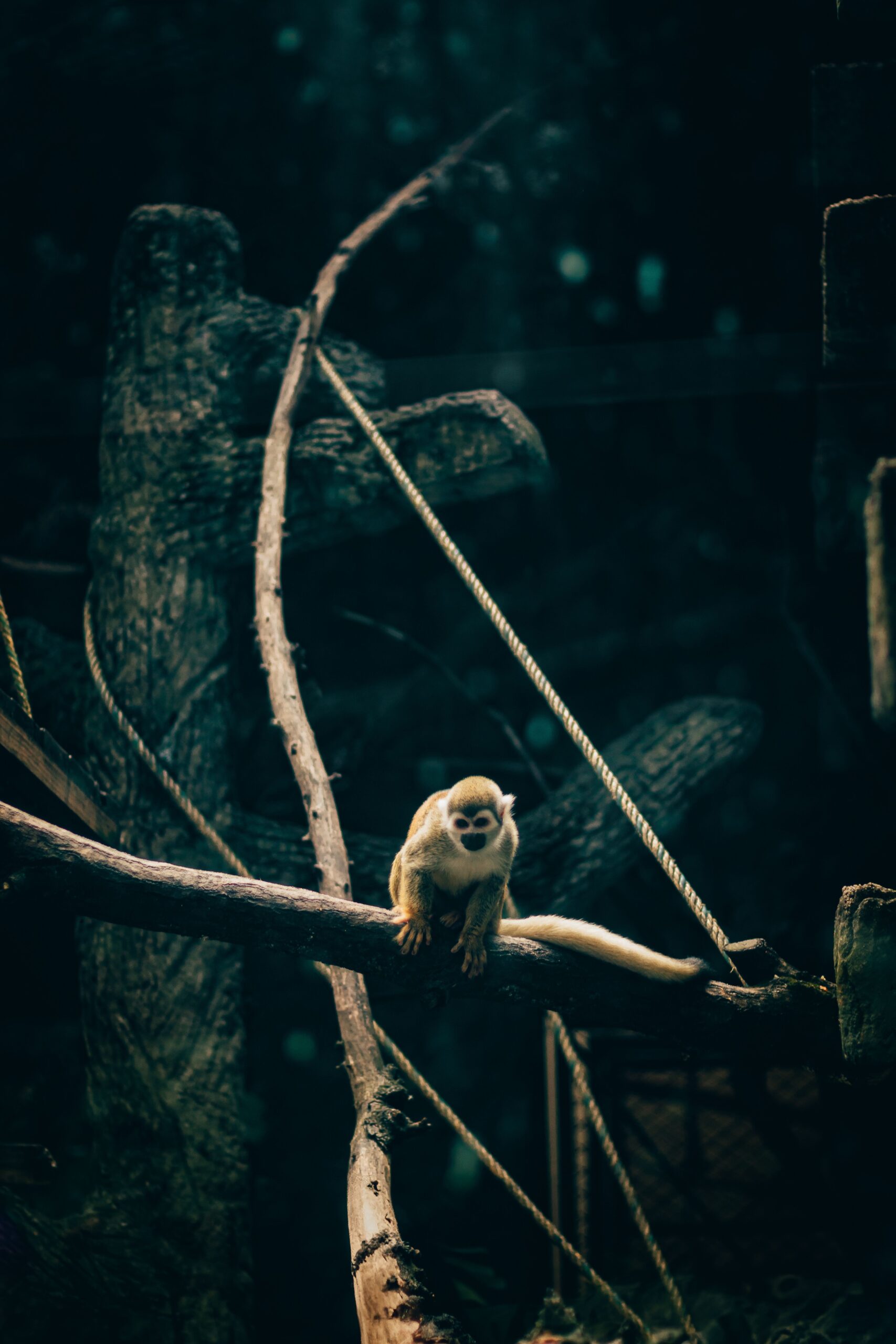
What kind of animal is a capuchin monkey? We will explain its characteristics, ecology, and habitat. It is an animal that can be seen in Colombia, Venezuela, Guyana, and Suriname in South America, and although it is not very famous, it is an endangered species and is in a very critical situation.








- What is a capuchin monkey? About basic status
- What are the roots and origins of the tufted capuchin?
- About habitat
- feature is? What kind of creature is it?
- What is your personality like?
- What does the ecology look like?
- About Molting
- Vocalizations
- Seasonal Activities
- Regarding Locomotion Speed
- About Baby Tufted Capuchin Monkeys
- Is the capuchin monkey an endangered species?
- Can capuchin monkeys be kept as pets?
- Zoos Housing the Species (Japan & Worldwide)
- Introducing other animals
What is a capuchin monkey? About basic status
The capuchin monkey is a monkey that belongs to the genus Capuchin in the order Primates, family Capuchinidae. The body length is 30-56cm and the weight is 2-4kg. The scientific name is Cebus apella. The kanji is Fusaomakizaru. The list of information is as follows.
| Japanese(和名) | フサオマキザル |
| English(英名) | tufted capuchin brown capuchin |
| scientific name(学名) | Cebus apella |
| classification(分類) | Mammalia、Primates、 Cebidae、Cebus 哺乳綱、サル目、オマキザル科、オマキザル属 |
| IUCN Status(保全状況) | CRITICALLY ENDANGERED |
| Length(体長) | 30-56cm |
| Weight(体重) | 2-4kg |
What are the roots and origins of the tufted capuchin?
The tufted capuchin (also known as the robust capuchin) belongs to the group of “New World monkeys” that evolved in South America.
Origins: Divergence from an ancestor about 7 million years ago
Capuchin monkeys (comprising the Cebus and Sapajus lineages), including the tufted capuchin, are believed to have emerged as a distinct lineage approximately 6.8 to 7 million years ago.
Their ancestors were small primates that evolved on the South American continent.
The general evolutionary progression is as follows:
Early primates
↓
New World monkeys (diversified in South America from approx. 30 million years ago onwards)
↓
Cebidae family
↓
Capuchin monkeys (Cebus lineage)
↓
Tufted capuchin genus (Sapajus)
Where did the ancestors come from?
The ancestors of New World monkeys as a whole are believed to have been primates of African origin that crossed the Atlantic Ocean to reach South America.
Around 40 million years ago, the body of water separating Africa and South America was narrower than it is today,
and it is highly probable that they drifted across on floating logs or mats of vegetation.
Once in South America, these primates evolved independently in an environment with few natural predators,
diverging into diverse groups such as:
Capuchins
Howler monkeys
Spider monkeys
Squirrel monkeys
Differences between tufted capuchins and “ordinary” capuchins
In the past, both tufted capuchins and “ordinary” capuchins were classified together under the genus Cebus.
However, based on genetic analysis and skeletal research,
they have come to be divided into two lineages:
Cebus (gracile/slender-bodied capuchins)
Sapajus (robust/sturdy-bodied capuchins = tufted capuchins) The tufted capuchin (Sapajus) is adapted for a more “powerful lifestyle,” characterized by:
A thick skull
Strong jaws
A muscular body
A thick tail
The ability to use tools
Why do they have “tufts”?
The tufts of hair (crest) on the sides of the head are an evolved trait.
Possible functions include:
Visual signals to other members of the group
Making the animal appear larger during displays of intimidation
Species recognition
In many species, these hair tufts are particularly prominent in males, suggesting they may play a role in social communication.
About classification
There are many subspecies of capuchin monkeys.
- C. a. apella
- C. a. macrocephalus
- C. a. fatuellus
- C. a. peruanus
- C. a. tocantinus
- C. a. margaritae
- C. a. libidinosus
- C. a. juruanus
- C. a. pallidus
- C. a. nigritus
- C. a. paraguayanus
- C. a. vellerosus
- C. a. robstus
- C. a. cay
- C. a. frontatus
- C. a. xanthosternos
scientific classification
- 界:動物界 (Animalia)
- 門:脊索動物門 (Chordata)
- 綱:哺乳綱 (Mammalia)
- 目:霊長目 (Primates)
- 亜目:真猿亜目 (Haplorhini)
- 科:オナガザル科 (Cebidae)
- 属:フサオマキザル属 (Cebus)
About habitat
The capuchin monkey is distributed in Colombia, Venezuela, French Guiana, Guyana, Suriname, and Brazil.
- Habitat Overview
Live primarily in the tropical rainforests and dry forests of Central and South America.
Mainly arboreal, living by moving between tree branches.
Forest density and food abundance are important factors.
- Main Distribution by Species
White-Faced Capuchin (Cebus capucinus)
Distribution: Tropical rainforests of Central America (Costa Rica, Panama), and northwestern South America.
Characteristics: Easily identified by its white face and black fur.
White-Fronted Capuchin (Cebus albifrons)
Distribution: Northern South America (Colombia, Venezuela, Guyana).
Characteristics: White forehead and prominent facial markings.
Brazilian Capuchin (Cebus apella)
Distribution: Amazon Basin, Brazil, Bolivia, Peru.
Characteristics: Dark fur and bushy head.
Olive Capuchin (Cebus olivaceus)
Distribution: Northern Brazil, Guyana, southern Venezuela
Characteristics: Named for its olive-colored fur
- Environmental Characteristics
Forests suitable for arboreal life
Prefers the complex canopy of branches
Nests and resting places are particularly high in trees
Areas rich in food resources
Forests with a diverse range of foods, including fruits, leaves, and insects
Often found near water sources
Also found in forests and wetlands along rivers
feature is? What kind of creature is it?
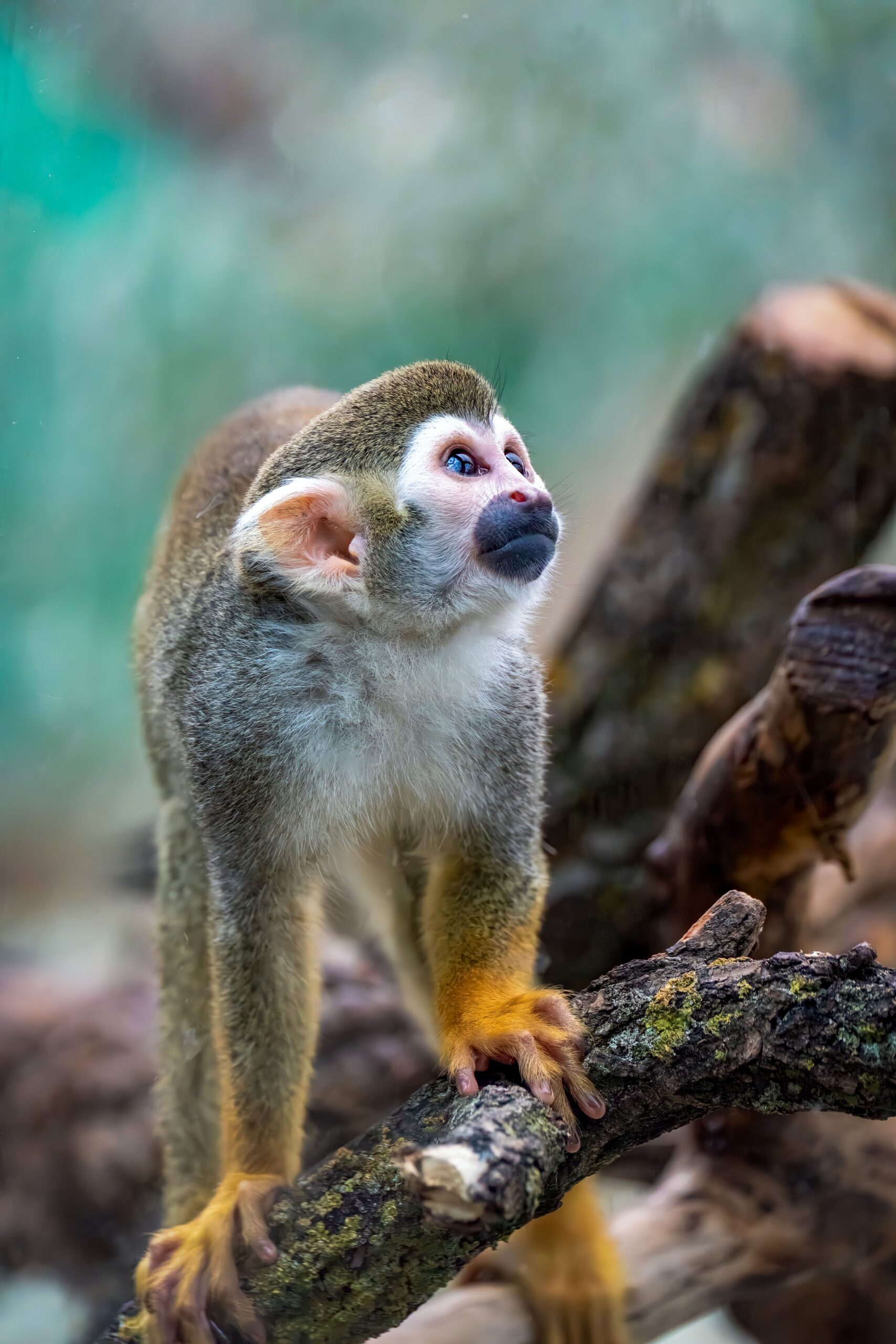
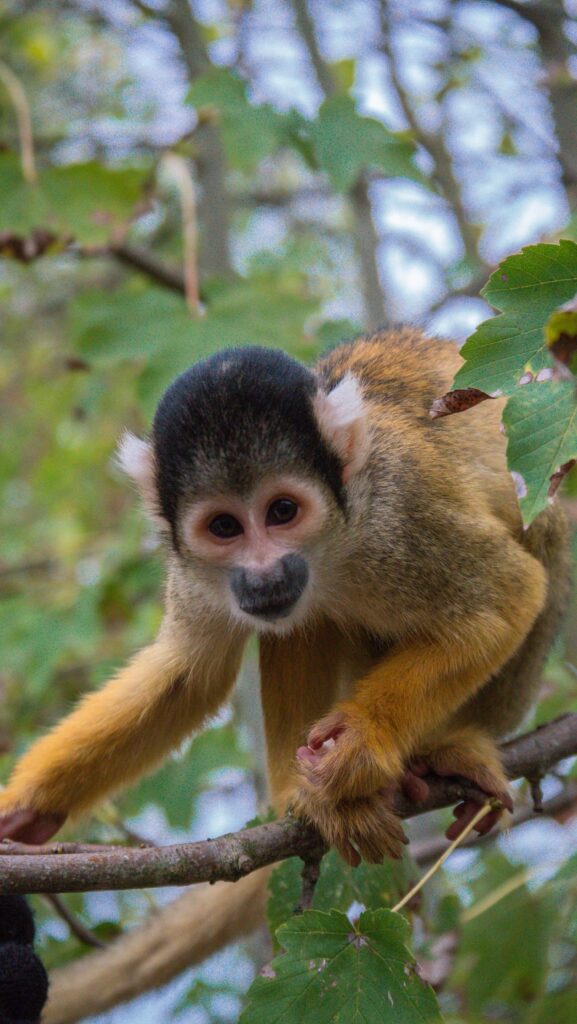
The most distinctive feature of the capuchin monkey is its black face and tuft-like raised hair on its head. It has five fingers on its four limbs, and can also grasp objects with its hind feet. Their long tails help them balance on trees. Capuchin monkeys live in subtropical and tropical forests. Although they sometimes descend to the ground, they are primarily arboreal, living in the middle to lower layers of trees.
- Physical Characteristics
Size: Body length 30-60cm, tail length 40-55cm
Body Type: Small to medium-sized, sturdy body
Fur:
Long, lush fur on the head
Color and pattern vary by species (White-faced Capuchin has a white face, while Brazilian Capuchin has a dark body)
Tail: Prehensile tail (allows for grasping branches)
Face:
Black or white patterning varies depending on the species, resulting in expressive faces
Large eyes give the impression of being active and intelligent
- Movement and Behavior
Mainly arboreal, moving quickly between tree branches
Highly athletic
Highly social, forming complex social relationships in groups
Exploratory, sometimes playing and using tools
- Diet
Omnivorous
Fruit, seeds, leaves, insects, small animals, etc.
Often moving between trees to search for food
- Personality and Intelligence
Highly intelligent and curious
They develop social skills through cooperation, conflict, and play within their pack
They can become accustomed to humans, but are wary in the wild
What is your personality like?
Capuchin monkeys are very intelligent monkeys, and they are better than stupid humans. In the wild, you can also use tools to perform tasks. They are also great because they can make warning sounds that other monkeys can hear to warn them of danger. They are also very social and live in groups.
Personality and Behavioral Characteristics of Tufted Capuchin Monkeys
Curious and intelligent
Shows interest in new environments and objects
May use tools and ingeniously find food
Highly social
Live in groups and build relationships through cooperation and play
Hierarchy and roles are established within the group
Maintain trust through grooming with other members
Playful and active
Move quickly and fly between trees
Young monkeys are particularly playful and learn social skills
Cautious
In the wild, they are highly wary of predators
Cautious with humans and other animals
Individual differences exist
Even within a group, some individuals are more leader-like and others are more reserved
Due to their high intelligence, differences in individual behavior are noticeable
What does the ecology look like?
Capuchin monkeys are omnivorous and mostly eat seeds and fruits, but they also eat nuts, roots, stems, etc., as well as insects and reptiles. The form of coexistence is viviparous. They are polygynous and have no fixed breeding season. The gestation period is 150 days, and it is possible to give birth to 1 to 3 cubs at a time. The lifespan is thought to be about 30 to 45 years.
- Living Environment
Primarily arboreal
Move freely among tree branches and the canopy
Rarely descend to the ground
Habitat
Tropical rainforests and dry forests
Select forests with abundant food and water sources
- Diet
Omnivorous
May also eat fruits, seeds, leaves, insects, and small reptile and bird eggs
Dietary Techniques
Use their hands to pick nuts, crack shells, and peel them
Food Search
Sometimes work together in groups to forage
- Sociality/Group Life
Living in groups
Most groups consist of 10-30 individuals
Hierarchy and roles are established within the group
Communication
Exchange information with others through vocalizations, facial expressions, and body movements
Maintain trust through grooming
- Movement/Behavior Patterns
Activity: Diurnal (active during the day)
Movement: Move quickly from tree to tree along branches
Rest: Sleep in tall trees at night
- Reproduction
Sexual maturity: Around 3-5 years of age
Breeding season: No specific period; breeding season varies depending on the environment
Gestation period: Approximately 160-180 days
Litter size: Usually one pup
Rearing: Carried by the mother and raised in the group
Are there any natural enemies?
The natural enemies of capuchin monkeys are jaguars and pumas.
About Molting
Tufted capuchin monkeys do not have a “distinct molting season” where they shed large amounts of fur at specific times of the year, unlike dogs or cats.
Instead, they generally undergo a process of continuous molting, where their fur is replaced gradually throughout the year.
The Molting Process
The fur of tufted capuchin monkeys follows a cycle of:
Old fur shedding
New fur growing from the same follicle
Gradual renewal across the entire body
Consequently, even with seasonal changes in the wild, they do not exhibit drastic shifts like the transition from a thick winter coat to a light summer coat.
Factors Affecting Molting
🌡 Temperature
Because there is little annual temperature fluctuation in their native tropical to subtropical environments in South America, they evolved to:
Forgo the need for a thick winter coat
Maintain a relatively constant coat density year-round
☀️ Daylight Duration
In primates, daylight duration and hormonal changes influence the hair growth cycle.
Specifically:
Melatonin
Thyroid hormones
Sex hormones
…all play a role in the hair growth cycle.
🍎 Nutritional Status
Molting requires energy.
Nutritional deficiencies can lead to:
Thinner fur
Loss of luster
Increased shedding
Disruption of the hair growth cycle
In the wild, the condition of their fur improves during periods when they can consume ample amounts of fruit, insects, and nuts.
Vocalizations
Tufted capuchin monkeys have a highly diverse vocal repertoire and are known for possessing advanced communication skills among primates.
Their vocalizations are not merely “sounds”; they serve to exchange information with group members, signal alerts, express emotions, and maintain social bonds.
Main Types of Vocalizations
🐒 “Kik-kik” or “Pip-pip” (Short, high-pitched sounds)
Used primarily for:
Calling out to group members
Checking the group’s location
Mild excitement
Infants searching for their mothers
Young monkeys, in particular, frequently make these sounds to maintain contact with their mothers.
🐒 Loud “Gyaa” or “Aa-aa” sounds
These are alarm or threat calls.
Triggered by:
Approaching predators
Intrusion by an unfamiliar individual
Conflicts within the group
…and so on.
Tufted capuchins share information about danger through vocalizations, not just visual cues.
🐒 Low-pitched “Kuk-kuk” or “Guru-guru” sounds
Produced when the monkeys feel at ease or during social interactions.
Used during:
Approaching group members
Grooming
Interactions between mother and infant
…and so on.
🐒 “Whistle” (A sound resembling a human whistle)
A vocalization characteristic of capuchin monkeys.
Used in situations such as:
Calling to group members who are far away
Gathering the group
Times of anxiety
By using frequencies that travel long distances, they can communicate with group members even within the forest.
Varying calls based on the predator
Tufted capuchins are highly intelligent and distinguish between different types of danger.
Examples:
🦅 Aerial raptors → High-pitched alarm call
🐍 Snakes → A different type of alarm call
🐆 Ground-based predators → Low-pitched alarm call
They issue different warnings depending on the situation.
This is considered not merely a “scream of fear,” but an ability to convey specific information about the danger to their group members.

Seasonal Activities
The activity patterns of tufted capuchin monkeys vary significantly by region.
Because they adapt to a wide range of environments—including tropical rainforests, dry forests, and savannas (Cerrado) in South America—their behavior is strongly influenced by the alternation between the rainy and dry seasons.
🌱 Spring (Start of the rainy season / Plant growth period)
In South America, this typically falls around September–November, depending on the region.
Activities
Increased time spent searching for fruits and new shoots
Intensified arboreal foraging
Expanded troop home range
Diet
New leaves
Flowers
Soft fruits
Insects
A period marked by an increase in high-nutrient foods.
Social Behavior
Active child-rearing
Increased play among young individuals
Increased social interaction, such as grooming
☀️ Summer (Rainy season / Period of food abundance)
Activities
The most favorable season for activity.
Main behaviors:
Foraging from early morning
Moving through the canopy
Foraging using tools
Playing with troop members
Diet
With the abundance of fruit, they primarily consume:
Fruits
Seeds
Palm nuts
Insects
They notably utilize their intelligence to crack open hard nuts using stones.
🍂 Autumn (Transition to the dry season)
Activities
Foraging strategies shift as food availability changes.
Increased behaviors:
Inspecting tree bark
Descending to the ground
Searching for roots and seeds
Foraging for insects
As fruit becomes scarce, they must employ more ingenuity to find food.
Social Behavior
Increased travel distance for the troop
Searching for water sources
Increased vigilance around territory boundaries
🌵 Winter (Dry season)
In South America, this typically falls around May–August, depending on the region.
The most challenging period for tufted capuchin monkeys.
Activities
Activity concentrated in the morning and evening
Resting during the heat of the day
Significant time spent searching for food
Diet
To compensate for the lack of fruit, they utilize:
Seeds
Nuts
Tree bark
Insects
Small animals
Nectar Behavioral changes
Increased time spent gathered in a group
Reduced energy consumption
Expanded range of movement
Regarding Locomotion Speed
While the tufted capuchin monkey’s walking speed is not as fast as that of strictly terrestrial animals, it possesses high physical agility suited for an arboreal lifestyle.
Its primary modes of movement are quadrupedal locomotion (walking on all fours), traversing branches, and leaping.
Normal Walking Speed
In the wild, the movement speed of the tufted capuchin varies by situation, but as a general guide:
Normal movement: Approximately 1–2 km/h
Moving while foraging: Slower (can be around several hundred meters per hour)
In danger or when fleeing: Rapid acceleration over short distances
Although slower than human walking speed (approx. 4–5 km/h), balance and the ability to change direction are more important than raw speed within a forest environment.
Running Speed
Tufted capuchins can move quite rapidly over short distances.
Characteristics:
High-speed movement using all four limbs
Scampering up tree trunks
Moving quickly from branch to branch
Instantaneous escape when in danger
However, they are not adapted for running long distances in open areas.
Arboreal Movement Capabilities
The tufted capuchin is truly in its element in the trees.
Strengths:
Moving quickly across branches
Balancing with the tail
Gripping branches with one hand
Leaping to other branches
The tail, in particular, acts like a “fifth hand” and is used to maintain posture.
*Note: The tufted capuchin’s tail is not a fully prehensile tail capable of wrapping around objects like that of a spider monkey.
About Baby Tufted Capuchin Monkeys
This section provides a detailed overview of baby tufted capuchin monkeys. Their interaction with their mother and the social life of the group is extremely important.
- Birth and Physical Characteristics
Birth Weight: Approximately 200-400g
Body Length: Approximately 15-20cm
Fur: Covered in soft, short fur
Limbs and Tail: Prehensile, they cling tightly to their mother’s back or belly
- Dependence on Their Mother
They spend the first few months of their lives in their mother’s arms
They ensure safety by clinging to their mother’s back or belly
They accompany their mother through treetops when she moves around
They may also receive protection from other members of the group
- Growth and Development
Lactation Period: Approximately 6 months
Weaning: They begin to eat leaves and fruit gradually at around 6 months of age
Independence: They begin to learn independent behavior within the group around 1 year of age
Social Learning: They acquire social skills through play and interactions with their mother and group members
- Behavioral Characteristics
Playful and active
Develops motor skills through tree climbing and jumping exercises
Curious
Interested in their surroundings and their peers
Safety first
Stays close to their mother and quickly embraces her if threatened
- Protection from Predators
Cubs are vulnerable on their own, so protecting their mother and herd is important
Staying in the trees protects them from jaguars and large birds
Is the capuchin monkey an endangered species?
Unfortunately, the subspecies of the capuchin monkey is designated as an endangered species. The population on Margarita Island in southern Venezuela is in severe decline and may become completely extinct.
- IUCN (International Union for Conservation of Nature) Assessment
There are multiple species of capuchin monkeys (Cebus), many of which are listed as Least Concern (LC). However, some species and local populations are under threat.
Species IUCN Assessment Comments
Cebus capucinus (White-faced Capuchin) LC (Least Concern) Widely distributed in Central America, populations relatively stable.
Cebus albifrons (White-fronted Capuchin) LC Widely distributed in northern South America.
Cebus apella (Brazilian Capuchin) LC Widely distributed in the Amazon Basin, populations stable.
Cebus olivaceus (Olive Capuchin) LC Stable in northern Brazil and Guyana.
However, localized declines have been reported in areas vulnerable to deforestation and the pet trade.
- Threat of Extinction
Deforestation and Habitat Loss
Agricultural development and urbanization are causing loss of arboreal habitats
Captivity for Pets
Local population declines due to the capture of young animals from the wild
Decreased Food Resources
Decreased Fruit and Insect Production Due to Deforestation
Can capuchin monkeys be kept as pets?
As mentioned above, capuchin monkeys are designated as an endangered species, so it is impossible for the general public to keep them. Let’s enjoy it at a zoo etc. Enter the park and ask for information about events and other activities within the park. It is possible for highly intelligent monkeys to use objects.
- Difficulty in Keeping
① High social and mental demands
In the wild, they live in groups and have complex social relationships.
Kept alone, they are prone to stress and aggression.
② Highly intelligent and active.
They are dexterous and have a strong curiosity for play and exploration.
They become bored easily in a domestic environment and may destroy furniture and objects.
③ Dietary management is difficult.
Although omnivorous, they require a diverse diet including fruits, insects, and seeds.
They may suffer from nutrient deficiencies and indigestion.
④ They require space for exercise.
They are adapted to arboreal living and require a large environment where they can jump and climb.
Crowded cages can cause stress and health problems.
- Legal Restrictions
In Japan, Capuchin monkeys require a permit if they are subject to the Convention on International Trade in Endangered Species of Wild Animals (CITES).
In many countries, Capuchin monkeys are regulated as “designated animals” or “wild animals.”
Illegal keeping of Capuchin monkeys may be subject to penalties.
- Health and Safety Issues
Bite and scratch risk
Stress can increase aggression
Risk of infectious diseases (monkeypox, intestinal bacteria, etc.)
Zoos Housing the Species (Japan & Worldwide)
The tufted capuchin (Sapajus apella) is a representative New World monkey kept in many zoos across Japan and the rest of the world.
They are popular in primate exhibits due to their high intelligence and the observable nature of their tool use and complex social behaviors.
🇯🇵 Major Zoos in Japan
Sapporo Maruyama Zoo
Houses tufted capuchins
Exhibit recreates a South American forest environment
Features information on their intelligence and tool-using abilities
Kyoto City Zoo
Exhibits tufted capuchins
Visitors can observe characteristics such as their arboreal lifestyle, prehensile tails, and distinctive tufts of hair
Ikeda Zoo
Houses tufted capuchins
Provides information on individual animals and their diet
Komoro City Zoo
Introduces the personalities of individual monkeys and their social dynamics within the troop
Houses tufted capuchins
🌎 Major Facilities Worldwide
🇬🇧 United Kingdom
Edinburgh Zoo
A prominent European zoo that houses tufted capuchins
Participates in primate exhibits and breeding programs
🇸🇬 Singapore
River Wonders
Features an exhibit of tufted capuchins
🇺🇸 United States
They are housed in many zoos and primate facilities across the United States.
Examples:
San Diego Zoo
Bronx Zoo
Smithsonian’s National Zoo
These and other facilities conduct the husbandry and research of capuchin monkeys.
Introducing other animals



コメント