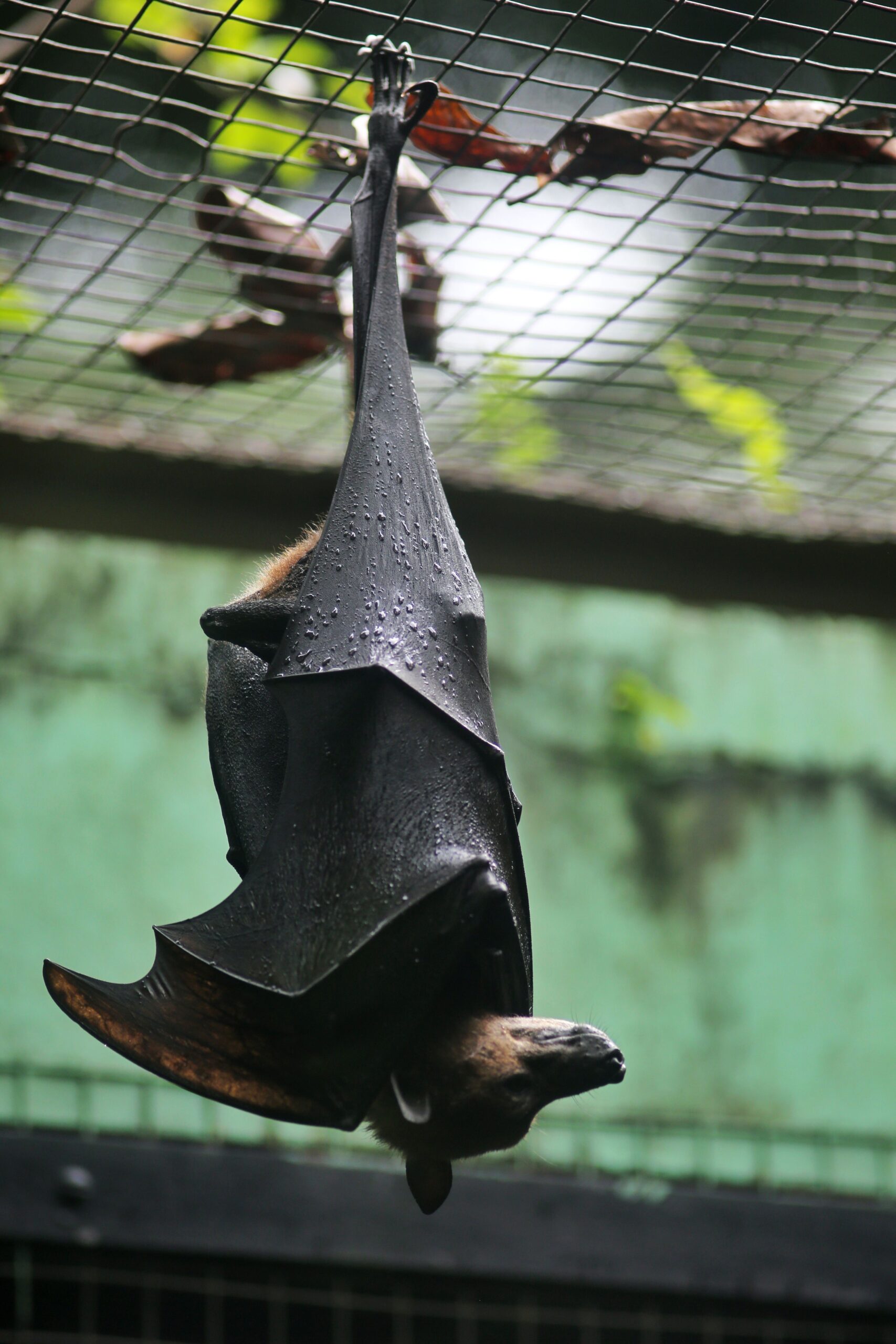
What kind of animal is the Indian flying fox? We will explain its characteristics, ecology, and habitat. Although it is a bat, many of them are large, with a wingspan of up to 2m, so they are classified as a species of flying fox, and are a very impressive type of bat.






- What is the Indian flying fox? Basic stats
- What are the roots and origins of the Indian flying fox?
- Habitat
- What are their characteristics? What kind of creatures are they?
- What is their ecology?
- About Molting
- Vocalizations
- Seasonal Activities
- About Flight Speed
- About Indian Flying Fox Hatchery
- Are Indian flying foxes an endangered species?
- Can Indian flying foxes be kept as pets?
- Zoos Housing the Species (Japan & Worldwide)
- Introducing other animals
What is the Indian flying fox? Basic stats
The Indian Flying Fox is classified as a member of the order Chiroptera and family Pteropidae. Its English name is Indian Flying Fox, and its scientific name is Pteropus giganteus. Its body length is 27cm and its weight is 1kg. The list of information is as follows.
| Japanese(和名) | インドオオコウモリ |
| English(英名) | Indian Flying Fox |
| scientific name(学名) | Pteropus giganteus |
| classification(分類) | Mammalia、 Chiroptera、 Pteropodoidea 哺乳綱、翼手目、オオコウモリ科 |
| IUCN Status(保全状況) | LEAST CONCERN~ |
| Length(体長) | 27cm |
| Weight(体重) | 1kg |
What are the roots and origins of the Indian flying fox?
The Indian flying fox (scientific name: Pteropus medius) belongs to the Pteropodidae family (megabats), which includes some of the world’s largest bat species. Despite having “fox” in its name, it is unrelated to the fox; it is simply a large, fruit-eating bat.
Origins: Evolution from ancient arboreal mammals
The ancestors of the Indian flying fox trace back to early bats that appeared over 50 million years ago (during the Eocene epoch).
Evolutionary lineage:
Early mammals (small arboreal dwellers)
↓
Primitive bats (approx. 52 million years ago)
↓
Large fruit-eating bats (Pteropodidae family)
↓
Genus Pteropus
↓
Indian flying fox (Pteropus medius)
The origins of bats
Some of the oldest known bat fossils include:
Onychonycteris finneyi
Icaronycteris index
These were discovered in geological strata dating back approximately 50 million years; by this time, they already possessed wings and the ability to fly.
Forests covered much of the Earth at that time, and it is believed that small, insect-eating mammals transitioned from an arboreal lifestyle to an aerial one.
The emergence of the Pteropodidae family
The Pteropodidae family, to which the Indian flying fox belongs, followed an evolutionary path distinct from that of typical small bats (microbats).
Characteristics:
Large eyes
Excellent vision
Well-developed sense of smell
Large body size
Diet consisting mainly of fruit and nectar
While many small bats rely on ultrasonic echolocation, Pteropodidae bats primarily use:
Vision
Sense of smell
…to locate food.
Biological classification (taxonomy)
| 階級 | 分類 |
|---|---|
| 界 | 動物界(Animalia) |
| 門 | 脊索動物門(Chordata) |
| 綱 | 哺乳綱(Mammalia) |
| 目 | 翼手目(Chiroptera) |
| 亜目 | オオコウモリ亜目(Yinpterochiroptera) |
| 科 | オオコウモリ科(Pteropodidae) |
| 属 | オオコウモリ属(Pteropus) |
| 種 | Pteropus medius |
Habitat
It is distributed in India, Sri Lanka and Myanmar.
- Geographic Distribution (Where Can They Be Found?)
Indian flying foxes are widely distributed, primarily in South Asia.
Main Distribution Countries
India (almost all of the country)
Pakistan
Nepal
Bangladesh
Sri Lanka
It is one of the most common large bats in South Asia.
- Habitat (Where Do They Live?)
Basic Environment
Tropical to subtropical climate
Lowlands to mid-mountain areas (up to approximately 1,000m above sea level)
Specific Habitats
Forests (evergreen and deciduous forests)
Rivers and wetlands
Rural areas
Urban suburbs and urban parks
They have adapted to human habitats and are not “reclusive animals.”
- Roosts (Daytime resting areas)
Roosts are an important element that characterizes the habitat of Indian flying foxes.
Roosting Characteristics
Tall, large trees
Sunny, open areas
Large trees along rivers, at temples, or in parks
Common Tree Species
Banyan (India rubber tree)
Mango
Tamarind
Figs
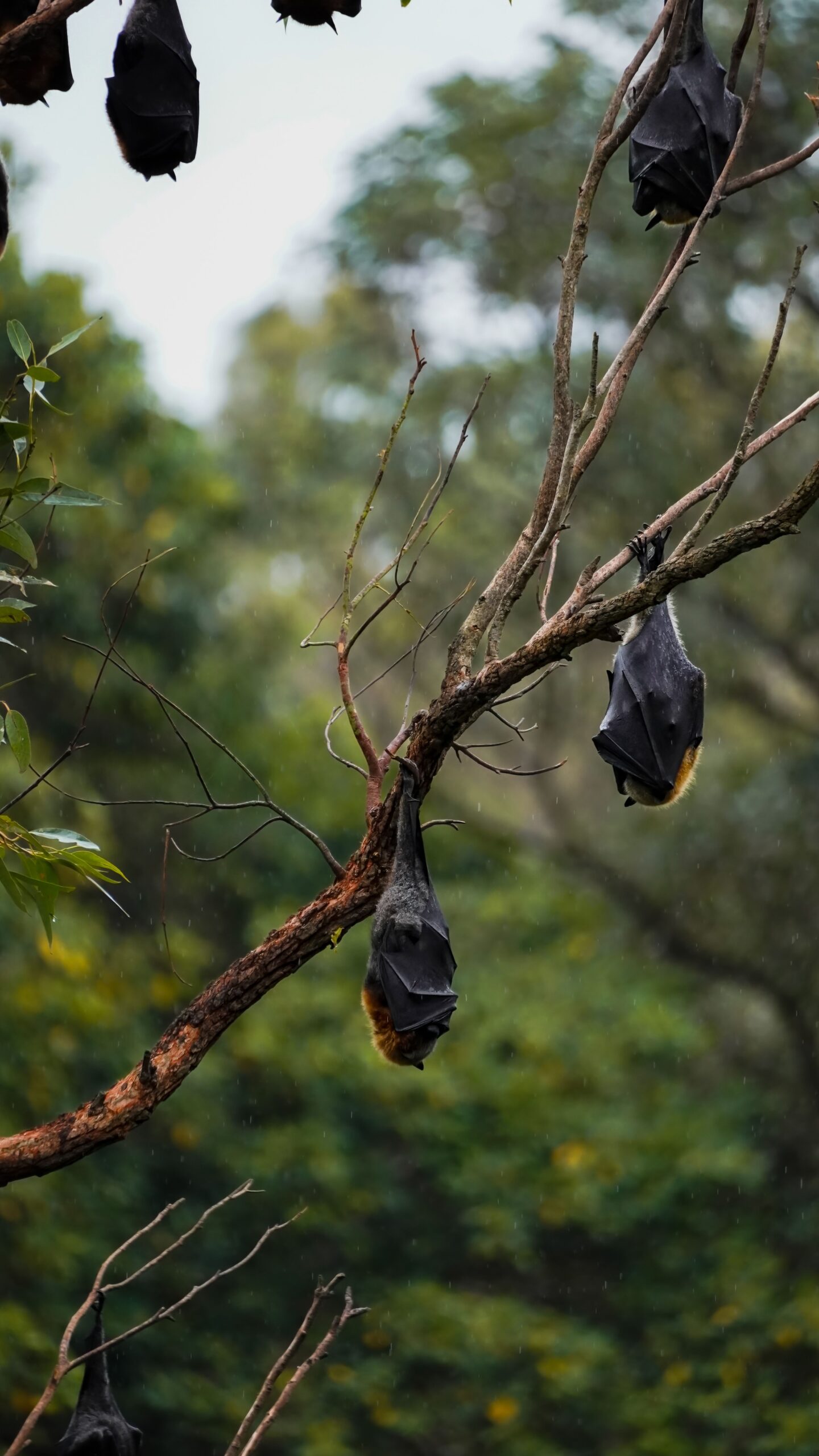
The sight of hundreds to thousands of individuals hanging from the same tree in groups is extremely famous in South Asia.
- Home Range and Migration
Nocturnal: Forages at night, rests in trees during the day
May fly 10-50 km or more to forage
Seasonal migrations to fruit-bearing areas (local migration)
What are their characteristics? What kind of creatures are they?
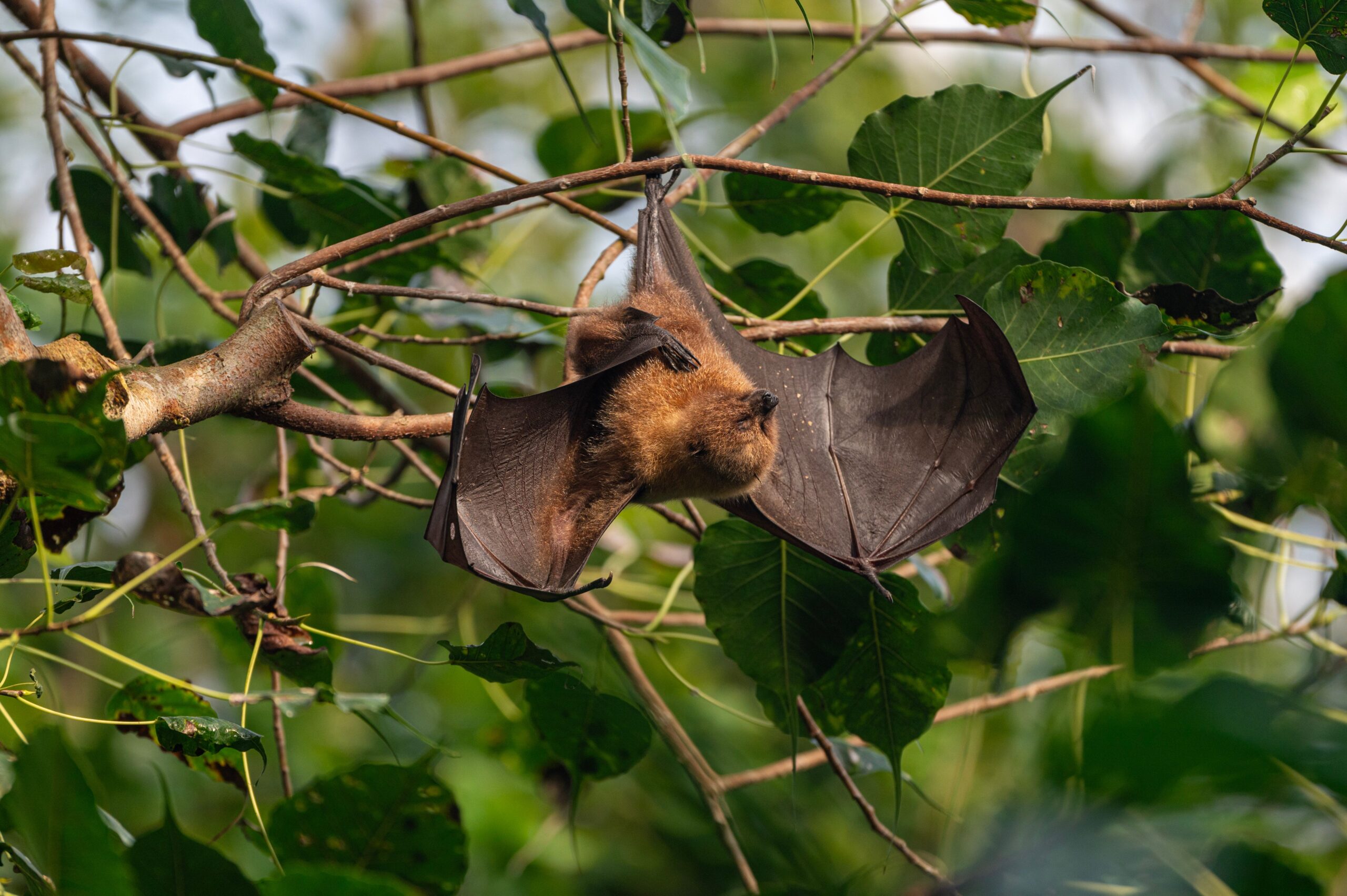
Indian flying foxes live in the forest. Many of them hang around during the day. They are completely nocturnal and go out in search of food in the evening. They can reach a maximum wingspan of 1.5m, making them a fairly large species of bat. They cannot use ultrasound to locate prey (echolocation). Their eyes are very developed because they rely on their vision to fly.
- Appearance (First Impression)
Very Large
Wingspan: Approximately 1.2-1.5m
Weight: 1-1.6kg
A size that is completely different from Japanese bats
Face
Face resembling a dog or fox (→Flying fox)
Large eyes, surprisingly many people find them “cute”
Pointed nose and relatively small ears
Body Color
Body: Dark-brown
Neck and Shoulders: Yellowish-brown to Gold
Wing Membrane: Black
- Personality and Temperament (What’s it like?)
Low Aggression
Generally Gentle
Often Runs Away or Ignores Humans
Rarely Attacks Humans
However:
Bites if Prey is Near (Defensive)
Skimmings Occur Within the Flock
- Behavioral Patterns (Life Rhythms)
Daytime
Resting while hanging from large trees
Fanning and grooming
Communicating with fellow birds through vocalizations
Night
Flying en masse at sunset
Long-distance flights in search of fruit and flowers
Quiet and leisurely flight
- Diet (What do they eat?)
Exclusively herbivorous
Fruit (mango, fig, banana, etc.)
Nectar and pollen
Sucking soft flesh and spitting out fibers
Not carnivorous or blood-sucking at all
- Intelligence and Sociality
Highly social
Large colonies of hundreds to thousands of individuals
Clear parent-child relationships
Communicating in detail through vocalizations and body movements
Learning Ability
Memorizing foraging routes
Knowing when fruit ripens
Learns danger from experience
What is their ecology?
Indian flying foxes feed mainly on fruit juice, and in the evening they search for and eat fruits and juice such as mangoes and bananas. The breeding season is from July to October. They have a gestation period of 150 days and can give birth to one baby at a time. They reach sexual maturity in about a year and a half and live for about 20 years.
- Daily Life Rhythm (Behavioral Ecology)
Daytime (Rest)
Resting en masse while hanging upside down from the branches of large trees
Fanning their bodies with their wings to regulate body temperature
Interacting through grooming and vocalization
Preferring direct sunlight (to maintain body temperature and protect against parasites)
Evening to Night (Active)
Flying en masse just after sunset
Traveling long distances to feeding grounds
Returning to roosts before dawn
- Feeding Ecology (What and How They Eat)
Diet
Exclusively herbivorous
Fruits (mangoes, figs, guavas, etc.)
Nectar and pollen
Find ripe fruit using sight and smell
Characteristic Feeding Patterns
Chewing the flesh and consuming only the juice
Spitting out fiber (pellets)
Swallowing or dropping seeds
- Movement/Home Range
Fly 10-50km or more per night
Home range changes with the season
Regular long-distance migrations are rare; migrations are primarily localized
They have excellent memories and often use roughly the same route every night.
- Social Structure (Flock Ecology)
Colony Structure
Large colonies of hundreds to thousands of individuals
No clear leader
Individuals are close but organized
Communication
High-pitched calls
Wing movement and body orientation
Individual identification by scent
- Breeding Ecology
Breeding Cycle
Breed once a year
Births vary by region and season
Usually one baby
Raising
Mothers always carry their babies and move around
Lactation Period: Several months
Mother-baby relationships continue for some time after they grow up
- Lifespan and Growth
Lifespan in the wild: 15-20 years
Some examples of babies living for over 30 years in captivity
Maturity is relatively slow (several years)
Large, low-birthing individuals = K-strategy species
Do they have any natural enemies?
Indian flying foxes are natural enemies of snakes, owls, and other birds of prey.
About Molting
The Indian flying fox (Pteropus medius) does not undergo “molting” in the sense that birds do. As they are mammals, the process is technically a coat change (shedding and regrowing fur).
🌱 Spring to Summer: Transition from winter coat to summer coat
Timing
While it varies by region,
this usually occurs from spring to early summer (around March to June).
Characteristics:
Old fur is shed
Body fur becomes slightly shorter
Fur structure allows for easier heat dissipation
In the Indian subcontinent, the hot season brings extremely high temperatures, so the coat changes to reduce excess heat retention.
🍂 Autumn to Winter: Transition from summer coat to winter-ready coat
Timing
Around autumn (September to November)
Characteristics:
Fur density increases
Heat retention improves
Insulation capability of the coat increases
Although Indian flying foxes inhabit tropical and subtropical regions, temperatures drop at night, making fur-based body heat maintenance crucial.
🦇 Unique fur structure of the flying fox
The Indian flying fox has two main types of body fur.
① Guard hair (outer coat)
Role:
Protects the skin from external irritants
Provides defense against rain and moisture
Determines body color
② Underfur (inner coat)
Role:
Creates a layer of air
Prevents body heat loss
Protects against the chill of the night
Since they are exposed to the wind while flying, fur that retains heat is essential.
Vocalizations
The Indian flying fox (Pteropus medius) is a species of bat with relatively well-developed vocal communication. Unlike smaller bats that rely on ultrasonic echolocation, they primarily interact with one another using sounds within the audible range—meaning humans can hear them too.
① Low-pitched “gyaa” or “gaa” sounds (screams)
These are the most frequently heard vocalizations.
Characteristics:
Loud and resonant
Hoarse or raspy quality
Reminiscent of a crow’s call
Functions:
Calling out to others
Locating the colony
Expressing excitement
Many individuals call back and forth to one another, particularly at daytime roosting sites.
② High-pitched “kee-kee” sounds
Characteristics:
Short, high-pitched notes
Rapid, repetitive pattern
Situations:
Social contact with others
Communication between mother and offspring
Anxiety or alertness
These sounds play a crucial role in communication between parent and offspring.
③ Growls and threat sounds
Used primarily during conflicts.
Situations:
Disputes over roosting spots
Competition at feeding sites
Close encounters between males
Characteristics:
Low-pitched sound
Short growl
Threat display with the mouth open
④ Courtship calls
Males produce distinctive vocalizations during the breeding season.
Purpose:
Attracting females
Asserting territory
Warning other males
In addition to vocalizations, males use various other methods to attract mates, such as:
Spreading their wings
Swaying their bodies
Releasing scents
Seasonal Activities
The activity of the Indian flying fox (Pteropus medius) varies primarily based on seasonal fruit availability, temperature, and reproductive cycles. As a large nocturnal mammal inhabiting tropical to subtropical regions, it does not hibernate and remains active year-round.
🌱 Spring (March–May): Preparation for breeding and increased activity
Key activities:
Reproductive behavior
Colony maintenance
Expansion of foraging range
Spring is a time when temperatures rise and plant growth accelerates.
Behavioral characteristics:
Emerging from the roost en masse at dusk
Flying long distances in search of fruit trees and flowers
Increased territorial disputes between males
Diet:
Mangoes
Figs
Nectar
Fruit juice
☀️ Summer (May–August): Breeding and rearing season
Key activities:
Birth
Nursing
Rearing young
While timing varies by region, reproductive activity peaks during the summer.
Behavioral characteristics:
Mothers:
Flying while carrying their young
Foraging at night
Nursing at the roost
Young:
Clinging to the mother
Spending time within the colony as they grow
Coping with heat:
Indian summers are extremely hot, so they do not remain active during the day.
Daytime:
Hanging from tree branches
Spreading wings to regulate body temperature
Sometimes opening their mouths to dissipate heat
Night:
Foraging once temperatures drop
🍂 Autumn (September–November): Period of active foraging
Key activities:
Regaining physical strength
Securing food
Colony movement
Following the rainy season, vegetation flourishes and fruit becomes abundant.
Diet:
Ripe fruit
Flowers
Tree sap
Behavior:
Flying over wider areas
Moving to areas with abundant food
Forming large colonies
❄️ Winter (December–February): Reproductive cycle and stable living
Key activities:
Colony life
Resting
Preparing for the next breeding cycle
Indian flying foxes do not hibernate.
Even in winter, they continue:
Nighttime flight
Foraging
Roosting However, in cold regions, there is a tendency for:
activity periods to shorten,
flight distances to decrease, and
group behavior during the day to increase.
About Flight Speed
The Indian flying fox (Pteropus medius) is one of the world’s largest bat species; it is an animal better suited for long-distance flight and efficient gliding than for high-speed flight.
🦇 Normal Flight Speed
Approximately 15–25 km/h
This is the speed maintained during routine movement and foraging.
Characteristics:
Slow, broad wing beats
Flying while searching for fruit
Moving in a specific direction within a flock
They fly in an energy-efficient manner by utilizing their large bodies and long wings.
⚡ Maximum Flight Speed
Approximately 40–50 km/h
They increase their speed to avoid danger or travel long distances.
Situations:
Escaping from birds of prey
Returning to the flock
Competing with other individuals
However, this differs from the diving speeds of peregrine falcons or the agile flight of smaller bats.
🪽 Wing Characteristics and Flight Ability
The Indian flying fox has a large body with:
Wingspan: Approximately 1.2–1.5 m
Weight: Approximately 1–1.6 kg
Advantages of large wings:
① Skilled at long-distance flight
Because their broad wings capture air efficiently, they can:
Beat their wings less frequently
Glide
Utilize the wind
② Nighttime mobility
For foraging, they may travel:
Several kilometers to tens of kilometers
Sometimes even greater distances
During seasons when fruit is scarce, they fly over wide areas in search of food.
About Indian Flying Fox Hatchery
This article describes the appearance, growth, parent-offspring relationship, and ecological characteristics of Indian flying fox hatchlings (Pteropus medius).
- Characteristics at Birth
Number of Births: Usually only one bat is born.
Eyes are open at birth.
Short fur and dark brown color.
Small body, but already has long digits (wing bones).
Ability to attach firmly to mother’s nipple.
A key characteristic is their ability to “hang” from the moment of birth.
- Relationship with Mother (Very Important)
From birth to a few weeks later.
Mothers fly with their hatchlings.
They are always together, day and night.
They cling to their mother’s chest and are wrapped in her wings.
They have a strong grip, preventing them from falling off during flight.
- Growth Stages
1-2 Months Old
Rapid Weight Gain
Mom is increasingly left behind at the roost when she goes out to feed
Cubs gather close to each other within the colony
3-4 Months Old
Wings grow larger and begin practicing flapping
Able to glide and fly short distances
Begins nibbling on solid fruit
5-6 Months Old
Nursing ends (weaning)
Appears to be a small adult
Capable of independent foraging
- Child Rearing Characteristics
Mothers invest heavily in child rearing
Fathers are not involved in child rearing
Mothers recognize their offspring through vocalizations and scent
Mothers and offspring do not get lost even in crowded colonies
- Behavioral Characteristics of Cubs
Vocal often (high-pitched, thin voice)
Spreads wings to practice balance
Observes surrounding individuals and learns behaviors
Buries face in mother’s chest when in danger
- Survival Rate and Risks
Risks in the Wild
Falling (Immature Grasping Ability)
Predation by Raptors
Starvation and Dehydration
Artificial Deforestation and Roost Destruction
Mortality Rate is Highest During the Pup Stage
Are Indian flying foxes an endangered species?
Indian flying foxes are not an endangered species. Because they can damage orchards, they are considered pests in many areas and are often exterminated.
International Union for Conservation of Nature (IUCN) Assessment
Status (2024 Assessment): Near Threatened
The Indian flying fox is not classified as “endangered,” but is listed as Near Threatened due to concerns about future population declines.
“Near Threatened” means a species at risk of extinction and indicates the possibility of moving to the next Red List category.
Population Trend
Overall, the population is believed to be declining. This is due to factors such as:
Habitat destruction and degradation (logging and development)
Treatment as a pest in orchards (persecution and extermination)
Electrocution from contact with power lines
Effects of extreme weather on colonies
However, due to its wide distribution (throughout South Asia) and ability to adapt to urban environments, it is not currently considered endangered.
Legal Protection and Regional Differences
There are efforts to strengthen protection in some areas, and in India, legal reforms are being implemented to reassess their protected status (e.g., the 2022 Wildlife Protection Act amendments).
However, due to conflicts with humans in some areas (e.g., crop damage), they are still treated as pests in many areas.
Can Indian flying foxes be kept as pets?
Indian flying foxes are often considered pests, so they are not suitable for keeping as pets. They can be a nuisance to neighbors, so we recommend viewing them at a zoo.
⚖️ 1. Legal Aspects (Japan/Overseas)
In Japan
Since Indian flying foxes are not naturally distributed in Japan, even though they are not subject to Japan’s wildlife protection regulations, import and captivity permits are likely required.
Legal and administrative restrictions generally apply to the careless keeping of invasive species and wild animals, and local government ordinances may also regulate this.
(Note: While we have not identified specific examples of designated species, as a general rule, permits are often required for handling wild species.)
Overseas (e.g., the United States)
In many countries and regions, special permits and licenses are required for personal pet ownership of wild animals.
For example, in Florida, a government permit is required to keep wild animals at home, and pet ownership is prohibited without one. Permits are often only issued for exhibition or conservation purposes.
Please assume that capturing and captivity of wild animals is generally illegal and strictly regulated.
2. Animal Characteristics (Not Suitable as a Pet)
Indian flying foxes are large, highly social, and wild animals that require a specialized environment.
Practical Difficulties in Captivity:
They live in groups and are not adapted to living alone (high stress).
They require a very large flying space.
They are nocturnal and have long-distance flight habits, making them unsuitable for home use.
Special nutritional requirements (fruit juice, fruit-based, high-energy diet).
Risk of Infectious Disease (wild bats may harbor pathogens that are harmful to humans).
Even if wild animals are captured and brought home, it is considered extremely difficult to care for them as captive animals for their entire lives. Keeping them as pets is not recommended.
3. Reality of Captivity (Case Study)
Examples of Zoo Care
Japanese zoos (e.g., Ikeda Zoo, Neo Park Okinawa) display and raise Indian flying foxes in specialized captivity environments.
This is possible because the objectives of education, conservation, and exhibition are met by specialized staff and appropriate facilities.
Instead of keeping them in ordinary households, they are kept in zoos and specialized facilities.
Zoos Housing the Species (Japan & Worldwide)
The Indian flying fox (Pteropus medius) is a large bat species kept in zoos around the world; however, due to the specific requirements for flight space, temperature control, and colony management, only a limited number of facilities house them. Several zoos in Japan also keep this species.
🇯🇵 Major Facilities in Japan
🦇 Kyoto City Zoo
One of the prominent facilities in Japan where Indian flying foxes can be observed.
Features:
Large flying fox exhibit
Presented as a nocturnal animal
Visitors can observe behaviors such as hanging, grooming, and feeding
Breeding records and exhibit information are available.
🦇 Nagasaki Bio Park
Keeps Indian flying foxes.
Features:
Tropical animal exhibit
A facility where the natural behavior of flying foxes can be observed
🦇 Ikeda Zoo
Has a record of exhibiting Indian flying foxes.
🦇 Kusatsu Tropical Zone
A facility specializing in tropical animals that keeps Indian flying foxes.
🌎 Facilities Worldwide
🇺🇸 USA
Denver Zoo
Confirmed to keep Indian flying foxes.
Features:
Tropical/Asian-themed exhibit
Showcases the flight capabilities of large bats
🇮🇳 India
Alipore Zoological Gardens
Exhibits Indian flying foxes.
In zoos located within their native range, they are kept to highlight their relationship with wild populations and their role in the ecosystem.
Introducing other animals
コメント