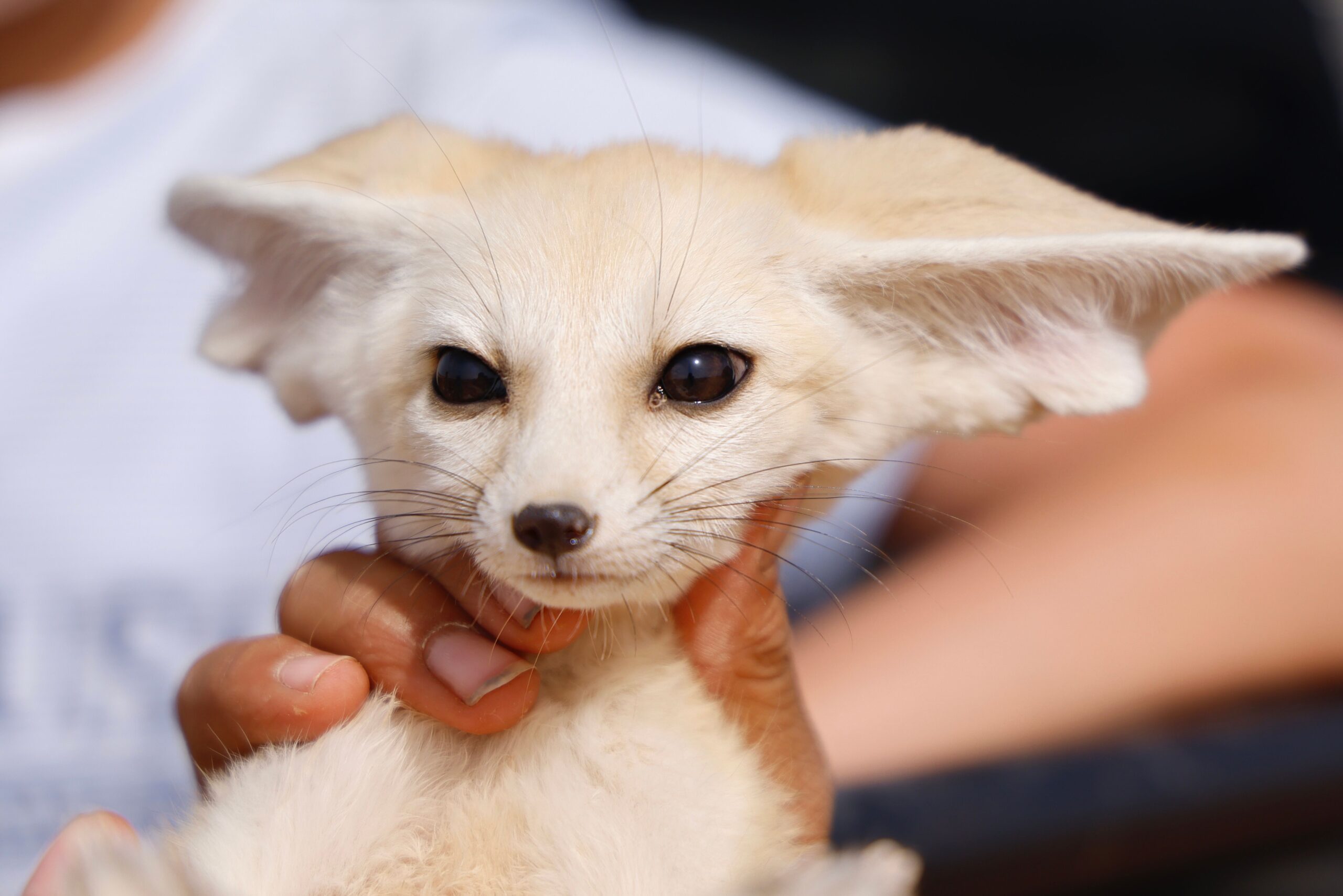
What kind of animal is a fennec? We will explain its characteristics, ecology, and habitat. Known as the desert fox, this animal is very popular as a pet due to its large ears. These cute animals can be seen in deserts and arid regions from North Africa to the Arabian Peninsula.








- What is fennec? About basic status
- What are the roots and origins of the fennec?
- Where is its habitat?
- feature is? What kind of creature is it?
- What is your personality like?
- What is the ecology like?
- Fennec Fox Vocalizations
- Seasonal Activities
- Walking Speed
- About Fennec Fox Baby
- Is the fennec fox an endangered species?
- Can you keep a fennec fox as a pet?
- Zoos Housing Fennec Foxes (Japan & Worldwide)
- Introducing other animals
What is fennec? About basic status
The fennec fox is a carnivorous animal classified in the class Mammalia, carnivora, canine family, genus Fox. The body length is 30-40cm, the tail length is 15-30cm, and the weight is 1-2kg. The scientific name is Vulpes zerda. It is also called the fennec fox. Below is a list of information.
| Japanese(和名) | フェネック |
| English(英名) | Fennec fox |
| scientific name(学名) | Vulpes zerda |
| classification(分類) | Mammalia、 Carnivora、 Canidae、Vulpes 哺乳綱、食肉目、イヌ科、キツネ属 |
| IUCN Status(保全状況) | LEAST CONCERN |
| Length(体長) | 30 – 40.cm |
| Weight(体重) | 1 – 2kg |
What are the roots and origins of the fennec?
The fennec (fennec fox) traces its roots to a “desert-specialized fox” adapted to the deserts of North Africa. Its current scientific name is Vulpes zerda, and it is classified within the family Canidae and the genus Vulpes.
Origins: A fox that evolved around the Sahara Desert
The fennec’s ancestors are believed to have diverged from the ancestral lineage of the genus Vulpes millions of years ago.
Their current distribution is in the arid regions of North Africa, including:
The Sahara Desert
Morocco
Algeria
Tunisia
Libya
Egypt (around the Sinai Peninsula)
In other words, the fennec is not simply an “ordinary fox that started living in the desert”; rather, it is a type of fox that specialized for desert life over a long evolutionary process.
Ancestors were close to ordinary foxes
Although the fennec has a unique appearance, its roots lie in the same genus (Vulpes) as the red fox and others.
A simplified view of its evolutionary path:
Ancestor of the Canidae family
↓
Birth of the genus Vulpes
↓
Lineage that expanded into the desert environment
↓
Evolution into the fennec
DNA analysis indicates that the fennec is particularly closely related to Blanford’s fox.
Why did they develop such huge ears?
The fennec’s most distinctive feature—its large ears—is an evolutionary adaptation for survival in the desert.
① Body temperature regulation
Daytime temperatures in the desert can reach nearly 50°C.
Their large ears contain many blood vessels, serving to:
Dissipate body heat
Prevent a rise in body temperature
② Detecting underground prey
Fennecs are nocturnal and feed on:
Insects
Small rodents
Lizards
Birds
Their huge ears allow them to detect the sounds of small prey moving beneath the sand.
Origin of the Name
The name “fennec” is believed to be derived from the Arabic word fanak (فَنَك).
It refers to a “desert fox.”
About classification
Fennec is a member of the fox genus. One theory is that it forms a monophyletic group with the Branford fox.
Fennec Fox Taxonomy
- 界(Kingdom):動物界 (Animalia)
- 門(Phylum):脊索動物門 (Chordata)
- 綱(Class):哺乳綱 (Mammalia)
- 目(Order):食肉目 (Carnivora)
- 科(Family):イヌ科 (Canidae)
- 属(Genus):キツネ属 (Vulpes)
- 種(Species):フェネック (Vulpes zerda)
Where is its habitat?
The fennec fox is distributed in the arid regions of North Africa and the Middle East. They live in countries such as Algeria, Morocco, Libya, Niger, and Mali.
- Geographic Distribution
North Africa: Widely distributed, mainly in the Sahara Desert
Morocco, Algeria, Libya, Egypt, Mali, Niger, Sudan, etc.
Parts of the Middle East: Israel, northern Saudi Arabia, etc.
- Habitat
Desert and semi-desert areas: Live mainly in dry sandy areas and rocky areas
Sand dunes and dry grasslands: Areas with sparse shrubs and grasses
Burrow Use:
Rests in burrows under sand dunes or rocks during the day
Avoids daytime temperatures and is active at night
- Environmental Characteristics
Adapted to hot, dry, and low-precipitation environments
Can survive with limited food and water (obtains moisture from food)
Changes range of activity depending on the presence of hiding places and prey
feature is? What kind of creature is it?
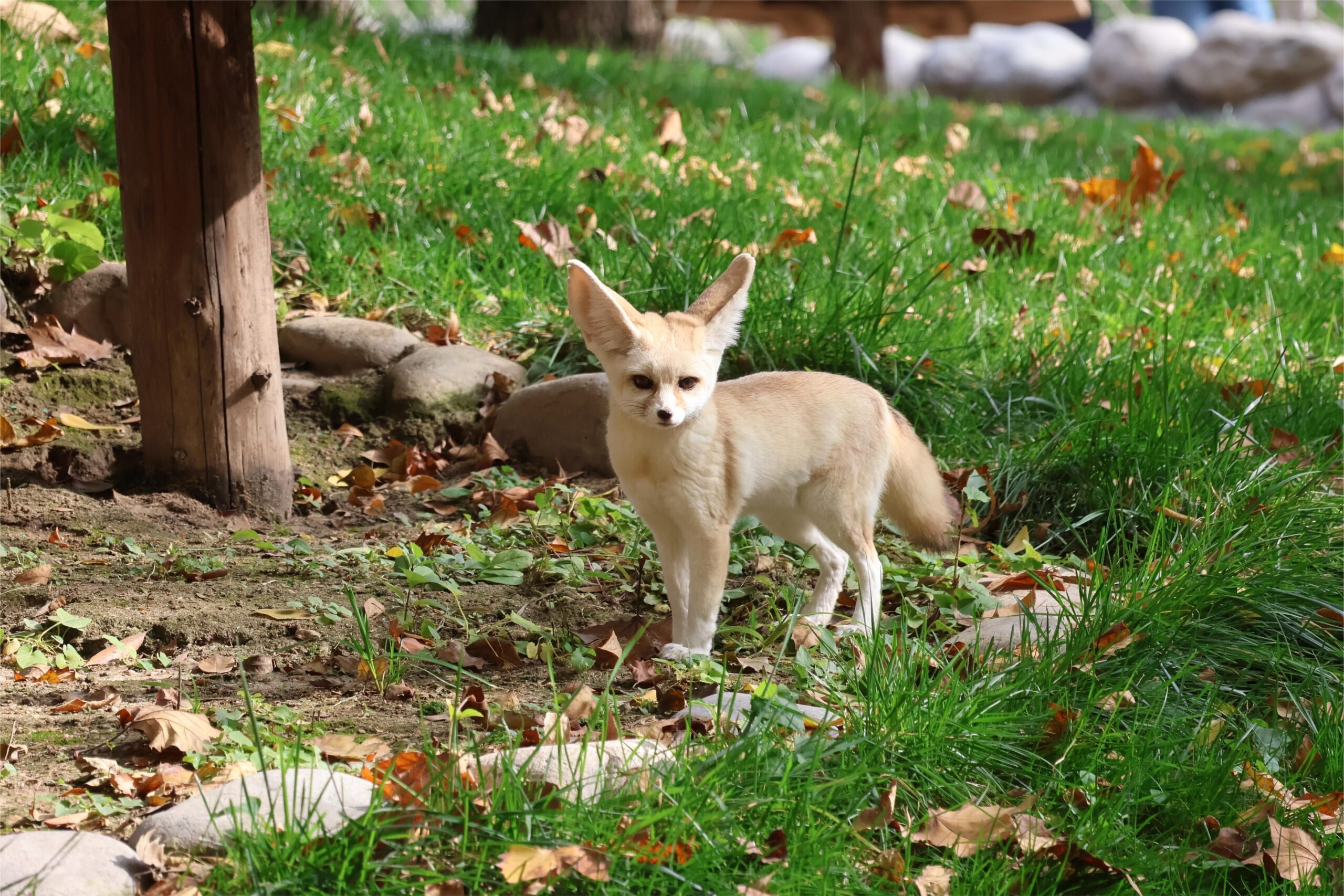
The fennec fox is the smallest member of the canine family. It has a reddish-brown stripe pattern running from the inside of its eyes to its lips, and is characterized by its large ears. Their ears help dissipate heat and find prey in the sand, so they use these to find prey. The soles of their feet are covered with body hair and are specialized for walking in the desert. Fennec foxes live mainly in deserts and are nocturnal, sometimes basking in the sun during the day. We act in groups and as a family rather than alone.
- Body Size and Appearance
Body Length: Approximately 24-41cm
Tail Length: 18-31cm
Weight: 1-1.5kg (Small)
Coat Color:
Back: Light sandy to yellowish-brown, underbelly: whitish
Camouflage coloring that blends in with the desert
Ears:
Very large, round ears (approximately 1/3 of body length)
Highly developed hearing, allowing them to detect the movements of small animals in the sand
Face and Eyes:
Small, cute face
Black eyes and a small nose
- Behavior and Personality
Nocturnal and solitary
Timid and cautious
Active and agile, moving quickly to capture prey
- Diet
Omnivorous (small predators):
Small mammals, insects, reptiles, birds, fruit, etc.
Hydration:
They obtain moisture from food, even if they rarely drink water
- Ecological Characteristics
They have feet, ears, and fur coloring adapted to the desert.
They rest in burrows during the day and forage at night.
They are highly independent and have their own territories.
What is your personality like?
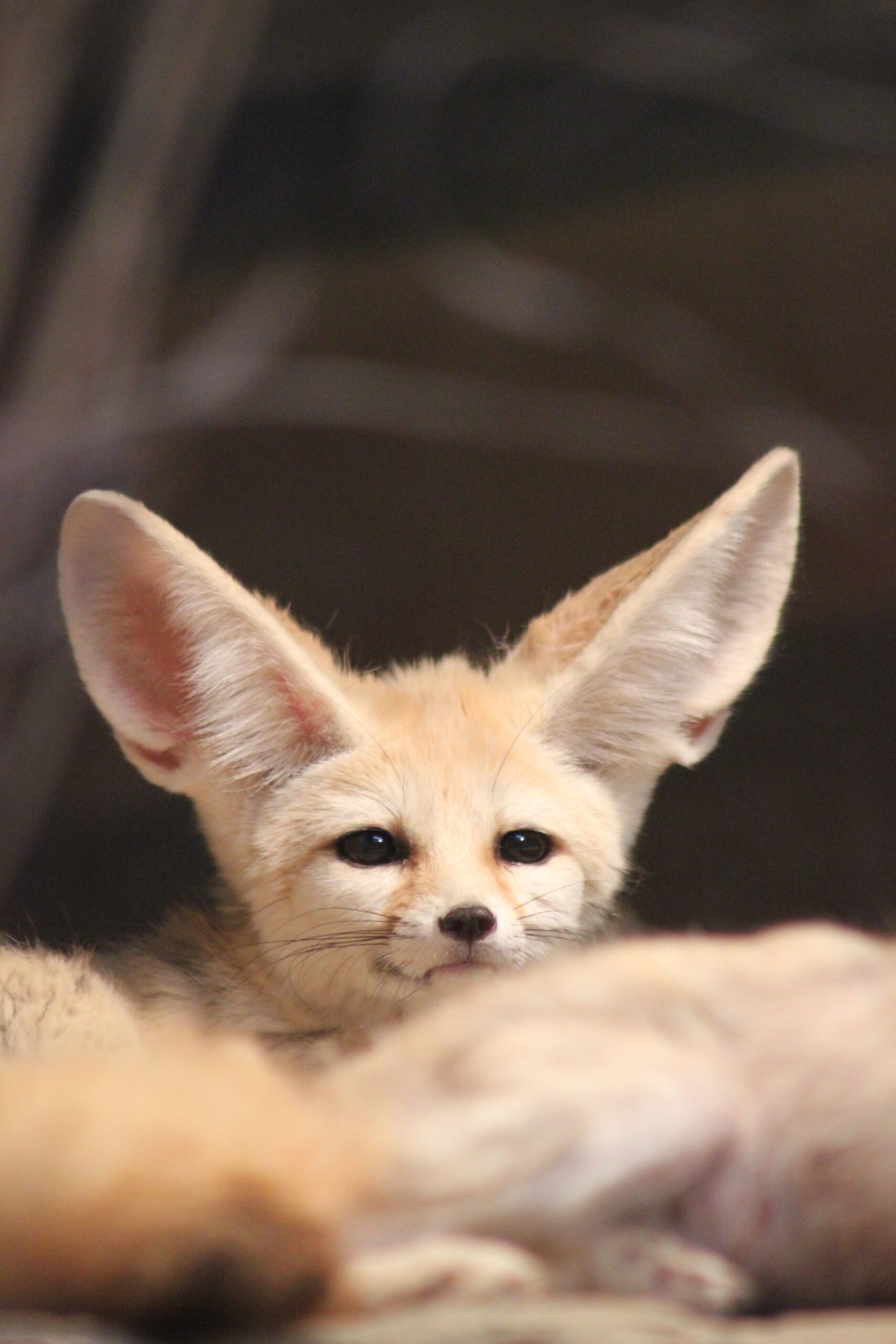
The fennec fox is a timid and very cautious animal. This is due to the fact that there are many natural enemies in the area where they originally inhabit. However, they are docile animals, but once you get used to them, they will wag their tails and show their bellies, so they will start communicating a lot.
Fennec Fox Personality and Behavior
Shy and cautious
Sensitive to predators and humans, they quickly hide when they sense danger
Rests in their burrows during the day to ensure safety
Independent
Generally solitary
Territorial, only interacting with others during breeding season
Nocturnal and active
Hunts and moves at night
Careful and agile when capturing prey
Curious and cautious
Approaches new objects and environments cautiously
Ensures food and burrow safety before moving
What is the ecology like?
Fennec foxes live by eating small mammals, reptiles, birds, insects, and fruit. They don’t eat much and don’t need to drink water, so they can get enough water by getting small amounts from leaves and other plants. Because they are small, they live in burrows. They often rest in their burrows during the day and search for food at night in pairs. They are viviparous and can give birth to 2-6 pups between January and February. The gestation period is 2 months. They reach sexual maturity at 6-9 months of age and can live up to 10 years in the wild.
- Life Rhythm
Nocturnal: Rests in burrows during the day and hunts at night.
Burrows:
Uses holes in sand dunes or under rocks as burrows.
Hides to avoid the daytime heat, regulates body temperature, and ensures safety.
- Diet
Carnivorous (predator) / Omnivorous
Small mammals (rodents), insects, reptiles, bird eggs, fruit, etc.
Water Intake:
Drinks very little water, obtaining moisture from food.
Hunts by sneaking up and capturing prey quickly.
- Breeding
Breeding Season: Spring to Summer
Nest Building: Digs a burrow in a sand dune or under a rock.
Litter Size: Usually 2-5
Brooding:
Mother holds and feeds chicks.
Begins independent behavior at approximately 2 months of age.
- Sociality / Behavior
Generally solitary.
Strongly territorial, interacting with others only during breeding season.
Travel distances vary depending on the availability of prey and water sources.
- Habitat Relationship
Adapted to desert and semi-desert regions
Can survive in hot, dry, and food-scarce environments
Flexibly adapts its range to suit the location of hiding places and prey
Are there any natural enemies?
The fennec fox’s natural enemies include owls, jackals, and hyenas. They are extremely vulnerable to large mammals and birds, so they often hide, especially during the day.
Fennec Fox Vocalizations
Contrary to their “small and cute” appearance, fennec foxes produce high-pitched vocalizations typical of small foxes.
🦊 1. High-pitched “kyu-kyu” sounds (Calls and communication)
These are the most well-known sounds made by fennec foxes.
“Kyu-kyu”
“Kyan-kyan”
“Pii”
They use these high-pitched sounds to communicate with their companions.
🦊 2. Whimpering and chirring sounds (Affection and greetings)
When bonding with family or companions, they make:
Soft sniffling or whimpering noises
Throaty, purr-like sounds
Gentle vocalizations
Fennec kits, in particular, frequently make these sounds toward their mothers.
🦊 3. Sounds resembling barking (Alertness and excitement)
Surprisingly, since fennecs are foxes, they can also produce sounds similar to dogs, such as:
“Wa”
“Kyan!”
“Gau”
They use these sounds when sensing danger or asserting their territory.
🦊 4. Purring sounds (Relaxation)
Fennecs kept in captivity may produce:
Cat-like purring sounds
Soft growling noises
These behaviors are observed when the animal feels safe or is being petted.
Seasonal Activities
The fennec fox is a nocturnal species adapted to the harsh environment of the Sahara Desert, and its activity patterns shift with the seasons. While the desert lacks the distinct four seasons found in Japan, their behavior changes primarily based on the hot season (summer), cool season (winter), and breeding season.
🌸 Spring (March–May): Breeding and Rearing Season
Activity
Increased nighttime activity
More time spent near the burrow
Males become more active in foraging
Breeding
Breeding occurs between winter and spring in many regions
Gestation period: Approximately 50 days
Typically, a litter of 2–5 pups is born around spring
Characteristics
The mother raises the pups inside the burrow, and life centers around the burrow until the young mature.
☀️ Summer (June–September): Avoiding the Desert Heat
Activity
Almost entirely nocturnal
Rests in deep burrows during the day
Active from sunset to dawn
Behavior
Uses large ears to detect insects and small animals
Begins hunting after the sand temperature drops
Adapted to a diet with low moisture content
Heat Adaptation
Fennec foxes possess desert-specific adaptations:
Dissipating heat through large ears
Protecting paws from hot sand with fur on the soles
Insulating the body against heat and cold with sand-colored fur
🍂 Autumn (October–November): Increased Activity
Activity
Lower temperatures make it easier to be active during both day and night
Extended foraging time
Building up physical reserves
Diet
They primarily eat:
Insects (such as grasshoppers)
Small rodents
Lizards
Birds
Fruits and plants
❄️ Winter (December–February): Breeding Preparation and Expanded Range
Activity
Primarily nocturnal, though they may emerge during the day when it is cold
Foraging range extends further
Increased territorial behavior among males
Breeding Preparation
Many regions enter the breeding season in winter:
Males approach females
Communication via vocalizations
Increased use of burrows
Walking Speed
While there is little research on the exact average walking (or movement) speed of wild Fennec foxes, they are quite agile for small foxes and capable of running quickly over short distances.
🦊 Normal Walking Speed
Approximately 2–5 km/h (estimated)
The speed at which they move when slowly exploring the area around their burrow or the desert.
When foraging at night, Fennecs do not simply run continuously; instead, they alternate between walking, stopping, and pouncing—using their ears to detect the sounds of prey.
🏃 Running Speed (Top Speed)
Approximately 40 km/h (estimated)
Despite their small size, they can move quickly across the desert thanks to:
Long hind legs
Light body weight (approx. 1–1.5 kg)
Fur on the soles of their feet that prevents them from sinking into the sand
🦘 Distinctive Movement Style
Fennecs do not just run; they also:
Move across the sand with a bounding, jumping motion
Stop suddenly to listen for sounds
Pounce vertically onto prey located beneath the ground
About Fennec Fox Baby
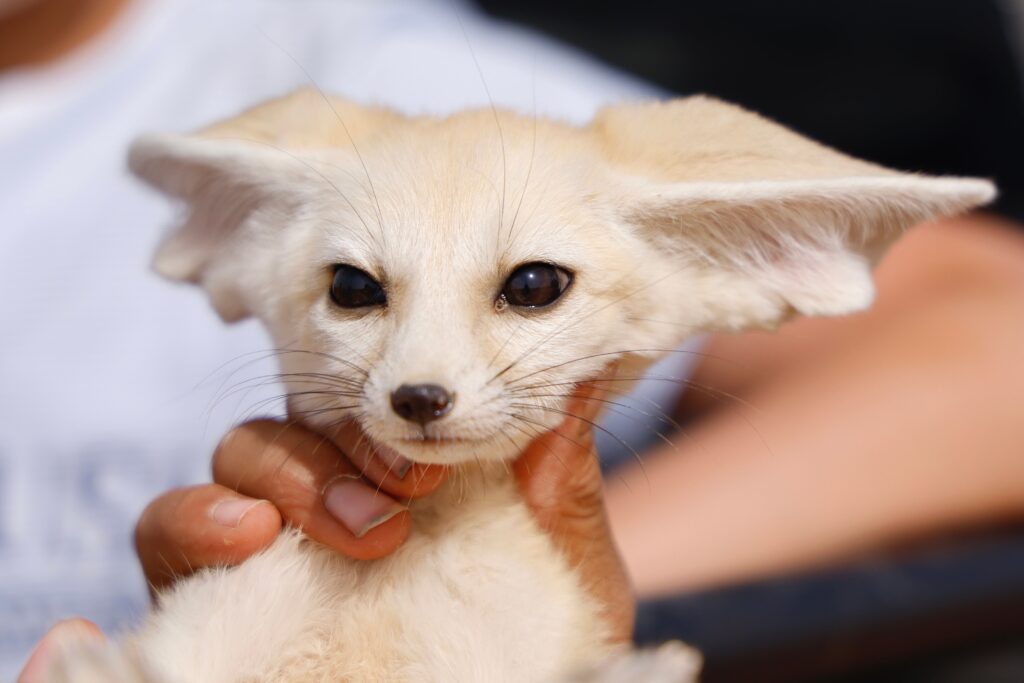
By summarizing the behavior of fennec fox (Vulpes zerda) baby fennec foxes, we can understand their developmental stages and behavior from birth to independence.
- Birth and Nest
Breeding Season: Spring–Summer
Nest Building:
They dig holes in sand dunes or rock shelters to create dens.
A safe place to protect the baby foxes from danger and high temperatures.
Litter Size: Usually 2–5
Birth Weight: Approximately 80–120g
- Baby Characteristics
Birthed covered in down, their eyes are closed.
Feet, ears, and sensory organs are underdeveloped.
They are barely able to move from the den and are completely dependent on their parents.
- Growth Stages
Growth and Behavior: From 0–2 weeks, they remain closed and are held by their mother in the den. They depend on feeding and warmth. From 2–4 weeks, their fur opens and their ears become erect. Their fur grows in and they play with their siblings. From 4–6 weeks, they begin walking and making small movements around the den. They learn hunting and survival skills from their parents. By 6-8 weeks, they begin exploring outside the den. They also practice hunting. By about 2 months, they begin to move independently. They are able to hunt and move around with the assistance of their parents.
- Survival Considerations
High risk of predation from natural enemies (birds of prey, snakes, weasels, etc.)
Poor food and den security reduce the survival rate of young.
Is the fennec fox an endangered species?
The fennec fox is not an endangered species. It is classified as Least Concern and is stable. However, it is almost extinct in southern Morocco, and has already been confirmed extinct in some areas. There are dangers such as: Fennec foxes are listed in Appendix II of CITES.
captured as a pet
The fennec fox is a much-loved animal all over the world, and is in high demand as a pet, so overhunting is becoming a serious problem locally. Housing development has progressed further in southern Morocco, so it is no longer seen.
Some protected areas begin
Because of the dangers mentioned above, they are protected in Morocco, Western Sahara, Algeria, Tunisia, and Egypt, and efforts are being made to prevent overfishing.
Can you keep a fennec fox as a pet?
Although keeping fennec foxes is not prohibited, they are rarely sold. Therefore, it is better to get one from a zoo rather than a pet shop. This category of animals is popular not only in Japan but also around the world. Fennec foxes are often reported in the news.
Active at night when people are sleeping
Fennecs are completely nocturnal. They are very active when humans are sleeping. As a result, their daily rhythms may not match those of humans.
Requires breeding space
Fennecs are not docile animals. They also love exercise, so a large breeding space is required. You will need a cage as large as possible.
I never remember the toilet
Fennec cats never learn to use the toilet. This is because they have a habit of claiming their territory. Additionally, they are extremely noisy, so they are definitely not suitable for apartments or condominiums. It also has a distinctive animal odor.
Food is dog food
Since fennec foxes belong to the canine family, they can be fed the same dog food as dogs.
Zoos Housing Fennec Foxes (Japan & Worldwide)
Fennec foxes are small foxes popular both in Japan and around the world; they are kept in facilities that recreate desert environments or in small-animal exhibit areas. However, because they are nocturnal and require careful management of heat and humidity, relatively few zoos keep them.
🇯🇵 Major Zoos in Japan Housing Fennec Foxes
🦊 Inokashira Park Zoo
One of the premier facilities in Japan for viewing fennec foxes
Actively engaged in breeding efforts
The birth of a baby fennec fox has been announced for 2026
🦊 Aquamarine Fukushima
A facility with a track record of keeping fennec foxes
Individuals are sometimes transferred through breeding cooperation programs (breeding loans)
🦊 Izu Shaboten Zoo
A facility known for exhibiting and keeping fennec foxes
Educational videos featuring zookeepers are available to the public
Baby fennec foxes have been exhibited in the past
🌍 Major Facilities Worldwide Housing Fennec Foxes
🇺🇸 Smithsonian’s National Zoo
A prominent overseas zoo that keeps fennec foxes
Exhibited in the Small Mammal House
Specific individuals named “Sahara” and “Desi” have been featured
🇬🇧 ZSL London Zoo
Fennec foxes are sometimes kept as part of exhibits featuring small desert mammals
🇫🇷 Parc Zoologique de Paris
A facility where fennec foxes can be seen in the North African animal exhibit
🇩🇪 Zoo Berlin
A historic zoo that houses a diverse range of small mammals
Has a track record of exhibiting fennec foxes
Introducing other animals




コメント