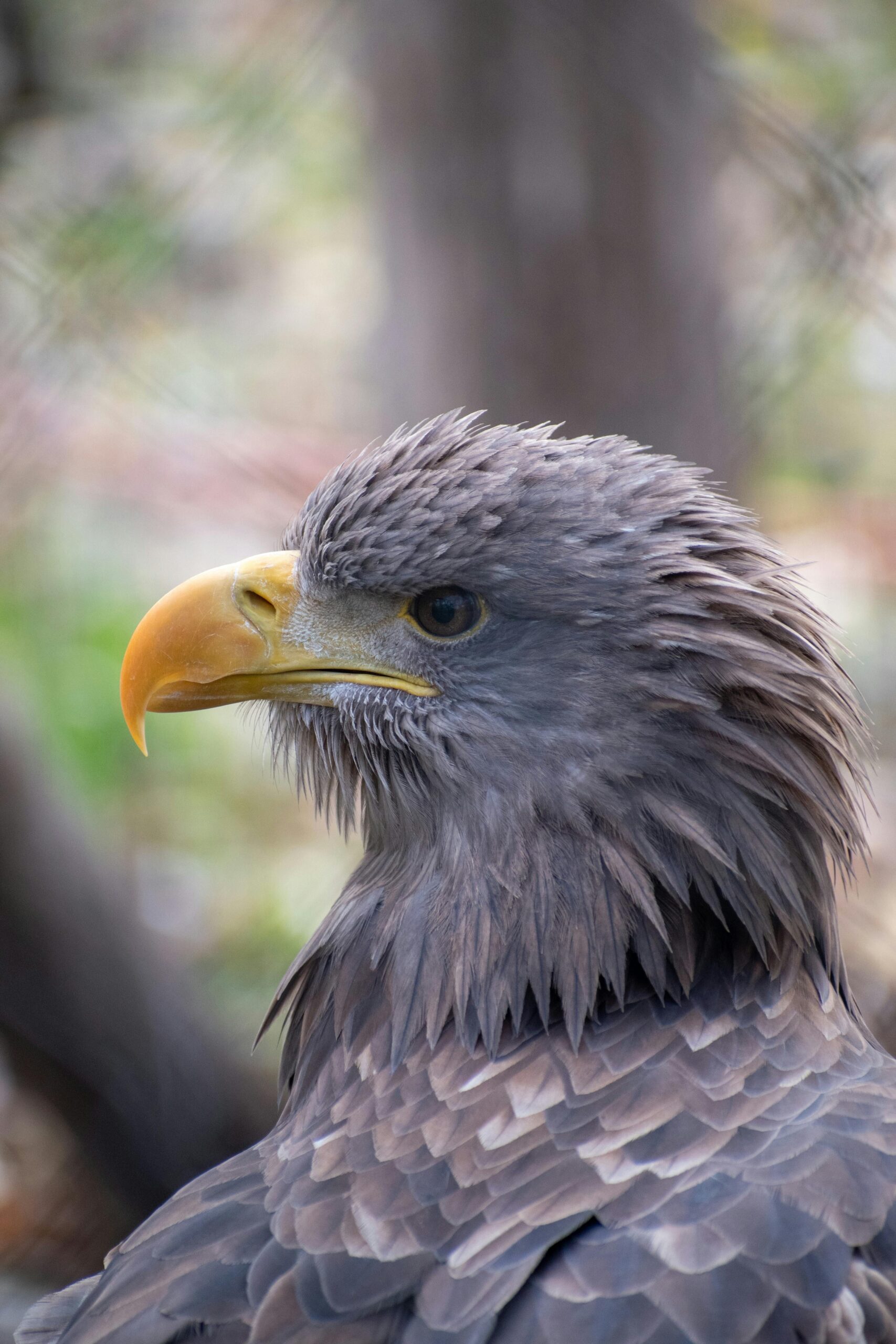
What kind of bird is a golden eagle? We will explain its characteristics, ecology, and habitat. The golden eagle is a very large bird that is also a predator. Due to its large body, it can expand its wings to an astonishing size. A summary of the characteristics and ecology of large birds.










- What is a golden eagle? About basic status
- What are the roots and origins of the Golden Eagle?
- About habitat
- feature is? What kind of creature is it?
- What is the ecology like?
- About Molting
- About Their Calls
- Seasonal Activities
- Flight Speed
- About Golden Eagle Chicks
- Is the golden eagle an endangered species?
- Can you keep a golden eagle as a pet?
- Facilities Housing Golden Eagles (Japan & Worldwide)
- Introducing other animals
What is a golden eagle? About basic status
The golden eagle is a bird classified in the order Accipitridae and the genus Accipitridae. The scientific name is Aquila chrysaetos, and the kanji is dog eagle. The body length is 75-95cm and the weight is 3-5kg. A list of basic information is below. Currently, eagles can be seen distributed all over the world and in Japan in the northern hemisphere. It is very large when it spreads its wings.
| Japanese(和名) | イヌワシ |
| English(英名) | Golden eagle |
| scientific name(学名) | Aquila chrysaetos |
| classification(分類) | Ave、Accipitriformes、 Accipitridae、Aquila 鳥綱、タカ目、タカ科、イヌワシ属 |
| IUCN Status(保全状況) | LEAST CONCERN |
| Length(体長) | 75 – 95cm |
| Weight(体重) | 3 – 5kg |
What are the roots and origins of the Golden Eagle?
The Golden Eagle (Aquila chrysaetos) is a large bird of prey. Tracing its origins reveals an evolutionary history spanning tens of millions of years leading up to the bird we see today.
Ancestors: Birds of prey from tens of millions of years ago
Taxonomically, eagles—including the Golden Eagle—belong to the family Accipitridae. The ancestors of modern eagles and hawks were carnivorous birds that evolved during the era when mammals flourished following the extinction of the dinosaurs (approximately 66 million years ago or later).
Ancient relatives of the genus Aquila (the true eagles), to which the Golden Eagle belongs, are believed to have existed by the late Miocene epoch (roughly 23 to 5.3 million years ago); the fossil record identifies “true Aquila” eagles dating back about 12 million years.
Evolutionary lineage
The general lineage is as follows:
Birds of the dinosaur era
↓
Primitive birds of prey
(Over 50 million years ago)
↓
Ancestors of the Accipitridae family
(30–40 million years ago)
↓
Large eagles (Aquilinae)
↓
Genus Aquila
(Approx. 12 million years ago)
↓
Golden Eagle
Aquila chrysaetos
Where did they originate?
The exact “place of origin” has not yet been definitively determined.
However, members of the Golden Eagle group are currently widely distributed across:
Europe
North Africa
The Middle East
Central Asia
Siberia
Japan
North America
Genetic studies indicate a history of the population splitting into multiple refugia during the Ice Age and subsequently expanding again. Specifically, a divergence between Asian and Mediterranean lineages has been confirmed.
Why did they become the “Kings of the Sky”?
The characteristics the golden eagle has acquired through evolution include:
a wingspan of over two meters;
powerful gripping strength in its feet;
sharp talons;
vision capable of spotting prey from high altitudes;
and the ability to glide through mountainous terrain.
Its eagle ancestors evolved into aerial predators capable of hunting large animals, and the golden eagle specifically developed the ability to target large mammals—such as rabbits, foxes, and small deer.
About classification
The following subspecies of golden eagles exist:
- Aquila chrysaetos chrysaetos
- Aquila chrysaetos daphanea
- Aquila chrysaetos himeyeri
- Aquila chrysaetos japonica
- Aquila chrysaetos kamtschatica
Systematic classification
| 階級 | 分類 |
|---|---|
| 界 | 動物界(Animalia) |
| 門 | 脊索動物門(Chordata) |
| 綱 | 鳥綱(Aves) |
| 目 | タカ目(Accipitriformes) |
| 科 | タカ科(Accipitridae) |
| 属 | ワシ属(Aquila) |
| 種 | Aquila chrysaetos |
About habitat
Golden eagles are distributed over a fairly wide area, including Eurasia, Africa, North America, Japan (Honshu, Shikoku, Kyushu, etc.), China, and Mexico.
- Global Habitat
Golden eagles have a very wide distribution, preferring mountainous and open areas throughout the Northern Hemisphere.
Europe
Scotland, northern Spain, Norway, and the Alps
Found in open areas such as mountains, moors, and grasslands rather than forests.
Asia
Central Asia (Mongolia, Kazakhstan)
Siberia, the Himalayas, and the Tibetan Plateau
North America
Canada, Alaska, and the Rocky Mountains
Live in vast grasslands and mountainous areas.
Characteristics:
Prefers high-altitude mountainous areas and valleys.
Prefers open terrain with better visibility and easier hunting than forests.
Avoids snowy and extremely humid areas.
- Habitat in Japan
Distribution: Mainly Hokkaido
Environment: Mountainous areas, valleys, vast forests, and grasslands
Estimated population: Rare in Japan, with a breeding population of approximately 100-200 birds (Ministry of the Environment Red List: Endangered).
Characteristics:
Some individuals migrate to lowlands and plains in winter.
Breeds on high-altitude cliffs and in trees.
- Habitat Requirements
Open spaces suitable for hunting (grasslands, hills, valleys)
Trees and cliffs suitable for building large nests
Areas rich in mammals and birds to feed on

feature is? What kind of creature is it?
The golden eagle is black or dark brown, and the feathers on the back of its head are shiny yellow. The feathers covering the base of the tail feathers are light brown. Young birds have a light brown vertical stripe running from the back of the head to the back of the neck. Their main habitat is forests and grasslands, where they are constantly searching for prey. When it spots prey from above, it purses its wings and swoops down to grab it, so the prey is eaten before it is noticed. They live in pairs in the mountains, so they are often observed.
- Physical Characteristics
Body Size:
Total Length: 75-90 cm
Wingspan: 1.8-2.3 m (Adult birds have very large wingspans, making for impressive flight)
Weight: 3-6.5 kg
Feather Color:
Overall color is dark brown
Golden feathers on the head and back of the neck shine in the sunlight → the origin of the name “Golden Eagle”
Tail feathers are dark brown with slightly lighter tips
Beak and Claws:
Sharp, curved beak for tearing prey apart
Powerful claws (talons) for capturing prey
Eyes:
Yellow eyes with excellent eyesight
Can spot small animals even from high in the air
- Behavior and Ecology
Hunting:
Mainly feeds on terrestrial mammals (rabbits, squirrels, guinea pigs, etc.) and birds.
Specializes in aerial hunting, swooping down from high altitudes to catch prey.
Typically, they act alone or in pairs.
Nesting:
Builds large nests (1-2 m high, 2-3 m wide) in trees or on cliffs.
Sometimes reuses the same nest for many years.
Reproduction:
Gives birth to 1-3 chicks per breeding.
Both parents take turns raising the chicks.
- Personality and Characteristics
Intelligence: Highly intelligent and strategic in hunting and nesting.
Vigilance: Highly alert and alert to humans and predators.
Flight: Highly gliding ability, allowing them to fly long distances using the wind.
Sociality: Primarily solitary, but often lives in pairs.
What is the ecology like?
The golden eagle’s diet consists of mammals such as hares, birds of prey, reptiles such as snakes, and animal carcasses. The reproductive form is oviparous. They lay eggs by building nests in trees. Because nesting sites are limited, they often use the same nest every year, and the incubation period is about two months. The lifespan is said to be 20 to 25 years.
- Behavior and Range
Diurnal: Hunts and travels during the day.
Solo or Pair Life: Low sociality, generally solitary, but cooperates with other eagles during breeding season.
Territorial: Has a large territory during breeding season and avoids intrusion by other golden eagles.
Flight Ability:
Excellent gliding ability.
Uses thermals to travel long distances and conserve energy.
Hunts by diving to catch prey.
- Diet (What it eats)
Main diet: Medium-sized mammals.
Rabbits, squirrels, guinea pigs, baby antelopes, etc.
Other: Birds (ducks, geese, crows, etc.)
Preying Method:
Dives from high altitudes to catch prey.
Finds small animals on the ground and pounces.
Captures with powerful claws, then tears them apart with their beaks and eats them.
- Breeding and Nesting
Nesting:
Builds large nests in trees or on cliffs.
May use the same nest for many years.
Breeding Season: Spring to early summer (varies by region)
Number of eggs: 1-3
Brooding:
Both parents cooperate to raise the chicks.
Chicks spend about 1-2 months with their parents in the nest before undergoing flight training and becoming independent.
- Movement and Distribution
Seasonal Migration:
Northern individuals sometimes migrate to lowlands and plains in winter.
In Hokkaido, Japan, some individuals descend to relatively lowlands in winter.
Habitat:
Mountainous regions, open grasslands, and valleys.
Prefers open areas with better visibility than forests and better hunting conditions.
About Molting
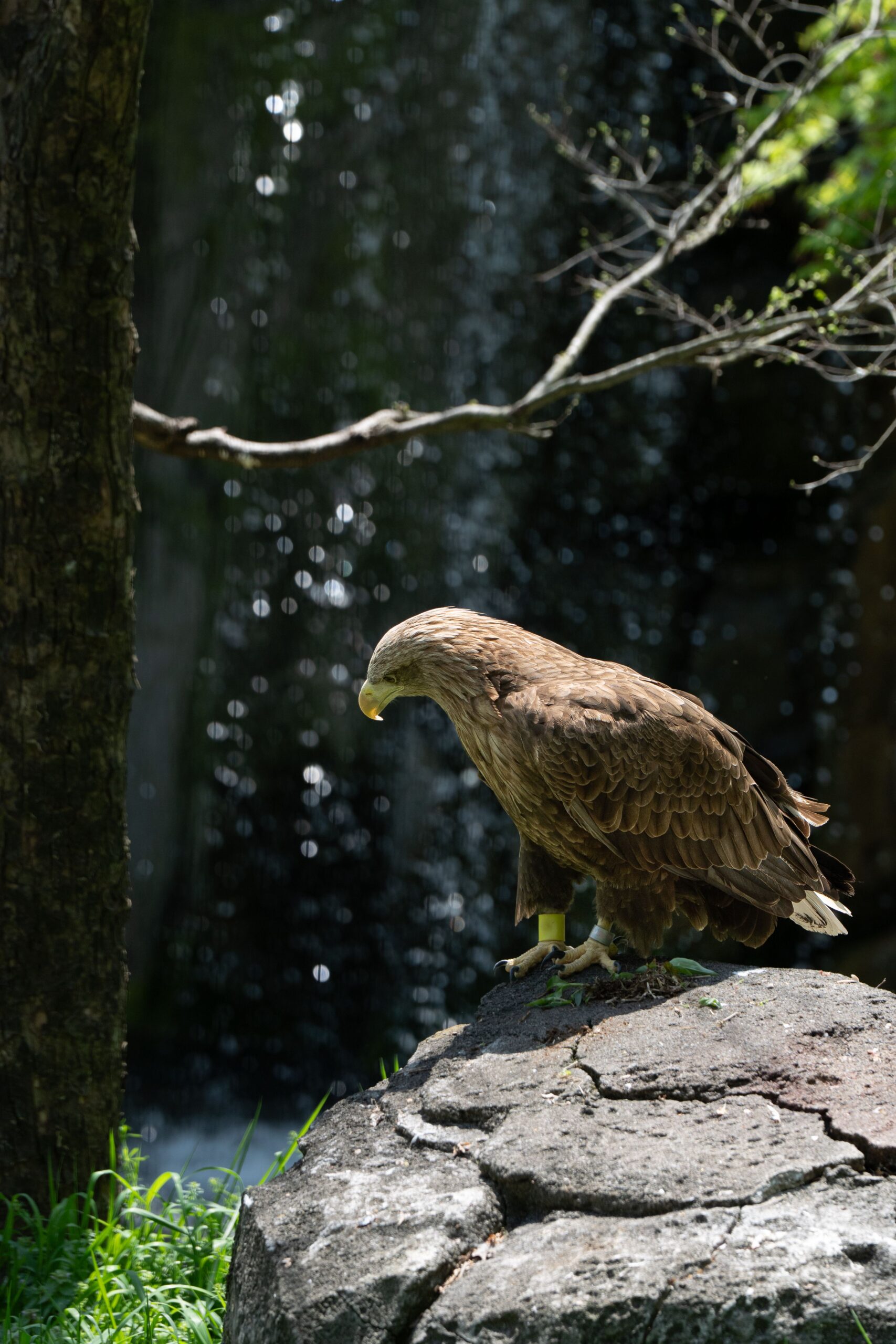
Molting in the golden eagle (Aquila chrysaetos) is the biological process of shedding old feathers and growing new ones. It is a crucial periodic change for the eagle, essential for maintaining its flight and hunting capabilities.
When Golden Eagles Molt
Adult golden eagles primarily molt
from spring to autumn (roughly April through October).
This timing allows them to renew their plumage while expending energy during the period spanning from the breeding season to the chick-rearing phase, following the harsh winter.
However, because losing too many feathers at once would render them unable to fly, raptors replace their feathers gradually over time.
The Molting Process
Feathers are replaced in the following sequence:
① Old feathers weaken
Feather structures deteriorate due to:
Ultraviolet (UV) rays
Friction
Rain and snow
Stress from flight
↓
② Feather bases loosen
The body begins producing new feathers and pushes out the old ones.
↓
③ New feathers (pin feathers) grow
Initially, they emerge as “pin feathers” (or blood quills) containing a blood supply; as they grow, they harden into mature feathers.
↓
④ Fully formed flight feathers
Once the new flight feathers are fully developed, flight performance is restored.
Wing feathers do not all shed at once
Large raptors like the golden eagle replace critical feathers sequentially.
Key feathers:
Primary flight feathers
Located at the wingtips
Crucial for high-speed flight and sharp turns
Secondary flight feathers
Located on the inner part of the wing
Related to gliding ability
Tail feathers
Crucial for changing direction and braking
To ensure they can still hunt while molting, they replace feathers gradually while maintaining balance between the left and right wings.
Molting from juvenile to adult
Golden eagles undergo multiple changes in plumage color as they mature. 0 years old (juvenile)
Overall dark brown-black coloration
White patches on the wings
Prominent white areas on the tail
↓
Ages 1–5
Undergoes annual molting
White patches decrease
Head turns golden-yellow
Body coloration gradually resembles that of an adult
↓
Approx. ages 5–7
Attains full adult plumage
Consequently, its age can be estimated in the wild by observing its plumage patterns.
About Their Calls
Contrary to the impression of being the “King of the Skies” suggested by their appearance, the Golden Eagle (Aquila chrysaetos) produces surprisingly high-pitched, thin-sounding calls. While they are a relatively vocal species among large birds of prey, they are generally very quiet birds.
Typical Calls
Golden Eagle calls are generally described as follows:
“Pee-pee”
High, clear tone
Short, repeated sounds
Used during flight or to communicate with others
“Kee-kee”
Used when alert or wary
Reaction to intruders in their territory
“Kwit-kwit”
Communication between mates
Calls between parent and offspring
These are sharp, whistle-like sounds characteristic of birds of prey—surprising given their large bodies.
Why don’t they have low voices despite their large size?
While large animals like lions and bears produce low-pitched sounds, the situation is different for birds.
A bird’s voice is determined by:
Body size
Trachea length
Structure of the vocal organ (syrinx)
Although the Golden Eagle is a large bird—measuring 80–90 cm in length with a wingspan exceeding 2 meters—its vocal organ is simple for a bird of prey, producing high-pitched calls that carry over long distances.
Situations Where They Call
① Communication between mates
Golden Eagles are monogamous and maintain the same territory for long periods.
When flying apart,
they call back and forth
to signal, “I am here.”
② Territorial defense
When other Golden Eagles or large raptors intrude,
they drive them away using
steep dives,
wing-spreading displays (intimidation),
and vocalizations.
Territorial instincts are particularly strong during the breeding season.
③ Demanding calls from young birds
Chicks in the nest make calls to their parents
to beg for food
or to summon them.
Young birds call more frequently than adults, becoming particularly active when a parent approaches.

Seasonal Activities
The seasonal activities of the Golden Eagle (Aquila chrysaetos) vary significantly depending on breeding, hunting, molting, and territory maintenance. Golden Eagles in Japan (subspecies Aquila chrysaetos japonica) possess a life cycle specifically adapted to the seasonal changes of their mountainous environment.
Spring (March–May)
Season of Breeding Onset and Territorial Defense
Spring is the most critical time of year for Golden Eagles.
Key Activities
Pair flights (display flights)
Territory verification
Nest repair
Egg-laying and incubation
Courtship flights (displays)
In early spring, they perform “undulating flights” characterized by:
Soaring to high altitudes
Diving steeply
Rolling their wings
Chasing one another
These behaviors serve to:
Reaffirm the pair bond
Assert territorial claims against other individuals
Prepare for breeding
Egg-laying
In Japan, egg-laying generally occurs:
Between February and April
Typically, 1 or 2 eggs are laid, though in most cases, only one chick is successfully raised.
Summer (June–August)
Season of Chick-rearing and Peak Demand for Hunting Skills
Summer is an extremely busy time for the parent birds.
Key Activities
Feeding the chicks
Frequent hunting
Guarding the area around the nest
Onset of molting
Parental hunting
Prey includes:
Mountain hares
Copper pheasants
Snakes
Pheasant species
Small mammals
As the chicks grow, their food requirements increase, leading the parents to go hunting multiple times a day.
Growth of the young
In the latter half of summer, the young begin:
Practicing wing-flapping
Flying around the nest
Hunting training
Autumn (September–November)
Season of Independence, Molting, and Territorial Adjustment
Autumn marks a major transitional period for the young birds.
Young birds
They fledge (leave the nest) at approximately 3 to 4 months of age, after which they continue to learn hunting skills from their parents for a time. What they learn:
How to locate prey
Timing for a dive
Using the wind
Avoiding danger
After a few months, they leave their parents’ territory.
Adults
Autumn is the season of molting.
Feathers replaced:
Flight feathers (wing feathers)
Tail feathers
Body feathers
As they grow new feathers, they tend to prioritize flight efficiency over hunting.
Winter (December–February)
A season for survival and maintaining territory
Winter is a crucial period for preparing for the breeding season.
Key activities:
Patrolling the territory
Pair bonding behaviors
Searching for prey
Preparing for courtship
With prey becoming scarce in the snowy mountains, golden eagles rely heavily on their keen eyesight.
From high altitudes, they scan for:
Movement on the snow
Small animals among the rocks
Open slopes
Flight Speed
The flight speed of the golden eagle (Aquila chrysaetos) varies significantly depending on the mode of flight. As a “hunter of the skies,” it prioritizes efficiency during routine gliding but can rapidly increase its speed when hunting.
Normal Flight (Level Flight)
Approximately 45–60 km/h
This is the speed at which golden eagles typically patrol their territories or travel from place to place.
Characteristics:
Slow wingbeats using large wings
Gliding by utilizing updrafts
Capable of sustained flight for long periods
As large birds with a wingspan exceeding 2 meters, they excel at energy-efficient flight that harnesses the wind, rather than the rapid wing-flapping seen in smaller birds.
Gliding Speed
Approximately 50–80 km/h
This is the golden eagle’s most proficient mode of flight.
In mountainous terrain, they maintain altitude with minimal flapping by utilizing:
Slope updrafts
Valley winds
Warm thermal updrafts
This capability allows them to search for prey from the air for extended periods.
Diving Speed During Hunting
Top speed: Estimated to reach approximately 240–320 km/h
When hunting, upon spotting prey from above, the eagle folds its wings and enters a steep dive.
During this maneuver, it achieves extremely high speeds through:
Acceleration due to gravity
Changes in wing shape
Control of air resistance
However, it is not a specialist in high-speed diving to the same extent as the peregrine falcon—known as the world’s fastest bird (capable of dives exceeding 300 km/h, with records surpassing 400 km/h).
The golden eagle is a type of predator that relies on:
A large body, powerful legs, and precise striking ability
…rather than sheer top speed.
About Golden Eagle Chicks
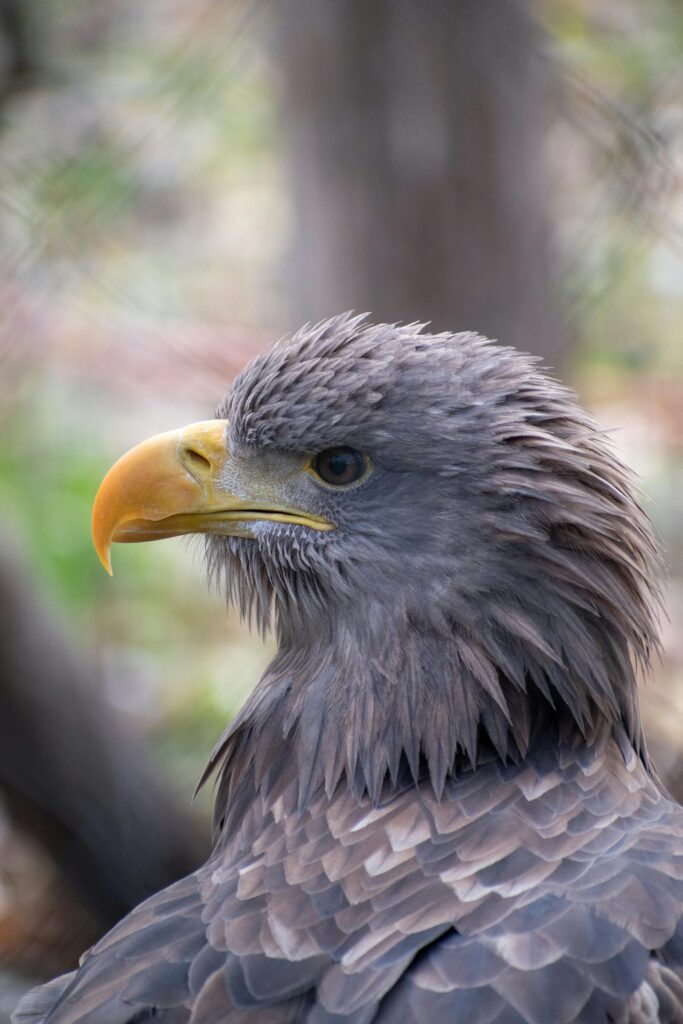
This article provides a detailed summary of the ecology and developmental process of golden eagle chicks.
- Eggs and Hatching
Egg-laying Season: Spring to Early Summer (April to May in Japan)
Egg Number: 1-3
Egg Characteristics:
White to Light Cream
May have Brown Spots
Hatching Time: Approximately 40-45 Days
- Chick Development
Immediately After Hatching:
Small body, thin down
Eyes are half-closed, and parents must keep them warm and protected
2-3 Weeks:
Down feathers turn to feathers, and body size increases rapidly
Not yet able to fly, but still fed by parents
1.5-2 Months:
Flight Training Begins
Practices gliding and short-distance flight under the supervision of parents
Independence:
Fledges approximately 2-3 months after hatching
Parents feed the chicks until fully capable of hunting
- Chick Characteristics
Plumage Color: Lighter brown than adults
Eyes: Grayish, not yellow
Body Size: As they grow, they gradually grow larger, and their wings and tail feathers develop.
Personality: Curious but not yet cautious, they are vulnerable outside the nest.
- Relationship with Parents
Protection: Parents protect their chicks from predators.
Feeding: Parents feed their chicks with prey they have hunted.
Training: Teaching hunting and flying skills.
Is the golden eagle an endangered species?
The golden eagle is not an endangered species. Instead, it is listed in the Washington Convention, so it is restricted in international trade. As eagles and black-tailed hawks decline, their populations become widely protected. Nature conservation research and activities are becoming more active.
- Global Conservation Status
IUCN Red List (International Union for Conservation of Nature)
Classification: Least Concern (LC) → Low risk of extinction globally
Reason: Wide distribution, large and stable population worldwide
However, populations may be declining in some areas
- Conservation Status in Japan
Ministry of the Environment Red List (Japan)
Classification: Endangered (EN)
Reason:
Distribution limited to Hokkaido
Habitat loss due to deforestation and human activity
Threats such as reduced prey and traffic accidents
Protection Measures:
Protection of breeding sites
Population surveys and habitat management
Restrictions on human interference (such as restricting development and forestry near nests)
- Population in Japan
Breeding population in Hokkaido: Approximately 100-200 birds
Distribution within Japan is extremely limited and highly rare
Can you keep a golden eagle as a pet?
Can you keep a golden eagle as a pet? It is not impossible to keep one, but there are many cases where permission is required. This is because they sometimes attack people and livestock, and they prey on them. It’s not easy at all, so I don’t recommend it to the general public. We recommend viewing it through information about events such as zoos.
- Legal Restrictions
In Japan, birds of prey require special permission.
Golden eagles are protected under the Wild Bird and Animal Protection Act.
Capturing or keeping them without permission is illegal.
Keeping them is permitted only with permission from the prefectural governor for special purposes (research, education, breeding facilities, etc.).
- Ecological Reasons
Large and have a strong hunting instinct.
Weight: 3-6 kg, wingspan: approximately 2 m.
Captures prey with sharp talons and beaks.
Dangerous and uncontrollable in a home environment.
Requires a large territory.
In the wild, they fly over tens of square kilometers.
Health and stress management are difficult in cages or indoors.
- Diet and Environmental Issues
Diet: Mainly wild animals (rabbits, birds, etc.).
Pet food tends to be nutritionally deficient.
Environment: Requires a high nest and ample gliding space.
Indoor breeding or a small garden is not possible.
Facilities Housing Golden Eagles (Japan & Worldwide)
The Golden Eagle (Aquila chrysaetos) is a large bird of prey kept in captivity both in Japan and around the world. However, unlike common zoo animals such as lions or elephants, they require extensive space for flight and specialized husbandry expertise; consequently, the number of facilities housing them is limited.
🇯🇵 Major Facilities in Japan Where Golden Eagles Can Be Seen
Tama Zoological Park (Tokyo)
A central hub for research on the husbandry and breeding of Japanese Golden Eagles.
Key Features:
Proven track record in husbandry and breeding
First successful breeding achieved in 1998
Contributed to maintaining the captive population in Japan for approximately 30 years
Involved in conservation, propagation, and reintroduction research
Tama Zoological Park conducts initiatives linked to the Ministry of the Environment’s conservation and propagation projects.
Chiba Zoological Park (Chiba Prefecture)
One of the facilities that exhibits Golden Eagles.
The exhibit allows visitors to observe up close:
Their impressive physique, with a wingspan reaching approximately 2 meters
Sharp talons
The distinctive appearance of a large bird of prey
Ishikawa Zoo (Ishikawa Prefecture)
Features an exhibit area called “Golden Eagle Valley” where the birds are housed and displayed.
The zoo places strong emphasis on conservation education, serving as a place to learn about the Japanese Golden Eagle, which inhabits the mountainous regions along the Sea of Japan coast.
🌎 Notable Facilities Housing Golden Eagles Worldwide
San Diego Zoo (USA)
One of the largest zoos in North America.
Engages in conservation and educational activities regarding birds of prey, including Golden Eagles.
Key Features:
Spacious bird exhibits
Wildlife conservation research
Educational programs
The Peregrine Fund World Center for Birds of Prey (USA)
A conservation facility specializing in birds of prey.
Activities:
Eagle conservation
Breeding research
Support for reintroduction to the wild
Education on birds of prey
Globally renowned for the conservation of large birds of prey, including Golden Eagles.
Tierpark Berlin (Germany)
A prominent zoo in Europe known for exhibiting and housing large birds of prey. Cotswold
Falconry Centre (UK)
A facility specializing in birds of prey.
Features:
Exhibits of birds of prey, including golden eagles
Flight demonstrations
Observation of behavior in captivity
Introducing other animals


コメント