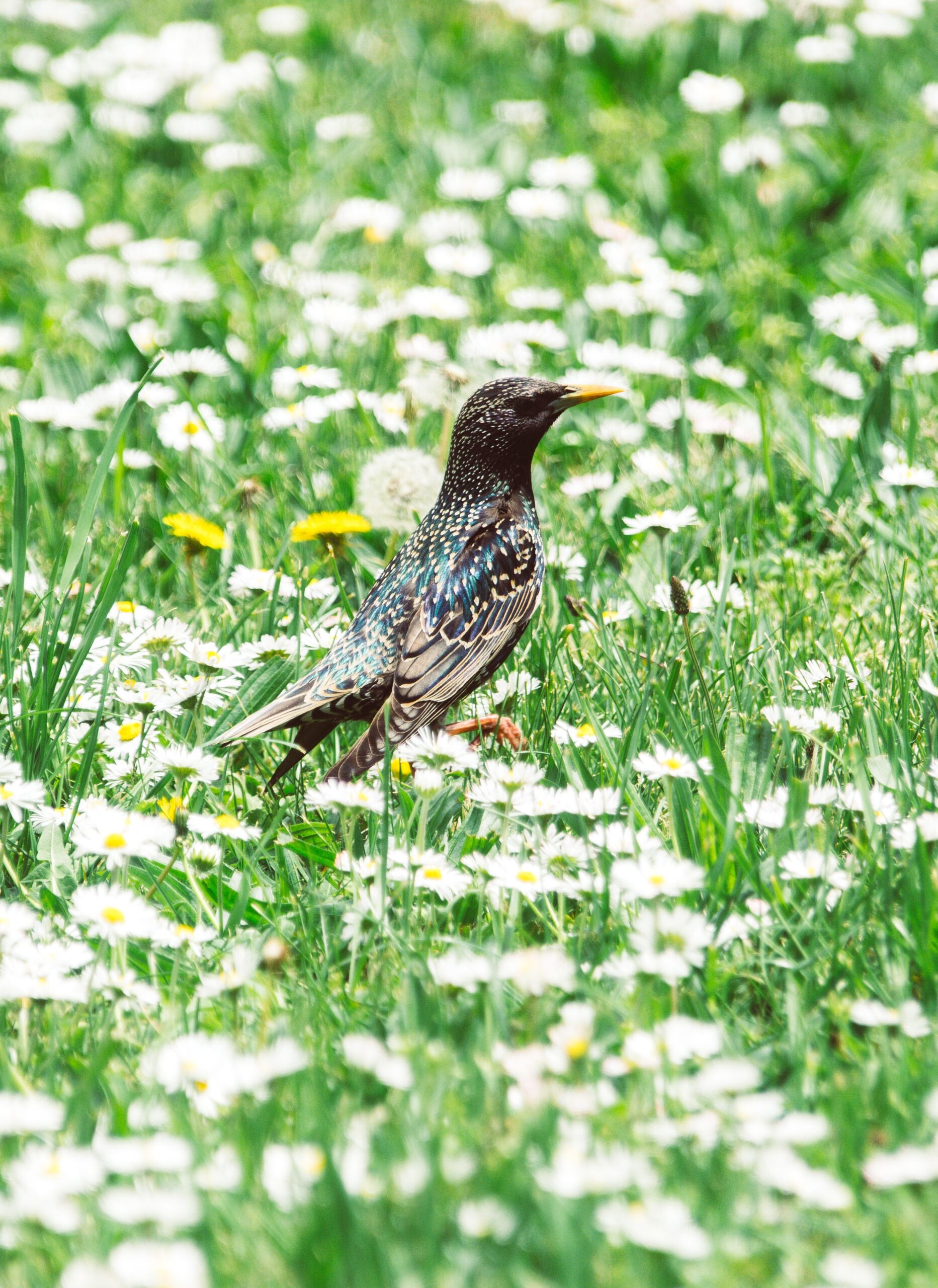
Starlings are known for their loud voices, cause damage, and are often exterminated. What kind of bird? We will explain its characteristics, ecology, and habitat. It has irregular white spots around the eyes and cheeks, making it a very distinctive bird. This bird can be seen not only in Japan, but also in the Korean Peninsula and China, so it is possible to observe large numbers in these areas.









- What is a starling? About basic status
- What are the roots and origins of the Mukudori (White-cheeked Starling)?
- About habitat
- feature is? What kind of creature is it?
- What does the ecology look like?
- About Molting
- About Their Calls
- Seasonal Activities
- Regarding Flight Speed
- About Starling Chicks
- Are starlings an endangered species?
- Can starlings be kept as pets?
- Zoos where they are kept (Japan & Worldwide)
- Introducing other animals
What is a starling? About basic status
Starlings are birds of the order Passeriformes and of the family Starlingidae. The scientific name is Sturnus cineraceus, and the kanji is Mukudori, Baekduo. The list of information is as follows.
| Japanese(和名) | ムクドリ |
| English(英名) | White-cheeked Starling |
| scientific name(学名) | Sturnus cineraceus |
| classification(分類) | Ave、 Passeriformes、Sturnidae、Sturnus 鳥綱、スズメ目、ムクドリ科、フクロウオウム属 |
| IUCN Status(保全状況) | LEAST CONCERN |
| Length(全長) | 24cm |
| Weight(体重) | 0.5kg |
What are the roots and origins of the Mukudori (White-cheeked Starling)?
The Mukudori (scientific name: Spodiopsar cineraceus) originated from the starling family (Sturnidae), which evolved in East Asia.
The Mukudori found in Japan today serves as a prime example of a species that—over a long evolutionary process—transformed from a “forest-dwelling bird” into one adapted to agricultural and urban environments.
Ancestry: Origins of the Starling Family (Sturnidae)
The Mukudori belongs to the starling family (Sturnidae), a group comprising over 120 known species worldwide.
Their primary distribution centers are:
Southeast Asia
South Asia
Africa
The evolutionary trajectory is as follows:
Early passerine birds
↓
Divergence of the starling family ancestor
↓
Spread to Asia and Africa
↓
Evolution of East Asian starling lineages
↓
Emergence of the modern Mukudori (Spodiopsar cineraceus)
When did they emerge?
Evolutionarily speaking, the starling family is a relatively recent group within the order Passeriformes (perching birds).
Approximate timeline:
Approximately 20–30 million years ago
(Cenozoic Era / Pre-Miocene)
Ancestors leading to the starling family appeared
Diversification occurred around tropical Asia
↓
From approximately 10 million years ago onwards
Climate change
Changes in forest environments
Expansion of grasslands and open terrain
…led to an increase in species adapted to open environments.
↓
Within the last few million years
Regional starling species diverged across the islands and mainland of East Asia
…is the prevailing theory.
Where did the Mukudori come from?
The ancestors of the modern Mukudori
most likely evolved in the East Asian region,
spanning from eastern China to the Korean Peninsula.
Current distribution:
Japan
Korean Peninsula
Eastern China
Russian Far East
…and elsewhere.
It is believed that they migrated to the Japanese archipelago from the continent in ancient times.
Why did they thrive in Japan? The reason the white-cheeked starling has thrived in Japan is its adaptability to the environment.
① Adaptation to agricultural land
Beyond just the forests of the past,
they have been able to utilize:
paddy fields
upland fields
grasslands
The spread of rice cultivation, in particular, increased the availability of foraging grounds for them.
② Omnivorous diet
They consume a wide variety of foods.
Animal matter
Insects
Earthworms
Spiders
Small larvae
Plant matter
Fruits
Seeds
Nuts
Their ability to change their diet according to the season is a key strength.
③ Communal living
The most distinctive characteristic of these starlings is their flocking behavior.
In the evening:
flocks numbering in the hundreds
or even thousands
may form (at their roosting sites).
This behavior serves to:
deter predators
facilitate information sharing
help maintain body heat
(Taxonomy of the White-cheeked Starling / Common Starling)
| 分類階層 | 名称 |
|---|---|
| 界 (Kingdom) | Animalia(動物界) |
| 門 (Phylum) | Chordata(脊索動物門) |
| 綱 (Class) | Aves(鳥綱) |
| 目 (Order) | Passeriformes(スズメ目) |
| 科 (Family) | Sturnidae(ムクドリ科) |
| 属 (Genus) | Sturnus(ムクドリ属) |
| 種 (Species) | Sturnus cineraceus(ムクドリ) |
About habitat
Starlings live in Japan, the Korean Peninsula, and China.
- Global Distribution
The Grey Starling is not endemic to Japan, but is widespread throughout East Asia.
Mainly found in the following areas:
All of Japan (Honshu, Shikoku, Kyushu, and parts of Hokkaido)
Korean Peninsula
Eastern China
Far Eastern Russia
- Habitat in Japan
Adapted to human habitats, including urban areas, farmlands, and forest edges
Breeding Season: Nests in tree holes, crevices, and nest boxes
Winter: Often forms large flocks in rivers, lakes, flat farmlands, and urban parks
Flocking Behavior:
Moves in flocks of dozens to hundreds of birds
Large flocks of thousands have sometimes been observed in winter
- Habitat Characteristics
Cities and Residential Areas: Resting in flocks on power lines and street trees
Farmlands: Congregate in farmland to feed on seeds, fruit, and insects
Forest Edges and River Areas: Used for breeding and foraging
Highly Adaptable: Can easily survive in human habitats
feature is? What kind of creature is it?
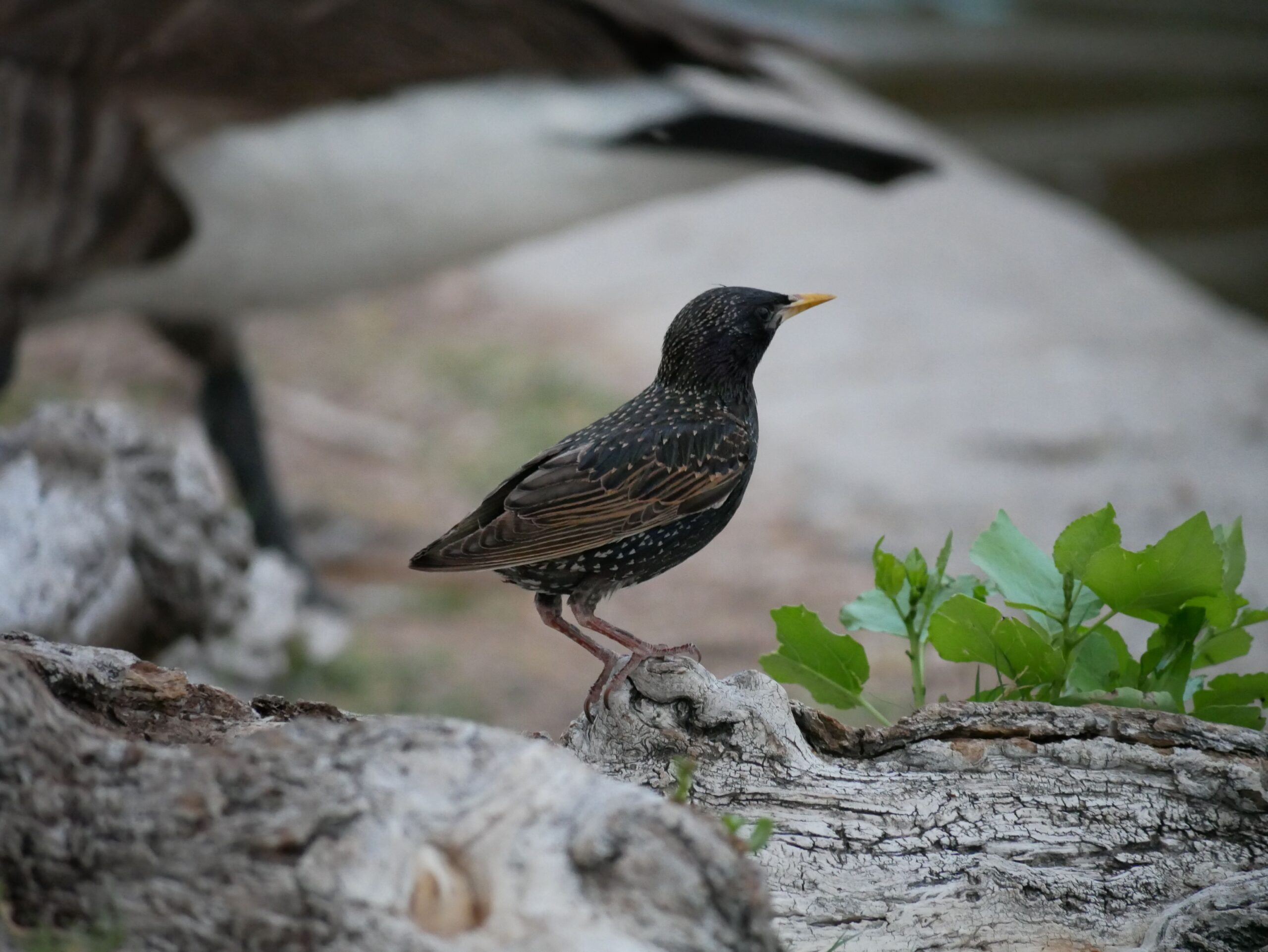
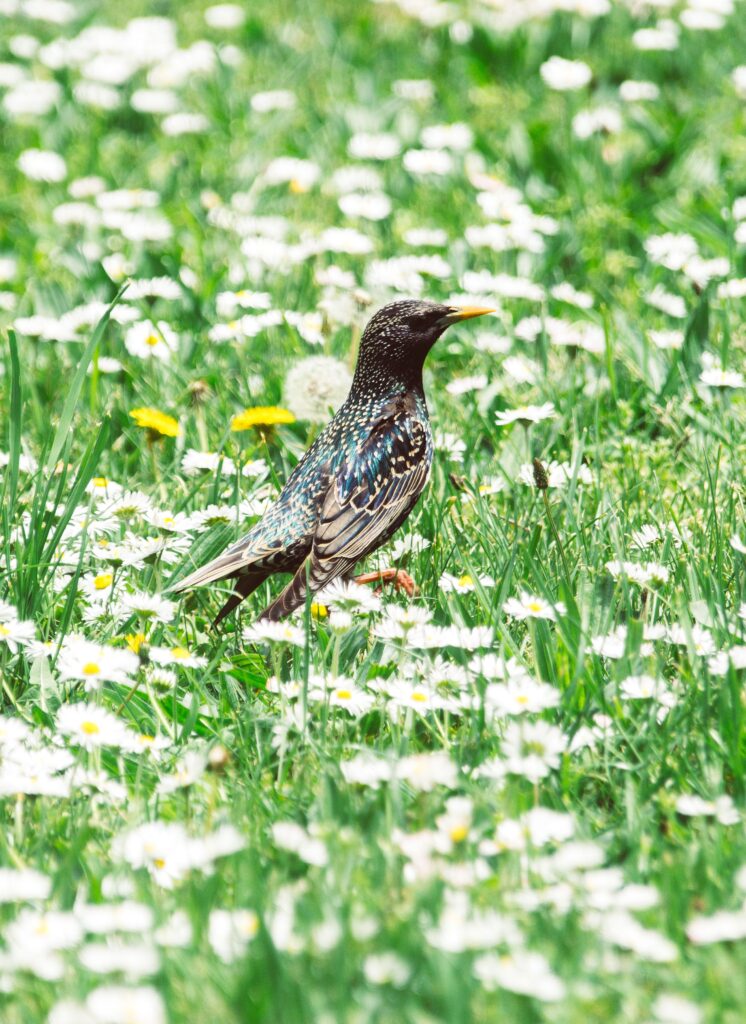
The starling’s body is blackish brown, and its head is grayish blackish brown. The most distinctive feature is irregular white spots around the eyes and cheeks. It is a resident bird that is distributed almost throughout Japan, and tends to migrate to the south in winter. This bird can be seen in farmlands, wetlands, and grasslands.
- Physical Characteristics
Body Shape/Size
Body Length: Approximately 21-23cm
Wingspan: Approximately 35-37cm
Body Type: Slightly larger than a sparrow, with a sturdy build
Plumage Color
Overall color is grayish-brown to darkish-brown
Winter plumage is mottled with white or pale spots
The beak of males turns yellow during the breeding season
Head, Beak, and Eyes
Head: Grayish
Beak: Yellow during the breeding season, slightly darker in winter
Eyes: Shiny black
Tail: Slightly short and spread out
- Ecology and Behavior
Diet
Omnivorous
Insects (adults and larvae), earthworms, and small crustaceans
Food also includes fruits, seeds, rice, and vegetables
Foraging Methods
Pecking on land, gathering nuts, and catching insects in the water
Behavior and Habits
Often travel in flocks
Form large flocks of hundreds to thousands of birds in winter
Flight
Nimble and fast, they fly in coordinated groups
Voices and Calls
They have a wide variety of calls and sometimes imitate the voices of other birds and humans
Nest Building
Build nests in tree holes, rock crevices, and crevices in buildings
Nesting Materials: Grasses and feathers
Sociality
Highly social, they forage and move around in flocks to ensure safety
Able to adapt to human contact in urban areas
- Lifestyle Characteristics
Breeding Season: Spring to early summer, nesting in trees or buildings
Wintering Season: Forms large flocks in flat farmland, cities, and parks
Highly adaptable: Found in a wide range of environments, including forests, farmland, and urban areas
What does the ecology look like?
Starlings are omnivorous, subsisting on plant seeds, fruits, and even insects. The breeding season is from spring to summer, when they often build nests in holes such as under the eaves of houses. When the chicks leave the nest, both parent and offspring gather together to form a flock. The lifespan is 10 to 20 years.
- Diet and Foraging Behavior
Omnivorous and highly adaptable
Insects (adults and larvae), earthworms, and small crustaceans
Food also includes fruits, seeds, rice, and vegetables
Foraging Methods
Pecks on the ground
Gathers nuts
May also catch insects and small aquatic animals near water
Forages in groups
In winter, they travel in flocks of hundreds to thousands of birds, efficiently searching for food
- Breeding
Breeding Season: Spring to early summer (April to July)
Nest Building:
Tree hollows, crevices in rocks, under the eaves of buildings, etc.
Nesting Materials: Grass, feathers, branches, etc.
Eggs and Incubation:
Number of Eggs: Approximately 4-6 per breeding
Incubation Period: Approximately 12-14 days (females incubate)
Chick Rearing:
Chicks are fed by the parents until they leave the nest.
Chicks leave the nest approximately two weeks after birth
- Migration/Migration
Starlings migrate according to the season.
While some species are resident in Japan, individuals in Hokkaido and Tohoku migrate south in winter.
They often fly in coordinated flocks, making them fast and agile flight enthusiasts.
- Flocking/Sociality
Highly social birds
They form large flocks (hundreds to thousands) in winter.
They forage, rest, and migrate while ensuring safety.
Highly adaptable to urban areas
They form flocks on power lines, street trees, and building roofs.
They are well adapted to human habitats.
- Habitat Adaptation
They live in a wide range of habitats, including forest edges, agricultural fields, rivers, lakes, and urban areas.
During the breeding season, they choose safe nesting locations.
During winter, they migrate in flocks in search of feeding and resting areas.
Are there any natural enemies?
Natural enemies include goshawks, black hawks, and owls.
About Molting
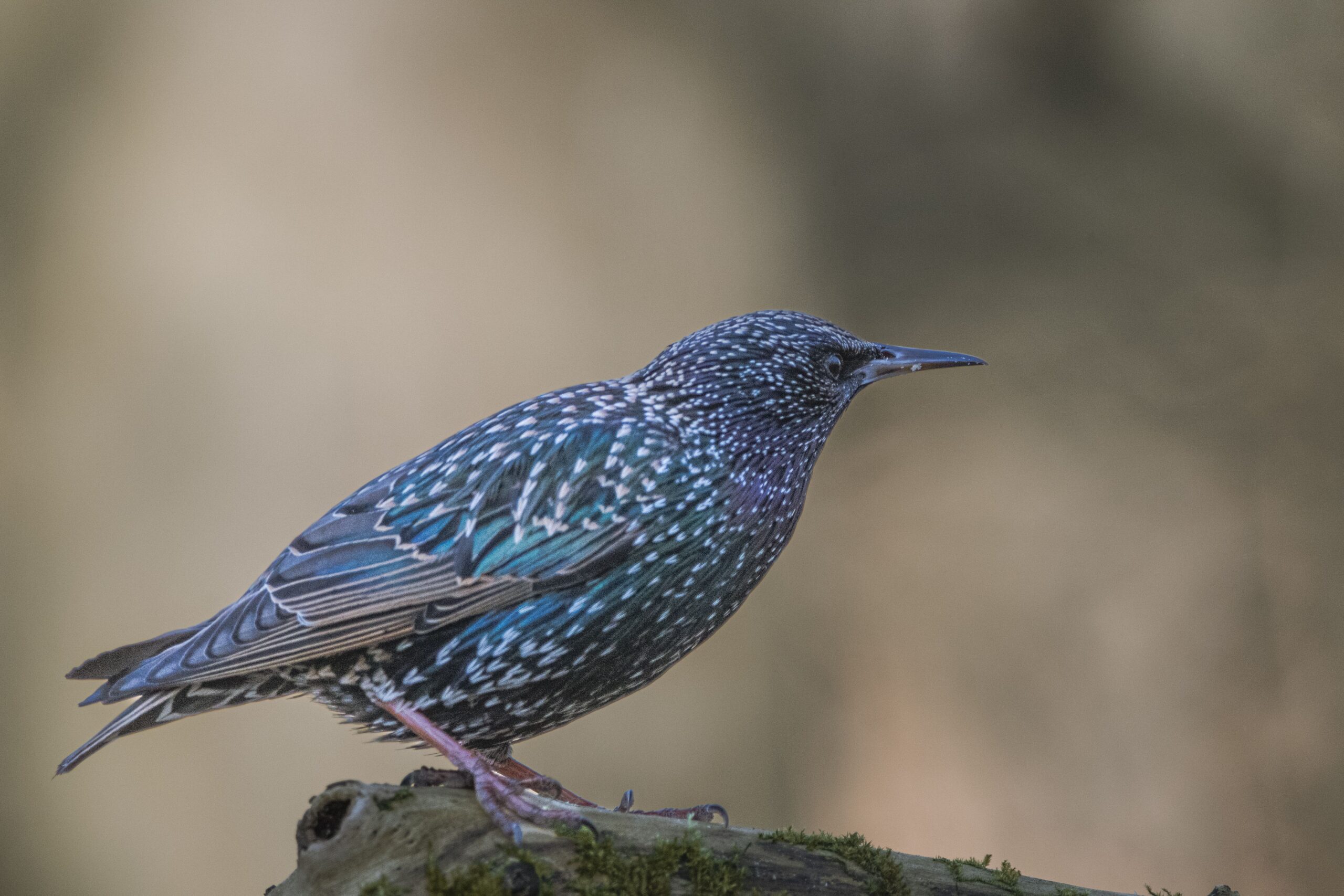
Molting is a crucial event in the annual life cycle of the White-cheeked Starling (Spodiopsar cineraceus). Because feathers are essential for flight, maintaining body temperature, and attracting mates, the birds replace their old feathers with new ones every year.
Molting Season
The primary molt for White-cheeked Starlings takes place:
🍂 From late summer to autumn (around July–November).
Annual cycle:
Spring
↓
Breeding and raising chicks
Summer
↓
Chicks become independent
Late summer to autumn
↓
Full-body molt
Winter
↓
Overwintering with new plumage
This is the general progression.
Types of Molt
White-cheeked Starlings undergo two main types of molting.
① Complete Molt
A large-scale molt that occurs after the breeding season.
Feathers replaced:
Flight feathers (wing feathers)
Tail feathers
Body feathers
Head feathers
Almost all feathers on the body are renewed.
② Partial Molt
Young birds or certain individuals may replace some feathers before the breeding season.
Specifically, feathers in areas such as:
Around the face
Chest
Head
…are renewed.
Wing Molt
Flight feathers, which are critical for flying, do not all fall out at once.
They are replaced in stages:
Old flight feathers fall out
New feathers grow from the shaft
Moving on to the next feather
…following this sequential process.
Reason:
Losing all wing feathers at once would make it impossible to fly.
About Their Calls
Rather than the melodic “songs” found in birds like the Light-vented Bulbul, the vocalizations of the White-cheeked Starling (Spodiopsar cineraceus) have evolved primarily for communication—specifically for keeping in touch with flock members, maintaining the flock’s cohesion, and sounding alarms.
Typical Calls
Their calls generally sound like this:
“Gya-gya”
“Kyuru-kyuru”
“Jee, jee”
“Gyuru-gyuru, kui-kui”
While some people find the noise level unpleasantly loud, this volume is an adaptation suited to their flock-based lifestyle.
Types of Calls
① Contact Calls (Everyday Calls)
These are the basic calls heard throughout the year.
Uses:
Locating flock members
Coordinating flock movement
Communicating while foraging
Characteristics:
Short
Repetitive
Loud
White-cheeked Starlings use these calls to stay connected with their flock, even when visibility is poor—such as in grassy areas or amidst dense foliage.
② Breeding Season Songs
During spring and early summer, males sing to attract mates.
Characteristics:
A mix of complex sounds
Multiple sound types (e.g., “kyuru-kyuru,” “piyo-piyo”)
Highly repetitive
However, they do not possess the beautiful, long songs characteristic of birds like the Japanese Bush Warbler or the Eurasian Skylark.
The reason for this is that, from an evolutionary standpoint, the priority was:
“Reliable communication with the flock”
rather than
“Singing beautifully.”
③ Alarm Calls
Their vocalizations change when they sense danger.
Examples:
Cats
Crows
Birds of prey
Humans
Upon spotting such threats, they emit:
Short, sharp “Gya, gya!” calls.
These serve to alert the entire flock to the danger.
④ Roosting Calls
Their behavior in the evening is perhaps their most distinctive trait.
Before sunset:
Hundreds to thousands of birds gather
They circle in the sky
They settle into the trees
At this time:
A massive chorus of “gyuru-gyuru” and “kyuru-kyuru” sounds erupts. This serves to:
Check for flock members
Ensure safety
Maintain the cohesion of the flock
Why do starlings have loud voices?
The reason lies in their living environment.
Starlings inhabit open areas such as:
Grasslands
Farmland
City parks
Street trees
Unlike birds that live deep within forests, their calls need to travel long distances.
Consequently, they have evolved characteristics such as:
High volume
Distinctive frequencies
Repetitive calling
Seasonal Activities
The annual activity cycle of the White-cheeked Starling (Spodiopsar cineraceus) follows a distinct pattern: spring breeding, summer rearing of young, autumn flock formation, and winter communal living.
Although they are resident birds in Japan—meaning they remain in the country year-round—their behavior changes significantly with the seasons.
🌸 Spring (March–May) — Breeding and Territorial Disputes
In spring, White-cheeked Starlings shift from flock-based living to a lifestyle centered on breeding.
Key activities:
Pair formation
Nest site searching
Territory establishment
Courtship displays
Nest building
White-cheeked Starlings naturally utilize tree cavities for nesting.
Nest sites:
Hollows in old trees
Gaps in buildings
Attics
Nest boxes
…and so on.
In urban environments, they also make use of human-made structures.
Vocalizations
Males are particularly active in spring.
They use sounds such as:
Chirping (kyuru-kyuru)
Piping calls (pii-pii)
Complex warbling songs
…to attract females and assert their territory.
☀️ Summer (June–August) — Rearing Young and Fledgling Growth
Summer is the busiest time of year for White-cheeked Starlings.
Breeding
Generally:
They breed once or twice
They lay several eggs
Feeding the chicks
Parent birds frequently bring food.
Main food sources:
Animal matter
Insects
Larvae
Earthworms
Spiders
Plant matter
Fruits
Seeds
They provide a large amount of protein-rich insects, especially to growing chicks.
Behavior of young birds
After fledging (leaving the nest), young birds:
Follow their parents to learn how to forage
Gather with other young birds of the same age
Gradually join larger flocks
🍂 Autumn (September–November) — Molting and Forming Massive Flocks
Autumn is a time of significant change for White-cheeked Starlings.
Molting
After the breeding season ends:
They replace feathers across their entire bodies
They renew their wing and tail feathers
They transition to winter plumage After molting:
Flight ability is restored
Feathers become beautifully groomed
Flocking behavior increases
Flock formation
In autumn, large flocks become a common sight in the evening.
Reasons:
Ensuring safety
Sharing information on feeding grounds
Maintaining body heat at night
In urban areas, thousands of birds may gather on street trees or power lines.
❄️ Winter (December–February) — Communal living and foraging
They do not breed in winter and live in flocks.
Daytime
Activities:
Foraging on the ground
Moving to farmland
Feeding in parks or on lawns
Food:
Tree nuts
Fruits
Seeds
Overwintering insects
etc.
Nighttime
Key feature:
Communal roosting
In the evening:
They gather from the surrounding area
They circle in the air
They descend into the trees en masse
Regarding Flight Speed
The flight characteristics of the White-cheeked Starling (Spodiopsar cineraceus) are defined more by their agility, ability to change direction, and endurance during flock flight than by raw top speed.
Estimated Flight Speeds
While research specifically measuring the exact top speed of the White-cheeked Starling is limited, estimates based on their body shape and the flight capabilities of closely related starlings suggest the following:
Normal flight: Approx. 30–45 km/h
Cruising speed while flocking: Approx. 35–50 km/h
Short-distance flight to evade danger: Approx. 50–60 km/h
Although they are not high-speed flyers like the peregrine falcon, they are agile fliers compared to other birds of similar size.
Characteristics of Their Flight
Undulating Flight
White-cheeked Starlings employ a rhythmic flight pattern:
Flap wings a few times
↓
Glide briefly with wings partially closed
↓
Flap again
This style is advantageous for:
Conserving energy
Facilitating quick changes in direction
Synchronizing movements within the flock
Flock Flight Capabilities
The White-cheeked Starling’s most impressive flight capability lies not in individual speed, but in group flight.
When gathering at evening roosts:
Hundreds to thousands of birds
Sometimes tens of thousands of birds
take flight simultaneously.
During this “flock dance” (murmuration), they:
Instantly adjust the distance between themselves and neighboring birds
Execute sharp turns
Perform steep dives
Change direction in unison
About Starling Chicks
This article summarizes the characteristics and ecology of starling (Sturnus cineraceus) chicks (young birds).
- Birth and Early Life
Hatching Period: Spring to Early Summer (Breeding Season, April to July)
Number of Eggs: Approximately 4-6 per clutch
Incubation Period: Approximately 12-14 days (Females incubate)
- Appearance (Chick Feathers)
Plumage Color: Newly hatched chicks have fluffy, soft down.
Color is grayish-brown to brown, sometimes with mottled patterns.
Dull coloring protects them from predators.
Body Shape: Small and round, but with a strong beak and eyes, and the ability to peck at food from their parents.
- Behavior and Development
Cared for by their parents in the nest.
The female incubates and feeds the chicks (rather than nursing them).
Foraging: They use their beaks to peck at food within a few days of birth.
Flight: They leave the nest at approximately two weeks old and fly low at first.
Sociality: Even after leaving the nest, they may form small flocks with their siblings or nearby young.
- Growth Stages
0-2 Weeks After Birth: Covered in down in the nest, they are fed by their parents. Around 2 Weeks After Birth: They leave the nest and fly low for the first time, practicing pecking food with their beaks. 3-4 Weeks After Birth: Their feathers approach those of an adult, improving their flight ability. Over 1 Month After Birth: They join the flock independently, fully adapted to foraging and flight.
- Biological Characteristics
From the chick stage, they develop horizontal and flight abilities while receiving parental protection.
They depend on the safety of the nest and flock against predators.
They learn omnivorous habits from their parents.
Are starlings an endangered species?
Starlings are not an endangered species; in fact, their overbreeding often causes problems such as the noise they make and the damage caused by their droppings. It has been designated as a game bird in Japan since 1994. Depending on the time of year, you can hear their cries in large numbers, so some local governments are taking measures to repel them.
- International Status (IUCN)
IUCN Red List: Least Concern (LC)
Reason:
Wide distribution range and relatively large population
No significant declines have been reported
- Status in Japan
Not listed as endangered in Japan
A resident winter bird commonly found throughout the country, it has adapted to human habitats such as urban areas, farmlands, and forest edges.
Populations are stable, but localized habitat loss may occur due to urban development and deforestation.
- Conservation Considerations
Capturing and destruction of nests may be prohibited (e.g., under the Wildlife Protection Act).
Environmental conservation of wintering and breeding grounds is important.
Can starlings be kept as pets?
Starlings can be difficult to raise. In Japan, they were originally a beneficial bird that ate insects that harmed crops, but they often become pests and cause trouble to neighbors. If you are a farmer, this may be recommended.
- Can Starlings Be Raised?
Starlings are wild birds and are generally not sold as pets.
In Japan, capturing wild birds is prohibited (under the Wildlife Protection Act), so they cannot be kept as pets.
Keeping is limited to individuals born in breeding farms or with permission.
- Difficulties of Raising
Highly social, gregarious birds.
They are prone to stress when kept alone.
They have an omnivorous, wide-ranging diet, so dietary management is required.
They require a balanced diet of insects, fruit, and seeds.
They have high flying ability and require a lot of exercise.
They require a large cage and an environment where they can fly around.
They make a variety of calls and mimicry sounds, making them noisy.
It is difficult to raise them in urban apartments.
- Overall Rating
Starlings are not suitable as pets.
Raising them is extremely difficult, requiring specialized knowledge and extensive facilities.
They are better suited to observing in the wild than as household pets.
Zoos where they are kept (Japan & Worldwide)
The White-cheeked Starling (Spodiopsar cineraceus) is a bird rarely found in permanent zoo exhibits.
The reason is that it is an extremely common wild bird in Japan and East Asia; zoos tend to prioritize rare birds, protected species, and exotic birds from abroad. As the White-cheeked Starling can be easily observed across Japan, it is a species better suited for outdoor birdwatching than for zoo captivity.
🇯🇵 Facilities in Japan where they might be seen
Inokashira Park Zoo
There are records of White-cheeked Starlings being observed here.
However, whether they are currently kept as “exhibit birds” specifically for public viewing varies depending on the time of year.
Characteristics:
A birdwatching spot close to Tokyo’s urban environment
Opportunities exist to see wild individuals that have flown in naturally within the park or the surrounding area
Around Ueno Zoo
There are instances of White-cheeked Starlings being observed in the vicinity of Ueno Park.
They are seen here as wild birds utilizing the park environment rather than as animals on display within the zoo.
🌏 Captivity in zoos worldwide
Zoos in China and South Korea
Since the White-cheeked Starling is native to East Asia,
Large zoos in China
Bird exhibition facilities in South Korea
Wild bird rehabilitation centers
…they may be kept at such facilities for purposes of conservation or research.
However, they are not considered “signature exhibit species” in the same way as giant pandas or large birds of prey.
Introducing other animals
コメント