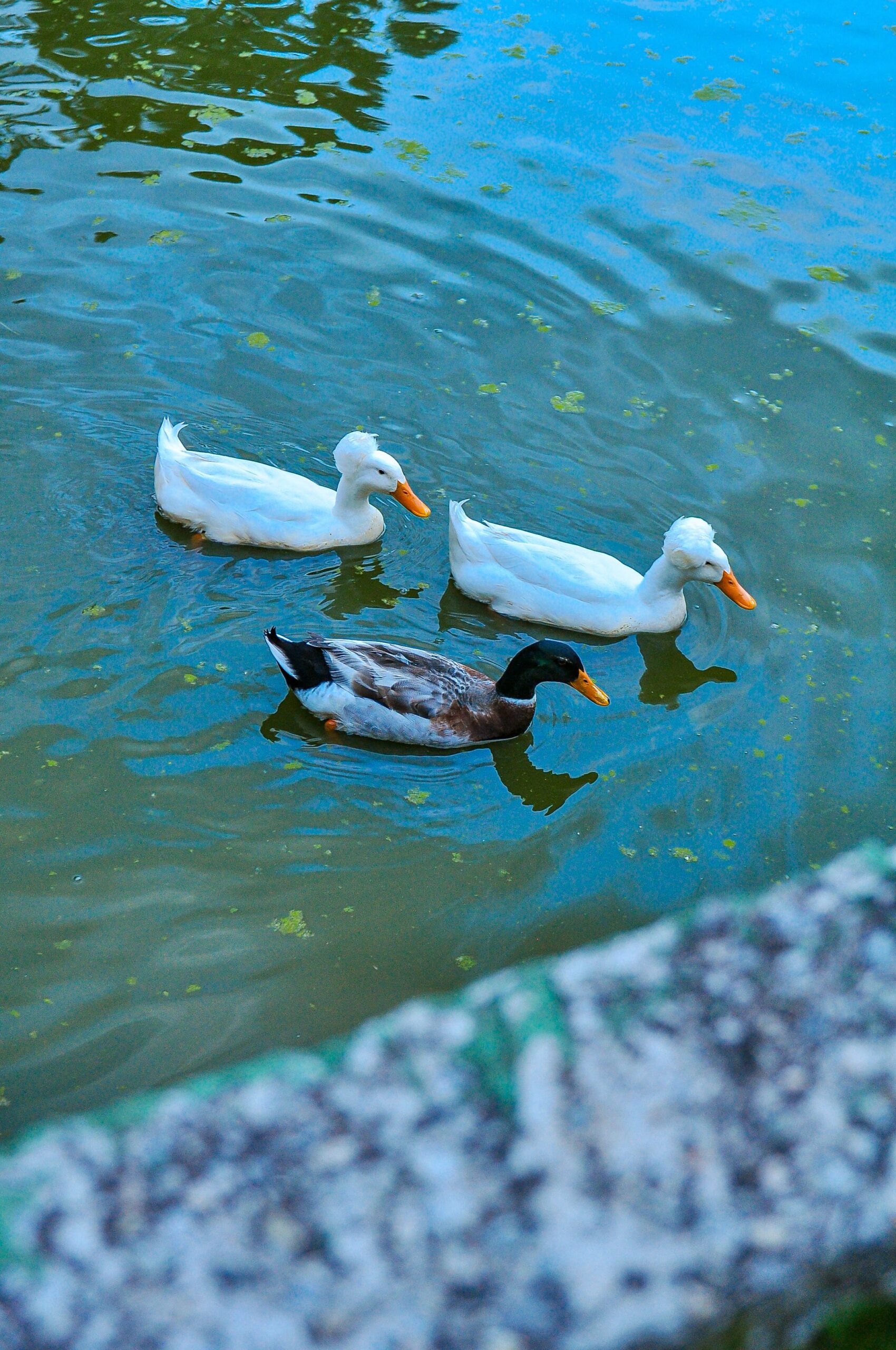
What kind of bird is a duck? We will explain the characteristics, ecology, and habitat of animals. Ducks are very famous birds that are bred all over the world. Biologically, they are considered the same species as mallards. So what are the characteristics of this very famous duck? I will summarize.


- What is a duck? About basic status
- What are the roots and origins of the domestic duck?
- About habitat
- feature is? What kind of creature is it?
- What is your personality like?
- What does the ecology look like?
- About Molting
- About Duck Calls
- Seasonal Activities
- On Swimming Speed
- About Ducklings
- Are ducks an endangered species?
- Can ducks be kept as pets?
- Zoos Where They Are Kept (Japan & Worldwide)
- Introducing other animals
What is a duck? About basic status
Ducks are also called cold ducks. It is a poultry breed derived from the mallard duck, a member of the Anatidae family, and is very famous because it is widely bred all over the world. The body length is 60cm and the weight is 3kg. It is written in kanji as crane, house duck, and duck. The scientific name is Anas platyrhynchos. The list of information and details are as follows. Ducks are also very famous as they are made into stuffed animals and other products.
| Japanese(和名) | アヒル |
| English(英名) | Duck |
| scientific name(学名) | Anas platyrhynchos |
| classification(分類) | Ave、 Anseriformes、Anatidae、Anas 鳥綱、カモ目、カモ科、マガモ属 |
| IUCN Status(保全状況) | Least Concern |
| Length(全長) | 60cm |
| Weight(体重) | 3kg |
What are the roots and origins of the domestic duck?
The ancestor of the domestic duck is the wild mallard.
Modern domestic ducks are birds that humans have domesticated and selectively bred from wild mallards over a long period; biologically, they are considered a domesticated form of the mallard.
When did humans start keeping them?
Duck domestication is believed to have begun more than 3,000 years ago.
Major regions of origin:
① China (East Asia)
One of the oldest regions for domestication.
Bred for meat, eggs, and feathers.
The “Peking Duck” (Pekin breed)—a large breed common worldwide today—also originated from Chinese lineages.
② Europe
Records of duck rearing exist from the era of Ancient Greece.
Domestication may have proceeded via a lineage separate from that of China.
How have they changed from wild mallards?
As humans continued to select individuals that were easier to keep, the following characteristics emerged:
Wild Mallard vs. Domestic Duck
High flight capability → Reduced flight capability
Wary/cautious → Easily tamed/friendly toward humans
Small body (approx. 1–1.6 kg) → Larger body (over 4 kg for meat breeds)
Seasonal breeding → Capable of laying eggs year-round
Wild coloration (e.g., green head) → Diverse plumage colors (e.g., white)
Why can’t domestic ducks fly?
Due to domestication, they were selectively bred to:
Increase body size for more meat yield
Increase breast meat and fat content
Prioritize value as food over flight muscles
Consequently, their bodies changed in ways that hindered flight.
The Pekin breed, in particular, is very heavy; while they may be capable of short-distance flight, long-distance flight—like that of wild mallards—is difficult for them.
About classification
Biologically, ducks are considered the same species as mallards.
Duck Taxonomy
- 界(Kingdom): 動物界 (Animalia)
- 門(Phylum): 脊索動物門 (Chordata)
- 綱(Class): 鳥綱 (Aves)
- 目(Order): カモ目 (Anseriformes)
- 科(Family): カモ科 (Anatidae)
- 属(Genus): 種類によって異なる
- マガモ属 (Anas):家禽化されたアヒル(バリケン、マガモ由来の家アヒルなど)
- その他の野生種は、アイガモ属、ハシビロガモ属などに分類されることもある
- 種(Species):
- 家庭でよく飼育されるアヒル:家アヒル (Anas platyrhynchos domesticus)
- 野生由来:マガモ (Anas platyrhynchos)
About habitat
Ducks are bred all over the world, so they are distributed all over the world. The country of origin is Europe and China.
- Habitat of Wild Ducks (Mallards, etc.)
Geographic Distribution
Widely distributed throughout the temperate and boreal zones of the Northern Hemisphere
North America, Europe, and Asia (including Japan)
Habitat
Freshwater lakes, ponds, rivers, wetlands, and rice fields
Rests and feeds in grasslands and wetlands near water
- Habitat of Domesticated Ducks
Distribution
Raised worldwide
Farms, homes, urban parks, etc.
Environment
Live in ponds and water bodies managed by humans
Can survive in artificial environments as long as food and water are available
- Habitat Conditions
Water is essential
Requires an environment for swimming and bathing
Food Availability
Wild species eat aquatic plants, seeds, small fish, and insects
Domesticated species can use grains, pellets, and vegetables as substitutes
Safe Resting Places
Grasslands, wetlands, artificial nest boxes, and waterside areas
feature is? What kind of creature is it?
Ducks originate from mallards. It was domesticated in the northern hemisphere and grew larger as a species for meat. Because they are domesticated, they are very well protected by humans. Perhaps because of this, its wings deteriorated and it lost its ability to fly. It depends on the individual and the breed, but they are now only able to fly a few meters at most.
- Physical Characteristics
Physique
A medium-sized waterfowl, approximately 50-70 cm in length (varies depending on species and whether it is domestic or wild)
Weight: Approximately 1-3 kg
A stocky body with backward-set webbed feet
Feathers
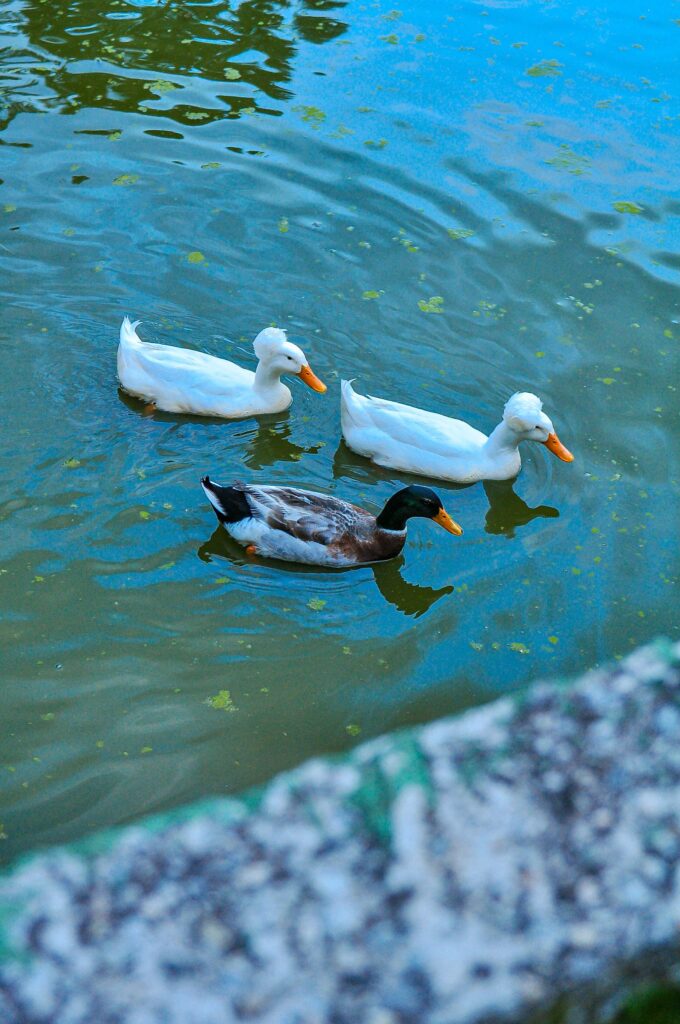
Males derived from wild mallards display vibrant plumage during the breeding season.
Males: Green head, brown chest, white and blue markings on the back and wings
Females: A dull brown camouflage
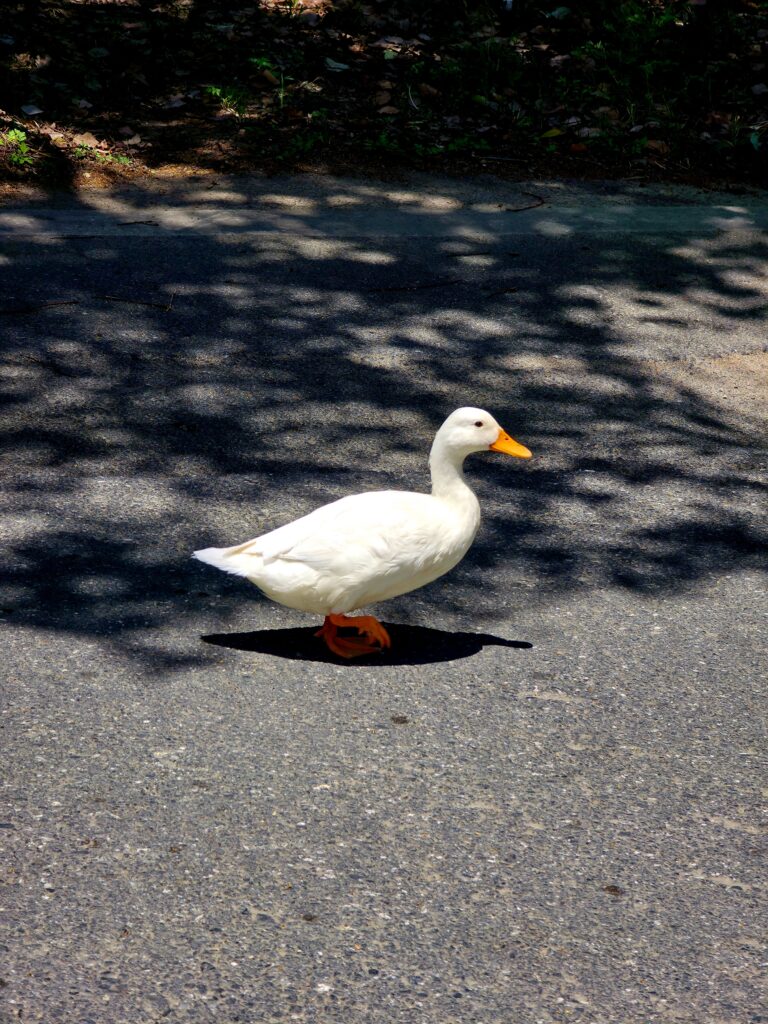
Domestic ducks vary in color from white to black, brown, or spotted, depending on the breed.
Beak and Feet
Beak: Flat and broad, easily scraped off aquatic plants and small creatures.
Feet: Webbed feet set backward, adapted for swimming.
- Behavior and Personality
Excellent swimmers and primarily live on the water
Flight ability varies by species
Wild species: Capable of short- to long-distance flight
Domestic species: Some breeds are unable to fly
Personality
Gentle and gentle
Timid and cautious, but easily tamed by humans
Likely to live in groups
- Ecological Characteristics
Diet: Omnivorous
Aquatic plants, seeds, insects, small fish, mollusks, etc.
Reproduction
Nests are built on land or in grassy areas near water
Eggs are laid (approximately 10-12 eggs), with the female incubating and raising them
Sociality
Live in small groups
Forage, rest, and breed near water
What is your personality like?
Ducks are very friendly animals and are very easy to handle. They also love physical contact, so if you talk to them, they will imitate the conversation with you. They also love bathing, so they will need a pool.
Duck Personality Traits
Gentle and gentle
Generally low in aggression
Coexist peacefully with their own species and other waterfowl
Timid and cautious
Sensitive to predators and humans
When threatened, they will flee into the water or raise their wings to intimidate others
Highly sociable
They live in groups, feeding and resting together
Domestic ducks also feel safe in the company of other ducks
Learning ability
In captivity, they can become accustomed to humans and other animals
They learn feeding times and tend to congregate in specific areas
Curious
Enjoys exploring the water and their surroundings
Swimming to find new food and safe places
What does the ecology look like?
Ducks love and eat nuts, bulbs, leaves, and grass. Now they are protected by humans, have been domesticated, and food has become very plentiful. Ducks produce 150 – 200 eggs per year, especially in the spring. Hatching occurs 30 days after spawning. Sexual maturity is about half a year. The lifespan is said to be 5 to 10 years.
- Lifestyle
Aquatic Lifestyle
Feeds while swimming in rivers, ponds, lakes, wetlands, and rice fields.
Rests on the surface, feeds underwater, and preens near water.
Activity Period
Mainly diurnal, active during the day.
Feeds, rests, and breeds during the day.
- Diet
Omnivorous
Vegetation: aquatic plants, seeds, grains, and fruit.
Animal Food: insects, small fish, mollusks, and aquatic invertebrates.
Feeding Method
Scoops food from the surface or underwater with its beak.
May also stir up mud from the bottom of the water to find food.
- Breeding and Rearing
Nest Building
Ground or waterside grass, sometimes at the base of a tree or in a nest box
Egg Laying
Usually 10-12 eggs
Incubation and Rearing
The female incubates and hatches the eggs, then guides them
Chicks begin swimming immediately after hatching
Development
Learns foraging and swimming within a few weeks of birth
Becomes largely independent within a few months
- Migration
Most wild species are migratory birds
Migrate to unfrozen waters in winter
Domestic ducks do not migrate and live in controlled environments
Do ducks have natural enemies?
Natural enemies of ducks include weasels, foxes, and owls. They have lost their ability to fly and are being raised by humans, so it cannot be said that they have a strong sense of danger.
About Molting
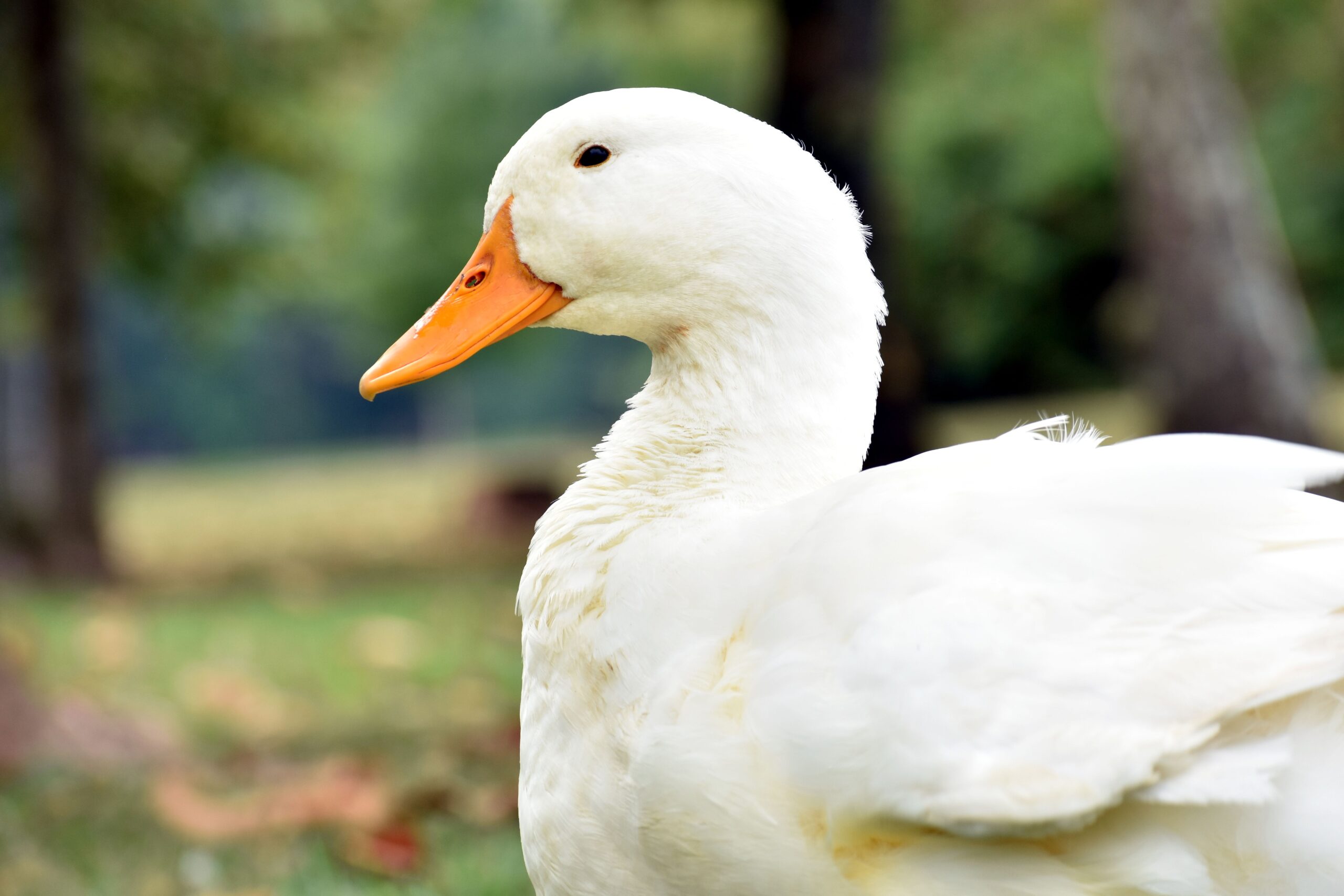
Ducks molt once or twice a year. Molting is a natural process in which old, worn-out feathers are shed and replaced by new ones. The basic mechanism is the same as that of their ancestor, the mallard.
① Summer Molt (Main Molt)
Around June–September
This is the most significant molt.
Characteristics:
Flight feathers (large wing feathers) are shed all at once
Temporary loss of flight ability (in the case of mallards)
Mass replacement of feathers across the entire body
Preparation for new winter plumage
*Note: Since domestic ducks have reduced flight capabilities, the impact of molting is not as severe as it is for wild ducks.
② Winter–Spring Molt (Partial Molt)
Around January–April
Gradual replacement of old feathers
Feather luster and color are restored/refined
Feather quality changes in preparation for the breeding season
Molting Process
New feathers (pin feathers) grow at the base
Old feathers are pushed out
Feathers fall out
New feathers unfurl
Full plumage is restored over several weeks to months
For domestic ducks, it can take approximately 6 to 10 weeks to complete a full-body molt.
Changes in Appearance
Feathers become shaggy or unkempt
Large amounts of feathers are shed
Colors may temporarily appear paler
Tail and wing feathers become uneven
Changes in Behavior
Increased frequency of bathing
Increased preening (grooming)
Slight decrease in activity levels
May show increased hiding behavior
About Duck Calls
Domestic ducks inherited their vocalizations from their ancestor, the mallard. However, domestication reduced their wariness and increased their opportunities to vocalize near humans, making their calls a familiar sound in daily life.
① “Gaa-gaa” / “Quack-quack” (Female)
This is the most well-known duck call.
Characteristics:
Loud and resonant
Repeated calls
Used to call out to other ducks
Main meanings:
Locating flock mates
Demanding food
Alerting to danger
Mating displays
Females, in particular, have loud voices and vocalize frequently.
② Male call: “Quack, quack”
The male’s voice is lower and more subdued than the female’s.
Characteristics:
Slightly raspy tone
Softer volume
Short calls
Reason:
This is due to differences in the structure of the trachea and syrinx (vocal organ) between males and females.
③ Duckling calls: “Piyo-piyo” / “Pi-pi”
Newly hatched ducklings make high-pitched sounds to:
Call for their mother
Locate their siblings
Signal anxiety or distress
Seasonal Activities
Although domestic ducks are active year-round, they retain the seasonal cycles of their ancestor, the mallard; consequently, their behavior, physical condition, and reproductive activities shift with the seasons.
🌸 Spring (March–May)
A season of heightened reproductive activity
Key Activities:
Increased reproductive behavior
Males performing courtship displays
More time spent swimming in the water
Increased foraging for food
Characteristics:
Males swim around females to attract attention
Increased vocalization
Nesting behaviors observed
In Captivity:
Increased egg production
Peak egg-laying period
☀️ Summer (June–August)
A season for molting and heat management
Key Activities:
More frequent bathing
More time spent resting in the shade
Onset of feather replacement (molting)
Characteristics:
Heavy feather shedding
Energy diverted to molting
Slightly reduced activity levels
Coping with Heat:
Panting (breathing with mouth open)
Spending long periods in the water
Preferring cool locations
*Note: Due to their dense plumage, domestic ducks are relatively sensitive to high temperatures.
🍂 Autumn (September–November)
Recovering strength and preparing for winter
Key Activities:
Grooming new feathers
Increased appetite
Accumulating body fat
Characteristics:
Improved feather sheen
Stabilized activity levels
More time spent near the water
In Wild Mallards:
Preparation for migration
Flocks grow larger
*Note: Most domestic duck breeds cannot fly and do not migrate, but they retain their biological responses to seasonal changes.
❄️ Winter (December–February)
A season of energy conservation
Key Activities:
Increased activity in the morning and evening
More time spent resting during the day
Increased food intake
Characteristics:
Fluffing feathers to retain heat
Shorter bathing sessions
Reduced activity in cold regions
*Note: Because their feathers are highly water-resistant, domestic ducks are relatively cold-hardy, provided the water surface does not freeze over.
On Swimming Speed
Ducks are among the more proficient swimmers of the waterfowl family. Like their ancestor, the mallard, they excel at moving across the water’s surface.
🦆 Normal Speed
Approx. 1–2 km/h
Moving leisurely across ponds or rivers
Speed while swimming and foraging for food
Typical daily swimming pace
🦆 When Moving Quickly
Approx. 3–5 km/h
When startled
When keeping up with the flock
When heading toward food
They propel themselves by kicking vigorously and using their webbed feet.
🦆 Short-Burst Top Speed
Around 5–6 km/h
While ducks can move quite powerfully in the water, they are not the type of swimmer—like penguins or otters—that uses their entire body to swim at high speeds.
How They Swim
Why ducks can swim:
① Webbed feet
Membranes between the toes
Push water backward
Generate propulsion
② Streamlined body
Reduces water resistance
Moves forward with neck extended
③ Waterproof feathers
Coated with natural oils
Repel water
Prevent heat loss
About Ducklings
This section provides detailed information about ducklings (young birds).
- Birth
Hatching Period: Spring to early summer (depending on region and breed)
Egg Laying: Usually 10-12 eggs
Hatching Period: Approximately 26-28 days (depending on breed and environment)
Characteristics at Hatching:
Feathers are soft and mottled with yellow or brown.
Eyes are open, allowing them to quickly recognize their surroundings.
Beaks and feet are well developed, allowing them to swim.
- Fleeting and Aquatic Life
Fleeting:
Immediately after hatching, they move from the nest to the water, guided by their mother.
Able to swim immediately after birth.
Aquatic Behavior:
Learns foraging by swimming behind their mother.
Practices pecking at aquatic plants, insects, and small fish.
- Growth and Development
First few weeks:
Learn basic behaviors such as foraging, swimming, and preening.
Follow their mother and learn safe areas.
First few months:
Adult plumage approaches that of an adult, allowing them to forage independently.
Wild species also learn to migrate and live in groups.
- Characteristics
Personality:
Curious and obedient to their mother and peers.
When sensing danger, they will hide behind their mother or in the water.
Sociality:
Form groups with their mother and chicks and cooperate with each other.
Are ducks an endangered species?
Ducks are not an endangered species. They are bred all over the world and their population is very stable.
- Domestic Ducks
Domestic Duck (Anas platyrhynchos domesticus)
Domesticated worldwide, with very large populations.
Due to domestication, there is little risk of extinction.
- Conservation Status of Wild Ducks (e.g., Mallard)
Mallard (Anas platyrhynchos)
Listed as Least Concern (LC) on the IUCN Red List.
Distributed widely throughout the Northern Hemisphere, with stable populations.
While there have been local population declines in some areas due to wetland loss and hunting, the species as a whole is at low risk of extinction.
Many other wild species are also classified as Near Threatened or Near Threatened, but are less threatened than domesticated ducks.
- Local Threats
Development of wetland and river habitats
Excessive hunting and capture
Impact of invasive species and environmental pollution
However, global populations are stable, and the species is not endangered.
Can ducks be kept as pets?
Ducks can be kept as pets. However, the problem is where to get it. If purchased at a pet shop, the price ranges from 500 yen to 4,000 yen. However, there are not many of them.
How to keep
Ducks are waterfowl, so they need an environment where they can bathe. This can be done indoors or outdoors. They are waterfowl that rest their feet by floating on the water, so standing for long periods of time can hurt their feet.
What does the bait eat?
Basically, waterfowl food and waterfowl pellets are OK. Make sure you are getting enough vitamins and minerals. Feed twice in the morning and in the evening. Chocolate, onions, cabbage, burdock, avocado, green onions, chives, and garlic are highly toxic and dangerous.
Zoos Where They Are Kept (Japan & Worldwide)
Ducks are kept in many zoos and petting zoos—not typically for wildlife conservation purposes, but rather as poultry (domesticated birds), animals for petting interactions, or waterfowl exhibits. In Japan, exhibits featuring “Call Ducks” (a small breed of duck) are particularly common.
🇯🇵 Major Facilities in Japan
🦆 Inokashira Park Zoo
Species kept: Call Duck (domestic duck)
Displayed in the waterfowl area.
Call Ducks are a small breed of domestic duck developed by humans from the wild mallard.
🦆 Izu Shaboten Zoo
A facility known for its waterfowl exhibits, including ducks.
They can sometimes be observed in the ponds or petting areas.
🦆 Ichikawa City Zoo
A zoo featuring exhibits of small animals and waterfowl.
A facility where visitors can observe familiar birds such as ducks.
🌎 Notable Facilities Worldwide
🇬🇧 ZSL London Zoo
A historic zoo with extensive waterfowl exhibits.
Features bird exhibits that include poultry and various duck species.
🇺🇸 San Diego Zoo
Boasts comprehensive waterfowl and bird exhibits.
Features exhibits that recreate pond and wetland environments.
🇦🇺 Taronga Zoo Sydney
Features a diverse range of bird exhibits, including waterfowl.
Introducing other animals
コメント