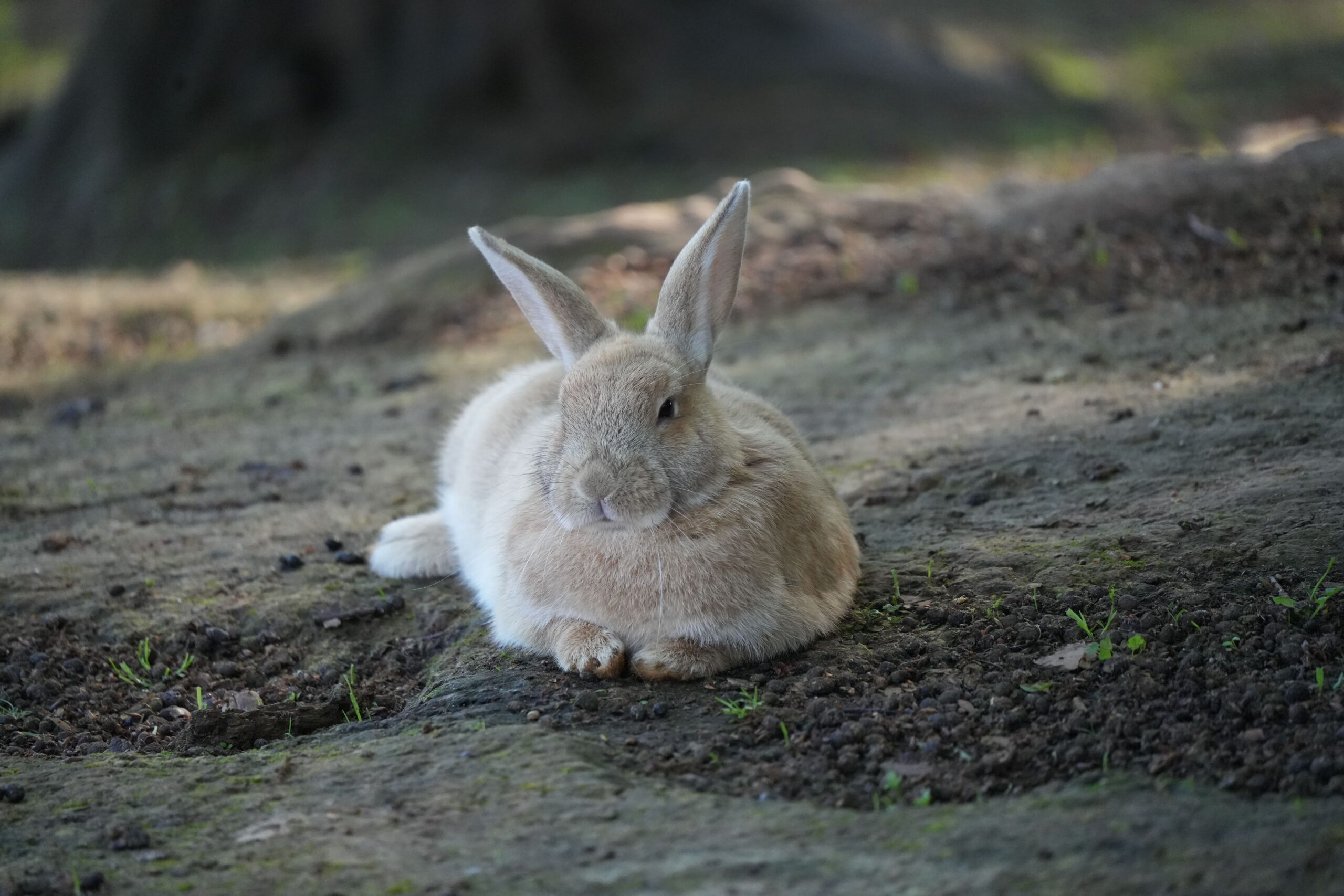
What kind of animal is the Japanese hare? We will explain its characteristics, ecology, and habitat. As the name suggests, it is a hare and can be seen in most areas of Japan, making it a fairly famous rabbit. However, some species have been designated as endangered species, so they are in need of protection.





- What is a Japanese hare? About basic status
- What are the roots and origins of the Japanese hare?
- About habitat
- feature is? What kind of creature is it?
- What is your personality like?
- What does the ecology look like?
- About Molting
- Vocalizations
- Seasonal Activities
- Locomotion Speed
- About Japanese Hare Babies
- Is the Japanese hare an endangered species?
- Can Japanese hares be kept as pets?
- Zoos Housing the Species (Japan & Worldwide)
- Introducing other animals
What is a Japanese hare? About basic status
The Japanese hare is a rabbit classified in the Lagomorpha (Lagomorpha) family and Lagomorpha family. The scientific name is Lepus brachyurus and the kanji is Japanese hare. The body length is 40-50 cm and the weight is 1-2 kg. The list of information is as follows.
| Japanese(和名) | ニホンノウサギ |
| English(英名) | Japanese hare |
| scientific name(学名) | Lepus brachyurus |
| classification(分類) | Mammalia、Lagomorpha、 Leporidae、Lepus 哺乳綱、ウサギ目、ウサギ科、ノウサギ属 |
| IUCN Status(保全状況) | LEAST CONCERN |
| Length(体長) | 40-50cm |
| Weight(体重) | 1-2kg |
What are the roots and origins of the Japanese hare?
The Japanese hare is considered a native species that evolved in isolation on the Japanese archipelago over a long period, descending from hares (Lepus species) of the Eurasian continent.
① Ancestry: Continental Hares
Taxonomically, the Japanese hare belongs to the genus Lepus within the family Leporidae.
Its ancestral hares were widely distributed across:
Eastern China
The Korean Peninsula
The Russian Far East
The broader East Asian region
It is believed that some of these hares crossed over to the Japanese archipelago in the distant past and underwent a unique evolutionary process.
② Time of Arrival in the Japanese Archipelago
While the exact timing is still a subject of debate, genetic and fossil evidence suggests a high probability that they entered Japan:
Between several hundred thousand years ago and the Pleistocene epoch (approx. 2.58 million to 10,000 years ago)
During that era, sea levels dropped due to glacial periods,
reducing the distance between the Korean Peninsula and the Kyushu area,
as well as between the continent and the Japanese archipelago,
compared to present-day distances.
This created an environment that allowed the ancestral hares to migrate.
③ Unique Evolution on the Islands
Once in Japan, the hares became isolated from the continental populations.
As a result, traits such as:
Body size
Coat color
Skull shape
Genetic characteristics
…underwent changes, eventually resulting in the modern Japanese hare.
④ Regional Evolution (Subspeciation)
Japanese hares exhibit regional variations within Japan.
Representative subspecies include:
Kyushu hare (Kyushu)
Sado hare (Sado Island)
Tohoku hare (Northeastern Honshu)
Japanese hare (Nominate subspecies; Honshu, etc.)
Adaptations to snowy environments are particularly evident in regions with heavy snowfall, such as:
Winter coats turning white
Slightly larger body size
About classification
The Japanese hare has the following subspecies: There are endemic rabbit species not only on Honshu, but also on Sado Island and the Oki Islands.
- L. b. brachyurus キュウシュウノウサギ
- L. b. angustidens トウホクノウサギ
- L. b. lyoni サドノウサギ
- L. b. okiensis オキノウサギ
classification
| 階級 | 分類 |
|---|---|
| 界 | 動物界(Animalia) |
| 門 | 脊索動物門(Chordata) |
| 綱 | 哺乳綱(Mammalia) |
| 目 | ウサギ目(Lagomorpha) |
| 科 | ウサギ科(Leporidae) |
| 属 | ノウサギ属(Lepus) |
| 種 | ニホンノウサギ(Lepus brachyurus) |
About habitat
The Japanese hare is distributed mainly in Honshu, Shikoku, and Kyushu in Japan. The creatures are also managed at the zoo and can be seen in information about events.
- Distribution in Japan
Widely distributed across Honshu, Shikoku, and Kyushu
Not naturally distributed in Hokkaido (the Hokkaido rabbit is also found there)
Subspecies exist on remote islands such as the Oki Islands
- Habitat
The Japanese hare has adapted to a variety of environments, not just forests.
Forests and forest edges
Secondary forests, bamboo groves, deciduous broadleaf forests, etc.
Farmland and satoyama (satoyama)
Commonly found in the grassy areas around rice paddies and fields
Grasslands and riverbanks
Areas with abundant food and relatively few predators
- Altitude and Climate
Flatlands to mountainous areas (altitudes up to approximately 200-1500m)
Adapted to seasonal changes
Brownish fur provides camouflage in summer
May turn whitish in winter in snow-covered areas
- Habitat adaptations through distinctive behavior
Rests in brush, rock shade, or thickets during the day
Active at night, feeding on grass and young shoots
Travels short distances and has a territorial lifestyle
feature is? What kind of creature is it?
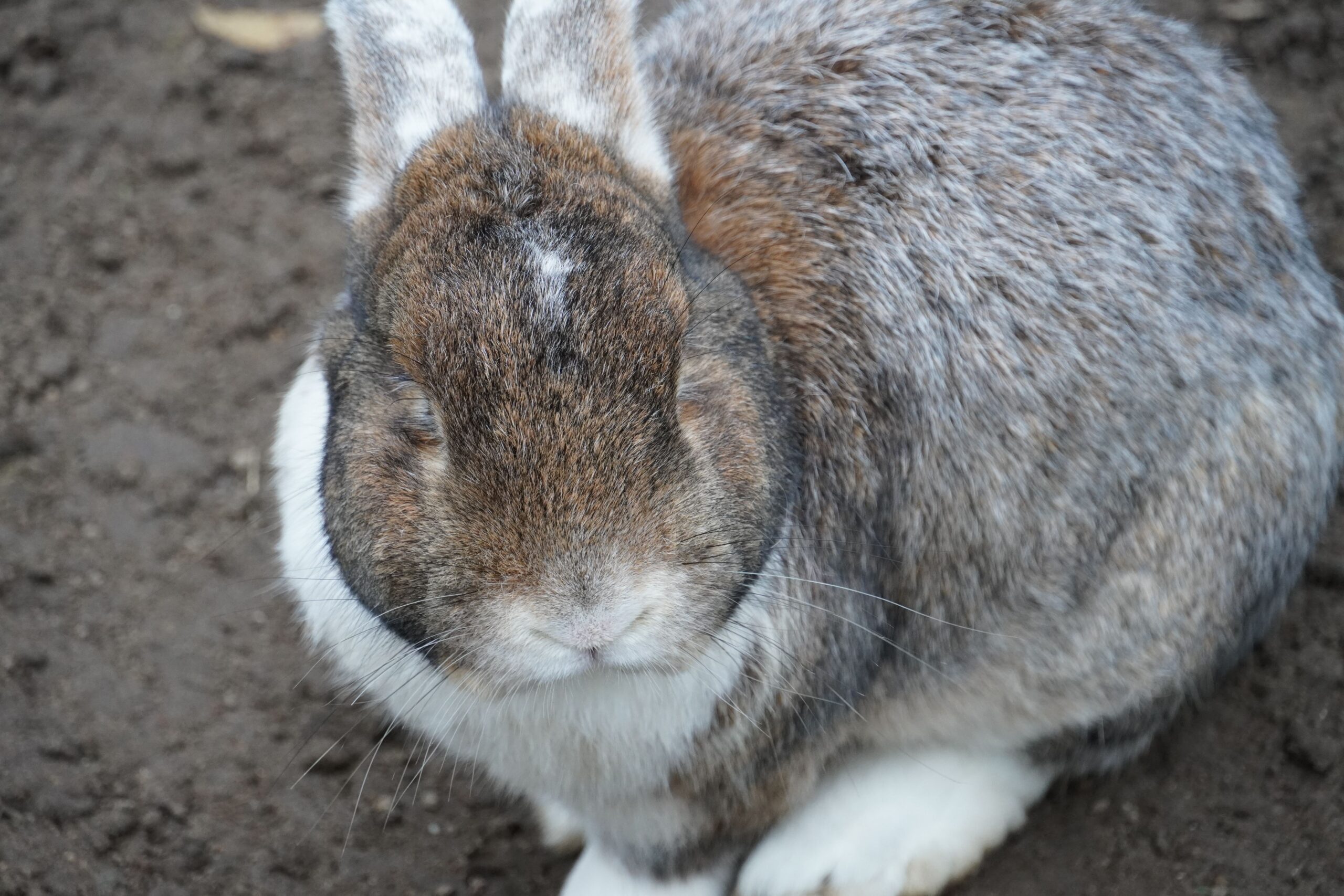
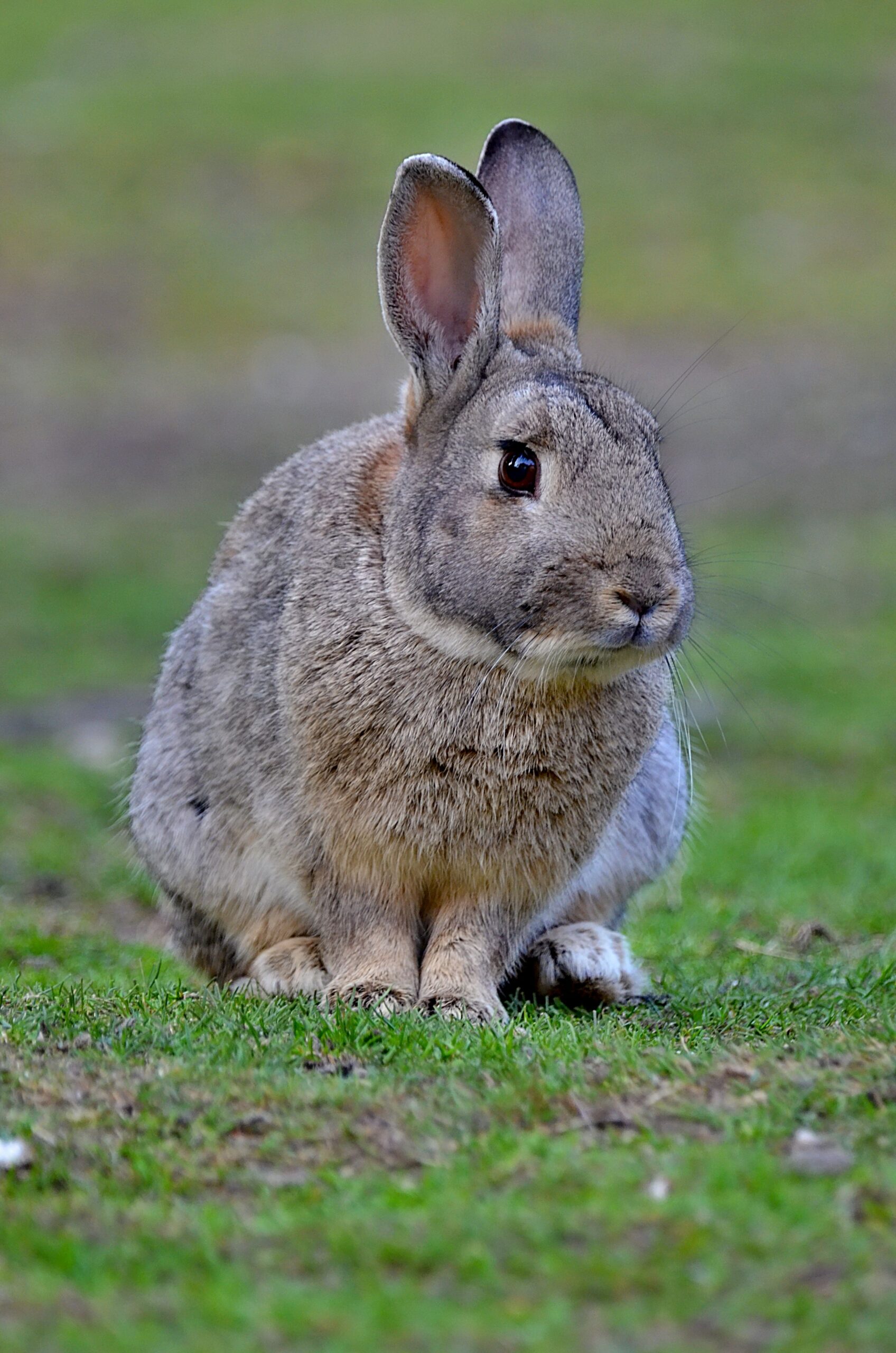
The Japanese hare has brown fur all over its body, and white fur on its abdomen. Populations that live in snow-covered areas on the Sea of Japan side have white fur all over their bodies in winter. The appearance differs depending on the species. Japanese hares live mainly in grasslands and forests, and are often solitary. During the day, they hide and protect themselves from natural predators by resting in bushes or at the base of trees, so they are primarily nocturnal rabbits. Rabbits live in holes.
- Physical Characteristics
Body Length: Approximately 40-55cm
Weight: Approximately 1.5-3kg
Coat Color: Varies with Season
Summer: Brown to Yellowish Brown
Winter: May change to pale white or gray in snowy areas
Ears: Relatively short, with black tips
Tail: Small and white
Legs: Long hind legs, adapted for quick jumping
- Behavior/Habits
Nocturnal
Rests in bushes, thickets, or under rocks during the day
Active at night, searching for food
Diet
Herbivore: Feeds on grass, bark, buds, seeds, etc.
Changes diet depending on the season
Locomotion/Movement
High jumping ability, quickly flees when threatened
Jumping distances can reach several meters
- Breeding and Rearing
Breeding Season: Spring to Autumn (April to October)
Gestation Period: Approximately 40 Days
Baby Rabbits
Births: 1 to 4 pups per litter
Baby rabbits are born with fur and their eyes are open (they are hidden in burrows)
They begin foraging on their own within a few weeks
- Natural Predators and Defense
Natural Predators: Hawks, owls, foxes, dogs, and cats
Defense Methods
Hiding in bushes
Quickly leaping to escape
Fur color blends in with the surrounding environment (protective coloration)
What is your personality like?
Japanese hares are generally considered to be gentle, but they also have a nervous side, and are very cautious due to the risk of being attacked by natural enemies.
- Basic Personality
Timid and cautious
Due to their numerous natural predators, they are always cautious of their surroundings
Highly reactive to the presence of humans, dogs, cats, etc.
Highly independent
Typically solitary
May exhibit territorial behavior
- Sociality
Rarely found in groups
Generally solitary
Except for breeding season and parent-child interactions, they rarely interact with other individuals
Parent-child relationships
Baby rabbits become very independent soon after birth
Mothers raise their young for several weeks, but do not interact with them for long periods
- Activity and Personality Characteristics
Nocturnal and cautious
Resting motionlessly in bushes or under rocks during the day
Foraging and moving at night
Curious, but reserved
Wary of new environments and sounds
Once they determine it is safe, they will graze and move about
- Defensive instinct
Escape is their number one priority
If they encounter a predator, they will quickly leap away.
They have high jumping ability, allowing them to escape over obstacles.
They use camouflage to hide.
Their brown or gray body coloring allows them to easily blend in with the surrounding grass and soil.
What does the ecology look like?
Japanese hares are herbivores, subsisting on grass, leaves, buds, bark, etc. The reproductive form is viviparous and the gestation period is 40 days. They can give birth to 1 to 4 cubs at a time, and the young can move around a week after birth and become independent within a month. Sexual maturity can occur in 8-10 months. The lifespan is said to be less than 5 years.
- Diet/Foraging
Primarily herbivorous
Eats grass, young shoots, bark, buds, vegetables, and seeds.
Seasonal diet changes
Spring to summer: Grass and young shoots
Autumn to winter: Bark and dry plants
Foraging behavior
Forages primarily at night (nocturnal)
Rests in bushes, rocks, or grass patches during the day
- Activity patterns
Nocturnal: Active from dusk to night
Daytime hiding: Rests in bushes or rocks to protect themselves from predators
Movement: Moves by quick hops over short distances
Jumping distances can reach several meters or more
Mostly stays within their territory
- Breeding and Rearing
Breeding Season: Spring to Autumn (April to October)
Gestation Period: Approximately 40 Days
Birthing
Approximately 1-4 babies per litter
Baby rabbits are born with fur and eyes open.
Rearing
The mother raises them in a den for several weeks.
They quickly become independent and quickly become independent.
- Sociality
Generally solitary.
Except during breeding season and during parent-child interactions, they rarely interact with other rabbits.
Other rabbits may be active nearby at night.
Are there any natural enemies?
Japanese hares are full of natural enemies, including dogs, cats, foxes, weasels, and even bears.
About Molting
The molting process (shedding and regrowing fur) in the Japanese hare (Lepus brachyurus) is a crucial adaptation for coping with seasonal environmental changes. However, not all regional populations turn white; the shift is most pronounced in areas with heavy snowfall.
🌱 Spring Molt (Winter Coat → Summer Coat)
Timing: Around March–May
The coat transitions from white winter fur to a summer coat ranging from brownish-brown to grayish-brown.
Characteristics:
White winter fur is shed
Color change begins on the back and head
Fur becomes shorter and more breathable
Purpose:
Adapting to heat
Providing camouflage in forests and grasslands
☀️ Summer Coat Period
Timing: Around June–September
The summer coat takes on:
Brown
Grayish-brown
Yellowish-brown
…tones.
Characteristics:
Short, low-density fur
Facilitates body temperature regulation
Blends in with the color of vegetation
🍂 Autumn Molt (Summer Coat → Winter Coat)
Timing: Around September–December
The coat thickens in preparation for winter.
Characteristics:
Undercoat increases
Fur becomes longer and denser
Turns white in regions with heavy snowfall
❄️ Winter Coat Period
Timing: Around December–March
In individuals living in snowy regions,
Ear tips
Paws
Tail
…may remain colored while the rest of the body turns white.
Purpose:
Camouflage against snow
Heat retention
Vocalizations
The Japanese hare (Lepus brachyurus) is a very quiet animal that rarely makes noise under normal circumstances. While rabbits are often associated with hopping about, wild Japanese hares do not rely much on vocal communication.
① Alert/Fear: “Kii!” or “Kee!”
This is their most well-known vocalization.
They may make this sound when:
Caught by a predator
Experiencing intense fear
Under extreme stress
Characteristics:
Very high-pitched
A short, scream-like sound
Carries well through forests at night
Soundイメージ:
“Kiiiii!”
“Gya!”
② Sounds made by young hares (kits)
Young individuals may produce:
Soft squeaks
Snorting or sniffing sounds
Calls to their mother
Soundイメージ:
“Pi, pi”
“Ku, ku”
③ Threat/Contact sounds
Adult individuals may exhibit behaviors such as:
Snorting
Light tooth-clicking
Soft growling
Seasonal Activities
The Japanese hare (Lepus brachyurus) is a non-hibernating wild rabbit that remains active throughout the year. Key seasonal changes occur in diet, breeding, coat color, and activity patterns.
🌱 Spring (March–May)
Activity Level: ★★★★★ (High)
Spring is a period of significantly increased activity.
Key Behaviors:
Onset of breeding activity
Foraging on new shoots and young leaves
Expansion of home range
Characteristics:
Males observed chasing females
Increased chasing and leaping behaviors during the breeding season
Vegetation sprouts, providing abundant food
Breeding:
Breeds multiple times from spring through autumn
Gestation period is approximately one month
☀️ Summer (June–August)
Activity Level: ★★★★☆
Activity patterns shift to avoid the heat.
Key Behaviors:
Foraging from evening through night
Resting in cool thickets or forests
Feeding primarily on herbaceous plants
Characteristics:
Hiding and resting during the day
Increased activity in the morning and evening
Coat thins out (summer coat), facilitating body temperature regulation
Diet:
Grass
Leaves
Young branches
Tree bark
🍂 Autumn (September–November)
Activity Level: ★★★★★ (High)
Autumn is a crucial season for preparing for winter.
Key Behaviors:
Increased food intake
Nutrient accumulation
Molting to winter coat
Characteristics:
Securing food before grass becomes scarce
Utilizing tree buds and bark
Potential expansion of home range
Molting:
Transition from summer coat to winter coat
Develops a white winter coat in cold regions
❄️ Winter (December–February)
Activity Level: ★★★☆☆ to ★★★★☆
Does not hibernate.
Key Behaviors:
Foraging at night
Moving across snow
Utilizing resting sites
Characteristics:
Activity level decreases slightly
Increased travel distance in areas with scarce food
Becomes less conspicuous against the snow in regions where the coat turns white
Diet:
Tree buds
Tree bark
Branches
Dried grass
Locomotion Speed
While there is limited detailed data on the walking speed of wild Japanese hares (Lepus brachyurus), their physical capabilities suggest the following ranges:
Estimated Movement Speeds
- Normal movement: Approx. 2–5 km/h
- Slow movement (while foraging): Approx. 1–3 km/h
- Cautious movement: Approx. 10–20 km/h
- Flight (full-speed sprint): Approx. 40–70 km/h
Characteristics of Movement
Rather than a standard “walk,” the Japanese hare’s movement is characterized by:
- Slow hopping
- Short, quick movements
- Sudden stops
Normal conditions:
- Lands front feet first, followed by hind feet
- Moves while scanning the surroundings
In times of danger:
- Kicks the ground powerfully with hind legs
- Runs in a zigzag pattern
- Makes sharp turns
…engaging in these types of escape behaviors.
Reasons for High-Speed Running
Japanese hares possess immense leg strength relative to their body weight.
Key features:
- Well-developed hind legs
- Long leg bones
- Lightweight body
- Flexible spine
These traits enable them to:
- Leap several meters in a single bound
- Accelerate rapidly
- Move at high speeds across mountainous slopes
About Japanese Hare Babies
This article provides a detailed summary of Japanese hare (Lepus brachyurus) baby rabbits.
- Birth and Early Characteristics
Birth Pattern
Japanese hare rabbits are “temporary nest-raising” types, born in burrows.
They often hide alone in grass or small depressions.
Physical Characteristics
They are born with fur and eyes open (a “mesociliate” type with a rich fur cover).
Ears are short and easily movable.
Weight
Approximately 100-150g
- Behavior and Lifestyle
Early Activity
They can walk immediately after birth and move around the nest.
The mother does not visit the burrow frequently, often only to nurse.
Independence
They begin to practice grazing within a few days to a week of birth.
They are able to forage almost independently by 2-3 weeks.
- Growth Process
Postnatal Period: Characteristics and Behavior: Immediately after birth, they grow fur and their eyes are open. They begin to eat grass little by little during the first week or two while nursing from their mother. They can forage independently for about two to three weeks, wandering around the burrow. They can move around without their mother’s protection for about a month, growing rapidly and becoming capable of moving within roughly the same range as their parents.
- Defensive Instinct
Highly cautious
Even young ones will quickly jump away from predators.
They protect themselves by hiding in bushes and grass.
Is the Japanese hare an endangered species?
Japanese hares can be caught in traps and overhunted for food and for their fur. Due to this, the population of the subspecies Sadono hare has decreased, and it is designated as near-threatened in Niigata Prefecture’s Red Data Book. The Kyushu hare is also protected as an endangered species in Saitama and Yamaguchi prefectures.
- Conservation Status
IUCN (International Union for Conservation of Nature) Red List:
Rating: Least Concern (LC)
Reason: Wide distribution and stable population
Status in Japan:
Widely distributed across Honshu, Shikoku, and Kyushu
Adapted to satoyama, farmland, and forests
No special conservation measures are currently needed
- Reasons for Stability
Highly Adaptable to Environment
Can live in forests, grasslands, farmland, and satoyama
Herbivorous, almost omnivorous
Can survive by feeding on grasses, tree buds, and bark seasonally
Highly Reproductive
Can breed several times a year, making it resistant to population decline
- Caution
Localized declines in populations due to forest development and pesticides
As a wild animal, it can be affected by predators (hawks, owls, foxes, dogs, and cats) and human activity
Can Japanese hares be kept as pets?
Japanese hares are managed under the Wildlife Protection and Management Act, and breeding is possible only if the animals are provided or obtained with a hunting permit based on hunting qualifications and permits. Wild rabbits are found in nature.
need a cage
Rabbits need cages. Make sure you have materials that are safe for chewing, and a set that includes a drinking bowl, toilet, and chewing tree. If you don’t make it as large as possible, your rabbit will feel cramped and stressed. You can get it for around 10,000 to 15,000 yen.
chewable toys
Chewing toys are a must for rabbits. Rabbits’ teeth continue to grow, so if they don’t chew, their teeth will grow too long and they won’t be able to eat.
rabbit food
We recommend special pet food for rabbits. I have also introduced the following articles, so I hope you find them helpful.
Zoos Housing the Species (Japan & Worldwide)
The Japanese hare (Lepus brachyurus) is a rare mammal native to Japan that is kept in very few zoos. This is because they retain strong wild instincts—unlike the European rabbit (Oryctolagus cuniculus) commonly kept as a pet—making them difficult to care for and breed in captivity.
🇯🇵 Zoos in Japan
Inokashira Park Zoo
Has a track record of keeping Japanese hares.
There are records of long-term care, with some individuals living up to 15 years.
As they are extremely wary in the wild, the exhibit includes hiding spots, and they are managed in an environment that closely resembles their natural habitat.
Itozu no Mori Park
One of the facilities involved in the care and breeding of Japanese hares.
It is recorded as the facility of origin for individuals transferred to Inokashira Park Zoo.
Hiroshima City Asa Zoological Park
Has a track record of keeping Japanese hares.
There are records of transferring individuals to Inokashira Park Zoo.
Yokohama Zoological Gardens “Zoorasia”
Exhibits the Tohoku hare (Lepus brachyurus angustidens), a subspecies of the Japanese hare.
🌍 Zoos Worldwide
Overseas—
in zoos across Europe and North America,
or in facilities in China, Taiwan, and elsewhere—
there are virtually no examples of the Japanese hare itself being permanently exhibited.
Introducing other animals
コメント