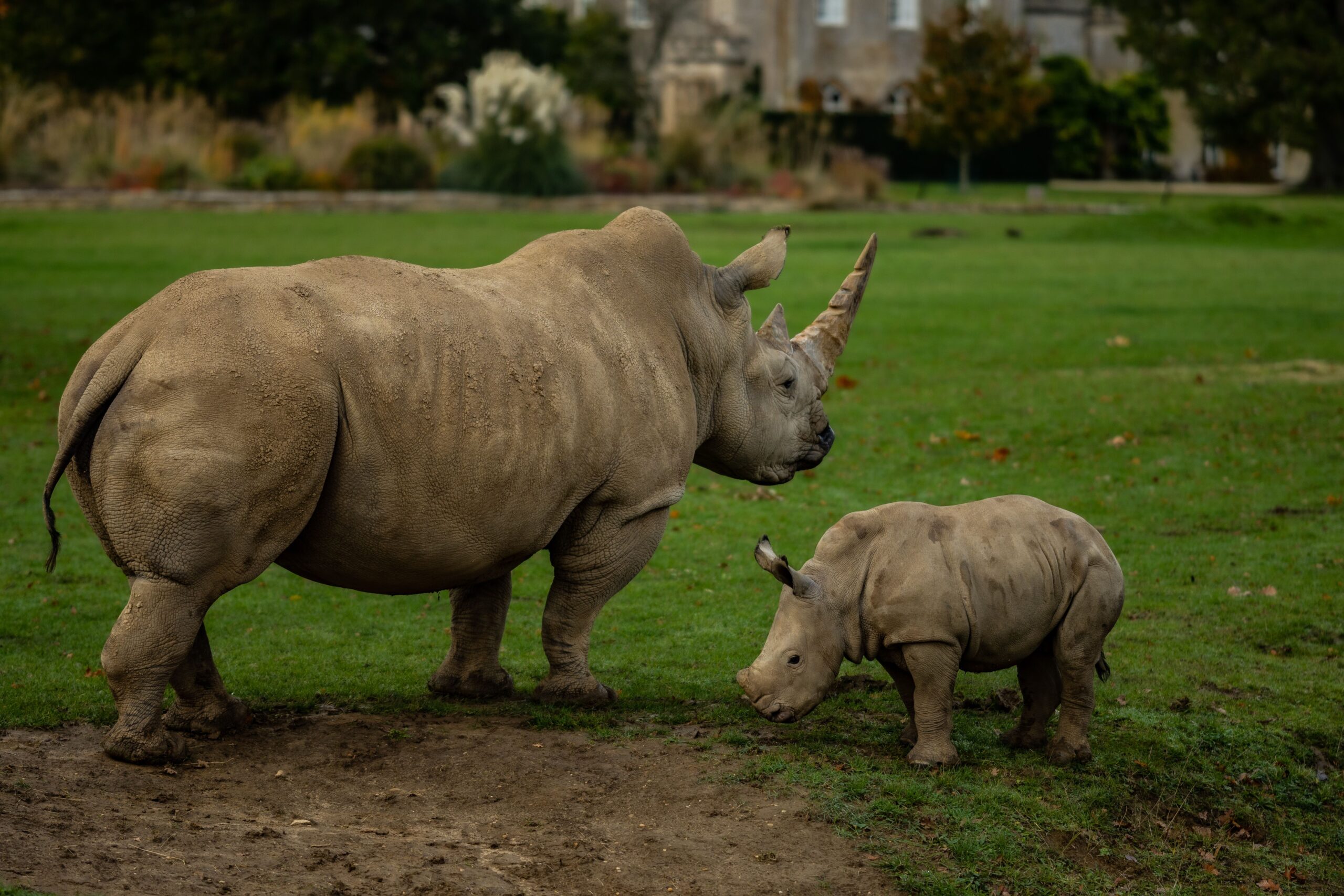
What kind of animal is the rhinoceros, a mammal from Asia and Africa? We will explain the characteristics, ecology, distribution, and habitat of each of the five species of rhino. The rhinoceros is one of the largest animals in the world, and is often exhibited at zoos, so it is well known. It is an animal covered with thick and hard skin, and there are subspecies, so I will explain them.








- What is a rhinoceros? About basic status
- What are the roots and origins of the rhinoceros?
- About rhino habitat
- feature is? What kind of creature is it?
- What will your personality look like?
- What is the ecology of rhinos?
- Vocalizations
- Seasonal Activities
- Walking Speed
- About Rhino Calves
- Are rhinos an endangered species?
- Can rhinos be kept in captivity?
- Zoos Housing Rhinos (Japan & Worldwide)
- Introducing other animals
What is a rhinoceros? About basic status
Rhinoceroses are mammals of the order Perissodactyla and family Rhinocerosidae. Their scientific name is Rhinocerotidae. They are 2.4-4m long and weigh 700-3,500kg. Most of them live in Africa and South Asia. They are large animals and are currently active in Asia and Africa. They are very common animals and appear in animal horoscopes and illustrations, and are said to be lucky animals. They are large and strong, along with hippos and elephants. You can also find information on wiki.
| Japanese(和名) | サイ |
| English(英名) | Rhinoceros |
| scientific name(学名) | Rhinocerotidae |
| classification(分類) | Mammalia、 Perissodactyla、Rhinocerotidae 哺乳綱、奇蹄目、サイ科 |
| IUCN Status(保全状況) | ENDANGERED |
| Length(体長) | 2.4~4m |
| Weight(体重) | 700~3,500kg |
What are the roots and origins of the rhinoceros?
The roots of the rhinoceros trace back to small herbivorous mammals that appeared in the early Cenozoic Era, approximately 50 million years ago. Modern rhinoceroses belong to the order Perissodactyla (odd-toed ungulates), a group shaped by a long evolutionary history.
Rhinoceros ancestors were closely related to the horse family
Although rhinoceroses may look similar to elephants or hippopotamuses, taxonomically they belong to the same order—Perissodactyla—as:
Rhinoceroses
Horses
Tapirs
Their common ancestor is believed to have existed around 55 million years ago. Unlike the massive rhinoceroses of today, these early ancestors were small animals, roughly the size of a dog.
Early rhinoceroses: The Hyracodontids
Between approximately 50 million and 30 million years ago, the Hyracodontidae—an early group in the rhinoceros lineage—emerged.
Characteristics:
Varied in size from small to large species
Inhabited forests and fed on tree leaves
Some species had long legs and were fast runners
Their appearance during this era differed significantly from that of modern rhinoceroses.
The giant rhinoceros: Paraceratherium
Perhaps the most famous figure in the evolutionary history of the rhinoceros is a giant species that lived between approximately 34 million and 23 million years ago.
Paraceratherium was one of the largest land mammals in history.
Estimated size:
Body length: Approx. 8 meters
Shoulder height: Over 5 meters
Weight: Approx. 15–20 tons
Characteristics:
Had no horns
Used a long neck to feed on leaves from tall trees
May have lived similarly to modern giraffes
In other words, the rhinoceros lineage once included “giant, hornless rhinoceroses.”
The emergence of modern-type rhinoceroses
Around 15 million years ago, relatives closely resembling modern rhinoceroses appeared. Current representative species:
White rhinoceros
Black rhinoceros
Indian rhinoceros
Javan rhinoceros
Sumatran rhinoceros
Asian and African rhinoceroses, in particular, diverged into separate evolutionary paths more than 10 million years ago.
Why did rhinoceroses develop horns?
Rhinoceros horns are not actually made of bone.
Main component:
Keratin (the same substance found in human fingernails and hair)
Possible reasons for their evolution include:
Conflicts between males
Territorial defense
Defense against predators
Signaling to others
They developed over a long period because individuals possessing horns held an advantage in survival and reproduction.
About classification
The rhino family is actually not one species. There are many subspecies. The following subspecies exist. Each has a long history on Earth and is different in each location. In the wild, they have large horns and can be seen everywhere. There were more of them in the past, but overall the threat from humans has spread and their population is decreasing. Conservation efforts are being made with the cooperation of organizations.
| Name (名前) | Academic Name (学名) |
| White rhinoceros シロサイ | Ceratotherium simum |
| Sumatran rhinoceros スマトラサイ | Dicerorhinus sumatrensis |
| Black rhinoceros クロサイ | Diceros bicornis |
| Javan rhinoceros ジャワサイ | Rhinoceros sondaicus |
| Indian rhinoceros インドサイ | Rhinoceros unicornis |
What is a white rhino?
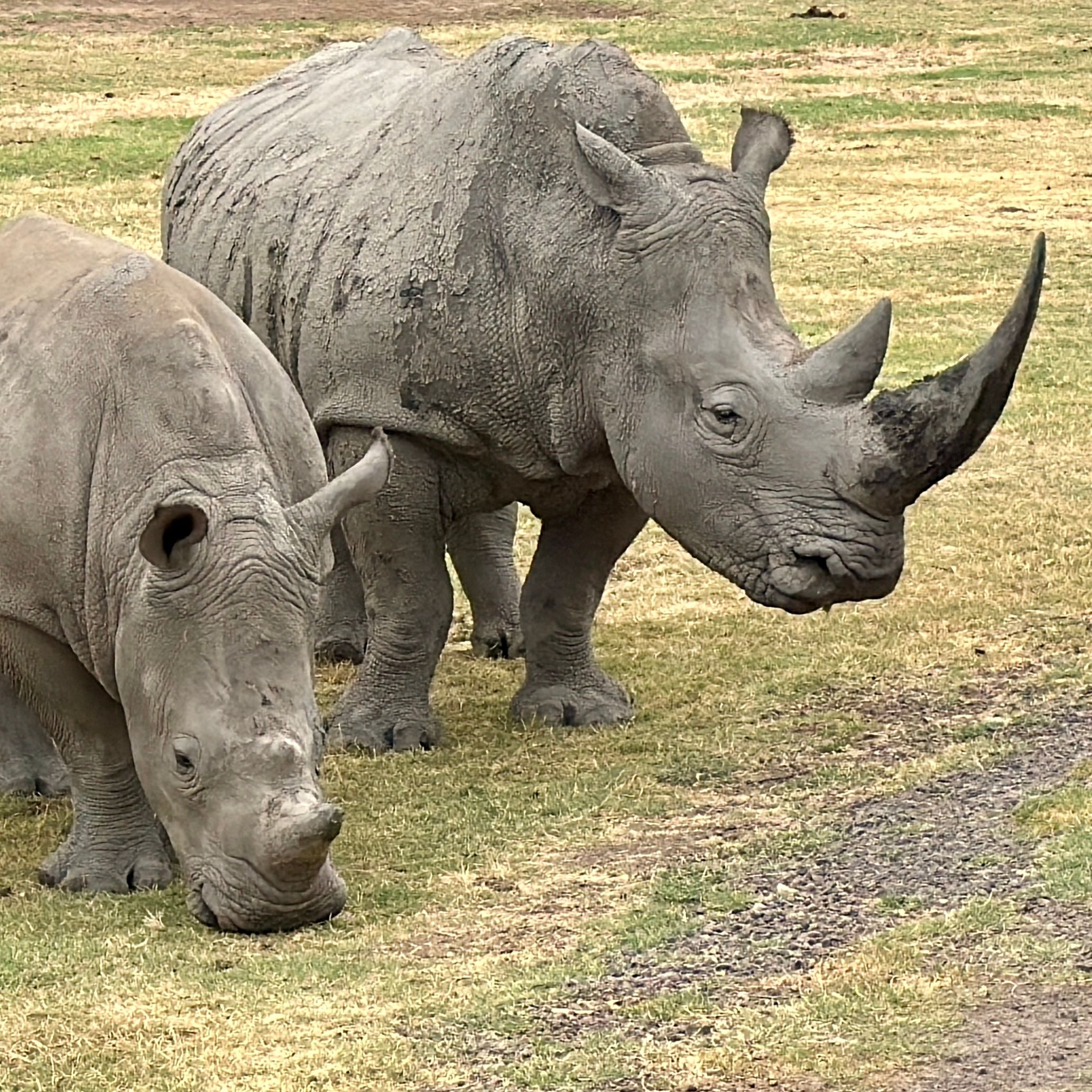
The white rhino is the largest species of rhinoceros. It consists of two species, the southern white rhino and the northern white rhino, and many live in central and southern Africa. It is listed in Appendix I of the Washington Convention, and trade is strictly restricted.
What is a Sumatran rhino?
The Sumatran rhino is the smallest of the rhinos. This animal lives in Indonesia and other countries and is designated as an endangered species. Most of the Sumatran rhino’s body is covered with reddish-brown fur. Its biggest feature is its two horns.
What is a black rhinoceros?
The black rhino is a rhinoceros that lives in Angola, Botswana, Kenya, Malawi, Mozambique, Namibia, South Africa, Eswatini, Tanzania, and other countries. It has become extinct in several regions due to poaching and habitat loss, and is designated as an endangered species.
What is a Javan rhino?
The Javan rhinoceros is one of the smallest rhinoceros species, along with the Sumatran rhinoceros. It is native to the Indonesian island of Java and is the rarest of all living animal species. This rhinoceros is also listed as an endangered species, and the Javan rhino population in Vietnam’s Cat Tien National Park is extinct.
What is Indian rhinoceros?
The Indian rhinoceros is the second largest extant rhinoceros species. It lives mainly in India. Indian rhinoceroses once lived throughout the Indo-Gangetic plains, but due to excessive hunting and agricultural development, their numbers have declined dramatically and they are now listed as an endangered species.
About rhino habitat
Rhinos are found in the eastern and southern parts of the African continent, as well as in India and Southeast Asia (Nepal, Indonesia, Malaysia, etc.). They are large wild animals that tend to live in groups, from young to adults. They generally move around with their companions.
① White Rhino (Ceratotherium simum)
Region: Southern and Eastern Africa (South Africa, Namibia, Zimbabwe, Kenya, etc.)
Environment: Savanna, grasslands, open woodlands
Characteristics: Highly herbivorous, requires large areas of grassland
② Black Rhino (Diceros bicornis)
Region: Eastern to Southern Africa (Kenya, Tanzania, South Africa, etc.)
Environment: Dry forests, savanna, shrublands
Characteristics: Brush-feeding, feeding on leaves and shrub branches
③ Indian Rhino (Ganges Rhino) (Rhinoceros unicornis)
Region: Northeastern India, southern Nepal, and surrounding Bhutan
Environment: Wetlands, grasslands, riverine forests
Characteristics: Prefers to live near wetlands and water sources
④ Javan Rhino (Rhinoceros sondaicus)
Region: Java, Indonesia (Endangered)
Environment: Lowland tropical rainforest, wetlands
Characteristics: Found only in very limited areas
⑤ Sumatran Rhinoceros (Dicerorhinus sumatrensis)
Location: Indonesia (Sumatra) and Malaysia (part of Borneo)
Environment: Dense tropical rainforests
Characteristics: Lives deep in forests and acts alone
Common habitat conditions
Near water: For drinking and mud bathing
Large habitat: Must be mobile to find food
Low human activity: Avoids the impact of poaching and development
feature is? What kind of creature is it?
Rhinos are covered with thick, hard skin that acts like armor. There is no hair on the body, with a small amount of hair on the tip of the short tail. Their body color is gray or brown, and they often play in the mud. Rhinoceroses have one or two thick horns on their heads, and the short ones are 25 cm long and the long ones are 1.5 m long. They are usually solitary and live in savannahs, forests, grasslands, bushes, and wetlands.
- Physical Characteristics
Size: Depending on the species, they range in length from 2 to 4 meters, height from 1.2 to 1.8 meters, and weight from 800 to 2,500 kg (white rhinos are the largest).
Body Shape: Sturdy body, thick legs, large head
Skin: Thick and tough, but almost hairless (Sumatran rhinos have a small amount of hair).
Horns: One to two horns on the nose.
Horns are made of keratin and are used as weapons, defense, and for territorial disputes.
Ears, Eyes, and Nose: Small but movable ears. Eyes have poor eyesight, but excellent sense of smell and hearing.
- Diet
Herbivore
White Rhinoceros: Eats mainly grass.
Black Rhinoceros: Also eats shrubs, leaves, and branches.
Indo-Sumatran Rhinoceros: Eats grass, shrubs, fruit, etc.
Feeding Method: Grabs grass and leaves with the upper lip and tongue.
- Behavior/Lifestyle
Activity: Active during the twilight hours of the morning and evening, often resting during the day.
Bathing/Mud: They bathe in mud to regulate their body temperature and prevent parasites.
Movement: They roam over a wide area to search for food.
- Sociality
They are generally solitary (especially black and Sumatran rhinos).
They may also live in groups (females and calves of white rhinos, and males themselves, often fight over territory).
They have a strong sense of territory, using their horns and bodies to fight.
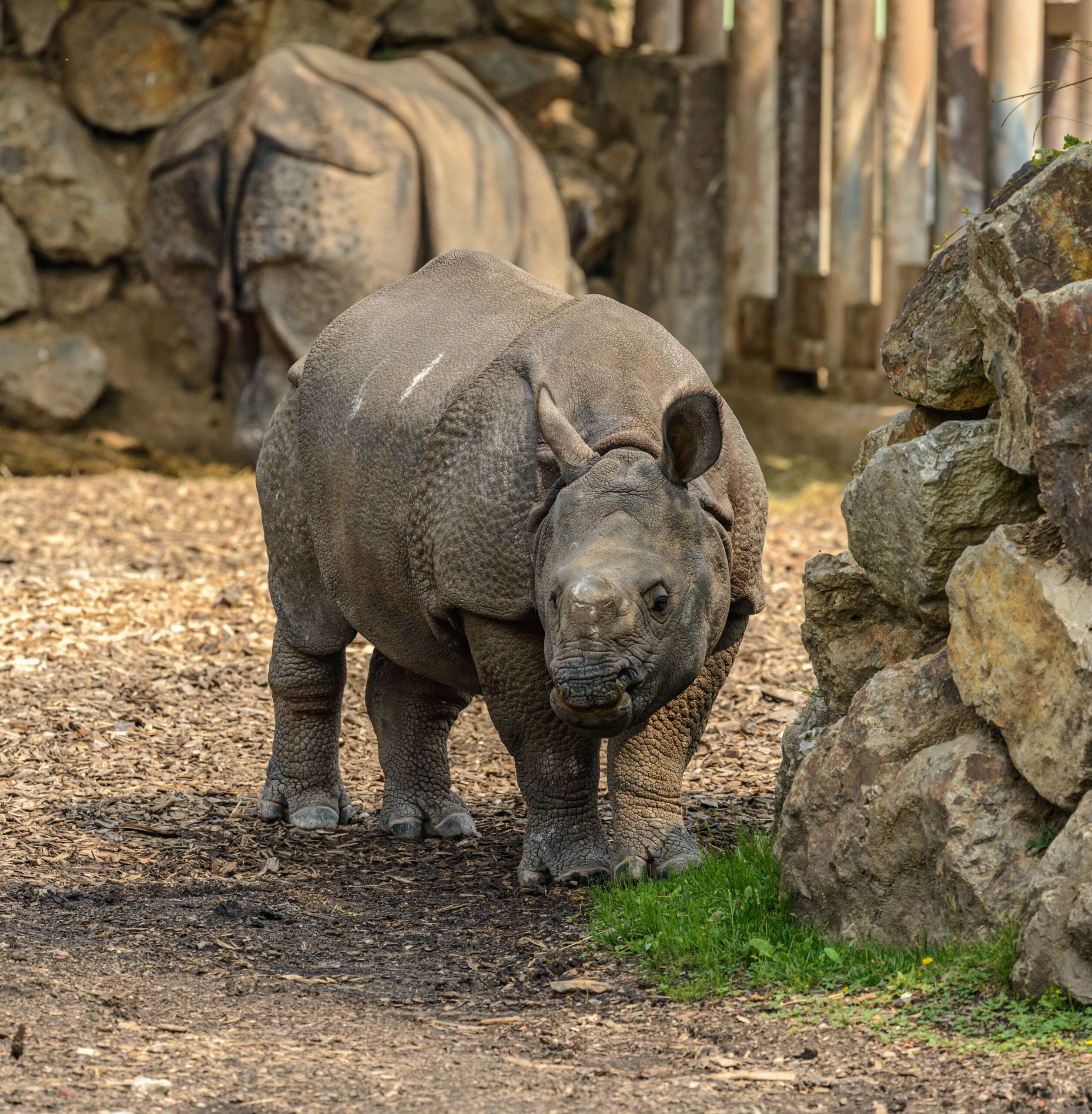
What will your personality look like?
Rhinos have ferocious personalities. Black rhinos have a strong sense of territory and will charge at intruders without discrimination. Once they start to run wild, they tend to become uncontrollable. Their height means that they are almost impossible to stop when they run.
- Basic Personality
Timid and cautious
Although their eyesight is poor, they have excellent hearing and sense of smell, and can become aggressive when they sense danger.
Aggressive
Males, in particular, are highly territorial and will use their horns to attack intruders and other males.
They can also be calm.
When they sense no danger, they will leisurely graze or bathe.
- Sociality
Solitary behavior is the norm.
Black rhinos and Sumatran rhinos live almost entirely alone.
They may also live in groups.
White rhinos form limited groups, such as females and their calves, or gather at watering holes.
Highly territorial
Aggressive toward males or other animals that enter their territory.
- Relationships with Humans
Dangerous if attacked
Highly cautious, and may charge if approached too closely.
Relatively calm in captivity.
In zoos and conservation facilities, they tend to be relatively calm once they become accustomed to their environment.
What is the ecology of rhinos?
Rhinoceroses are herbivores, living off grass, leaves, plants, fruits, etc. They breed all year round, with a gestation period of one year. Females can give birth to one baby at a time. They are said to live for around 45 to 50 years.
- Living Environment
Habitat: Savannas and forests in Africa, tropical rainforests and swamps in Asia
Large habitat requirements: They travel several kilometers to several tens of kilometers per day in search of food
Prefers proximity to water: They regulate their body temperature and prevent parasites by bathing in water and mud
- Diet
Herbivore
White rhino: Eats primarily grass
Black rhino, Indian rhino, and Sumatran rhino: Also eats grass, shrub branches, leaves, and fruit
Feeding method: Grabs grass and leaves using their upper lip and tongue
Food intake: Approximately 50 kg per day (depending on species and size)
- Behavior
Activity period: Crepuscular (active in the early morning and evening)
Locomotion: Walks on the ground, but can also run quickly (40-50 km/h over short distances)
Rest: Rests in the shade or grasslands during the day
- Sociality
Primarily solitary (black rhino and Sumatran rhino)
Limited groups (female white rhinos and calves, congregating at watering holes)
Highly territorial: Male-male contact often leads to aggression
- Reproduction
Sexual maturity: Males 5-7 years old, females 3-6 years old
Gestation period: Approximately 15-16 months in African species, approximately 16-18 months in Asian species
Birth: A single calf is born, and the mother raises it for 1-3 years
- Communication
Calls: Low-pitched sounds and growls made using the nose and mouth
Scent: Territory marking with urine and feces
Horn use: Used for intimidation and territorial disputes
- Lifespan
Wild: Approximately 30-40 years
Captive: May live for more than 40 years
Do rhinos have natural enemies?
Rhinos are powerful animals, so they have no natural enemies among carnivores. Their hearing is well developed and they can sense the approach of enemies. However, small or sickly rhinos are targeted by predators such as lions and leopards. Rhinos can run away at speeds of around 30km per hour, so they are not easily caught. However, they can catch diseases.
Vocalizations
Contrary to their imposing appearance, rhinoceroses have a surprisingly diverse range of vocalizations, producing sounds that span from high-pitched, bird-like calls to low, rumbling growls.
Common vocalizations include the following:
Low growls or rumbles (e.g., “buoo,” “gwooo”)
Primarily used for intimidation or to signal alertness
Used during disputes between males or to assert territorial claims
The sound tends to be lower in pitch the larger the rhinoceros is
High-pitched calls (e.g., “hyuu,” “pee-pee”)
Used by calves to call their mothers
Used for communication among the herd
Calves, in particular, may produce high-pitched sounds resembling those of human babies
Snorting or huffing sounds (e.g., “buu-buu,” “fun-fun”)
When nervous
When wary of another individual
When checking the surroundings for information
Since rhinoceroses have poor eyesight, they rely heavily on their senses of smell and hearing, as well as signals conveyed through these types of sounds
High-pitched, scream-like sounds (e.g., “kee-kee”)
When injured
When experiencing intense stress
When a calf perceives danger
Seasonal Activities
While rhinoceros activity varies by species and habitat (Africa vs. Asia), they generally alter their behavioral patterns in response to the shift between the rainy and dry seasons.
Spring (Onset of the Rainy Season)
Activity level: Increases
Foraging time increases due to the growth of new grass and vegetation.
They tend to congregate around waterholes.
In some regions, breeding activity intensifies.
Males increase territorial patrols and scent-marking.
Although rhinos are typically solitary, multiple individuals may be seen in the same area when food is abundant.
Summer (Rainy Season to Hot Season)
Activity level: Concentrated in early morning and evening
To avoid the heat, they adopt a routine of:
Being active early in the morning
Resting in the shade or mud wallows during the day
Foraging from evening through the night
Since rhinos have a limited ability to sweat, mud wallowing is crucial.
Purposes of mud wallowing:
Body temperature regulation
Insect repellent
Skin protection
Autumn (Transition to the Dry Season)
Movement in search of water and food
As conditions become drier, they:
Rely more heavily on waterholes
Travel over wider ranges
Seek out areas where the grass is still in good condition
Territorial behavior regarding waterholes and feeding grounds may intensify, particularly among African rhinos.
Winter (Dry Season)
Activity level: Tends to decrease
In arid regions, they tend to:
Stay close to waterholes
Reduce travel distances
Conserve energy
However, they do not hibernate, even in cold regions.
As large animals, rhinos are capable of maintaining their body temperature and remain active regardless of the season.
Walking Speed
The walking and running speeds of rhinoceroses are surprisingly fast, given their massive size.
Normal Walking
Approx. 3–5 km/h
Moving while slowly checking the surroundings
Speed observed during foraging or when moving to a watering hole
Brisk Walk / Trot
Approx. 10–20 km/h
When alert or moving with some urgency
Charging / Running
Approx. 40–50 km/h
Extremely fast over short distances
Capable of reaching speeds of around 50 km/h at maximum
Differences by Species
| Species | Estimated Top Speed | Characteristics |
|---|---|---|
| Black Rhino | Approx. 50 km/h | Highly aggressive; fast short-distance charges |
| White Rhino | Approx. 40–50 km/h | Large, yet capable of high running speeds |
| Indian Rhino | Approx. 40 km/h | Runs powerfully even in wetlands |
| Sumatran Rhino | Approx. 30–40 km/h | Smaller; suited for forest environments |
About Rhino Calves
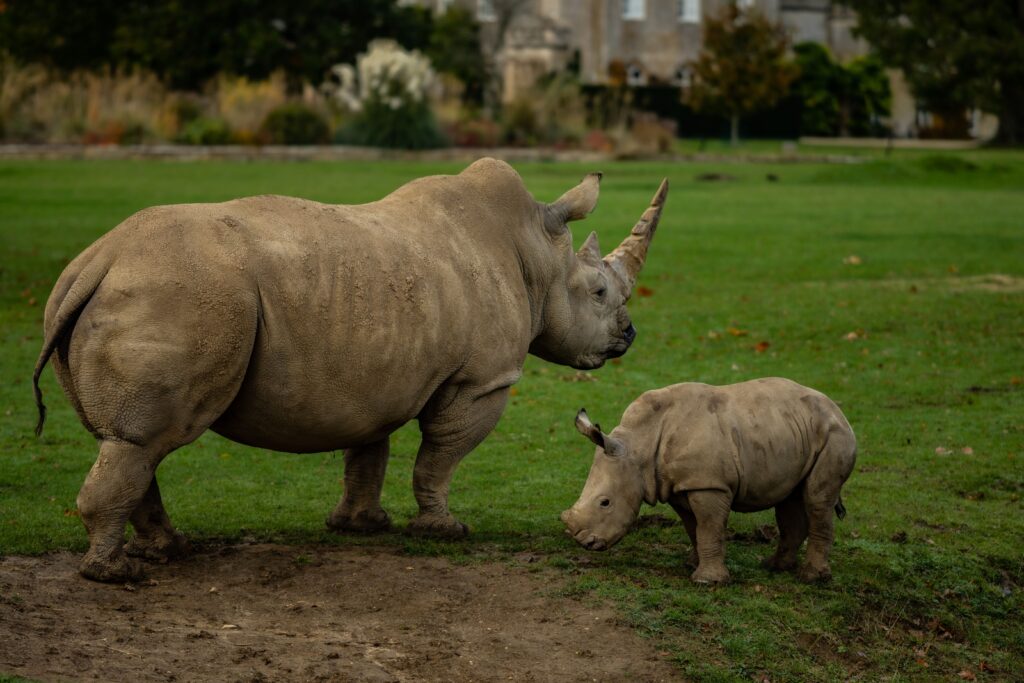
Let’s take a look at rhino calves.
- Birth
Gestation Period: Approximately 15-18 months depending on the species (15-16 months for African species, 16-18 months for Asian species)
Size at Birth: Approximately 40-65 kg (depending on species and mother)
Appearance: Born with small horns, soft skin, and almost no hair
- Growth
Starts walking: Begins walking after their mother within a few hours of birth
Lactation Period: Raised on breast milk for approximately one year
Horn Development: Horns gradually grow over the first few months of life
Independence: They do not leave their mother until around 2-3 years of age (depending on species and environment)
- Relationship with Mother
Stays close to their mother and avoids danger
Learns how to forage and use water sources from their mother
Grows up safely under the protection of the herd or mother
- Personality/Characteristics
Timid and cautious
Dependent on their mother for a long period of time, they adapt their behavior to her.
Curious, but will quickly hide near their mother if they sense danger.
Summary
Rhinoceros calves are “able to walk immediately after birth, but are dependent on their mother.”
Are rhinos an endangered species?
As explained above, most rhinoceros subspecies are listed as endangered species. It is also listed in the Washington Convention, and transactions are classified and strictly restricted. The reasons for this are as follows. We are in a critical situation.
illegal hunting
Rhinos are protected internationally, but illegal hunting for their horns continues in Asia and Africa. As a result, the population has not recovered at all. Rhino horn is more lucrative than cocaine, heroin, or gold.
habitat destruction
Habitat destruction is also a problem. In Southeast Asia in particular, rapid land development is progressing, creating a very harsh environment. They are now protected on a limited basis in zoos and national parks. Conservation events are also being held around the world.
Can rhinos be kept in captivity?
Rhinos are not very suitable for breeding because they are huge animals and are designated as an endangered species, so there are many restrictions. These animals require more protection than other animals, and urgent action is needed. It is safe to observe the actual rhinos on site.
- Legal Restrictions
Rhinoceroses are designated as an endangered species, and international trade is restricted by the Convention on International Trade in Endangered Species of Wild Fauna and Flora (CITES).
Even in Japan, private captivity is prohibited by law.
Only organizations with special permits, such as zoos, research facilities, and conservation facilities, are permitted to keep them.
- Ecology and Difficulties
Large and Aggressive
Adults weigh 1-2.5 tons and are extremely strong, so safety management is essential.
Requires Large Living Space
Because they move around to find food, they require large areas, trees, and water sources.
Unique Diet
Requires large amounts of grass and shrubs, so an appropriate food supply is essential.
Vulnerable to stress
Captivity and changes in environment can lead to illness and loss of appetite.
- Examples of Captivity
Rhinoceroses are kept in zoos and conservation facilities around the world, where appropriate space, water, and food are provided.
Even in Japan, many zoos keep white and black rhinos, equipped with safety fences and artificial ponds.
Zoos Housing Rhinos (Japan & Worldwide)
Rhinos are kept in zoos around the world. The main species currently on display are:
White rhinoceros
Black rhinoceros
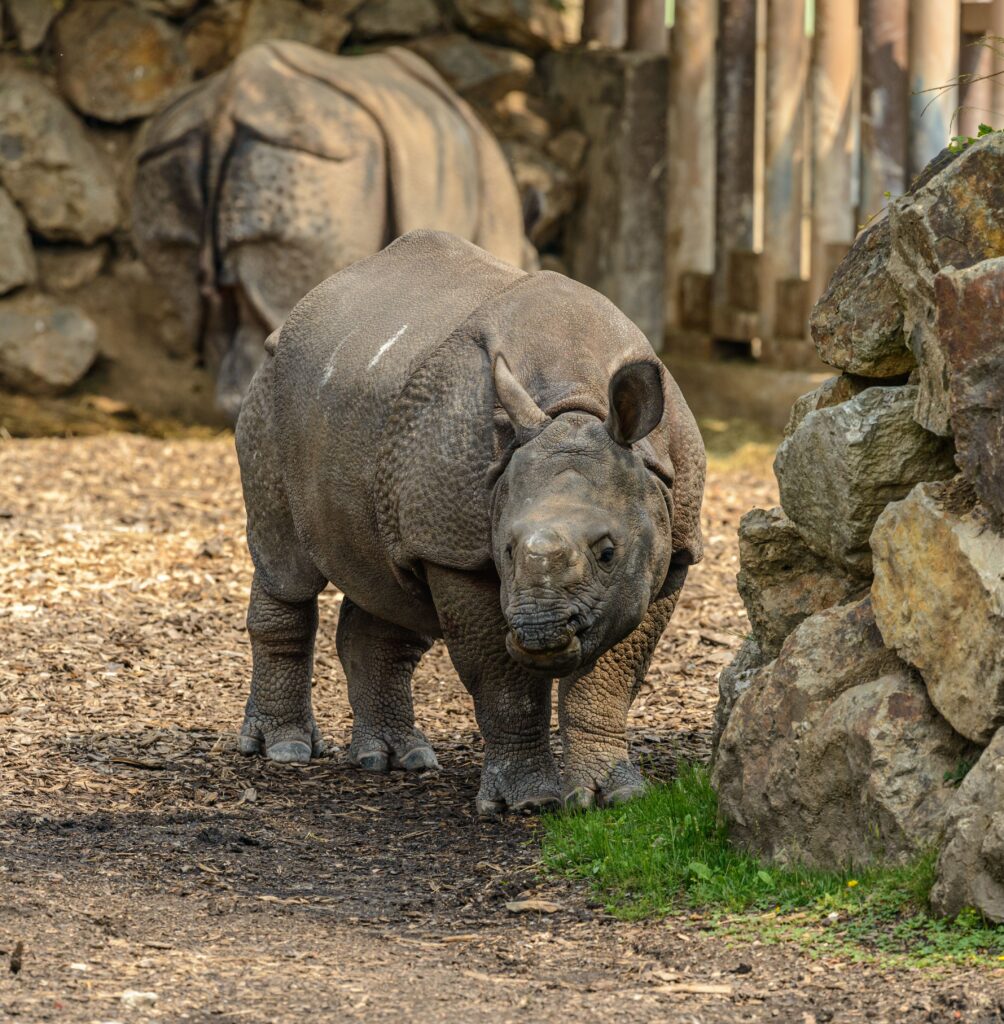
Greater one-horned rhinoceros (Indian rhinoceros)
All three of these species can be seen in Japan.
🇯🇵 Major Zoos in Japan Where Rhinos Can Be Seen
Ueno Zoological Gardens
Species: Black rhinoceros
A zoo with a long history of keeping rhinos in Japan
Known for breeding and exhibiting black rhinos
An institution involved in rhino conservation activities
Tama Zoological Park
Species: Greater one-horned rhinoceros
Features:
Houses greater one-horned rhinos, a rarity in Japan
Can be observed in a spacious outdoor enclosure
Has a successful breeding record
Yokohama Zoological Gardens “Zoorasia”
Species: Black rhinoceros
Features:
Exhibits recreate the African environment
Facility designed to make it easy to observe natural rhino behaviors
Toyohashi Comprehensive Zoo and Botanical Park (Nonhoi Park)
Species: White rhinoceros
Features:
Houses multiple white rhinos
Can be observed in the large herbivore area
Other major facilities in Japan
Black rhinoceros
Tennoji Zoo
Higashiyama Zoo and Botanical Gardens
Yokohama Municipal Kanazawa Zoo
Kumamoto City Zoological and Botanical Gardens
🌍 Major Zoos Worldwide Housing Rhinos
San Diego Zoo
Species: White rhinoceros, black rhinoceros, etc.
Features:
World-renowned for the conservation and research of large animals
Participates in endangered species conservation programs
Chester Zoo
Species: Black rhinoceros, etc.
Features:
Focuses on breeding research for rare animals
Conducts wildlife conservation activities
Basel Zoo
Species: Greater one-horned rhinoceros
Features:
World-renowned for breeding greater one-horned rhinos
Contributes to international rhino conservation efforts
Monterey Zoo
Species: Southern white rhinoceros
Features:
Exhibits recreate a savanna environment
Focuses on conservation education
Introducing other animals


コメント