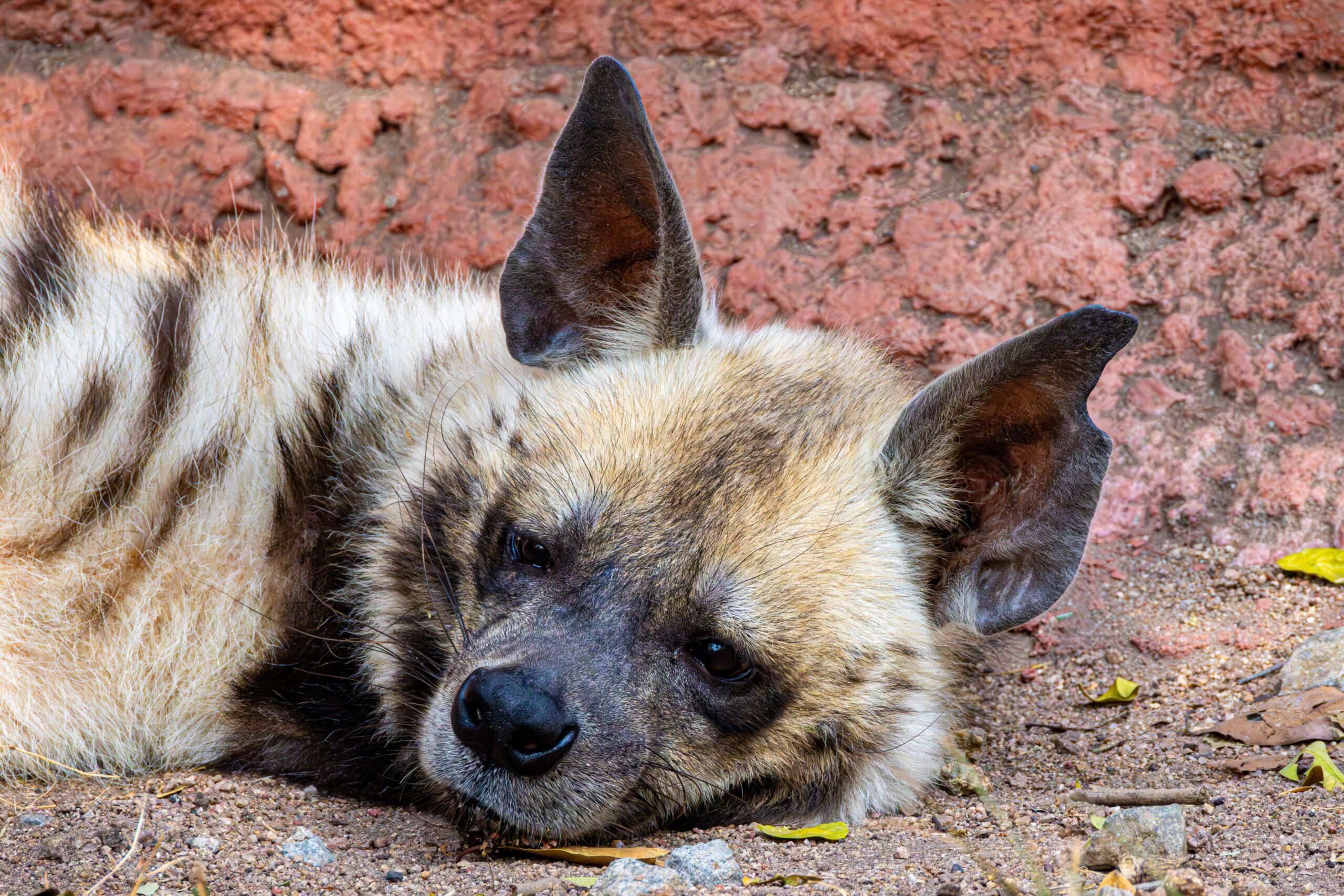
What kind of animal is a hyena? We will explain its characteristics, ecology, and habitat. This is an animal that lives widely from Africa to Asia. However, there are surprisingly many subspecies whose populations are not stable, and the reality is that many hyenas are designated as endangered species, so I will explain this.






- What is a hyena? About basic status
- What are the roots and origins of the hyena?
- About habitat
- feature is? What kind of creature is it?
- What is your personality like?
- What is the ecology like?
- About Molting
- About Hyena Vocalizations
- Seasonal Activities
- Walking Speeds
- About Hyena Cubs
- Are hyenas an endangered species?
- Can hyenas be kept as pets?
- Zoos Housing Hyenas (Japan & Worldwide)
- Introducing other animals
What is a hyena? About basic status
Hyena is an animal that belongs to the Carnivora order, Hyenaidae. The body length is 1.3m and the weight is 62-70kg. In kanji, it is a maned dog, and its scientific name is Tamias. Although it looks similar to a dog, it is a member of the civet family. A list of basic information is below. Due to their large bodies, they tend to gather around meat and eat it in their daily lives. It is an animal that has a strong image as a villain.
| Japanese(和名) | ハイエナ |
| English(英名) | hyena |
| scientific name(学名) | Tamias |
| classification(分類) | Mammalia、Carnivora、 Hyaenidae 哺乳綱、食肉目、ハイエナ科 |
| IUCN Status(保全状況) | LEAST CONCERN |
| Length(体長) | 1.3m |
| Weight(体重) | 62-70kg |
What are the roots and origins of the hyena?
Although hyenas (family Hyaenidae) are often mistaken for members of the dog family due to their appearance, they are actually carnivorous mammals belonging to a lineage closer to the cat family (suborder Feliformia). They are distant relatives of the Canidae (dog) family and represent a group that underwent its own unique evolution.
Origins: Approximately 22 million years ago (Miocene epoch)
Hyena ancestors are believed to have originated on the Eurasian continent about 22 million years ago. Early hyenas were not the large, bone-crushing predators we see today; instead, they were small, slender animals resembling civets.
Representative early hyena:
Plioviverrops
Lived approximately 20–22 million years ago
Small physique
Resembled a civet
Believed to have possessed characteristics suited for an arboreal (tree-dwelling) lifestyle
Hyenas of this era were not “specialists in scavenging carrion” but rather omnivorous animals that preyed on small creatures.
Evolution into dog-like hyenas (around 15 million years ago)
During the Miocene, grassland environments expanded, making the ability to chase down prey while running crucial.
In this era, hyenas evolved along two main paths:
A. Dog-like hyenas
Characteristics:
Long legs
High running ability
Some species hunted in packs
Representative example:
Chasmaporthetes
This group even expanded into North America for a time. However, most went extinct due to environmental changes and the expansion of canids (dog-family animals).
B. Large, bone-crushing hyenas
An evolutionary path closer to modern hyenas. Characteristics:
Powerful jaws
Robust teeth
Ability to consume bone
Enhanced ability to utilize carrion
Representative species:
Pachycrocuta brevirostris
- One of the largest hyenas in history
- Potentially reached a body weight of over 100 kg
- Inhabited Pleistocene Eurasia
This lineage leads to the ancestors of modern hyenas, such as the spotted hyena.
Expansion into Africa
After originating in Eurasia, hyena ancestors migrated to Africa.
From approximately 10 million years ago onwards, they evolved as large carnivores in Africa, leading to the modern:
Spotted hyena
Striped hyena
Brown hyena
Aardwolf
About classification
The following subspecies of hyena exist: The following is a quote from Wikipedia. Four species exist in nature, and there are not many major differences between them.
Crocuta crocuta
Spotted hyenas are carnivores classified in the genus Spotted Hyena, in the order Carnivora, family Hyena, class Mammalia. It lives on the African continent and its population is stable. Body length: 95-165cm. Tail length 25-36cm. Height: 70-90cm. Weight 40-86kg. It is a nocturnal animal that primarily lives in grasslands.
Hyaena hyaena
The striped hyena is a hyena that belongs to the genus Striped Hyena, family Hyena. Body length 100–120 cm, tail length 25–45 cm, weight 25–55 kg. They live from the African continent to the Middle East, and their population is stable. It is a nocturnal animal that primarily lives in grasslands.
Hyaena (Parahyaena) brunnea
The brown hyena is a carnivorous animal that belongs to the hyena family, genus Striped hyena. Body length: 110-140cm. Tail length 20 – 27cm. Height: 65-88cm. Weight 35 – 50kg. It lives on the African continent, and its population is decreasing, so it is designated as a near-threatened species. It is a nocturnal animal that primarily lives in grasslands.
Proteles cristatus
Aardwolf is also known as Aardwolf. Body length 55–80 cm, tail length 20–30 cm, body height 45–50 cm, weight 8–14 kg. It is a nocturnal animal that primarily lives in grasslands. The fur is gray, yellow-gray, yellow-brown, yellow-white, or reddish-brown, and there are differences from the above types.
About habitat
Hyenas are mainly found in South Africa and other African continents, but can also be found in the Middle East, India, and Nepal.
① Main Distribution Areas
Mainly in Africa
Wide area south of the Sahara Desert
Some species are also found in the
Middle East (Arabian Peninsula)
Around India
Habitat by Species
● Spotted Hyena (Most Famous)
Savannah
Grasslands
Semi-Desert
Open Forest
Lives in the same areas as lions.
● Striped Hyena
Arid Zones
Rocky Mountains
Desert Areas
May be found near human settlements.
Well-adapted to human habitations.
● Brown Hyena
Mountainous Zones
Savannah
Grasslands
Tolerant of high altitudes.
● Aardwolf (Insect-eating Hyena)
Grasslands
Semi-Arid Zones
Limited to areas with abundant termites.
② Environmental Characteristics
Mainly found in hot, dry regions
Can survive with little water
Rests in rock shelters or burrows during the day and is active at night
③ Nest (Roost)
Sometimes digs its own burrows
Often uses the burrows of other animals
Emphasis on safe places during the pupping period
④ Distance from humans
National parks and protected areas
Pastures
Near suburbs and villages
Highly adaptable to their environment.
feature is? What kind of creature is it?
Hyenas mainly live in savannas and desert areas, and are nocturnal, often resting in holes or crevices between rocks during the day. Bones in their burrows are often an emergency food, and they often survive by eating bones. The tooth row consists of 3 pairs of upper and lower incisors, 1 pair of upper and lower canines, 4 pairs of upper and lower premolars, and 1 pair of upper and lower molars, for a total of 34 teeth. They have the ability to chew up bones that other carnivores leave behind and digest and absorb organic components. The number of toes is 4 on both the front and back legs.
① Physical Characteristics
Unique body shape with long front legs and short hind legs
Slanted back
Thick jaws and necks, large heads
Some species have mane-like fur
Unique and impressive walking style
② Incredible jaw strength
Strongest bite force among mammals
Can crush even thick bones
Eats bones, skin, and horns
“Scavengers who eat even bones.”
③ Actually, excellent hunters
Though often thought of as scavengers,
they have a high success rate in hunting
They can target large prey through teamwork
High stamina and excel at long-distance tracking
④ Extremely intelligent
Excellent problem-solving skills
Remembers relationships among peers
Quick situational assessment
Intelligence said to be on par with that of primates
⑤ Highly social (especially spotted hyenas)
Living in large groups (clans)
Matriarchal society in which females outnumber males
Strict hierarchical hierarchy
A unique social structure, even in the animal kingdom.
⑥ Vocalization and Communication
Sounds like laughter (actually alarm or excitement)
Various vocalizations, including growls and screams
Frequently use scent marking
⑦ Differences by species
Spotted hyena: Largest and most social
Striped hyena: Often solitary
Brown hyena: Medium-sized
Aardwolf: Insectivorous (specializing in termites)
What is your personality like?
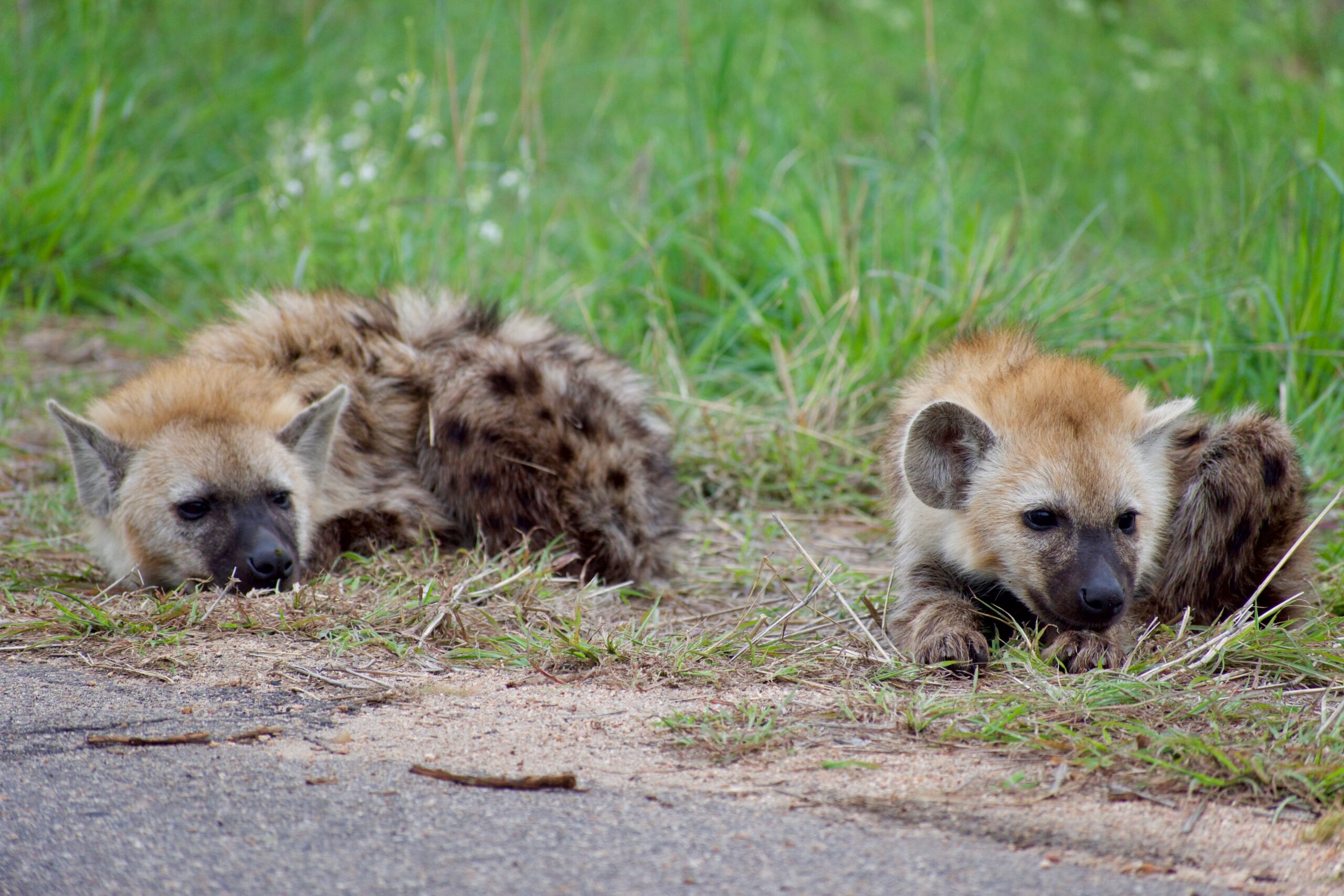
Hyenas are highly social animals and live in groups. Perhaps because of this, they are very disciplined creatures. The leader of a hyena group is often a female.
① Highly intelligent
Quickly assesses situations
Understands the positions and power dynamics of others
Knows when to back off or when to go for it
Calculating rather than reckless.
② Bold and assertive in groups
Will stand up to lions when outnumbered
Works in cooperation with others
May brazenly steal prey
Uses group tactics against stronger predators.
③ Cautious when alone
Retreats immediately if they sense danger
Doesn’t attempt unreasonable challenges
Doesn’t often pursue prey relentlessly
Survival is their number one priority.
④ Highly social (spotted hyena)
Strict hierarchical relationships
Females are more dominant than males
Children also learn hierarchy as they grow
Emphasizes social rules.
⑤ Do they have a bad temper?
Becomes aggressive when excited.
Fights are often resolved by vocalization or intimidation.
Avoids pointless combat.
More realistic than aggressive.
⑥ Coexistence of curiosity and caution.
Shows interest in new things.
Always waits before approaching.
Closely observes humans.
⑦ Sex differences among species.
Spotted hyena: Bold and sociable.
Striped hyena: Cautious and solitary.
Brown hyena: Relatively docile.
Aardwolf: Timid and gentle.
What is the ecology like?
Hyenas often steal prey or scavenge for the carcasses of other animals, but they also hunt. Basically, they hunt in packs, and the success rate of hunting is 60-70%. Their staple food is large mammals such as zebras, insects such as termites, and birds. They breed on average after a 4-month gestation period, giving birth to two offspring at a time. They have a long lifespan of around 20 years, and some have lived up to 40 years in captivity.
① Activity Period
Mainly nocturnal
Active from dusk to dawn
Rest in dens or under rocks during the day
A rational lifestyle to avoid the heat.
② Social Structure (especially spotted hyenas)
Live in groups called clans
(Can range from 10 to 80 or more individuals)
Matriarchal society
Strict hierarchy
Divided responsibilities for hunting, raising children, and defense
Highly organized
③ Diet
Exclusively carnivorous, but with a wide range of uses
Highly likely to hunt for themselves
Uses carrion without waste
Eats bones, skin, and organs
“Cleaners” of the savanna
④ Hunting Method
Tiring out prey through long-distance runs
Working together as a herd to surround them
Also targets large herbivores (wild primates and zebras)
⑤ Breeding and Rearing
Breeding possible year-round (regional differences apply)
Gestation Period: Approximately 110 days
Large Number of Pups: 1-3
Raising is primarily the mother’s responsibility
Young animals learn hierarchical relationships as they grow
⑥ Nest (Roost)
Uses underground burrows
May reuse the burrows of other animals
The birthing and rearing periods are particularly important
⑦ Lifespan
Wild: Approximately 12-20 years
Captive: Can live for more than 20 years
Are there any natural enemies?
The hyena’s enemy is the lion. Because lions and hyenas live in overlapping habitats, they often become rivals and compete for prey. If you invade a lion’s territory, you may be preyed upon.
About Molting
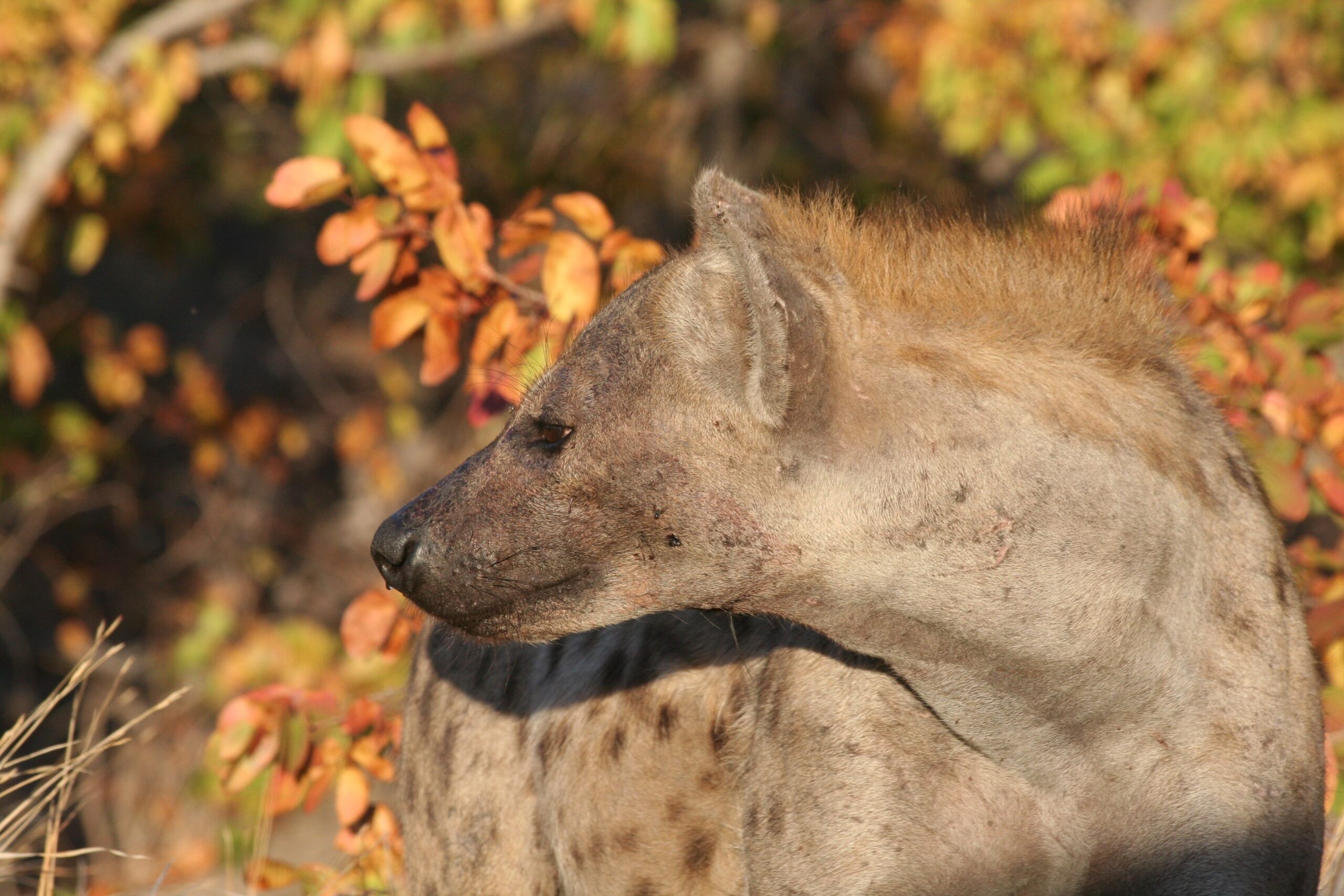
Hyenas are mammals that undergo “molting”—the seasonal shedding and regrowth of fur. However, unlike animals such as wolves or foxes that exhibit a drastic difference between winter and summer coats, hyenas undergo a relatively gradual molt adapted to the climate of their specific habitat.
Molting Periods
Hyena molting generally occurs as follows:
🌱 Spring (Transition from dry season to rainy season)
Shedding the dense fur developed during winter or the dry season
Transitioning to shorter, more breathable fur
Facilitating easier body temperature regulation
🍂 Autumn to Winter
Fur becomes slightly thicker
Heat retention improves
This is particularly noticeable in individuals living in colder regions
However, for Spotted Hyenas living in the African savanna, the shift between “summer coat” and “winter coat” is not as distinct as it is in dogs or deer in Japan.
Differences in Molting by Species
① Spotted Hyena
Spotted Hyena
Characteristics:
Short, coarse fur
Spotted pattern remains throughout life
Minimal seasonal change in fur volume
Molting functions:
Shedding old fur
Growing new fur
Maintaining skin health
Combating parasites
These are the primary roles.
Because Spotted Hyenas are adapted to hot regions, they do not need to grow a long winter coat.
② Striped Hyena
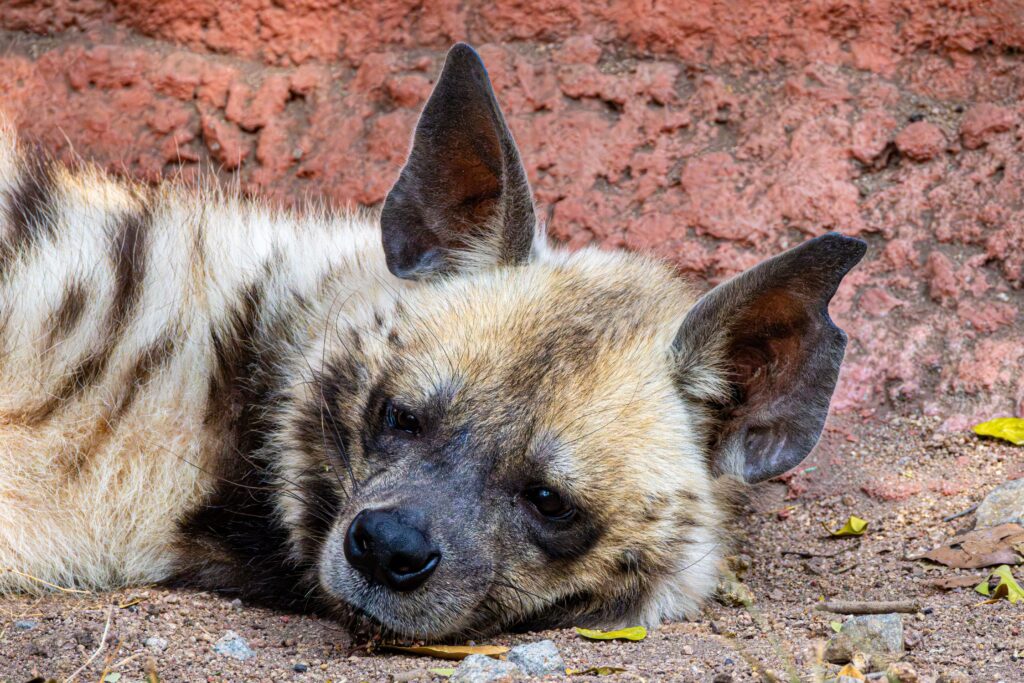
Striped Hyena
Characteristics:
Inhabits arid regions and desert fringes
Has longer fur
Well-developed mane-like fur on the neck and back
Molting trends:
Summer: Fur becomes thinner
Winter: Fur volume increases
In desert environments with significant temperature fluctuations, molting is crucial for body temperature regulation.
③ Brown Hyena
Brown Hyena
Characteristics:
Inhabits arid zones of Southern Africa
Has long fur
Seasonal changes in fur are particularly noticeable on the:
Neck area
Back
Shoulders
The long fur acts as insulation during cold nights.
④ Aardwolf
Aardwolf
Characteristics:
A member of the hyena family, but feeds exclusively on insects
Fine body fur
Distinctive mane along the back
When sensing danger, it raises the fur on its back to make itself appear larger.
About Hyena Vocalizations
Hyenas are among the most vocal of carnivores, using a wide variety of sounds to communicate. They are particularly famous for a distinctive call known as “laughter,” though in reality, this sound does not indicate amusement or happiness.
The True Nature of “Laughter” (Spotted Hyena)
Spotted Hyena
Most famous call:
High-pitched sounds like “hee-hee-hee” or “cackle-cackle.”
Commonly referred to as “hyena laughter.”
However, the meaning is:
❌ Amusement
❌ Joy at seeing prey
Instead, it signifies:
✅ Excitement
✅ Nervousness
✅ Frustration
✅ A signal for help
✅ Disputes over social rank
What does the “laughter” convey?
Research has shown that this call contains information specific to the individual.
The voice reflects:
Age
Individual strength
Social status
Social bonds
…and more.
Pack members can identify exactly “who is calling” just by hearing the sound.
Typical Hyena Calls
① “Laughter” (Cackle)
Uses:
Calling pack members
Conveying excitement
During disputes over prey
Requesting to join the group
Often heard when multiple hyenas gather together.
② Growl
A low “grrr” sound.
Uses:
Intimidation
Guarding prey
Warning an opponent
Often produced while opening the mouth to bare the teeth.
③ Whoop
A low, resonant “whoop-whoop” sound.
Primarily observed in spotted hyenas.
Uses:
Locating the pack
Gathering the group
Claiming territory
Can carry for several kilometers.
A sound that echoes across the savanna at night.
④ Moan/Whine
Frequently used by cubs. Purpose:
Demands directed at the mother
Requests for nursing
Expression of anxiety
Hyena cubs rely heavily on vocalizations to interact with their mothers.
Seasonal Activities
Hyenas primarily inhabit the arid regions and grasslands of Africa; their seasonal activity patterns are heavily influenced by temperature, prey migration, water availability, and breeding cycles.
🌱 Spring (Start of the Rainy Season)
Activity Characteristics
Active hunting
Targeting young herbivores
Increased breeding activity
More frequent territory patrols
With the arrival of the rainy season:
Grass grows
Herbivore populations (wildebeest, zebras, etc.) increase
Many animals enter their birthing season
…making this a time of abundant food for hyenas.
Behavior
Increased pack hunting
More food transport to cubs
Increased activity around the den
☀️ Summer (Hot/Dry Season)
Activity Characteristics
Increased nocturnal activity
More time spent resting during the day
Activity centered around waterholes
In hot African regions, daytime temperatures can approach 40°C, so
Hyenas tend to:
Rest in the shade
Begin activity in the evening
Travel long distances at night
Hunting
Primary prey:
Deer species
Zebras
Wildebeest
Warthogs
…and others.
The dry season is also a time when prey animals are more likely to be weak, increasing the success rate of pursuit-based hunting.
🍂 Autumn (Transition to Dry Season)
Activity Characteristics
Increased long-distance travel
Tracking prey migration
More territorial disputes between packs
As herbivores migrate in search of water and food, hyenas follow their movements.
In particular:
The great migration of wildebeest
Concentration of animals at waterholes
…provide crucial opportunities for hyenas to find food.
❄️ Winter (Dry Season)
*Note: In Africa, “winter” refers to the dry season, unlike the cold winter in Japan.
Activity Characteristics
Period of most efficient hunting
Increased scavenging (feeding on carrion)
Primarily nocturnal activity
During the dry season:
Herbivores weaken
Animals congregate at waterholes
Predation opportunities increase
…making this a critical season for hyenas.
Walking Speeds
While hyenas are often imagined as animals built for running, they are actually endurance-oriented carnivores designed for efficient, long-distance travel. They excel more at sustained pursuit without tiring than at achieving high top speeds.
🚶 Normal Walking
Approx. 4–6 km/h
Patrolling their territory
Moving as a pack
Foraging for food
They walk for extended periods at this pace.
Since hyenas can travel dozens of kilometers in a single night, they possess immense stamina even when walking slowly.
🐾 Brisk Walk / Trot
Approx. 8–12 km/h
This is the speed hyenas use most frequently for travel.
Characteristics:
Low energy expenditure
Can be maintained for long periods
Suitable for tracking prey
Spotted hyenas, in particular, do not immediately sprint at full speed upon spotting prey; instead, they wear it down by pursuing it at a steady pace.
🏃 Top Speed
Approx. 55–65 km/h
Observed primarily in:
Spotted hyenas
Brown hyenas
However, they do not possess the type of explosive, short-distance acceleration seen in cheetahs.
About Hyena Cubs
Hyena cubs are babies who are thrown into a competitive world from the moment they are born, and they grow up in a very harsh environment.
They may look cute, but their behavior is very harsh.
① Immediately after birth
They are born with their eyes open (rare)
They already have teeth
They have fur and are mobile
They also exhibit aggressive behavior
They are at a highly mature stage as carnivores.
② Intense competition between siblings
1-3 siblings in a litter
Siblings fight fiercely
They fight over food and milk
Weaker individuals may even lose their lives
This is “natural selection.”
③ Life in the den
They grow in the den for the first few months
The mother is responsible for nursing and defense
Other adults are not very involved
④ Growth characteristics
Growth is relatively slow
Breast milk is highly nutritious
They take about a year or more to wean (a very long time)
Unusual among carnivores.
⑤ Social learning period
Once they start leaving the den
Learn hierarchy
Threat
Communication
Even among young animals, hierarchical relationships are formed
⑥ Differences between females and males
Female young are more likely to be dominant
Mother’s status directly affects their young
Bloodline is important for social status
⑦ Until independence
It takes several years for them to become fully independent
Grow as part of a pack
Males often leave the pack after adulthood
Are hyenas an endangered species?
As explained above, there are subspecies of hyena that are designated as endangered species. The impact of extermination as a pest and predation by dogs is increasing, and some subspecies are even listed in the Washington Convention.
● Spotted Hyena
Rating: LC (Least Concern)
Relatively stable population
Widely distributed throughout Africa
This is the most well-known hyena and is not at risk of extinction.
● Brown Hyena
Rating: NT (Near Threatened)
Limited habitat and small population
Frequent conflict with humans
Potential for increased risk in the future.
● Striped Hyena
Rating: NT (Near Threatened)
Distributed from Africa to the Middle East to India
Decreasing due to development and persecution
“One step away from the danger zone.”
● Aardwolf
Rating: LC (Least Concern)
Specializes in termites and is less likely to compete with humans
Relatively stable
Why are some species declining?
Habitat destruction and fragmentation
Extermination due to livestock damage
Persecution due to superstition and misunderstanding
Traffic accidents
Their “bad image” can also be a direct cause.
Can hyenas be kept as pets?
Hyenas are not suitable for keeping as pets. This is because it is extremely dangerous as it often causes harm to people and livestock. Therefore, it is not recommended for amateurs.
① Legal Issues (in Japan)
Hyenas are dangerous animals and large carnivores.
Keeping them in private homes is generally prohibited or extremely strict under the Animal Welfare and Management Act
Prefectural ordinances
Keeping them is permitted only in licensed facilities such as zoos and research facilities.
② Safety Issues
They have extremely strong jaws (they can crush bones).
Adults weigh over 30-80kg.
They are highly intelligent and tend to test people.
A serious bite can be life-threatening.
Even young animals are not considered safe.
③ Personality and Instinct Issues
They are social, but not suited to human society.
They have a strong territorial instinct.
When they see prey, their instincts take over.
They often exhibit behaviors that cannot be controlled through training.
They cannot be treated like dogs or cats.
④ Breeding Environment Issues
Large exercise space required
Strong cages with double doors are essential
Loud noise (crying)
Extremely expensive food and care costs
Physically impossible for an average household.
⑤ What about overseas?
Illegal breeding exists in some countries.
Frequent behavioral problems, accidents, and euthanasia.
Strongly condemned from an animal welfare perspective.
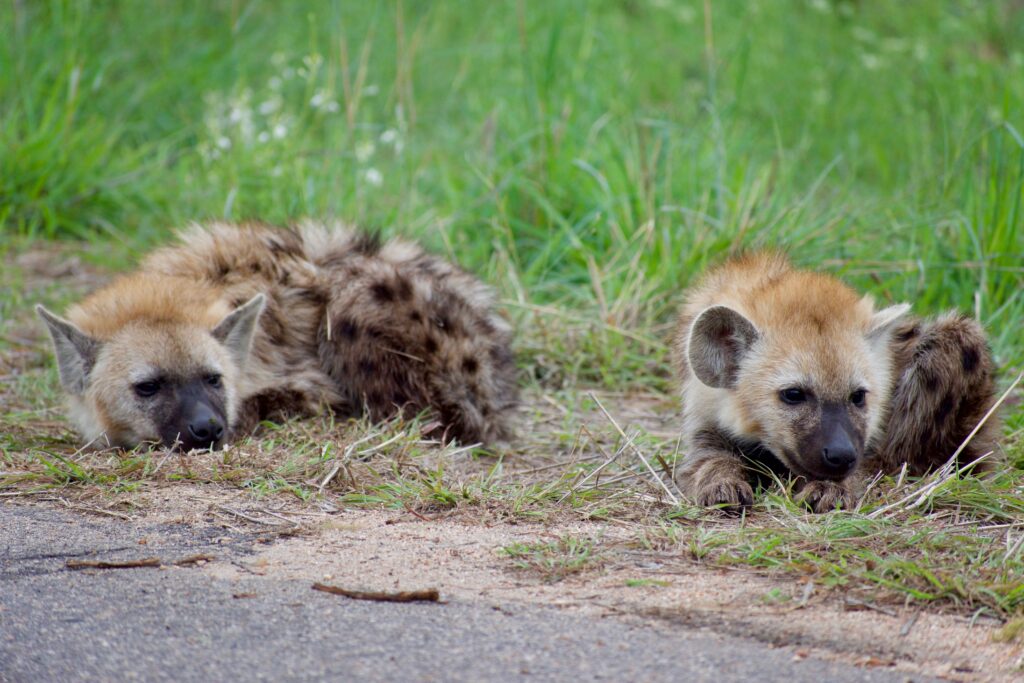
Zoos Housing Hyenas (Japan & Worldwide)
Most hyenas currently kept in zoos are spotted hyenas (Crocuta crocuta). Among the four species in the Hyaenidae family, they are the largest and highly social, making them popular choices for zoo exhibits.
🇯🇵 Zoos in Japan Where You Can See Hyenas
Hokkaido
Sapporo Maruyama Zoo
Species: Spotted hyena
Features:
One of the few facilities in Hokkaido exhibiting hyenas.
As they are nocturnal, they are often most active in the evening or later.
The zoo places emphasis on explaining their ecology, including their powerful jaws and social structure.
Kanto
Utsunomiya Zoo
Species: Spotted hyena
A facility where you can observe them up close.
Chiba Zoological Park
Species: Spotted hyena
A facility involved in research on hyena breeding.
Omiya Park Small Animal Zoo
Species: Spotted hyena
A facility with a long history of keeping hyenas.
Tokai
Shizuoka City Nihondaira Zoo
Species: Spotted hyena
Offers opportunities to observe hyena behavior and watch feeding events.
Fuji Safari Park
Species: Striped hyena (kept here; exhibit status varies by season)
Allows observation of large animals in a safari-style setting.
Kansai
Tennoji Zoo
Species: Spotted hyena
Hosts events such as hyena feedings.
Chugoku/Shikoku
Ikeda Zoo
Species: Spotted hyena
Provides information on the ecology of the individual animals kept there.
Kochi Prefectural Noichi Zoological Park
Species: Spotted hyena
Tokushima Zoo
Species: Spotted hyena
Shirotori Zoo
Species: Spotted hyena
🌍 Notable Hyena-Keeping Facilities Worldwide
🇺🇸 USA
Woodland Park Zoo
Exhibits spotted hyenas.
The exhibit was reintroduced in 2026 after a hiatus of approximately 25 years.
San Diego Zoo
Famous for its African animal exhibits.
Has a track record of keeping African carnivores, including spotted hyenas.
🇬🇧 United Kingdom
London Zoo
A zoo with a history of exhibiting African carnivores.
Chester Zoo
A facility known for its exhibits of large carnivores.
🇩🇪 Germany
Berlin Zoo
One of the oldest zoos in the world.
Houses a diverse range of carnivores, including hyenas.
🇫🇷 France
Paris Zoo
Houses carnivores in its African animal exhibit area.
Introducing other animals
コメント