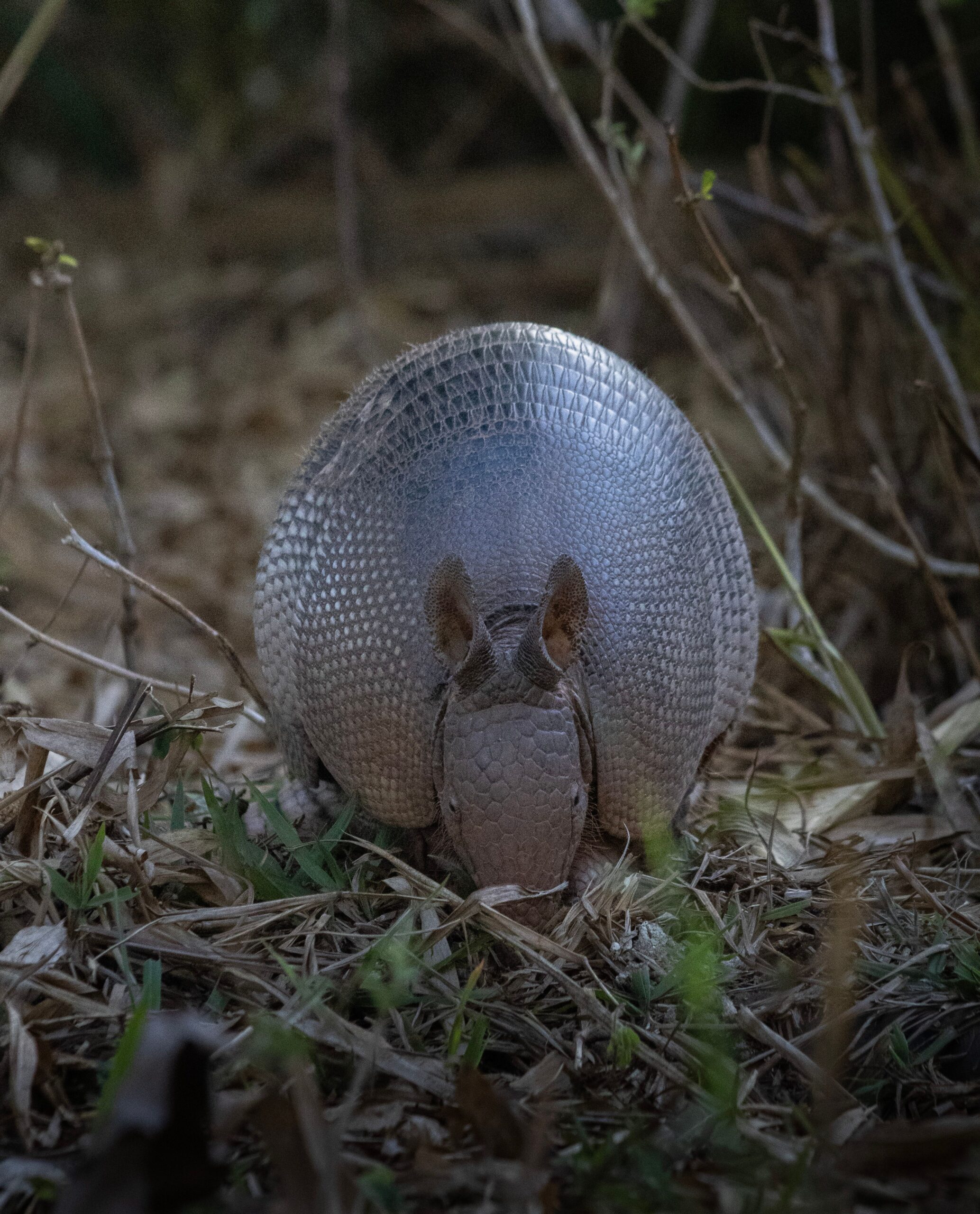
What kind of animal is an armadillo? We will explain its characteristics, ecology, and habitat. It is said to be the only mammal with a shell, making it a very rare animal. However, they have many subspecies, and many of these subspecies are endangered. The situation is extremely dangerous and requires protection.









- What is an armadillo? About basic status
- What are the roots and origins of the armadillo?
- About habitat
- feature is? What kind of creature is it?
- What is your personality like?
- What is the ecology like?
- About Vocalizations
- Seasonal Activity
- Walking Speed
- About Baby Armadillos
- Are armadillos an endangered species?
- Can armadillos be kept as pets?
- Zoos Housing Armadillos (Japan and Worldwide)
- Introducing other animals
What is an armadillo? About basic status
Armadillo is a general term for the oligodont order Armadillodae, which is a mammal. The body length is 75-100cm and the weight is 30kg. Animals belonging to the order Tepidoptera are collectively called armadillos. In kanji, it is called 犰狳, obiju, etc. The list of information is as follows. The body is covered with hard skin. Curl up to protect yourself.
| Japanese(和名) | アルマジロ |
| English(英名) | armadillo |
| scientific name(学名) | Dasypodidae |
| classification(分類) | Mammalia、Cingulata、 Dasypodidae 哺乳綱、貧歯目、アルマジロ科 |
| IUCN Status(保全状況) | LEAST CONCERN |
| Length(体長) | 75-100cm |
| Weight(体重) | 30kg |
What are the roots and origins of the armadillo?
The roots (origins) of the armadillo are believed to trace back to ancestors that emerged in South America during the Eocene epoch, approximately 52 to 55 million years ago.
The evolutionary history of armadillos
Approximately 55 million years ago
The first armadillo-like creatures (order Cingulata) appeared in South America.
At that time, South America was isolated from other continents, allowing for unique evolutionary development.
Approximately 35 million years ago
Many lineages leading to modern armadillos diverged.
During this period, the Glyptodonts—massive, armored animals—also evolved. Recent DNA research indicates that Glyptodonts were not merely distant relatives but were actually part of the armadillo lineage itself.
Approximately 3 million years ago
The Isthmus of Panama formed, triggering the “Great American Biotic Interchange.”
Some armadillos expanded into North America; today, they are distributed from the southern United States down through Central and South America.
What are armadillos related to?
Armadillos belong to a very ancient group of mammals known as Xenarthra. Their closest relatives are:
Anteaters
Sloths
Although they look completely different, these three groups diverged from a common ancestor.
The origin of the shell (armor)
An armadillo’s “shell” is not formed from modified ribs, unlike a turtle’s shell.
It is composed of:
Bone formed within the skin (osteoderms)
A covering of keratin (the same substance found in human fingernails and hair)
This armor is believed to have evolved as a defense against predators.
Their oldest relative
A prominent extinct relative of the armadillo is the Glyptodont.
Body length: Approx. 3–4 meters
Weight: Approx. 2 tons
They possessed massive, dome-shaped armor and lived until the Ice Age.
They went extinct at the end of the Pleistocene epoch, approximately 12,000 years ago. In other words, today’s small armadillos are a surviving lineage of the giant armored mammals that once inhabited South America.
About classification
There are many subspecies of armadillos around the world, including the following: This is a quote from Wikipedia.
- Calyptophractus retusus チャコアルマジロ Greater hairy armadillo
- Chlamyphorus truncatus ヒメアルマジロ Pink hairy armadillo
- Chaetophractus nationi ペルーケナガアルマジロ Andean hairy armadillo
- Chaetophractus vellerosus ケナガアルマジロ Screaming hairy armadillo
- Chaetophractus villosus アラゲアルマジロ Big hairy armadillo
- Euphractus sexcinctus ムツオビアルマジロ Six-banded armadillo
- Cabassous centralis パナマスベオアルマジロ Northern naked-tailed armadillo
- Cabassous chacoensis チャコスベオアルマジロ Chacoan naked-tailed armadillo
- Cabassous tatouay オオスベオアルマジロ Greater naked-tailed armadillo
- Cabassous unicinctus スベオアルマジロ Southern naked-tailed armadillo
- Priodontes giganteus オオアルマジロ Giant armadillo
- Tolypeutes matacus マタコミツオビアルマジロ Southern three-banded armadillo
- Tolypeutes tricinctus ミツオビアルマジロ Brazilian three-banded armadillo
- Dasypus hybridus ムリタアルマジロ Southern long-nosed armadillo
- Dasypus kappleri ヤツオビアルマジロ Greater long-nosed armadillo
- Dasypus novemcinctus ココノオビアルマジロ Nine-banded armadillo
- Dasypus pilosus ムクゲアルマジロ Hairy long-nosed armadillo
- Dasypus sabanicola コムクゲアルマジロ Llanos long-nosed armadillo
- Dasypus septemcinctus ナナツオビアルマジロ Seven-banded armadillo
- Dasypus yepesi イエペスアルマジロ Yepes’s mulita
About habitat
Armadillos are distributed in South America, including Argentina.
- Distribution
Distributed mainly in North and South America
South America: Brazil, Argentina, Uruguay, Paraguay, etc.
North America: Southern United States (Texas, Arizona, etc.)
Distribution varies by species
Examples: Saw-toothed Armadillo, Nine-banded Armadillo, Three-banded Armadillo, etc.
- Habitat
Various habitats, including grasslands, savannas, dry forests, and woodlands
Due to their digging habits, they prefer soft soil and sandy areas
Some species also live near water and wetlands
They build underground burrows and often rest in them during the day
- Nests and Hiding Places
They dig their own burrows and tunnels to live in
Burrows provide a safe haven from predators
Some species may use a single burrow for several years
- Climate Adaptation
Adapted to a wide range of climates, from tropical to subtropical and arid regions
They rarely live in cold climates and are vulnerable to frost and ice
feature is? What kind of creature is it?
The armadillo’s entire body is made up of bone-like plates with modified skin, and it looks very hard. The English name Armadillo means “armed one” in Spanish. When the two species of armadillo encounter an enemy, they curl up into a ball-like shape to protect themselves. They have a highly developed sense of smell and are only active at night. Armadillos are mainly found in grasslands.
- Physical Characteristics
Body Shape/Size
Small to medium-sized mammals, ranging from approximately 15cm to 100cm in length depending on the species.
Weight ranges from 0.5kg to 50kg (varies greatly by species).
Body Structure
Their bodies are covered with hard armor plates (bony carapaces) to protect them from predators.
Their heads, backs, tails, and limbs are partially armored.
Tails/Limbs
Some species have long or short tails, which they use for balance and defense.
Their front paws have strong claws adapted for digging.
Face/Ears
They have a pointed nose, which is excellent for detecting the smell of the ground.
They have small ears.
- Personality/Behavior
They are timid and cautious.
If they encounter a predator, they will quickly hide in a hole or protect themselves with armor.
Nocturnal or crepuscular.
They are mainly active at night, in the evening, or early morning.
They love digging.
They dig to make burrows and search for food.
- Biology and Abilities
Diet: Omnivorous, but primarily insectivorous
Ants, termites, insects, earthworms, and small invertebrates
Depending on the species, they also eat fruit and plant roots
Burrow Lifestyle
Draw underground burrows to protect themselves from predators
Defensive Abilities
Can curl up in armor and deflect attacks
Reproduction
Give birth to 1-4 young at a time (varies by species)
Mothers protect their young in burrows
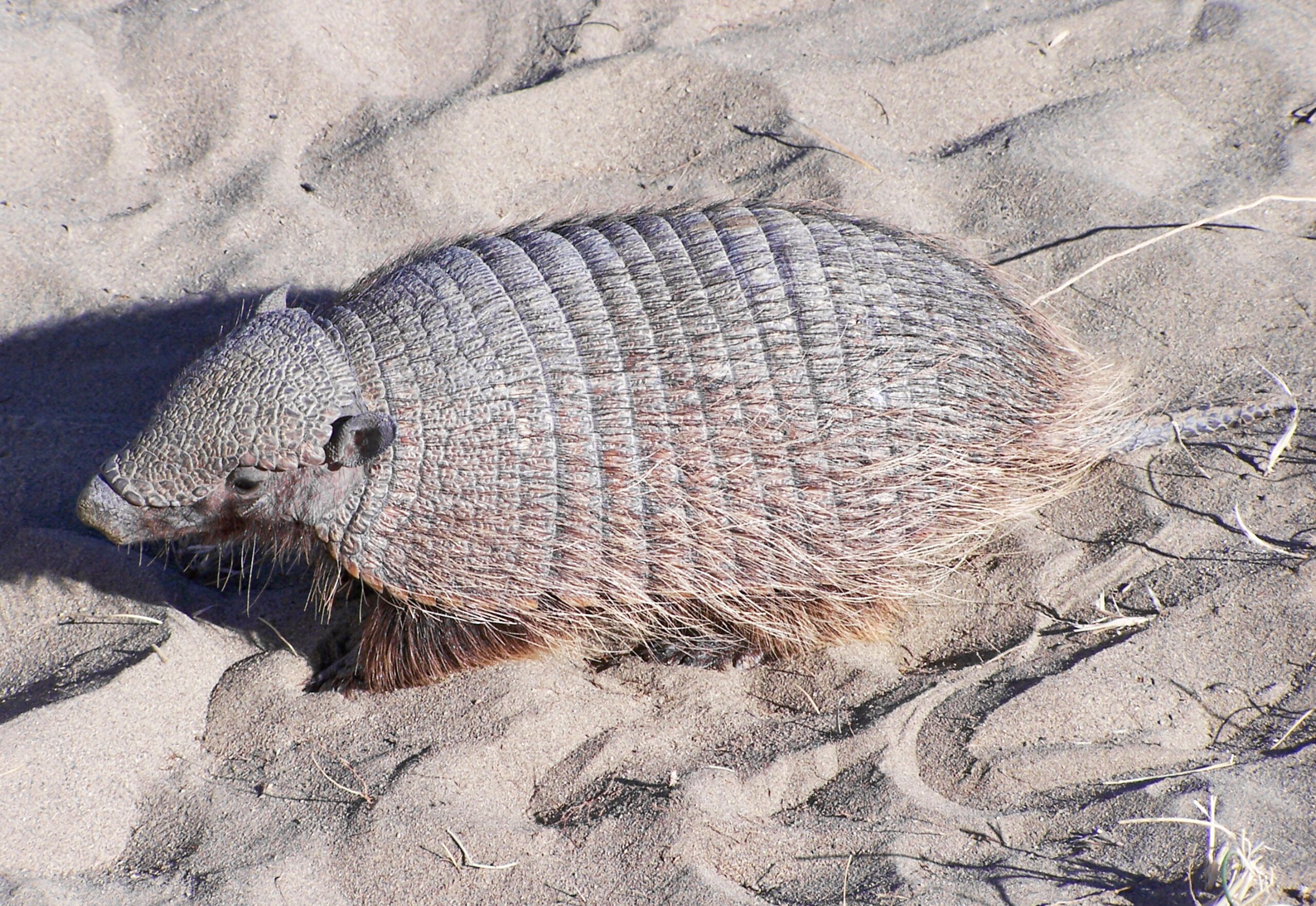
What is your personality like?
Armadillos have very gentle and gentle personalities, making them easy to keep as pets. They are very easy to handle as they have a very friendly personality.
Armadillo Personality Traits
Shy and cautious
If they encounter a predator, they will immediately retreat to their burrow.
They may also use their armor for protection.
They are highly alert and sensitive to humans, sound, and light.
Highly independent
They generally live alone and rarely travel in groups.
They value their burrows and territories.
Moderately curious
They carefully observe their surroundings when exploring or searching for food.
They quickly retreat if they sense danger, so they are not reckless.
They are patient
They are patient when digging and searching for food.
Once they dig a hole, they may continue to use it for several days.
Gentle and not aggressive
They generally do not attack, and their behavior is primarily defensive.
They protect themselves from danger by using their armor and curling up.
What is the ecology like?
Armadillos live by completely attracting insects such as termites and small animals such as earthworms, snails, and snakes in their burrows with their tongues and eating them. The form of coexistence is viviparous. The gestation period is approximately 4 months, and they can give birth to 4 to 8 puppies at a time. The lifespan is said to be about 12 to 15 years.
- Habitat
Terrestrial and adapted to digging
Habitats are diverse, primarily found in North and South America:
Grasslands, savannas, and dry forests
Some species also live in tropical rainforests and wetlands
Prefer soft soil or sandy areas to build burrows
- Behavior
Nocturnal or crepuscular
Rest in burrows during the day
Search for food at night or early morning
Primarily solitary
Territorial, interacting with others only during breeding season or when mothers and their young are involved
Highly skilled at digging, they frequently dig in the soil to build burrows and search for food
- Diet
Omnivorous, but primarily insectivorous
Feeds on ants, termites, insects, earthworms, and small invertebrates
Depending on the species, they also eat fruit and plant roots
Strong claws on the front feet are important for digging to find food
- Reproduction
They give birth to 1-4 babies at a time (varies by species)
Mothers protect their babies in their dens
Babys are breastfed for several weeks, then learn to forage around the den.
Are there any natural enemies?
Armadillos have coyotes, leopards, and other animals, but their biggest natural enemy is humans. This is because overhunting by humans has become a problem.
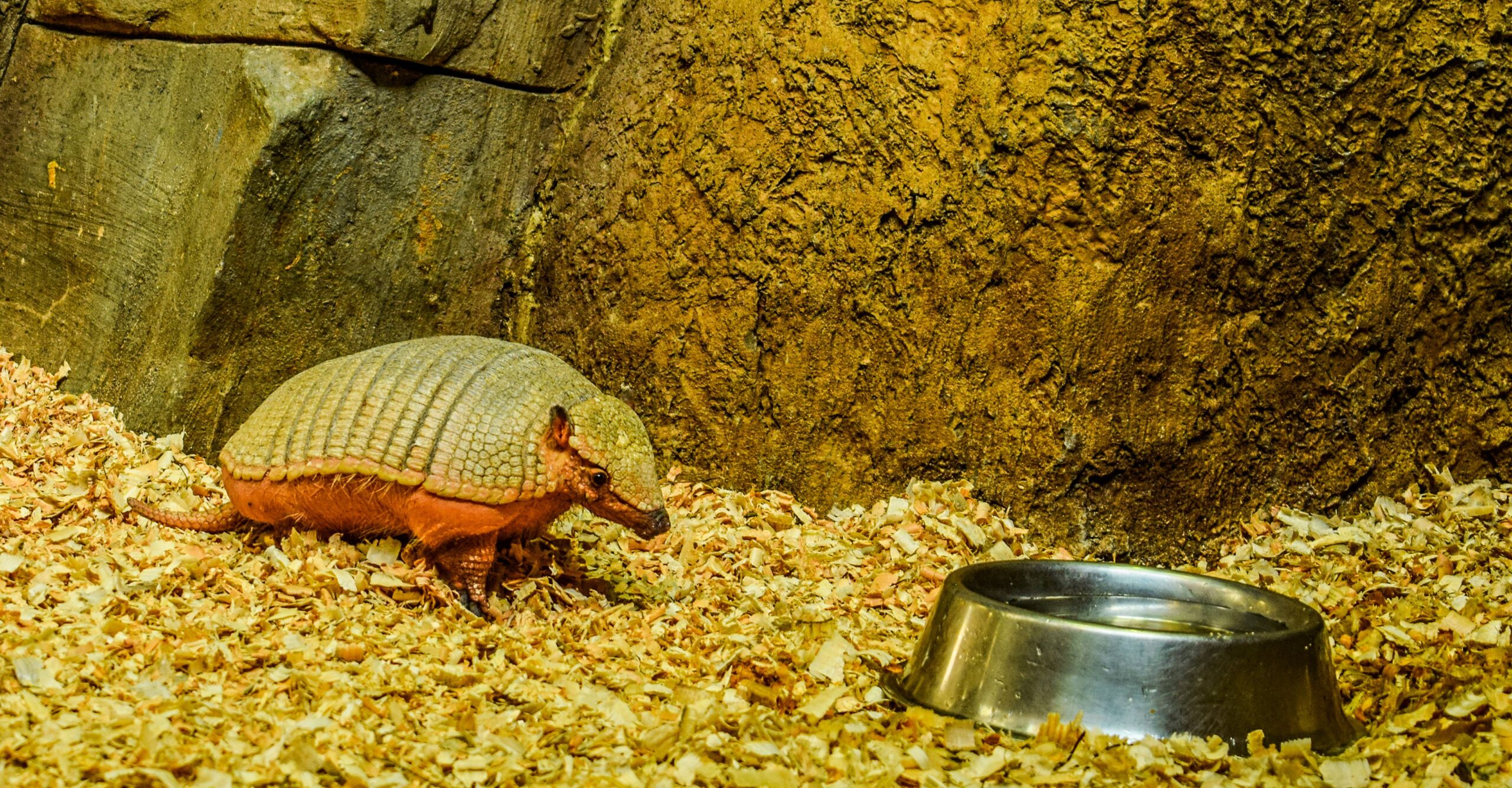
About Vocalizations
Armadillos are generally quiet animals. Unlike dogs or cats, they do not frequently communicate through vocalizations; instead, they primarily rely on their sense of smell and physical contact to interact.
However, that does not mean they never make sounds.
What kind of sounds do they make?
Depending on the situation, they may produce the following sounds:
“Kee” or “Qew”
A high-pitched, scream-like sound made when startled or captured.
“Oink-oink” or “Snort-snort”
Snorting or huffing sounds made while foraging for food or when excited.
“Grrr” or “Urr”
Some species emit low growls to signal a threat or express discomfort.
Young armadillos vocalize frequently
Baby armadillos may make high-pitched “peep-peep” sounds to call for their mothers. Mothers also rely on scent and these vocalizations to locate their young.
Differences by species
There are approximately 20 species of armadillos, and their vocal habits vary.
Nine-banded armadillo: Usually very quiet, but emits short vocalizations when in danger.
Three-banded armadillo: Often curls into a ball for protection and rarely vocalizes.
Screaming hairy armadillo: True to its name, it is known for letting out a relatively loud “scream” when captured or threatened.
Seasonal Activity
Armadillo activity is heavily influenced by the season and temperature. They are vulnerable to the cold because they are not very efficient at regulating their body temperature and have little body fat.
🌸 Spring (March–May)
They recover from the reduced activity of winter and become active foragers.
They replenish their energy reserves by consuming large quantities of insects, earthworms, and larvae.
For some species, the breeding season begins.
☀️ Summer (June–August)
This is their most active season.
They rest in their burrows during the hot daylight hours and are active from evening through the night and into the early morning.
They spend more time digging in the soil in search of insects and small animals.
They also make greater use of waterside areas and damp locations.
🍂 Autumn (September–November)
Foraging increases as they build up nutritional reserves for the winter.
In some regions, they may spend more time active during the day as temperatures drop.
They may maintain or re-excavate their burrows.
❄️ Winter (December–February)
Activity levels drop significantly.
They spend more time in their burrows on days when temperatures are low.
Armadillos do not hibernate, but during cold spells, they may remain in their burrows for several days at a time.
In cold regions, survival is difficult due to risks like hypothermia, which limits their distribution.
Daily Activity Rhythm
This varies by season.
Spring/Autumn: Primarily evening through night
Summer: Night through dawn (to avoid the heat)
Winter: May be active during the warmer daylight hours
Because armadillos’ activity times are strongly influenced by temperature adaptation, their behavioral patterns vary by region. In tropical zones, they remain relatively active year-round, whereas in temperate zones, their activity decreases as winter approaches.
Walking Speed
Although armadillos can move faster than their appearance suggests, they usually walk slowly while foraging for food.
Typical Walking Speed
Approximately 0.5–2 km/h
They walk in a zigzag pattern, keeping their snouts close to the ground to sniff out insects and earthworms.
Running Speed
When sensing danger, they can accelerate over short distances,
reaching top speeds of approximately 30–50 km/h.
However, they can only maintain this speed for a very short time.
Walking Characteristics
They walk with their bodies held low on short legs.
Because they use the large claws on their forelegs to dig into the ground, their front legs move powerfully even while walking.
Their tails serve to help maintain balance.
As their eyesight is poor, they navigate by keeping their snouts close to the ground and relying on their sense of smell.
Surprising Athletic Ability
Armadillos are not only adept at walking;
they can jump vertically about 30–40 cm (often as a reaction to being startled).
Many species can swim—using the air in their lungs for buoyancy—or even hold their breath and walk across the riverbed.
Despite their leisurely appearance, they are animals capable of moving with great agility over short distances when they sense danger.
About Baby Armadillos
This article provides detailed information about baby armadillos.
- Appearance and Characteristics
Immediately after birth, they are small and have soft fur, and their armor plating has not yet fully hardened.
Depending on the species, they are approximately 10-20 cm long and weigh 100-500 g.
They have short tails, underdeveloped claws and fangs.
Their fur is light brown or gray and remains soft until the hard armor of adults develops.
- Behavioral Ability
Immediately after birth, they cling to their mother’s back or belly to move around.
They begin to imitate walking and digging within a few weeks.
They learn foraging behavior by observing their mother around the burrow.
- Diet and Growth
They receive nutrition from their mother’s milk for a while after birth.
Around 1-2 months of age, they begin to eat a small diet of insects and small animals around the burrow.
Their armor, similar to that of adult animals, develops and their digging ability improves after a few months.
They become independent and can forage for food outside the burrow around 3-6 months of age.
- Sociality
Young animals depend on their mothers for survival.
They have little contact with other individuals and primarily learn social behaviors and survival skills through play with their mothers and siblings.
They acquire digging skills and defensive behaviors through play and imitation.
- Defense and Safety
They hide in their mother’s burrow to protect themselves from predators.
While their armor is underdeveloped, their mother’s protection is an important means of survival.
Are armadillos an endangered species?
Overall, armadillo populations are stable and classified as low concern. However, some subspecies are already at risk of extinction. Armadillos and other animals are sometimes eaten as food in their native habitat, and their numbers continue to decline due to habitat destruction and overhunting for food. This is an animal in urgent need of protection.
- Current Classification
There are many armadillo species (approximately 21), and the level of endangerment varies by species.
Examples of representative species classifications (IUCN Red List):
Species Endangerment Level (IUCN)
Nine-banded Armadillo (Dasypus novemcinctus) Low Risk (LC)
South American Giant Armadillo (Priodontes maximus) Endangered (Vulnerable, VU)
Saw-toothed Armadillo (Chlamyphorus truncatus) Endangered (Vulnerable, VU)
In other words, most small- to medium-sized armadillos are stable, while larger and endemic species are classified as endangered.
- Population Status
The widely distributed nine-banded armadillo has a large and stable population.
Giant armadillos and saw-toothed armadillos, which are restricted to specific habitats, are declining due to deforestation and habitat destruction.
- Threats
Habitat destruction
Deforestation, agricultural development, urbanization
Hunting and capture for pets
They are sometimes captured for food and as pets
Natural disasters and climate change
Wetland destruction and drought in certain areas affect their populations
- Conservation Status
In many countries, endangered armadillos are legally protected by bans on capture and the establishment of protected areas.
Habitat conservation is a top priority.
Can armadillos be kept as pets?
Armadillos can be kept as pets. Yes, as long as it is not an endangered species. There are other services such as zoos and events that provide information about the species, so we recommend that you try observing them.
What should I do with the food?
Armadillos survive by preying on insects, earthworms, and snakes. When keeping them as pets, we recommend ferret food. Cat food can also be substituted.
Temperature control is required
Armadillos live in warm regions, so they don’t like cold weather. It is essential to take measures such as creating shade in the summer and heating the room in the winter.
Caged or free range?
There is a big difference between cages and free range. If you keep it in a cage only, it will need a certain size.
Zoos Housing Armadillos (Japan and Worldwide)
Although armadillos are relatively rare exhibit animals in Japan, they are currently kept at several zoos.
Major Zoos in Japan
Chiba Zoological Park
Houses six-banded armadillos.
An individual was transferred here from Ueno Zoo in 2026.
Kobe Animal Kingdom
Exhibits southern three-banded armadillos.
Saitama Children’s Zoo
Houses southern three-banded armadillos.
Higashiyama Zoo and Botanical Gardens
Exhibits southern three-banded armadillos.
Izu Shaboten Zoo
Exhibits six-banded armadillos.
They were previously exhibited at Ueno Zoo, but the six-banded armadillos were transferred to Chiba Zoological Park in June 2026, and the exhibit there has ended.
Famous Facilities Worldwide
San Diego Zoo
Known for exhibiting animals such as the nine-banded armadillo.
Smithsonian’s National Zoo
Houses Central and South American mammals, including armadillos.
Zoo Miami
Features an extensive collection of South American animals, including armadillos.
Zoo Berlin
One of the prominent zoos in Europe that keeps armadillos.
Introducing other animals


コメント