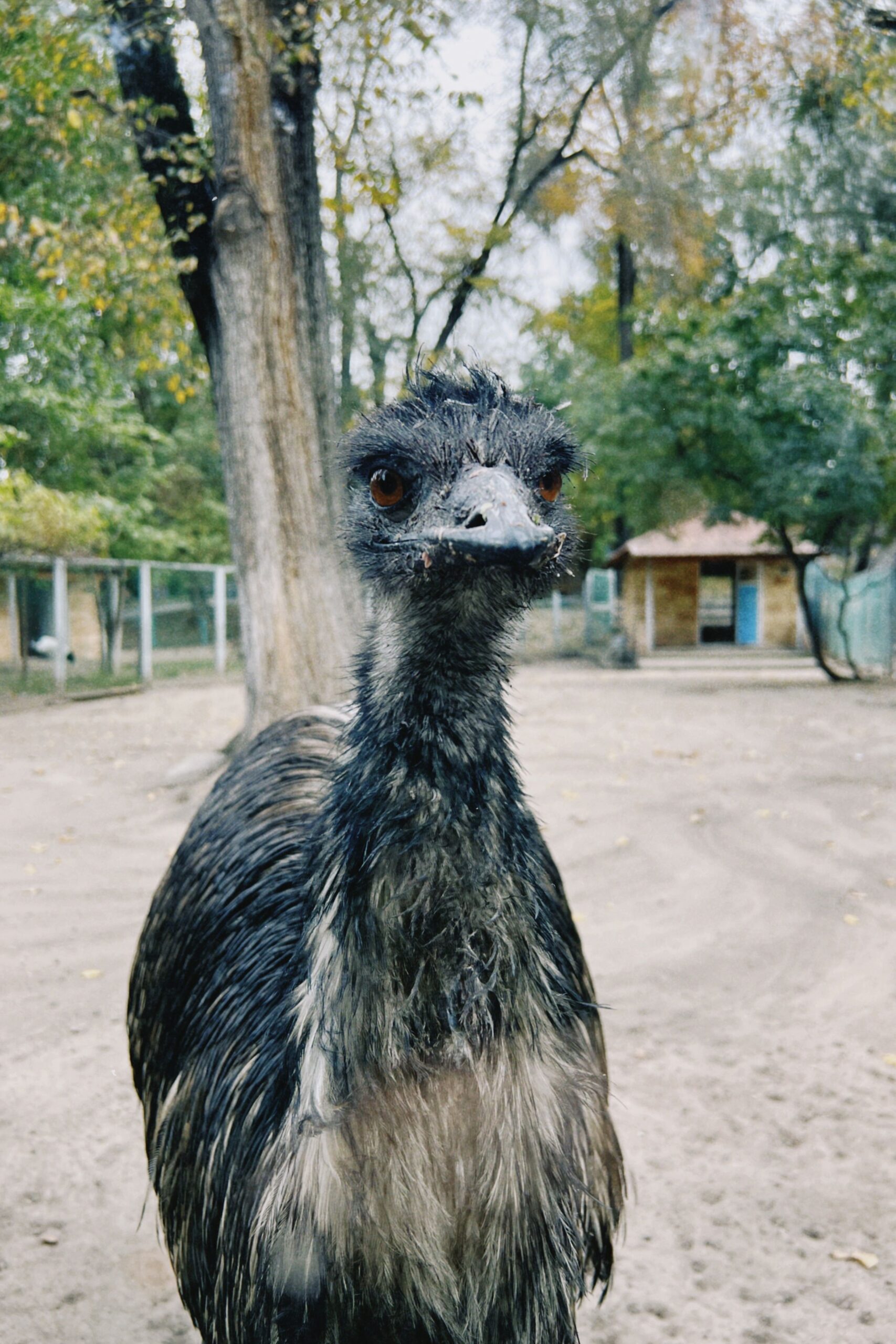
What kind of bird is an emu? We will explain its characteristics, ecology, and habitat. The emu, also known as a flightless bird, is very famous in Australia. It is distributed in open areas such as grasslands and sandy areas throughout Australia, and is known as one of the most famous bird species.




- What is an emu? About basic status
- What are the roots and origins of the emu?
- About habitat
- feature is? What kind of creature is it?
- What is your personality like?
- What is the ecology like?
- Emu Molting
- Vocalizations
- Seasonal Activities
- Walking Speed
- About Emu Chicks
- Is the emu an endangered species?
- Can emus be bred?
- Zoos Housing Emus (Japan & Worldwide)
- Introducing other animals
What is an emu? About basic status
Emu (emu) is a bird classified in the genus Emu, in the order Cassowaries and family Cassowaries. The scientific name is Dromaius novaehollandiae and the English name is 鯯鶓. The height is approximately 1.6m-2.0m, and the weight is approximately 40kg-60kg. It is the second tallest animal after the ostrich and cannot fly. Females are larger than males.
| Japanese(和名) | エミュー |
| English(英名) | Emu |
| scientific name(学名) | Dromaius novaehollandiae |
| classification(分類) | Ave、 Casuariiformes、 Casuariidae、Dromaius 鳥綱、ヒクイドリ目、ヒクイドリ科、エミュー属 |
| IUCN Status(保全状況) | LEAST CONCERN |
| Length(体長) | 1.6m-2.0m |
| Weight(体重) | 40kg-60kg |
What are the roots and origins of the emu?
The roots of the emu trace back to ancient avian ancestors that lived on the supercontinent Gondwana approximately 80 million years ago. The modern emu is a large, flightless bird (ratite) native to Australia; its scientific name is Dromaius novaehollandiae.
Origins: The lineage of large Gondwanan birds
Emus belong to a group of birds known as “ratites.”
Their relatives include:
Ostriches (Africa)
Rheas (South America)
Cassowaries (Australia/New Guinea)
Kiwis (New Zealand)
The extinct moa (New Zealand)
The extinct elephant bird (Madagascar)
It was once believed that these flightless birds evolved after the breakup of Gondwana, with each group remaining on its respective continent. However, current genetic research suggests it is highly likely that they independently lost the ability to fly, evolving from ancestors that were capable of flight.
Why did they lose the ability to fly?
The ancestors of the emu were likely small, flying birds.
However, in Australia:
There were few large carnivorous mammals.
Traveling across vast distances on foot was advantageous.
Leg strength and increased body size offered greater advantages than the muscles and wings required for flight.
Consequently, they gradually lost the ability to fly.
As a result, they evolved into “giant running birds” with the following characteristics:
Height: Approx. 1.5–2 m
Weight: Approx. 40–60 kg
Running speed: Approx. 50 km/h
Extinct species related to the emu’s ancestors
Several large bird species existed in the past within the lineage that led to the modern emu. Representative examples:
Proapteryx (and other ancient lineages)
Emu-lineage birds that inhabited ancient Australia
Ancient emu-like birds
Species ranging from smaller to larger than the modern emu
Australia was also once home to the Dromornithidae (thunder birds)—a group of giant birds—but these belonged to a lineage distinct from that of the emu.
Origin of the name “Emu”
The name “emu” was given by European explorers who encountered the bird in Australia. While there are various theories regarding its etymology, it is believed to derive from an Arabic word for large birds or from a term used by the Portuguese to describe large birds (such as cassowaries) in Southeast Asia.
About classification
The following subspecies of emu exist:
- Dromaius novaehollandiae novaehollandiae
- Dromaius novaehollandiae baudinianus
- Dromaius novaehollandiae diemenensis
- Dromaius novaehollandiae minor
About habitat
The emu is endemic to Australia.
- Geographic Distribution
Found throughout Australia
However, they avoid tropical rainforests, wetlands, and extremely dry deserts.
Their main distribution is as follows:
Forests and grasslands in Eastern Australia
Dry grasslands in South Australia
Open lands in Western Australia
- Habitat
Adapted to a wide range of habitats, including open forests, grasslands, savannas, and shrubs.
Prefers to be near water sources, but can also move in search of water sources in arid areas.
Due to their wide range of movement, they live in open areas far from human settlements.
- Behavior and Characteristics
Move alone or in small groups.
Omnivorous, feeding on grasses, fruits, and insects.
Agility to run quickly to avoid predators.
feature is? What kind of creature is it?
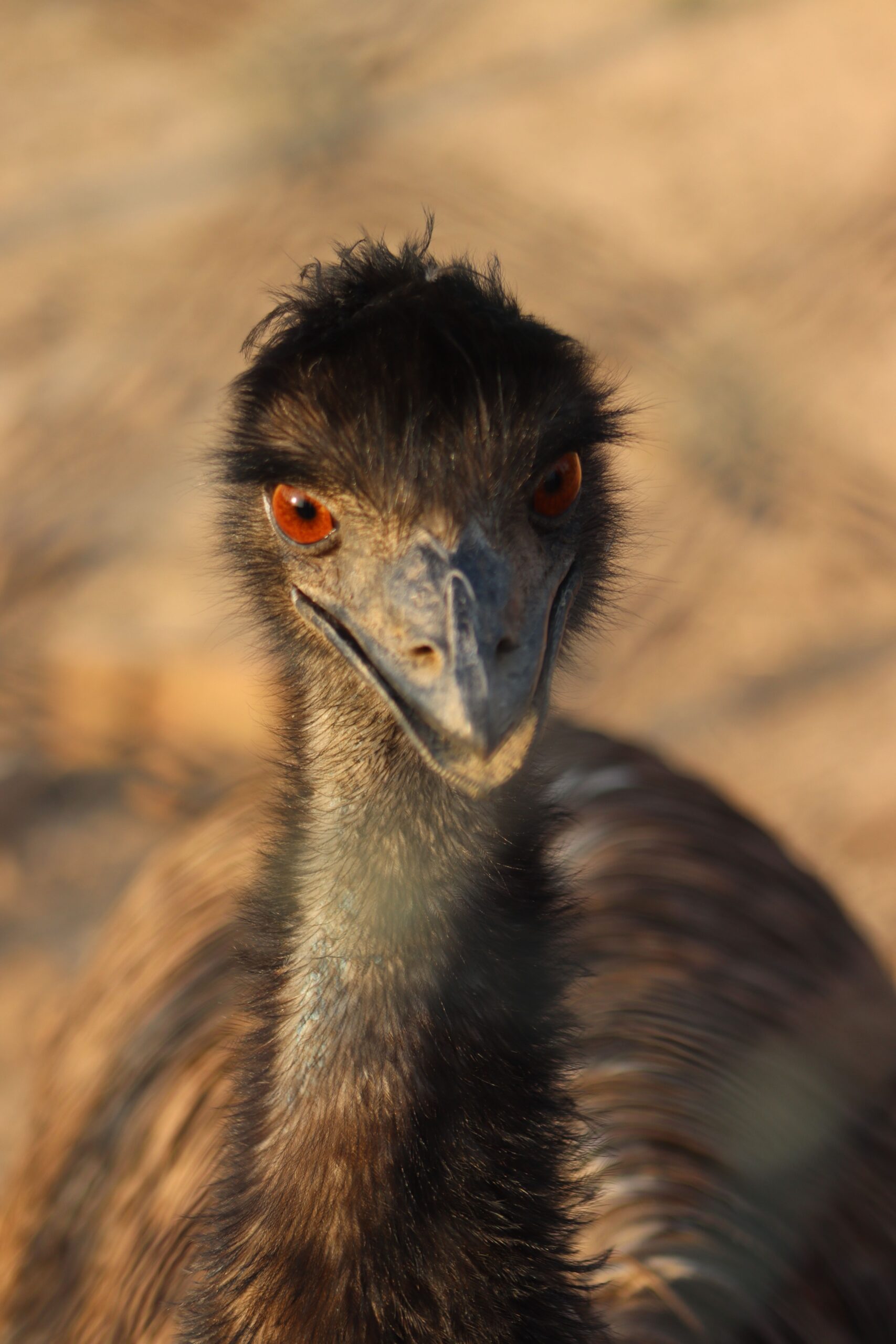
The emu is the second tallest bird after the ostrich, but it cannot fly. It has a rather sturdy body and is characterized by relatively long feathers that extend from the neck to the head. The feathers all over the body are grayish-brown, and there are areas where the color is peeling off or darkened. The wings are hidden in deep feathers and are almost invisible from the outside.
- Physical Characteristics
Body Type: A large, flightless bird with a long neck and legs and an overall slender appearance.
Body Length/Weight:
Body Length: Approximately 150-190 cm
Weight: Approximately 30-60 kg
Feathers: Brown to grayish-brown, fluffy and soft.
Head/Beak: Small head, short beak.
Legs: Very long, strong, and adapted for running. They have three toes.
- Behavior and Personality
Although they are flightless, they are very fast runners (up to approximately 50 km/h).
They are highly curious and cautious.
They sometimes live in groups, but can also act alone.
In their habitat, they forage on the ground and also visit waterside areas.
- Biology and Abilities
Diet: Omnivorous, consuming grasses, fruits, seeds, insects, and small animals.
Reproduction: Males are responsible for incubating eggs and raising the young.
Adaptability: They have adapted to a variety of environments, including arid lands, grasslands, forests, and farmland.
- Differences from Poultry
Larger than chickens and ostriches, they have long legs specialized for running.
They cannot fly, but use their feathers for insulation and camouflage.
They are cautious and tend to keep their distance from each other even in groups.
What is your personality like?
Emus have very calm and gentle personalities, and if you treat them kindly, they will become attached to you. However, if you mess with her, she may get angry and attack you with her beak, so be careful.
- Basic Personality
Curious: Often interested in surrounding movements and objects
Highly alert: Sensitive to predators and suspicious noises, they quickly flee
Gentle: Usually behaves calmly in flocks
- Sociality and Behavior
Capable of both flock and solitary behavior
Young birds and birds in food-rich areas tend to live in small flocks
May travel widely alone
Territorial: Rarely stay in a particular location for long periods, instead moving in search of food and water sources
- Relationships with People
Wild individuals keep their distance from humans
In captivity, they are relatively docile and can become accustomed to people, but may kick when stressed or startled
Rarely aggressive, but their defensive instinct is their powerful kicking legs
- Characteristic Behavior
Excellent at running long distances and highly alert to danger
Gentle while eating or traveling, but quickly flees when alarmed
What is the ecology like?
Emus are omnivores, subsisting on small mammals, insects, and seeds. The reproductive form is oviparous. They lay 10-30 eggs from November to April. The lifespan of an emu is said to be 20 to 30 years.
- Activity Pattern
Diurnal, mostly active during the day
Highly mobile: Walks long distances to search for food and water
Solo or in small groups: Flexible behavior patterns change depending on food and water sources
- Diet
Omnivorous: Eats grasses, leaves, fruits, seeds, insects, small animals, etc.
Feeding Method: Pecking at plants and insects from the ground
Diet changes depending on the season and region, consuming foods with high moisture content during dry periods
- Breeding and Rearing
Breeding Season: Spring to Summer
Males are responsible for incubation and rearing
After the female lays eggs, the male guards the nest and incubates them for about 8 weeks
The male continues to care for the chicks after they hatch
Breeding Characteristics: The male remains largely stationary in the nest and protects the chicks while restricting food and water
- Habitat
Adaptable to a wide range of environments, including open forests, grasslands, savannas, and shrubs.
Prefers to live near water sources, but can also live mobile in arid areas.
Requires a wide range of movement, moving in search of food and water sources.
- Adaptability
Excellent running ability: Can escape at speeds of up to 50 km/h.
High endurance: Can travel long distances even in arid areas and grasslands.
Omnivorous and adaptable, they change their survival strategies depending on the season and region.
Are there any natural enemies?
Emu’s natural enemies include dingoes and crocodiles. Therefore, chicks in particular tend to be attacked preferentially.
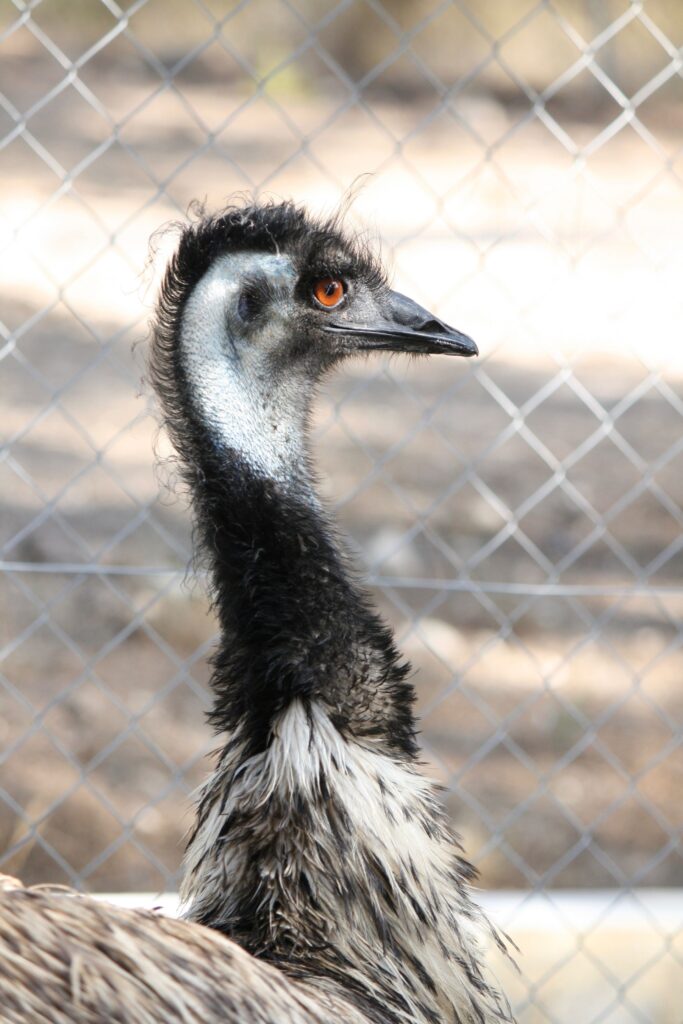
Emu Molting
Molting is a natural physiological process in which emus shed old feathers and replace them with new ones. Although emus are flightless birds, their feathers play crucial roles in thermoregulation, protection against ultraviolet rays, and reproductive behavior.
Molting Once a Year
Emus generally molt about once a year. Feather replacement typically occurs after the breeding season or during periods when environmental conditions change.
While the timing varies by region and climate, in Australia, molting is primarily observed between summer and autumn.
Feathers Do Not Fall Out All at Once
While some bird species shed large amounts of feathers simultaneously, the molting process in emus proceeds relatively slowly.
Characteristics:
Feathers shed gradually, starting from the neck and body
New feathers grow in from underneath
Since there is no need to maintain flight capability, wing molting does not restrict movement
Unique Emu Feathers
Emu plumage differs slightly from that of typical birds.
Typical birds:
Barbs extend to the left and right from a single central shaft (rachis)
Emus:
A dual structure where two shafts (or branches) extend from a single base
They have a fluffy, hair-like appearance
They are well-suited for retaining body heat
This structure is an adaptation for survival in the arid Australian environment.
Changes During Molting
During the molting period, the following changes occur:
Feathers appear shaggy or unkempt
Feather color may look slightly paler
Large amounts of old feathers fall to the ground
Increased rubbing of the body and preening behavior
In a healthy emu, the plumage is restored after molting, resulting in feathers that are more vibrant and dense.
Why Do Emus Retain Their Feathers?
Even though emus are flightless, they did not lose their feathers during the course of evolution. Reasons include:
Body temperature regulation
Crucial in Australia, where there is a significant temperature difference between day and night
Protection from the sun
Dark-colored feathers absorb ultraviolet rays
Courtship behavior
Feather condition serves as an indicator of health
Keeping chicks warm
Parent birds’ plumage also aids in raising their young
Vocalizations
Emu vocalizations differ significantly from the “bird-like chirping” one might imagine based on their appearance; they are characterized by deep, resonant, and drum-like sounds.
Female Vocalizations (Loud, Deep Resonance)
Female emus produce very loud calls during the breeding season.
Characteristics:
Low-pitched sounds like “boo-boo” or “bon-bon”
Sounds that carry over long distances
Sounds that seem to vibrate the chest and throat
These sounds are said to travel up to several kilometers.
Females use these calls to:
Call to males
Assert their territory
Signal their presence to potential mates
Male Vocalizations (Low Grunts and Rumbles)
Males do not vocalize as loudly as females, but they do produce:
Low rumbling sounds
Quiet calls
Snorting or grunting sounds
They may emit warning calls, particularly when incubating eggs or raising chicks.
Chick Vocalizations
Unlike adults, emu chicks produce:
High-pitched, faint “peep-peep” sounds
“Chu-chu” calling sounds
Since chicks begin walking and following their fathers almost immediately after hatching, they use these vocalizations to communicate with their parents.
The Secret Behind the Emu’s “Drum-like Sound”
The emu’s distinctive low-pitched sounds are not produced solely by the vocal cords, as is the case with most birds.
They utilize a specialized vocal organ that vibrates the trachea (windpipe) deep in the throat, creating low-frequency sounds through air resonance.
Females, in particular, vocalize using a unique method that involves:
Extending their necks
Inflating a sac-like structure in their throat
Emitting low-frequency sounds
Seasonal Activities
Emu activity is heavily influenced by Australia’s seasonal changes (dry and wet seasons, temperature, and food availability). The seasons are the reverse of those in Japan; in the Southern Hemisphere, summer is December–February, autumn is March–May, winter is June–August, and spring is September–November.
Spring (September–November) | Peak Breeding Activity
Key behaviors:
Pair formation between males and females
Courtship displays
Territorial disputes
Mating
Spring marks the beginning of the breeding season for emus.
Females attract males through:
Low, booming calls
Neck-stretching displays
Slow, deliberate courtship walks
Diet:
As plants are actively growing, they consume large amounts of:
New shoots
Grass
Fruit
Insects
…building up the physical strength needed for breeding.
Summer (December–February) | Egg-laying and Incubation
Key behaviors:
Females lay eggs
Males begin incubation
Males enter “parenting mode”
A distinctive feature of emus is that the male incubates the eggs.
A single clutch consists of:
Approximately 5 to 15 large, green eggs
Each egg weighs about 500–700g
For about eight weeks, the male:
Barely eats
Barely moves
Guards the nest
Coping with summer heat:
Emus are adapted to hot environments and regulate their body temperature by:
Reducing activity during the day
Becoming active in the morning and evening
Utilizing shade
Autumn (March–May) | Chick Growth and Migration
Key behaviors:
Chicks grow
Males raise the young
Migration in search of food
Newly hatched chicks possess:
Striped plumage
High alertness
The ability to walk quickly
The male protects the chicks for about six months, fulfilling roles such as:
Shielding them from danger
Teaching them about food sources
Managing their movements Diet
Autumn offers an abundance of plants and insects,
seeds
grasses
fruits
small insects
and other items that make up their varied diet.
Winter (June–August) | A period focused on movement and foraging
Key behaviors
Moving in flocks
Foraging for food
Maintaining physical condition
Once the breeding season ends, emus move about relatively freely.
Characteristics:
They may form flocks ranging from a few birds to several dozen
They travel in search of water sources
They roam over vast areas
Coping with the cold
Emu feathers provide excellent insulation,
allowing them to withstand
low nighttime temperatures
and dry winds.
Walking Speed
An emu’s walking speed differs significantly between normal conditions and emergency situations (when running).
Normal Walking
Approximately 3–7 km/h
A speed comparable to a human’s slow to average walking pace
Emus typically walk slowly through vast grasslands or forests while foraging for:
grass
fruit
seeds
insects
small animals
They are capable of walking for extended periods and cover large distances in a single day.
Brisk Walking
When sensing danger or rushing to a destination,
they move at a brisk pace of approximately
10–20 km/h.
Because emus have very long legs and a long stride, they move faster than they appear to.
Running Speed
An emu’s most notable characteristic is its running ability.
Top speed: Approximately 45–50 km/h
They may appear even faster over short distances
This places them among the fastest of all large, flightless birds.
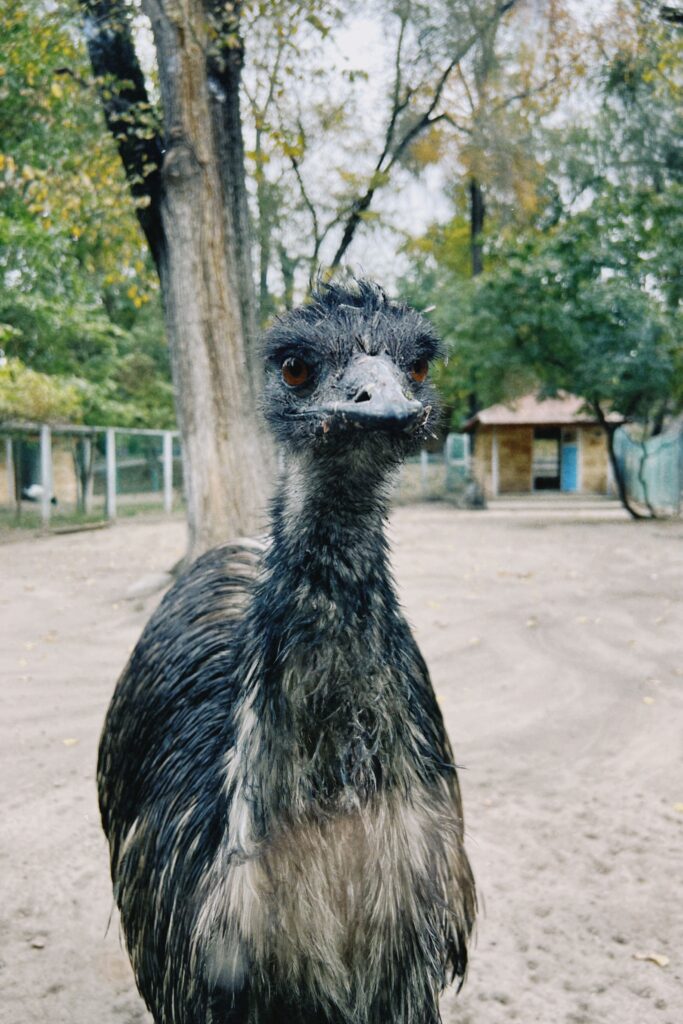
About Emu Chicks
Let’s take a look at emu (Dromaius novaehollandiae) chicks.
- Birth
Breeding Season: Spring to Summer
Nest: Females lay eggs in shallow ground nests built by males.
Number of Eggs: Usually 8-12
Incubation Period: Eggs hatch in approximately 8 weeks.
- Growth
Immediately After Hatchlings: Approximately 30cm in length, approximately 300g in weight
Coat Color: Light brown with black stripes, similar camouflage coloring to their parents.
Rapid Activity: Begins walking and following their parents immediately after hatching.
Growth Rate: Very fast, pecking at the same food as their parents within a few weeks of birth.
- Relationship with Parents
Males are responsible for rearing: Caring for chicks, protecting them from danger, and providing nutritional guidance.
Population Movement: Chicks accompany their parents and learn to forage and find water sources.
Learning Period: Chicks learn survival skills by observing their parents’ behavior.
- Independence
Independence Period: They become independent and leave their parents at approximately 6-12 months of age.
By this time, they have acquired basic skills such as foraging, escape, and social behavior.
- Characteristics and Personality
Active and curious
Highly dependent on their male parent and highly cautious
Agile and fast, they have a high ability to escape predators.
Is the emu an endangered species?
Emu is not an endangered species. Previously, emus could be seen all over Australia. However, emus became extinct in Tasmania in the 19th century. In 1999, the emu became formally protected by the Australian government under the Environmental Protection and Biodiversity Conservation Act, making it highly protected. However, only the state of New South Wales classifies the emu as an endangered species.
- International Status
IUCN Red List: Least Concern (LC)
Global populations are stable, and the risk of extinction is low.
- Population and Distribution
Widely distributed throughout Australia
Adapted to a wide range of environments, including forests, grasslands, and savannas
May be found near farmland and cities
- Threats
Few natural predators, and few direct threats from human activity
Traffic accidents on farmland and roads affect some areas
Low-scale habitat destruction, limiting population decline
Can emus be bred?
Emus are extremely difficult to keep. Because they travel long distances, they require quite a large amount of space, which limits the number of people who can keep them. It is appropriate to enter the zoo and see them at events. Please check the official website for details.
- Legal Status
In Australia, they are protected as wild animals.
Keeping them overseas requires permission from the national or state government.
Even in Japan and other countries, keeping them is often permitted only in zoos and designated facilities.
- Difficulties of Keeping
They are large, weighing 30-60 kg, and require a large enclosure.
They are fast runners and have good jumping ability, so their enclosure must be sturdy and high, otherwise they risk escape and injury.
They are omnivorous and eat a large amount.
They need to be fed grass, fruit, seeds, insects, etc.
Sociality: They prefer to live in groups, so keeping them alone can be stressful.
- Actual Breeding Examples
They are often kept in zoos, farms, and research facilities.
Breeding Environment: Spacious exercise areas, sturdy fences, and water sources are required.
Professional staff are responsible for diet, health, and breeding management.
Private ownership is extremely difficult due to legal, safety, and management considerations.
Zoos Housing Emus (Japan & Worldwide)
Although native to Australia, emus are now kept in zoos and bird parks around the world. As large, flightless birds with relatively docile temperaments, they are frequently exhibited in spacious outdoor enclosures.
🇯🇵 Major Zoos in Japan Where You Can See Emus
Ueno Zoo
Exhibit: Emu
Features:
One of the world’s largest bird species
Small wings
Unique feathers that grow in pairs (a double-shafted structure)
Characterized by the female’s low, booming call (often described as a “bon-bon” sound)
Ueno Zoo also provides information on emu ecology, including breeding habits, plumage, and vocalizations.
Tama Zoological Park
Housed in the “Australia Zone”
Viewable in a spacious exhibit area
Allows visitors to observe emu behavior that closely resembles their natural habits
Tama Zoological Park also highlights behaviors such as flocking and foraging.
Chiba City Zoological Park
Features:
Exhibits emus
Large birds standing approximately 150–180 cm tall
Omnivorous diet consisting of seeds, fruits, insects, and more
Chiba City Zoological Park also shares information regarding the emu’s physical characteristics and ecology.
Fukuoka City Zoological Park
Features:
Houses emus
Showcases their unique breeding habits, where the male incubates the eggs and raises the chicks
Provides explanations about their vocalizations
🌏 Notable Facilities Worldwide Where You Can See Emus
🇦🇺 Australia
Taronga Zoo Sydney
A premier Australian zoo
Features many exhibits of native Australian species
Visitors can see Australian wildlife, including emus
Melbourne Zoo
One of Australia’s oldest zoos
Exhibits native Australian animals, including emus
🇺🇸 United States
San Diego Zoo
A leading facility where emus can be seen in an Australian-themed exhibit
Smithsonian’s National Zoo
A large zoo housing a diverse range of bird species
🇬🇧 United Kingdom
London Zoo
A zoo with a long history
Exhibits a variety of large bird species
Introducing other animals
コメント