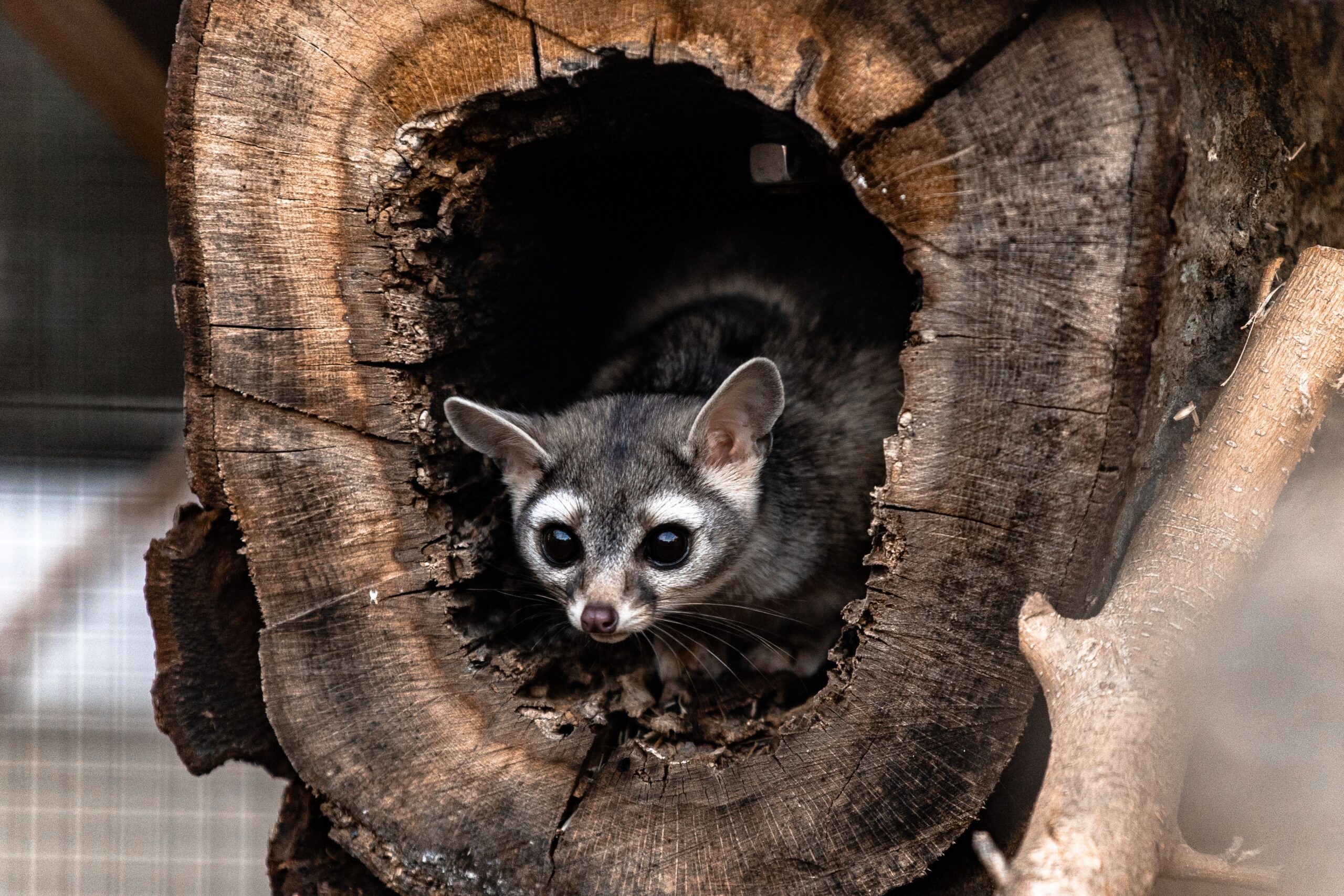
What kind of animal is a flying squirrel? We will introduce and explain its characteristics, ecology, and habitat. Even in the photo, this animal, which can be seen gliding widely, is different from the flying squirrel and is endemic to Japan. Since it is a very small creature, many people have never seen one, but many people actually keep it as a pet, so it is highly recommended.


- What is a flying squirrel? About basic status
- What are the roots and origins of the musasabi (Japanese giant flying squirrel)?
- Where is its habitat?
- feature is? What kind of creature is it?
- What is your personality like?
- What is the ecology like?
- About Molting
- About Their Calls
- Seasonal Activities
- About Flight Speed
- About Baby Flying Squirrels
- Is the flying squirrel an endangered species?
- Can flying squirrels be kept as pets?
- Zoos Housing the Japanese Giant Flying Squirrel (Japan & Worldwide)
- Introducing other animals
What is a flying squirrel? About basic status
A flying squirrel is a mammal belonging to the order Rodentia, family Squirrel, subfamily Squirrel, genus Flying Squirrel. The scientific name is Petaurista leucogenys, and it is written and written as 鼯鼠 or 鼺鼠 in kanji. It is a very small mammal, with a body length of 27-49 cm and a weight of 150-220 g. The list of information is as follows.
| Japanese(和名) | ムササビ |
| English(英名) | Capybara |
| scientific name(学名) | Petaurista leucogenys |
| classification(分類) | Mammalia、 Rodentia、 Sciuridae、Petaurista 哺乳綱、齧歯目、リス亜科、ムササビ属 |
| IUCN Status(保全状況) | LEAST CONCERN |
| Length(体長) | 27-49cm |
| Weight(体重) | 150-220g |
What are the roots and origins of the musasabi (Japanese giant flying squirrel)?
The musasabi (specifically the Japanese giant flying squirrel, Petaurista leucogenys) is a large gliding mammal belonging to the squirrel family (Sciuridae). Although it appears to “fly” through the air, it does not engage in true flight like birds or bats; rather, it is an animal that evolved the ability to glide as an adaptation to an arboreal (tree-dwelling) lifestyle.
Evolutionary roots of the musasabi
The ancestors of the musasabi are believed to be primitive squirrel-like creatures that appeared approximately 50 million years ago (during the Eocene epoch of the Cenozoic era).
The evolutionary progression is as follows:
Primitive arboreal rodents
↓
Ancestors of the squirrel family (Sciuridae)
↓
Squirrels specialized for arboreal life
↓
Gliding squirrels (musasabi and momonga)
The squirrel family (Sciuridae), to which the musasabi belongs, is part of the order Rodentia—the same group as mice and rats—but these animals evolved specifically to live in trees.
Why did they develop the ability to glide?
The primary reason the musasabi moves through the air is to navigate the forest efficiently.
When moving from tree to tree:
Typical animals:
Must descend to the ground
Must avoid obstacles
Face the risk of predators
↓
Musasabi:
Launch from a high tree
Glide to another tree
Can live without ever descending to the ground
This offers significant advantages.
The evolved “patagium” (gliding membrane)
The most distinctive feature of the musasabi is the membrane along the sides of its body.
This is a
Membrane of skin connecting the forelimbs → hindlimbs → body sides
that acts like a wing when spread out.
Its roles include:
Utilizing air resistance
Slowing the rate of descent
Increasing gliding distance
Adjusting the landing point
Relationship between musasabi and momonga
The musasabi and the momonga (Japanese dwarf flying squirrel) are very closely related.
Classification:
Sciuridae (Squirrel family)
├── Tree squirrels
├── Momonga (Dwarf flying squirrels)
└── Musasabi (Giant flying squirrels)
This is the nature of their relationship. The difference is mainly in size.
About classification
Flying squirrels are a member of the genus Flying Squirrel, but are often mistaken for flying squirrels. There are several ways to tell the difference between flying squirrels and flying squirrels.
different sizes
The flying squirrel is the size of a handkerchief, and the flying squirrel is the size of a cushion. There are also differences in the shape of the membrane; the flying squirrel has a membrane between its tail and hind legs, but the flying squirrel does not. The tail of the flying squirrel is also longer and fuller than that of the flying squirrel.
different habitats
Flying squirrels usually prefer broad-leaved forests, while flying squirrels prefer coniferous forests, so there are differences in where they live.
Where is its habitat?
The distribution of the flying squirrel is endemic to Japan. It can be seen in Honshu, Shikoku, and Kyushu.
Flying Squirrel Habitat
Distribution Area
Japan: Distributed across Honshu, Shikoku, and Kyushu
East Asia: Some species also live in the Korean Peninsula, eastern China, and Taiwan
Habitat
Live primarily in deciduous broadleaf forests and mixed forests
Prefers forests dominated by sawtooth oak, konara oak, and beech trees
Often builds nests in tree holes or old trees
Altitude
Distributed widely from flatlands to mountainous areas
Common in forest zones up to an altitude of 1,000-1,500 meters
Can be observed near cities
Can sometimes be seen around residential areas and parks where forests remain
Characteristics
Nocturnal and adapted to arboreal life
Able to glide through the forest canopy
feature is? What kind of creature is it?
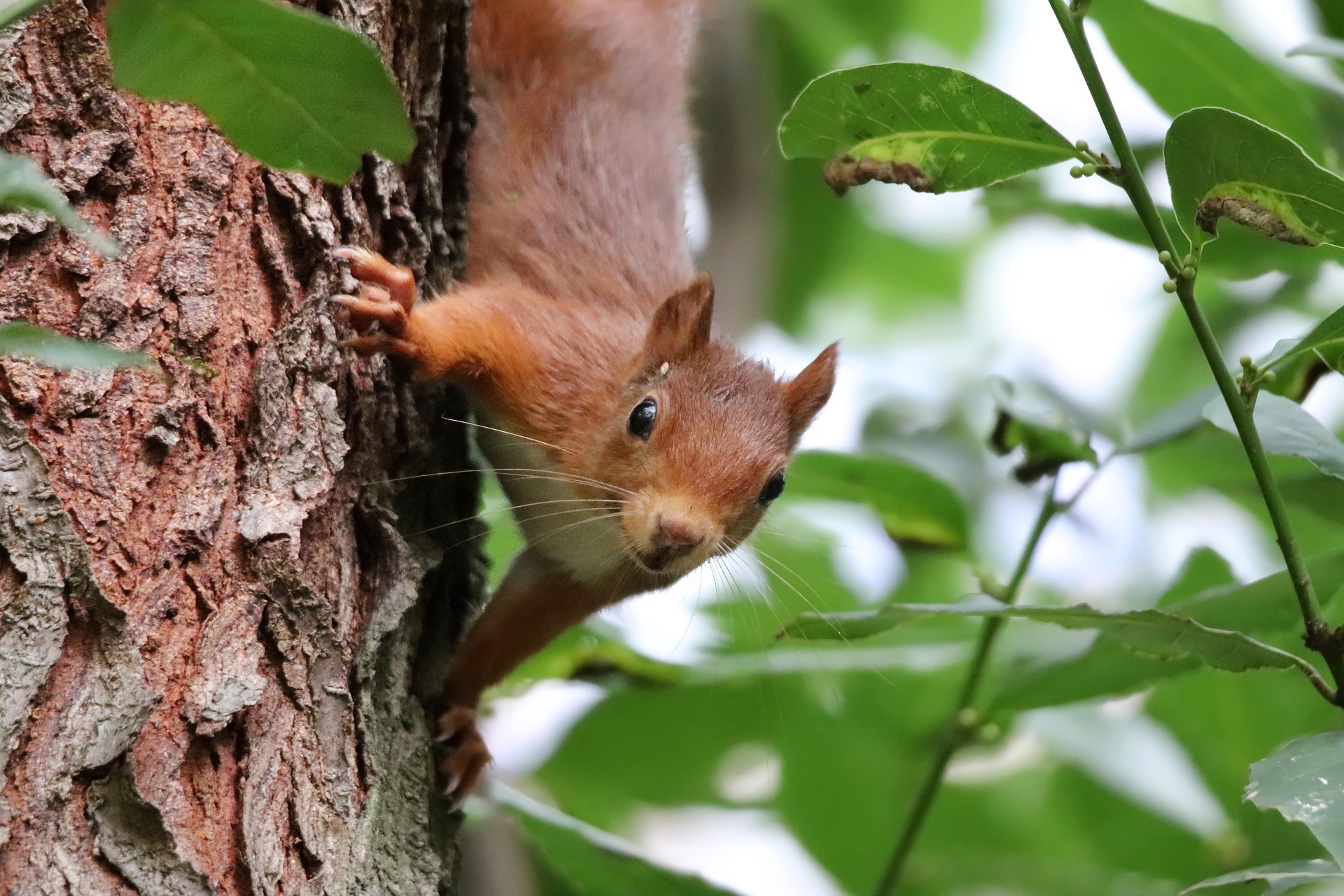
Flying squirrels have a membrane called a flying membrane between their long front legs and hind legs, which allows them to glide by spreading the flying membrane. Using this feature, you can jump from tree to tree. There is cartilage called spicule cartilage in the wrist, and its role is to increase the area of the flying membrane by protruding outward during gliding. It lives in mountains, flatlands, forests, and tree cavities, and is nocturnal.
Characteristics of Flying Squirrels
Body Size/Body Shape
Body Length: 40-50cm (excluding tail)
Tail Length: Approximately 30-40cm
Weight: Approximately 1-1.5kg
Stout, stocky body with well-developed front and back legs, adapted to arboreal life
Fur/Color
Back: Brown to grayish-brown, underside: Whitish
Soft fur and a bushy tail contribute to gliding stability
Face/Head
Round head, large eyes, and developed night vision
Small ears, adapted to arboreal life and gliding A shape that doesn’t get in the way when flying
Gliding Membrane
A membrane of skin (gliding membrane) exists between their front and back legs, allowing them to glide from tree to tree.
Gliding distances are approximately 50-100m, and in some cases they can reach over 150m.
Diet
Omnivorous, primarily consuming tree leaves, buds, fruits, and nuts.
They also occasionally eat insects and small animals.
Behavior and Ecology
Nocturnal, resting in tree holes or nesting boxes during the day.
Specialized for arboreal life, they rarely descend to the ground.
What is your personality like?
Flying squirrels are small animals, very delicate and timid, so it takes quite a while to get used to them. Therefore, when breeding them, it is necessary to shorten the distance over time.
Flying Squirrel Personality and Behavior
Highly cautious
Nocturnal, they rest quietly in their burrows during the day.
If an enemy (bird of prey or human) approaches, they quickly hide in a tree cavity or up in the tree.
Gentle and docile
Generally low in aggression and avoid conflict.
They remain calm when moving and eating in the trees.
Sociable
More often live in families or small groups than alone.
During the breeding season, pairs may share nests.
Curious but cautious
They may show interest in new environments and sounds at night.
However, they will quickly flee if they perceive danger.
Breeding Season Behavior
Males can become very territorial during the breeding season.
They behave cautiously when approaching females.
What is the ecology like?
Flying squirrels eat plant matter such as leaves, buds, flowers, fruits, seeds, and bark. Flying squirrels also spend most of their time in trees. Breeding occurs in June and December, and the males gradually gather around the female’s nest. They only mate once. The gestation period is around 75 days, with one to two children per birth. The lifespan is about 15 years.
Flying Squirrel Ecology
Habitat
In Japan, they live in deciduous broadleaf and mixed forests in Honshu, Shikoku, and Kyushu.
They build burrows in tree cavities or where large branches fork.
They are adapted to arboreal life and rarely descend to the ground.
Activity Period
Nocturnal: Active in the evening and at night.
They rest in their burrows during the day to protect themselves from predators.
Diet
Omnivorous, but primarily herbivorous.
Leaves, buds, fruit, bark, etc.
They occasionally eat insects and small animals.
Movement/Gliding
They glide from tree to tree. Movement (distances of 50-100m, sometimes over 150m)
Gliding is used to avoid predators, travel to feeding grounds, and breed.
Breeding
Breeding season: Spring-Summer
Gestation period: Approximately 3-4 months
Give birth to one or two young at a time
Parents protect young in burrows to help them adapt to arboreal life immediately after birth
Sociality
Generally live in pairs or small groups
May be solitary outside of breeding season
Lifespan
Live for approximately 5-7 years in the wild, and may live for over 10 years in captivity
Are there any natural enemies?
Flying squirrels are small mammals, so they have many natural enemies. The main predators are weasels, foxes, and hawks.
About Molting
Molting in giant flying squirrels is the process of shedding and replacing fur in response to seasonal changes. Unlike the molting of bird feathers, this process primarily involves the transition between winter fur and summer fur.
🌸 Spring (Around April–June): Winter Fur → Summer Fur
The thick fur that helped them survive the winter is shed and replaced by fur suited for summer.
Changes:
Dense winter fur is shed
Replaced by shorter, lighter summer fur
Easier body temperature regulation
During the spring molt, large amounts of the fur accumulated over winter are shed, so clumps of fur may be found around their nests or resting spots.
🍂 Autumn (Around September–November): Summer Fur → Winter Fur
They transition to winter fur in preparation for the cold.
Changes:
Fur becomes denser
Increase in soft undercoat
Improved heat retention
This is a crucial mechanism for maintaining body temperature in the cold forest environment of winter, especially for giant flying squirrels, which are active at night.
About Their Calls
Contrary to their cute appearance, the Japanese giant flying squirrel—a nocturnal animal—produces calls ranging from low, sharp sounds to high-pitched alarm cries. While they generally live quietly, they vocalize to communicate with others or react to danger.
Low-pitched sounds like “gurururu” or “kukkukku”
Communication with others
Confirming presence near their territory
When on alert
High-pitched sounds like “kyu” or “kyu-kyu”
When startled
When sensing danger
As a signal to others
Sharp sounds resembling “gyaa” or “kii”
Heard during the breeding season or in situations involving conflict.
Because these sounds suddenly echo through the forest at night, those hearing them for the first time may mistake them for the cries of birds or other small animals.
Seasonal Activities
The activity of the Japanese giant flying squirrel is heavily influenced by seasonal changes in temperature, food availability, and reproductive cycles. Although nocturnal and rarely seen during the day, they live primarily in the treetops of forests throughout the year.
🌸 Spring (March–May): A Season for Breeding and Renewed Activity
After a period of low activity during winter, they become more active.
Key Activities:
Increased nightly travel distances
Intensified foraging
Onset of breeding activity
Increased interaction between males and females
Spring marks the beginning of an increase in food availability; they feed on:
Tree buds
New leaves
Flowers
Tree bark
Breeding Behavior:
Japanese giant flying squirrels may breed multiple times a year.
Spring breeding involves:
Males searching for females
Nocturnal pursuit behavior
Rearing young in tree hollows
☀️ Summer (June–August): Rearing Young and Active Foraging
Summer is the season when food is most abundant.
Activity:
Prolonged nocturnal activity
Increased movement among trees
More frequent gliding
Diet:
They utilize forest plant resources such as:
Leaves
Tree buds
Fruits
Seeds
Tree bark
Rearing Young:
By summer, the young born in spring begin to:
Venture out of the tree hollow
Practice tree climbing
Start moving short distances
This is a crucial period for developing gliding skills.
🍂 Autumn (September–November): Preparing for Winter
Autumn is a vital season for storing resources.
Key Activities:
Increased food intake
Storing nutrients for winter
Expanding their home range
Diet:
They consume large quantities of:
Nuts
Acorns
Fruits
Seeds
Molting:
In autumn, they molt from:
Summer coat → Winter coat
Changes:
Fur becomes thicker
Insulation improves
Preparation for cold nights
❄️ Winter (December–February): Energy-Conserving Lifestyle
Japanese giant flying squirrels do not hibernate. However, their activity patterns change to cope with the cold.
Key behaviors:
Reducing nighttime activity
Spending more time resting in their dens
Conserving energy
Winter diet:
They feed on items such as:
Tree bark
Winter buds
Fruits
Stored seeds
Winter habits:
Giant flying squirrels rest in places like:
Large tree hollows
Nest boxes
Crevices in trees
They survive the harsh forest environment by maintaining their body temperature with a thick winter coat.
About Flight Speed
The “flight speed” of the Japanese giant flying squirrel is, strictly speaking, a gliding speed. Unlike birds or bats, they cannot fly by flapping their wings; instead, they possess the ability to leap from high trees to lower ones, moving through the air while catching the wind with their gliding membranes.
Gliding Speed
The gliding speed of the Japanese giant flying squirrel is estimated to be:
Approximately 20–30 km/h
Potentially higher in momentary bursts
This is comparable to the speed of a person cycling slowly, but it represents a highly efficient mode of travel within the forest at night.
How Far Can They Glide?
These squirrels are large gliding animals capable of covering considerable distances.
Generally:
They glide distances of about 20–50 meters
In favorable conditions, some have been known to travel nearly 100 meters
The higher the tree they launch from, the further they can glide.
The Mechanics of Gliding
When taking flight, the squirrel moves through the following sequence:
① Launch from a tree trunk or branch
↓
② Spread all four limbs
↓
③ Extend the gliding membranes
↓
④ Position the body nearly horizontally
↓
⑤ Adjust direction using the tail
The gliding membrane does not act like a parachute; instead, it functions more like a wing.
Maneuverability
These squirrels do not simply fall through the air.
While airborne, they:
Change the angle of their forelimbs
Adjust the tension of the gliding membranes
Move their tails
This allows them to:
Adjust their landing spot
Avoid obstacles
Land precisely on tree trunks
Upon landing, they extend their forelimbs to absorb the impact of the collision with the tree.
About Baby Flying Squirrels
By understanding the characteristics of baby flying squirrels, we can better understand their developmental process and behavioral traits.
Characteristics of Baby Flying Squirrels (Juvenile Flying Squirrels)
Size at Birth
Body Length: Approximately 10-15cm
Weight: Approximately 30-50g
Their entire bodies are covered in soft down, but their tails and gliding membranes are not yet fully developed.
Behavior
They can walk immediately after birth, but cannot glide yet.
They spend their time protected by their mother in their burrow.
They grow by drinking breast milk and gradually begin to eat solid foods such as leaves and fruit.
Growth Process
Within a few weeks of birth, their gliding membranes develop, allowing them to fly short distances. They become capable of gliding.
At 2-3 months of age, they begin to leave the burrow and move around trees with their parents.
By around 6 months of age, they are nearly independent and have adapted to arboreal life.
Sociality
Through interactions with their mother and other young animals in the burrow, they learn the rules of the pack and how to move around in the trees.
They acquire motor skills and gliding techniques through play.
Defensive behavior
When they sense danger, they will hide on their mother’s back or in the burrow.
They do not attempt horizontal gliding from an early age; instead, they first learn how to move safely in the trees.
Is the flying squirrel an endangered species?
Flying squirrels are classified as low concern and their population is very stable.
Conservation Status Details
International Assessment (IUCN)
Japanese flying squirrels are not listed on the IUCN Red List or classified as endangered.
Their range is relatively wide, and their populations are considered stable.
Domestic Conservation Status
Captivity is prohibited under the Wildlife Protection Act.
Decreased natural forests and deforestation pose local threats, but do not significantly affect the overall population.
Threats
Habitat fragmentation due to deforestation and residential expansion
Predation by natural predators (such as owls and hawks)
Traffic accidents due to roads and human activities
Can flying squirrels be kept as pets?
In Japan, it is prohibited to keep flying squirrels by individuals under the Wildlife Protection Act. It is possible to become a wildlife conservationist, but I have to say that it is difficult. All you can do is observe how they live in the wild. You can see them moving and flying in the forest. They can often be seen at night.
Why Flying Squirrels Cannot Be Kept as Pets
They are wild animals.
In Japan, the Wildlife Protection Act prohibits the capture and keeping of flying squirrels.
Keeping them without permission is illegal.
They specialize in arboreal living and gliding.
Living in tree holes and gliding are central to their lives.
Home environments do not provide sufficient exercise or space for gliding.
They are nocturnal and have a unique lifestyle.
They are active at night and sleep most of the day.
They are not compatible with human lifestyles, making them prone to stress.
They have a unique diet.
They mainly eat tree leaves, buds, and fruit.
It is difficult to secure food for them in captivity, making nutritional management difficult.
Health management is difficult.
Even veterinarians find it difficult to examine these species.
They are prone to illness due to stress and inappropriate captivity.
Zoos Housing the Japanese Giant Flying Squirrel (Japan & Worldwide)
Because the Japanese giant flying squirrel (musasabi) is nocturnal and arboreal, it is not commonly exhibited in zoos. They often sleep in nest boxes or tree hollows during the day, making it difficult to catch them in motion. However, there are facilities in Japan that exhibit them for purposes of husbandry, conservation, and education.
🇯🇵 Major Facilities in Japan Where You Can See the Japanese Giant Flying Squirrel
🦇 Tama Zoological Park (Tokyo)
One of the premier facilities in Japan for exhibiting the Japanese giant flying squirrel.
Species Housed:
Japanese giant flying squirrel (Petaurista leucogenys)
Characteristics:
Often sleeps during the day due to its nocturnal nature
Visitors may sometimes observe them peeking out from their nesting holes
Conducts and presents research on their diet and signs of activity in captivity
Tama Zoological Park showcases their nocturnal behaviors—such as feeding habits and signs of activity—based on observations made in captivity.
🦇 Kyoto City Zoo (Kyoto Prefecture)
Houses the Japanese giant flying squirrel.
Characteristics:
Exhibited as a native species inhabiting Japanese forests
Visitors can learn about their ecology (patagium/gliding membrane, gliding ability, diet, etc.)
Kyoto City Zoo introduces them as members of the squirrel family and explains that they are endemic to Japan, distributed across Honshu, Shikoku, and Kyushu.
🦇 Komoro City Zoo (Nagano Prefecture)
Has a history of housing rescued/protected individuals.
Characteristics:
Example of exhibiting individuals raised by hand (artificial rearing)
Showcases the animal’s physical structure and gliding capabilities
Cases exist where rescued individuals are kept in captivity
🌍 Captive Care of Giant Flying Squirrels Worldwide
Globally, in addition to the Japanese giant flying squirrel, related species known as giant flying squirrels (genus Petaurista) are kept in select zoos and conservation facilities.
These giant flying squirrels belong to a group of large gliding squirrels also found in southern Eurasia. 🇨🇳 Facilities in China and East Asia
In regions such as China,
large gliding squirrels—
specifically Chinese giant flying squirrels
and other Asian squirrel species—
are sometimes exhibited instead of snowy owls.
The genus Petaurista, in particular,
includes several species—
such as the red giant flying squirrel,
the white-cheeked giant flying squirrel,
and the Indian giant flying squirrel—
which are kept at zoos and research facilities across Asia.
Introducing other animals

コメント